

Picking a bathroom vanity seems simple enough. Until the measurements come into play. Then things get tricky real fast.
Most people focus on width and height, but depth? That’s the sneaky dimension that can make or break a bathroom’s functionality.
The right depth isn’t just about fitting the vanity into the space. It’s about creating a bathroom that actually works for daily life. Storage needs, plumbing requirements, and how people move through the room all factor into this decision.
Getting it right means understanding what standard depths exist and why they matter.
What is the Standard Bathroom Vanity Depth?
Standard bathroom vanity depths typically range from 18 to 24 inches. The most common depth is 21 inches, which balances counter space with room mobility and works well in most bathrooms.
| Vanity Depth | Best For | Key Features |
|---|---|---|
| 18 inches | Small bathrooms, powder rooms | Space-saving design, minimal projection into the room |
| 21 inches | Standard bathrooms, most common choice | Balanced counter space and storage, industry standard |
| 24 inches | Master bathrooms, spacious areas | Maximum storage and counter space, roomier basins |
| 30+ inches | Custom installations, luxury bathrooms | Extra-deep storage, double sinks, premium feel |
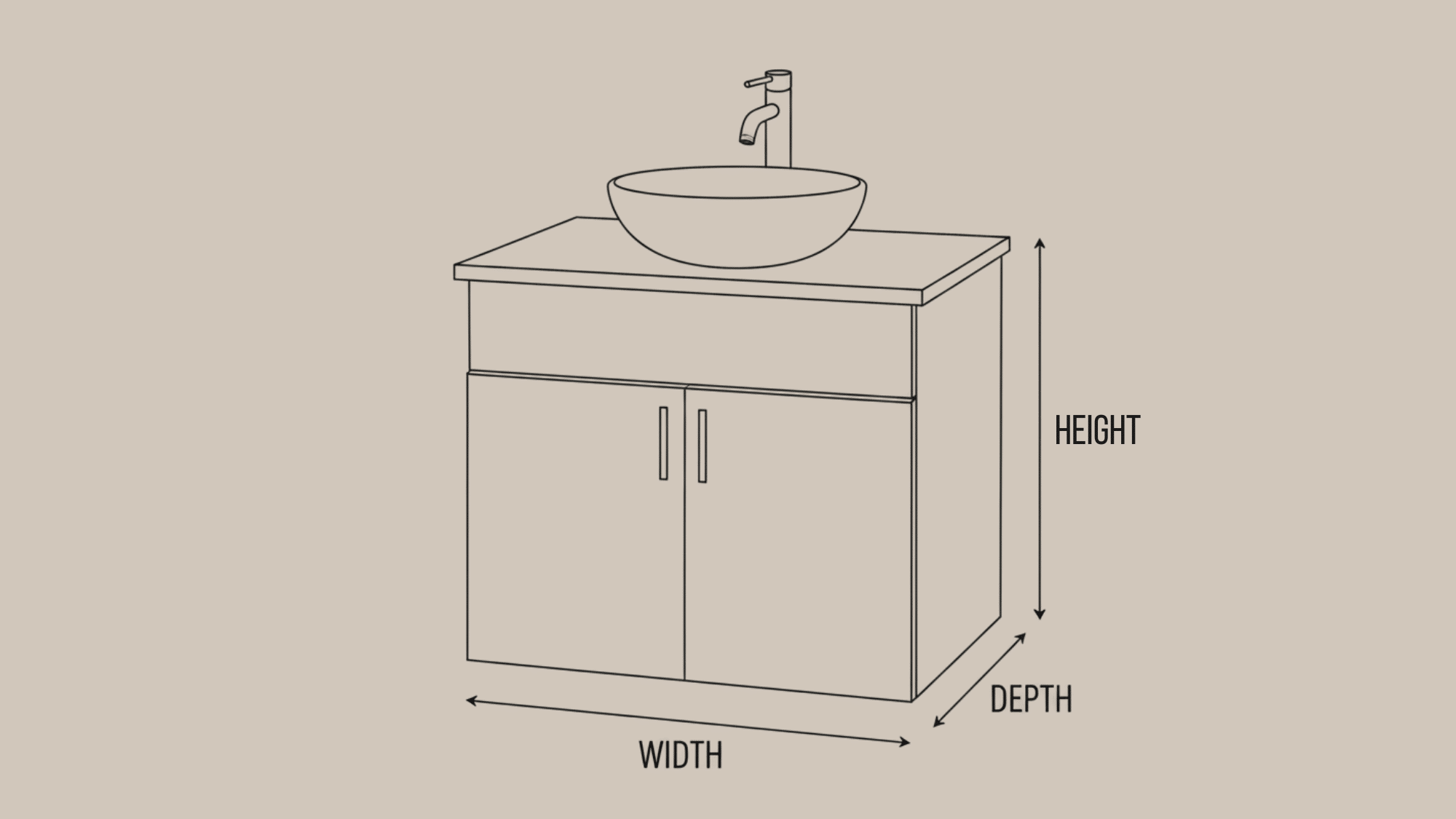
Bathroom Vanity Depth vs Width vs Height
While depth often gets overlooked, all three dimensions play distinct roles in vanity selection.
Width determines how much counter space runs along the wall and whether single- or double-sink configurations fit. It’s usually the first measurement people consider since it’s the most visible.
Height affects daily comfort at the sink. Standard vanities sit around 32 inches, but modern ones often reach 36 inches to reduce back strain.
Depth, though, controls how far the vanity juts into the room. It simultaneously impacts traffic flow and storage capacity.
A vanity might have perfect width and height, yet the wrong depth makes the entire bathroom feel off. These three dimensions work together, but depth ultimately decides whether the space feels cramped or comfortable.
Common Bathroom Vanity Depth Sizes
Vanity depths come in three main categories, each designed for specific bathroom sizes and needs. Understanding these options helps narrow down the right choice.
Standard Depth Vanities
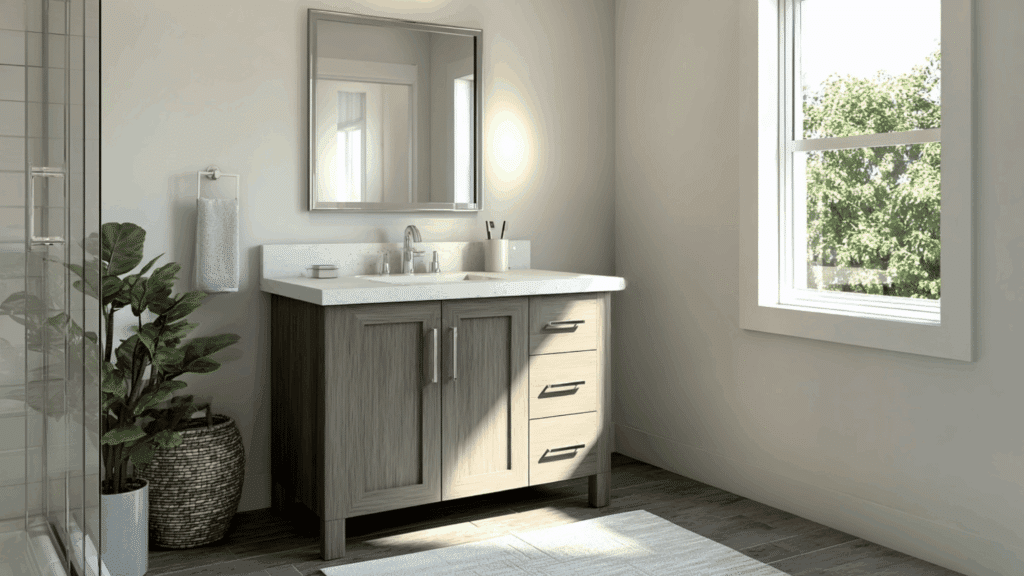
These vanities hit the sweet spot for most bathrooms. At 21 inches deep, they provide enough counter space for toiletries and daily essentials without overwhelming the room.
The drawers and cabinets offer decent storage for towels, cleaning supplies, and personal items.
Standard depths work with most sink styles and leave adequate walking space. They’re the safe bet for average-sized bathrooms and guest baths where balance between function and flow matters most.
Shallow Depth Vanities
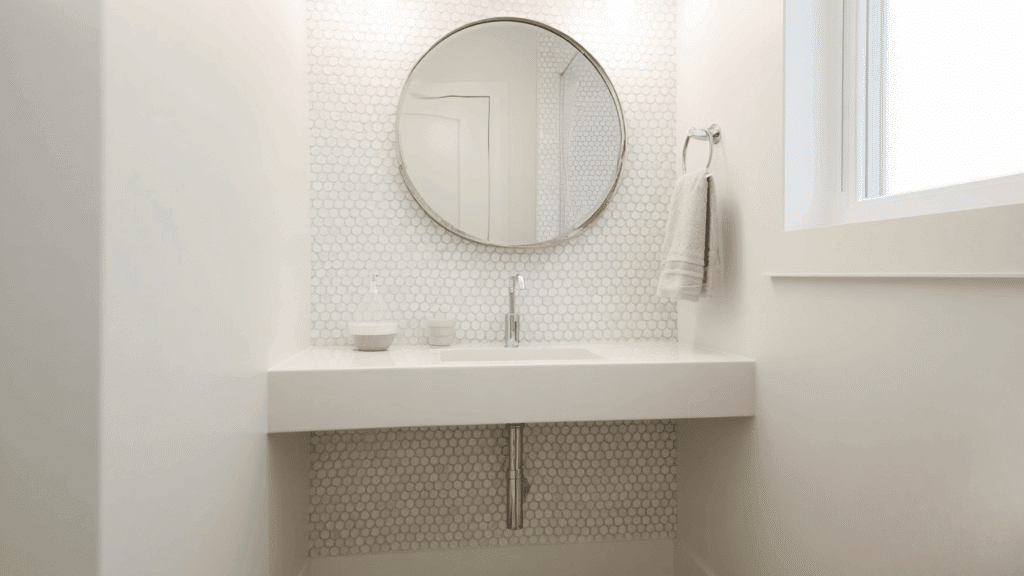
Compact bathrooms and powder rooms benefit from these space-savers. Shallow vanities maximize floor space, making tight quarters feel less claustrophobic.
They project less into the room, which helps in narrow layouts or hallway bathrooms. Storage takes a hit compared to standard depths, but creative organization helps. Wall-mounted models in this range create an airy feel.
Perfect for half-baths where guests wash hands but don’t need extensive counter space or storage for daily routines.
Deep Vanities
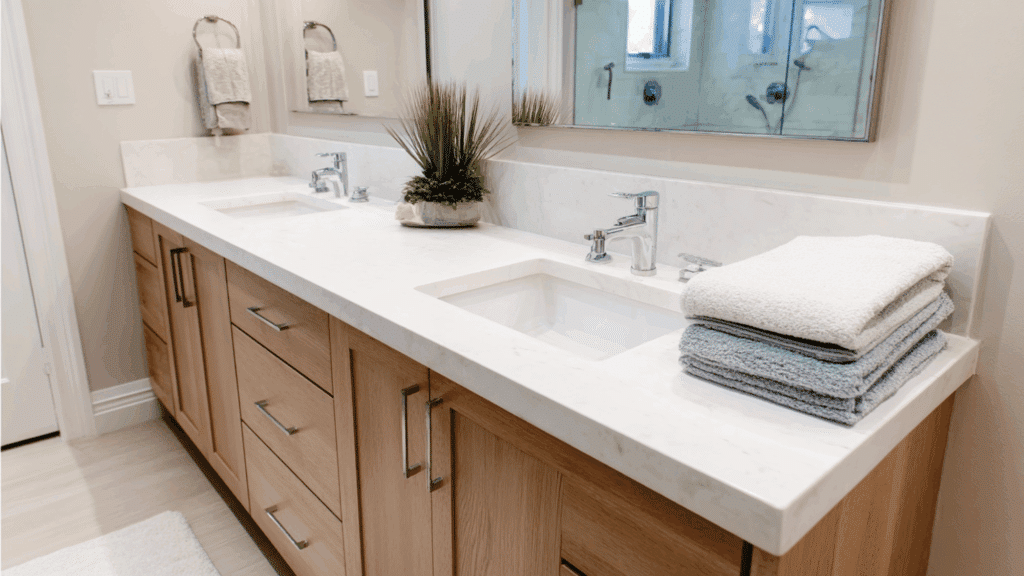
Spacious master bathrooms can handle these substantial pieces. Extra depth means more counter real estate for spreading out grooming products and decor.
Storage increases significantly with deeper drawers that accommodate bulkier items. Double-sink vanities often fall into this category since they need the extra projection.
The trade-off is reduced floor space, so the bathroom needs enough square footage to accommodate the deeper footprint without creating a cramped feel or awkward traffic patterns.
How to Measure Bathroom Vanity Depth Correctly
Accurate measurements prevent costly mistakes and returns. Getting the depth right means accounting for more than just the vanity cabinet itself. Several factors affect the final projection into the room.
1. Measure from the wall to the front edge: Start at the wall where the vanity will sit and measure straight out to the front edge. This gives the basic depth dimension.
2. Account for plumbing fixtures: Pipes, shut-off valves, and drain lines often protrude from the wall. Measure how far they stick out since the vanity needs to clear them.
3. Include countertop overhang: Countertops typically extend beyond the cabinet by 1/2 to 1 inch. Add this overhang to the cabinet depth to determine the total projection.
4. Check door and drawer clearance: Ensure cabinet doors can swing fully open without hitting the toilet, tub, or opposite wall. Drawers need clearance, too.
5. Consider sink basin projection: Vessel sinks sit on top of the counter, adding height, while undermount sinks stay flush. Some basins extend past the counter edge.
6. Factor in faucet reach: Wall-mounted faucets need different spacing than deck-mounted ones. The faucet should reach the sink center comfortably without awkward angles.
Wall-Mounted vs Freestanding Vanity Depth Differences
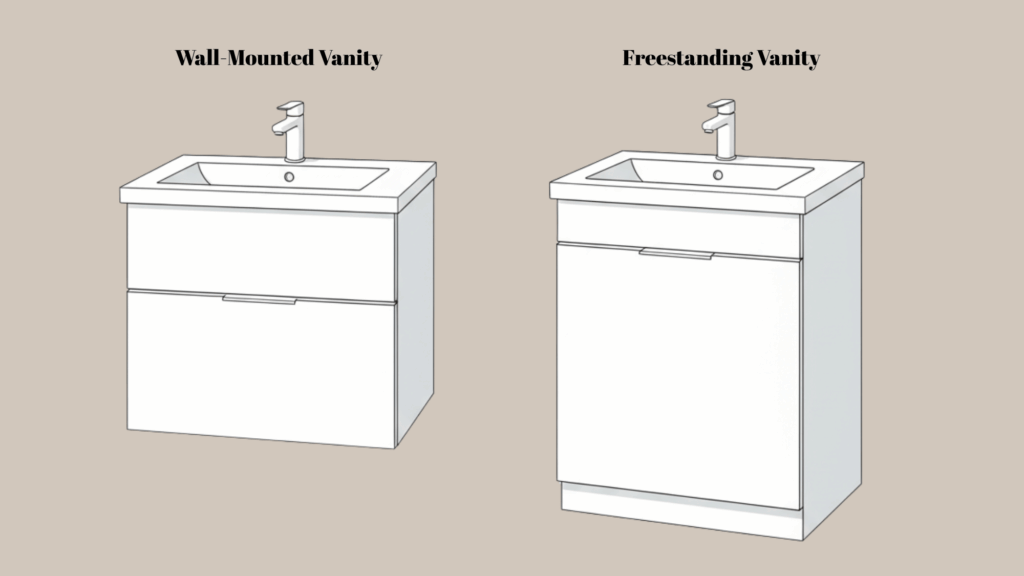
The mounting style significantly impacts how depth works in a bathroom.
Wall-mounted vanities float off the floor, attached directly to the wall with hidden brackets. This creates open space underneath, making the room feel larger even if the actual depth matches a freestanding unit.
The visual lightness tricks the eye into perceiving more space.
Freestanding vanities sit directly on the floor with a full cabinet base. They often include toe kicks at the bottom, adding bulk.
While both types come in similar depth ranges, freestanding models typically feel more substantial. Wall-mounted vanities work better in tight spaces since the visible floor extends beneath them.
Freestanding options offer more stability for heavier countertops and provide enclosed storage right down to the floor, which some prefer for hiding cleaning supplies.
Mistakes to Avoid When Choosing Vanity Depth
Choosing the wrong vanity depth creates frustration that lasts for years. These common mistakes trip up homeowners during bathroom renovations, leading to cramped spaces or wasted potential.
- Ignoring door swing clearance: Vanities that block bathroom doors from opening fully create awkward entry and exit situations.
- Forgetting about the toilet proximity: A vanity that’s too deep can make sitting on the toilet uncomfortable or create knee-knocking hazards.
- Not accounting for cabinet hardware: Drawer pulls, and door handles add extra projection beyond the vanity face, reducing usable space.
- Overlooking daily traffic patterns: Multiple people getting ready simultaneously need enough clearance to move around without constantly bumping into each other.
- Choosing depth based on looks alone: A beautiful, deep vanity loses appeal quickly when it makes the entire bathroom feel like a narrow hallway.
The Bottom Line
Bathroom vanity depth isn’t just a number on a spec sheet. It determines whether mornings feel rushed and cramped or smooth and functional.
The right depth creates breathing room while maximizing storage potential.
Start with accurate measurements, consider how the space gets used daily, and don’t sacrifice comfort for aesthetics. A vanity might look sleek, but if it leaves no counter space, frustration builds quickly.
Take time with this decision. The vanity becomes the bathroom’s anchor point, and getting the depth right means enjoying the space for years without regrets or awkward workarounds.