

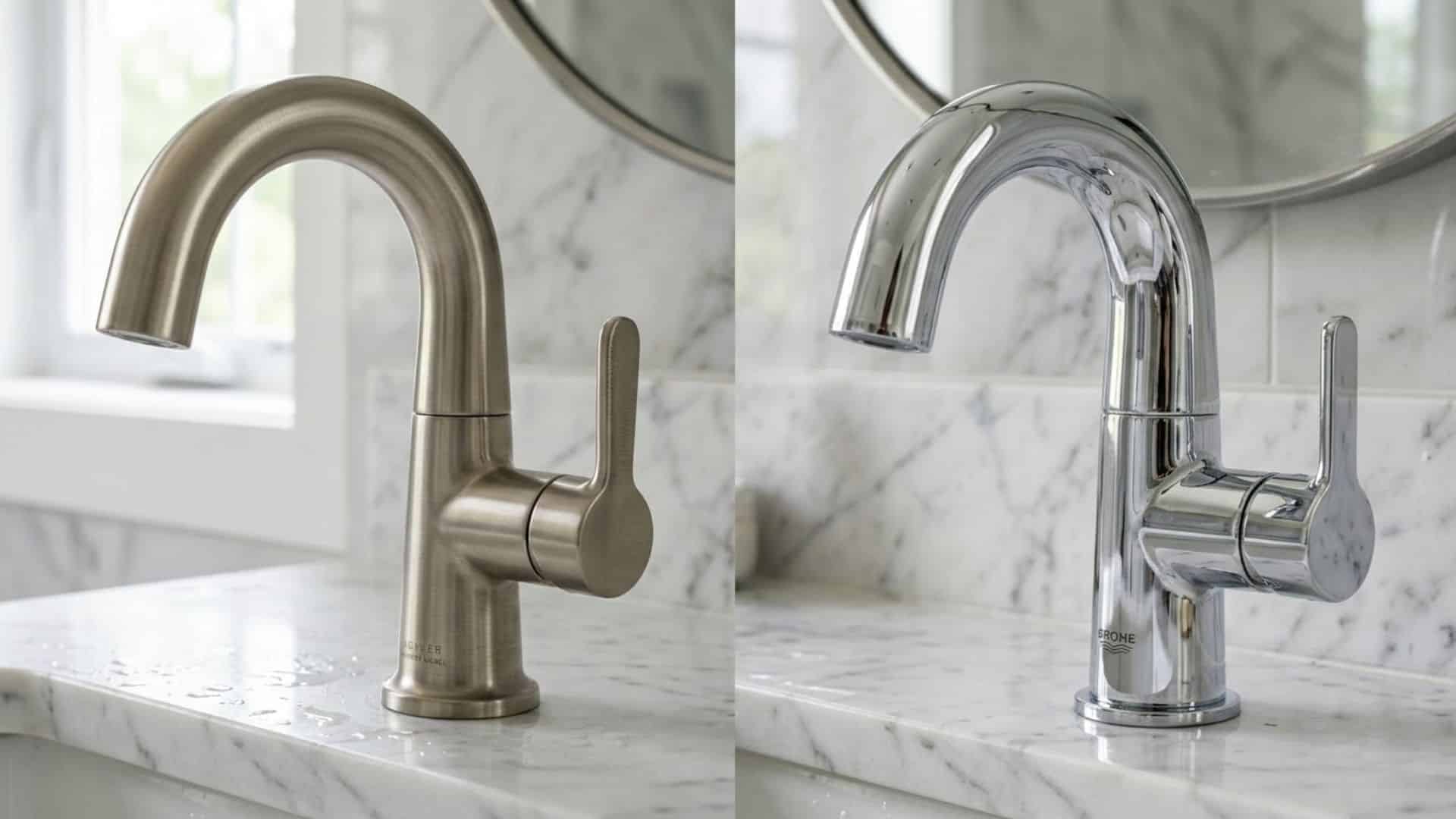
When it comes to choosing the perfect finish for your kitchen or bathroom fixtures, I get how overwhelming it can be.
You’re probably wondering, should I go for the sleek, mirror-like shine of chrome, or does the softer, warmer tone of brushed nickel suit my space better?
The choice between brushed nickel vs chrome isn’t just about the look; there’s also the factor of maintenance, durability, and how each finish will fit with your room’s style.
Even if you’re after a modern, minimalist vibe or a more traditional, cozy atmosphere, the right finish can make all the difference.
In this blog, I’ll walk you through the pros and cons of each option, so you can make a decision that’s just right for you and your home.
Let’s get right in!
Understanding the Differences: Chrome vs Brushed Nickel
When choosing between chrome vs brushed nickel, it’s important to understand the core differences.
Chrome offers a bright, mirror-like finish with a sleek, modern appeal. Its reflective surface enhances light and creates a clean, polished look, often used in contemporary and minimalist designs.
On the other hand, brushed nickel has a softer, matte finish with warm undertones, making it a popular choice for more traditional or transitional spaces.
To help you make the best decision, let’s take a deeper look at what sets brushed nickel and chrome apart.
Even if you’re after a low-maintenance finish or a high-shine look, this guide will give you all the insights you need to choose the perfect fixture finish for your home.
What is Brushed Nickel?
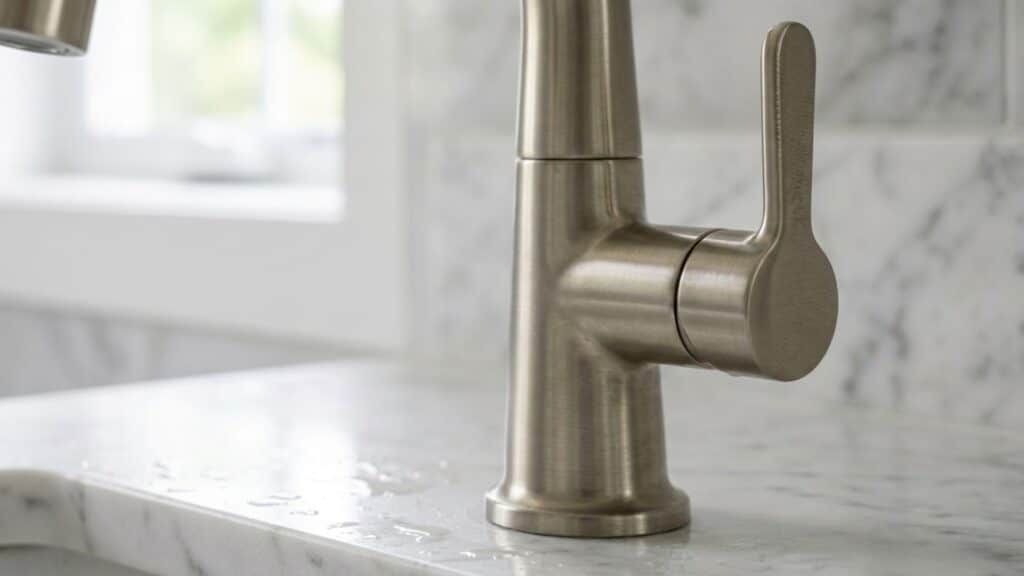
Brushed nickel is a popular metal finish used on many kitchen and bathroom fixtures. It is created by brushing the metal surface with a wire brush or a similar abrasive tool.
This process forms fine lines across the metal, giving the finish a soft, textured appearance instead of a bright shine.
These brushed lines reduce glare and soften the way light reflects off the surface. Rather than a mirror-like reflection, brushed nickel produces a gentle glow with a warm undertone.
Because of this subtle look, it blends easily with many interior styles. It is also practical for busy spaces since the textured surface helps hide fingerprints, smudges, and water spots better than highly polished finishes.
Key Characteristics of Brushed Nickel
Brushed nickel is known for its soft texture and warm tone. Its subtle finish reduces glare and hides fingerprints, making it a practical and stylish choice for home fixtures.
- Created by brushing the metal surface with fine tools
- Has a matte or lightly textured finish
- Features warm undertones that feel softer than chrome
- Fine brush lines reduce glare and soften the shine
- Helps hide fingerprints, smudges, and water spots
- Commonly used for faucets, cabinet handles, shower fixtures, and bathroom hardware
What Is Chrome Finish?
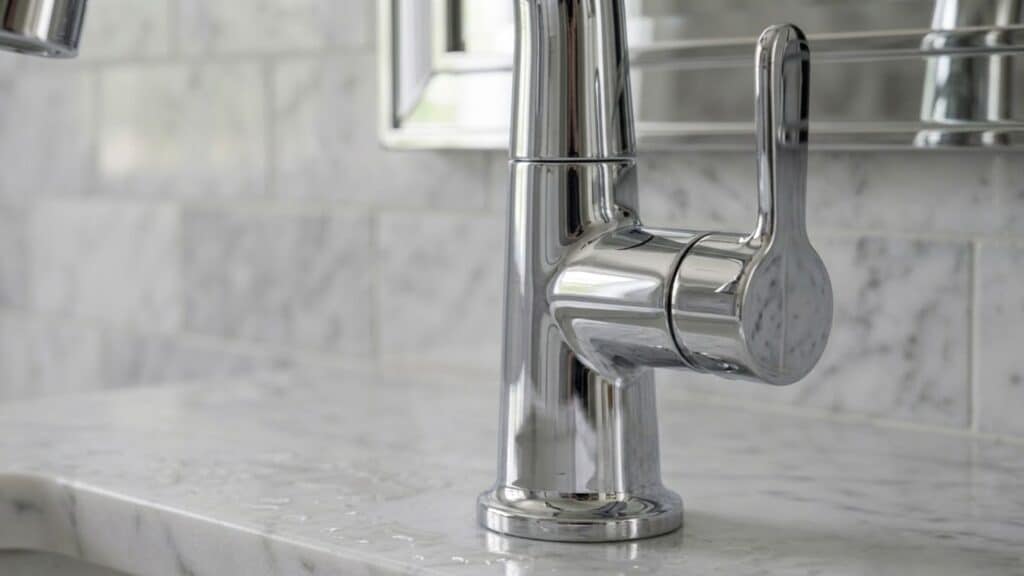
Chrome finish is a metal coating commonly used on kitchen and bathroom fixtures. It is created through a process called chrome plating, where a thin layer of chromium is applied to another metal, such as brass or steel.
This plating helps protect the base metal from corrosion, moisture, and everyday wear.
The coating also gives fixtures a smooth, polished surface that looks clean and attractive. Because the surface is highly reflective, chrome creates a bright, easily catchable shine.
As a result, rooms can appear cleaner and more spacious. Due to its sleek silver color and glossy finish, chrome is widely used in modern kitchens and bathrooms for faucets, showerheads, towel bars, and cabinet hardware.
Key Characteristics of Chrome Finish
Chrome finish stands out for its bright shine and smooth surface. Its reflective look adds a clean, modern feel while offering strong durability and resistance to corrosion.
- Made Through a Chrome Plating Process that Coats Another Metal
- Has a Mirror-Like Reflective Surface
- Features a Bright Silver Color with Cool Undertones
- Reflects Light Strongly, Creating a Clean and Polished Look
- Often Used in Faucets, Shower Heads, Towel Bars, and Cabinet Hardware
- Popular in Modern and minimalist home designs
Key Differences Between Polished Nickel and Chrome
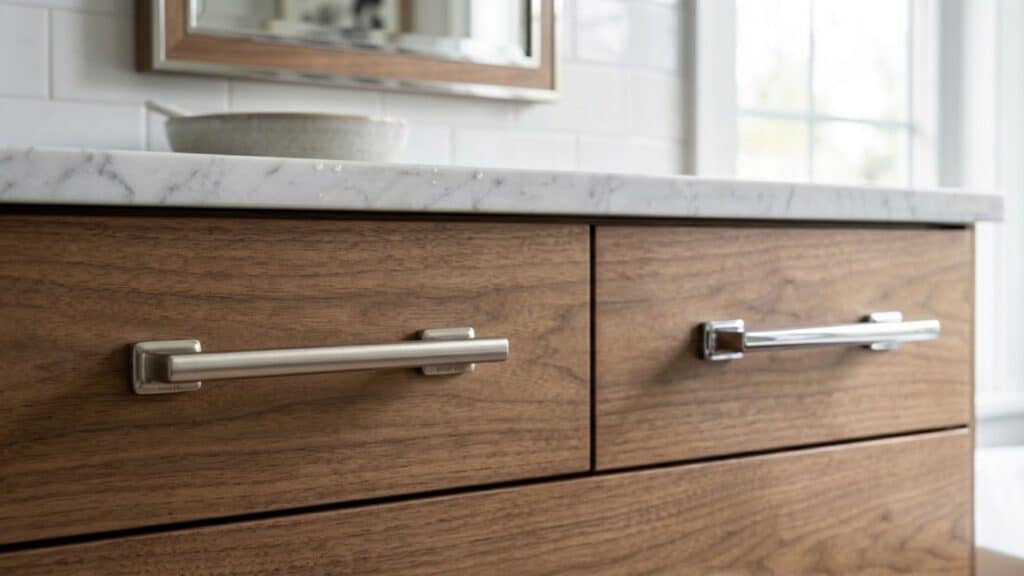
Polished nickel and chrome may look similar at first glance, but they differ in tone, upkeep, durability, and price. Understanding these differences helps homeowners choose the right finish.
1. Appearance and Color Tone
The biggest visual difference between polished nickel and chrome is the color tone.
Polished nickel
It has a warm undertone with a slight golden or champagne tint. Its surface is shiny yet softer than chrome, giving fixtures a classic, refined appearance.
This finish works well in traditional or transitional interiors where warmth is preferred.
Chrome
It has a cooler tone and a bluish-silver appearance. It reflects light strongly and produces a bright, mirror-like shine.
Because of this crisp look, chrome is commonly used in modern and minimalist kitchens and bathrooms where a clean, sleek style is desired.
2. Maintenance and Cleaning
Maintenance is another key difference between polished nickel and chrome finishes.
Polished nickel
It tends to hide fingerprints, smudges, and water spots better because of its warmer tone and slightly softer reflection.
This means it often requires less frequent cleaning to maintain its attractive look. However, polished nickel can develop a natural patina over time, which some homeowners appreciate for its aged character.
Chrome
Easy to clean and highly resistant to corrosion, but its bright reflective surface makes water spots and fingerprints more visible.
As a result, chrome fixtures may need more frequent wiping to keep their shiny appearance in kitchens and bathrooms.
3. Durability and Longevity
Both polished nickel and chrome are durable finishes, but they achieve durability in slightly different ways.
Polished nickel
It is often applied via a thick plating process that creates a strong, long-lasting surface. Over time, it can develop a gentle patina rather than showing harsh wear, which many people see as part of its charm.
Chrome
It is also highly durable because it is applied via electroplating, which adds a thin yet very hard layer of chromium over the base metal.
This coating resists corrosion, rust, and tarnish very well, making chrome fixtures a dependable choice for high-moisture areas like bathrooms and kitchens.
4. Cost and Availability
Price and availability often influence the final choice between polished nickel and chrome.
Polished nickel
Usually costs more because the finishing process is more complex and the demand for this premium look is smaller.
Fixtures in this finish may also be slightly harder to find compared with chrome options.
Chrome
It is typically more affordable and widely available. Many manufacturers produce chrome fixtures in large quantities, which keeps prices lower.
Because of this accessibility and budget-friendly cost, chrome remains one of the most common finishes used for faucets, shower fixtures, and bathroom hardware.
Where Each Finish Works Best
The right finish can look different depending on the room. Lighting, cabinet color, and overall design style often determine whether chrome or brushed nickel works better.
Best Rooms for Chrome
| Room Type | Why Chrome Works Well | Design Tips |
|---|---|---|
| Bathrooms | Chrome’s reflective surface helps bounce light, making small spaces appear larger and cleaner. | Pairs with white cabinets and glass surfaces. Adds a polished, modern look for minimalist designs. |
| Kitchens | Chrome enhances brightness and reflects light, making kitchens appear spacious and clean. | Complements stainless steel appliances and white cabinets. |
| General Design | Chrome’s cool tone adds a sleek, polished touch to contemporary designs. | Pairs well with minimalist spaces and modern elements. Ideal for designs with gray, black, or crisp white tones. |
Best Rooms for Brushed Nickel
| Room Type | Why Brushed Nickel Works Well | Design Tips |
|---|---|---|
| Bathrooms | Soft texture hides fingerprints and water spots, making it practical for busy households. | Ideal for high-traffic areas. Pairs well with wood cabinets and natural stone countertops. |
| Kitchens (Warm-Toned) | Brushed nickel’s soft texture hides marks and provides a practical finish for busy kitchens. | Complements wood cabinets, beige tiles, and natural stone countertops. Blends well with warm color schemes. |
| General Design | The warm undertone makes it less shiny and overpowering, perfect for softer lighting and warm color palettes. | Works well with rustic, traditional, or transitional home styles. Great for spaces with warm color tones and softer lighting. |
How to Choose Between Brushed Nickel and Chrome
Choosing the right finish depends on your home style, daily use, and personal preference. Use this simple checklist to decide which option best fits your kitchen or bathroom.
- Room Style: Modern or minimalist rooms usually suit chrome’s bright shine, while traditional or warm interiors pair better with the softer, matte appearance of brushed nickel.
- Cleaning Habits: Chrome shows fingerprints and water spots more easily, while brushed nickel hides smudges and marks better, making it easier to maintain in busy homes.
- Budget: Chrome fixtures are usually more affordable and widely available, while brushed nickel often costs slightly more because of the finishing process.
- Existing Hardware: Match the finish with cabinet handles, towel bars, and other hardware to create a consistent and balanced look throughout the room.
- Lighting Conditions: Bright lighting highlights chrome’s reflective shine, while softer lighting complements the gentle glow and texture of brushed nickel.
At the End
When I compare brushed nickel vs. chrome, the main differences come down to tone, shine, and maintenance.
Chrome gives off a bright, mirror-like finish that reflects light and creates a clean, modern look, while brushed nickel offers a softer texture with warm undertones, giving spaces a more subtle and classic style.
Both finishes are durable and commonly used for faucets, shower fixtures, and cabinet hardware. The right option for you depends on your design style, budget, and cleaning habits.
In my experience, chrome is usually more affordable and widely available, while brushed nickel does a better job of hiding fingerprints and water spots.
Personally, I’d choose chrome for a sleek, shiny look or brushed nickel for a warmer finish that requires less upkeep.
What about you? Which finish do you prefer? Share your thoughts in the comments!