

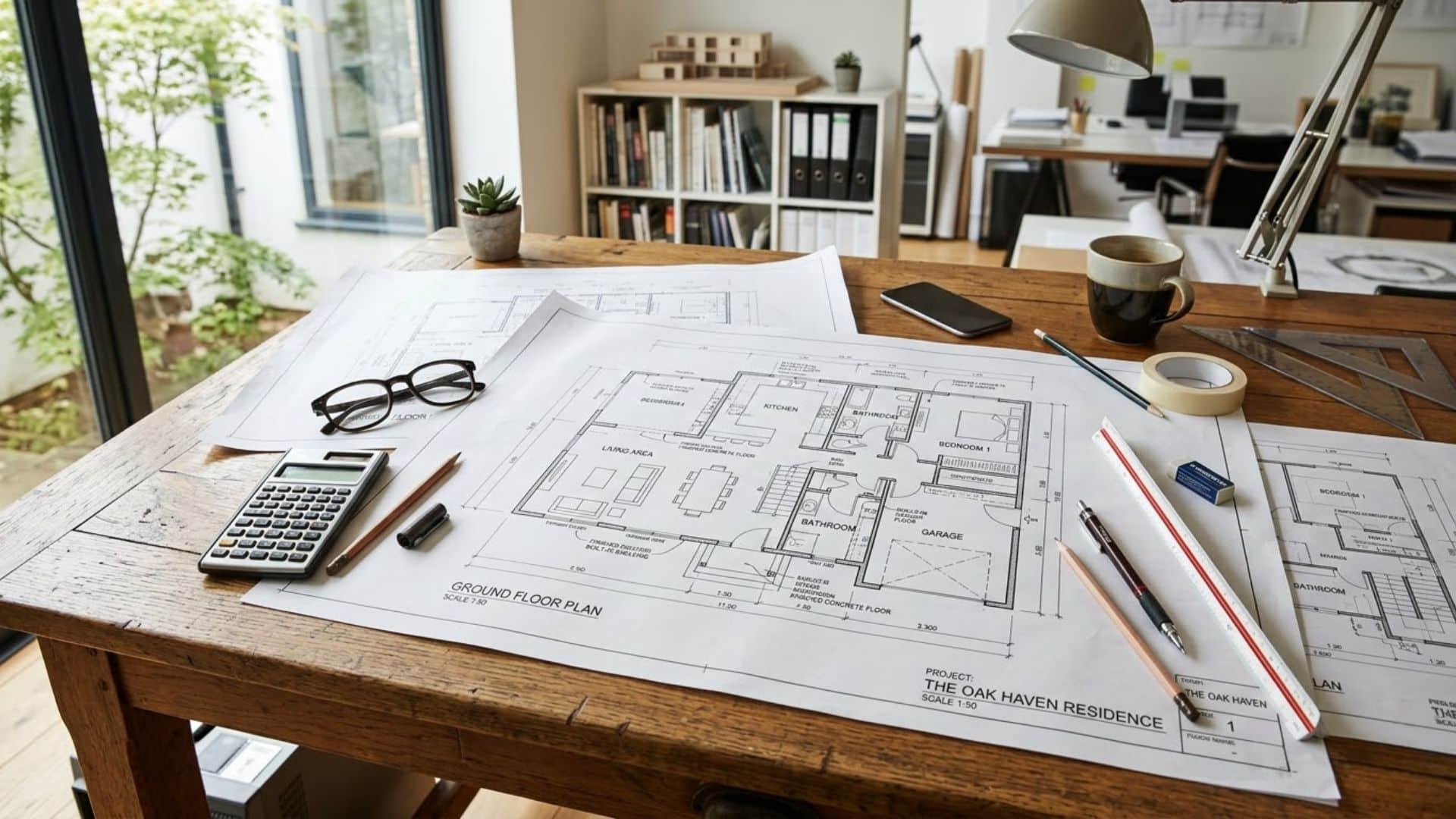
If you’ve ever looked at a floor plan and felt confused by all the symbols and lines, you’re not alone.
I’ve been there too. But understanding floor plan symbols doesn’t have to be tricky.
In this guide, I’ll break down what these symbols mean and how you can use them to make better decisions, whether you’re designing a new space, remodeling, or buying a home.
From kitchens and furniture to electrical lines and plumbing, this article covers all the basic symbols you’ll encounter in floor plans.
You’ll learn how to read and interpret these symbols with ease, making it simpler to understand and plan spaces.
By the end, you’ll feel more confident navigating floor plans and using them to create the space you want.
How Floor Plan Symbols Simplify Architectural Design?
Floor plan symbols serve as a universal language that simplifies communication between designers, builders, and clients.
By using standardized symbols for various elements like walls, doors, windows, and fixtures, these symbols make it easier for all parties to understand the layout and design intent.
Instead of complex descriptions or drawings, symbols make it easy to quickly understand a space’s purpose.
This clear communication helps reduce errors, ensures everyone is on the same page, and streamlines the design and construction process.
In the end, these symbols make complex designs more accessible and efficient to execute.
Different Floor Plan Symbols You Should Know
Floor plan symbols help represent various elements within a building, making it easier for designers, builders, and homeowners to understand and plan spaces effectively.
1. Kitchen Symbols
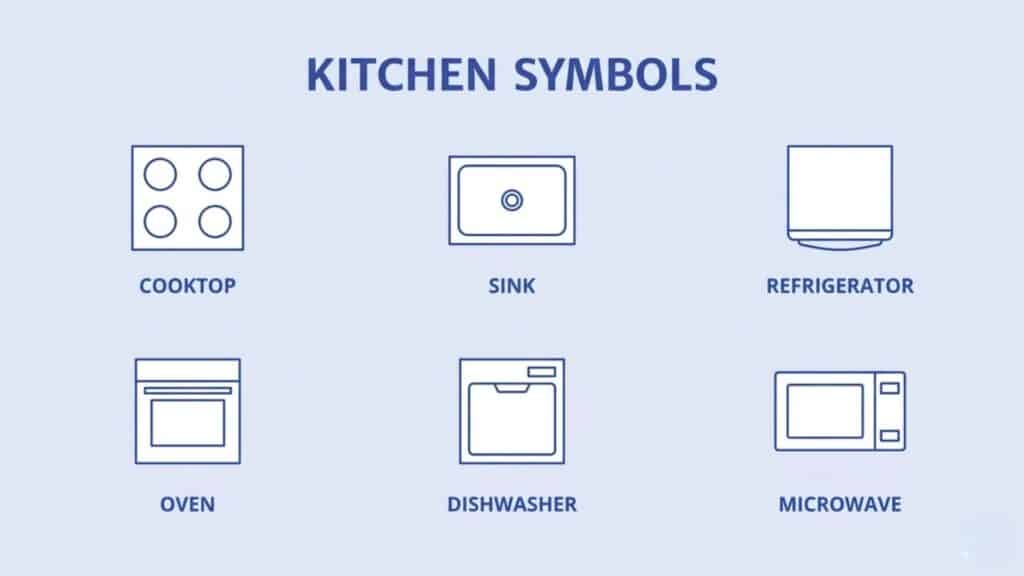
Kitchen symbols represent essential features like appliances and fixtures, offering a clear layout of cooking and food storage areas for designers and homeowners.
Kitchen symbols are crucial in designing a functional kitchen. They provide a visual representation of important components such as stoves, sinks, and refrigerators.
These symbols help ensure proper kitchen layout, increasing efficiency and safety for users.
- Cooktop: Symbol for stove or cooking surface
- Sink: Location of kitchen sink
- Refrigerator: Represents fridge placement
- Oven: Marks oven placement
- Dishwasher: Indicates where the dishwasher is located
- Microwave: Represents the placement of the microwave in the kitchen
2. Furniture Symbols
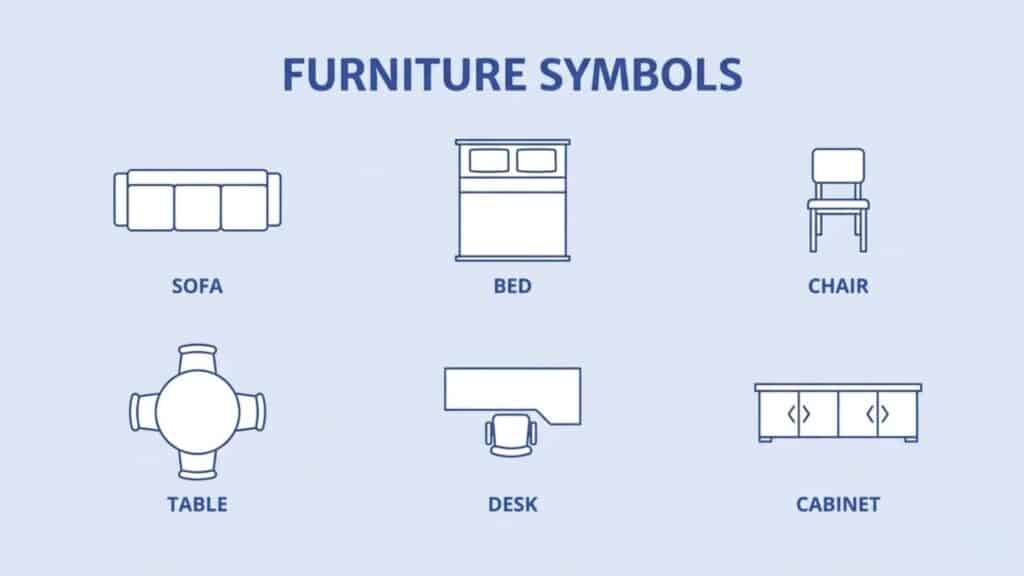
Furniture symbols help visualize how furniture fits into a floor plan, ensuring functionality and flow in living or working spaces.
These symbols assist in planning the arrangement of furniture, contributing to the overall design and layout.
Proper placement of furniture ensures comfort, optimal use of space, and ease of movement.
By considering these symbols, designers can create spaces that are both practical and aesthetically pleasing, allowing for a smooth, well-organized environment that enhances the user’s experience and convenience.
- Sofa: Symbol for seating arrangement
- Bed: Represents the position of beds in bedrooms
- Chair: Denotes placement of chairs
- Table: Marks the position of dining or coffee tables
- Desk: Indicates workspace location
- Cabinet: Represents storage space in living or kitchen areas
3. Electrical and Plumbing Symbols
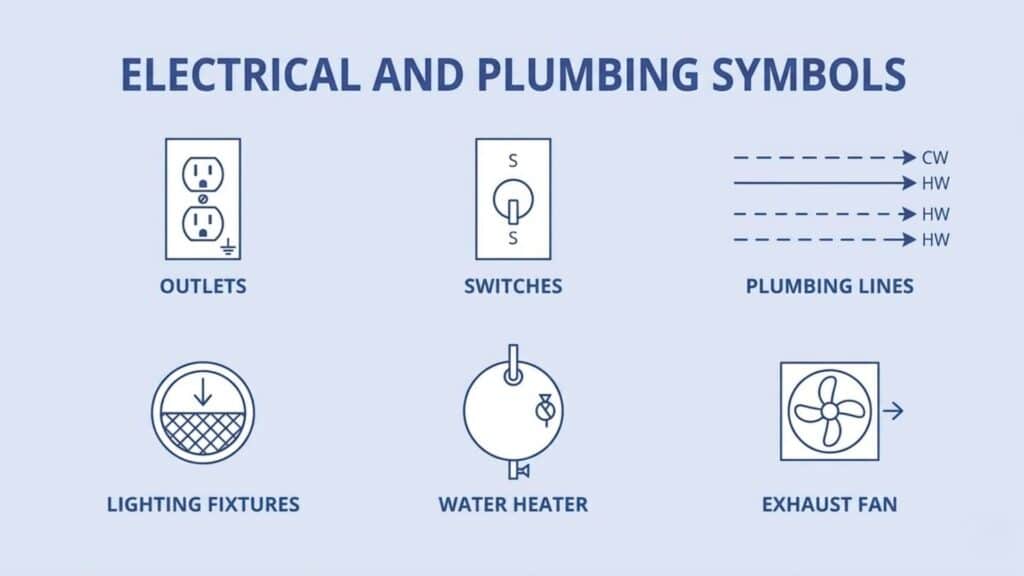
Electrical and plumbing symbols denote essential utility components such as outlets, switches, water pipes, and fixtures, making it easy to plan functional spaces.
These symbols represent the critical utility systems within a building, including electrical wiring, outlets, water pipes, and drainage lines.
They help designers plan for efficient energy and water use while maintaining safety standards.
- Outlets: Denotes electrical outlets in rooms
- Switches: Marks location of light switches
- Plumbing Lines: Water pipes or drainage lines
- Lighting Fixtures: Ceiling or wall-mounted lighting symbols
- Water Heater: Symbol for water heater placement
- Exhaust Fan: Indicates the location of fans for ventilation
4. Structural Symbols
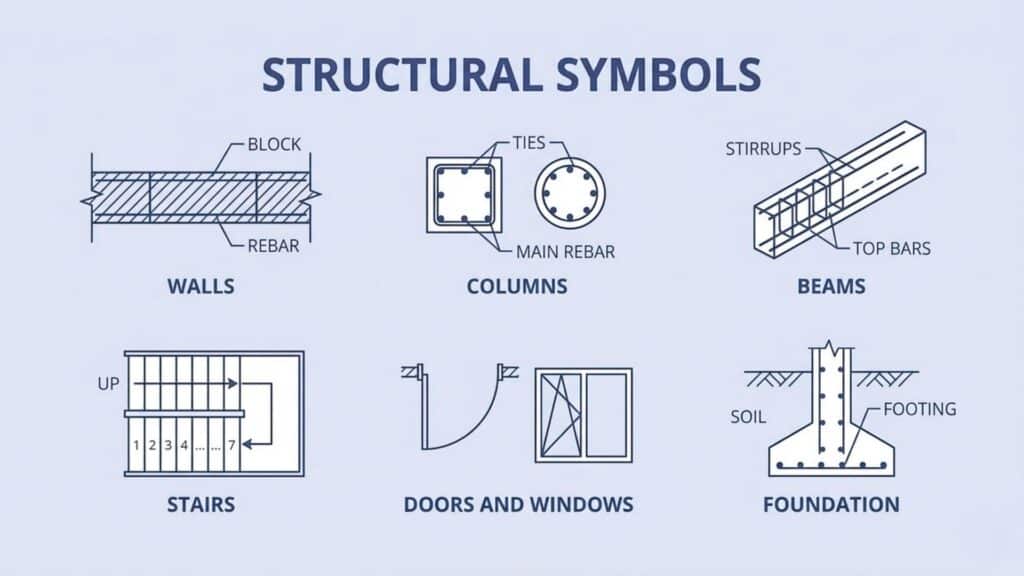
Structural symbols define the framework of the building, highlighting support features like walls, beams, and columns, which are crucial for a stable design.
Structural symbols are essential for showing the foundational elements of a building.
They help architects and builders understand the layout’s stability and support system, ensuring the building’s safety and integrity.
- Walls: Denotes walls and partitions
- Columns: Vertical support structures in buildings
- Beams: Horizontal structural supports
- Stairs: Symbol for stairways or steps in multi-level designs
- Doors and Windows: Entry points and light openings
- Foundation: Indicates the base structure of a building
5. Outdoor and Landscaping Symbols
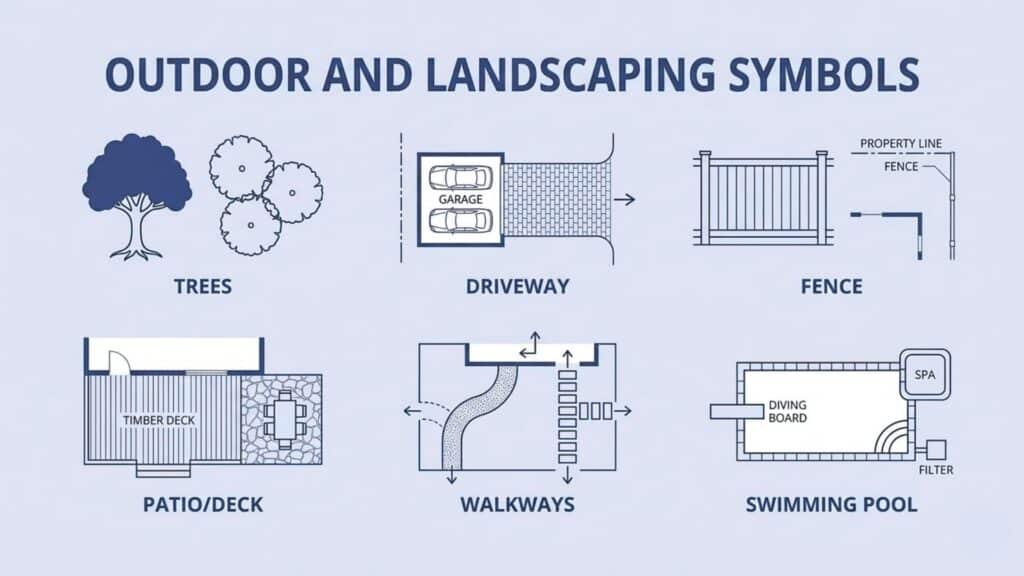
Outdoor symbols help represent garden features, paths, and external elements, creating a cohesive flow between the interior and exterior of a building.
These symbols represent landscaping and exterior elements, enhancing the design of outdoor spaces.
Proper placement of these elements helps to connect the indoor living area with outdoor spaces, promoting a harmonious environment.
- Trees: Indicates tree or plant locations
- Driveway: Symbol for vehicle access paths
- Fence: Denotes boundary fences or walls
- Patio/Deck: Outdoor seating or entertainment areas
- Walkways: Pedestrian paths and trails
- Swimming Pool: Marks the location of a pool in outdoor areas
6. Compass or Direction Symbol
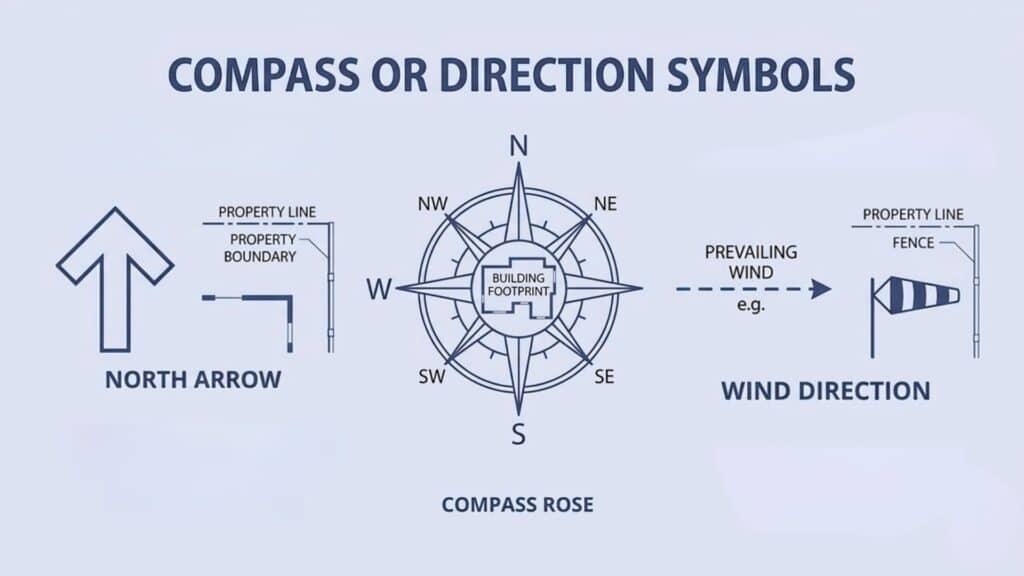
Orientation symbols are important for understanding how a building or property is positioned in relation to cardinal directions.
These symbols are crucial for proper planning of light exposure and climate control.
Knowing north helps plan lighting, wind flow, and energy efficiency based on orientation. These symbols are crucial for larger properties to maximize space and comfort.
- North Arrow: Indicates the direction of north for orientation.
- Compass Rose: Shows all cardinal directions on larger plans.
- Wind Direction: Displays natural wind flow for ventilation planning.
7. HVAC and Mechanical Symbols
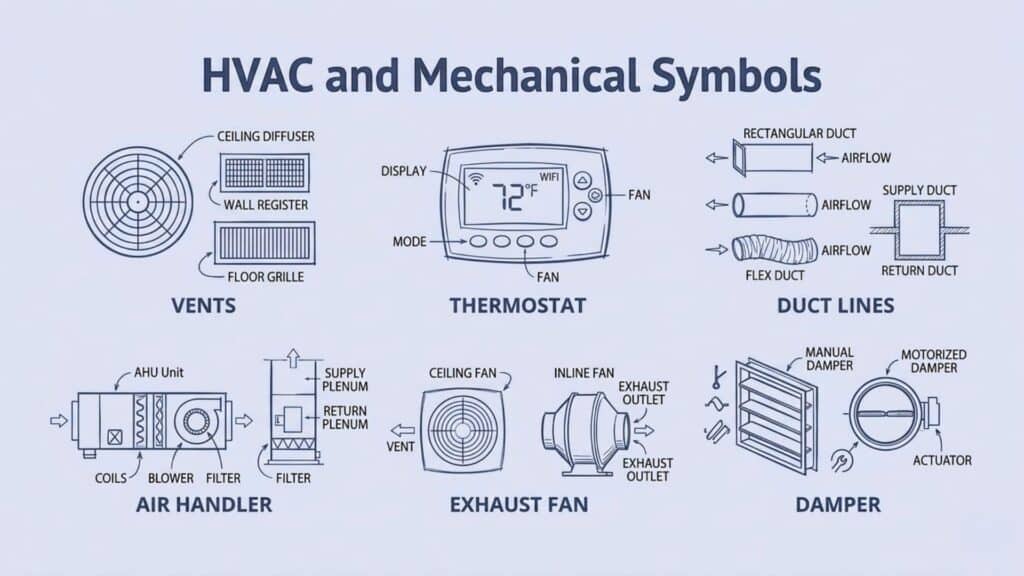
Heating, Ventilation, and Air Conditioning (HVAC) symbols are crucial for the design of building climate control systems.
They are key components that ensure comfort and efficiency in both residential and commercial spaces.
HVAC symbols help designers and builders plan for proper air circulation, heating, cooling, and ventilation to ensure a comfortable environment.
Proper placement of these systems affects the building’s energy efficiency and air quality.
- Vents: Mark air circulation vents for heating and cooling.
- Thermostat: Represents thermostat location for temperature control.
- Duct Lines: Shows air ducts for heating/cooling airflow.
- Air Handler: Indicates the unit that distributes air through ducts.
- Exhaust Fan: Represents fans for ventilation and air quality.
8. Safety and Emergency Symbols
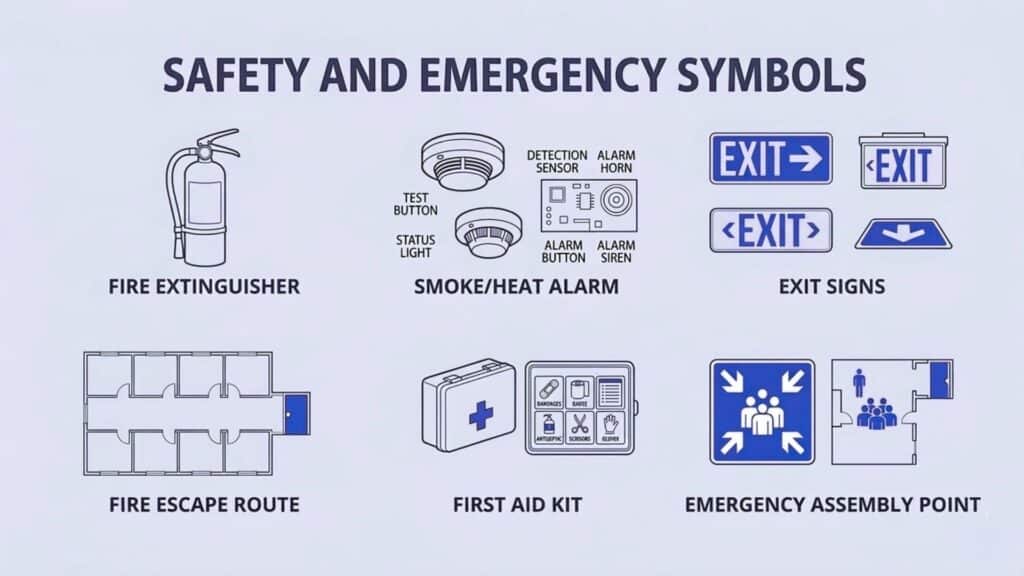
Safety and emergency symbols are essential for meeting health, safety, and fire codes in buildings. They represent vital systems that guide occupants to safety during emergencies.
These symbols mark fire safety equipment, exits, and evacuation routes, ensuring buildings are ready for emergencies.
Particularly in commercial, industrial, and public spaces, these symbols help facilitate quick and safe evacuations while enhancing emergency preparedness.
Proper use of safety symbols is key to creating a secure environment and maintaining code compliance.
- Fire Extinguisher: Marks the fire extinguisher location.
- Smoke/Heat Alarm: Indicates smoke or heat detectors.
- Exit Signs: Shows emergency exits for evacuation.
- Fire Escape Route: Path to follow during a fire emergency.
- First Aid Kit: Location of medical emergency kits.
9. Abbreviation Symbols
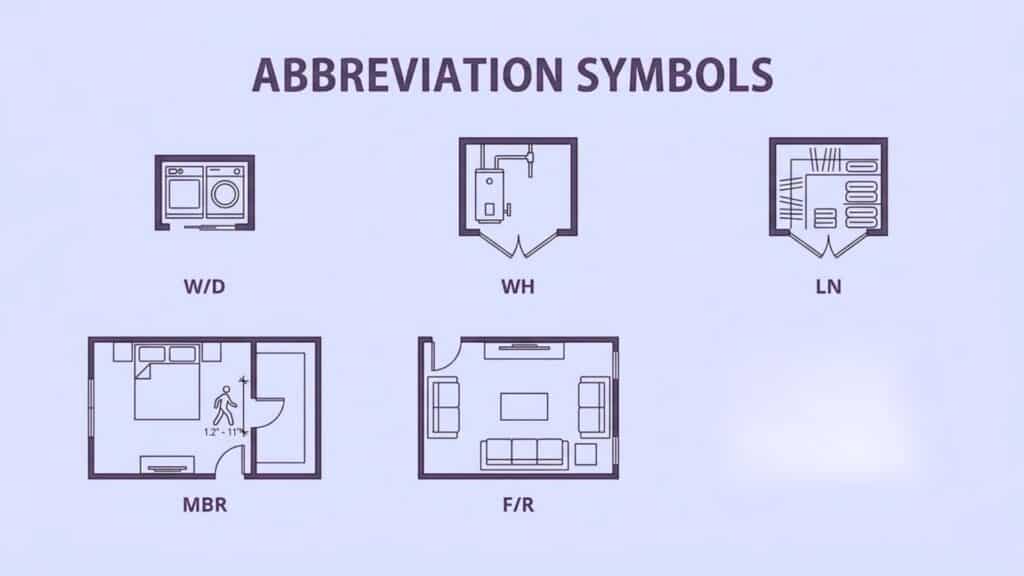
Abbreviation symbols simplify floor plans and save space, especially in tight areas. They represent commonly used features or rooms, allowing designers and builders to communicate more efficiently.
These symbols, though regionally varied, generally follow standardized abbreviations for common areas and features.
This consistency enhances both understanding and workflow, helping professionals quickly grasp key details without needing lengthy descriptions.
Abbreviation symbols enhance the efficiency of creating and reading floor plans, making them essential in design and construction.
- W/D: Washer/Dryer space
- WH: Water Heater
- LN: Linen Closet
- MBR: Master Bedroom
- F/R: Family Room
How to Read and Interpret Floor Plan Symbols?
Reading floor plans involves interpreting symbols, dimensions, and scale to understand the layout of a space. Here’s how to break it down in steps.
- Start with the Orientation: Begin by identifying the plan’s orientation. The north arrow shows direction, helping you understand how the space aligns with the surrounding environment.
- Understand the Symbols: Symbols represent walls, doors, windows, and furniture. Recognizing these allows you to understand the layout and purpose of each space within the plan.
- Check the Dimensions: Dimensions provide measurements for each room. This step helps you gauge the actual size of spaces, ensuring they meet your needs and expectations.
- Consider the Scale: The scale indicates the ratio of the drawing to the real-world size. It helps translate the plan’s measurements to actual room sizes for accurate planning.
- Interpret the Features: Identify plumbing, electrical, and HVAC symbols to understand how utilities are distributed. This ensures the space will be functional and meet your practical requirements.
The Importance of Floor Plan Symbols
Floor plan symbols are vital in architectural design, providing a visual representation of building elements. They simplify communication between designers, builders, and homeowners, ensuring effective planning.
1. Effective Communication in Design and Construction
Floor plan symbols ensure clear communication between architects, designers, and builders, simplifying complex designs and making it easier for everyone to understand a space’s structure and functionality.
With standardized symbols, all parties can interpret the layout, room sizes, and placement of key features.
These symbols eliminate the need for lengthy explanations, enabling faster, more accurate decision-making during the design and construction process.
They bridge the gap between technical and non-technical stakeholders, ensuring alignment throughout the project.
2. Streamlining the Planning Process
Using floor plan symbols streamlines the entire planning process. They help designers and homeowners visualize how different elements will fit within the space, aiding in better layout decisions.
By incorporating symbols for appliances, furniture, and structural features, the design becomes more practical and functional.
These visual cues allow for efficient use of space, reducing placement errors and ensuring that all necessary features are included.
Symbols also make it easier to identify potential issues, such as insufficient space for movement or improper flow, early in the planning phase.
3. Enhancing Space Utilization and Functionality
Floor plan symbols contribute to optimizing the functionality and flow of a space. By representing various elements like walls, windows, and doors, they allow designers to plan the room layout effectively.
This helps in creating functional areas that cater to specific needs, such as storage, workspaces, and relaxation zones.
The correct placement of furniture and fixtures using these symbols ensures that the space will be comfortable, efficient, and aesthetically pleasing.
Moreover, they provide a blueprint for maximizing room dimensions and ensuring smooth movement throughout the space.
4. Facilitating Future Modifications and Renovations
One of the key advantages of using floor plan symbols is their role in future renovations and modifications. They serve as a reference that can be easily adjusted when changes are needed.
Whether updating a kitchen layout or adding new rooms, these symbols provide a clear starting point for the redesign.
Architects and designers can quickly visualize the current structure and propose adjustments without confusion.
Additionally, having a well-documented floor plan with symbols makes coordination easier when hiring contractors or making significant changes to a property.
5. Ensuring Compliance and Safety Standards
Floor plan symbols help ensure that the design complies with building codes and safety regulations.
Many symbols represent safety features, such as fire exits, alarm systems, and structural supports, which are critical for maintaining safety in the building.
They also indicate compliance with accessibility standards, ensuring that spaces are wheelchair-friendly and that necessary clearances are in place.
By incorporating these symbols into the design, architects and builders can avoid costly mistakes, ensure that the space meets all legal requirements, and create a safe environment for its occupants.
Understanding Scale and Proportions in Floor Plans
Understanding scale and proportions in floor plans is crucial for creating a functional space. Scale refers to the size of the elements in the plan compared to their real-life size.
For example, one inch on the floor plan may represent one foot in the actual space.
Proportions focus on how different elements in the design relate to each other. A room’s layout will feel off if the furniture or windows are out of proportion to the room size.
To read a floor plan, always check the scale to understand the true size of spaces and features.
It helps ensure that everything fits as intended. Using the correct proportions also ensures that rooms feel balanced and comfortable.
Both scale and proportions help avoid mistakes when planning or redesigning a space. This is why it’s important to use them correctly for a successful design.
The Role of Floor Plan Symbols in Modern Architecture
Floor plan symbols play a key role in modern architecture by simplifying the design process. These symbols represent different elements like walls, doors, windows, and furniture.
They help architects and builders quickly communicate ideas without needing detailed descriptions.
By using standardized symbols, everyone involved in the project can understand the layout, making collaboration easier.
Symbols save space on blueprints, allowing for clearer designs.
They also help ensure accuracy, reducing mistakes in construction. In modern architecture, floor plan symbols are used not just for building homes but also for offices, schools, and public spaces.
They make the planning process faster and more efficient while ensuring that designs meet all necessary standards and requirements.
Conclusion
Understanding floor plan symbols is more than just a technical skill; it’s about making design and construction easier and more efficient.
With the right knowledge, you can confidently navigate any floor plan, whether you’re designing your dream home, renovating a space, or buying a property.
By recognizing and interpreting symbols, you can ensure that spaces are both functional and well-planned.
I hope this guide has made floor plan symbols clearer. If it helped or you have experiences to share, I’d love to hear from you!
Drop a comment below and share your thoughts or any questions you might have.
Let’s keep the conversation going and help each other master the art of reading floor plans!