

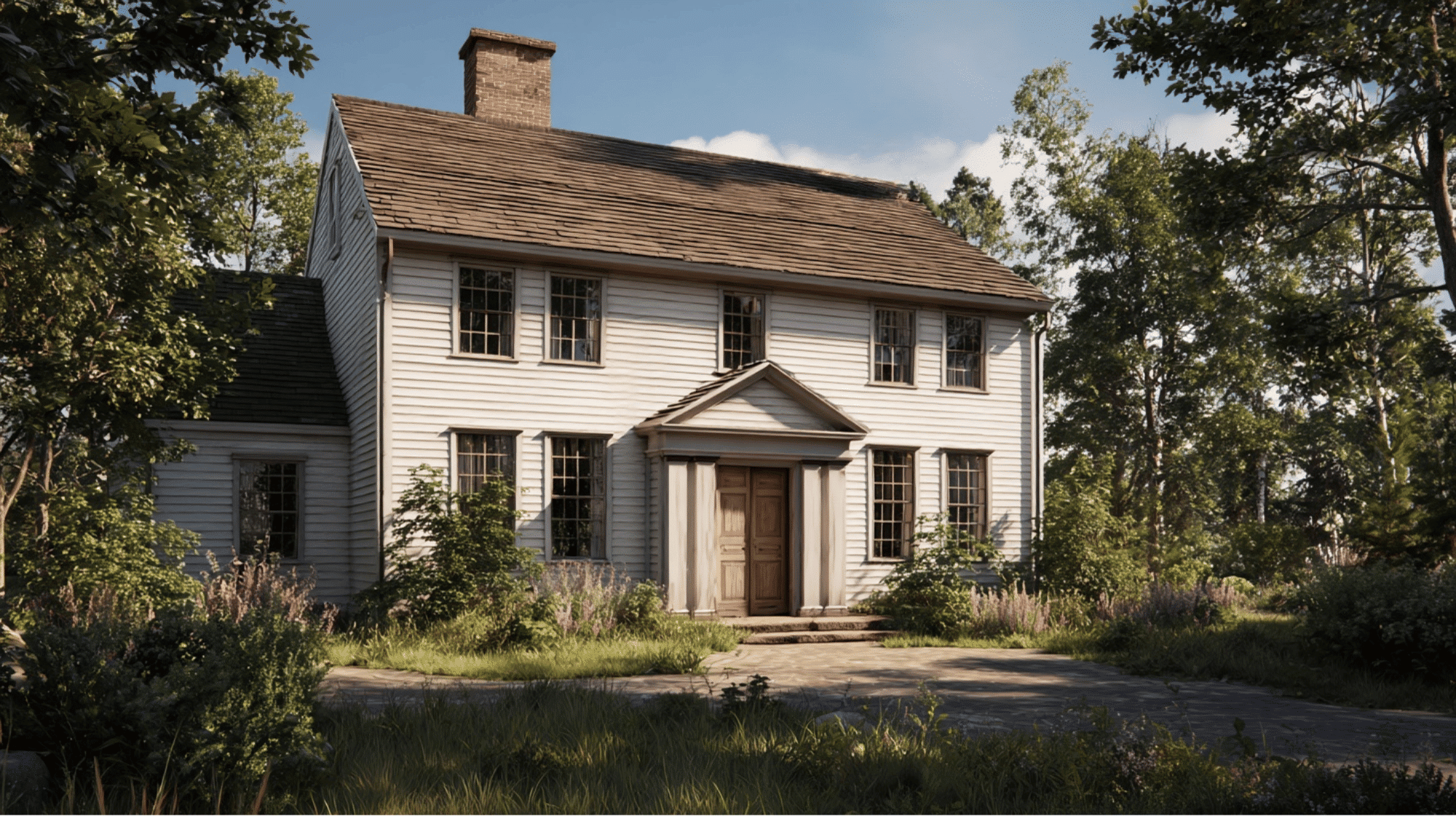
Ever noticed those charming homes with the long, sloping rooflines that seem to touch the ground?
They look like something straight out of a history book, and that’s because they are. These houses carry stories from colonial America, built by folks who knew a thing or two about practical design.
The distinctive shape wasn’t just for show; it served real purposes that made life easier in those early settlements.
But what exactly makes these homes so special, and why do they still catch our eye today? Let’s take a closer look at what sets them apart.
What is a Saltbox Style House?
A saltbox style house is a traditional American home design that first appeared in New England during the 1600s.
The name comes from its resemblance to wooden boxes that stored salt back in colonial times. What makes it stand out is the asymmetrical roofline; short in the front, dramatically long in the back.
This creates a two-story facade at the front and a single-story facade at the rear.
Early settlers built these homes with hand-hewn timber frames and clapboard siding. The style became a practical solution for growing families who needed more space.
The History and Origins of the Saltbox Style House
The saltbox house has roots that stretch back to 17th-century colonial New England.
Settlers brought building traditions from England but adapted them to fit the harsh American climate and available materials.
These homes started appearing around the 1650s in Massachusetts and Connecticut. The distinctive sloped roof wasn’t part of the original plan, though.
Most saltbox houses began as simple two-story structures. When families needed extra room, they added a lean-to extension at the back. This created that signature long, sloping roofline.
The design proved so practical that builders started constructing new homes with the saltbox shape from the ground up. By the early 1700s, this style had become a staple of colonial architecture.
Traditional Exterior Characteristics of a Saltbox House
The traditional exterior of a saltbox house reflects early American practicality, featuring simple materials, weather-resistant forms, and understated details shaped by climate, function, and colonial building traditions.
1. Wood Clapboard Siding
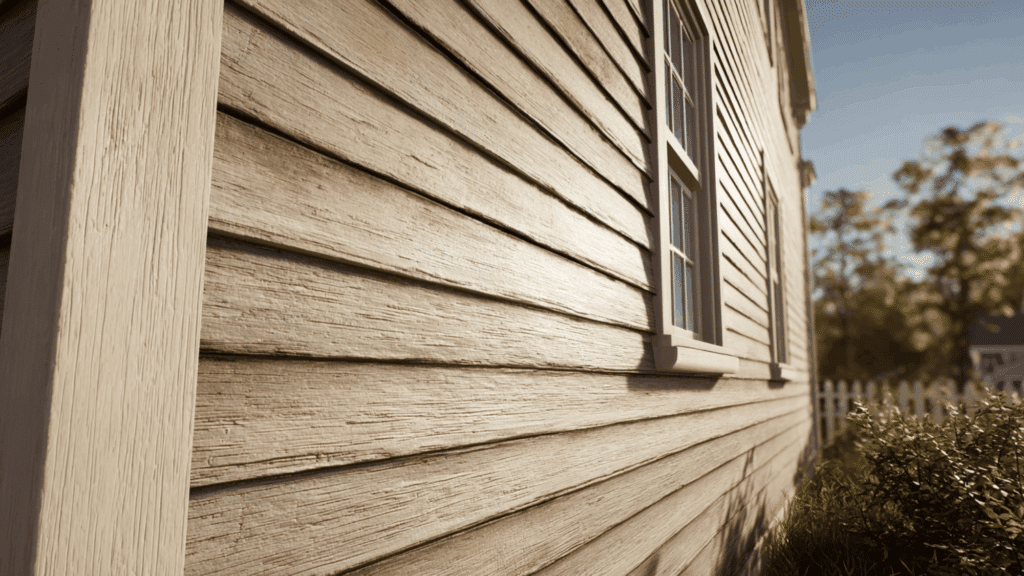
Wood clapboard siding is one of the most recognizable exterior features of a saltbox house style.
Made from overlapping horizontal wooden boards, it was valued for affordability, availability, and effective weather protection. Clapboards helped shed rain and snow while allowing the house to breathe naturally.
Traditionally painted in muted or earthy tones, this siding reinforced the saltbox house’s simple, utilitarian appearance while offering durability in harsh New England climates.
2. Small Multi-Pane Windows
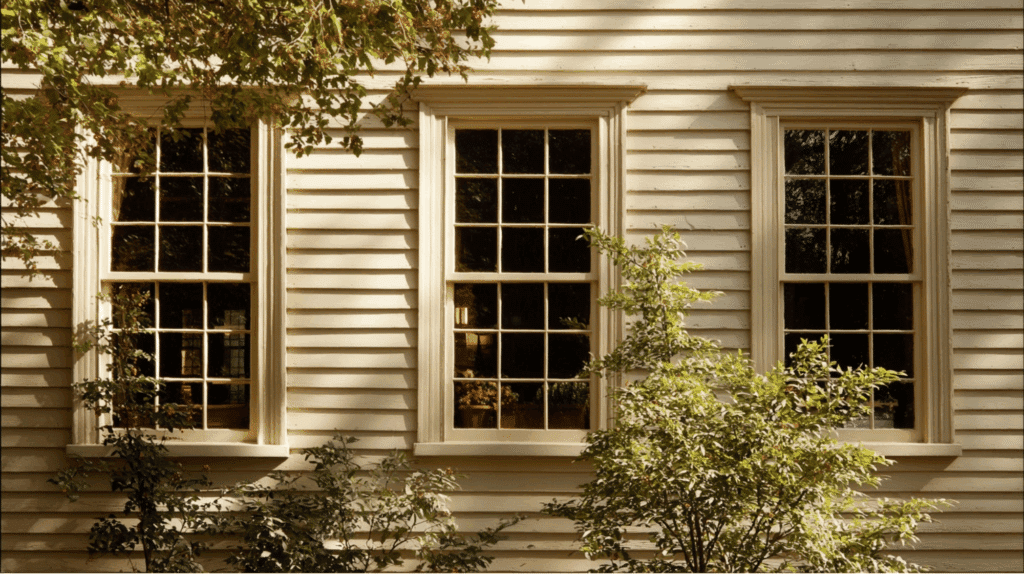
Small multi-pane windows are a defining element of the saltbox house exterior.
Early glassmaking limitations required windows to be divided into multiple panes, resulting in symmetrical, grid-like designs. These windows reduced heat loss, improved structural strength, and allowed natural light without compromising insulation.
Their modest size and placement contribute to the saltbox style house’s balanced, practical façade while reinforcing its historic colonial character.
3. Steep Gable Roof
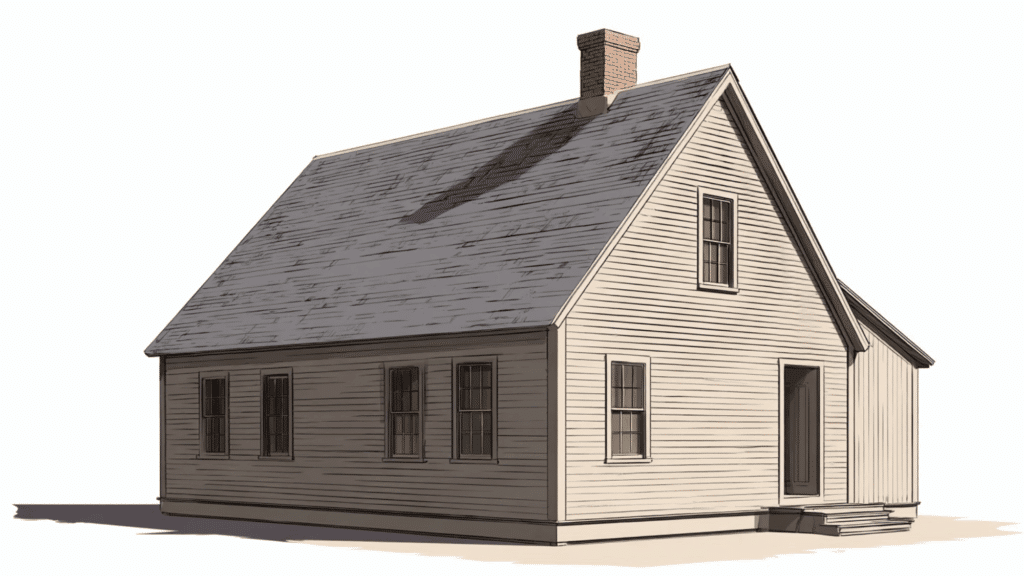
The steep gable roof is the most distinctive architectural feature of a saltbox house. Its asymmetrical design, with a short front slope and long rear slope, efficiently sheds snow and rain.
This roof form also enhanced interior heating efficiency by reducing exposed wall surfaces.
Designed for function rather than decoration, the steep gable roof defines the saltbox house style and sets it apart from other colonial homes.
4. Minimal Ornamentation
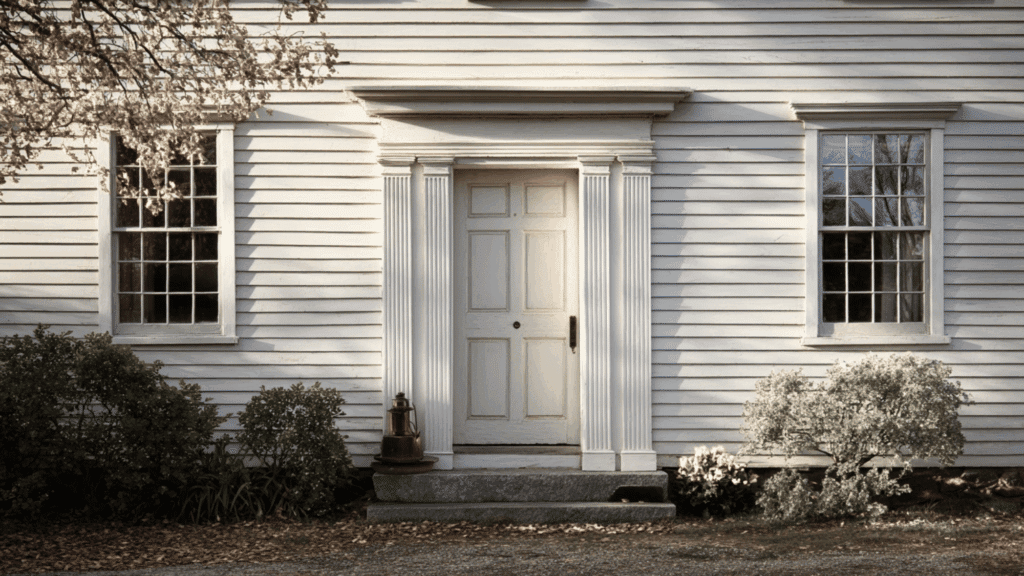
Minimal ornamentation reflects the practical mindset behind the saltbox house style. Decorative elements were intentionally limited, emphasizing function over visual excess.
Exteriors typically lack elaborate trim, columns, or embellishments, focusing instead on clean lines and structural efficiency. This restrained design approach aligned with colonial values of simplicity and self-sufficiency, giving the saltbox house its timeless, honest, and unpretentious exterior appeal.
Interior Layout of a Classic Saltbox House
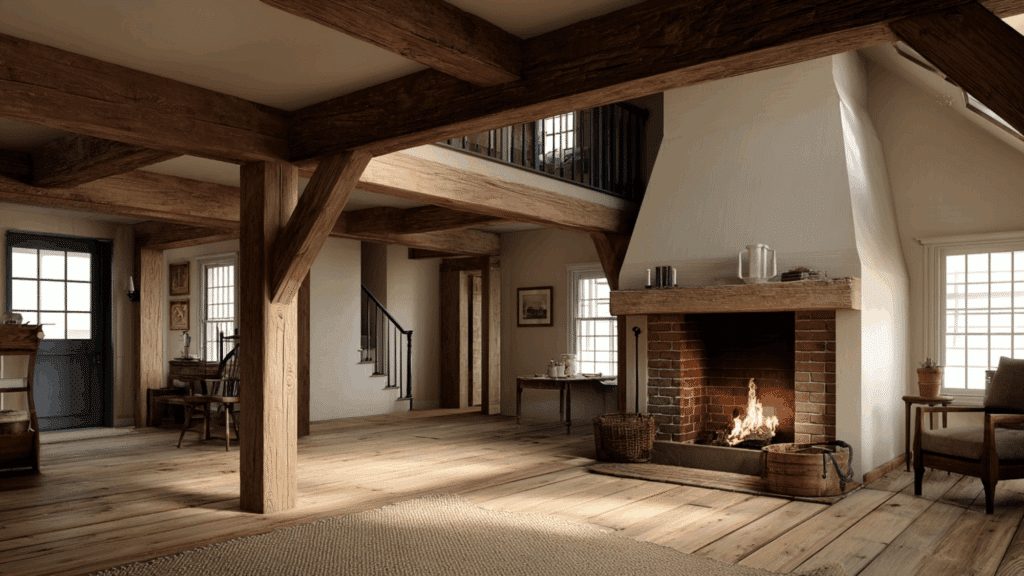
The interior layout of a classic saltbox house was designed for efficiency, warmth, and practicality, reflecting colonial lifestyles through compact spaces, functional room arrangements, and heat-centered planning.
1. Central Chimney Floor Plan
A central chimney floor plan formed the core of the saltbox house interior.
Positioned at the center of the home, the chimney connected multiple fireplaces, efficiently distributing heat to surrounding rooms. This layout reduced fuel use and improved comfort during harsh winters.
The chimney also influenced room arrangement, creating compact, purpose-driven spaces that maximized warmth and minimized heat loss throughout the house.
2. Room Placement and Function
Room placement in a saltbox house was carefully planned around daily colonial life.
Common areas such as the kitchen and keeping room were located near the central chimney for warmth and accessibility. Sleeping quarters were typically placed upstairs or in smaller adjacent rooms.
Each space served a clear function, reflecting the need for efficiency, privacy, and practicality rather than decorative or open-concept living.
3. Low Ceilings and Narrow Staircases
Low ceilings and narrow staircases were common interior features of classic saltbox houses.
Lower ceiling heights helped retain heat, making rooms warmer and more energy-efficient during cold seasons. Narrow staircases conserved space within the compact footprint of the home.
While these features may feel restrictive by modern standards, they played a crucial role in maintaining warmth and functionality in colonial-era living.
4. How Interiors Supported Colonial Living
Saltbox house interiors were designed to support self-sufficient colonial lifestyles. Layouts emphasized warmth, durability, and efficient use of space to accommodate cooking, sleeping, and daily labor under one roof.
Materials were locally sourced, and rooms were multipurpose, adapting to seasonal needs.
This practical interior design allowed families to live comfortably despite limited resources and challenging environmental conditions.
Pros and Cons of Living in a Saltbox Style House
| Pros | Cons |
|---|---|
| Unique architectural charm with historical value | Sloped rear roof limits upper-floor headroom |
| Excellent resistance to harsh weather conditions | Interior layouts can feel restrictive |
| Energy-efficient design due to the central chimney | Renovations may require structural adjustments |
| Simple, durable construction materials | Limited natural light in some rooms |
| Strong curb appeal and uniqueness | Modern layouts are harder to achieve |
Tips to Bring Saltbox House Style into Your Home Today
Bringing saltbox charm into modern homes means blending colonial character with today’s comfort. Here are practical ways to capture that classic appeal.
- Install wide-plank wood flooring in oak or pine to recreate the authentic colonial feel underfoot.
- Add exposed ceiling beams or dark-stained wooden trim to highlight the structural simplicity of traditional saltbox interiors.
- Choose a muted color palette with whites, grays, and earth tones that reflect the natural materials colonists used.
- Incorporate a large central fireplace or wood-burning stove as a focal point, just like in original saltbox homes.
- Use simple, functional furniture with clean lines and minimal ornamentation to honor the practical colonial aesthetic.
- Consider adding board-and-batten or clapboard siding accents to exterior walls for instant saltbox character
Conclusion
The saltbox house stands as more than just an architectural style; it’s a testament to American ingenuity and adaptability.
These homes solved real problems for colonial families while creating a look that still turns heads centuries later.
Today, homeowners can draw inspiration from this historic design, whether renovating an original saltbox or simply borrowing elements for modern spaces. The beauty lies in the simplicity and function that defined colonial life.
So if you’re drawn to homes with character and history, the saltbox style offers changeless appeal that’s worth considering for your next project.