

Countertop height plays a big role in how a kitchen or bathroom feels and works. Many people do not think about height until they start planning a remodel or new build.
A surface that is too low can cause back strain. One that is too high can feel awkward during daily tasks.
That is why standard sizes exist. Builders and designers follow these sizes for comfort, safety, and ease of use.
Countertop height also affects storage, appliance fit, and overall flow in a space. Small changes can make a big difference over time. This guide explains countertop height in a clear and simple way.
Understanding Standard Countertop Height
Countertop height is the distance from the floor to the top surface of a counter. This height affects how people cook, clean, wash their hands, and complete daily tasks.
A counter that feels right helps reduce strain, while a poor height can cause discomfort over time.
Most homes follow a standard size because it works well for everyday use. This is known as the standard countertop height.
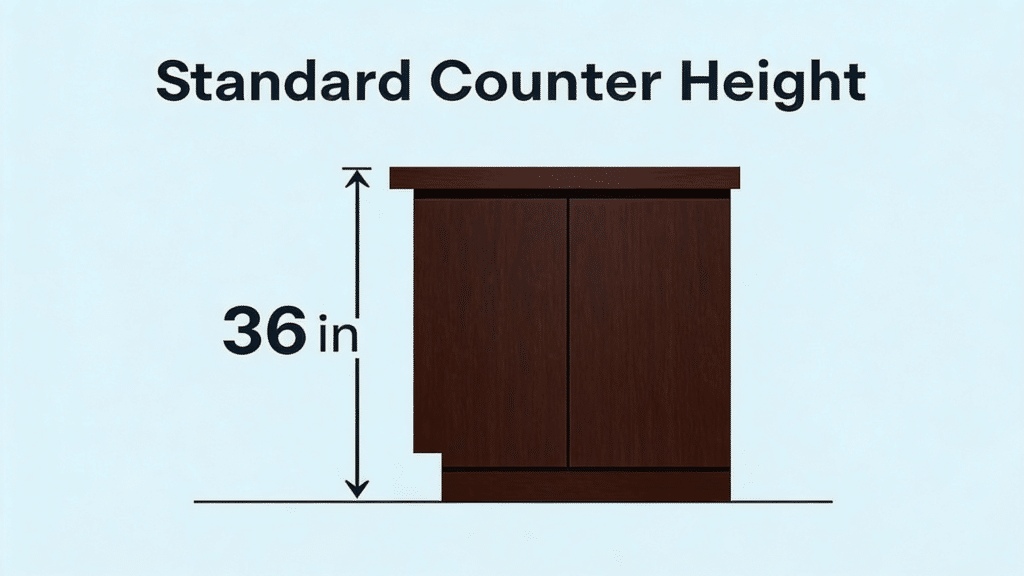
In most homes, that height is 36 inches, including the countertop material. This size has been used for many years because it fits most adults and works well with cabinets and appliances.
Base cabinets, sinks, stoves, and dishwashers are designed to match this height, which helps keep kitchen and bathroom layouts practical and straightforward.
Standard Countertop Height by Use and User Type
Countertop height can change based on where the counter is placed and who uses it. Below are common countertop height guidelines for kitchens, bathrooms, and different user needs.
For Kitchens
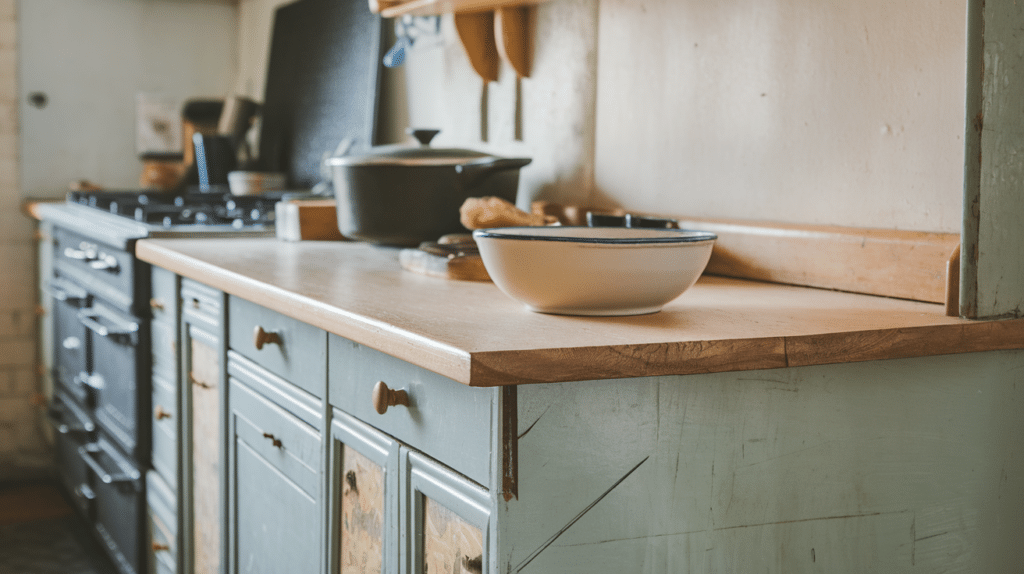
In kitchens, the standard countertop height is almost always 36 inches. This height supports many tasks, such as:
- Chopping food
- Mixing ingredients
- Using small appliances
- Washing dishes
Kitchen counters often see heavy daily use. A good height helps reduce wrist, shoulder, and back strain. Most kitchen islands also follow the same height, unless they include seating or a special work area.
Kitchen Island
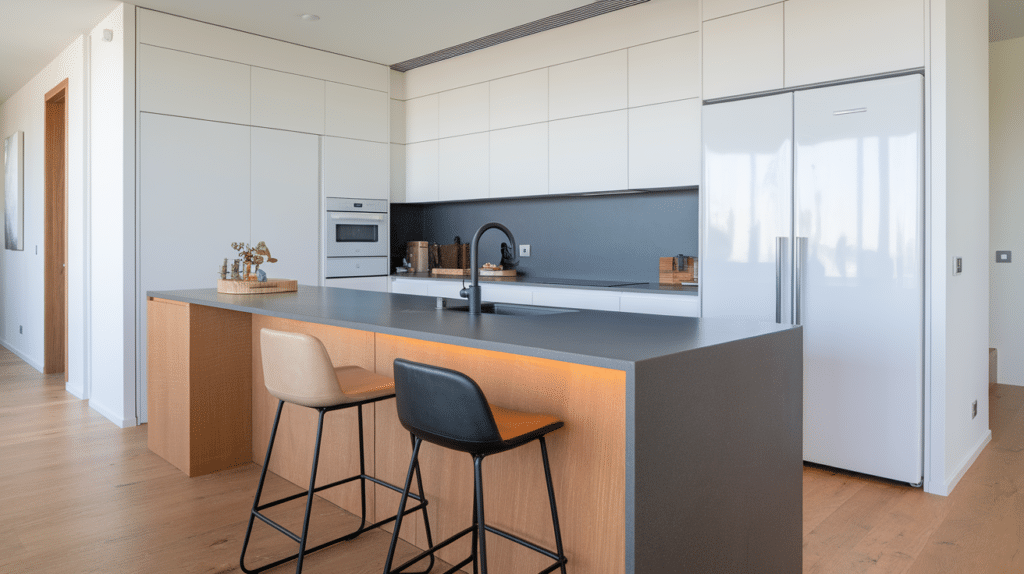
Kitchen islands can have more than one height. The main work surface is usually the same as the standard countertop height of 36 inches.
Some islands include raised or lowered sections:
- 36 inches for food prep
- 42 inches for bar seating
- 30 inches for seated work areas
The main surface still follows the standard size, so it lines up with other counters.
For Bathrooms
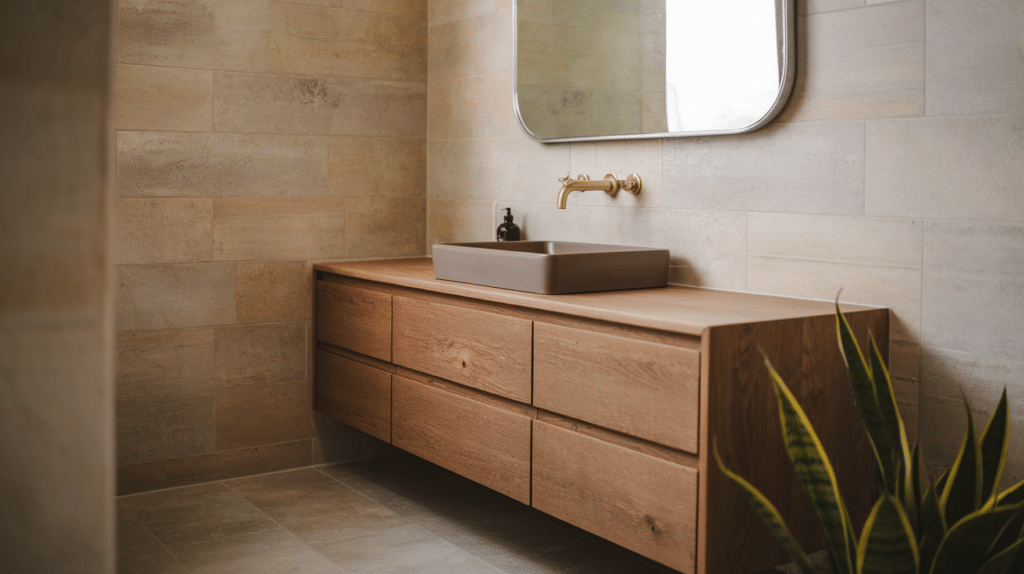
Bathroom counters also follow the standard countertop height of 36 inches in many modern homes.
Bathroom counter height affects comfort when brushing teeth, washing hands, or using the sink. Taller counters are now more common because they reduce bending.
Bathroom vanities can vary more than kitchen counters. Common heights include:
- 30–32 inches: Older homes or children’s bathrooms
- 34–36 inches: Modern standard countertop height
- 36+ inches: Custom or tall-user designs
The standard countertop height is often chosen for master bathrooms because it feels more comfortable for adults.
For Children
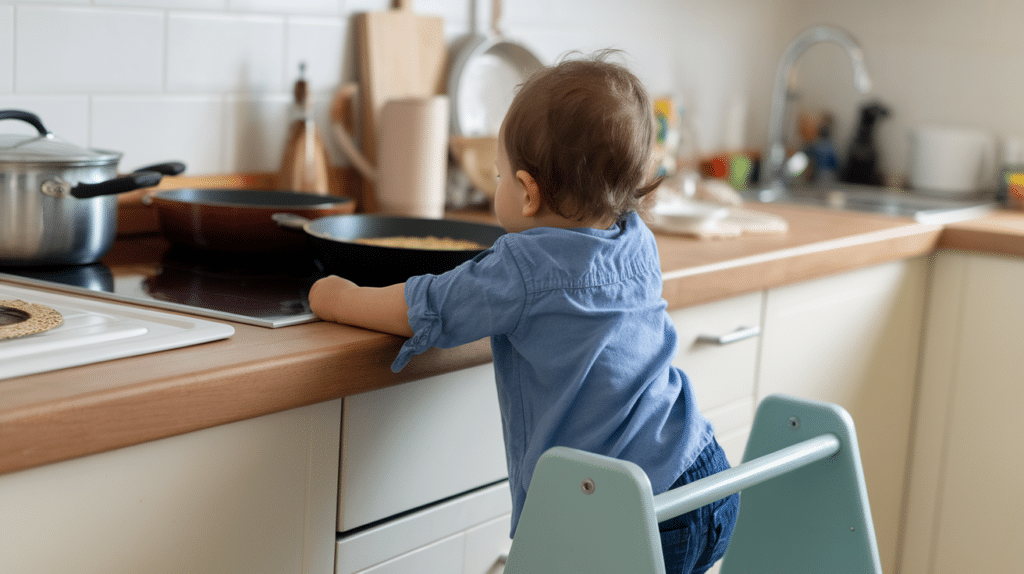
Children often struggle with full-height counters. In homes with young kids, parents may add:
- Step stools
- Lower work surfaces
- Adjustable seating
Lower counters are not usually permanent because children grow quickly. The standard countertop height still works best long term.
For Taller People

Taller users may find standard counters slightly low. Over time, this can cause back strain. Some solutions include:
- Slightly taller counters (37–38 inches)
- Raised cutting boards
- Custom work zones
Still, many tall people adjust well to the standard countertop height, especially in shared homes.
For Shorter People
Shorter users may feel that 36 inches is too high. This can strain shoulders and arms.
Possible solutions include:
- Pull-out cutting boards
- Lower sections in islands
- Using thinner countertop materials
Even so, many shorter people still choose the standard countertop height to match cabinets and appliances.
ADA Countertop Height Guidelines
Homes designed for accessibility often follow ADA rules. These rules support people who use wheelchairs.
ADA countertop guidelines include:
- Maximum height of 34 inches
- Open space below for knee clearance
- Reach-friendly depth
These designs may differ from the standard countertop height, but they are essential for safe access.
How Countertop Height Affects Kitchen Layout
Countertop height affects cabinets, countertop thickness, appliances, and backsplash spacing. The standard countertop height keeps everything aligned and easy to install.
| Area | Key Impact |
|---|---|
| Cabinets | Base cabinets are 34.5 inches tall. With the counter added, the total height becomes 36 inches, the standard size. |
| Counter Thickness | Thicker counters can raise the final height. Cabinets are often adjusted to keep the standard countertop height. |
| Appliances | Most appliances are made to fit under or line up with a 36-inch counter. |
| Backsplashes | Standard height keeps backsplash spacing even and simple. |
How to Measure Countertop Height
Measuring countertop height is simple and only takes a few steps. Accurate measurement helps confirm if a counter follows the standard countertop height.
- Place a tape measure flat on the floor
- Measure straight up to the top surface of the counter
- Include the countertop material in the measurement
- Make sure the tape stays straight and vertical
- Check more than one spot to confirm accuracy
Countertop Height and Home Resale Value
Countertop height can affect home resale value because buyers expect standard sizes when viewing a home.
Counters that are too high or too low may feel uncomfortable or out of place to new owners.
Using the standard countertop height helps a home appeal to more buyers, fit modern design trends, and reduce the need for costly changes after purchase.
A familiar and comfortable layout makes a space feel easier to live in, which can support long-term value and make the home more attractive on the market.
To Conclude
Countertop height may seem like a small detail, but it influences many parts of a home. It affects posture, reach, storage, and how smoothly daily tasks are completed.
Choosing the right height also supports better flow between counters, cabinets, and appliances.
Thoughtful planning at this stage can improve comfort and function for years. Before finalizing any design, review how the space will be used and who will use it most often.
Take time to measure carefully and review layout needs. Use this information to make confident choices and create a space that works well every day.