

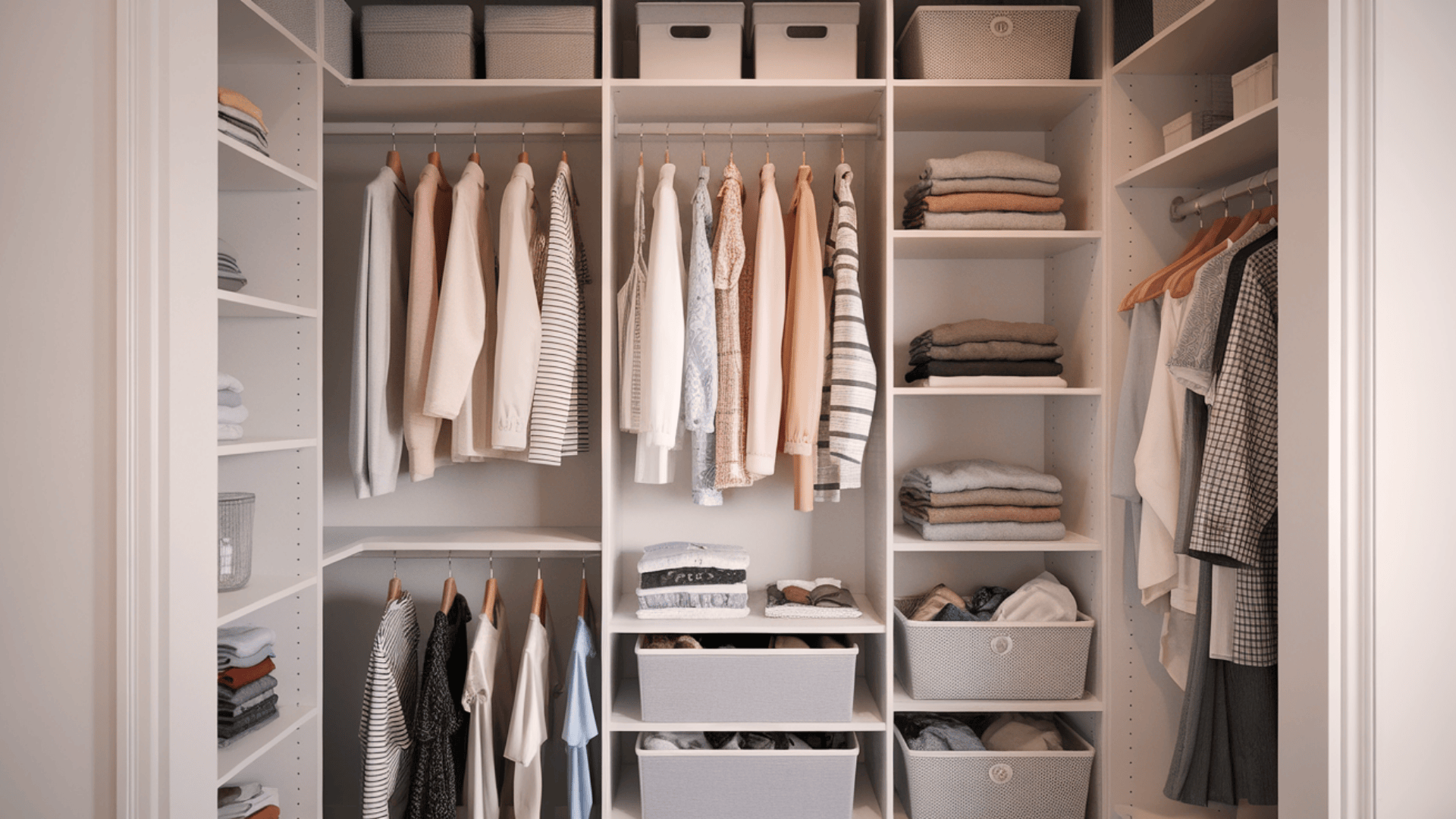
Small closets fill up fast, and I learned that the hard way while figuring out how to organize a small closet with too many clothes.
One day it feels fine, and the next, nothing fits. You’re left staring at clothes with nothing to wear.
I know this struggle well, and I realized you can make things work with the space you already have. You just need a better system that feels realistic for everyday life.
In this article, I share simple ways to sort, store, and manage clothes without stress.
I also share tips I use myself and advice from online forums. These ideas are easy to follow and don’t require fancy tools or big spending.
If your closet feels packed and messy, this guide will help you take control and make your space work better for you.
Why Small Closets Get Overcrowded so Fast?
Small closets get overcrowded fast because a few everyday habits add up over time.
Impulse buys play a big role. You grab items on sale or “just in case,” and they quietly take over space.
Seasonal clothes also stick around longer than they should, even when you’re not wearing them. Without a clear system, they pile up. Limited storage makes things harder, since small closets don’t forgive clutter.
Another issue is putting things back quickly instead of properly, which turns into messy stacks and packed hangers.
Clothes you rarely wear stay mixed in with daily outfits, so everything feels full.
Over time, these small choices create a crowded closet without you noticing. None of this happens overnight. It’s just normal life.
The good news is that once you understand why it happens, it’s easier to fix the problem and make better use of the space you already have.
Top Tips to Organize a Small Closet with Lots of Clothes
These tips focus on simple changes that make a crowded closet easier to use. Each one is practical, realistic, and meant for everyday life.
1. Take Everything out Before You Start
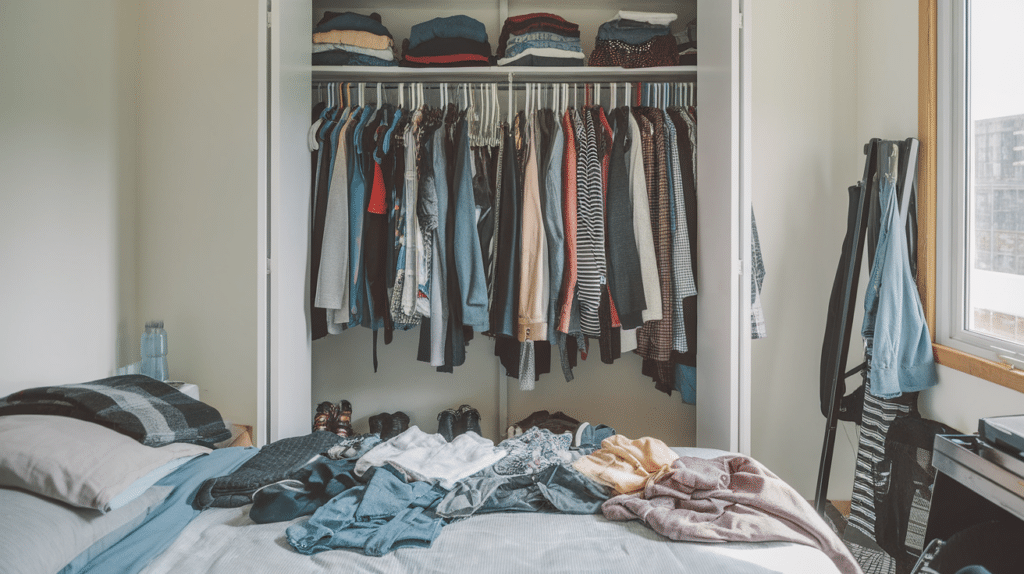
Before organizing anything, I’ve learned it helps to take every item out of the closet. This step makes the mess visible and stops you from working around clutter.
When the closet is empty, you can see how much space you really have and what you’re dealing with.
It also forces you to handle each item instead of skipping over problem areas. Lay clothes on the bed or floor and group them as you go.
Starting with a clean, empty closet makes the rest of the process easier and more honest.
2. Sort Clothes by How Often You Wear Them
Once everything is out, sorting by how often you wear each item makes decisions easier. I separate clothes into daily wear, occasional wear, and rarely worn.
This helps you see what actually deserves closet space.
Daily clothes should be easy to reach, while less-used items can move to higher shelves or storage bins. This step often shows how many clothes sit untouched for months.
When your closet is built around what you wear most, getting dressed feels quicker and less frustrating.
3. Let Go of Clothes You Don’t Wear or Like

This is the hardest step, but it makes the biggest difference. If something doesn’t fit, feels uncomfortable, or you never reach for it, it’s taking up space you need.
I remind myself that keeping clothes “just in case” usually adds clutter, not value.
You don’t have to declutter everything at once.
Start with the obvious pieces you avoid wearing. Letting go creates breathing room and makes the rest of your closet easier to organize and maintain.
4. Store Off-Season Clothes Outside the Closet
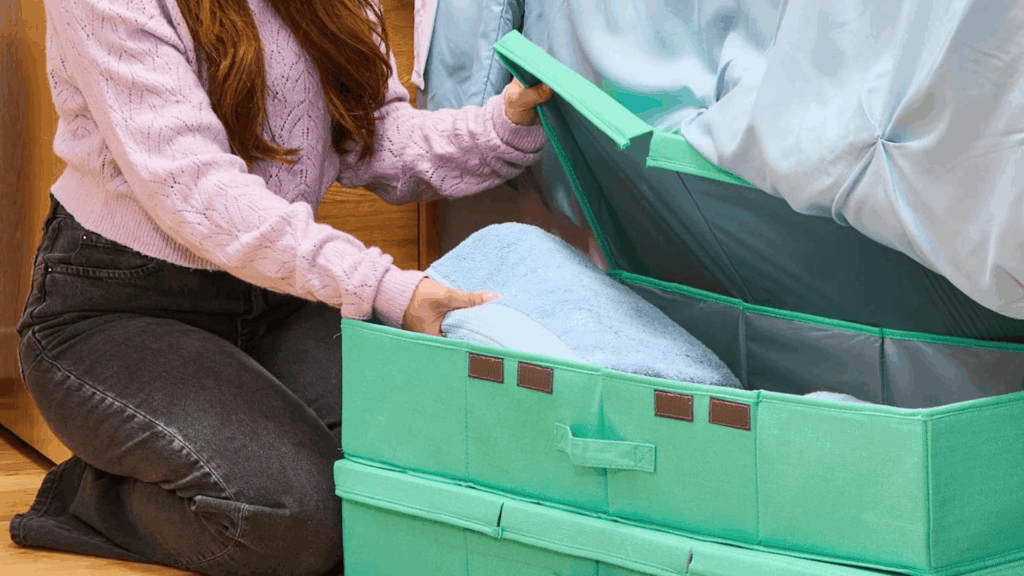
Keeping every season in one small closet makes it feel full all year. I move off-season clothes out as soon as the weather changes.
Heavy coats, boots, or summer pieces don’t need daily access when they’re not in use.
These items work well in bins, suitcases, or under-bed storage. This simple shift opens up space for what you actually wear right now.
When the closet only holds current-season clothes, it feels lighter, easier to manage, and less overwhelming.
5. Use Slim and Matching Hangers
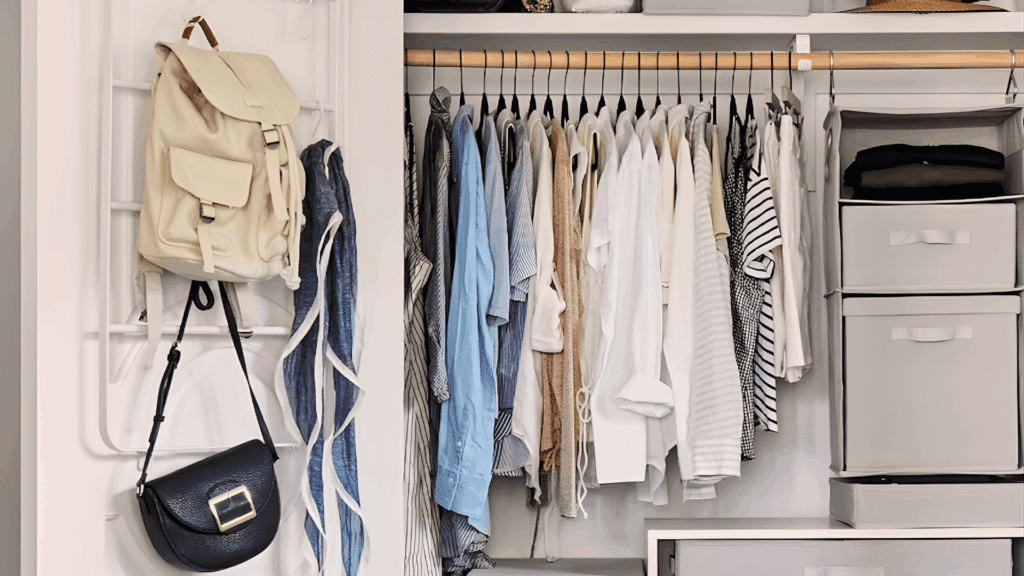
Switching to slim, matching hangers creates more space than most people expect. Bulky or mixed hangers waste space and make clothes sit unevenly.
I noticed that slim hangers let items hang closer together without crowding.
Matching hangers also make the closet look calmer, which helps it feel less cluttered. This isn’t about looks alone. Clothes slide less, stay aligned, and are easier to grab.
It’s a small change that makes the closet easier to use every day.
6. Hang Similar Items Together
Grouping similar clothing makes a small closet easier to use. I hang shirts with shirts, dresses with dresses, and jackets in one spot.
This keeps the closet from feeling scattered and saves time when getting dressed.
It also helps you see how much of each type you own, which can prevent overbuying. When items are grouped, it’s easier to space them evenly and avoid overcrowding one area.
This simple habit keeps things organized and helps your closet stay functional instead of messy.
7. Keep Everyday Clothes at Eye Level
The clothes you wear most should be the easiest to reach. I keep everyday items at eye level so I don’t have to dig through other pieces.
This keeps the closet feeling organized even on busy mornings.
Special-occasion clothes or rarely worn items can stay higher up or off to the side. When daily clothes are front and center, the rest of the closet stays neater.
This setup also helps prevent pulling everything out just to find one outfit.
8. Use the Top Shelf for Rarely Used Items
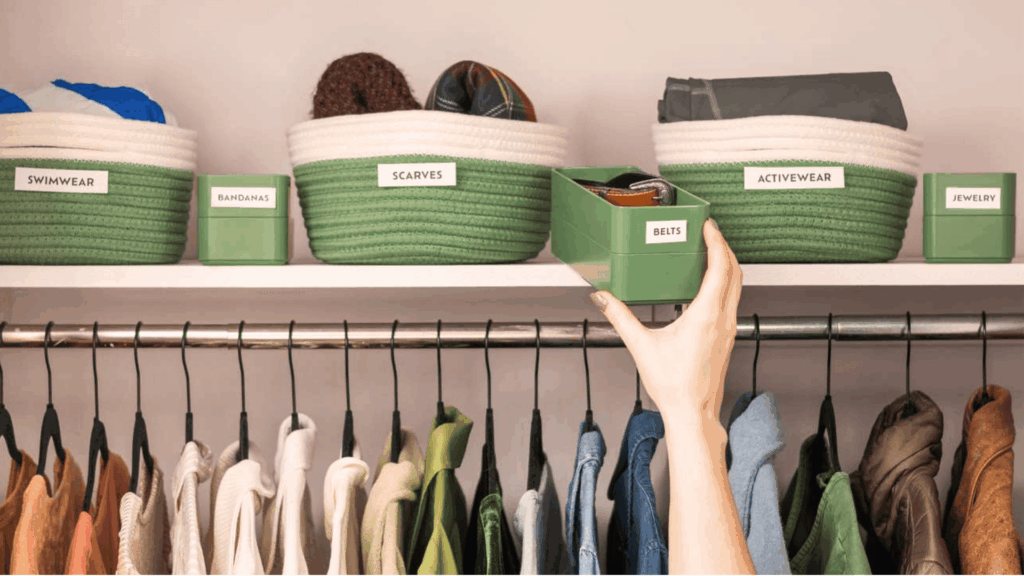
The top shelf is best for items you don’t need often. I use it for bags, special-occasion clothes, or storage bins with off-season items.
Keeping rarely used things up high frees up the main closet space for everyday clothes.
It also helps prevent clutter from building at eye level. Using bins or labeled boxes makes these items easier to find later.
When the top shelf has a clear purpose, the rest of the closet feels more open and easier to manage.
9. Add Shelf Dividers to Keep Stacks Neat
Shelf dividers help stop folded clothes from falling over. Without them, stacks tend to blend together and create a mess fast.
I use dividers to separate sweaters, jeans, or t-shirts so each pile stays in place.
This makes it easier to pull out one item without disturbing the rest. Shelf dividers also help you limit how much you keep in one stack.
When piles stay neat, the closet looks organized and stays that way longer.
10. Fold Bulky Items Instead of Hanging Them
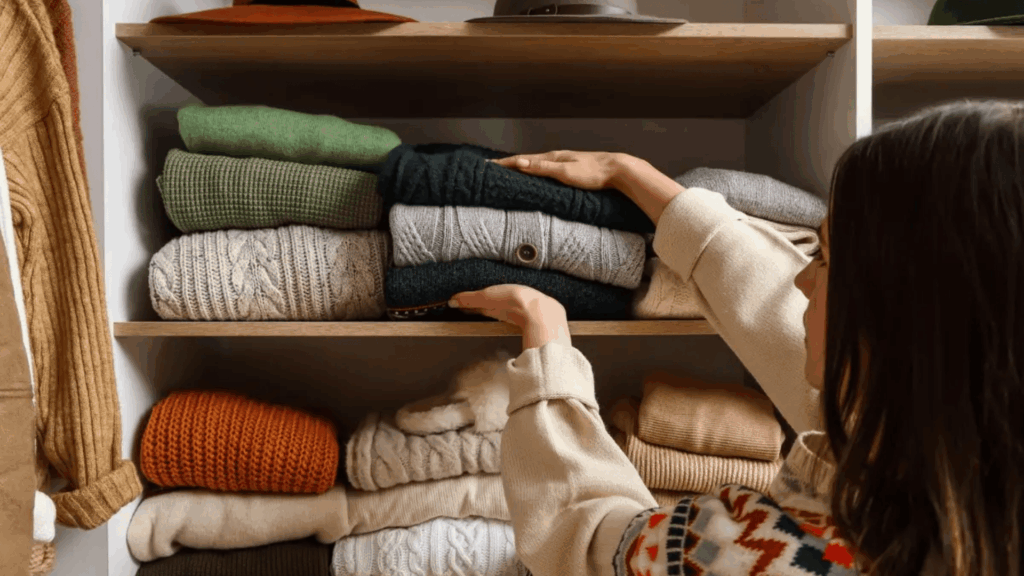
Bulky clothes like sweaters and hoodies take up too much hanging space.
I fold these items and store them on shelves or in bins instead. This keeps hangers from stretching the fabric and frees up room for lighter pieces.
Folded bulky items stack better and are easier to manage in small closets.
Hanging space is limited, so saving it for items that truly need it makes the whole closet work more efficiently.
11. Roll Small Items to Save Space
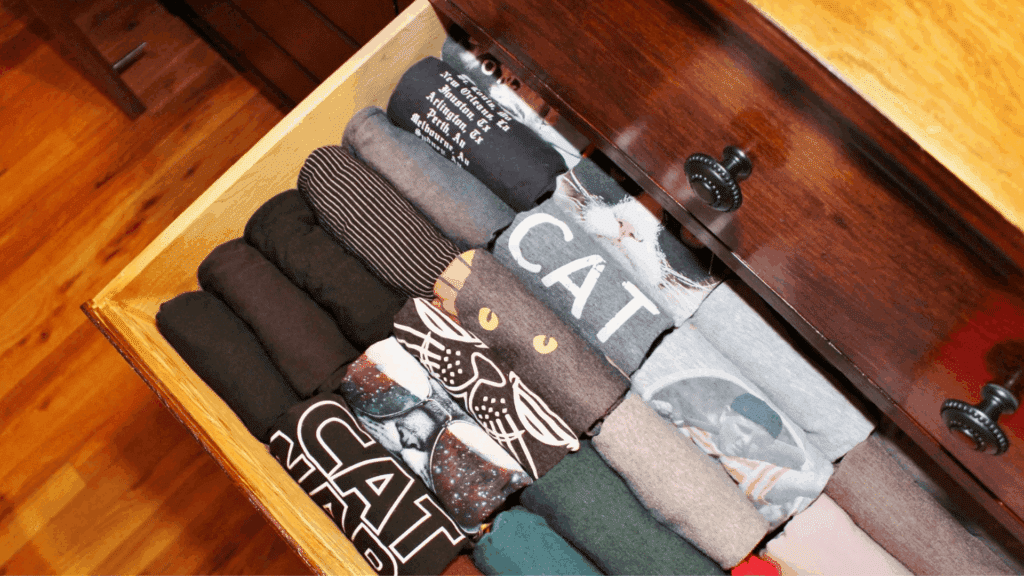
Rolling smaller items like t-shirts, workout clothes, or pajamas saves more space than folding.
I use this method in drawers and storage bins where stacking gets messy. Rolled clothes are easier to see, so nothing gets buried at the bottom.
This also helps prevent overstuffing since each item has its own place.
Rolling keeps things tidy and makes it easier to grab what you need without unfolding everything. It’s a simple habit that works well in tight spaces.
12. Use Bins or Small Boxes
Small items create clutter fast if they don’t have a set spot. I use bins or small boxes to keep socks, belts, and scarves together.
This stops them from getting mixed in with clothes or piling up on shelves.
Bins also make it easier to grab what you need without digging. Clear bins help you see what’s inside, while labeled ones keep everything organized.
Giving small items a home keeps the closet cleaner and easier to maintain.
13. Label Bins to Keep Things Organized
Labels help keep your system in place over time. I label bins so everything goes back where it belongs, even on busy days.
This is especially helpful if you share a closet or rotate seasonal items.
Labels also stop overfilling, since you can see what each bin is meant to hold. You don’t need fancy labels. Simple tags or tape work just fine.
Clear labeling makes it easier to stay organized without thinking too hard.
14. Use the Back Wall of the Closet
The back wall of a small closet often goes unused. I like to use this space for hooks, slim shelves, or hanging organizers.
It works well for bags, belts, or light layers that don’t need full hanging space. Using the back wall helps spread items out instead of crowding one area.
This keeps the closet easier to navigate and prevents everything from piling up in front.
Even small additions here can create useful storage without taking up much room.
15. Add a Second Hanging Rod if Possible
If your closet has extra vertical space, a second hanging rod can double your storage.
I use it for shirts, skirts, or shorter items that don’t need much length. This setup keeps clothes from overlapping and makes better use of the full height.
It also helps separate daily wear from less-used items.
Adding a second rod is a simple change that can make a small closet feel more organized and easier to manage.
16. Use Cascading Hooks for Hangers
Cascading hooks let you hang multiple items vertically instead of side by side. I find them helpful for saving space when the rod feels crowded.
You can group outfits or similar items together, which also makes planning easier.
These hooks work well for shirts, light jackets, or work clothes. By stacking items downward, you free up horizontal space without removing anything.
It’s a simple way to fit more clothes without making the closet feel packed.
17. Store Shoes Vertically or in a Rack
Shoes take up more space than expected when left in piles. I store mine vertically or in a slim shoe rack to keep them organized.
This makes it easier to see every pair and stops shoes from getting damaged.
Vertical storage works well in tight closets or corners. When shoes have a clear place, they don’t spread across the floor.
Keeping them contained helps the closet stay cleaner and easier to move around in every day.
18. Keep Only Shoes You Actually Wear
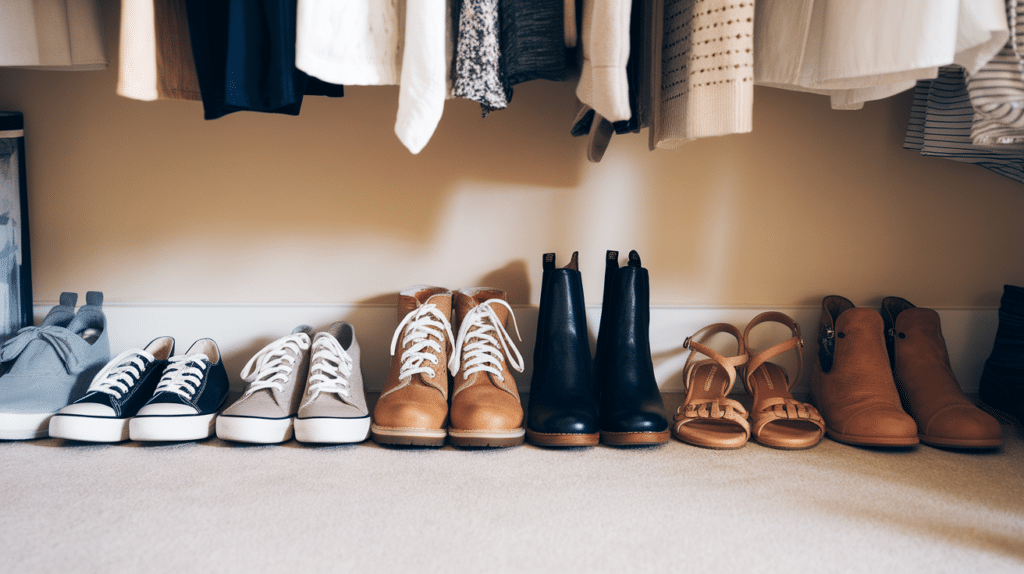
It’s easy to hold onto shoes that never get worn. I go through my collection and keep only pairs I use or truly like.
Shoes that hurt, don’t fit, or never match outfits just take up space. Letting go of these frees up room for pairs you reach for often.
This also makes shoe storage easier to manage. Fewer shoes mean less clutter and faster choices when getting ready.
19. Use Under-Bed Storage for Overflow
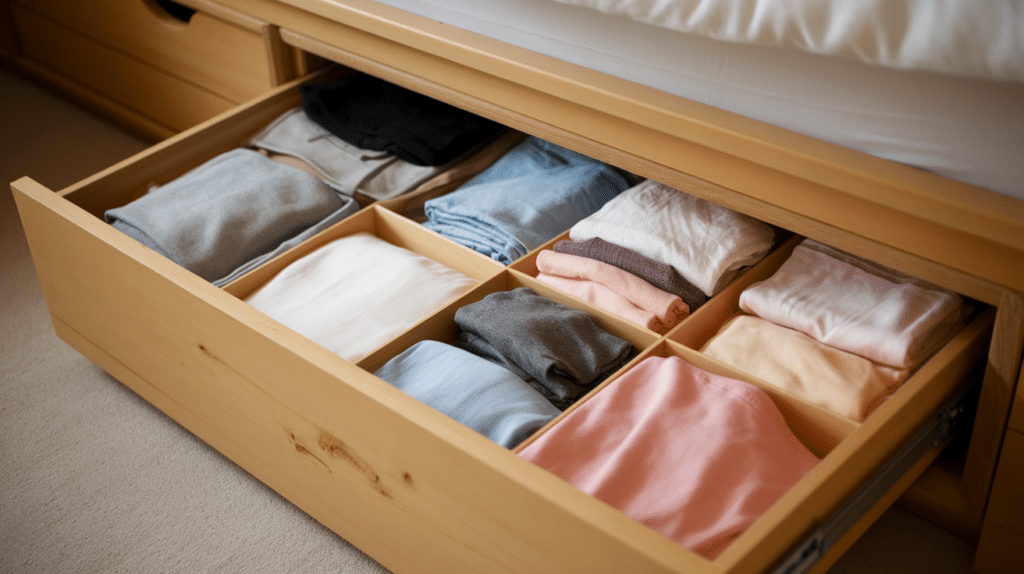
Under-bed storage is one of the easiest ways to create extra space. I use it for clothes I don’t need every day, like seasonal items or backups.
Storage bins or rolling containers work well and keep things protected.
This helps prevent the closet from getting overstuffed. Using space that’s already there makes the room feel less crowded and keeps the closet focused on daily essentials.
20. Try Over-the-Door Organizers
Over-the-door organizers add storage without taking up floor space. I use them for shoes, accessories, or small clothing items.
They’re easy to install and work well in small rooms. This type of organizer keeps things visible and within reach.
It also helps clear clutter from shelves and the floor. When the door space is used wisely, the rest of the closet feels more open and easier to use.
21. Avoid Stuffing Drawers Too Full
Overfilled drawers make it hard to find anything and create a mess fast. I try to leave a little space so items can move without getting tangled.
When drawers are packed tightly, clothes wrinkle and piles shift every time you open them.
Keeping drawers slightly loose helps everything stay in place. It also makes it easier to see what you own, which prevents buying duplicates.
A drawer that closes easily is a good sign that it’s not too full.
22. Group Clothes by Category and Not by Color
Grouping clothes by type makes a small closet easier to manage.
I keep all shirts together, then pants, dresses, and layers. This helps me see how much of each item I own and keeps things balanced.
Organizing by color can look nice, but it doesn’t always help with daily use.
Categories make it faster to find what you need and easier to notice when one area starts getting overcrowded.
23. Keep a Donation Bag Nearby
Keeping a donation bag nearby makes decluttering easier over time.
I place one in the closet or just outside it so I can drop items in as I notice them. If something doesn’t fit right or never gets worn, it goes straight into the bag.
This stops unwanted clothes from going back on the rod. Having a visible donation bag encourages small, regular edits instead of big cleanouts.
It helps keep the closet from filling up again without much effort.
24. Follow a One-In and One-Out Rule
The one-in, one-out rule helps control how much enters a small closet. When I bring in a new item, I choose one piece to remove.
This keeps things balanced and prevents slow buildup. It also makes you think twice before buying something new. Over time, this habit keeps your closet at a manageable size.
You don’t need strict rules, just awareness. This simple practice helps maintain order long after the initial organization is done.
25. Avoid “Just in Case” Clothes
“Just in case” clothes often take up more space than they deserve. These are items you keep for unlikely situations or future plans.
I’ve found they rarely get worn and usually create clutter.
If you haven’t needed it in a long time, chances are you won’t miss it. Keeping only clothes that fit your current life makes the closet easier to manage.
Letting go of these pieces frees up space and reduces daily frustration.
26. Recheck Your Closet Every Few Months
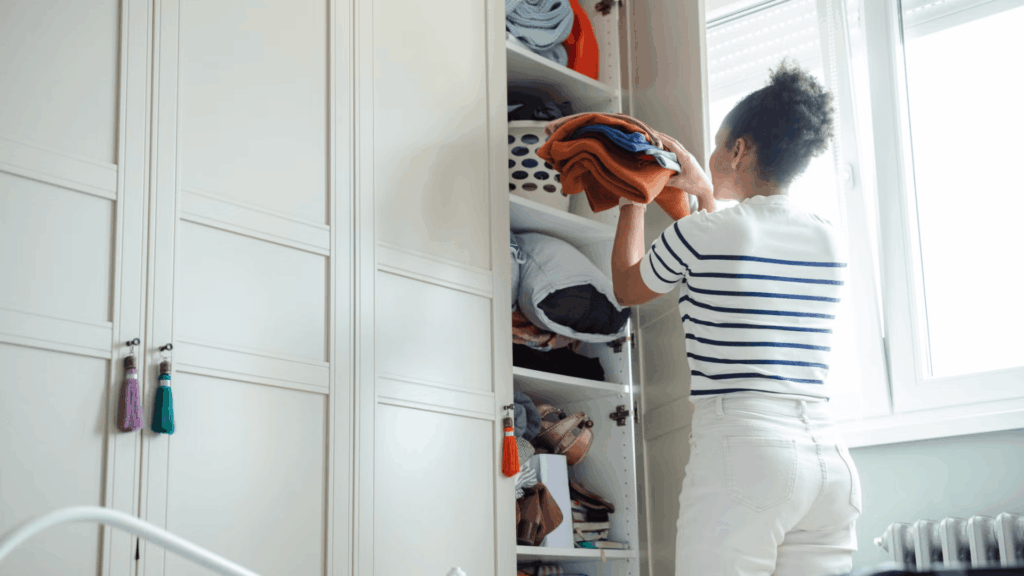
Closets don’t stay organized on their own, especially small ones.
I like to do a quick check every few months to see what’s working and what’s not. This isn’t a full cleanout. It’s just a simple review to catch clutter early.
Clothes you stopped wearing or items that drifted out of place are easier to fix right away.
Regular check-ins keep the system running smoothly and prevent the closet from feeling overwhelming again.
27. Use Clear Bins So You Can See Items
Clear bins make it easier to remember what you own. When items are visible, they don’t get forgotten at the bottom of a pile.
I use clear bins for accessories, off-season clothes, or smaller items.
This cuts down on digging and saves time when getting dressed.
Clear bins also help limit clutter because you can see when something is getting too full. Visibility keeps everything easier to manage in a small space.
28. Keep Accessories Outside the Closet if Needed
If your closet feels packed, accessories don’t always need to live inside it. I store bags, hats, or jewelry in another spot when space is tight.
Wall hooks, drawers, or small shelves work well for this.
Moving accessories out frees room for clothes that need hanging or shelving space.
This also makes accessories easier to grab without disturbing clothes. Shifting items around helps the closet stay focused and less crowded.
29. Don’t Mix Daily and Special-Occasion Clothes
Mixing everyday clothes with special-occasion outfits makes a small closet feel crowded fast.
I keep daily wear separate so it’s easy to grab what I need without digging. Formal outfits, party clothes, or rarely worn pieces can go to one side or a higher shelf.
This keeps the main area focused on real life, not “someday” events.
When daily clothes have their own space, the closet feels calmer, and getting dressed takes less time.
30. Leave Some Breathing Room Between Items
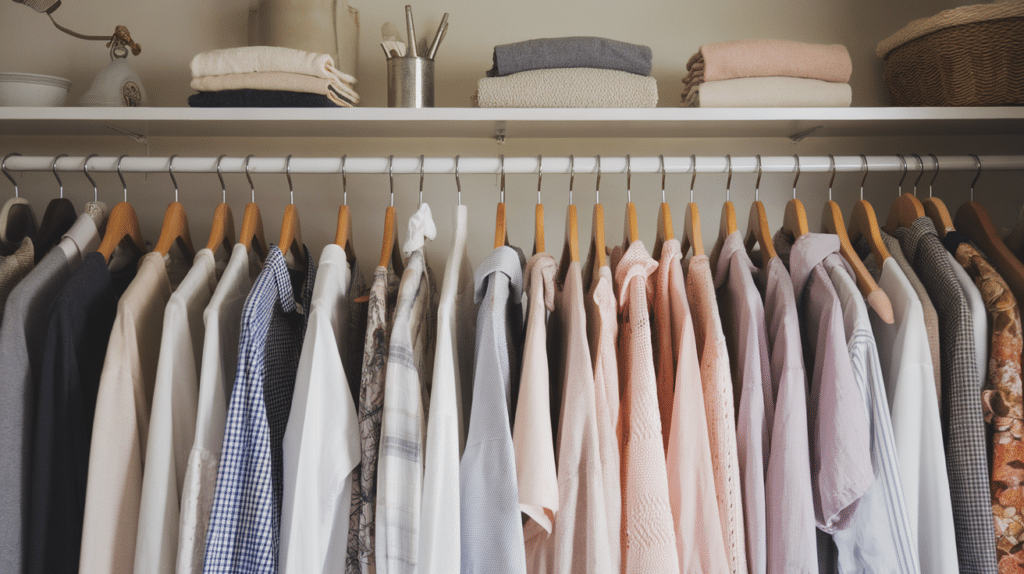
A packed closet is harder to manage than one with a little space. I try not to fill every inch, even if it feels tempting.
Leaving breathing room helps clothes hang properly and makes it easier to see what you own. It also stops wrinkles and keeps items from getting tangled.
When there’s space between clothes, the closet feels less stressful to use.
A little empty space actually makes the whole setup work better.
31. Focus on Keeping It Usable and Not Perfect
A small closet doesn’t need to look perfect to work well. I focus on whether it’s easy to use, not how it looks in photos.
If you can find clothes quickly and put things back without effort, the system is doing its job. Life gets busy, and closets will shift.
That’s normal. A usable setup that fits your routine will always last longer than a perfect one that’s hard to keep up with.
What Reddit Users Say About Small Closet Organization?
Most users on Reddit agreed that having less stuff makes the biggest difference. Many said they started by removing clothes they didn’t wear, didn’t like, or that no longer fit.
Another common tip was to use vertical space instead of overfilling the closet rod.
People shared ideas like tall shelves, cubby units, and slim hangers to open up the room.
Under-bed storage came up often, especially for seasonal clothes and shoes. Users also stressed keeping daily items easy to reach while moving less-used things out of the way.
Makeup, shoes, and accessories worked better in separate storage units instead of piling up in the closet.
Overall, the advice focused on simple changes that fit real life and small spaces.
Easy Decluttering Tips that Actually Help
This section shares simple habits that make your closet easier to manage. These ideas focus on progress, not perfection, and fit real daily life.
- Start with one small area: Pick one shelf or hanger section so the task feels manageable and not stressful.
- Keep only what you wear: If you haven’t worn it in months, it’s likely taking up space for no reason.
- Use the one-in, one-out rule: When something new comes in, let one item go to keep the balance.
- Remove seasonal clothes: Store off-season items elsewhere so your closet stays focused and clear.
- Question “just in case” items: These pieces often sit untouched and quietly create clutter.
- Do quick monthly check-ins: Small, regular edits prevent clutter from building up again.
Conclusion
Small closets can work when you have a system that fits your real life, not a perfect setup you can’t keep up with. You don’t need more space or expensive tools to feel better about your closet.
What matters most is making small changes that stick. Start with one simple step today.
Clear one shelf, sort one pile, or remove a few items you never wear. Small wins add up faster than you think.
The biggest difference comes from staying consistent, even when things get busy. A few minutes here and there help more than waiting for the right time. Your closet doesn’t need to be perfect.
If you’ve tried any of these tips or have your own small-closet struggles, share your experience in the comments below.