

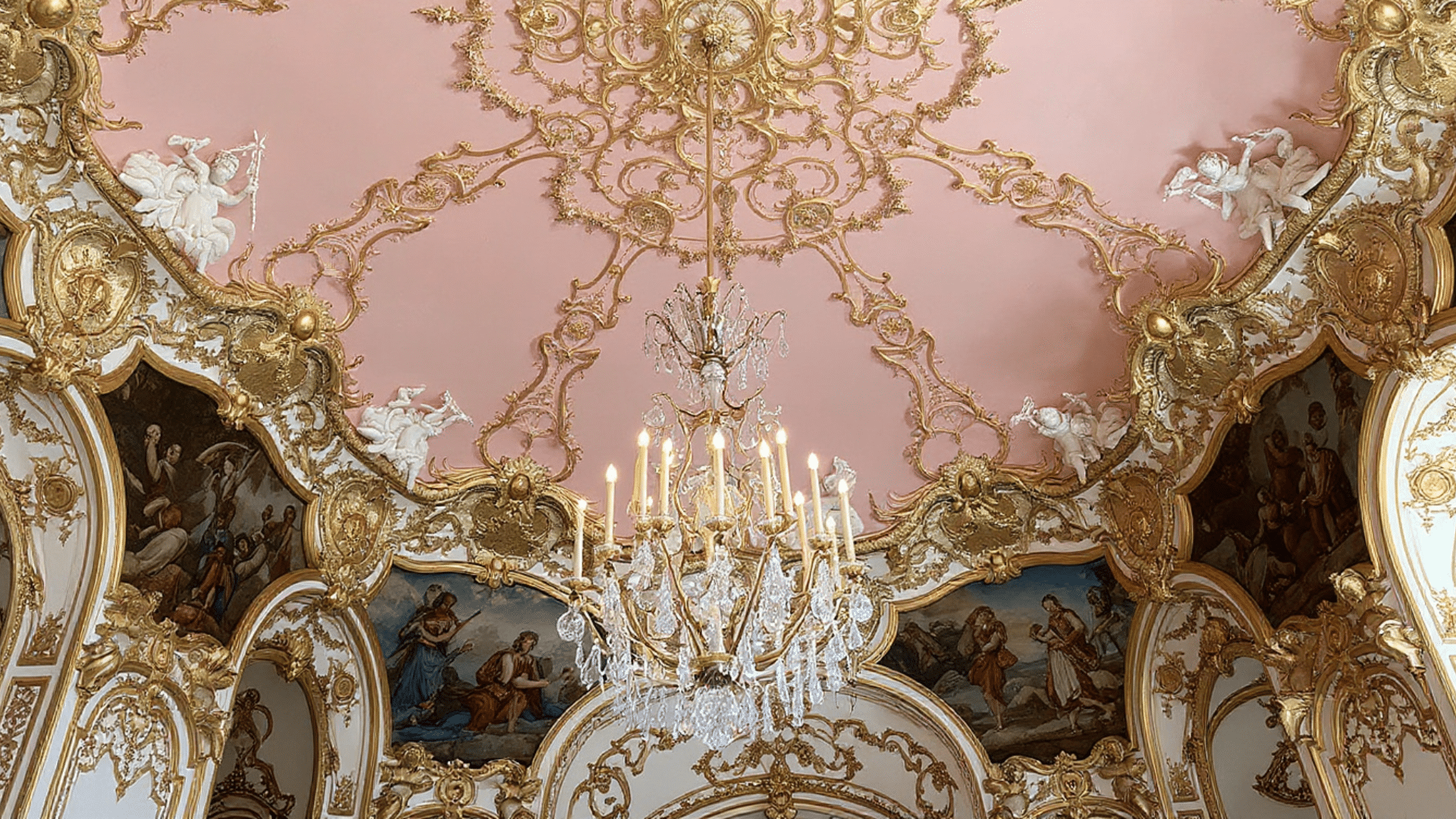
Rococo architecture began in France in the early 1700s. It was a reaction to the darker, heavier Baroque style that came before it.
This new style focused on comfort, lightness, and beauty. Builders used soft colors, gold trim, and curved lines to make rooms feel warm and fancy.
Rococo showed up in churches, palaces, and private homes. The style spread across Europe and left a strong mark on art and design.
This blog will explain what makes Rococo architecture special, how it started, and what to look for if you want to spot it in buildings or décor.
What is the Rococo Architecture Style?
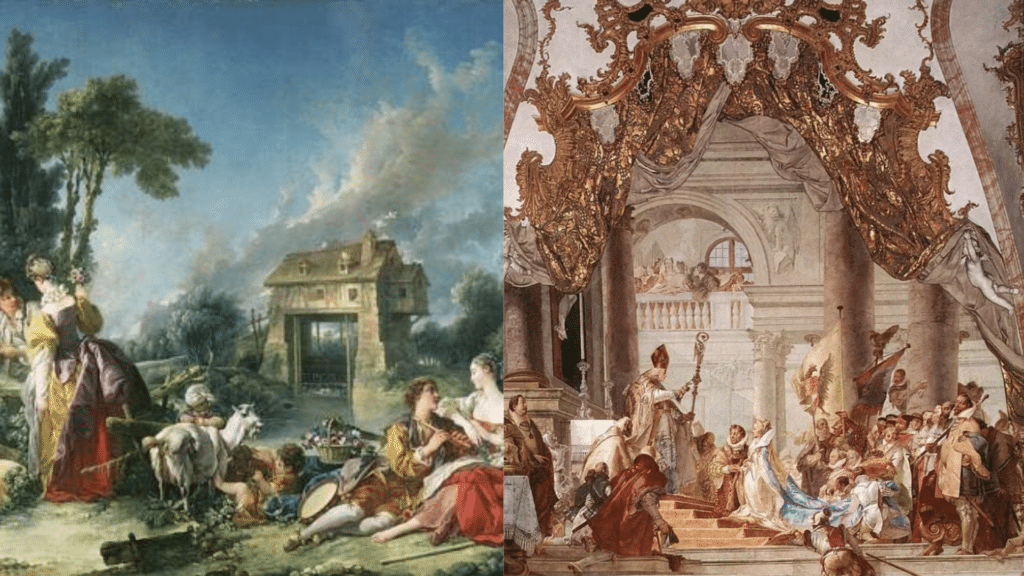
The Rococo architectural style began in France in the early 1700s. It came after a bold style called Baroque, which was known for its heavy and dramatic look.
People wanted something lighter, softer, and more fun. That’s when Rococo was born. It was first used in Paris, then spread across Europe, especially in Germany, Austria, and Italy.
The name “Rococo” comes from the French word “rocaille,” which means rock or shell.
These shapes were often used in Rococo art and design. You’ll see them in wall carvings, mirrors, and ceiling patterns.
Who Designed Rococo Buildings?
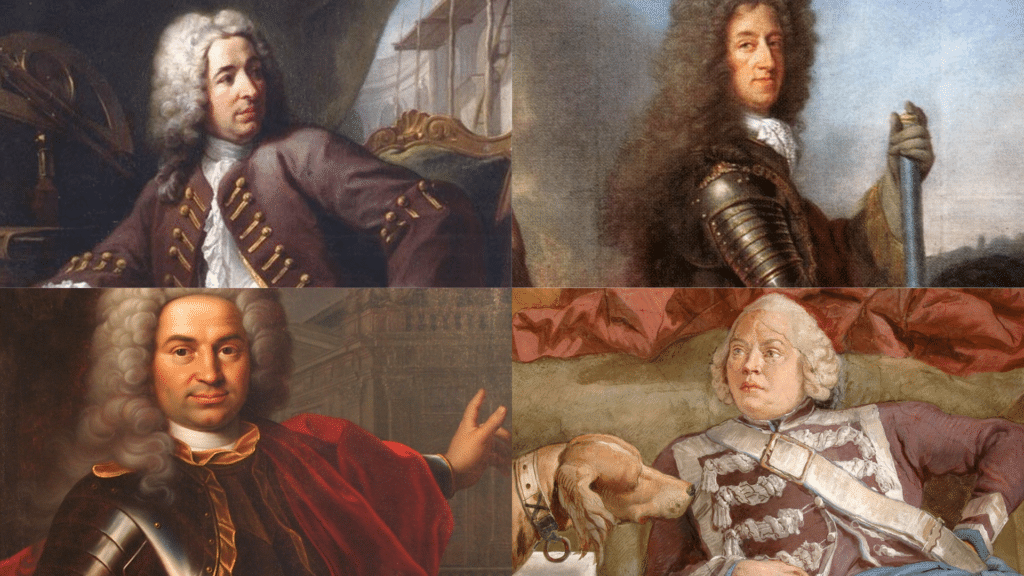
The Rococo architectural style was shaped by a few important designers in Europe.
In France, Germain Boffrand was one of the first to use light colors, curves, and gold trim in grand homes like the Hôtel de Soubise.
In Germany, François de Cuvilliés brought Rococo to life through buildings like Amalienburg, known for its blue walls and mirrors.
Another German architect, Balthasar Neumann, used the style in churches like the Wieskirche, creating calm and open spaces.
These designers helped move away from dark, heavy styles and brought in something softer, lighter, and full of detail.
Main Features of Rococo Architecture
Let’s break down the key features of the Rococo architecture style. These will help you spot a Rococo building or room.
1. Curved and Flowing Lines
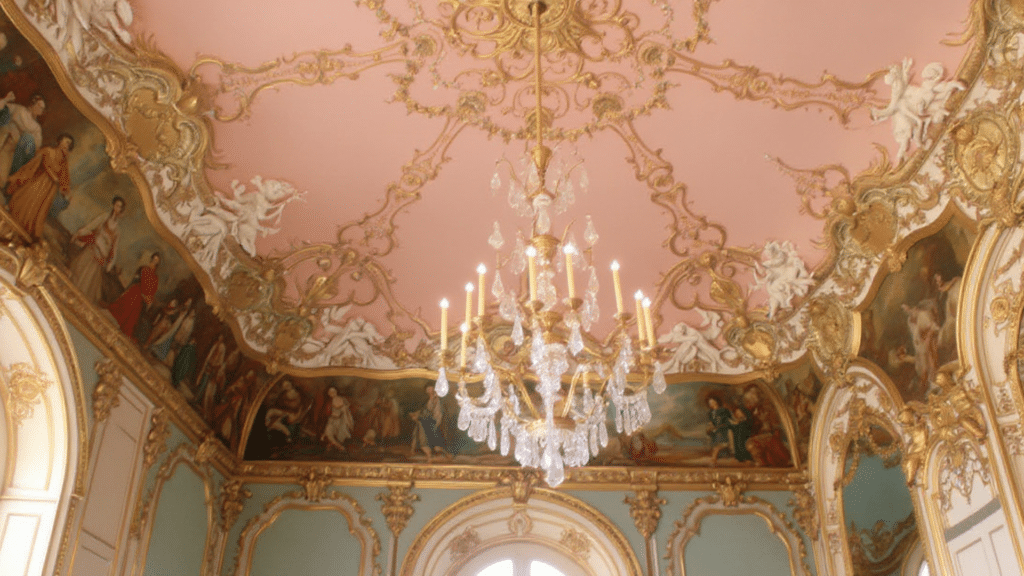
The Rococo style rarely uses straight lines. Instead, it has many curves, spirals, and waves. You might see this in:
- The shape of ceilings
- Arched doorways and windows
- Rounded furniture and mirrors
These soft shapes make rooms feel more relaxed and welcoming.
2. Light Colors
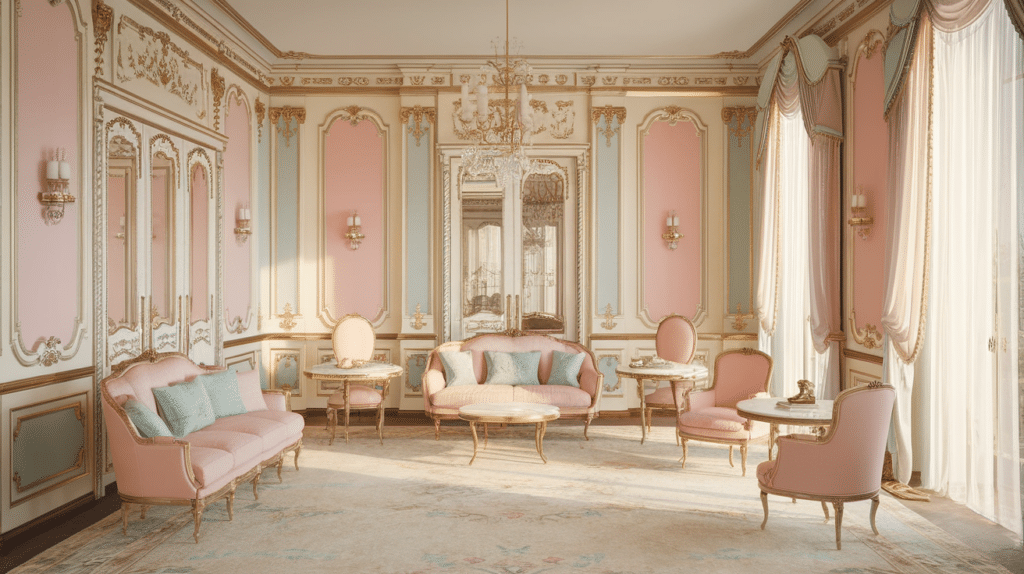
Rococo designers often used pastel colors like:
- Soft pink
- Light blue
- Cream
- Pale green
- White with gold
These colors made rooms look brighter and more cheerful, especially when sunlight came through the windows.
3. Gold Details
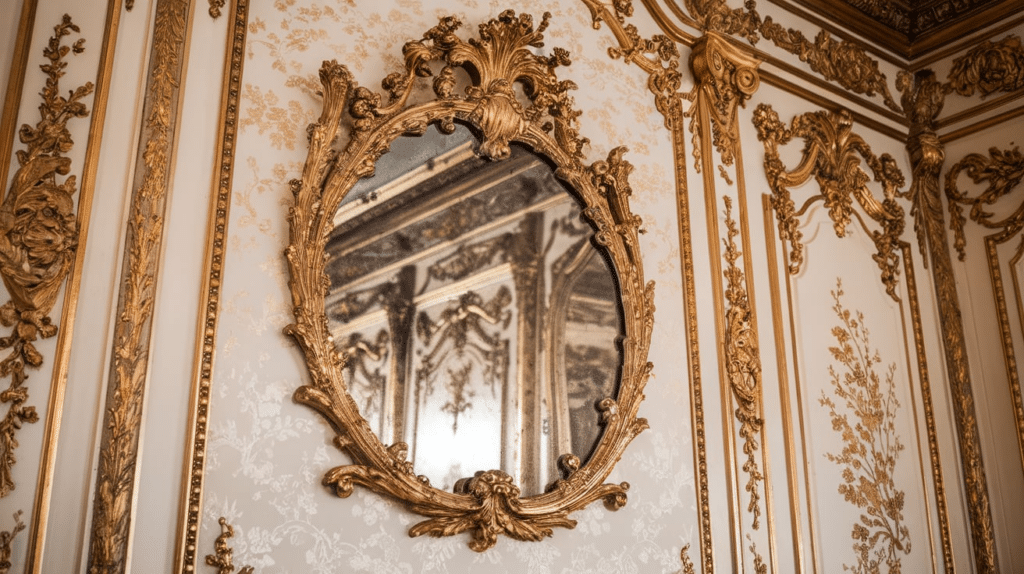
Gold trim was used to make things look rich and elegant. You’ll see gold:
- Around mirrors
- On ceiling moldings
- In picture frames
- On furniture legs
This gave a luxury feel without needing dark or heavy materials.
4. Decorative Patterns
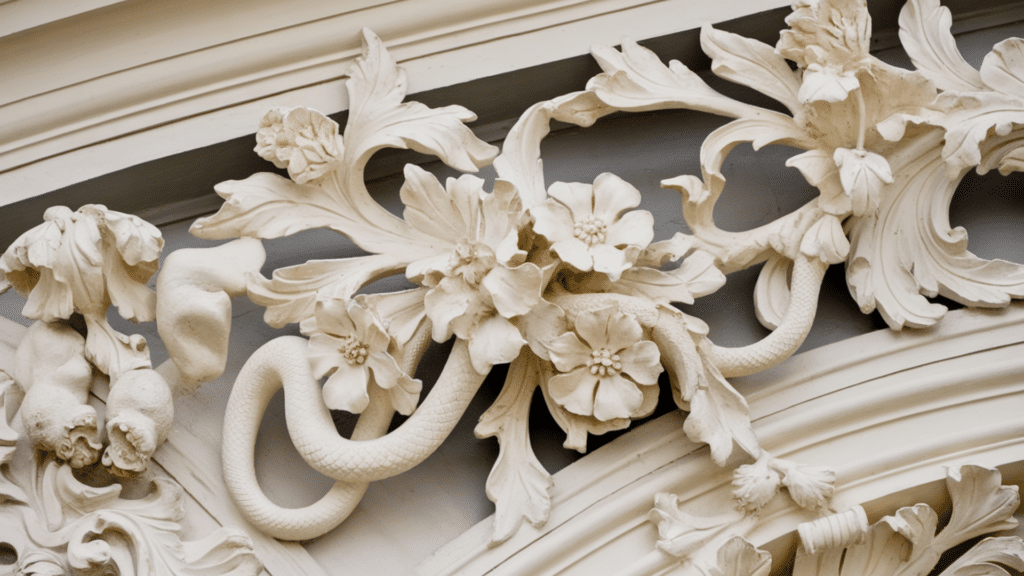
The Rococo architectural style is full of small, detailed designs. Common patterns include:
- Shells (rocaille)
- Flowers and leaves
- Birds
- Scrolls and curved lines
- These designs were carved into wood, painted on walls, or added with plaster.
5. Use of Mirrors
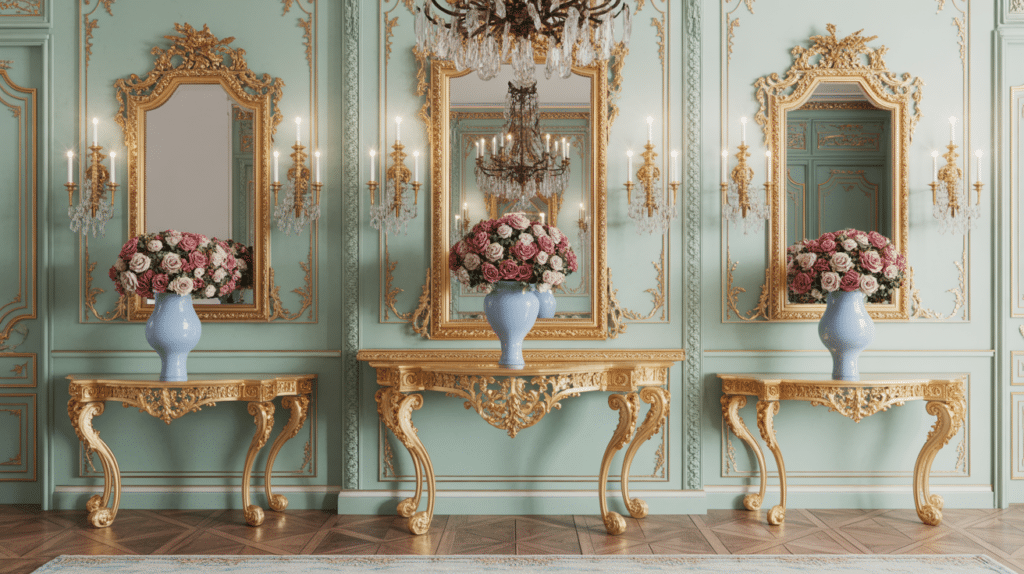
Mirrors were a big part of Rococo interiors. They made rooms look:
- Larger
- Brighter
- More open
Mirrors were often placed across from windows to reflect sunlight and create a soft glow.
6. Ceiling and Wall Art
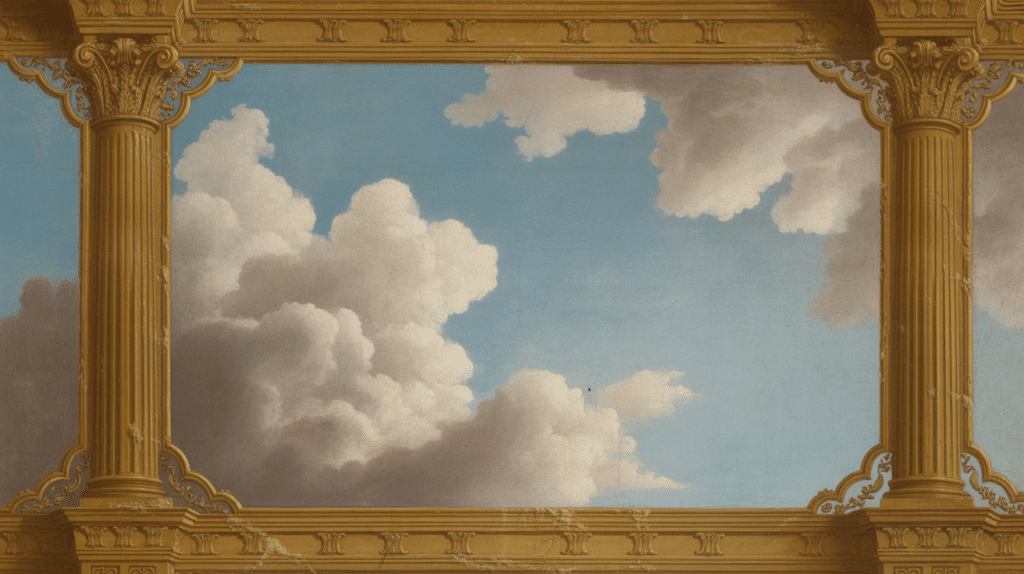
In Rococo buildings, the ceilings and walls were often covered in paintings or plaster art. These showed:
- Scenes from nature
- Love stories
- Clouds and sky
- Mythical figures
This art added to the playful and dream-like feeling of Rococo spaces.
Famous Rococo Architectural Buildings
Many buildings across Europe still show off the Rococo architectural style. These places highlight the soft colors, curved shapes, and detailed designs that made Rococo special. Here are a few well-known examples:
1. Amalienburg (Munich, Germany)

Amalienburg is a small lodge in the gardens of Nymphenburg Palace. It’s known for its bright blue and silver walls, curved mirrors, and fancy details.
The rooms feel light, fun, and full of charm. Designed by François de Cuvilliés, it shows how the Rococo style could turn a simple building into a place of beauty. The curved lines and gold trim make it a classic Rococo masterpiece in Germany.
2. Wieskirche (Bavaria, Germany)

Wieskirche is a peaceful church in the countryside of Bavaria. It has soft pastel colors, gold trim, and a high ceiling painted with sky scenes.
Inside, the curved shapes and gentle light give the church a calm and dreamy look. Built by Balthasar Neumann, it shows how Rococo was used to create holy spaces that felt open, welcoming, and filled with light and grace.
3. Catherine Palace (Russia)
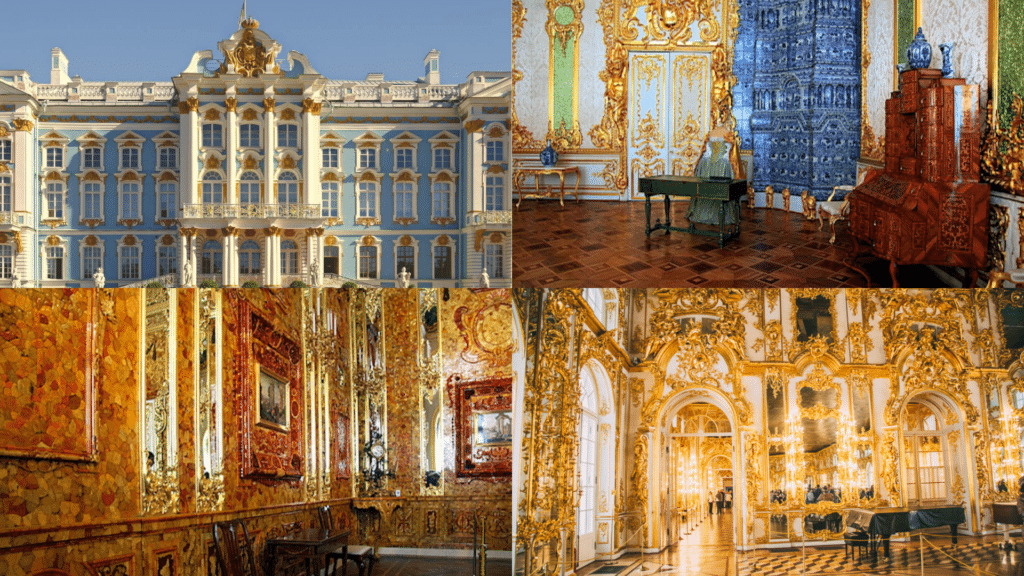
The Catherine Palace near St. Petersburg has many Rococo rooms inside, even though the outside looks more Baroque. One famous room is the Amber Room, which is covered in golden amber panels and rich trim.
The interiors have soft colors, elegant shapes, and detailed carvings. These features show how the Rococo style reached Russia and was used to add beauty and comfort to royal life.
4. Hôtel de Soubise (Paris, France)
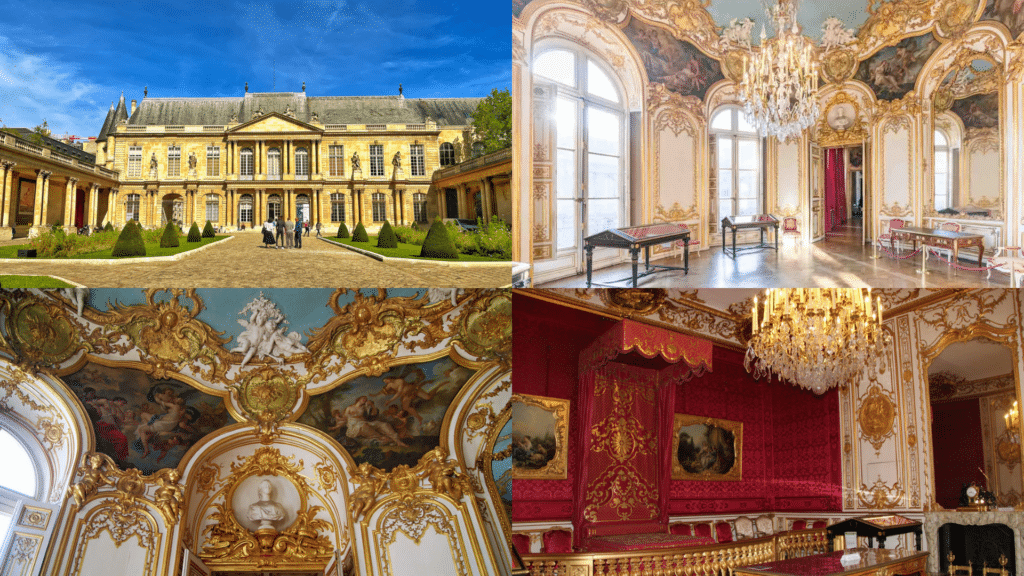
Hôtel de Soubise in Paris is a grand home with a strong French Rococo style. Inside, the walls are curved, the mirrors are trimmed in gold, and the colors are soft pastels.
Built for a noble family, the rooms feel graceful and rich without being heavy. Today, it’s part of the French National Archives, but its design still shows the early roots of the Rococo architectural style.
Rococo vs. Baroque: What’s the Difference?
Though Rococo came from Baroque, the two styles are easy to tell apart. Here’s a quick look:
| Feature | Baroque | Rococo |
|---|---|---|
| Mood | Serious, Grand | Light, Playful |
| Colors | Dark, Bold | Soft, Pastel |
| Shapes | Strong, Symmetrical | Curved, Flowing |
| Decoration | Large-scale, Dramatic | Small, Delicate |
| Common Use | Churches, Palaces | Homes, Salons, Some Churches |
| Gold Trim | Used, but heavier | Light, used to highlight details |
Why Rococo Style Faded Away?
Like all trends, Rococo didn’t last forever. By the late 1700s, a new style called Neoclassicism became popular. This style went back to straight lines and ideas from Ancient Rome and Greece.
Why the change?
- Some people thought Rococo was too soft or too silly.
- Others wanted a style that felt more serious and strong.
- Times were changing. Big events like the French Revolution made people think differently about art and design.
Still, the Rococo architectural style had a big impact. Its soft shapes, pastel tones, and rich detail can still be seen in design today.
How to Spot Rococo Style
Want to know if a room or building follows the Rococo architecture style? Look for these clues:
- Curved shapes: Lots of curves, swirls, and flowing lines
- Gold details: Trim and borders used in a light, elegant way
- Pastel colors: Soft pinks, blues, creams, and whites
- Mirrors: Often placed across from windows to reflect light
- Decorative art: Painted ceilings, wall carvings, and fancy trim
- Overall feel: Warm, fancy, playful, not too serious
Once you know these signs, it becomes easier to spot Rococo style in museums, historic homes, or even modern décor inspired by the past.
Final Thoughts
Rococo architecture was a short chapter in design history, but it left lasting marks.
It showed how buildings could feel light and personal, not just grand. Today, it’s not about copying the past; it’s about noticing how style and mood can shape a space.
Its details may be fancy, but the ideas behind it are simple: make spaces feel good to be in.
Want to keep learning about architecture made simple? Check out more beginner-friendly guides on styles from around the world.