

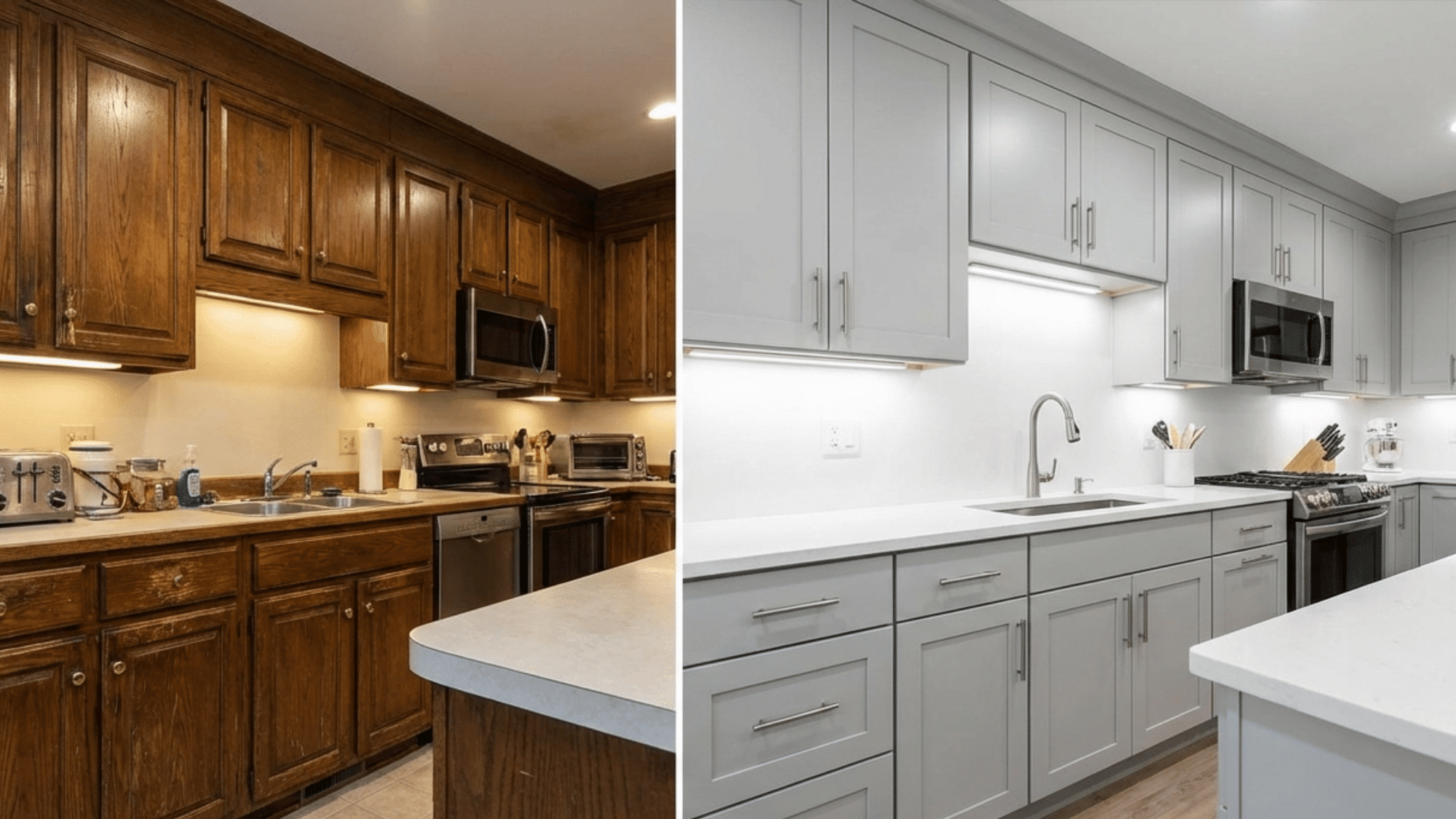
Looking at tired, outdated cabinets every day? There’s a budget-friendly fix that doesn’t require a full kitchen overhaul. Cabinet refacing offers a fresh look without the mess and expense of replacement.
But the costs can vary wildly. Some homeowners spend a few thousand dollars, while others invest significantly more. The final price tag depends on several factors, from kitchen size to material choices.
Understanding these cost drivers helps with smart planning. It prevents budget surprises and ensures realistic expectations.
This blog breaks down everything affecting cabinet refacing prices, so homeowners can make informed decisions about their kitchen upgrade.
What is Cabinet Refacing?
Cabinet refacing is a renovation technique that updates existing cabinets without replacing them entirely.
The process involves keeping the cabinet boxes intact while swapping out doors, drawer fronts, and hardware. A thin veneer covers the visible frame surfaces, creating a cohesive, brand-new appearance.
Think of it as giving cabinets a makeover rather than major surgery.
The structural boxes stay put, but everything visible gets refreshed. This approach saves money compared to full replacement since there’s no need to tear out and reinstall entire cabinet systems.
Plus, it generates less waste and disruption. Most refacing projects wrap up in just a few days, not weeks.
Cabinet Refacing Total Cost Breakdown
Cabinet refacing costs typically range from $4,000 to $10,000 for an average kitchen. Several factors influence the final price, from materials to labor expenses.
| Cost Component | Price Range |
|---|---|
| Materials (veneer, doors, hardware) | $2,000 – $5,000 |
| Labor | $1,500 – $4,000 |
| Additional upgrades (soft-close hinges, specialty finishes) | $500 – $1,500 |
| Total Average Cost | $4,000 – $10,000 |
Factors That Affect Cabinet Refacing Cost
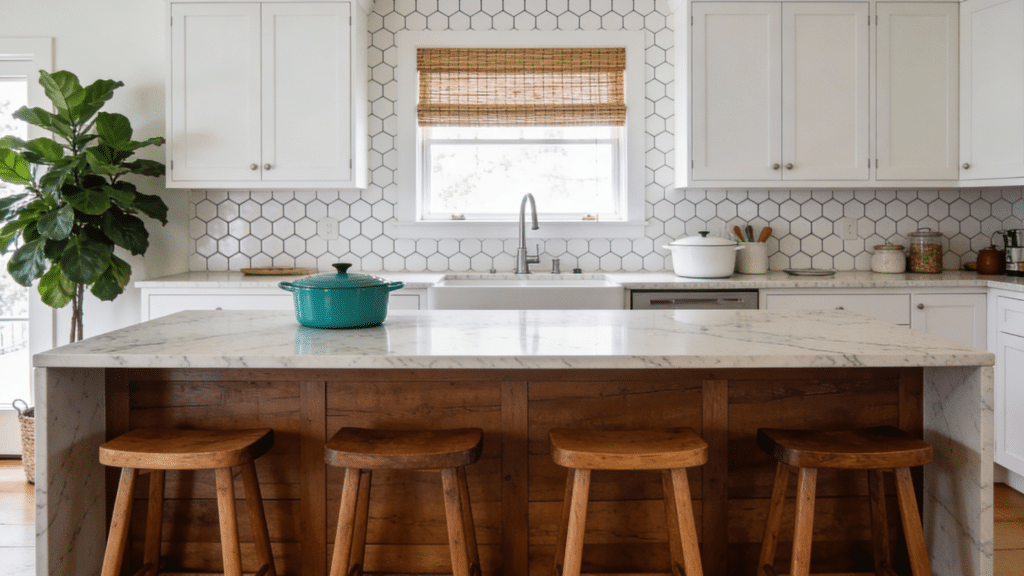
Not all cabinet refacing projects cost the same. Multiple variables influence the final price tag, making each kitchen unique.
1. Cabinet Size and Layout
The number of cabinets directly impacts cost. Kitchens with more cabinet boxes, drawers, and doors require more materials and labor hours.
Complex layouts with corners, angles, or odd-shaped spaces also increase expenses. Installers need extra time to measure, cut, and fit veneer around tricky configurations, which drives up the bill.
2. Material Type (Veneer, Laminate, Solid Wood)
Material choice significantly affects pricing. Laminate veneer is the most budget-friendly option, offering durability at lower costs.
Wood veneer sits mid-range, providing natural grain patterns. Solid wood doors command premium prices but deliver superior quality and longevity.
Each material has different maintenance requirements and aesthetic appeal, so the selection balances budget with desired look.
3. Door Style and Finish
Simple, flat-panel doors cost less than ornate designs with raised panels or intricate details.
Custom finishes like hand-glazing, distressing, or specialty stains add labor time and material costs. Standard colors from stock options keep expenses down.
High-gloss finishes require more prep work and coats than matte options, increasing both material and labor expenses.
4. Labor Rates by Location
Geographic location heavily influences labor costs. Metropolitan areas with higher living costs charge more for installation services.
Rural regions typically offer lower rates. Regional demand for cabinet services also plays a role.
Areas with booming housing markets see increased prices due to contractor availability and competition for skilled labor.
5. Kitchen Size (Small, Medium, Large)
Small kitchens with 10-15 cabinet doors run $4,000-$6,000. Medium kitchens with 20-25 doors average $6,000-$8,000. Large kitchens exceeding 30 doors easily surpass $10,000.
Square footage alone doesn’t tell the whole story, though. Cabinet density matters more than floor space, so a compact kitchen packed with storage costs more than expected.
6. Custom vs Stock Doors
Stock doors from standard catalogs keep costs manageable. They come in predetermined sizes and styles with quick turnaround times.
Custom doors built to exact specifications cost considerably more but accommodate unique dimensions or design preferences. Custom work requires skilled craftsmanship and longer lead times, both of which increase the investment substantially.
Cabinet Refacing Cost by Material Type and Kitchen Size
Material selection and kitchen dimensions are the two biggest price drivers. Here’s what homeowners can expect to pay.
| Material Type | Small Kitchen (10-15 doors) | Medium Kitchen (20-25 doors) | Large Kitchen (30+ doors) |
|---|---|---|---|
| Laminate Veneer | $3,500 – $5,000 | $5,500 – $7,500 | $8,000 – $11,000 |
| Wood Veneer | $4,500 – $6,500 | $7,000 – $9,500 | $10,000 – $14,000 |
| Solid Wood Doors | $6,000 – $8,500 | $9,000 – $12,500 | $13,000 – $18,000 |
Note: Prices include materials, labor, and standard hardware. Additional upgrades may increase costs.
Cabinet Refacing vs Cabinet Replacement Cost vs Cabinet Painting Cost
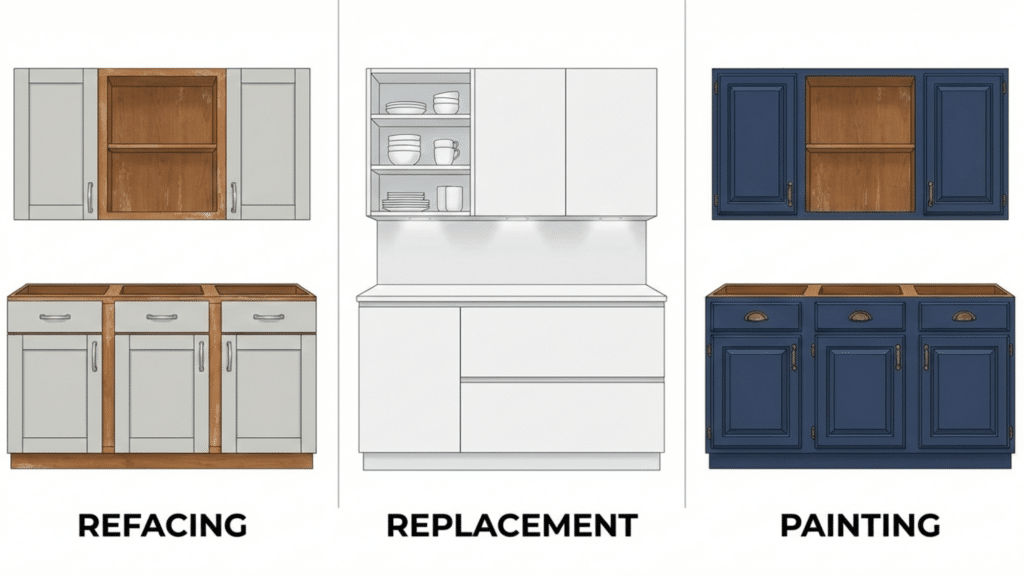
Choosing between refacing, replacement, or painting depends on budget, the condition of existing cabinets, and desired results. Each option offers distinct advantages and price points.
Cabinet Refacing Cost
Refacing strikes a balance between affordability and transformation. It delivers near-total visual renewal while preserving functional cabinet structures.
The process suits kitchens where boxes remain sturdy, but surfaces look dated. Homeowners get new-looking cabinets at roughly half the replacement cost, with minimal disruption to daily routines.
Cabinet Replacement Cost
Full replacement runs $15,000 to $30,000 or more for average kitchens. This option makes sense when cabinet boxes are damaged, poorly configured, or lack sufficient storage.
Replacement allows complete layout redesigns and modern storage solutions. The trade-off includes extended timelines, major mess, and potential plumbing or electrical work if configurations change significantly.
Cabinet Painting Cost
Painting represents the most budget-conscious choice, typically costing $2,000 to $5,000. It refreshes the appearance without altering door styles or hardware.
However, painting won’t hide damaged surfaces, outdated styles, or worn hardware.
The finish requires careful prep work and may chip over time with heavy use, especially around handles and high-traffic areas.
How to Save Money on Cabinet Refacing
Smart planning and strategic choices can significantly reduce cabinet refacing expenses without sacrificing quality or appearance.
- Choose stock doors and standard finishes instead of custom options to cut material costs substantially.
- Keep existing hardware if it’s still functional, or buy budget-friendly replacements from discount retailers.
- Select laminate veneer over wood veneer or solid wood for a fresh look at lower prices.
- Get multiple quotes from contractors and compare pricing, services, and material quality before committing.
- Handle prep work yourself by removing doors, cleaning surfaces, and clearing the kitchen to reduce labor hours.
- Schedule refacing during off-peak seasons when contractors may offer discounts to fill their calendars.
To Conclude
Cabinet refacing delivers significant visual impact without breaking the bank.
The key lies in understanding cost variables. Material choices, kitchen size, and door styles all shape the final investment.
Smart shoppers can trim expenses further through strategic decisions. Stock materials, retained hardware, and off-season scheduling reduce costs without compromising quality.
Ready to renovate that kitchen? Armed with realistic budget expectations and money-saving strategies, homeowners can confidently move forward with cabinet refacing projects that deliver beautiful results.