

Many people want to grow plants but don’t know where to begin. It can feel confusing at first: how much water, how much light, when to repot.
Without help, it’s easy to make small mistakes. This simple guide is here to clarify things.
It’s written for beginners who want to keep their plants alive and healthy. With a little care and attention, plants can grow strong and add beauty to any space.
This blog will walk through the basics so anyone can start with confidence and build a routine that works.
Why Plant Care is Good for You and Your Space?
Taking care of plants teaches patience, routine, and care. It’s not just about making your space look nice.
When you care for something living, you build focus and calm. Even five minutes a day with your plants can lower stress.
Over time, this habit becomes a quiet part of your day you look forward to. It also helps people feel more connected to nature, especially in busy homes or cities.
You don’t need to own a garden; just one plant can bring this feeling. Plant care is simple, but the effects can reach your mood, your air, and your sense of peace.
Indoor vs Outdoor Plant Care: Key Differences
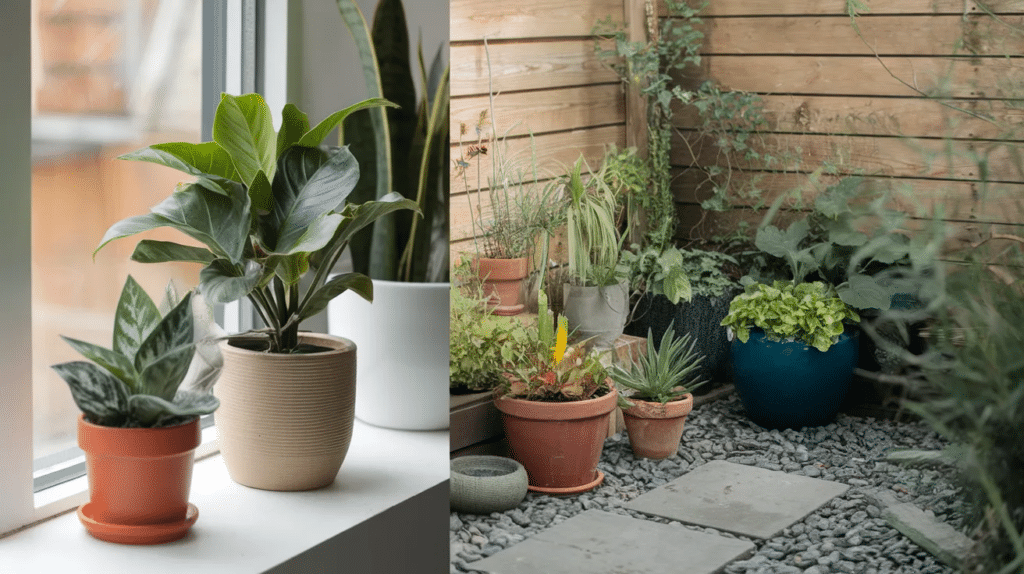
Indoor and outdoor plants have different needs. Knowing how they differ helps you care for them the right way. Use this table to see the main changes in light, water, and more.
| Care Factor | Indoor Plants | Outdoor Plants |
|---|---|---|
| Light | Usually low to medium light; comes through windows | Natural sunlight is often brighter and stronger |
| Watering | Less water needed; soil dries slowly indoors | May need frequent watering, especially in hot weather |
| Airflow | Limited airflow; risk of mold or pests | More airflow helps prevent fungus and root rot |
| Temperature | More stable indoors | Can change with seasons, sun, wind, and rain |
| Humidity | Often dry, especially with indoor heating | Natural humidity levels are better for some plant types |
| Pests | Common indoor pests: spider mites, gnats | Outdoor pests: aphids, slugs, beetles |
| Cleaning | Dust can build up on leaves; needs gentle wiping | Leaves cleaned naturally by wind and rain |
| Pot Drainage | Drainage is very important due to slower drying | Faster drying; still needs drainage, but less risky |
| Fertilizer Use | Use light fertilizer during growing months | May need more feeding due to faster growth outdoors |
Simple Steps to Take Care of Plants
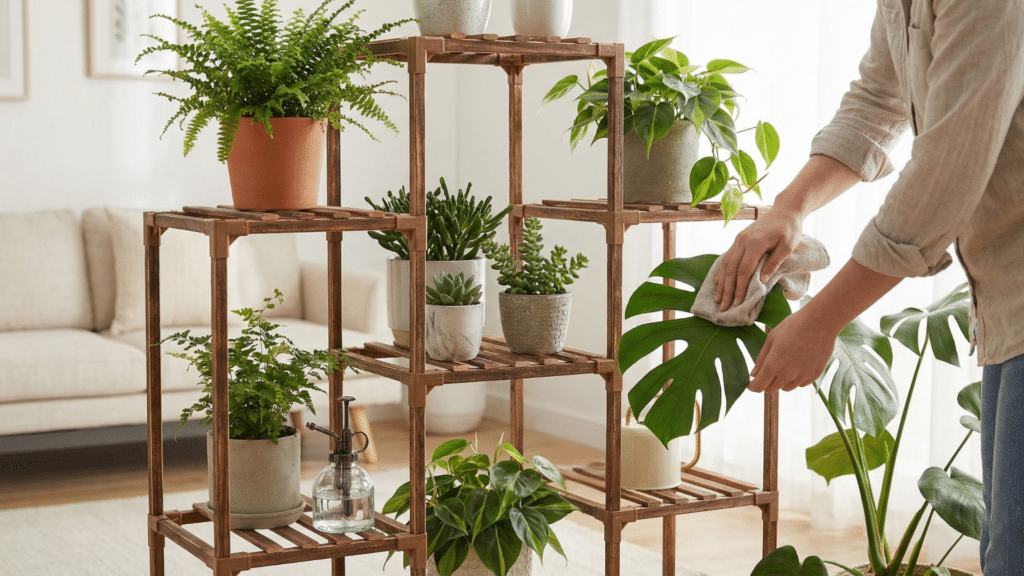
Learning how to take care of plants can feel easier when broken into simple steps. Follow these beginner-friendly tips to build a strong plant care routine.
1. Start with the Right Plant
Begin with plants that don’t need too much care. These plants forgive small mistakes, such as missed watering or low light. Good beginner plants include:
- Snake plant
- Pothos
- Spider plant
- ZZ plant
- Peace lily
- These are all low-maintenance and do well indoors.
Match the Plant to Your Space
Ask yourself:
- How much sunlight does the spot get?
- Is the air dry or humid?
- Do you want a tall plant or something small?
- A cactus won’t do well in a dark room, and a fern may dry out in the sun. Look around your space and choose a plant that fits.
2. Learn How Plants Use Light
Plants need light to make food. This is called photosynthesis. But not all plants need the same amount.
Light levels:
- Bright light: Direct sun (ex, south-facing window)
- Medium light: Indirect sun (ex, east- or west-facing window)
- Low light: Little sun (ex, corners, north-facing window)
Signs of Light Problems
- Pale or stretched-out leaves = not enough light
- Brown, scorched spots = too much sun
- Leaning toward light = move it closer to a window
Easy Fixes
- Rotate plants weekly
- Move them closer or farther from the window
- Use a grow light if natural light is poor
3. Watering: What Beginners Must Know
How Often Should You Water?
There’s no one answer. It depends on:
- Plant type
- Pot size
- Room temperature
- Soil type
A general tip: Check the soil before watering.
How to Check Soil Moisture
Stick your finger 1 inch into the soil.
- Dry? Time to water.
- Damp? Wait a few days.
Signs of Overwatering
- Yellowing leaves
- Mushy stems
- Mold or fungus on the soil
- Bad smell from the pot
Signs of Underwatering
- Dry, crispy leaves
- Drooping stems
- Soil pulling away from the pot sides
Watering Tips for Beginners
- Use a watering can with a narrow spout
- Water slowly until it drains from the bottom
- Always empty the drainage tray after watering
4. Choosing the Right Pot and Soil
A pot with a hole in the bottom is a must. If water can’t drain, roots can rot.
Pot Size Matters
- Too small = crowded roots
- Too big = soil stays wet for too long
Start with a pot just 1–2 inches wider than the root ball.
Use the Right Soil
Not all plants use the same soil. Buy the right mix:
- All-purpose mix: Works for most houseplants
- Cactus mix: For succulents and cacti
- Orchid mix: Airy blend for orchids
Don’t use garden soil indoors. It can carry bugs or mold.
5. Feeding Your Plants
Fertilizer is like plant food. It helps plants grow better and faster.
When to Use It
- Spring/Summer: Feed every 4–6 weeks
- Fall/Winter: Most plants rest, skip feeding
Best Type for Beginners: Use liquid fertilizer mixed into water. Follow the instructions on the label. Too much can burn the roots.
6. Repotting: Give Roots Room to Grow
Signs It’s Time to Repot
- Roots grow out of the bottom
- Water runs through too fast
- The plant looks too big for the pot
Steps to Repot a Plant
- Choose a new pot that is 1–2 inches larger.
- Add a bit of fresh soil to the bottom.
- Remove the plant gently.
- Loosen roots with your fingers.
- Set in a new pot and add more soil.
- Press soil down gently and water well.
Repot once a year or when needed.
7. Seasonal Plant Care Tips
Spring
- Plants wake up and start growing
- Increase water slowly
- Begin feeding again
- Time to prune or repot
Summer
- Plants grow fast
- Soil dries faster, check more often
- Keep out of the strong afternoon sun
Fall
- Growth slows
- Cut back on watering
- Stop feeding
Winter
- Plants rest
- Water less often
- Keep away from cold drafts or heaters
8. How to Take Care of Plants Indoors
Common Indoor Challenges
- Dry air from heaters
- Low light
- Poor airflow
Tips to Help
- Group plants together to raise humidity
- Wipe leaves to remove dust
- Crack a window for fresh air (if warm enough)
- Mist leaves if they like humidity (like ferns)
9. How to Take Care of Plants Outdoors
Sun, Wind, and Rain
Outdoor plants are exposed to more sun and wind.
- Water more during hot spells
- Use mulch to hold moisture
- Move potted plants under cover during storms
Bug Watch: Check leaves often. Remove pests such as aphids by spraying with water or applying neem oil.
10. Make a Weekly Plant Care Routine
Creating a schedule makes plant care easy.
Weekly Checklist:
- Check soil moisture
- Water if dry
- Turn the plant for even growth
- Wipe leaves clean
- Look for bugs or dead leaves
Monthly Tasks:
- Light feeding (if in growing season)
- Check if roots are crowded
- Clean pots and trays
Solving Common Plant Problems
When a plant looks sick or weak, it’s often due to water, light, or pests. This table shows signs to watch for and how to fix them.
| Problem | What It Looks Like | Possible Cause | Simple Fix |
|---|---|---|---|
| Yellow Leaves | Leaves turn yellow and soft | Overwatering or poor light | Let the soil dry, move the plant to a brighter spot |
| Brown Leaf Tips | Dry, crispy edges on leaf tips | Dry air or not enough water | Water more often; mist or raise humidity |
| Drooping Leaves | Leaves hang low or look limp | Underwatering or root rot | Check soil moisture; adjust watering |
| Spotted Leaves | Small spots or holes in leaves | Fungal infection or pest damage | Remove damaged leaves; check for pests |
| White Webs or Dots | Fine webs or small white bugs under leaves | Spider mites or mealybugs | Wipe leaves; spray with soapy water |
| Soil Smells Bad | Soil has a sour or moldy smell | Overwatering or poor drainage | Repot with fresh soil; use a pot with holes |
| Slow Growth | The plant is not getting taller or fuller | Not enough light or nutrients | Move to better light; add gentle fertilizer |
Easy Plants That Clean the Air
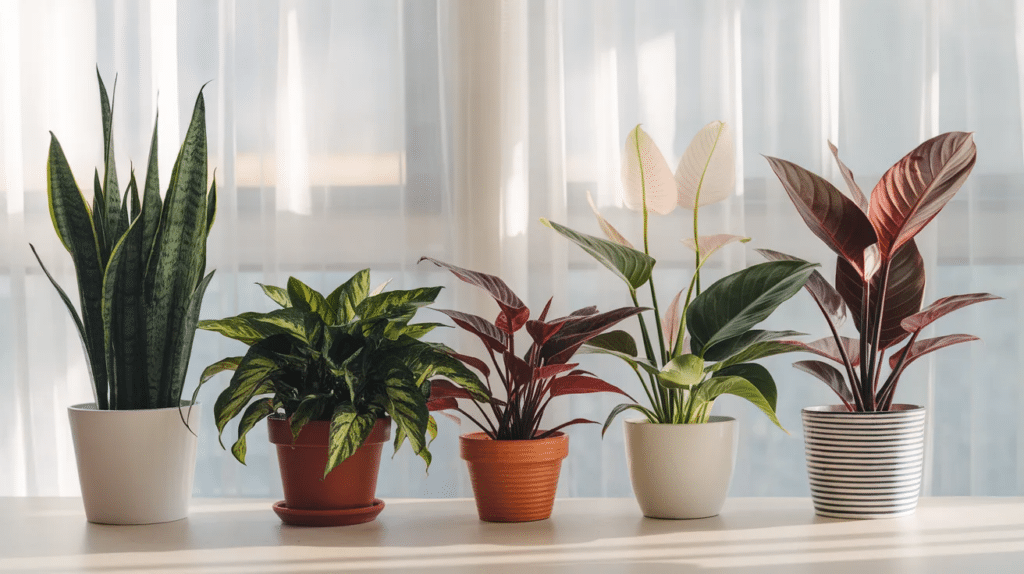
Some plants do more than just look nice. They also help clean the air in your home. These plants remove toxins, freshen the air, and are easy to grow, even for beginners.
- Snake Plant: This plant is great for bedrooms because it cleans the air at night. It needs very little care and can grow in low light. Just water it every few weeks.
- Spider Plant: The spider plant is a fast-growing plant that helps remove carbon monoxide and other harmful gases. It’s safe for pets and does well in hanging pots or shelves.
- Pothos: Pothos is one of the easiest plants to care for. It grows quickly and works well in bright, indirect light. It also helps clean the air by removing common toxins.
- Peace Lily: Peace lilies have beautiful white blooms and clean the mold spores from the air. They like low to medium light and need soil that stays slightly moist.
- ZZ Plant: The ZZ plant can survive with very little light and water. It helps clean indoor air and is very strong, making it great for people who forget to water.
- Areca Palm: This palm adds moisture to dry air and also filters it. It needs some space to grow and prefers bright light. Water it regularly, but don’t let the soil stay soggy.
- Rubber Plant: The rubber plant is good at removing chemicals from the air. It grows best in bright, indirect light and should be watered when the topsoil feels dry.
Conclusion
Plant care is more than a task; it’s a calm and steady part of your day. Watching a plant grow from your care feels rewarding.
It builds patience and adds something peaceful to your space. You don’t need to rush or be perfect. Every small step helps your plant and teaches you something, too.
Start simple, and enjoy the process. Over time, it becomes a habit that brings joy. Even one healthy plant can brighten a room and lift your mood.
Keep learning, stay curious, and let your plants grow with you. Have questions or tips of your own? Drop them in the comments!