


Winter takes a toll on outdoor furniture. Snow, ice, and freezing temperatures leave teak pieces looking dull and weathered.
The once-beautiful wood now has a grayish coating that makes homeowners wonder if their furniture is ruined for good.
But teak is tougher than it looks. That winter damage? It’s mostly surface-level. With the right cleaning approach, that furniture can look stunning again.
Spring is the perfect time to bring teak back to life and get it ready for the outdoor entertaining season. This blog breaks down exactly how to clean teak wood furniture after winter and restore its natural beauty.
Why Teak Furniture Needs Regular Cleaning
Winter weather isn’t kind to teak furniture. Moisture seeps into the wood grain, dirt accumulates, and organic matter, like leaves, can cause staining. Without regular cleaning, mildew grows in those damp crevices.
Teak naturally contains oils that protect it from decay, but those oils can’t do their job when covered in grime.
The wood develops that silvery-gray patina everyone notices after winter. Some folks like that aged look, but most prefer the warm honey tones teak is known for.
Regular cleaning maintains the wood’s integrity and keeps furniture looking its best season after season.
What You Need Before Cleaning Teak Furniture
| Tools & Materials | Purpose |
|---|---|
| Teak cleaner | Breaks down baked-on dirt and stains |
| Stiff brush | Removes moss, lichen, and loose debris |
| Sponge | Applies teak cleaner evenly |
| Green scouring pad | Helps scrub away stubborn grime |
| Hosepipe or garden hose | Rinses cleaner off safely |
| Rubber gloves | Protects hands from chemicals |
| Safety glasses | Prevents splashes into the eyes |
| Protective clothing | Cleaning can get messy |
| Elbow grease (light effort) | Helps lift dirt without pressure washing |
Step-by-Step Instructions on How to Clean Teak Wood
Cleaning teak after winter doesn’t require fancy products or complicated techniques. A few basic supplies and the right method will restore the wood’s natural appearance effectively.
Step 1: Inspect the Teak Furniture and Avoid Pressure Washing

Check the furniture’s condition before starting. Older pieces often have dirt baked into the surface.
Pressure washers cause rough patches by digging into the grain and stripping natural oils. Skip the jet wash and choose gentler cleaning methods that protect the wood’s integrity instead.
Step 2: Brush Off Moss, Lichen, and Loose Dirt First
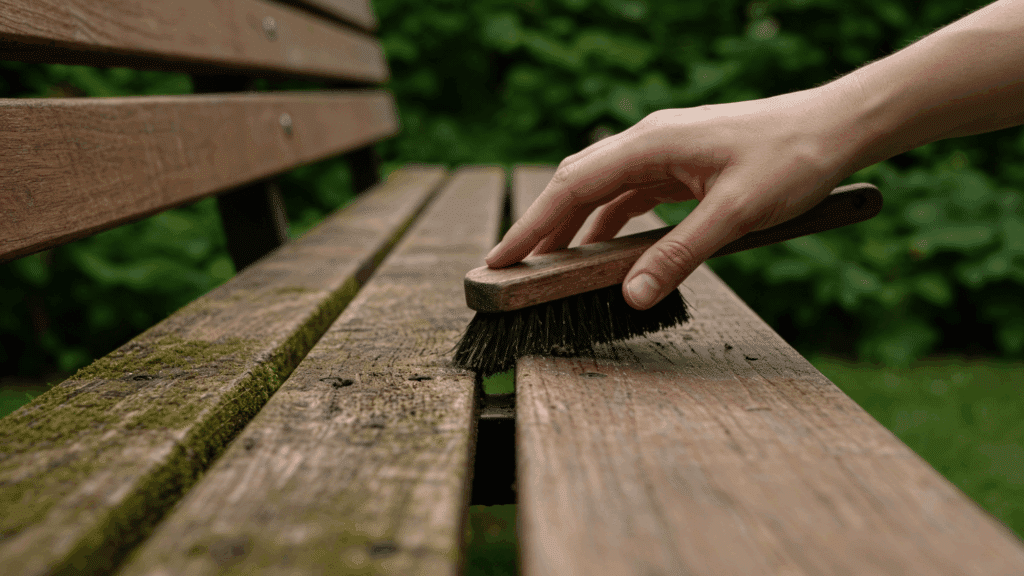
Start with dry preparation using a stiff brush. Remove loose debris like moss, lichen, dust, and surface dirt. This prevents grime from getting scrubbed deeper into the wood later.
Red staining from patio dust is common but removable. Brushing first creates a clean surface for better results.
Step 3: Soak the Teak Wood and Apply Teak Cleaner Safely
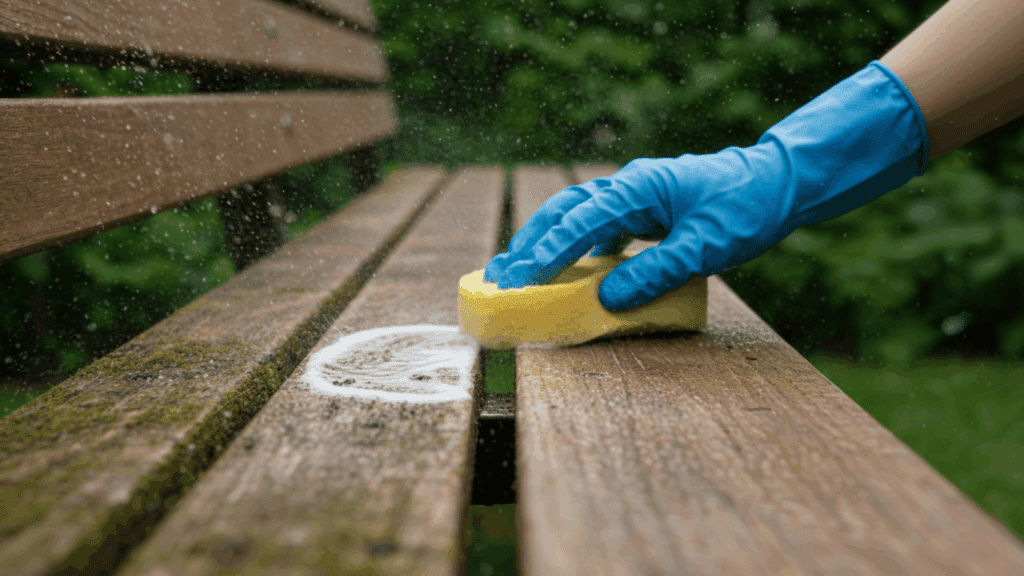
Thoroughly soak the furniture with water using a hose. This prevents the cleaner from absorbing too quickly and helps it spread evenly.
Apply teak cleaner with a sponge, working section by section. Wear rubber gloves and safety glasses, as the cleaner can irritate the skin and eyes. Cover all dirty areas completely.
Step 4: Let the Cleaner Sit, Then Scrub with a Scouring Pad
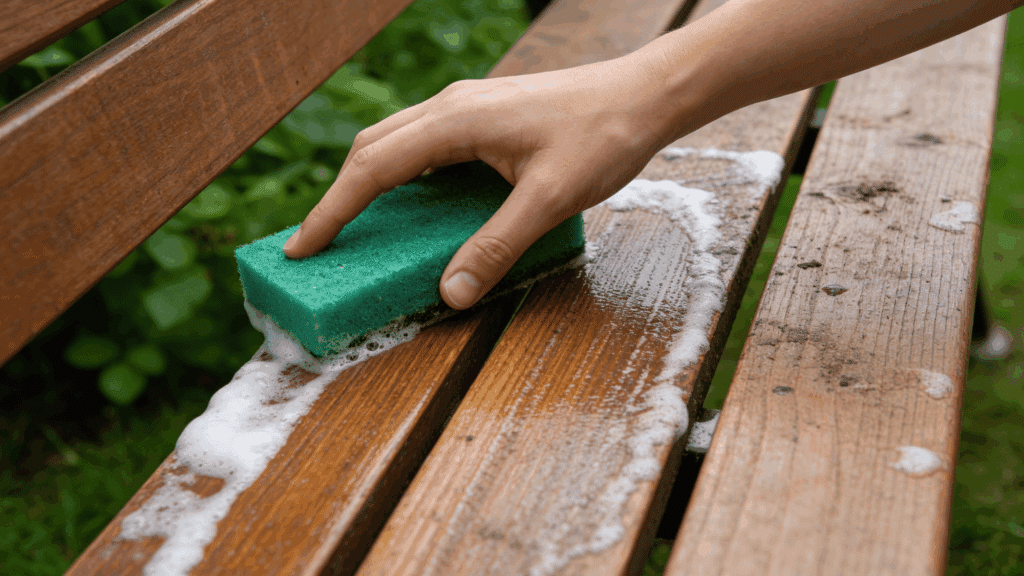
Allow the teak cleaner to sit for 4–5 minutes to break down dirt and stains. Scrubbing too early reduces effectiveness.
Use a green scouring pad to scrub gently, following the wood grain. The dirt lifts off without aggressive force. This step produces the biggest transformation.
Step 5: Rinse Thoroughly, Dry Completely, and Skip Teak Oil Outdoors
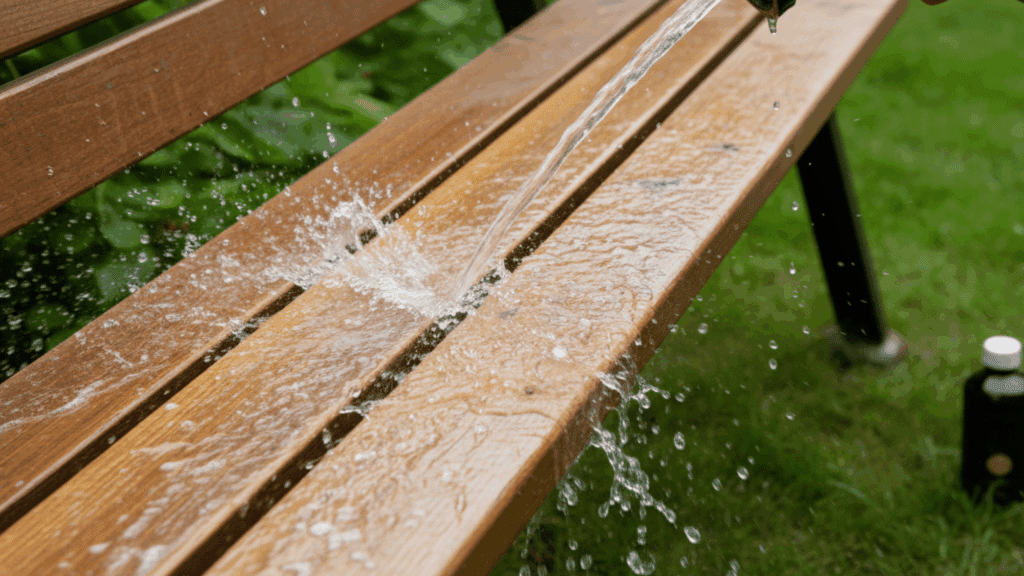
Rinse the furniture thoroughly with clean water using a hose. Remove all cleaner residue, then let the teak dry naturally. The restored finish will appear after drying.
Don’t apply teak oil to outdoor furniture, as teak already contains natural oils. Only indoor pieces may benefit from additional oiling.
Removing Common Teak Furniture Stains
Teak furniture picks up various stains throughout winter and spring.
Water marks, mildew spots, and rust from metal accents are frequent culprits. Food and drink spills from last season might still be visible, too.
Most stains respond well to the standard cleaning process, but stubborn marks need extra attention.
Oxalic acid works wonders on dark water stains and rust marks. Mildew requires a diluted bleach solution applied carefully to avoid damaging the wood.
The key is to identify the stain type first, then use the appropriate treatment. Patience matters more than elbow grease when tackling tough spots.
Should You Use Teak Oil for Outdoor Furniture?
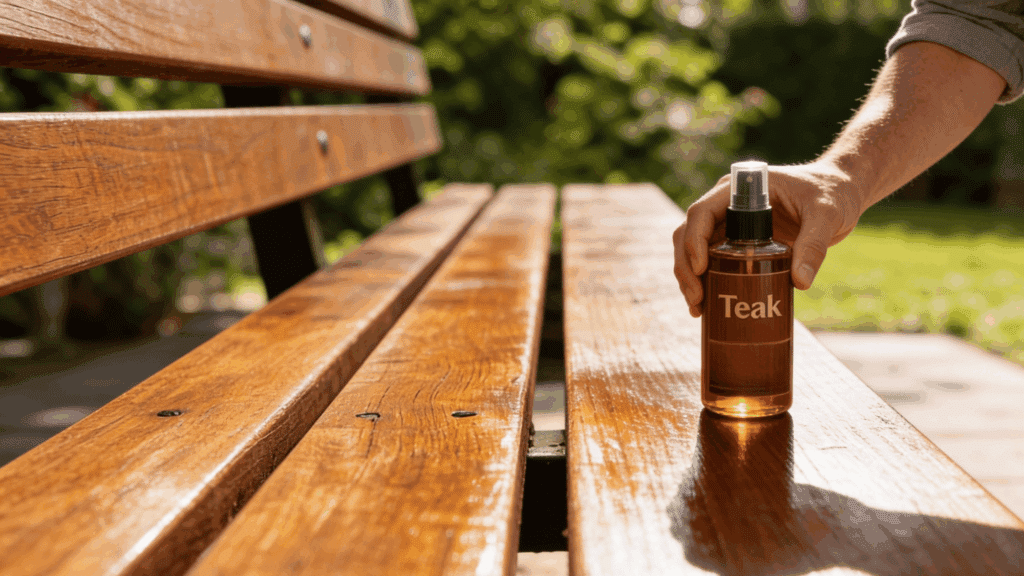
The teak oil question comes up constantly among furniture owners. Many assume oiling is necessary to protect outdoor pieces, but that’s actually a misconception.
Teak naturally produces its own protective oils that help it withstand weather and resist decay. These oils are part of what makes teak such a popular choice for outdoor furniture in the first place.
Adding store-bought teak oil to outdoor pieces doesn’t provide additional protection and can actually attract dirt and dust.
The oil sits on the surface rather than penetrating deeply, creating a sticky layer that collects grime faster. This means more frequent cleaning becomes necessary.
Indoor teak is different. Those pieces benefit from occasional oiling since they’re not exposed to moisture that helps maintain the wood’s natural oils.
How to Apply Teak Oil Correctly
For indoor teak furniture that needs oiling, proper application ensures an even finish and long-lasting protection without sticky residue buildup.
- Lightly sand the surface with fine-grit sandpaper to open the wood grain.
- Wipe away all dust with a clean, dry cloth.
- Apply a thin coat of teak oil using a lint-free cloth or brush.
- Let the oil soak in for 15–20 minutes.
- Wipe off excess oil completely with a clean rag.
- Allow 24 hours to dry before applying a second coat if needed.
Teak Furniture Maintenance Tips for Long-Term Care
Regular maintenance keeps teak furniture looking great and extends its lifespan. Simple habits prevent major cleaning sessions and preserve the wood’s natural beauty.
- Clean teak furniture at least twice yearly, ideally in spring and fall.
- Brush off debris regularly to prevent dirt buildup and staining.
- Store cushions and covers during heavy rain or winter months.
- Use furniture covers for extended protection during harsh weather.
- Avoid placing metal objects directly on teak to prevent rust stains.
- Allow proper airflow around furniture to prevent mildew growth.
To Conclude
Teak furniture bounces back beautifully with proper cleaning and care. The steps outlined here remove years of winter damage and restore that warm, natural finish homeowners love.
Regular maintenance prevents heavy buildup and makes future cleaning easier.
Remember, teak doesn’t need constant babying. Its natural durability is why it’s been a favorite for generations. A good cleaning twice a year and basic upkeep keep outdoor pieces looking their best.
Skip the oil for outdoor furniture and let the wood’s natural properties do their job. With minimal effort, teak furniture provides decades of reliable use.