

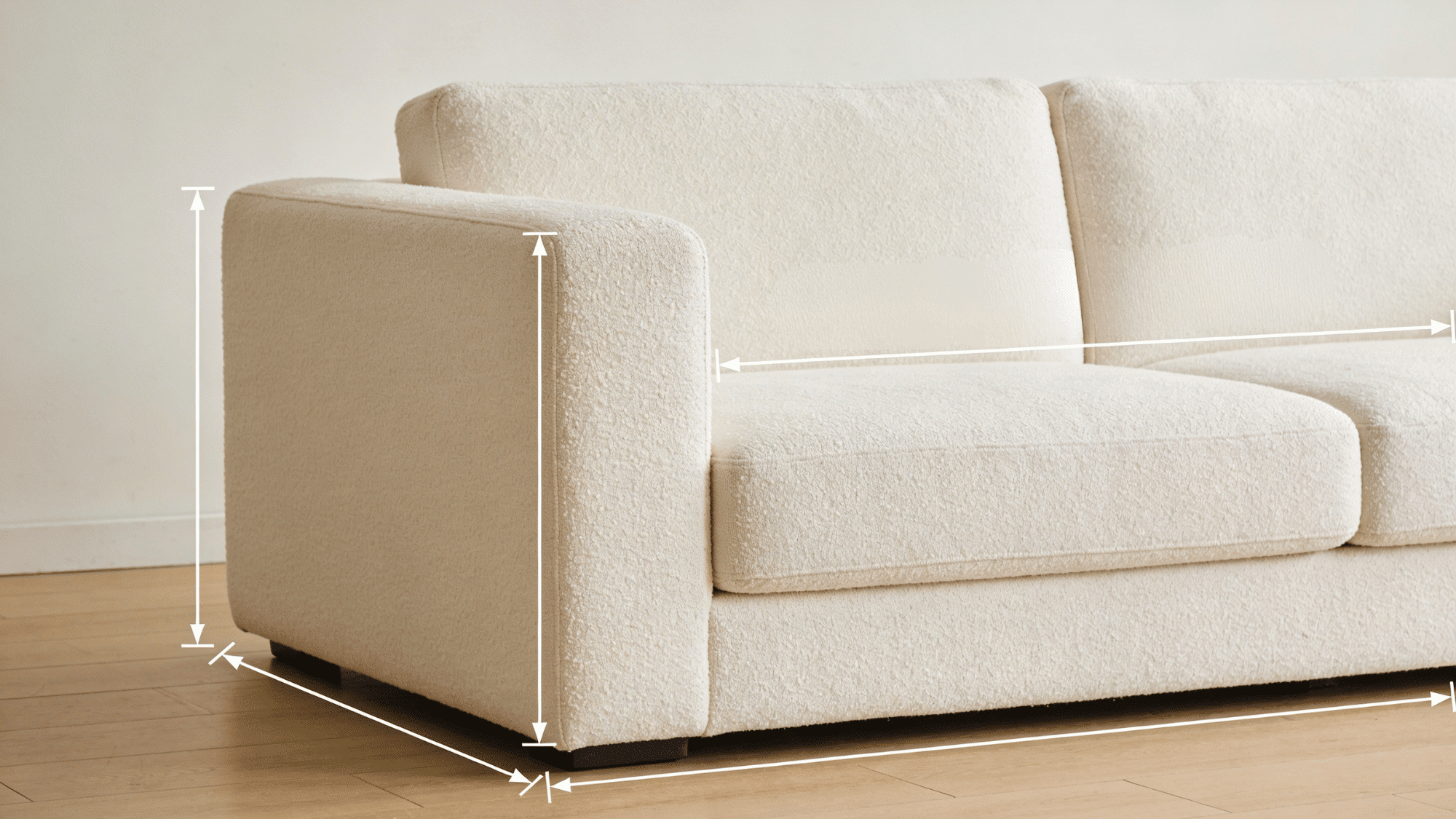
Couch shopping sounds simple. Until it isn’t.
Most people pick a sofa based on how it looks in the showroom. It seems perfect. But then it arrives home, and suddenly the living room feels like a hallway. Or worse, the couch barely fits through the front door.
Sofa sizes are tricky. There’s no single “standard” size that works for every home, every room, or every family. And without knowing the right measurements upfront, it’s easy to make a very expensive mistake.
That’s exactly why sofa sizes matter more than most people think. This blog breaks down the most common sofa sizes so the next couch fits just right.
What is the Standard Couch Length?
Most standard couches range from 84 to 96 inches in length. That’s roughly 7 to 8 feet. This size works well for most living rooms and comfortably fits 3 people.
But “standard” doesn’t mean one-size-fits-all. Sofa lengths vary based on style, design, and the number of seats.
A small apartment sofa might measure just 70 inches. A large family sectional could stretch well past 100 inches.
The key is matching the sofa size to the room size. A couch that’s too big crowds the space. One that’s too small looks lost in it.
Standard Couch Dimensions for Your Interior Design
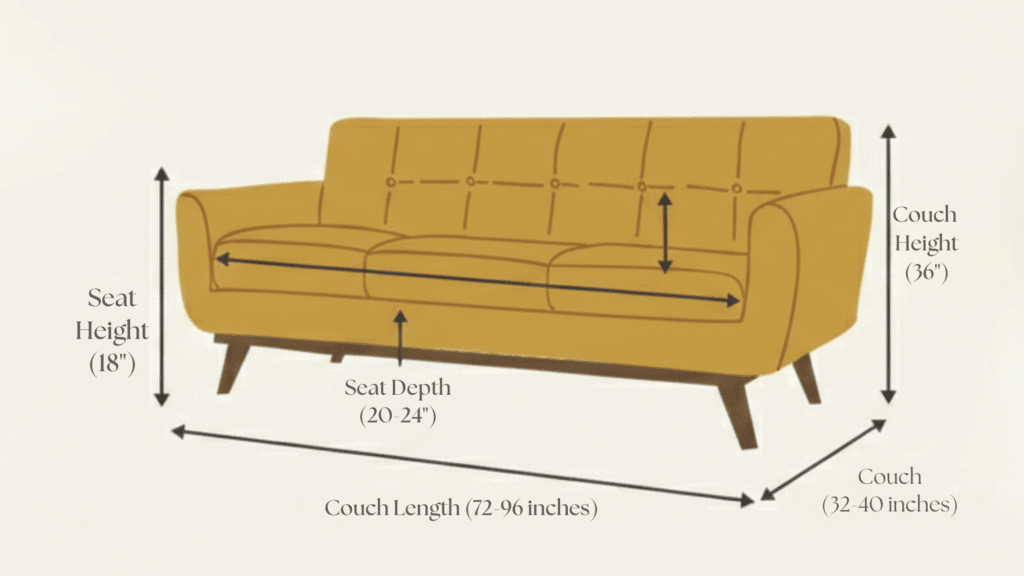
Getting sofa dimensions right makes a real difference. Here’s a quick breakdown of every standard measurement to know before buying.
1. Standard Couch Length
Couch length is the first measurement to check. A 2-seater typically runs 60–72 inches. A 3-seater fits between 72 and 96 inches.
Need more room? An extra-large sofa stretches from 96 to 110 inches. Longer sofas suit bigger rooms with open floor plans. Smaller ones work better in compact spaces or apartments.
Always measure the wall space first before settling on a length.
2. Standard Couch Depth
Depth decides how comfortable a sofa actually feels day-to-day. Most standard sofas measure 32–40 inches deep.
Deep-seating sofas go 40 inches and beyond. These are great for lounging but need more floor space.
A shallow sofa keeps the room feeling open. A deeper one feels more relaxed and cosy. Pick based on how the sofa will actually be used.
3. Standard Couch Height
Sofa height affects how a room looks and feels overall. Most couches stand 30–36 inches tall. Lower sofas give a modern, relaxed look. Taller ones feel more formal and are easier to get up from.
Height also affects how the sofa lines up with other furniture in the room, like side tables and armrests.
4. Standard Seat Height and Seat Depth
Seat height and depth decide personal comfort. Standard seat height runs 17–19 inches from the floor. This makes sitting down and standing up easy for most people.
Seat depth ranges from 20 to 24 inches. A deeper seat lets people sink in and stretch out.
A shallower seat keeps posture more upright. Both measurements matter more than most buyers realise at first.
How to Choose the Right Couch Length for Your Room
Picking the right couch length takes more than guessing. These simple steps make the whole process much easier.
- Measure the Room First: Note the length and width of the space before looking at any sofa.
- Leave Walking Space: Always keep at least 30–36 inches of clear space for easy movement around the sofa.
- Follow the Two-Thirds Rule: The sofa length should cover about two-thirds of the wall it sits against.
- Mark the Floor with Tape: Use painter’s tape to outline the sofa’s dimensions directly on the floor.
- Account for Other Furniture: Factor in coffee tables, side tables, and rugs when deciding on sofa length.
- Think About the Doorway: Make sure the sofa can physically fit through the entrance before buying.
- Match the Sofa to The Room Shape: Long, narrow rooms suit smaller sofas. Open square rooms handle larger ones better.
- Consider the Number of Users: More people at home means a longer sofa makes more practical sense.
When Should You Choose a Non-Standard Couch Size?
Standard sofa sizes work well for most homes. But not every living room is built the same way.
Some spaces are too small for a regular 3-seater. Others are large enough that a standard sofa looks completely out of place.
Certain households have specific needs, too, such as extra seating for a big family or a compact sofa for a studio apartment.
Non-standard sizes also make sense when the room has an awkward layout. Think slanted walls, bay windows, or unusually narrow doorways.
Custom or non-standard couches give more control over fit, comfort, and style. They cost more and take longer to arrive. But in the right situation, they solve problems that off-the-shelf sofas simply can’t.
To Conclude
Sofa shopping gets a lot easier once the numbers make sense. Standard couch lengths, depths, and heights exist for good reason; they fit most homes and most people without much fuss.
The right sofa isn’t always the biggest or the most expensive one. It’s the one that fits the room, suits the people using it, and works within the space available.
Before making a final call, measure twice. Check the doorway. Mark the floor. These small steps save a lot of trouble later.
Got a tricky room layout or an unusual space? Drop the details in the comments. Finding the right fit for every home is always worth talking about.