

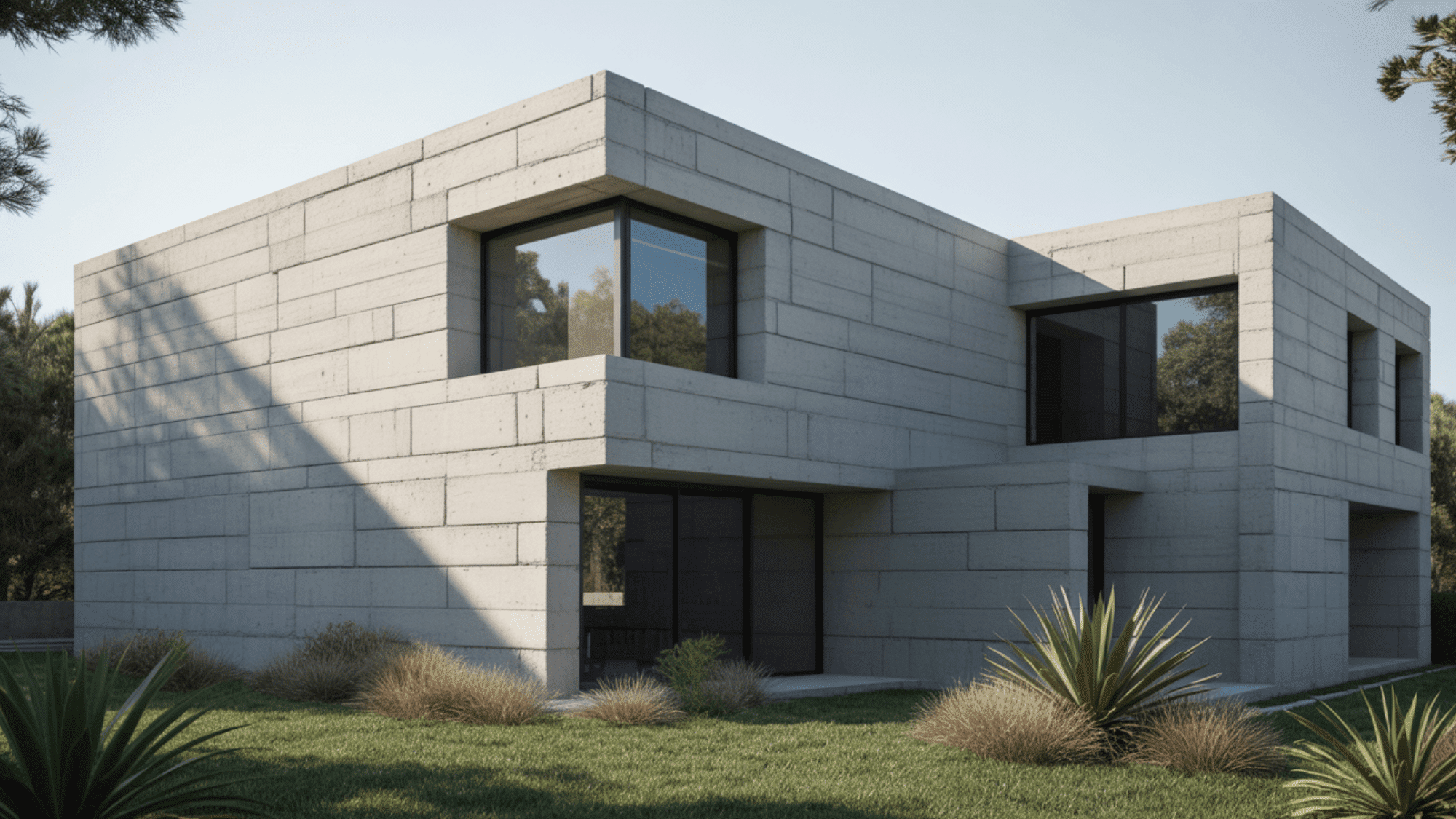
What if your home could survive a hurricane, resist fire, and keep your energy bills low, all at the same time? That sounds like a lot to ask from four walls and a roof. But a concrete block house can actually deliver on all three.
I remember when I first started looking into concrete block homes, I was surprised by how many advantages they offered beyond just being solid structures.
Most people think of them as plain or industrial-looking. What they miss is the real value beneath the surface. Concrete block houses are built to last, and the reasons go far beyond strength alone.
In this post, I’ll walk you through the benefits of a concrete block house that might just change the way you think about this building style.
What Makes a Concrete Block House Different?
A concrete block house is built using concrete masonry units, also called CMUs. These are large, dense blocks stacked and secured with mortar to form the walls of a home.
Unlike wood-frame houses, which rely on timber and drywall, concrete block homes use solid material from the ground up.
Compared to brick homes, concrete blocks are larger and faster to lay. They also have hollow cores that can be filled with insulation or steel rebar, making the walls even stronger and more energy-efficient.
Wood-frame homes are lighter and cheaper to build, but they come with trade-offs. They are more vulnerable to fire, moisture, pests, and storm damage.
Concrete block construction is common in states like Florida, where strength and weather resistance matter most. It is a building method built around long-term performance.
Benefits of a Concrete Block House
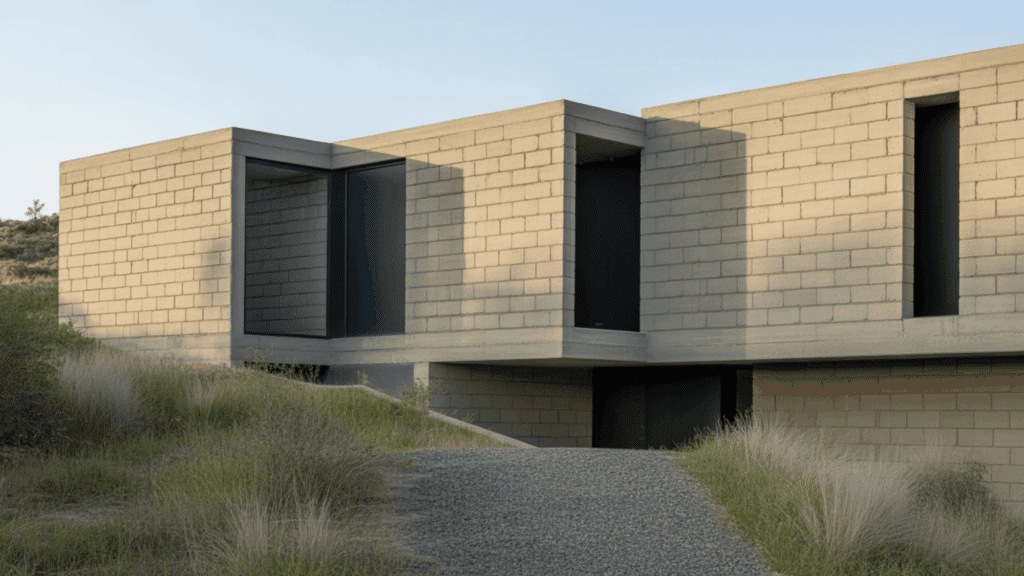
Concrete block homes offer more than just durability. Here are the benefits that make this building style a smart choice for everyday homeowners.
1. Strength That Lasts for Decades
Concrete block walls are extremely dense and hard to damage. They do not warp, crack, or shift the way wood does over time.
A well-built concrete block house can stand for 50 to 100 years with minimal structural issues. The material holds its shape through heat, cold, and humidity.
For homeowners who want a house that stays solid without constant repairs, concrete block construction is a dependable long-term option.
2. Better Protection Against Fire
Concrete does not burn. That is one of the biggest advantages of a concrete block house over a wood-frame home.
If a fire starts inside or outside the home, concrete block walls slow the spread significantly. This gives families more time to get out safely and reduces the risk of total loss.
Many fire codes recognize concrete block as a safer building material, which is why it is widely used in commercial buildings as well.
3. Stands Up to Severe Weather
Concrete block homes are built to handle strong winds, heavy rain, and even hurricanes. The thick, dense walls resist impact from debris and do not blow apart the way lighter materials can.
This is why concrete block construction is the go-to choice in storm-prone areas like Florida and the Gulf Coast.
When severe weather hits, homeowners in concrete block houses have a much better chance of walking away with little to no structural damage.
4. Keeps Noise Out
One underrated benefit of a concrete block house is how well it blocks sound. The thick walls absorb noise from traffic, neighbors, and outdoor activity far better than wood-frame walls can.
If you live near a busy road or in a neighborhood with a lot of activity, this makes a real difference in daily comfort.
Families with young children or anyone who works from home will especially notice how much quieter life feels inside a concrete block home.
5. Lower Energy Bills
Concrete block walls have natural thermal mass, meaning they absorb heat during the day and release it slowly at night.
This keeps indoor temperatures more stable without overworking your heating or cooling system. Over time, this leads to lower monthly energy bills. When the hollow cores are filled with insulation, the effect is even stronger.
Homeowners in hot climates especially benefit from this, as the walls help keep the inside cool without running the air conditioner constantly.
6. Resistant to Pests and Termites
Termites and other pests cause billions of dollars in damage to wood-frame homes every year. Concrete block gives them nothing to feed on.
The material is not organic, so insects cannot burrow through it or break it down. Homeowners do not need to worry about termite inspections, chemical treatments, or the hidden damage that often goes unnoticed for years in wood homes.
This alone saves a significant amount of money and stress over the life of the house.
7. Less Maintenance Over Time
Concrete block homes simply do not need as much upkeep as other building types. The walls do not rot, warp, or peel.
They hold paint well and do not require frequent repainting as wood siding does. There are no boards to replace, no timber to seal, and no siding to patch after a storm.
For homeowners who want to spend less time on repairs and more time enjoying their home, concrete block is one of the lowest-maintenance options available.
8. Better Air Quality Inside the Home
Wood and drywall can trap allergens, absorb odors, and hold moisture that leads to mold growth. Concrete block does not have the same problem.
The material does not off-gas chemicals or hold onto pollutants the way some building materials do. This makes the indoor air cleaner and healthier, especially for people with allergies or respiratory sensitivities.
Families who prioritize a healthy living environment will find that a concrete block house supports better air quality from the ground up.
9. Strong Resale Value
Buyers looking for a long-lasting, low-maintenance home are willing to pay more for concrete block construction.
The durability, storm resistance, and lower insurance costs all add to the home’s appeal on the market. In areas where concrete block is a known standard, like Florida, it is often a top-selling point.
Homeowners who invest in concrete block construction tend to see that investment reflected in their home’s value when it comes time to sell.
10. Resistant to Mold and Moisture
Moisture is one of the biggest threats to a home’s structure and air quality. Concrete block handles it better than wood.
When properly sealed, the walls resist water absorption and do not create the warm, damp conditions that mold needs to grow. This is especially important in humid climates where moisture problems can develop quickly.
Homeowners in coastal or tropical areas find that concrete block holds up far better than wood-frame construction when it comes to long-term moisture control.
11. Environmentally Friendly Build
Concrete block homes have a smaller environmental footprint than many people expect. The blocks are made from natural materials like sand, gravel, and cement.
They last for decades, which means less waste from repairs and replacements over time. The energy efficiency of concrete block construction also reduces the home’s long-term carbon output.
For homeowners who want to build with the environment in mind, concrete block is a practical and responsible choice that holds up well without constant resource consumption.
12. Lower Homeowner’s Insurance Cost
Insurance companies consider concrete block homes less risky than wood-frame homes. They are harder to damage by fire, wind, and pests, which means fewer claims and lower premiums.
In storm-heavy states, this difference can be significant. Homeowners in Florida, for example, often pay noticeably less for insurance on a concrete block home compared to a wood-frame property.
Over the years, those savings add up to a real financial advantage that makes the initial build cost easier to justify.
13. Long-Term Cost Savings
When you add up lower energy bills, reduced maintenance costs, cheaper insurance, and fewer repairs, a concrete block house delivers strong financial value over time.
The upfront construction cost may be higher than wood-frame building, but the ongoing savings more than make up for it.
Homeowners who plan to stay in their home for ten years or more consistently find that concrete block pays for itself. It is not just a building choice — it is a long-term financial decision that works in your favor.
Are There Any Downsides to Consider?
Concrete block construction has a lot going for it, but it is fair to look at the full picture before making a decision.
The upfront building cost is higher than that of wood-frame construction. Materials and labor for concrete block work require more investment at the start, which can be a stretch for buyers on a tight budget.
The weight of concrete block walls also means the foundation needs to be stronger and more carefully designed. This adds to both the planning time and the overall cost.
Construction takes longer compared to wood-frame builds. Laying and setting concrete blocks is a slower process, which can push back move-in timelines.
Lastly, making changes or additions to a concrete block home after it is built is more difficult. Cutting through walls for new wiring or plumbing requires more effort and cost than it would in a wood-frame home.
What People Say About Building a Concrete Block House?
Based on discussions on Reddit, some people are considering building a small house with concrete blocks and wonder whether it is a practical option.
One user explained they were considering building a small home of around 750 square feet and asked whether the process could work by hiring professionals for the foundation and getting help with laying the blocks and mortar.
They also raised common questions that many beginners have when researching this idea.
These include whether rebar should be placed inside the walls for strength and if the hollow cores of the blocks need to be filled with concrete.
People in similar threads often say concrete block construction can work, but it usually requires proper reinforcement, planning, and professional guidance to ensure the structure is safe and in compliance with local building codes.
You can also view and participate in the discussions here at Reddit.
Is a Concrete Block House Right for You?
The answer depends on a few key factors specific to your situation.
If you live in a region with extreme weather, high humidity, or an active storm season, a concrete-block house makes a lot of sense. The strength and moisture resistance alone justify the investment for homeowners in those areas.
Budget is another factor to carefully consider. If you can handle a higher upfront cost and plan to stay in the home for ten or more years, the long-term savings on energy, maintenance, and insurance will work in your favor.
For buyers who move frequently or have a limited construction budget, wood-frame may be a more practical starting point.
But if you are building a forever home, want lower ongoing costs, and value safety and durability above all else, a concrete block house checks every box. It is a decision built around the long game.
Final Thoughts
A concrete block house is not just a building choice. It is a long-term investment in safety, comfort, and financial stability.
From standing up to severe weather and fire to cutting energy bills and maintenance costs, the benefits are real and add up over time.
The upfront cost may give some buyers pause, but for homeowners who are thinking ten, twenty, or even fifty years ahead, concrete block consistently delivers value that other building methods struggle to match.
If you found this helpful, take a look at our guide on the best building materials for storm-prone areas. And if you already live in a concrete-block home, I would love to hear about your experience.
Drop a comment below and share what you have noticed most about living in one.