

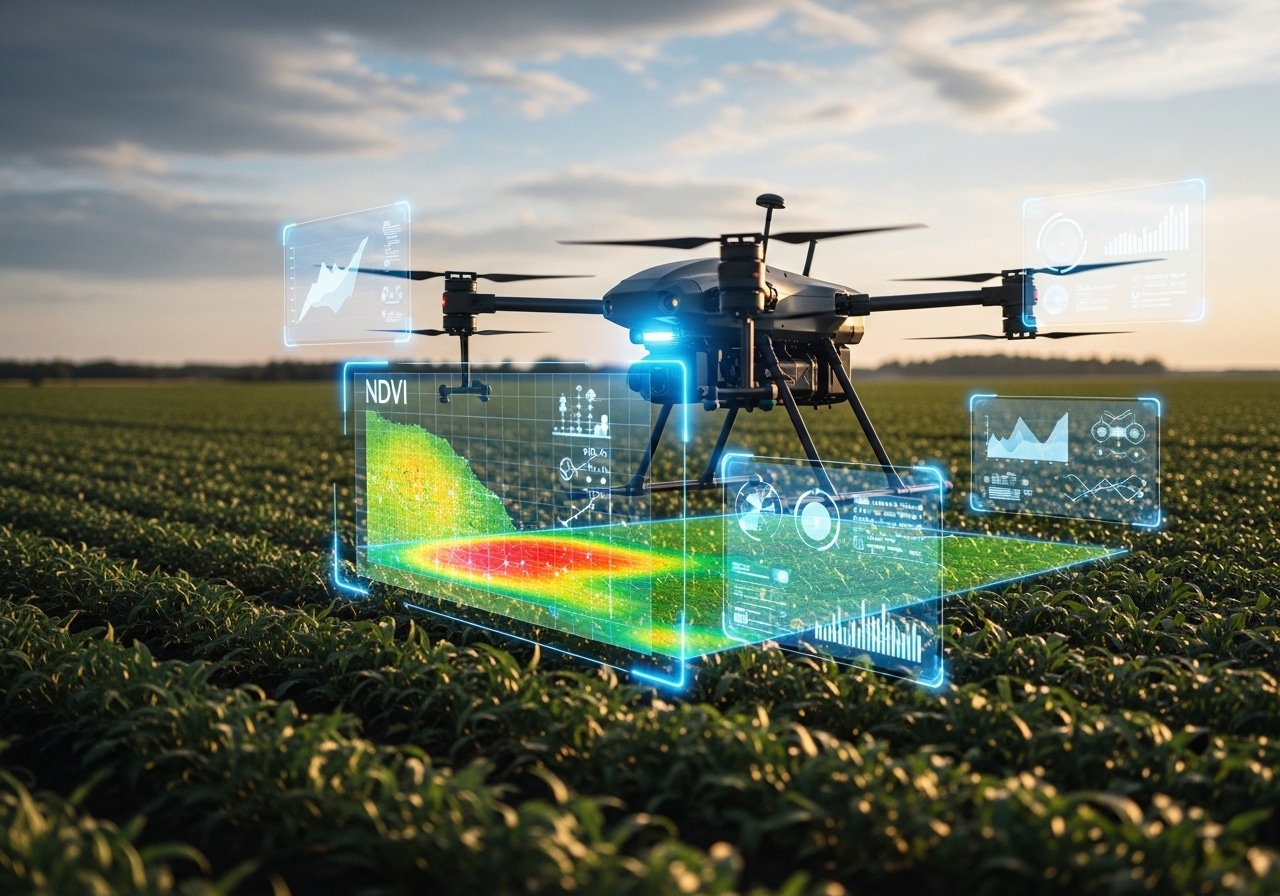
The agricultural industry is undergoing a profound technological transformation. For over a century, tractors were the undisputed kings of the field, but a new aerial revolution is changing the landscape of modern farming. Agricultural drones, also known as Unmanned Aerial Vehicles (UAVs), have emerged as essential tools for precision agriculture, offering solutions that traditional machinery simply cannot match .
According to the Food and Agriculture Organization (FAO), global agricultural production must increase by approximately 50% by 2050 to meet the demands of a growing population, yet farmers face shrinking arable land, labor shortages, and climate volatility .
Agricultural drones address these challenges head-on by enabling data-driven decision-making, reducing input costs, and maximizing yields. As a leading manufacturer in this space, Jinghong Drone is at the forefront of providing robust, efficient UAV solutions tailored for modern agricultural operations.
Here is a comprehensive look at the top benefits of integrating agricultural drones into your farming practices.
1. Precision Crop Health Monitoring and Scouting
One of the most significant advantages of agricultural drones is their ability to provide a bird’s-eye view of the farm, revealing issues invisible to the naked eye from the ground. Equipped with advanced sensors, such as multispectral, thermal, and RGB cameras, drones capture detailed data on crop health, plant count, and growth patterns .
Early Detection: Drones detect stress in plants caused by pests, diseases, or nutrient deficiencies days or even weeks before they become visible to humans. Multispectral imagery uses NDVI (Normalized Difference Vegetation Index) to quantify plant health, allowing farmers to intervene precisely where needed .
Efficiency:Instead of walking miles across fields to inspect crops manually, a farmer can launch a drone and survey hundreds of acres in minutes. Doug Houser, a digital agriculture Extension specialist at Iowa State University, notes that farmers can use drones to stop at the end of a road and “see all over the field,” identifying green spots in dry areas or damage without stepping foot in the mud.
2. Precision Spraying and Variable Rate Application
Traditional crop spraying methods whether by tractor or manned aircraft often result in uneven application, waste, and soil compaction. Agricultural spraying drones offer a more precise, efficient alternative.
Targeted Intervention: Unlike conventional methods that spray entire fields uniformly, drones excel at spot spraying. By analyzing data from mapping flights, drones can identify specific zones affected by weeds or pests and apply pesticides or herbicides only to those areas. This targeted approach reduces chemical usage by up to 60% while maintaining efficacy .
Accessibility: Drones can access areas that ground rigs cannot, such as wet fields (preventing soil compaction and ruts), steep slopes, and tall crops like corn or sugarcane late in the season . They also minimize the destruction of crops under wheels, ensuring every plant has the best chance to thrive.
3. Resource Optimization and Sustainability
Sustainability is no longer just a buzzword in agriculture; it is a financial necessity. Drones contribute to sustainable farming by optimizing the use of water, fertilizers, and fuel.
Water Conservation: Drones equipped with thermal sensors can identify areas of a field suffering from water stress or drainage issues. This allows farmers to adjust irrigation systems to deliver water precisely where it is needed, rather than over-watering entire fields .
Reduced Input Costs: By ensuring that seeds, fertilizers, and chemicals are applied only where they are needed, drones drastically reduce waste. This not only lowers the cost of inputs but also minimizes the environmental impact of agricultural runoff .
4. Efficient Field Mapping and Soil Analysis
Before planting begins, understanding the topography and soil composition of a field is crucial. Drones create high-resolution 3D maps and elevation models that provide actionable insights for farm planning.
Topographic Surveys: Drones can quickly map a field to identify drainage patterns, low spots, and areas of poor soil health. This data helps farmers plan irrigation systems, manage water flow, and optimize planting patterns to maximize yields .
Data Integration: The data collected by drones can be integrated with farm management software (like BASF’s xarvio® FIELD MANAGER) to create prescription maps for seeding and fertilization, automating the decision-making process .
5. Planting and Seeding
While less common than spraying, drones are increasingly being used for direct seeding applications. Drone seeding is particularly valuable for cover crops and re-seeding wet or muddy areas where heavy machinery cannot operate.
Access: Drones can broadcast seeds into flooded rice paddies or cover crop mixes into standing corn, ensuring ground cover is established without damaging the cash crop.
Speed: They offer a fast and efficient way to establish vegetation, helping farmers meet planting windows that would otherwise be missed due to adverse weather conditions .
6. Labor Shortage Solution and Cost Savings
Labor shortages are a critical issue in agriculture globally. Drones offer a high-tech solution to the problem of finding manual labor for scouting and spraying.
Reduced Manpower: One drone operator can accomplish the work of a large ground crew. The automation features of modern drones allow them to fly pre-programmed routes autonomously, requiring minimal input from the pilot beyond monitoring the system .
Cost-Effectiveness: While the initial investment in a high-quality spray drone can range from $40,000 to $50,000 (plus accessories), it often proves more cost-effective than hiring custom applicators or purchasing large, expensive ground rigs that require significant maintenance and fuel . Over time, the savings on inputs and labor provide a strong return on investment.
7. Overcoming Terrain and Weather Limitations
Traditional farming is often dictated by the weather and the condition of the soil. If it rains, tractors are sidelined to prevent soil compaction. Drones, however, are not limited by wet field conditions.
Timeliness: In agriculture, timing is everything. Drones can fly and spray even when the ground is too soft for heavy equipment. This ability to act immediately during critical pest or disease outbreaks can save an entire crop from devastation .
Versatility: Whether navigating the rice terraces of Asia, the vineyards of Europe, or the vast row crops of the Americas, drones are adaptable to any terrain .
8. Integration with AI and Advanced Analytics
The future of agriculture lies in artificial intelligence (AI), and drones are the perfect platform for AI-driven farming. Modern drones utilize edge computing and machine learning algorithms to process data in real-time.
Autonomous Decisions: AI enables drones to recognize weeds, count fruit, and detect diseases autonomously. Swarm intelligence where multiple drones coordinate together is already being tested to cover massive areas more efficiently than a single large drone .
Yield Estimation: By analyzing images throughout the growing season, AI algorithms can predict yield with high accuracy, helping farmers negotiate better contracts and manage harvest logistics effectively .
Frequently Asked Questions (FAQs)
1. What types of sensors are used in agricultural drones?
Agricultural drones typically use RGB cameras for standard visuals, multispectral sensors (capturing NIR and Red-edge bands) for crop health analysis (NDVI), thermal sensors for irrigation and stress detection, and LiDAR for detailed 3D mapping and terrain modeling.
2. Are there regulations for flying drones on my farm?
Yes. In most countries, farmers are required to register their drone. If you are using the drone for business purposes (which includes improving your farm management to make a profit), you generally need a commercial operator license (such as the FAA Part 107 in the U.S.) rather than a hobbyist license.
3. How much does an agricultural spray drone cost?
The cost varies widely based on payload capacity and features. Entry-level imagery drones can cost $1,000–$3,000. High-capacity spray drones typically range from $40,000 to $50,000 for the unit, with total startup costs (including batteries, chargers, nurse tanks, and trailers) often reaching $80,000–$100,000.
4. How much area can a drone cover in a day?
Efficiency depends on battery life and tank size. Generally, a spray drone can cover up to 500 acres per day, significantly reducing the time required for tasks like spraying and monitoring compared to manual methods . However, operators must manage frequent battery swaps (every 10-12 minutes) to maintain efficiency.
5. How do drones help with sustainability?
Drones promote sustainability by enabling “precision agriculture.” They allow farmers to apply water, fertilizers, and pesticides only where needed, drastically reducing chemical runoff, conserving water, lowering fuel consumption, and minimizing soil compaction.
6. Is it difficult to learn to fly an agricultural drone?
Most modern agricultural drones feature autonomous flight modes. Operators can set waypoints via a ground control station, and the drone flies the pattern automatically. While flying is relatively easy (often compared to using a smartphone), obtaining the necessary commercial license requires studying for a certification test .
7. What is the future of agricultural drones?
The future includes swarm intelligence (multiple drones working together), deeper integration with AI for real-time pest detection, and edge computing for processing data directly on the drone without needing to upload to the cloud.
Conclusion
Agricultural drones are not just a trend; they are a fundamental shift in how we approach food production. They bridge the gap between traditional farming methods and the demands of a modern, data-driven world. By offering precision in spraying, insight through imaging, and efficiency that saves time and money, drones empower farmers to do more with less.
As we look toward the future, the integration of AI, swarm technology, and autonomous flight will only increase the utility of drones on the farm . Whether you are a large-scale producer or a smallholder, the adoption of drone technology is a strategic investment in sustainability and profitability.
If you are ready to take your farming operation to the next level, explore the latest innovations in precision agriculture. As a trusted expert in the field, Jinghong Drone offers a range of high-quality agricultural UAVs designed to meet the specific needs of modern farmers.