

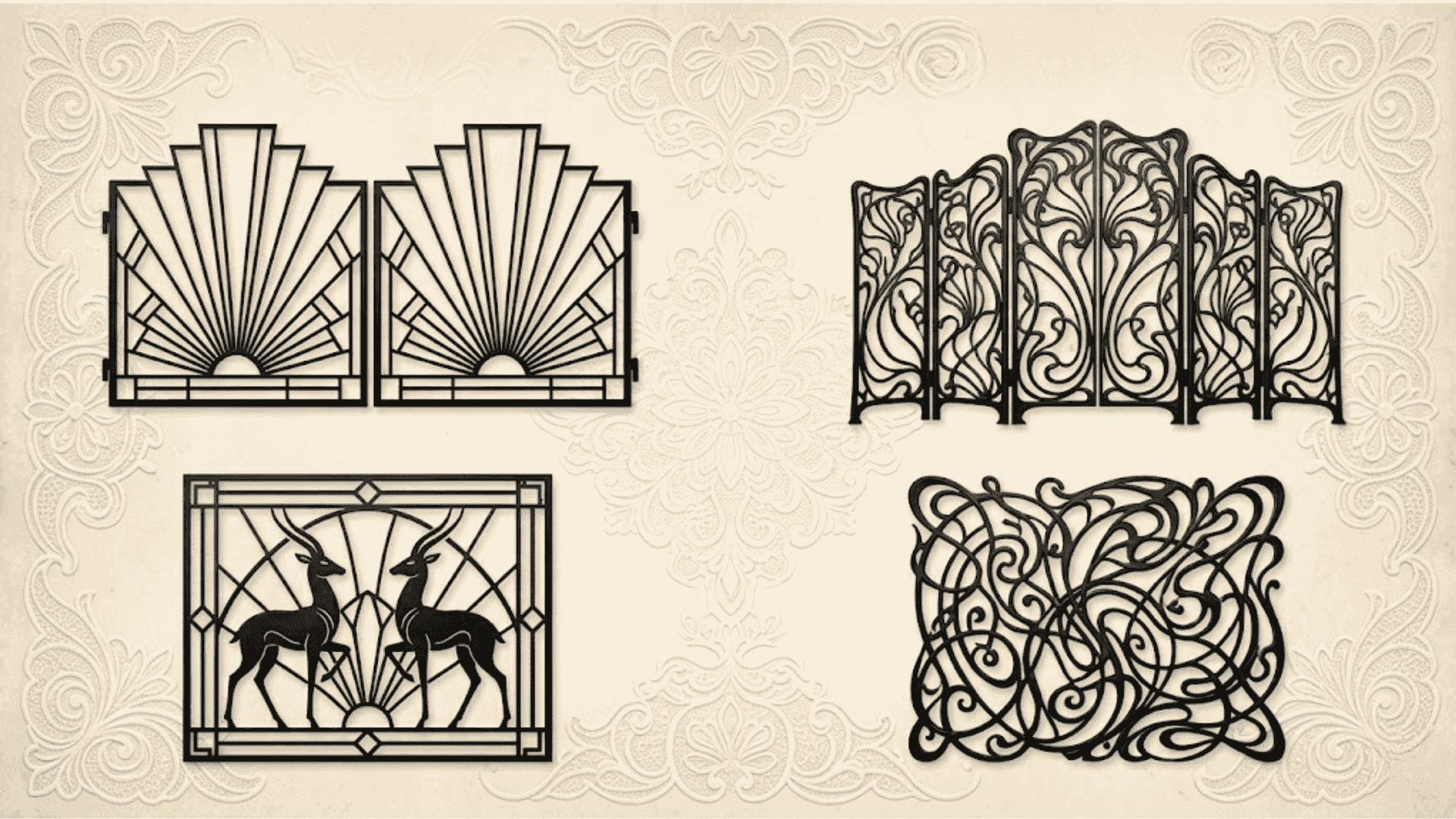
When I first started noticing old buildings and vintage furniture, I often came across the terms Art Deco vs Art Nouveau, and I found them a bit confusing at first.
Both styles look decorative and artistic, so it’s easy to mix them up. But once I learned the key differences, it became much easier to recognize each one.
In this blog post, I will explain both styles in a simple, clear way. I’ll cover what Art Nouveau is, what makes it unique, and the main features of Art Deco.
I’ll also compare their history, design ideas, materials, and how they appear in architecture and interiors. By the end, you’ll know exactly how to tell these two styles apart.
What Is Art Nouveau Style
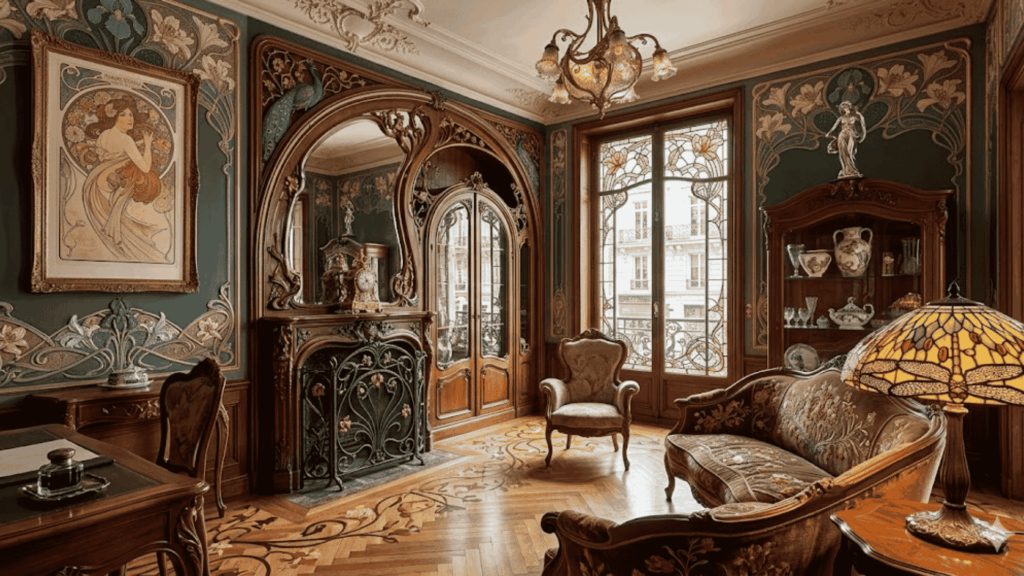
Art Nouveau is a design style known for its flowing lines and decoration inspired by nature. Many designs include shapes resembling plants, flowers, vines, and curved stems.
Instead of straight lines and rigid patterns, the style focuses on smooth movement and natural forms.
Buildings, furniture, and decorative objects often show curved details that move across the surface. Iron railings, stained glass, and wall designs frequently include these organic shapes.
The goal was to create designs that felt connected to nature rather than a strict geometric structure.
Art Nouveau designs often appear fluid and natural in their form. The lines usually bend and curve, giving the style a soft and decorative appearance.
Designers commonly worked with materials like glass, wood, and metal. Natural shapes and detailed decoration remain the defining features of Art Nouveau style.
What Is Art Deco Style
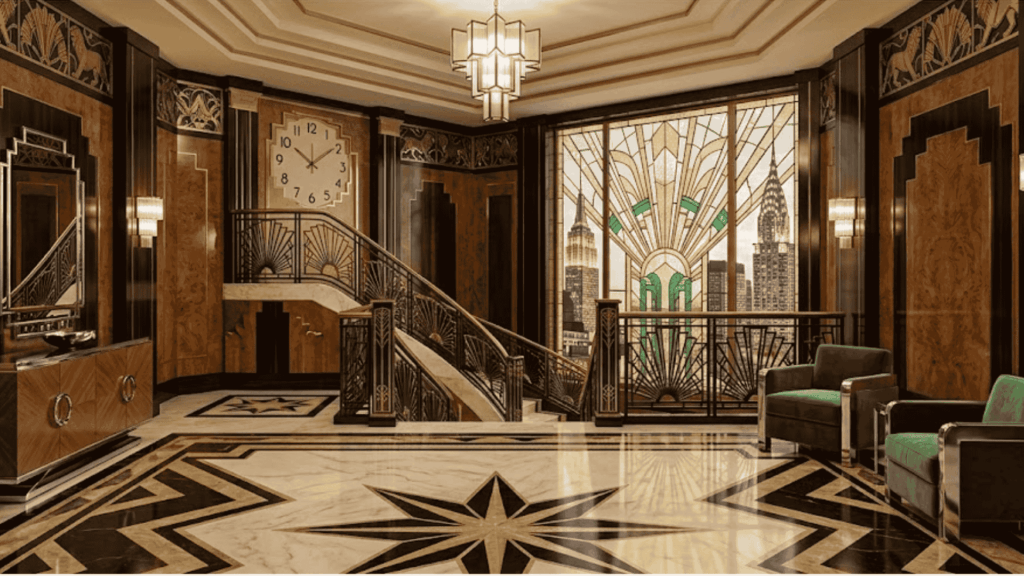
Art Deco is a design style known for its strong geometry and structured patterns. Instead of curved natural forms, this style focuses on straight lines, symmetry, and bold shapes.
Designers often used patterns such as zigzags, chevrons, sunbursts, and stepped forms to create a modern and striking look.
Architecture, furniture, and decorative objects in this style often appear polished and balanced. Buildings may feature tall vertical lines, repeating patterns, and decorative panels that emphasize symmetry.
Interiors also follow this approach with sleek furniture shapes and decorative details that highlight structure.
Art Deco design is recognized for its clear geometry and symmetry. The style often uses materials like chrome, glass, lacquer, and polished metals to create a refined appearance.
The focus stays on bold structure, modern materials, and decorative patterns, which give Art Deco its distinctive visual identity.
Key Differences Between Art Nouveau & Art Deco
Art Nouveau and Art Deco look similar at first, but come from different time periods and design ideas. Knowing their differences makes each style easier to identify.
| Aspect | Art Nouveau | Art Deco |
|---|---|---|
| Time Period | Popular mainly between 1890 and 1910 during the late 19th and early 20th century | Became popular in the 1920s and 1930s during the rise of modern industry |
| Design Inspiration | Strongly inspired by nature and natural movement | Inspired by technology, machines, and the modern industrial world |
| Artistic Influence | Connected to the Arts and Crafts movement and fine decorative arts | Influenced by modernism, industrial progress, and luxury design |
| Surface Detail | Designs often blend decoration into the structure itself | Decoration is usually added in structured repeating patterns |
| Visual Rhythm | Patterns flow continuously across surfaces without sharp breaks | Designs often repeat in clear, structured, and balanced layouts |
| Craftsmanship Approach | Emphasizes handmade artistic craftsmanship and detailed work | Focuses on precision-polished finishes and modern production |
| Decorative Focus | Decoration highlights artistic expression and natural beauty | Decoration highlights luxury, glamour, and modern progress |
| Overall Style Direction | More organic, artistic, and expressive in character | More bold, structured, and futuristic in appearance |
Origins and Historical Development of Both Styles
Art Nouveau and Art Deco developed at different times and reflect the changing design ideas of their eras. Art Nouveau appeared first in the late nineteenth century and became popular across Europe.
Designers wanted to move away from traditional historical styles and create something new that felt artistic and connected to everyday life.
The movement spread through architecture, furniture, posters, and decorative arts. Cities such as Paris, Brussels, and Barcelona became well known for buildings that showed this style.
A few decades later, Art Deco began to appear. This style emerged during the early twentieth century, as cities expanded and modern industry shaped design.
Architects and designers started using stronger geometry and cleaner structure in their work.
Art Nouveau developed earlier, while Art Deco emerged later as design ideas shifted toward modern forms.
Art Nouveau vs Art Deco in Architecture
The architectural differences between these two styles become clearer when their main structural and decorative features are compared side by side.
| Feature | Art Nouveau Architecture | Art Deco Architecture |
|---|---|---|
| Building Lines | Curved and flowing forms | Straight and geometric lines |
| Decorative Style | Floral patterns and natural motifs | Bold geometric patterns |
| Facade Design | Detailed and ornamental surfaces | Clean lines with structured decoration |
| Windows and Balconies | Curved frames and decorative ironwork | Symmetrical layouts and sharp edges |
| Overall Structure | Organic shapes and artistic detail | Tall structures with strong vertical lines |
| Materials Used | Iron, glass, stone, and ceramic | Concrete, steel, glass, and polished metals |
| Visual Impression | Soft, decorative, and nature-inspired | Bold, modern, and symmetrical |
How to Identify Art Nouveau and Art Deco Designs
Recognizing these two styles becomes easier once you pay attention to their visual patterns and shapes. Art Nouveau designs usually include flowing lines and decorations inspired by nature.
You may notice curved forms that resemble plants, flowers, or vines. Windows, railings, and furniture often feature these smooth, organic shapes.
Art Deco designs look very different because they focus on geometry and symmetry. Straight lines, sharp angles, and repeating patterns are common.
Decorative elements such as zigzags, sunbursts, and stepped shapes often appear in buildings, furniture, and interior details.
Art Nouveau designs usually appear curved and nature-inspired.Art Deco designs appear structured, geometric, and balanced.
Looking at the shapes and patterns used in a design can quickly help you identify which style it represents.
Art Nouveau vs Art Deco in Interior Design
Interior design shows clear differences between these two styles. Each style follows its own approach to furniture, decoration, and overall layout.
| Feature | Art Nouveau Interior Design | Art Deco Interior Design |
|---|---|---|
| Furniture Shape | Curved forms and flowing lines | Straight lines and geometric shapes |
| Decorative Patterns | Floral and plant-inspired motifs | Zigzags, chevrons, and sunburst patterns |
| Color Approach | Soft, natural tones | Bold colors with strong contrast |
| Materials | Wood, glass, ceramic, and decorative metal | Chrome, glass, lacquer, marble, and polished metals |
| Lighting Style | Decorative lamps with curved designs | Sleek lighting with geometric forms |
| Overall Feel | Artistic, organic, and detailed | Modern, structured, and bold |
Materials and Decorative Elements Used in Each Style
Materials play an important role in shaping the look of both styles. Art Nouveau often uses materials that allow smooth curves and detailed decoration.
Designers commonly worked with wood, glass, iron, and ceramic to create flowing shapes and nature-inspired details.
Decorative elements such as floral patterns, stained glass, and curved metalwork appear frequently in furniture, windows, and wall designs. The focus stays on craftsmanship and natural forms.
Art Deco takes a different approach, highlighting modern materials and polished surfaces. Designers often chose chrome, steel, glass, lacquer, marble, and other refined materials.
These materials helped create clean lines and bold geometric patterns. Decorative elements usually include stepped shapes, sunburst designs, and symmetrical details.
The goal is to create a strong, modern appearance that reflects the structure and precision of the design.
At the End
After going through both styles, I can now see how different they really are. When I look at a design, I try to notice the shapes first.
If I see soft curves and nature-like details, I know it points to Art Nouveau. If the design looks bold, balanced, and full of straight lines, it feels more like Art Deco.
For me, understanding these small details makes old buildings and furniture much more interesting. I no longer feel confused when I see these styles.
Now it’s your turn. Next time you spot a design, try to identify it yourself. And if you found this helpful, share it with someone who enjoys design too!