

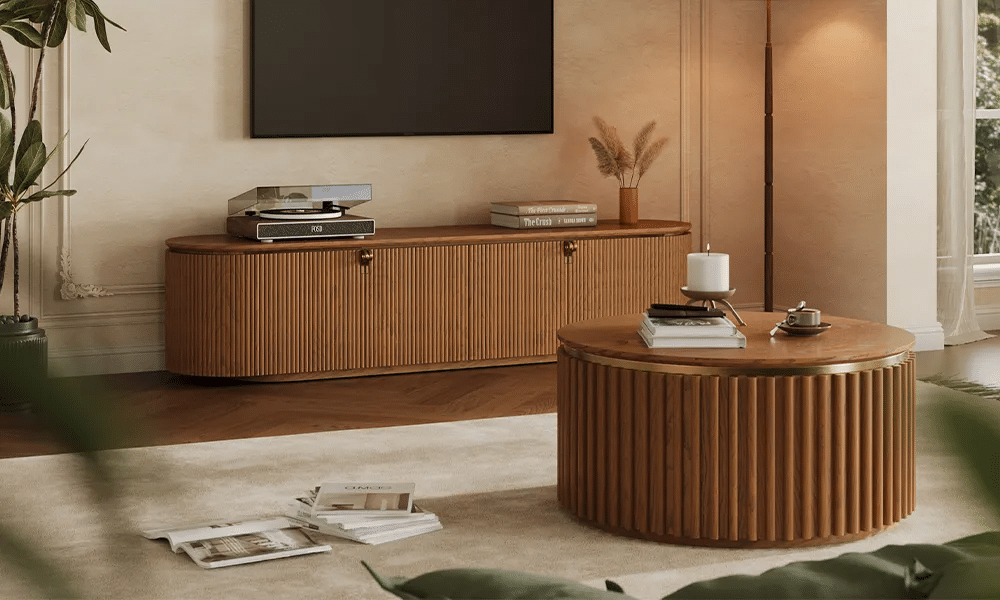
The media wall is the modern fireplace—it’s the focal point of the living space, the command center for entertainment, and often the primary reflection of a home’s design sensibility. Yet, while most homeowners dedicate significant thought to the size and resolution of their television, the piece of furniture holding it up—the TV stand or media console—is frequently treated as an afterthought.
This is a critical oversight. The perfect TV stand doesn’t just support your screen; it organizes your technology, dictates the aesthetic flow of the room, and provides crucial storage. Choosing the right one is about balancing form, function, and future-proofing your entertainment experience.
Here is a comprehensive guide to moving beyond basic utility and selecting a TV stand that elevates your entire media wall.
1. Function First: The Technical Triad
Before getting swept away by design, you must ensure the console meets three critical technical requirements: Size, Weight, and Ventilation.
A. The Right Size: Length and Height
- Length (The 25% Rule): For optimal visual balance, your TV stand should be approximately 25% longer than your television. A 65-inch TV (which measures about 57 inches wide) pairs best with a stand that is at least 70 to 75 inches wide. A stand that is wider than the TV anchors the wall and provides a sophisticated, grounded look.
- Height (Eye Level): The center of your television screen should be at or slightly below eye level when you are seated. If you’re buying a new stand, measure the height of your sofa’s seating position and subtract half the height of your TV. The resulting number is the ideal height for your console. Avoid stands that are too low, as they can lead to uncomfortable viewing angles and neck strain.
B. Weight and Stability
Modern TVs are lighter than their plasma predecessors, but they still require a robust and stable base. If you have any peripheral equipment (soundbars, gaming consoles, AV receivers, cable boxes, etc.), the total combined weight can be substantial. Always check the stand’s specified weight capacity. When selecting high-quality furniture, choosing a POVISON Fully Assembled Furniture piece is a simple way to ensure the structural integrity is already guaranteed by professional builders, eliminating the risk of consumer assembly error compromising stability.
C. Ventilation and Cable Management
Technology generates heat. Enclosing components like AV receivers or gaming systems in a stand without proper airflow can lead to overheating and premature failure.
- Look for stands with open shelving or integrated ventilation holes in the back panels.
- Check for effective cable management access—large, well-placed cutouts that allow you to route all wires neatly out of sight, maintaining that sleek, modern look.
2. Form and Flow: Dictating the Aesthetic
The TV stand is a major piece of furniture and should complement, not compete with, your room’s decor.
- Modern and Minimalist: Opt for stands with clean lines, flat fronts, handle-less doors, and materials like high-gloss lacquer or matte finishes. These stands integrate seamlessly and draw attention to the screen, not the furniture itself.
- Warm and Rustic: Look for pieces made from natural wood (oak, walnut) with exposed grain, perhaps featuring slatted or woven door fronts. This adds texture and warmth to the media wall.
- Industrial and Edgy: Choose consoles that incorporate metal elements, dark wood, or concrete finishes. These are often characterized by open frames and a rugged aesthetic.
A key trend in contemporary design is the floating console. Mounted directly to the wall, a floating stand creates a clean, airy look and makes the room appear larger by exposing the floor beneath it.
3. The Critical Role of Storage
A well-designed media console offers specialized storage for the clutter that inevitably accompanies technology and entertainment.
- Open Shelving: Ideal for displaying decorative items, art books, or showcasing aesthetically pleasing components like a high-end turntable or a signature soundbar. It also aids in remote control accessibility.
- Closed Cabinets/Drawers: Essential for hiding mess. Use these spaces for storing DVDs, video games, controllers, charging cables, extra remotes, and general clutter. Opaque doors maintain the minimalist appeal by keeping everything out of sight.
- Smart Features: Modern media walls demand more than just passive storage. Look for integrated smart features like built-in charging ports, discreet lighting, or even motorized storage panels that reveal equipment only when needed.
4. The Final Consideration: The Assembly Dilemma
The complexity of media consoles—with their specific dimensions, complex door hinges, and numerous internal dividers—makes them one of the most frustrating pieces of furniture to assemble. Misalignment of doors or failure to properly stabilize the unit can ruin both the look and the safety of the setup.
This is why many consumers are making the definitive choice to prioritize a fully assembled delivery model. When a console arrives pre-built, you eliminate all the common headaches:
- Guaranteed Alignment: Doors and drawers are guaranteed to be flush and perfectly spaced.
- Time Saved: You bypass hours of assembly time, moving directly to setup and enjoyment.
- Structural Assurance: The stand is built to last, engineered by the manufacturer to handle the weight and demands of modern media equipment.
Choosing the right TV stand is not a minor decision; it is an investment in your home’s design and your daily enjoyment. By prioritizing technical requirements, aligning the console with your aesthetic, and ensuring reliable, frustration-free delivery, your media wall will transition from a simple spot for a screen to a beautifully curated centerpiece of your home.