


Many homeowners consider bow vs. bay window options when they want to brighten a room or give their home a fresh look.
They often compare these two because both bay and bow windows bring in great natural light and add beauty to any space.
Understanding the subtle differences in design and structure helps homeowners choose the window that best fits their home.
By learning how bay windows and bow windows work, anyone can make a confident choice for a beautiful upgrade.
What is a Bay Window?
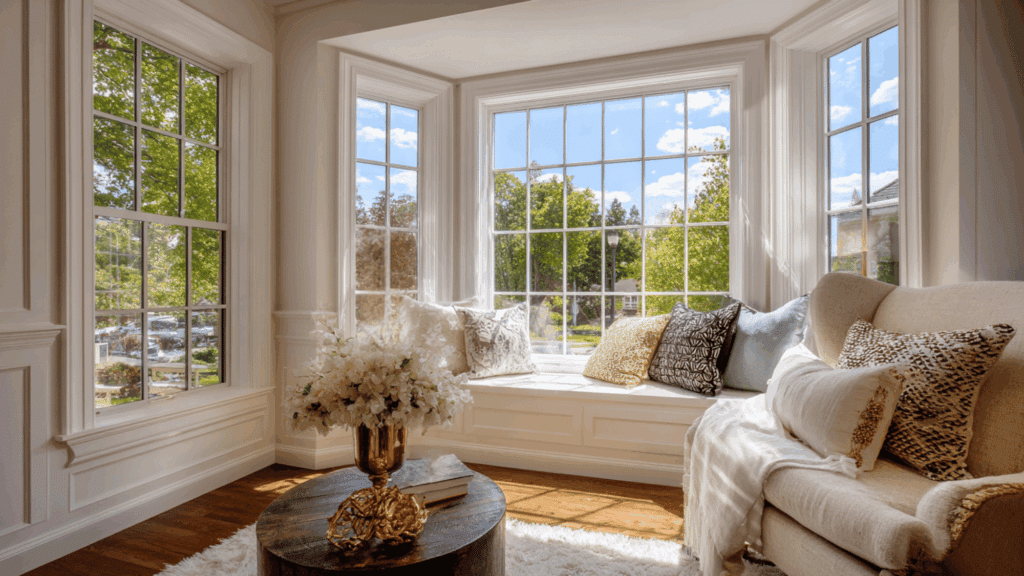
A bay window is a window that sticks out from the main wall of a house, creating a small bump-out area inside the room.
Most bay windows are made of three panels: one large window in the center and two smaller angled windows on the sides.
This angled design gives the window its signature shape and helps bring in more light. Bay windows are popular in many home styles, including traditional, Victorian, and modern.
Homeowners love them because they create extra interior space that can be used for seating, storage, or simple decoration.
| Pros | Cons |
|---|---|
| Creates extra interior space for seating or décor | Needs strong support due to deeper projection |
| Often more affordable with fewer panels | Limited curve options reduce customization |
What is a Bow Window?
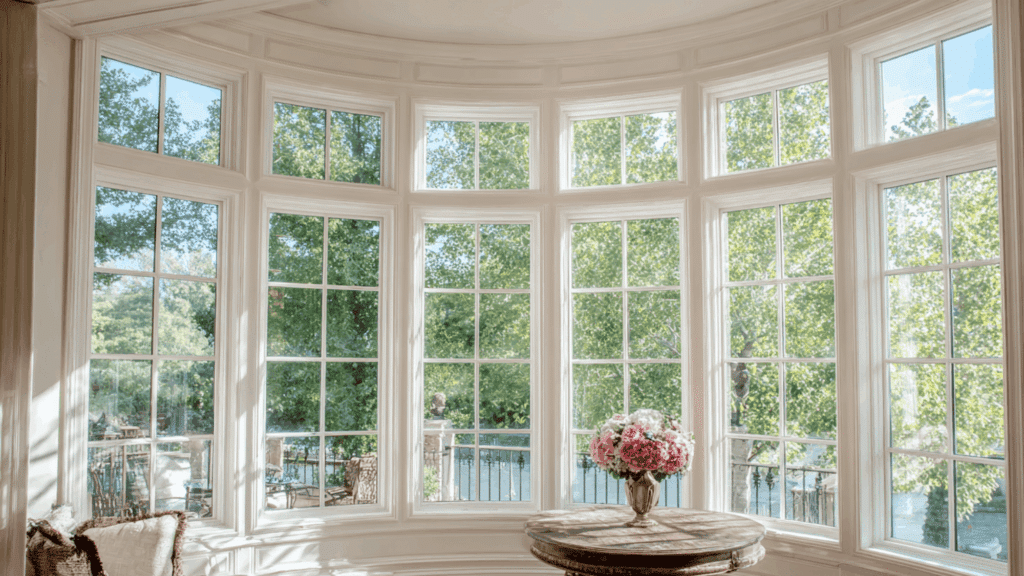
A bow window is a window made from a gentle curve of several connected panels, usually four to six.
This curved design brings in plenty of natural light and offers wide, panoramic views that make a room feel open and airy.
Bow windows are often seen in historic homes, where their beautiful look fits beautifully, but they also work well on houses with soft architectural lines or classic details.
Homeowners appreciate their graceful style, increased brightness, and the polished look they add to the home’s exterior.
| Pros | Cons |
|---|---|
| Let in more natural light to brighten the room | Often costs more due to extra panels and framing |
| Makes the space feel larger without big structural changes | May need a more complex install for proper support |
Bow Window vs Bay Window: Key Differences at a Glance
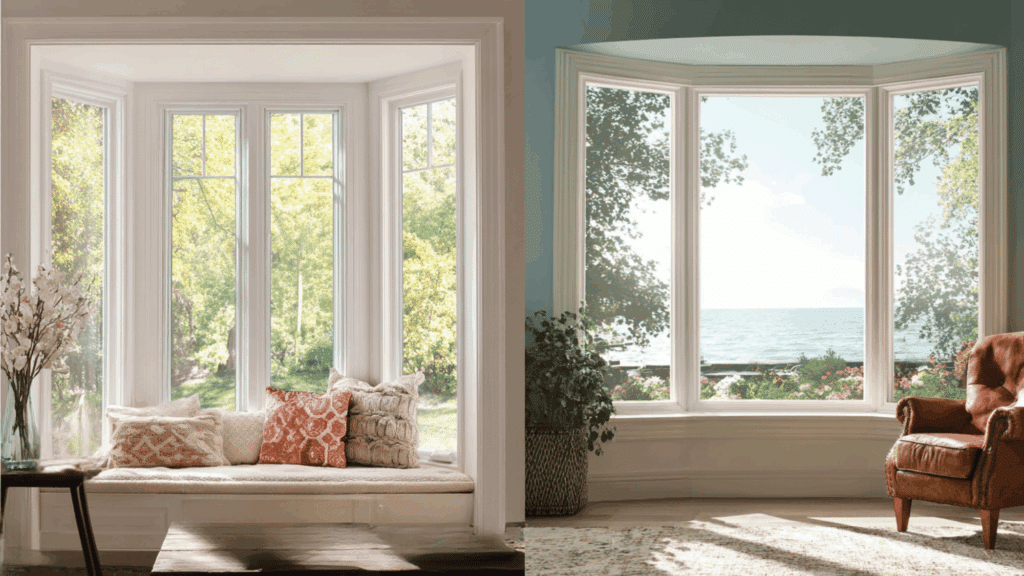
Choosing between a bow window and a bay window becomes easier when you understand how their shape, spaces, and lights differ.
| Feature | Bay Window | Bow Window |
|---|---|---|
| Shape | Angular shape with defined lines | Smooth, curved shape with a rounded appearance |
| Number of Panels | Typically, 3 window panels | Usually 4–6 window panels |
| Interior Space | Creates a cozy nook that feels structured and tucked in | Makes the room feel wider and more open with a gentle curve |
| Light Levels | Brings in plenty of light from angled sides | Offers even more natural light because of multiple panels |
| Architectural Match | Great for traditional and modern homes | Ideal for historic homes or softer exterior styles |
| How It Feels Inside | Feels warm, defined, and perfect for seating or décor | Feels bright, airy, and visually spacious due to the wider arc |
How Each Window Style Shapes Your Home’s Look
Each window style changes the look ad feel of a home, adding its own character through shape, light, and overall design.
Bay Windows
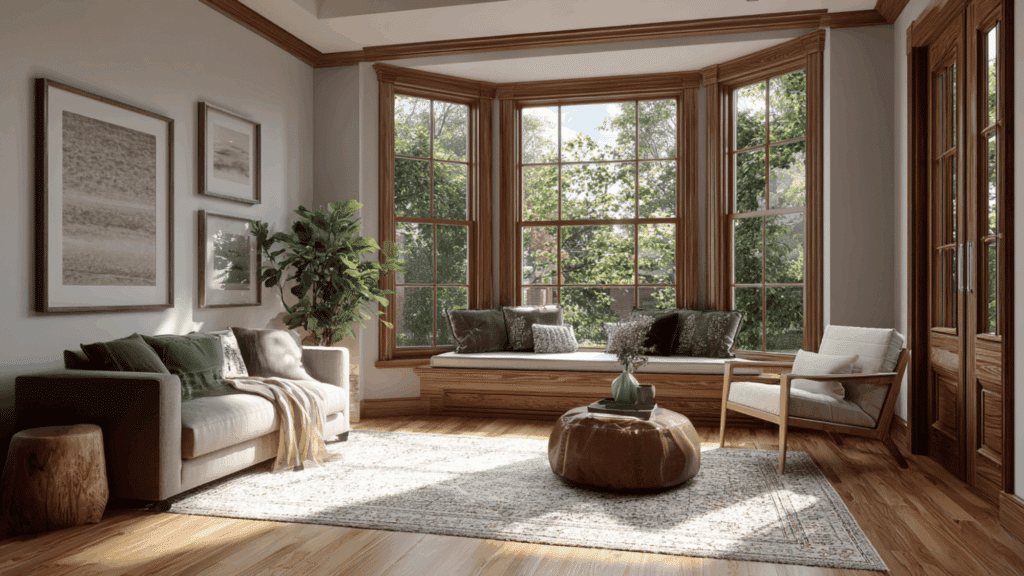
Bay windows add strong, defined lines that work well in both modern and classic homes.
Their angular shape creates a structured look that naturally frames views and adds depth to a room. Because they project outward, they form a cozy nook perfect for seating or décor.
It will find bay windows improving living rooms, dining areas, and front elevations where a bold architectural statement fits perfectly.
Bow Windows
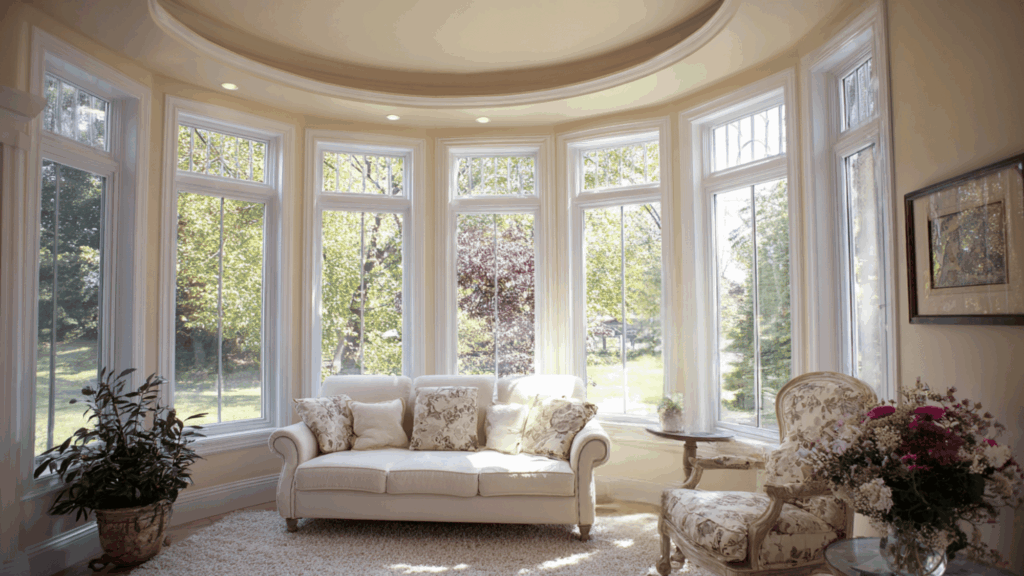
Bow windows offer a gentle, sweeping curve that brings softness and beauty to a home’s exterior.
Their rounded shape creates a graceful, romantic feel that suits historic homes or designs with delicate architectural details. Inside, the curve provides wider views and extra brightness, making any space feel open and airy.
Bow windows look especially beautiful on front-facing walls, sunrooms, or rooms where natural light is a top priority.
Which One is Right for Your Home?
Choosing the right window style becomes easier when you compare how each option fits your home’s look, space needs, and lighting goals.
- Home Style: Choose a bay window for modern or traditional homes, while bow windows suit historic designs or homes with soft exterior lines.
- Desired Look: Pick bay windows for strong, angular structure; choose bow windows for smooth curves that create a graceful appearance.
- Budget: Bay windows cost less with fewer panels, while bow windows require more materials, making them a higher-priced but stylish option.
- Functional Needs: Bay windows create a usable nook for seating or décor; bow windows visually expand the room with a wider, rounded projection.
- Natural Light: Bay windows brighten rooms well, but bow windows provide even more light thanks to multiple panels and a broader curved shape.
Conclusion
Choosing between a bow window and a bay window becomes far easier once homeowners understand how each style can influence comfort, resale value, and curb appeal.
Both bay and bow windows bring something meaningful to a home, whether it’s added space, softer lines, or more natural light.
With a clearer grasp of how bay windows and bow windows function, readers can confidently plan their next upgrade.
The right choice depends on long-term goals, whether enhancing everyday living, exterior appeal, or increasing overall home value.