

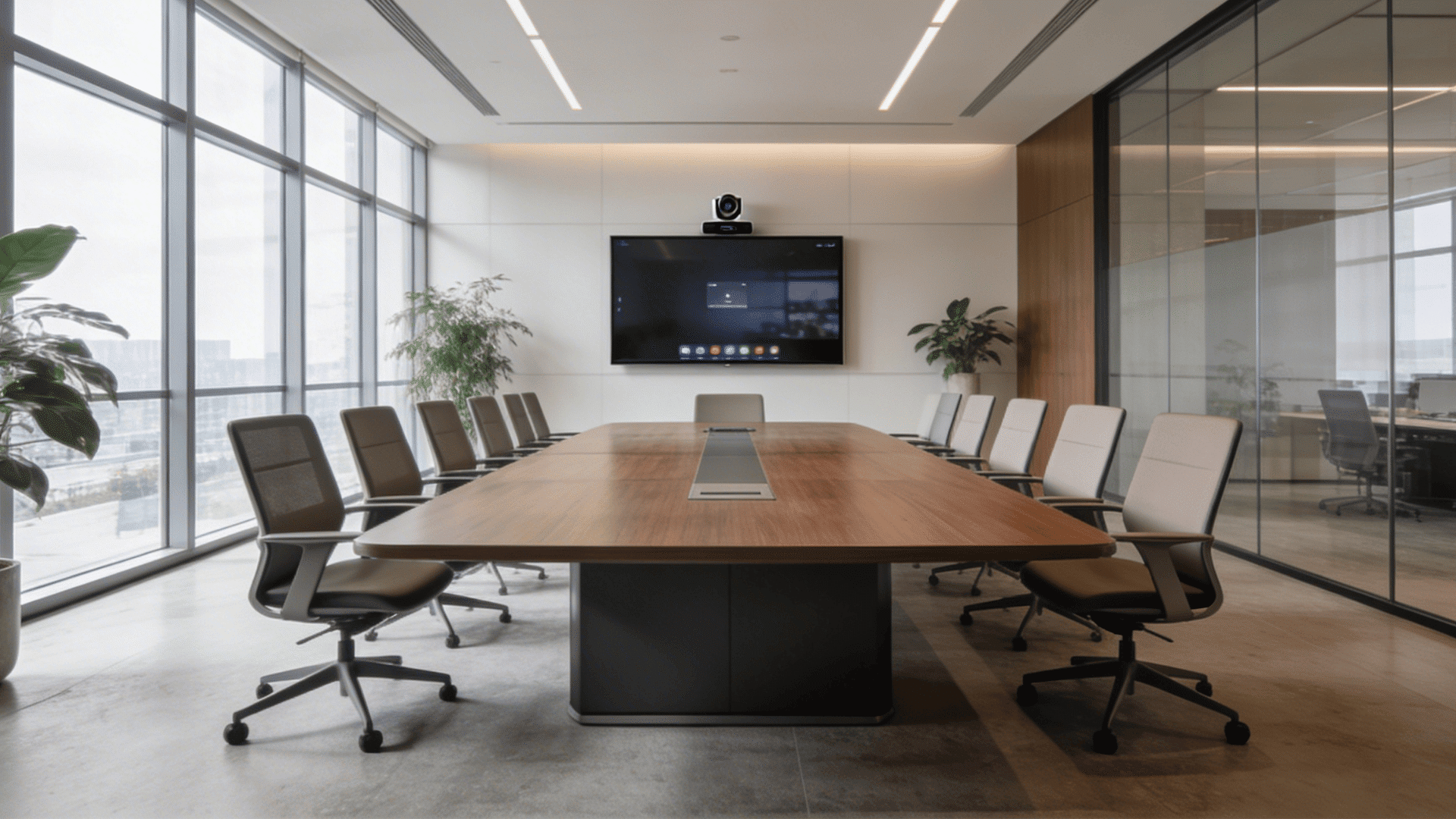
Walk into most conference rooms, and you’ll find the same old setup: a long table, a few chairs, and maybe a dusty whiteboard in the corner. It’s not exactly the kind of space that gets your team excited to meet.
But here’s the thing: your meeting room can do so much better. A well-designed conference room helps your team think clearly, collaborate easily, and feel comfortable during long sessions.
If you’re planning a full-room makeover or just a few smart updates, the right changes can make a real difference.
In this blog, I’ll cover practical conference room design ideas, from lighting and furniture to tech upgrades and layout tips- that can turn any dull meeting space into one your team actually enjoys using.
What Makes a Great Conference Room Design?
Conference rooms have changed a lot. The old-style boardroom with its long table, stiff chairs, and projector screen no longer fits how teams actually work.
Today, good design brings together comfort, technology, and flexibility in one space.
A well-designed room keeps people focused. It has the right lighting, enough space to move around, and tools that make sharing ideas easy.
Video screens, wireless connections, and clear acoustics are no longer extras. They’re basics.
Flexibility matters too. Some meetings need a formal setup. Others work better with open seating or breakout areas. A smart design handles both.
Most importantly, the room should support communication. When a space feels right, people engage more and stay on track. That’s the real goal: a room that works as hard as the people in it.
Conference Room Design Ideas You Can Use Right Now
The right conference room design can transform how your team works, communicates, and collaborates. These 15 practical ideas cover everything from furniture and lighting to technology and sustainability.
1. Bring Nature Indoors with Biophilic Design
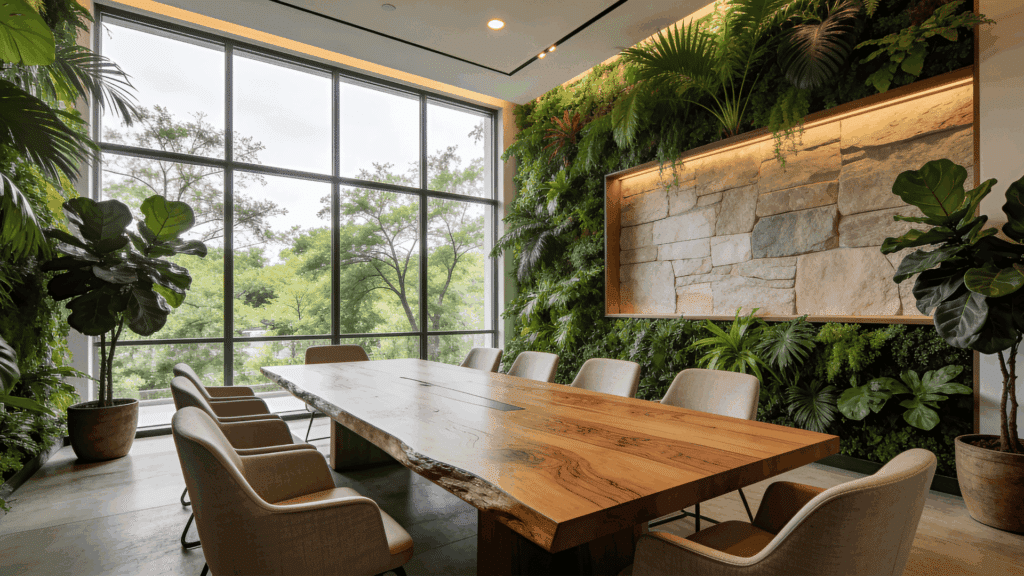
Biophilic design brings the outdoors inside by incorporating plants, natural light, and wood elements into your conference room.
Living walls or potted plants add freshness and visual calm, while wooden furniture and stone accents create a grounded, warm atmosphere.
Studies show that natural elements reduce stress and sharpen focus, making meetings more productive.
Large windows that frame outdoor views also contribute to this effect, giving occupants a sense of openness that keeps energy levels steady throughout long sessions.
2. Create Smart Technology-Integrated Rooms
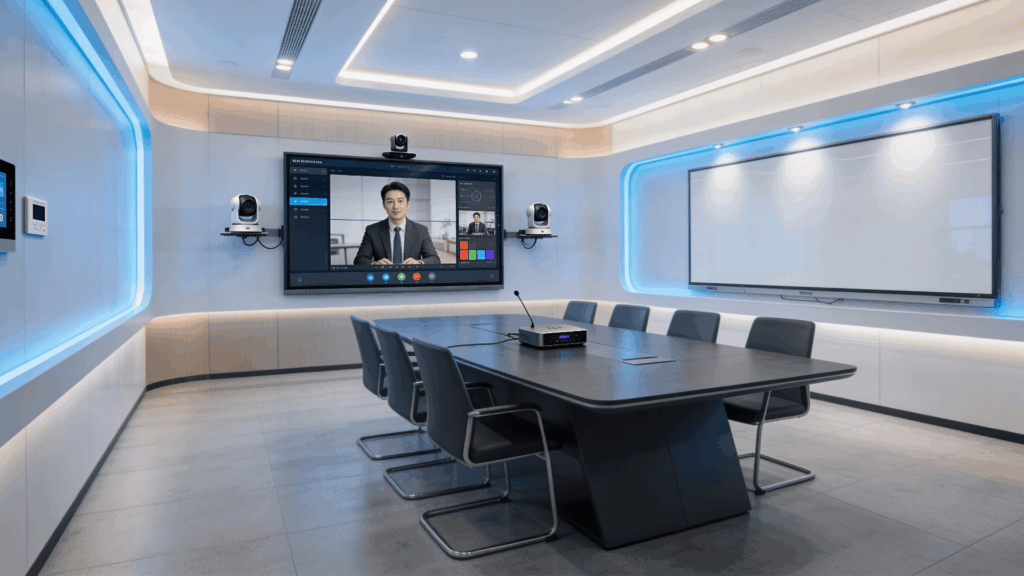
A tech-enabled conference room reduces meeting friction. Wireless systems allow easy screen sharing, and AI cameras automatically frame remote speakers.
Smart whiteboards capture notes digitally, and one-touch room controls manage lighting, displays, and temperature from a single panel.
When technology works seamlessly in the background, teams spend less time troubleshooting and more time focused on the agenda, leading to faster decisions and smoother collaboration across in-person and remote attendees.
3. Use Flexible Modular Layouts
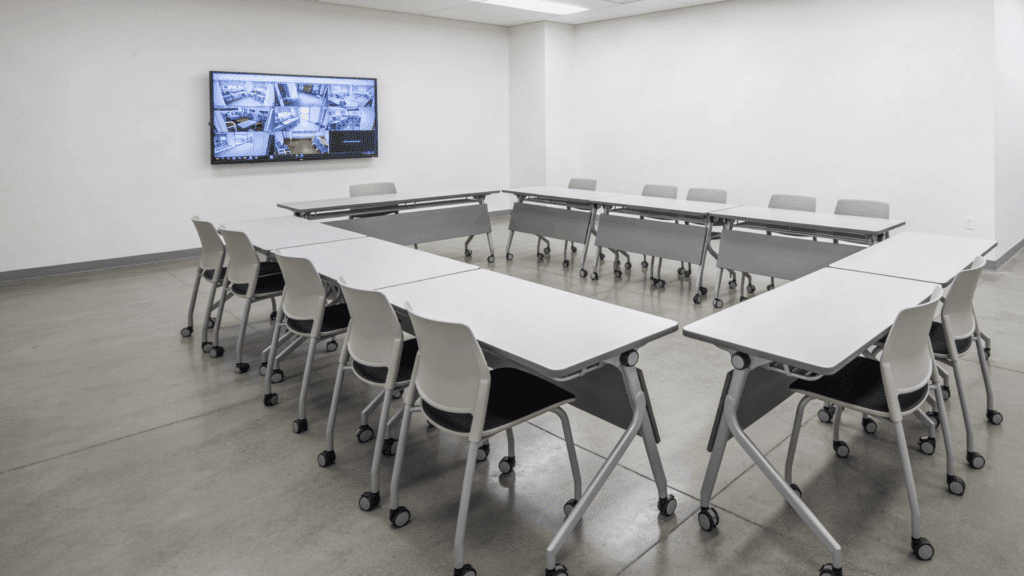
Modular conference rooms use lightweight, movable tables and stackable or wheeled seating that can be rearranged in minutes.
A boardroom setup for a formal presentation can shift into a cluster layout for group brainstorming or a U-shape for open discussion, all without outside help.
This flexibility makes a single room serve multiple meeting types, maximizing your space investment.
Choosing furniture with locking casters and keeping open floor space along the walls gives teams the freedom to configure the room exactly as each meeting demands.
4. Try Minimalist Scandinavian Design
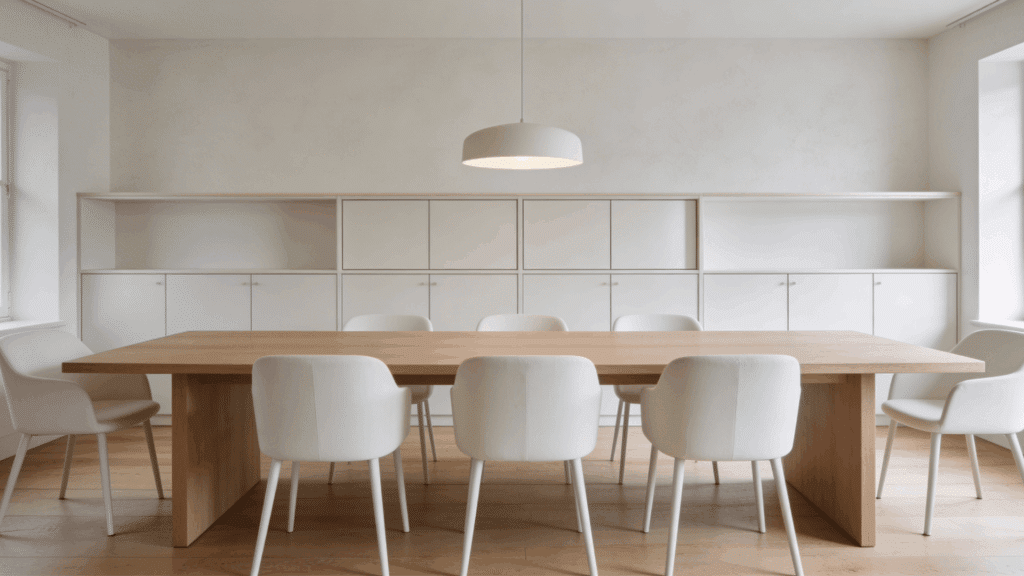
Scandinavian design principles prioritize simplicity, function, and calm. In a conference room, this means neutral color palettes, whites, soft grays, and warm beiges, paired with clean-lined furniture and zero visual clutter.
Storage is built in, so supplies stay hidden, and only essential items remain on the table. The result is a space that feels organized and mentally easy to work in.
Research consistently links low-clutter environments with improved concentration and reduced cognitive load, making Scandinavian-inspired rooms a solid choice for teams tackling complex problems or long strategic sessions.
5. Improve Sound with Acoustic Design
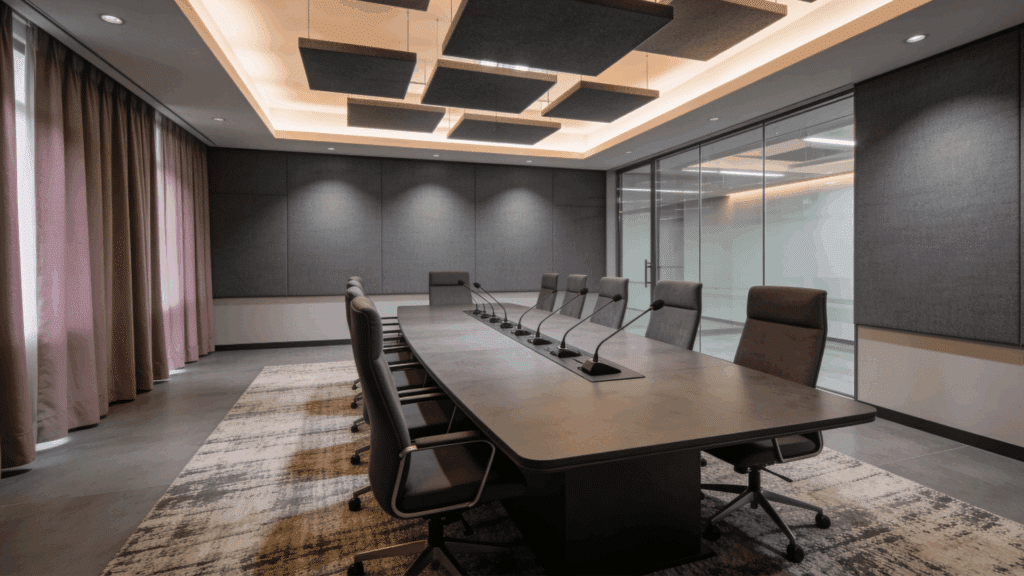
Poor acoustics are one of the most common complaints in conference rooms, yet they are among the easiest problems to fix.
Acoustic wall panels absorb reflected sound, while thick carpets and upholstered furniture reduce echo.
Ceiling baffles and sound-dampening curtains add another layer of noise control, particularly in rooms with hard surfaces or glass walls.
In hybrid meetings, effective acoustic treatment ensures microphones capture voices clearly, free of background noise.
When sound quality improves, communication becomes sharper, misunderstandings decrease, and meetings move forward with less frustration.
6. Design Activity-Based Collaboration Zones
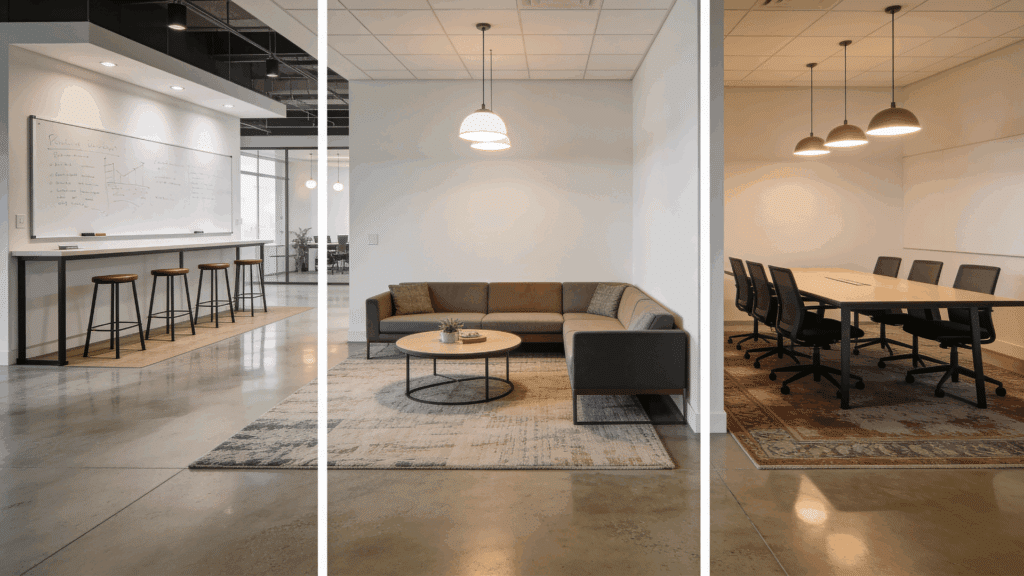
Rather than designing a single room to do everything, activity-based conference spaces divide the space into distinct zones for different tasks.
A standing-height section near a whiteboard supports quick ideation, while a lounge-style seating cluster encourages relaxed discussion.
A formal table area is used for structured presentations. Each zone is defined with subtle visual cues, different flooring, lighting, or furniture height, so participants naturally shift their mindset as they move between areas.
This approach boosts engagement, supports diverse working styles, and keeps energy high across the full length of a meeting.
7. Focus on Ergonomic and Wellness Design
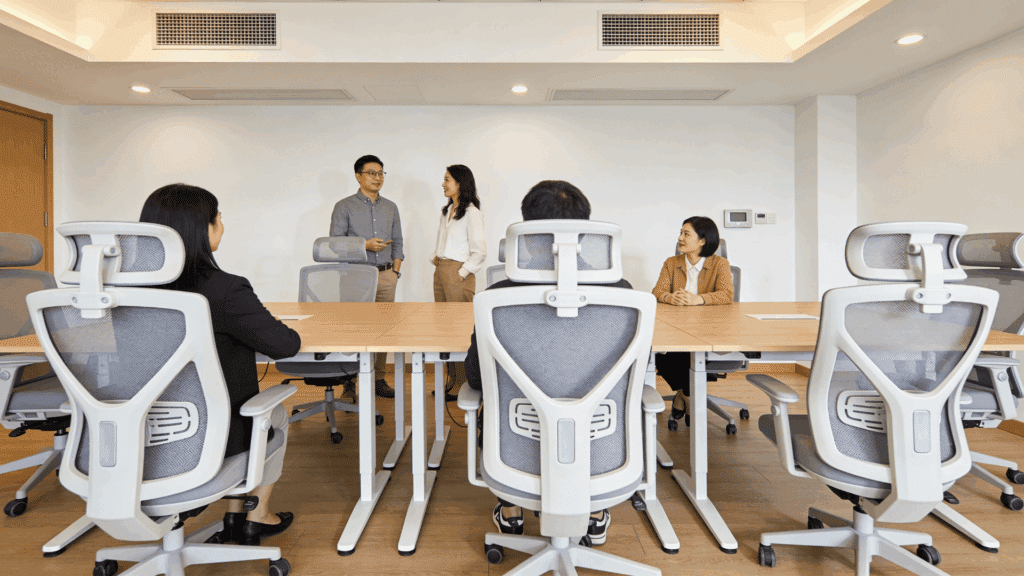
Long meetings take a physical toll when furniture is poorly designed. Ergonomic conference chairs with lumbar support and adjustable armrests reduce discomfort during extended sessions,
while sit-stand tables allow participants to alternate between sitting and standing throughout the day. Keeping the room temperature regulated and ensuring adequate ventilation further supports physical comfort.
When people feel physically at ease, their attention stays on the conversation rather than on sore backs or stiff necks. Investing in wellness-focused design signals to your team that their comfort and health genuinely matter.
8. Apply Color Psychology to Drive the Right Mood
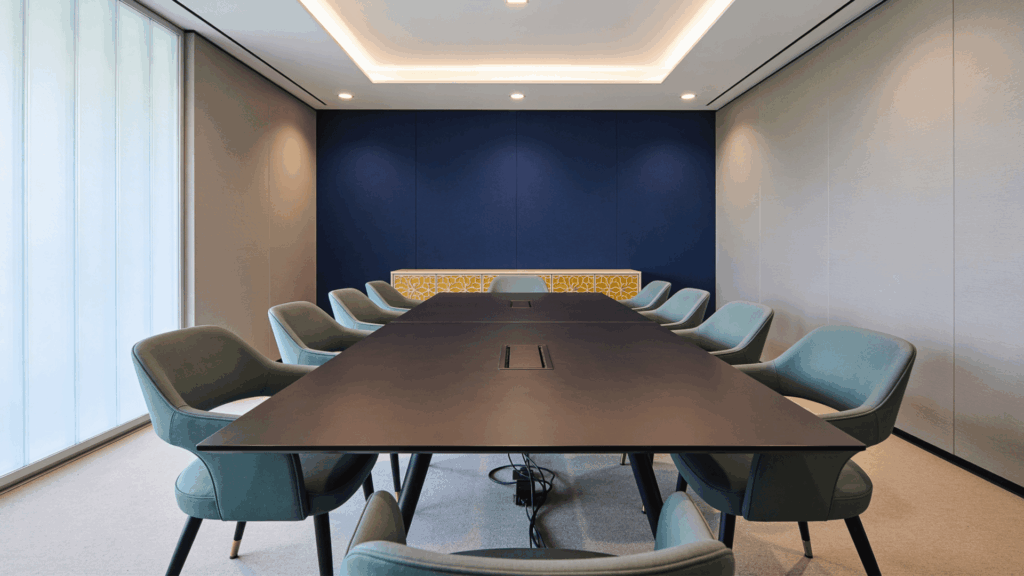
Color has a direct effect on how people think, feel, and perform during meetings, making it one of the most practical design tools available.
Blue tones promote focus and calm, making them a strong choice for rooms used for analytical work or client presentations. Green supports a sense of balance and reduces mental fatigue during long sessions.
Yellow in small doses adds energy and encourages creative thinking, though too much of it increases agitation.
Neutral base walls keep the space from feeling overwhelming, while accent colors on a single feature wall or in upholstery introduce the psychological benefit without visual overload.
9. Add Brand and Culture Elements
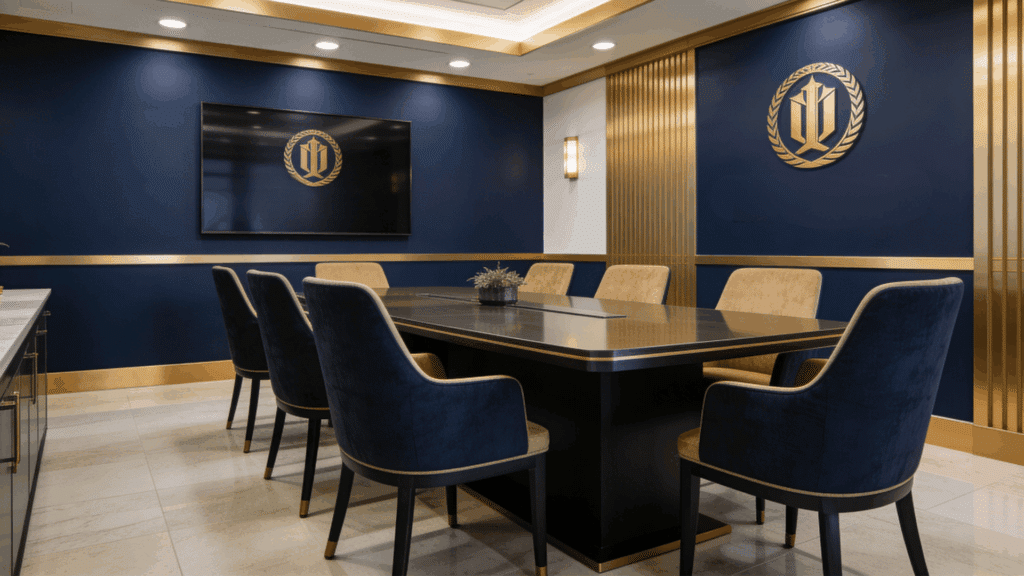
A conference room is one of the most visible expressions of your company’s identity, especially for visiting clients and new hires. Incorporating brand colors into wall paint, upholstery, and accent pieces creates a cohesive,
professional impression. Large-format wall graphics or murals can tell your company’s story, display your mission, or showcase your work.
Custom signage, branded stationery, and even the artwork you choose all communicate culture and values without a single word being spoken.
A room that reflects who you are builds confidence and makes a lasting impression on everyone who walks in.
10. Optimize for Hybrid Video Meetings
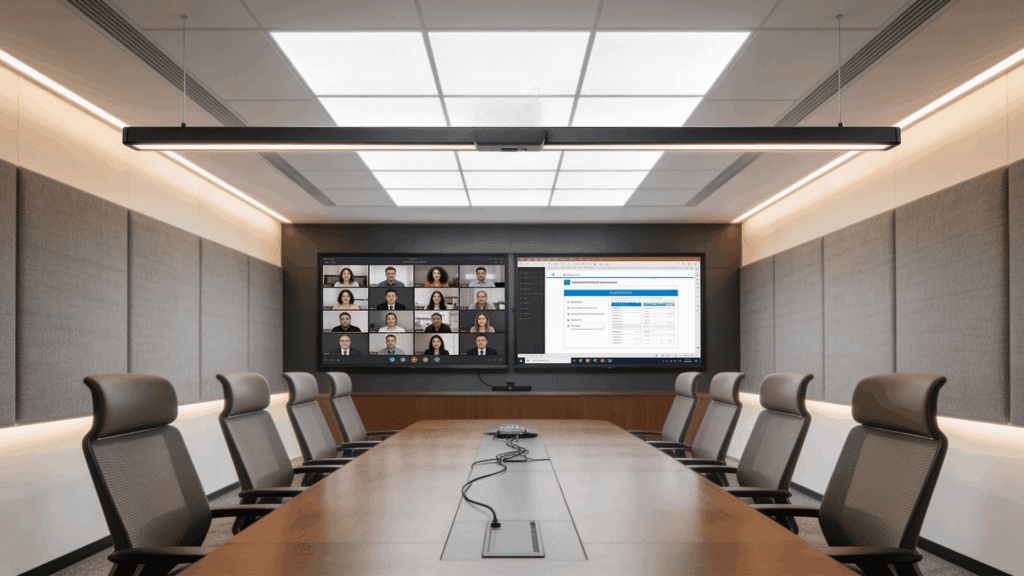
As hybrid work becomes standard, conference rooms must perform equally well for in-room and remote participants. Positioning a wide-angle or AI-tracking camera at eye level ensures remote attendees see the full room clearly.
Ceiling-mounted or boundary microphones capture every voice without cluttering the table. Dual displays—one for video participants and one for shared content- prevent the confusion of a single, crowded screen.
Acoustic treatment supports clear audio pickup, and good lighting eliminates harsh shadows on faces. When both groups feel equally present, hybrid meetings become genuinely collaborative rather than two separate experiences happening at once.
11. Use Statement Lighting for Impact
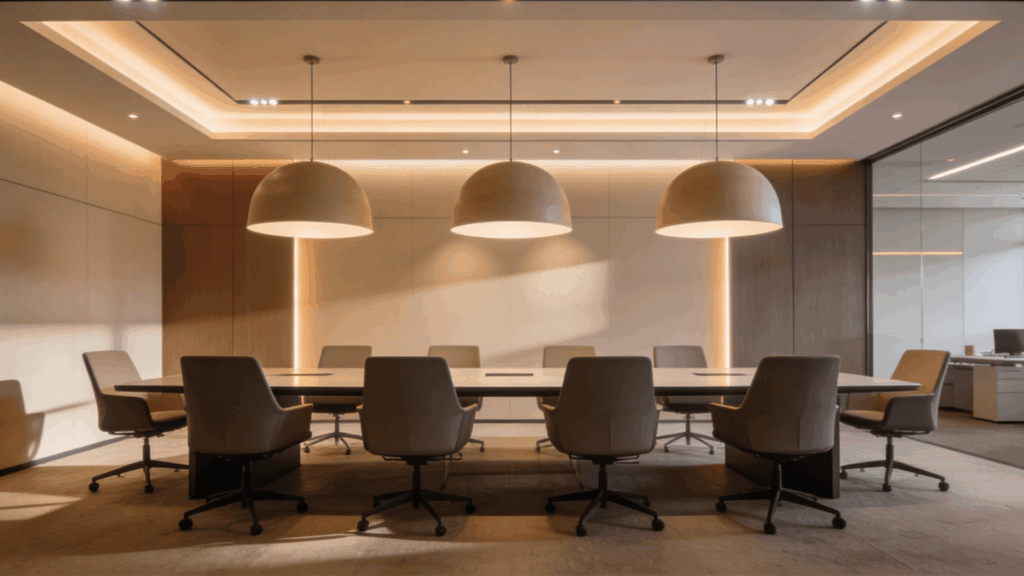
Lighting does more than illuminate a room; it sets the entire tone of the space. Layered lighting combines ambient overhead light for general visibility, task lighting for focused work, and accent lighting to create visual interest.
Pendant lights above the conference table add character and draw attention to the center of the room. Dimmable systems let you adjust brightness to match the meeting type,
from bright and energizing for brainstorming to softer and more relaxed for informal discussions. Warm-toned LED bulbs are easier on the eyes during long sessions and create a more welcoming atmosphere than harsh, cool-white alternatives.
12. Create Small Huddle Rooms
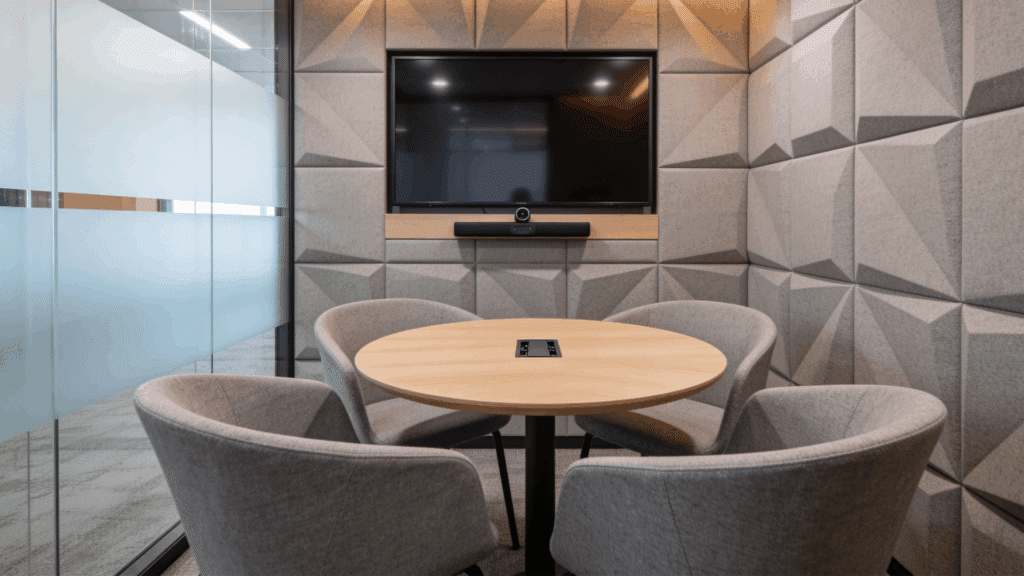
Not every meeting needs a large boardroom. Small huddle rooms—designed for two to six people—are ideal for quick check-ins, focused problem-solving, and confidential conversations.
These compact spaces work best with a small round or rectangular table, a wall-mounted display, and a video conferencing setup. Sound insulation is particularly important in huddle rooms to ensure privacy.
Positioning them near open workspaces makes them easy to book and access on the spot. Teams with dedicated huddle spaces report fewer interruptions at their desks and faster issue resolution than teams without them.
13. Add Multi-Functional Furniture
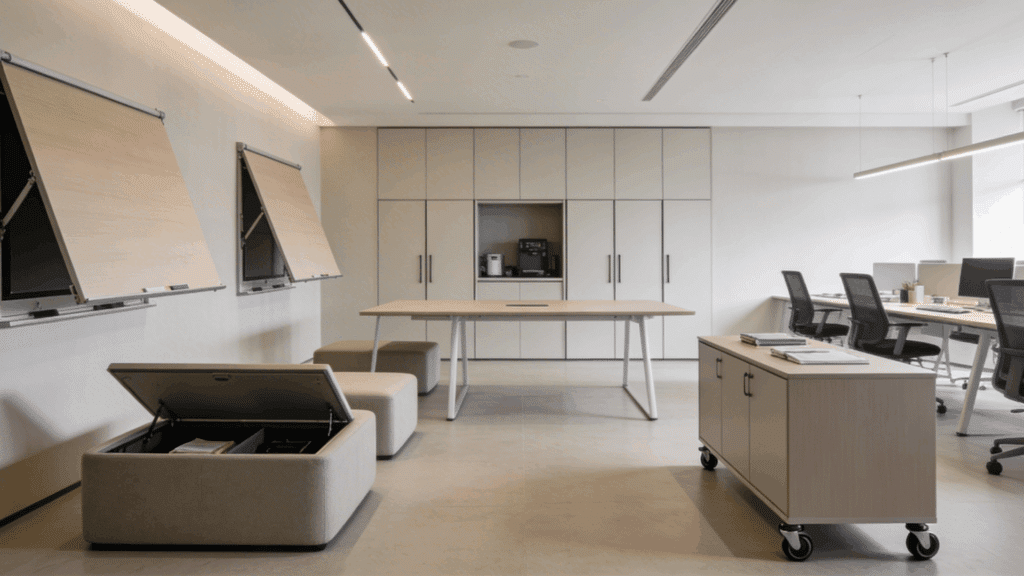
Multi-functional furniture solves the challenge of limited conference room space by serving multiple purposes. Foldable tables collapse flat against the wall when not in use, instantly opening the floor for a standing workshop or presentation.
Ottomans with internal storage hold supplies or serve as extra seating. Mobile credenzas provide surface space during meetings and roll away afterward. Built-in cabinetry with doors keeps AV equipment, stationery, and cables hidden and organized.
Choosing furniture that does double duty reduces clutter, maintains a clean and professional appearance, and ensures the room remains fully functional regardless of meeting size.
14. Maximize Natural Light and Views
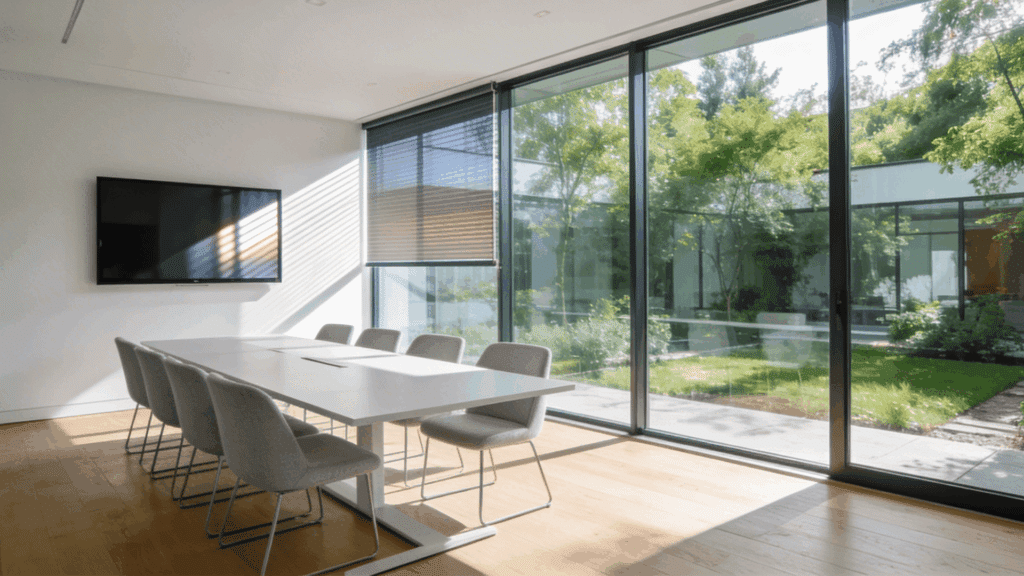
Natural light is one of the most powerful tools in conference room design, yet it is often underused. Large windows or glass walls flood the room with daylight, reducing reliance on artificial lighting and supporting participants’ natural energy rhythms.
Where direct sunlight creates glare on screens, adjustable solar shades manage brightness without blocking the view entirely. Open layouts that avoid tall furniture along window walls allow light to penetrate deep into the room.
When the view outside is attractive, greenery, a courtyard, or an urban skyline, it becomes an asset that enhances a more refreshing, stimulating meeting environment.
15. Use Clean Cable Management Solutions
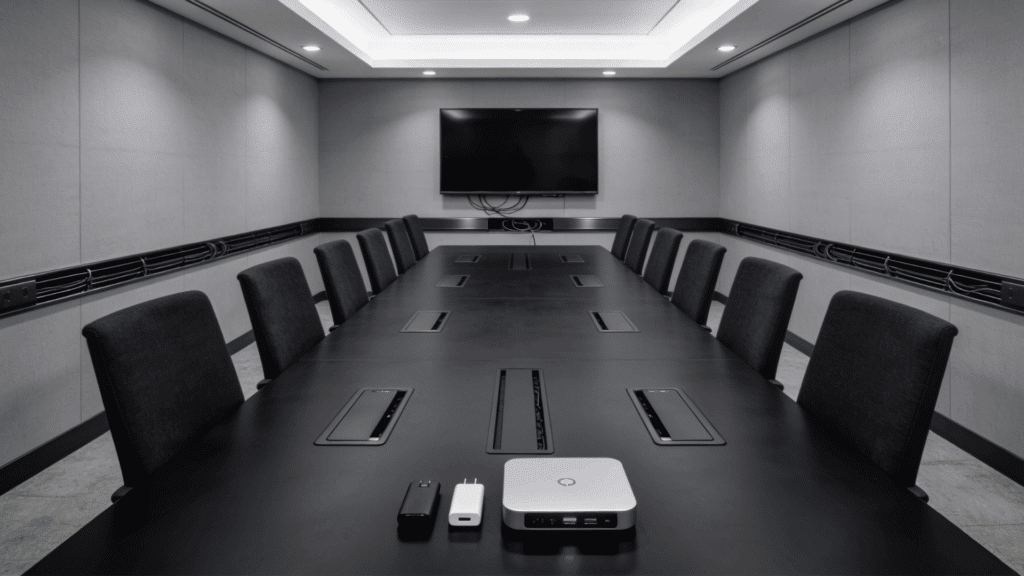
Visible cables are among the most common sources of visual clutter in conference rooms and pose real safety hazards when left unmanaged.
In-table cable ports allow laptops and devices to connect without dragging cords across the surface, while cable raceways along walls and under flooring keep power and data lines completely out of sight.
Wireless charging pads and Bluetooth peripherals reduce the need for cables altogether. A well-organized, cable-free environment looks more professional, impresses clients, and allows the room to be set up more quickly before meetings.
Clean cable management is a small investment that immediately improves both the look and function of any conference space.
How to Choose the Right Conference Room Design
No single design works for every team. The right choice depends on how your team actually works day to day.
Start by thinking about room size. A small huddle space works well for quick check-ins or one-on-one meetings. A larger boardroom setup makes more sense for formal presentations or client meetings.
Next, consider how often the room gets used and for what purpose. High-traffic rooms need flexible furniture that can be rearranged quickly. Rooms used mainly for video calls need good lighting and minimal background distractions.
You don’t have to pick just one style, either. Mixing designs across different rooms gives your team options, so people can choose the setup that fits the task.
Common Conference Room Design Mistakes to Avoid
Small oversights in conference room design can quietly undermine productivity and collaboration. Here are four common pitfalls to watch out for before finalizing your space.
- Ignoring Acoustics: Echo-heavy rooms and thin walls make it difficult to hold focused conversations. Without proper sound absorption, background noise can disrupt both in-person and remote participants equally.
- Overcrowding Furniture: Cramming in extra chairs or oversized tables limits movement and makes the space feel uncomfortable. A well-proportioned room keeps traffic flow open and reduces friction during meetings.
- Poor Lighting: Harsh overhead lights or dim corners cause eye strain and reduce on-screen visibility during presentations.
- Complicated Tech: Systems that require lengthy setup or technical knowledge slow meetings down before they even begin.
Final Thoughts
In the end, improving your conference room doesn’t have to feel like a big project. I’ve seen how even small changes can shift the energy of a meeting, less frustration, more focus, and smoother conversations.
When your space supports your team, people show up more prepared and engaged. That’s what really matters.
If you’re thinking about making a change, start with one thing that bothers you most. Fix that first and notice the difference. You might be surprised how quickly things improve.
Now I’d love to hear from you. Have you made any upgrades to your meeting space recently? What worked, and what didn’t?
Share your experience in the comments below. Your insight could help someone else take that first step.