

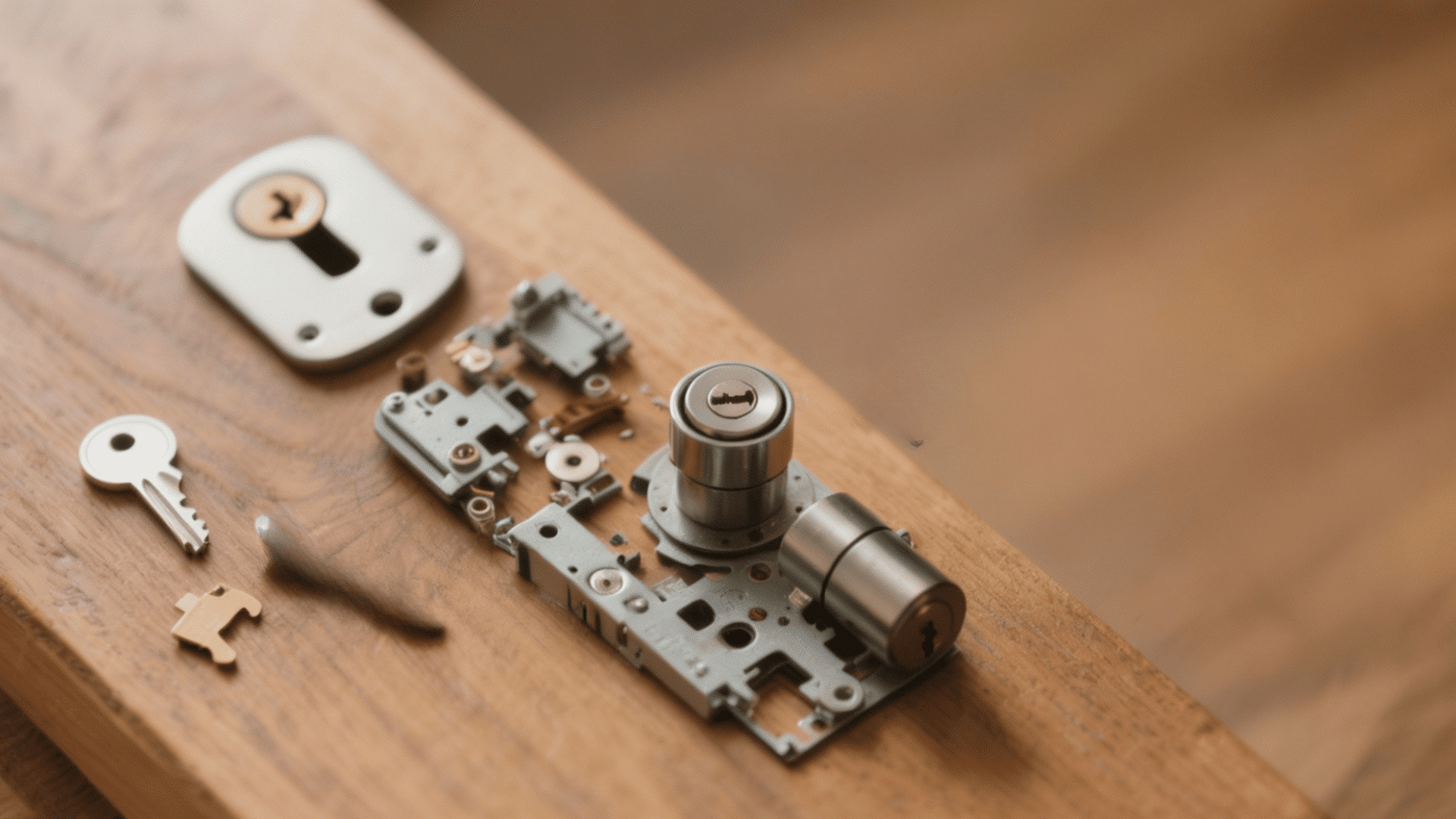
Understanding the intricate components that make up your door lock is more than just its practical knowledge, which can save you time and money when dealing with these issues.
Door locks may look simple, but they’re made of carefully designed parts that work together to keep your property secure.
From the visible elements to the hidden internal parts of a door lock, each component plays a critical role in the locking mechanism.
This blog will break down all the door parts, explain how they work together, and help you understand the anatomy of both traditional and modern locking systems.
How Door Locks Play a Vital Role?
Door locks play a vital role in ensuring safety, privacy, and peace of mind in any home or business.
They serve as the first line of defense against unauthorized entry, protecting your property and loved ones from potential intruders.
Beyond security, locks also provide a sense of personal privacy, allowing you to control access to specific rooms or areas.
Modern door combine both function and design, offering styles that complement interiors while incorporating advanced technology for added protection.
A well-functioning door lock is not just a mechanical device but a key element in creating a safe, comfortable, and worry-free living space.
Main Components of a Standard Door Lock
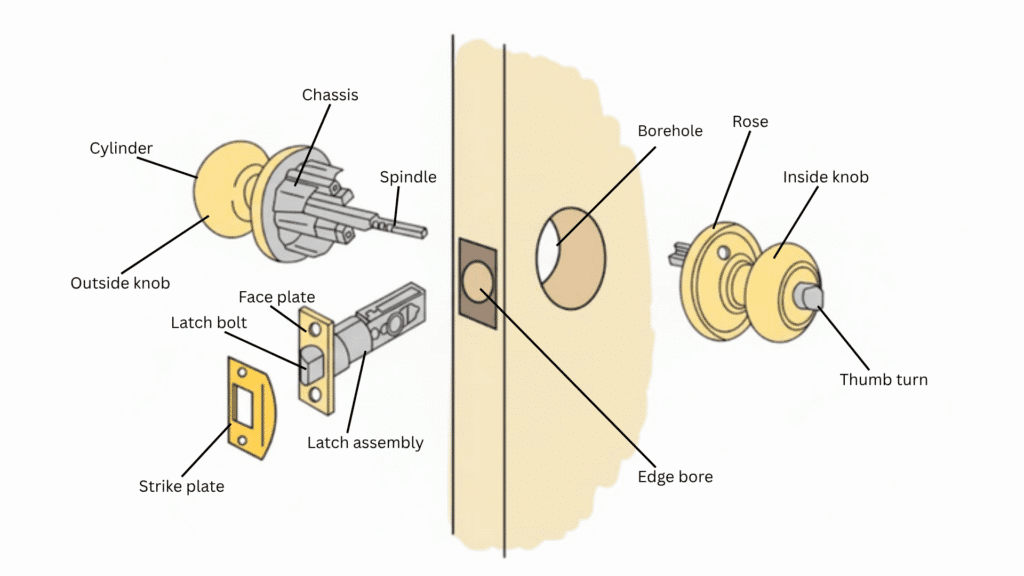
Understanding these components helps in identifying issues, performing repairs, and choosing the right lock for your needs.
- Lock Cylinder (or Core): This is the main part where you insert the key. Inside the cylinder are small pins and springs that align with the key’s grooves to unlock the door.
- Key: The key is uniquely cut to match the lock’s internal pin arrangement, allowing only the correct key to operate it.
- Bolt or Latch: The bolt secures the door when locked. Spring bolts retract automatically with the handle, while deadbolts require manual locking for added security.
- Strike Plate: Mounted on the door frame, it receives the bolt and reinforces the lock against forced entry. Proper alignment ensures smooth operation.
- Spindle: A rod that connects the handles or knobs through the door, transferring motion to the latch when turned.
- Handle or Knob: Used to operate the latch, allowing the door to open or close. Handles may come in various styles, knobs, levers, or pull types, depending on the design.
- Rose or Escutcheon Plate: A decorative cover that surrounds the handle or keyhole, concealing screws and enhancing the overall look of the lock.
What are the Common Types of Door Locks?
Door locks come in a variety of designs, each serving different security needs and aesthetic preferences. From simple interior locks to high-tech smart systems.
1. Knob Locks
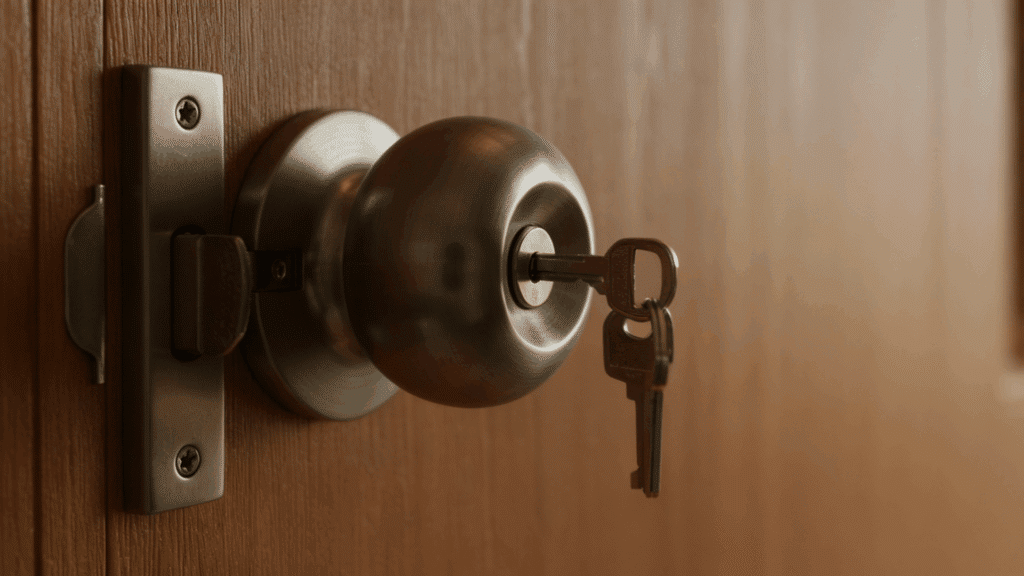
Knob locks feature a cylindrical doorknob with an integrated locking mechanism, commonly found on interior doors and as secondary locks on exterior doors.
The lock cylinder sits within the knob itself, operating a spring-loaded latch bolt. While convenient and affordable, knob locks offer minimal security since the cylinder can be easily broken off.
They’re best used alongside deadbolts for exterior applications or alone for bedroom and bathroom privacy.
2. Deadbolt Locks
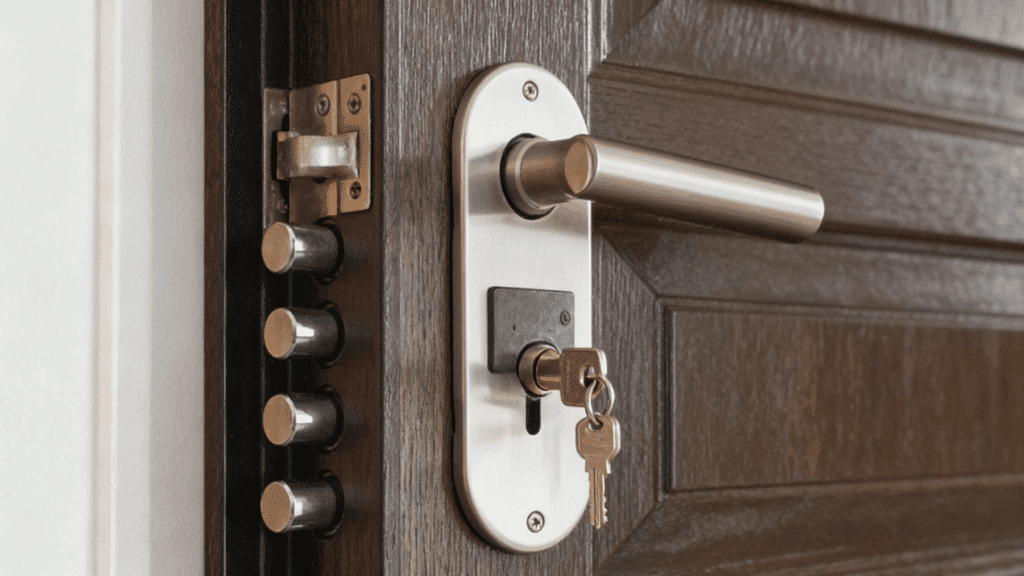
Deadbolts feature a solid metal bolt that extends deep into the door frame, providing superior security compared to spring-loaded latches.
Key components include the throw bolt (typically one inch long), the thumb turn or key cylinder, and reinforced strike plates.
Single-cylinder deadbolts use a key externally and a thumb turn internally, while double-cylinder versions require keys on both sides for enhanced security
3. Lever Handle Locks
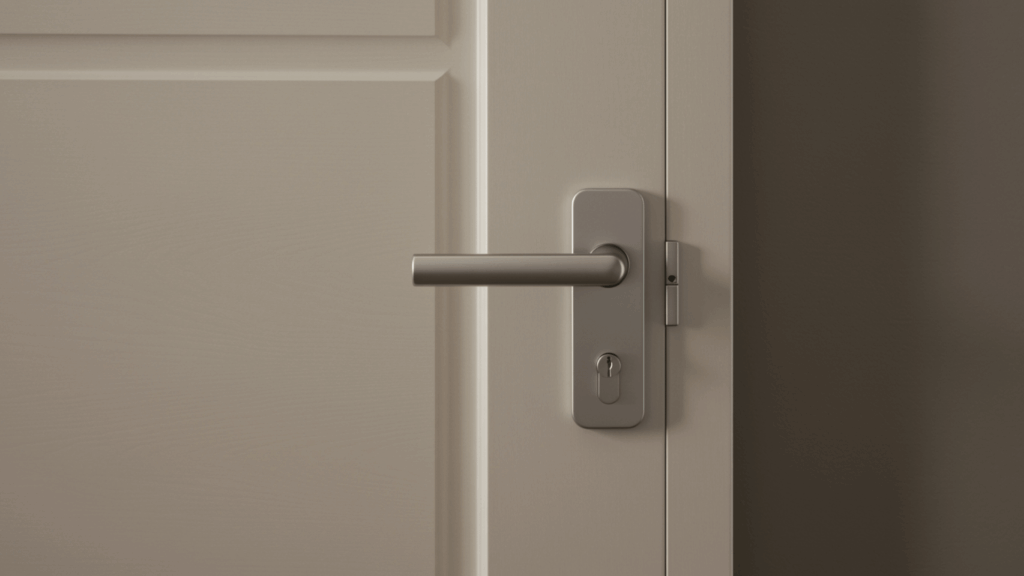
Lever handle locks use a horizontal handle instead of a round knob, making them ADA-compliant and easier to operate for people with limited hand mobility or arthritis.
The lever activates the latch mechanism through a spindle connection. Common in commercial buildings and modern homes, they offer locking functionality but with improved accessibility.
Available in passage, privacy, and keyed entry configurations for various door applications
4. Mortise Locks
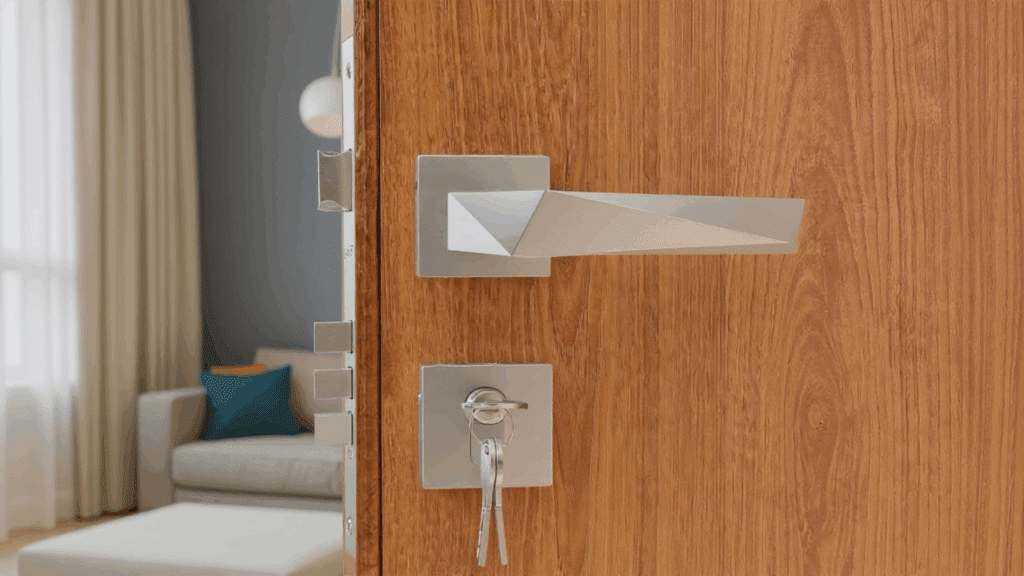
Mortise locks are installed within a pocket (mortise) cut into the door edge, offering robust security through their complex internal mechanism.
They contain a body housing the cylinder, lever or knob spindle, deadbolt, latch bolt, and various springs and cams. Additional components include the faceplate, strike box, and trim hardware.
Their durability and multi-point locking capability make them popular in commercial settings and high-end residential applications.
5. Cam Locks
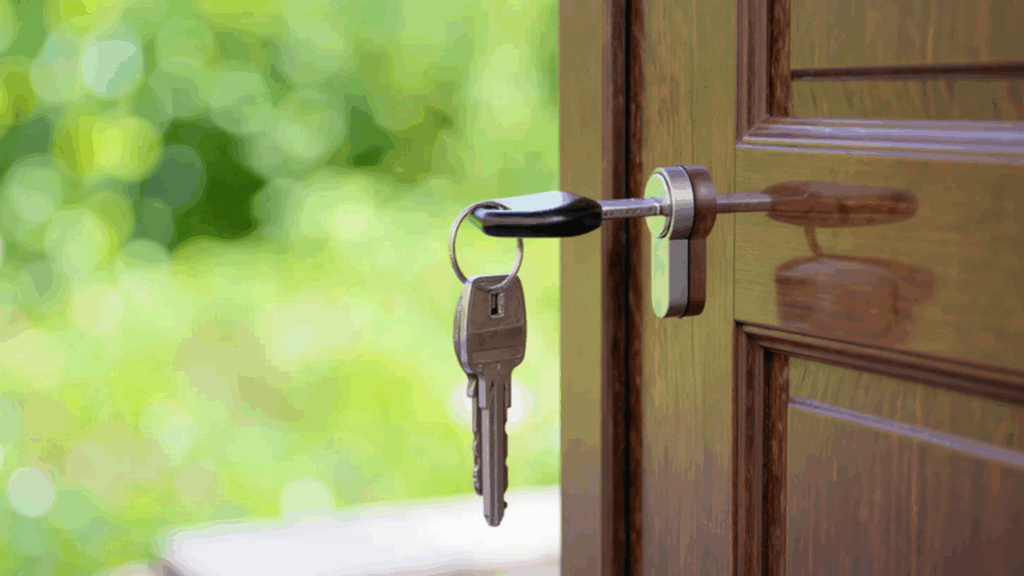
Cam locks consist of a cylindrical body with a flat metal piece (the cam) that rotates when the key turns, securing cabinets, mailboxes, drawers, and lockers.
These compact units are installed through a drilled hole and feature cam lengths and orientations. The simple design includes a cylinder, tailpiece, and rotating cam that catches the strike.
They’re ideal for low-security applications where space is limited and provide quick, economical security solutions
6. Padlocks
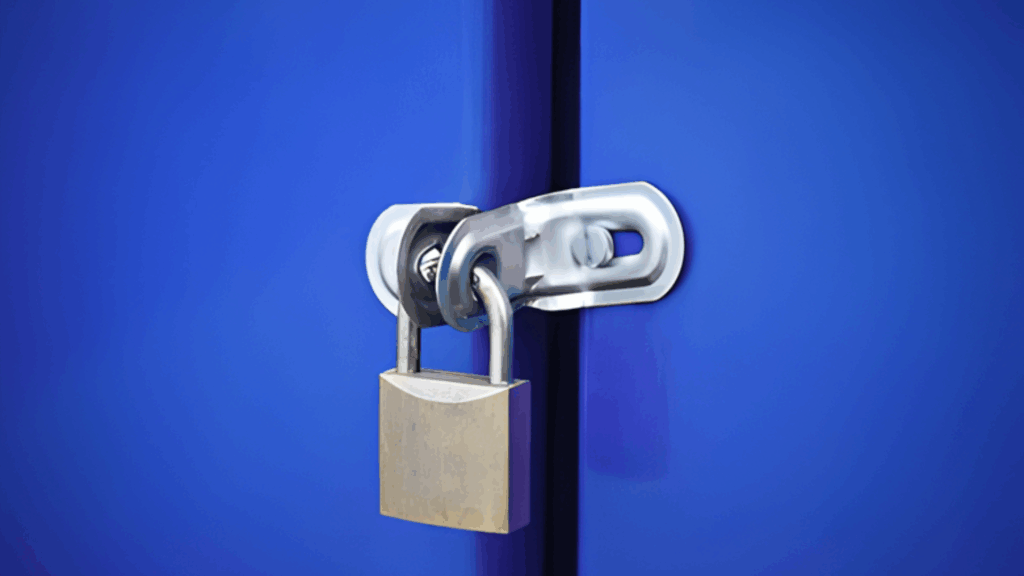
Padlocks are portable, detachable locks featuring a U-shaped shackle that releases from the body when unlocked with a key, combination, or digital code.
Available in various sizes and security levels, they secure gates, sheds, lockers, and chains. Components include the shackle, lock body housing the cylinder or combination mechanism, and locking pawls.
Weather-resistant models with hardened shackles offer enhanced outdoor durability and resistance to cutting or prying attempts
7. Smart Locks
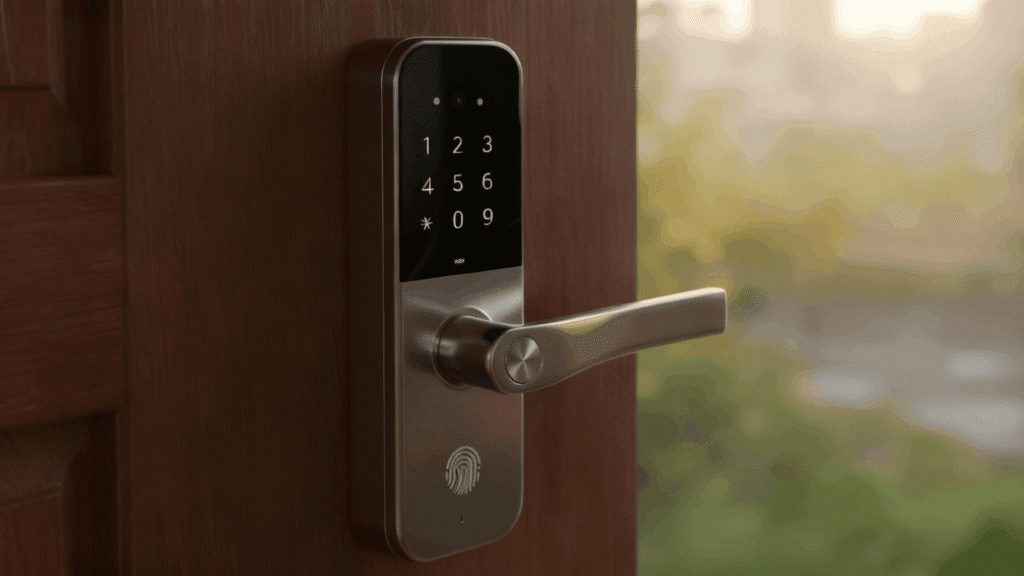
Smart locks incorporate electronic components alongside traditional mechanical parts, including motorized bolt actuators, circuit boards, wireless communication modules (Wi-Fi, Bluetooth, Z-Wave), and battery compartments.
They feature keypads, touchscreens, or biometric scanners for keyless entry. Many retain physical key cylinders as backup access.
Additional components include LED indicators, speakers for audio feedback, and encryption processors that secure digital credentials and enable remote access control through smartphone applications.
Simple Door Lock Maintenance Tips
Even the most reliable door locks can develop issues over time, but with regular care and a few quick fixes, you can keep them working smoothly for years.
- Key sticking or hard to turn: This usually happens when dust, grime, or worn pins build up inside the lock cylinder, making it difficult for the key to align properly.
- Loose handles or knobs: Frequent use can cause the screws or spindle to loosen over time, making the handle feel wobbly and less secure.
- Misaligned latch or strike plate: When the door frame shifts or hinges sag, the latch no longer lines up with the strike plate, preventing smooth locking or latching.
- Key won’t insert fully: A bent or damaged key, or an obstruction inside the keyway, can stop the key from sliding in all the way.
- Lubricate regularly: Apply graphite or silicone-based lubricant to the keyway and moving parts every 6–12 months. Avoid oil-based products they attract dust.
- Tighten screws and fittings: Periodically check all visible screws on knobs, handles, and strike plates to keep components stable.
- Clean the lock cylinder: Use compressed air or a dry cloth to remove dust and debris that might cause sticking or rough operation.
- Check alignment: After door adjustments or hinge tightening, ensure the latch fits smoothly into the strike plate.
Conclusion
Now that you’ve gained an understanding of the parts of a door lock, you’re better equipped to maintain, troubleshoot, and make informed decisions about your home’s security hardware.
From the cylinder and pins to the bolt and strike plate, each door part serves a specific purpose in creating a reliable locking system that protects your property daily.
This knowledge empowers you to communicate effectively with locksmiths, identify when components need replacement, and even tackle simple lock repairs yourself.
Consider upgrading worn components to ensure your home’s security remains uncompromised!