

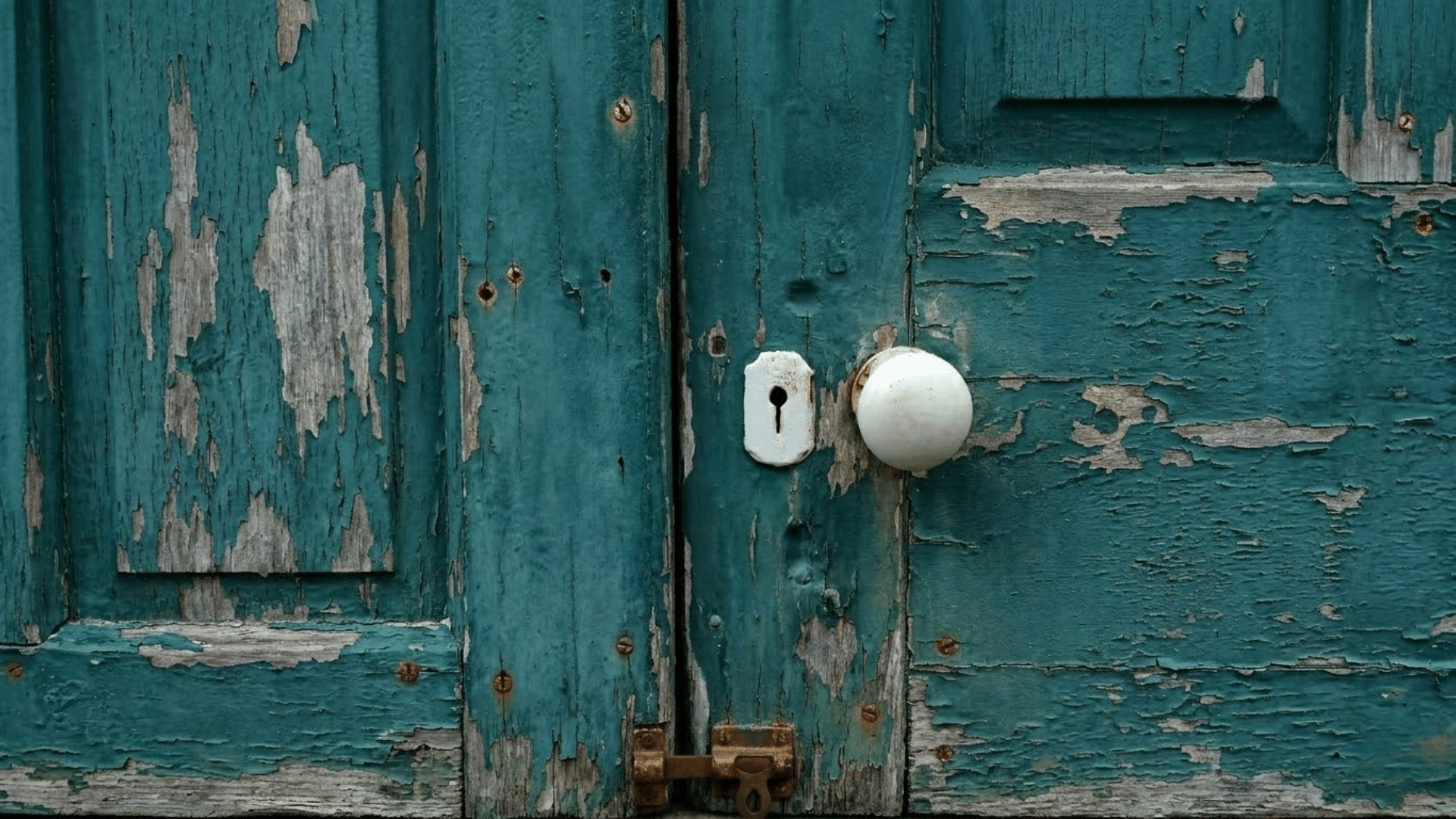
I’ve dealt with peeling paint more times than I can count, and I know how frustrating it can be to see it on doors, trim, or walls.
It can make your whole space feel messy, even when everything else looks fine. I’ve also learned that fixing it does not have to be complicated if you use the right approach.
Even if you’re a complete beginner, you can handle this with simple tools and a bit of time.
In this guide, I’ll show you easy ways to remove peeling paint safely at home. You’ll learn how to prepare your surface, choose the right tools, and smooth out any imperfections before repainting.
If you want clean, long-lasting results without confusion, this guide will help you get there.
What Causes Peeling Paint on Doors and Trim?
Peeling paint on doors and trim is a common issue in many homes. I’ve seen it happen even with fresh paint when a few basic steps are missed.
- Poor Surface Preparation: If dust, grease, or old, loose paint is left behind, new paint cannot adhere well and may start to peel.
- Moisture Problems: Water from humidity, leaks, or damp wood can break the bond between paint and the surface.
- Skipping Primer: Primer helps paint stick to the surface better. Without it, paint may peel sooner than expected.
- Low-Quality Paint: Cheap or wrong type of paint does not hold up well, especially on doors and trim.
- Temperature Changes: Heat and cold can cause paint to expand and contract, leading to cracks and peeling over time.
- Daily Wear and Tear: Doors and trim face constant use, which can slowly weaken the paint layer.
- Painting Over Glossy Surfaces: Smooth or shiny finishes must be sanded first; otherwise, the new paint will not grip properly.
- Thick Paint Layers: Applying paint too thickly can cause uneven drying, leading to peeling later.
How to Prepare Surfaces Before Removing Peeling Paint?
Preparing the surface before removing peeling paint helps make the process smoother and more effective. Proper prep also protects the material underneath and improves the final finish.
Start by cleaning the area with a damp cloth or mild soap to remove dust, grease, and dirt. Let the surface dry completely before moving forward.
Next, inspect for loose or flaking paint and gently scrape off any parts that are already lifting.
Use painter’s tape or a drop cloth to protect nearby areas from dust and debris. For wood surfaces, light sanding helps loosen stubborn paint and creates a more even base.
It is also important to ensure the surface is dry and free from moisture. Good preparation makes paint removal easier and reduces the risk of damage.
How to Removing Peeling Paint from Doors and Trim?
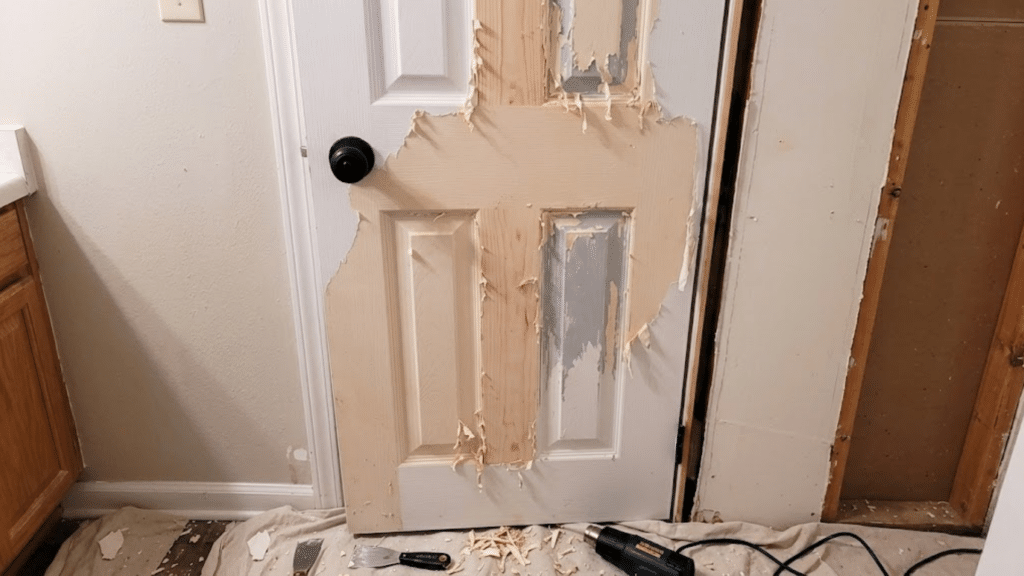
Removing peeling paint from surfaces like doors and trim takes the right method and a bit of patience. Using the correct technique helps protect the surface and gives better results.
1. Scraping Off Loose Paint
Scraping is one of the simplest ways to remove peeling paint from doors, trim, and wood. Start by using a paint scraper or putty knife to remove loose or flaking paint.
Hold the tool at a slight angle and apply gentle pressure to avoid damaging the surface underneath.
Focus only on areas where the paint is already lifting, rather than forcing it off.
This method works best as a first step before using other techniques. It helps clear the surface, making further cleaning or sanding much easier and more effective.
2. Sanding the Surface
Sanding helps remove leftover paint and smooth out rough areas after scraping.
Use medium-grit sandpaper to take off stubborn paint, then switch to fine-grit sandpaper for a smoother finish.
This method works well on wood, trim edges, and detailed sections. Sanding also helps create an even surface for repainting later.
Always sand in the direction of the grain when working on wood to avoid scratches. After sanding, wipe away dust with a clean cloth so the surface is ready for the next step.
3. Using a Paint Stripper
Paint strippers are useful for removing thick or old layers of paint that are hard to scrape or sand.
Apply the stripper evenly over the surface using a brush, then let it sit as directed on the product label.
The paint will soften and start to lift, making it easier to remove with a scraper. This method works well on detailed trim and carved wood.
Always use gloves and work in a well-ventilated area to stay safe while handling chemical products. It is especially helpful for areas where sanding might damage fine details.
4. Heat Gun Method
A heat gun is another effective way to remove peeling paint, especially from wood and trim.
It works by softening the paint so it can be easily scraped off.
Move the heat gun slowly over the surface and keep it at a safe distance to avoid burning the material. Once the paint bubbles, gently scrape it away.
This method is helpful for areas with multiple paint layers. Be careful when using heat tools and avoid overheating a single spot for too long.
5. Cleaning After Removal
Cleaning the surface after removing peeling paint is an important final step. Dust, debris, and leftover residue can affect how well new paint sticks.
Use a damp cloth or a mild cleaner to thoroughly wipe down the area.
Make sure the surface is completely dry before moving forward. This step helps reveal any rough spots that may need extra sanding.
A clean surface also enhances the overall finish when repainting, giving your doors and trim a smooth, fresh look.
6. Using a Wire Brush
A wire brush is helpful for removing paint from small areas and tight corners where scrapers may not reach easily. It works well on trim details and edges.
Gently brush over the peeling areas to loosen and remove paint without applying too much pressure.
This method is best used along with scraping or sanding for better results.
It is especially useful for textured or uneven surfaces. After brushing, clean off any dust to keep the surface ready for the next step.
7. Pressure Washing (Outdoor Only)
Pressure washing is a quick way to remove peeling paint from outdoor doors, trim, or wooden surfaces.
The strong water pressure helps lift loose paint and clean the surface at the same time.
It should be used outdoors and with care, as excessive pressure can damage wood. Keep a safe distance and use a moderate setting for best results.
After washing, allow the surface to dry fully before sanding or repainting to avoid moisture-related issues.
8. Using Eco-Friendly Paint Removers
Eco-friendly paint removers are a safer option for indoor use. These products have less odor and contain fewer harsh chemicals.
Apply the remover to the surface and allow it to sit until the paint softens. Then, gently scrape off the paint. This method is suitable for doors and trim where strong fumes may be a concern.
It may take a bit longer to work than chemical strippers, but it is a good choice for a safer, cleaner process.
9. Manual Peeling and Picking
For small or lightly affected areas, paint can sometimes be removed by hand.
Gently peel off any loose paint using your fingers or a small tool. This method works best when the paint is already lifting and requires little effort.
It is a simple way to start before using other tools, such as scrapers or sandpaper.
While it may not work for large areas, it helps reduce loose paint and prepares the surface for deeper cleaning or removal methods.
What Reddit Users Say About Removing Peeling Paint?
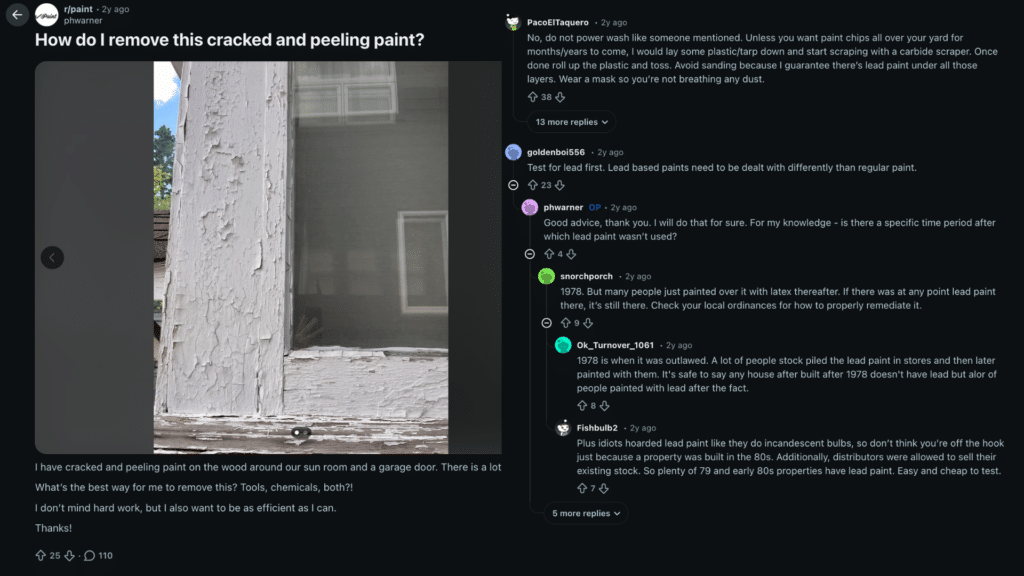
Many Reddit users shared practical advice based on real experience when dealing with cracked and peeling paint on doors and trim.
A common suggestion was to avoid power washing, as it can spread paint chips everywhere and create a bigger mess.
Instead, users recommended using a carbide scraper along with plastic sheets or tarps to catch debris.
A major concern raised was the risk of lead paint, especially in older homes. Several users advised testing for lead before starting and avoiding dry sanding if lead is present.
Others suggested using paint strippers, heat guns, or keeping the surface slightly wet while scraping to reduce dust.
Overall, most users agreed that there is no quick fix, but careful scraping, safety steps, and patience give the best results
Safety Tips when Removing Old Paint at Home
Removing old paint can create dust, fumes, and small debris that may be harmful if not handled carefully. Taking simple safety steps helps protect both you and your space.
- Wear Protective Gear: Use gloves, safety glasses, and a mask to protect your skin, eyes, and lungs from dust and chemicals.
- Work in a Well-Ventilated Area: Open windows and doors to let in fresh air, especially when using paint strippers or heat tools.
- Handle Tools Carefully: Use scrapers, sandpaper, and heat guns with care to avoid cuts, burns, or surface damage.
- Check for Lead Paint: Older homes may have lead-based paint, which requires extra caution and proper handling. Use a test kit or seek professional help before starting work.
- Store Materials Safely: Keep tools, chemicals, and waste out of reach of children and pets. Seal containers properly to avoid spills or exposure.
- Avoid Direct Skin Contact: Try not to touch paint dust or chemicals with bare hands. Wash your hands well after finishing the work.
- Dispose of Waste Properly: Collect paint chips and used materials in a bag and follow local rules for safe disposal.
How to Prevent Peeling Paint in the Future?
Preventing peeling paint starts with doing the basics right from the beginning. A clean, well-prepared surface makes a big difference in how long the paint lasts.
Make sure to remove dust, grease, and any loose paint before applying a new coat.
Using a good-quality primer helps the paint stick better and creates a strong base. Choosing the right type of paint for doors and trim is also important.
Avoid applying thick layers, as they can dry unevenly and peel over time. Always allow each coat to dry fully before adding another.
Keeping moisture away from surfaces and fixing leaks early can also prevent damage.
With proper prep and the right materials, you can keep your paint looking smooth and fresh for a long time.
Conclusion
Dealing with peeling paint may feel like a small problem, but fixing it the right way can completely change how your space looks and feels.
With the right prep and simple tools you can turn rough, damaged surfaces into smooth and clean ones again.
The key is to take your time, follow the right methods, and not skip important steps like sanding and priming.
Now that you know what to do, you’re ready to handle peeling paint on your own with confidence. Whether it’s a door, trim, or any other surface, a fresh finish can make a big difference.
Have you tried any of these methods before? Or do you have a tip that worked well for you?
Share your experience in the comments below to guide others.