

I’ve looked closely at how European furniture markets are changing, and there’s a lot to unpack. If you’re trying to understand where the industry stands today, this guide will help you make sense of it in simple terms.
In this article, I’ll walk you through the market size, key players, and how the share is divided across regions. You’ll also see the main trends shaping demand, from design shifts to online sales and changing buyer habits.
I’ll break down the data so you don’t have to dig through complex reports or guess what matters most. By the end, you’ll have a clear view of where the market is heading and what to expect in the coming years.
If you’re a business owner, investor, or just curious, you’ll find useful insights here to support better decisions.
Europe Furniture Market Overview
The European furniture market is one of the most established and diverse markets in the world. It includes a wide range of products, from home and office furniture to outdoor and specialty items.
The market continues to grow steadily, supported by strong demand across both residential and commercial sectors.
Right now, the market is driven by changing lifestyles, urban living, and a rising focus on home comfort. More people are investing in better furniture as remote work and home upgrades become common.
At the same time, businesses such as hotels and offices are also increasing their spending on modern and functional designs.
Europe plays a key role in the global furniture industry due to its strong manufacturing base and design leadership.
Overall, the market shows stable growth, backed by steady demand, evolving trends, and expanding online sales channels.
European Furniture Market Size And Growth Analysis
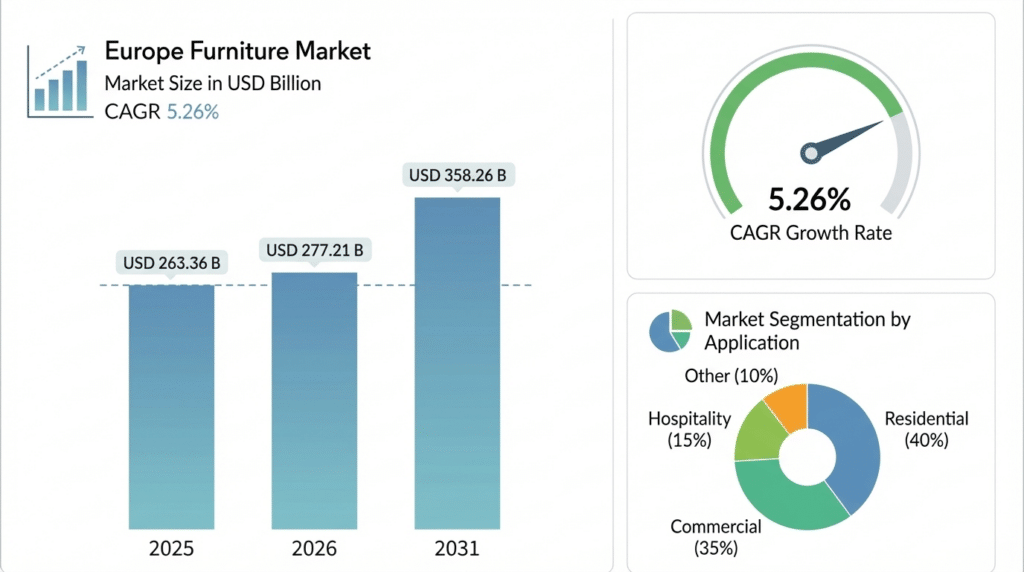
The European furniture market continues to grow at a steady pace in 2026. The market size is currently estimated at around USD 260-280 billion, showing stable demand across both residential and commercial sectors.
This growth reflects consistent spending on home improvement, office upgrades, and hospitality spaces across the region.
Looking back, the market has followed a gradual upward trend over the past decade. Growth has been supported by urbanization, rising living standards, and a stronger focus on interior design.
Even during economic slowdowns, demand has remained fairly stable due to the essential nature of furniture.
The market is expected to grow at a compound annual growth rate (CAGR) of around 4% to 6% over the next few years.
Key drivers include the rise of online furniture sales, demand for eco-friendly products, and the growing need for multifunctional furniture in modern homes.
Key Trends Shaping The European Furniture Market

The European furniture market is evolving, and several key trends are shaping how furniture is designed, sold, and used across the region.
- Rise of Sustainable and Eco-Friendly Furniture
Consumers are choosing furniture made from recycled, certified, and low-impact materials. Brands are focusing more on sustainability to meet stricter regulations and buyer preferences. - Growth of E-Commerce and Online Retail
Online platforms are making it easier to compare prices, designs, and reviews before buying. Fast delivery and virtual tools are also improving the online shopping experience. - Demand for Multifunctional and Space-Saving Furniture
Smaller living spaces are increasing the need for furniture that serves multiple purposes. Products like sofa beds and foldable tables are becoming more popular. - Impact of Urbanization and Lifestyle Changes
Urban living and remote work are reshaping furniture needs and design choices. People are investing more in comfort, flexibility, and modern home setups.
European Furniture Market Share By Country
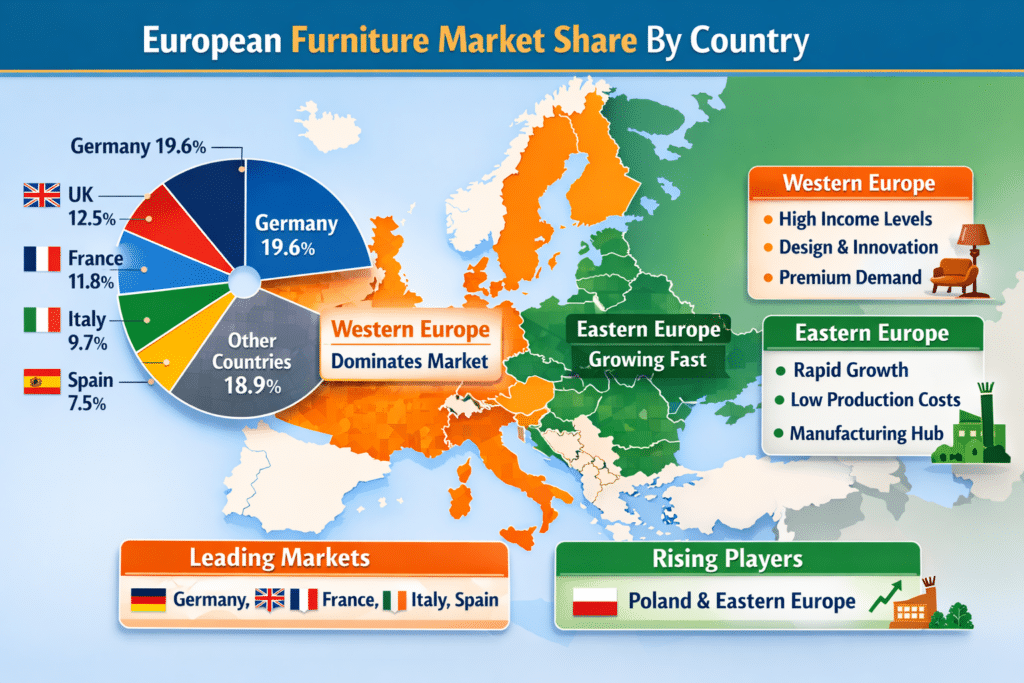
The European furniture market is led by a few major countries that account for a large share of total demand and production.
Among them, Germany holds the largest share, contributing around 19–20% of the market, supported by its strong economy and manufacturing base.
The UK, France, Italy, and Spain also play key roles, together making up a significant portion of regional consumption and sales.
In terms of regional comparison, Western Europe dominates the market, driven by higher income levels, mature retail networks, and strong consumer demand.
Countries in this region also lead in design innovation and premium furniture segments.
Meanwhile, Eastern Europe is growing at a faster pace, especially in manufacturing. Countries like Poland and others are gaining share due to lower production costs and increasing investments.
Challenges And Market Restraints
While the European furniture market shows steady growth, it also faces several challenges that can impact overall performance and profitability.
| Challenge | Description |
|---|---|
| Raw Material Costs | Rising material prices increase production costs and reduce margins. |
| Supply Chain Disruptions | Delays in sourcing and transport affect product availability. |
| Environmental Regulations | Strict rules raise costs and require process changes. |
| Intense Market Competition | High competition pushes companies to innovate and stand out. |
Competitive Landscape And Key Players

The European furniture market is highly competitive, with a mix of global brands and regional players competing across different price segments.
Overview of Major Companies
Leading players include IKEA, Natuzzi, Roche Bobois, and other regional brands. They offer products across budget, mid-range, and premium segments.
Market Competition And Positioning
The market is fragmented, with brands competing on price, design, and quality. Companies position themselves based on target customers and product style.
Strategies Like Mergers, Expansion, And Innovation
Companies focus on expanding into new markets and strengthening their online presence. Innovation in design, materials, and digital tools is also a key strategy.
Focus on Sustainability and Branding
Brands are investing in eco-friendly materials and transparent sourcing. Strong branding helps build trust and attract modern consumers.
European Furniture Market Forecast (2025–2030)
The European furniture market is expected to maintain steady growth through 2030, supported by evolving consumer needs and ongoing industry innovation.
-
Future Market Size Projections
The market is projected to grow from around USD 277 billion in 2026 to over USD 350 billion by 2031, showing strong long-term expansion. -
Emerging Trends to Watch
Sustainability, digital retail, and smart furniture solutions are shaping future demand. Hybrid work and home upgrades are also influencing buying patterns. -
Long-Term Growth Outlook
The market is expected to grow at a steady CAGR of around 4%–6% over the forecast period. This reflects a mature but stable industry with consistent demand. -
Shift Toward Omnichannel Retail
Online and offline channels are merging to improve customer experience. This shift is helping brands expand reach and boost long-term sales growth.
Wrapping Up
By now, you have a clear picture of how the European furniture market is growing and what’s shaping its future. From steady market growth to changing consumer needs, many factors are influencing where the industry is heading.
If you’re a business owner or investor, these insights can help you make smarter decisions and spot new opportunities early.
What stands out most is how trends like sustainability, online sales, and modern living are driving real change. The market may be mature, but it still offers room for growth if you stay informed and adapt.
I hope this guide made things simple and useful for you. Now I’d love to hear from you. What trends or changes have you noticed in the furniture market? Share your thoughts or experience in the comments below!