

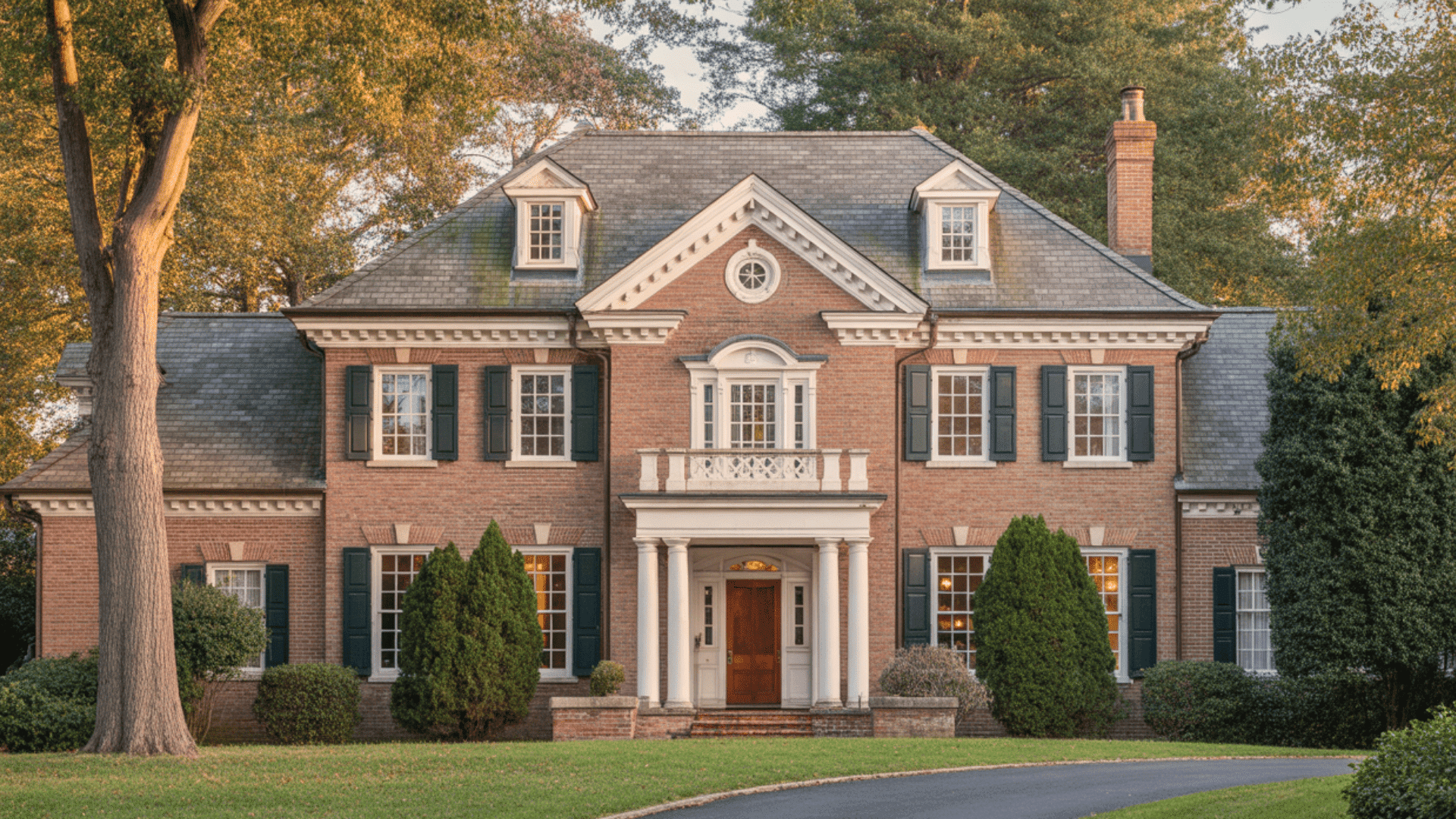
Some home styles never fade, and Georgian design is one of them. Built on balance and order, these homes have a look that feels calm, solid, and planned.
You often see them in older neighborhoods, but many new homes borrow from it.
Georgian-style houses are known for symmetry, brick exteriors, and simple details that feel clean rather than flashy.
This design came from 18th-century Britain and later shaped many homes in the United States. Even now, people choose it because it feels steady and well thought out.
In this guide, I have shared what defines Georgian architecture, where it came from, and how to spot it.
You will learn how to design a Georgian-style home, compare it with other styles, and avoid common mistakes to see if it fits your needs.
What Is a Georgian-Style House?
A Georgian-style house is a home design based on balance, order, and clear structure.
These homes were built to show stability and good planning, not excess. The main goal was to create houses that felt solid, organized, and easy to live in.
Georgian architecture follows strict symmetry, meaning windows, doors, and rooms line up evenly.
Most homes use brick, simple rooflines, and centered front doors. Inside, the layout is practical, with rooms placed in a clear and logical way.
This style was often used for family homes because it worked well for daily life and long-term use.
Today, Georgian-style houses still matter because they offer a classic layout that fits both traditional and modern living. Their design focuses on function, balance, and lasting appeal rather than trends.
Key Characteristics of Georgian Style Houses
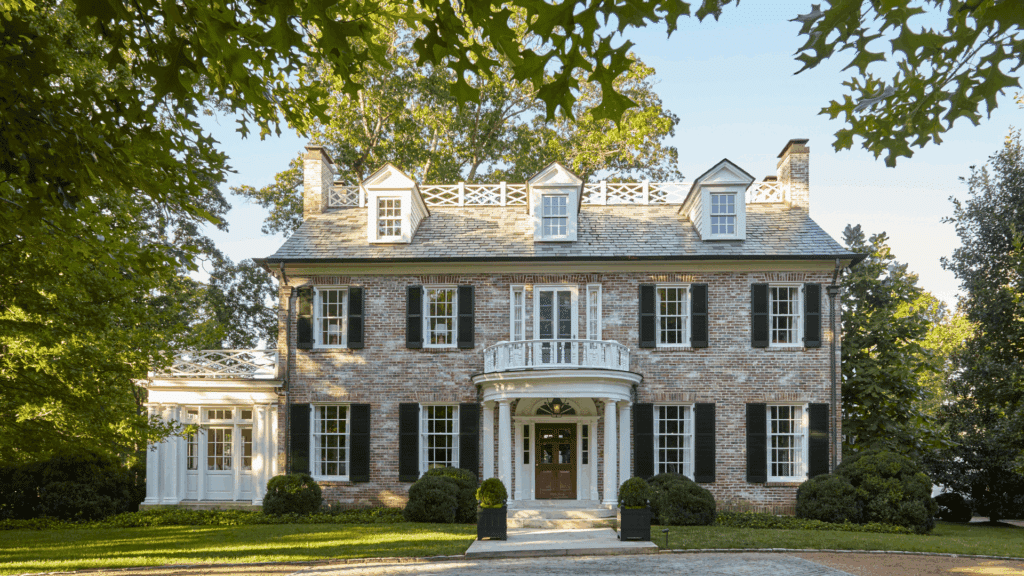
Georgian homes follow clear design rules that focus on balance, order, and structure. These features make the style easy to recognize and easy to apply.
1. Symmetrical Facade
Symmetry is one of the most defining traits of Georgian-style houses. The front of the home is carefully balanced, with windows placed evenly on both sides of a centered door.
Each window usually matches in size, shape, and spacing, which creates a calm and organized appearance.
This design was meant to reflect order and careful planning rather than decoration. Symmetry also helps the house feel grounded and stable.
Because of this, Georgian homes often look neat and well-proportioned from the street, even when the design is simple.
2. Centered Front Entrance
The front entrance of a Georgian house always sits directly in the center of the facade.
This door acts as the main visual focus of the home. It often includes simple details such as columns, a rectangular frame, or a small decorative crown.
Many entrances also feature a fanlight or glass panels that bring natural light into the entryway.
This centered door usually leads to a straight hallway inside, helping guide the layout of the entire house. The entrance design supports both function and balance without feeling excessive.
3. Brick and Simple Exterior Materials
Brick is the most common exterior material used in Georgian-style houses. It was chosen because it is strong, long-lasting, and easy to maintain.
Brick colors are usually red or brown, with very little variation.
Other materials, such as stone or wood, may be used for trim around doors and windows, but they remain subtle.
Decorative elements are kept to a minimum to maintain a clean and orderly look. This focus on simple materials helps Georgian homes age well and remain visually consistent over time.
4. Balanced Interior Layout
The interior of a Georgian house follows the same sense of order seen on the outside.
Rooms are arranged in a balanced way, often split evenly on both sides of a central hallway. Each room has a clear purpose, which makes the layout easy to understand and live in.
Ceilings are often higher, helping rooms feel open without relying on heavy decoration.
This layout was designed for daily family life and formal gatherings. Even today, it supports modern needs while keeping a structured and practical flow.
Historical Timeline of Georgian Style Homes
Georgian architecture began in Britain in the early 1700s during the reigns of Kings George I through George IV. The style focused on order, balance, and clear rules for building homes.
Early Georgian homes were simple and formal, often built for wealthy families.
As the style spread, designs became more refined and widely used. By the mid-1700s, Georgian homes appeared across towns and cities in Britain.
The style later traveled to North America with British settlers. Georgian architecture in the United States became common in the 18th century, especially along the East Coast.
It was used for homes, public buildings, and estates. Over time, builders adjusted the style to local materials and needs.
Even after newer styles appeared in the 1800s, Georgian design remained popular because of its practical layouts and balanced appearance. That influence still shapes traditional housing today.
How to Design a Georgian Style Home Today?
Designing a Georgian-style home today means respecting classic rules while meeting modern needs. The focus stays on balance, structure, and simple details that work in real life.
1. Follow Symmetry and Proportion
Start the design by planning a balanced layout. The front of the home should feel even, with windows and doors placed in a clear and orderly way.
Avoid uneven spacing or mixed window sizes. Inside, keep rooms aligned around a central hallway when possible.
Proportion matters just as much as symmetry. Rooms should feel equal in size and purpose, not random or oversized.
This approach keeps the home grounded and true to Georgian design while still allowing flexibility for modern living.
2. Choose Traditional Materials with Modern Performance
Select materials that match the classic Georgian look but meet today’s building standards.
Brick remains the most common choice for exterior walls because it offers durability and a traditional feel. Modern brick options now provide better insulation and energy performance.
For trim and accents, use stone or painted wood in simple shapes. Avoid decorative materials that feel too modern or textured.
This balance helps the home keep its historic look while functioning well in today’s climate and construction needs.
3. Keep Exterior Details Simple and Clean
Georgian design avoids heavy decoration. When adding exterior details, stick to clean lines and subtle features. Door frames, window trim, and cornices should be neat and well-proportioned.
Avoid oversized columns, ornate railings, or decorative elements that draw too much attention.
The goal is to support the structure, not overpower it.
Simple details help maintain the calm, orderly appearance Georgian homes are known for. This approach also makes the design easier to maintain over time.
4. Adapt the Interior for Modern Living
While the layout should feel structured, the interior can still support modern needs.
Open up certain spaces carefully without losing balance. For example, connect the kitchen and dining areas while keeping clear room boundaries.
Use modern lighting, heating, and storage solutions that stay out of sight.
This allows the home to feel comfortable and updated without breaking the traditional layout. Thoughtful planning helps combine classic design with everyday function.
How to Identify Georgian Architecture?
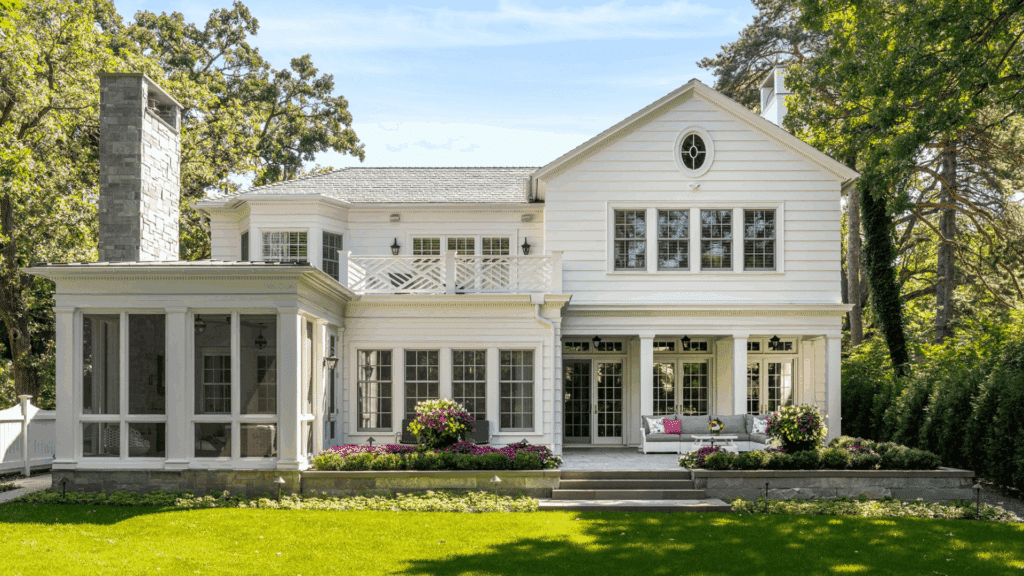
Certain visual details make this style easy to recognize at a glance. These features appear on both historic and modern Georgian homes.
- Facade symmetry: Perfectly balanced with evenly spaced windows
- Front entrance: Centered door that serves as the main focal point
- Exterior materials: Mostly brick in red or brown tones
- Window style: Evenly sized sash windows with simple frames
- Roof design: Side-gabled or hipped with a modest slope
- Exterior decoration: Minimal with clean, straight lines
- Chimney placement: Balanced, often matching on both sides
- Overall layout: Clear structure visible from the outside
- Window alignment: Vertically and horizontally aligned across floors
Georgian vs. Colonial vs. Victorian Architecture
Each style comes from a different period and follows its own design rules. Looking at structure, materials, and layout makes the differences easier to spot.
| Feature | Georgian Architecture | Colonial Architecture | Victorian Architecture |
| Time Period | Early 1700s to early 1800s | 1600s to late 1700s | Mid to late 1800s |
| Overall Design | Strictly balanced and formal | Simple and practical | Detailed and decorative |
| Exterior Look | Clean lines with symmetry | Plain with minimal detail | Ornate with layered elements |
| Common Materials | Brick and stone | Wood and brick | Wood with mixed materials |
| Window Style | Evenly spaced sash windows | Small, simple windows | Tall, decorative windows |
| Roof Style | Side-gabled or hipped | Steep gabled roofs | Complex, steep roofs |
| Decorative Details | Very limited | Minimal | Extensive trim and patterns |
| Interior Layout | Centered hallway with balanced rooms | Compact and functional | Asymmetrical and varied |
| Visual Focus | Proportion and order | Utility and function | Visual interest and detail |
| Best Fit For | Traditional and modern homes | Modest, early homes | Statement-style homes |
Common Mistakes to Avoid While Designing Georgian Design
Small design choices can affect how authentic the final result feels. Paying attention to proportions and details helps maintain the style.
- Ignoring symmetry: Placing windows or doors unevenly across the facade
- Using modern materials: Choosing finishes that clash with traditional brick or stone
- Overdecorating exteriors: Adding heavy trim, bold colors, or ornate features
- Incorrect window sizes: Mixing window shapes or using oversized glass panels
- Off-center entrances: Placing the main door away from the center
- Poor proportions: Designing rooms or elevations that feel unbalanced
- Inconsistent rooflines: Using complex or steep roof shapes
- Mixing styles: Combining Georgian elements with unrelated architectural details
Is Georgian Architecture Practical for Modern Living?
Georgian architecture can work well for modern living when planned carefully. The layout focuses on balance and clear room placement, which helps homes feel organized and easy to use.
Central hallways create simple movement between rooms. Room separation allows for privacy, which many families still prefer today.
Some layouts may feel closed, but selective openings can improve flow while keeping symmetry.
Georgian homes also support comfort through high ceilings and large windows that bring in natural light.
Modern heating, insulation, and storage can be added without changing the structure. Modern updates help the home meet today’s needs while keeping its classic form.
With thoughtful design, Georgian architecture offers both function and long-term comfort.
Conclusion
Georgian-style houses stand out because they are built with balance, structure, and purpose.
From their clear layouts and symmetrical exteriors to their long history and practical design rules, this style offers a strong foundation for both classic and modern homes.
It shows how simple planning and good proportions can create spaces that still work today.
If you are thinking about building, updating, or even just understanding this style, knowing the key features helps you make better choices.
Georgian design proves that homes do not need heavy detail to feel complete.
If you want to keep learning, look deeper into materials, layouts, and modern updates that fit this style.
I’d love to hear your thoughts. Have you lived in or worked on a Georgian-style home? Share your experience in the comments below.