

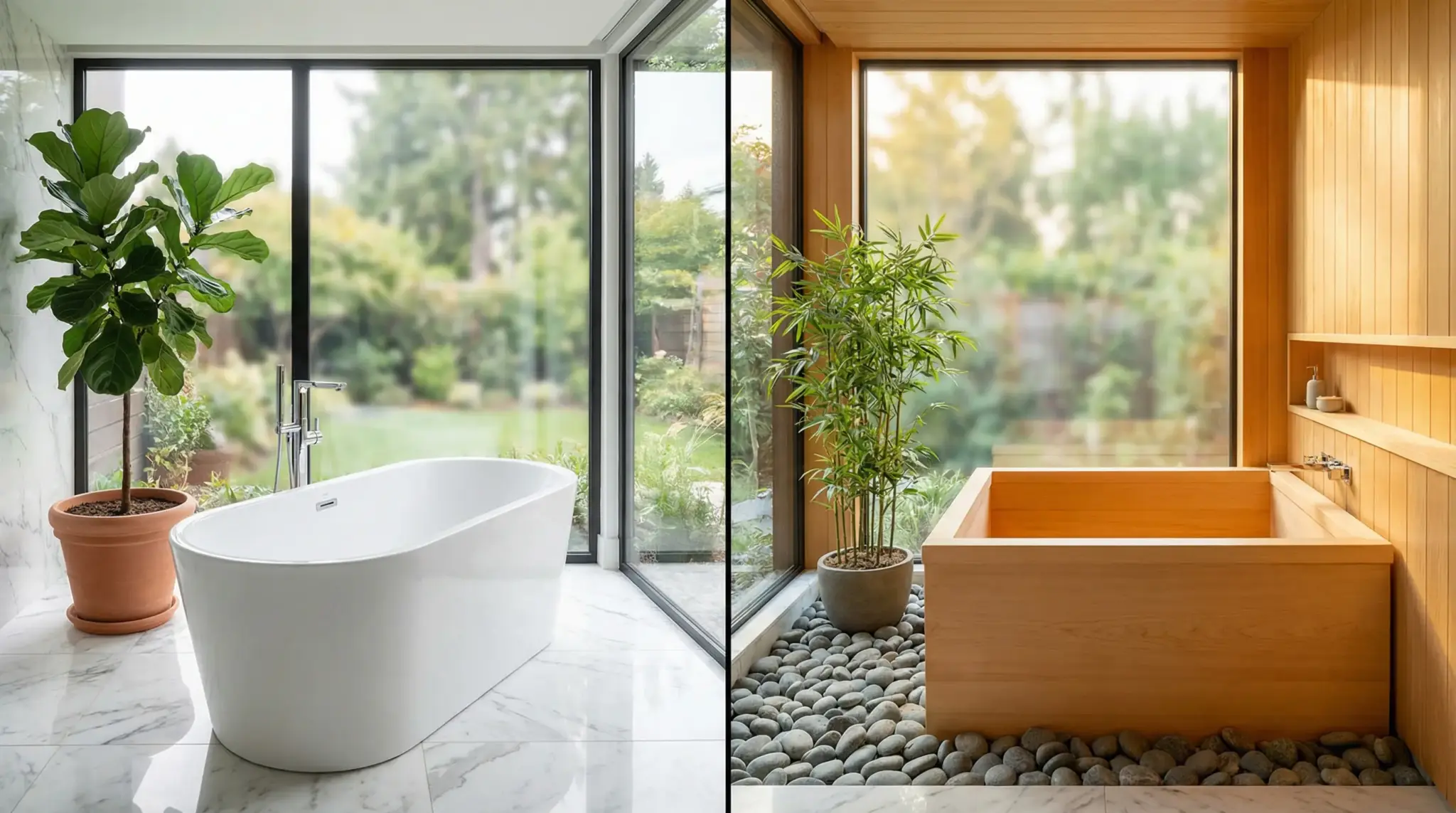
When you start looking at bathroom remodels, the tub is often the centerpiece. Two styles that come up frequently are the classic freestanding tub and the compact Japanese soaking tub. Both look great in photos, but they serve very different purposes. One is about having a long, open space to stretch out. The other is about going deep with a smaller footprint.
Choosing between them is not just about looks. It affects how much floor space you need, how you get in and out, and how you actually use the tub on a regular basis. Understanding the real-world differences helps you pick the one that fits your home and your routine.
Space and Layout
The first thing most homeowners notice is how much room each tub takes up. Bathroom square footage is valuable, and the tub you choose determines what else you can fit in the space.
Footprint of a Freestanding Tub
A standard freestanding bathtub typically requires a footprint of about 60 to 68 inches in length and 30 to 36 inches in width. But the actual space needed is larger than the tub itself. You need room to walk around it, clean behind it, and access the faucet if it is floor-mounted. In a typical bathroom, a freestanding tub needs at least 12 inches of clearance on the sides to feel comfortable and functional.
For a master bathroom with generous square footage, that works fine. But in smaller bathrooms common in older homes or city apartments, a freestanding tub can make the space feel cramped. You end up with a tub that dominates the room and leaves little room for a vanity or storage.
Footprint of a Japanese Soaking Tub
A Japanese soaking tub is a different story. These tubs are designed to be compact. A typical square model measures around 36 inches by 36 inches. Round models are similar in diameter. The smaller footprint means you can fit one into a corner, against a wall, or in a space that would never accommodate a 60-inch tub.
For homeowners working with a tight bathroom, the space savings are significant. You can have a soaking tub and still have room for a larger shower, a double vanity, or a linen cabinet. In some cases, a Japanese soaking tub lets you add a tub to a bathroom where a standard model simply would not fit.
Installation and Placement
How a tub installs affects the complexity of your renovation. The differences between freestanding and Japanese tubs go beyond just where they sit in the room.
Freestanding Tub Installation
Installing a freestanding tub requires careful planning of the drain location. The drain is usually in the floor directly under the tub. If you are replacing an existing alcove tub, the plumber needs to move the drain to the new location. That involves cutting the subfloor and rerouting pipes. It is standard work but adds time to the project.
The faucet is another consideration. Freestanding tubs often use floor-mounted faucets that come up from the floor next to the tub. These require additional plumbing rough-ins and need to be positioned precisely so the faucet aligns with the tub. Wall-mounted faucets are also an option, but the tub needs to be positioned close enough to the wall for the water to reach the center.
Weight is a factor too. A freestanding bathtub in acrylic is manageable at 70 to 100 pounds, but stone or cast iron versions can be three to four times heavier. With acrylic, installation is straightforward for two people. With heavier materials, you may need extra labor or equipment.
Japanese Soaking Tub Installation
A Japanese soaking tub also requires the drain to be placed in the floor, usually centered under the tub. If you are converting from a standard tub, the drain location will need to move. That work is similar to what a freestanding tub requires.
The difference comes in placement flexibility. Because a Japanese soaking tub is smaller, you have more options for where it goes. You can set it against a wall, in a corner, or partially recessed into a platform. That flexibility often means less structural work because you can place the tub where existing plumbing is easier to reach.
Many Japanese soaking tubs are designed to be installed flush with the floor or on a low platform. This reduces the step-over height compared to a freestanding tub, which often sits higher off the floor. For anyone concerned about accessibility, that lower entry is a practical advantage.
Bathing Experience
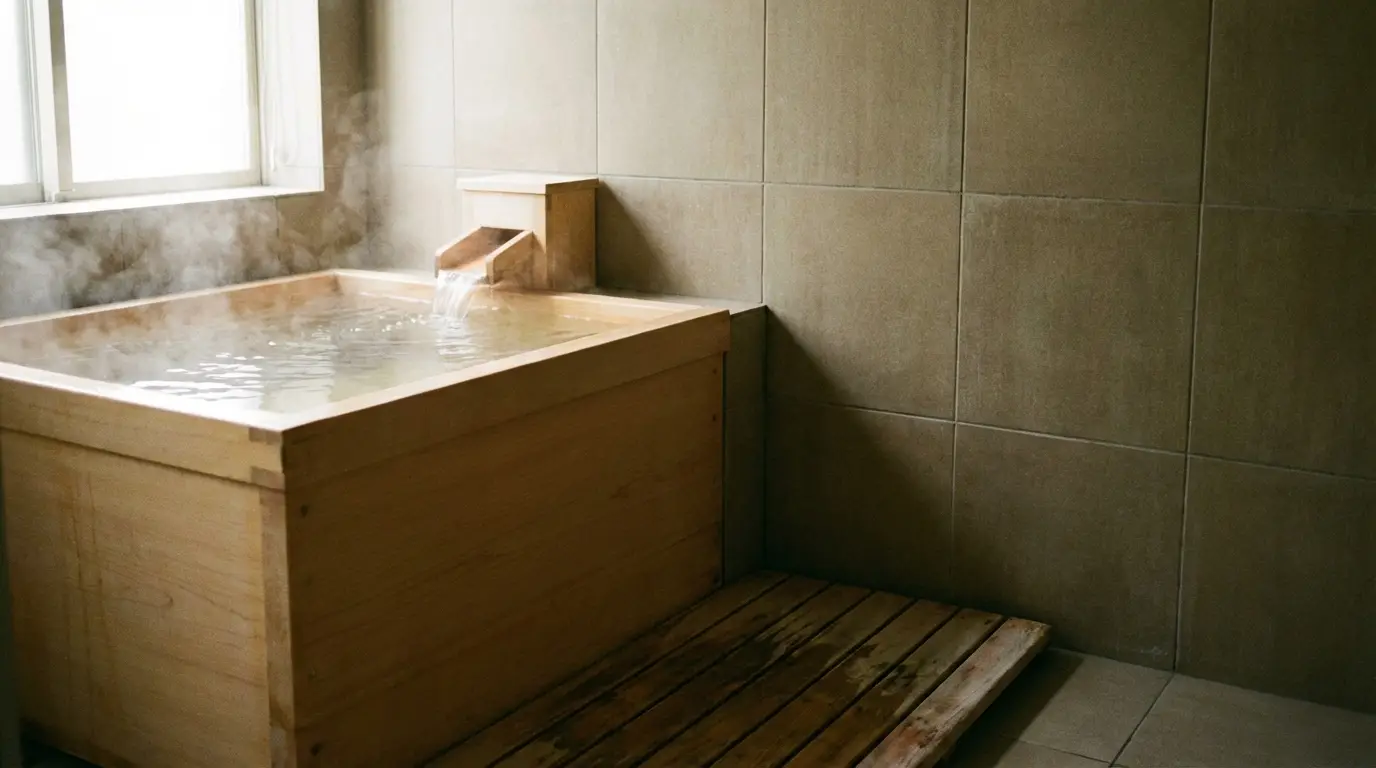
The way you sit in a freestanding tub versus a Japanese soaking tub is fundamentally different. Your body position affects comfort, water coverage, and how long you stay in the bath.
Lying Down vs. Sitting Upright
A standard freestanding bathtub is designed for lying down. You stretch out along the length of the tub with your legs extended. The water depth in a typical freestanding model is about 14 to 16 inches. For most adults, that means your shoulders and upper chest are exposed unless you slouch down. The tub is wide enough to move around, which is useful if you are bathing children or need space to maneuver.
A Japanese soaking tub is designed for sitting upright. The depth is usually 24 to 28 inches. When you sit in one, the water comes up to your shoulders or neck. Your whole body stays submerged, which keeps your muscles relaxed and helps the water stay warm longer. The seated position also puts less strain on your lower back compared to lying flat in a shallow tub.
Who Benefits from Each Style
The freestanding tub works well for people who like to stretch out while bathing. It also works better for families with young children because you have more room to move around. If you use the tub for washing dogs or soaking large items, the longer shape is more practical.
The Japanese soaking tub is a good fit for people with joint pain, muscle tension, or anyone who wants deep heat penetration. Athletes, people with physically demanding jobs, and anyone dealing with chronic back pain often find that full submersion does more for recovery than a shallow bath. It also works well in households where multiple adults use the tub, because the compact size fills faster and uses less water per bath.
Material and Durability
Both styles are available in acrylic, which is one of the most practical materials for residential bathrooms. Acrylic handles moisture well, retains heat, and resists staining.
Why Acrylic Works for Both
Acrylic is non-porous, so mold and mildew do not have a surface to grow into. It cleans easily with mild bathroom cleaners and a soft sponge. It also retains heat better than metal. In both a freestanding tub and a Japanese soaking tub, that heat retention matters because you are likely to soak for 20 to 30 minutes.
Acrylic is also repairable. If you drop something and cause a scratch or a small chip, you can sand it out or use a repair kit. That is not the case with stone, which is difficult to patch, or with cast iron, which chips and rusts.
For a freestanding bathtub, acrylic keeps the weight manageable. You can move it easily during installation, and you do not have to reinforce floor joists to support it. For a Japanese soaking tub, acrylic allows for the deep design without making the tub too heavy for a standard floor.
Reinforcement and Build Quality
A well-made acrylic tub includes a layer of fiberglass reinforcement that adds stiffness. That reinforcement is important for deep tubs like Japanese soaking tubs because the water pressure against the sides is greater than in a shallow tub. The same reinforcement makes a freestanding tub feel solid underfoot rather than flexing when you step in.
When you are shopping, you can check the quality by pressing on the bottom and sides. A well-reinforced acrylic tub feels rigid and does not flex. That solid feel translates to durability over years of use.
Daily Maintenance and Cleaning
No matter which tub you choose, you will need to clean it. The amount of effort required depends on the surface and the shape.
Cleaning a Freestanding Tub
A freestanding tub has more surface area than a compact Japanese tub. That means more space to wipe down. The biggest cleaning challenge is often behind the tub. Because a freestanding tub sits away from the wall, the back side collects dust and soap residue. You need to reach back there regularly to keep it clean. In some bathrooms, that means getting on your hands and knees with a sponge.
The exposed sides of a freestanding tub also show water spots and soap scum more visibly than a tub that is tucked against a wall. If you have hard water, you will need to stay on top of cleaning to keep the finish looking good.
Cleaning a Japanese Soaking Tub
A Japanese soaking tub has less surface area, so cleaning takes less time. If the tub is installed against a wall or in a corner, you do not have to clean behind it. The smooth acrylic surface wipes down quickly with a soft sponge.
One practical difference is the seat. Many Japanese soaking tubs have a built-in seat or a contoured bottom. That seat area can collect soap residue if you do not rinse it after use. A quick spray with a handheld shower wand or a cup of water over the seat after each bath keeps it clean without extra effort.
Cost and Value
Budget is a major factor in any bathroom remodel. The cost of the tub itself is only part of the equation. Installation labor, plumbing changes, and long-term maintenance all add to the total.
Initial Costs
A standard freestanding acrylic tub is generally affordable, with installation costs driven by plumbing relocation and floor finishing. A Japanese soaking tub can be similar in price or slightly higher depending on the design and whether it includes features like a built-in seat or wood exterior.
The installation costs for a Japanese soaking tub can be lower in some cases because the compact size gives you more placement options. You might be able to position it where existing plumbing is easier to reach, reducing the amount of pipe relocation needed.
Long-Term Value
Both styles hold up well when made from acrylic. The non-porous surface means you will not need to reseal or refinish the tub over time. With regular cleaning, both will look good for years.
For resale value, a freestanding tub is what most American buyers expect in a master bathroom. It is a familiar feature that signals a higher-end renovation. A Japanese soaking tub is more of a specialty item. Some buyers appreciate the space savings and deep soaking, while others prefer a standard shape. If resale is a major concern, the freestanding style is the safer choice.
Making the Choice
The right tub for your bathroom depends on your space, your body, and how you want to use it.
Choose a freestanding bathtub if you have a larger bathroom with room to walk around the tub, if you prefer lying down while bathing, or if you want a familiar look that appeals to most buyers. Acrylic keeps the weight manageable and the maintenance simple.
Choose a Japanese soaking tub if your bathroom is tight on space but you still want a full soaking experience, if you have joint pain or muscle tension that benefits from deep water coverage, or if you prefer sitting upright while bathing. The compact footprint lets you add a tub to bathrooms where a standard model would not fit.
Both styles have their place. Acrylic gives you durability, easy cleaning, and straightforward installation regardless of which shape you choose. The decision comes down to how much space you have and how you want to feel when you step into the water.