

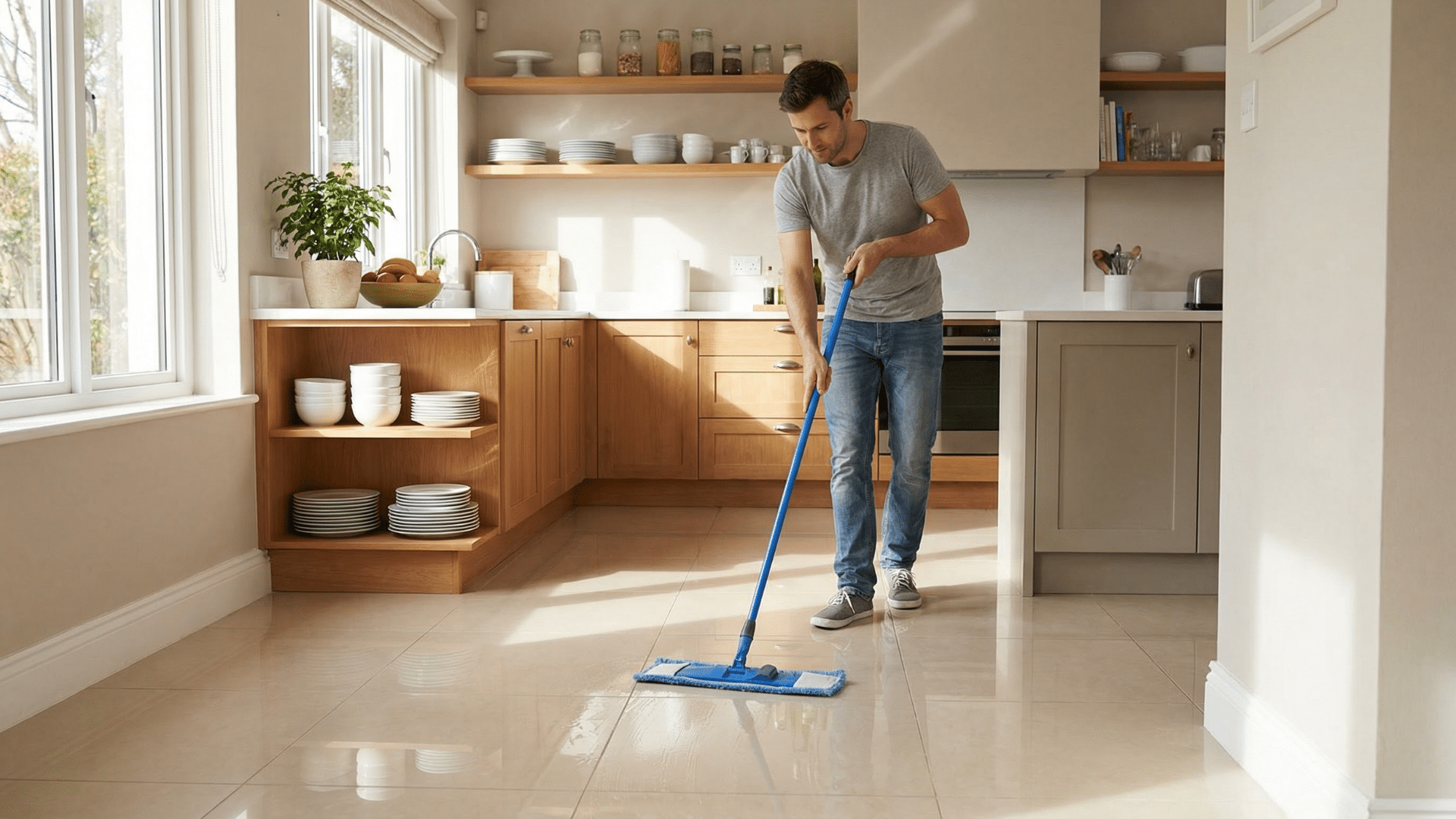
Tile floors are a common choice in kitchens, bathrooms, and hallways because they are strong and long-lasting.
Over time, though, dirt, spills, and everyday foot traffic can leave them looking dull. Many homeowners look for the best way to clean tile floors without using harsh chemicals or expensive products.
A simple routine can make a big difference in how the surface looks and feels. Regular care also helps protect grout lines and prevent stains from setting in.
This guide explains how to clean ceramic tile floors the right way with practical, cost-effective methods that are easy to follow and safe for most homes.
Why Tile Floors Get Dirty So Fast
Tile floors are strong, but they are not immune to dirt. Dust, sand, food crumbs, grease, soap residue, and pet hair collect on the surface every day.
In high-traffic areas like kitchens and entryways, dirt gets ground into the tile and pushed into grout lines. Over time, this buildup makes floors look dull and stained.
Ceramic tile floors are especially common in homes. They are water-resistant and easy to wipe down. Still, they need regular care to stay clean.
If grime is left too long, it becomes harder to remove. That is why learning the best way to clean tile floors is important for long-term maintenance.
Know Your Tile Type Before Cleaning
Understanding your tile type helps you choose the safest and most effective cleaning method. Using the wrong product can damage the surface or grout. Here is a simple guide:
| Tile Type | Key Features | Safe Cleaning Methods | What to Avoid | Best For |
|---|---|---|---|---|
| Ceramic Tile | Glazed surface, water-resistant, common in homes | Warm water, mild dish soap, vinegar (diluted), baking soda | Abrasive scrubbers and strong acids are used frequently | Kitchens, bathrooms, hallways |
| Porcelain Tile | Denser and less porous than ceramic, highly durable | Warm water, mild soap, diluted vinegar, steam mop (with care) | Harsh abrasive pads, excessive water | High-traffic areas, entryways |
| Natural Stone (Marble, Slate, Travertine) | Porous surface, sensitive to acids, elegant finish | pH-neutral stone cleaner, warm water, soft mop | Vinegar, lemon, acidic cleaners, and bleach | Living areas, upscale interiors |
| Quarry Tile | Unglazed, textured, slip-resistant | Mild detergent, warm water, soft brush | Acidic cleaners, strong chemicals | Mudrooms, outdoor areas |
| Glass Tile | Smooth, reflective surface | Glass-safe cleaner, warm water, microfiber cloth | Abrasive tools, rough scrubbers | Accent areas, backsplashes |
Basic Supplies for Cleaning Tile Floors
Most homes already have what is needed for effective tile cleaning. There is no need to buy expensive specialty products.
Common supplies include:
- Broom or vacuum
- Microfiber mop
- Bucket
- Warm water
- Mild dish soap
- White vinegar (for ceramic or porcelain only)
- Baking soda
- Soft scrub brush or old toothbrush
- Clean towels or dry mop
Using the right tools makes cleaning easier and prevents damage.
The Best Way to Clean Tile Floors: Step-by-Step
Many homeowners ask about the best way to clean tile floors without making the process long or expensive. The truth is that a simple, consistent routine delivers the best results. The key is to do each step properly rather than rushing through it.
Step 1: Sweep or Vacuum First
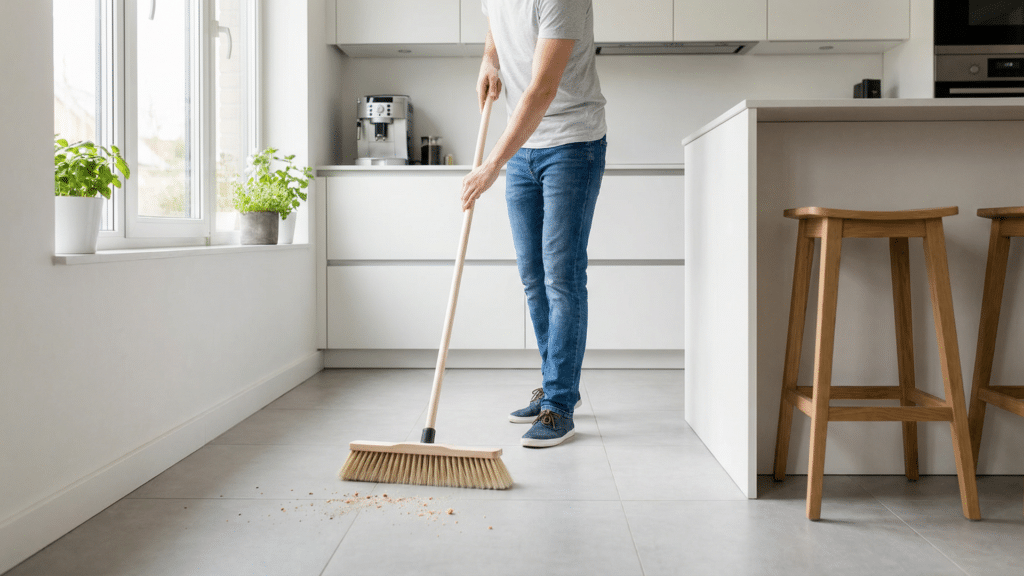
Always remove loose dirt before mopping. Grit and sand can scratch the surface if pushed around with a wet mop. Use a broom with soft bristles or a vacuum set for hard floors.
Move slowly across the room and pay close attention to corners, edges, and areas under cabinets. Dirt often collects along baseboards and in grout lines. Taking time during this step prevents debris from spreading during mopping and protects the tile finish.
Step 2: Mop with Warm Water and Mild Soap
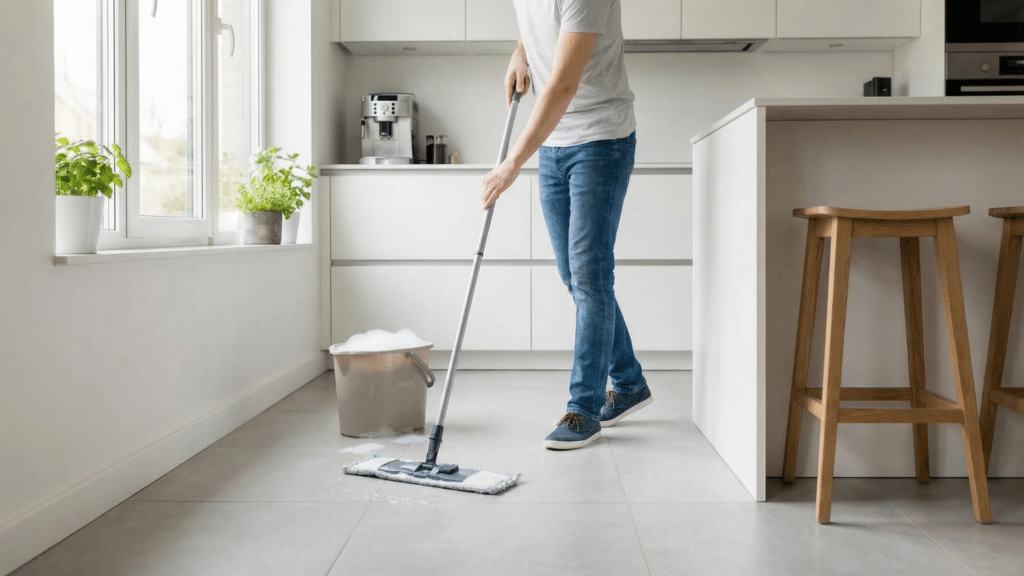
Fill a bucket with warm water and add a small amount of dish soap. Using too much soap can leave residue, so use it sparingly. Dip the mop, wring it out well, and mop in small sections.
Avoid soaking the tiles. Excess water can seep into grout lines and weaken them over time. If the water becomes dirty, replace it with a fresh solution. Clean water ensures better results and prevents streaking.
Step 3: Rinse with Clean Water
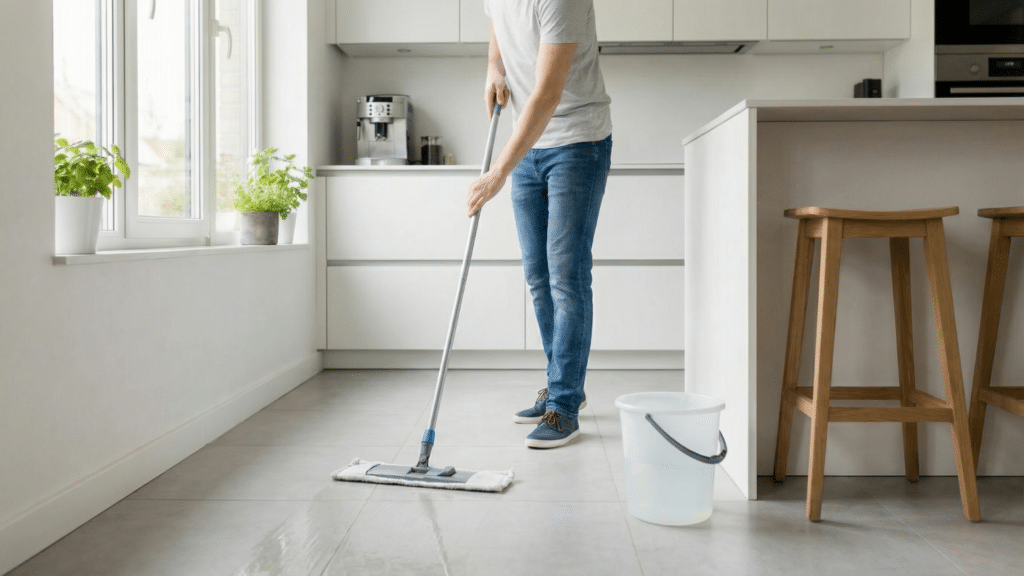
After mopping with soap, go over the floor again with clean water. This step removes leftover detergent that can make tiles look cloudy.
Use a well-wrung mop and work in the same sections as before. Skipping this step often leads to buildup that dulls the shine of ceramic tile floors.
Step 4: Dry the Floor
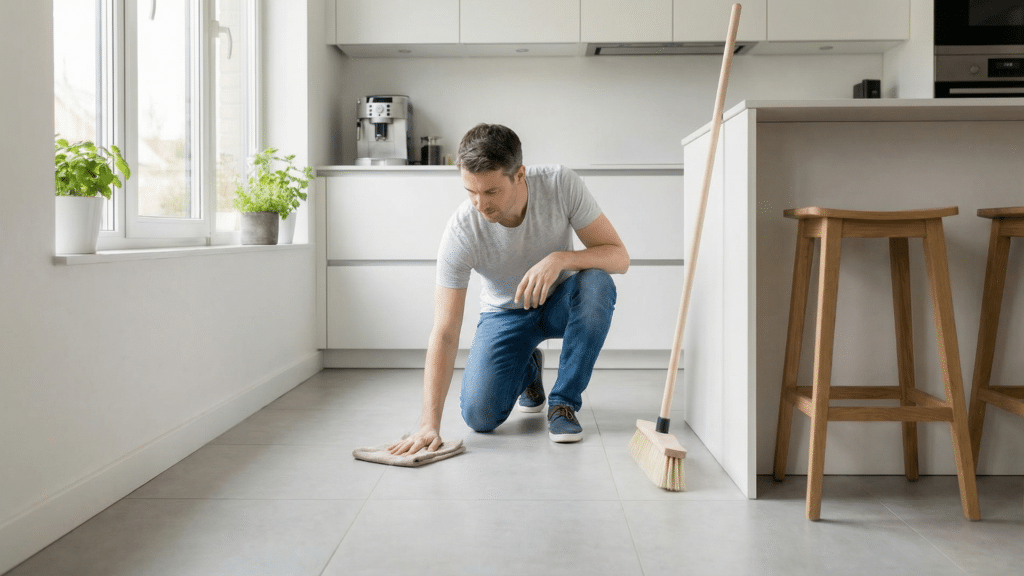
Use a dry mop or clean towel to remove excess moisture. Drying helps prevent streaks and water spots, especially in areas with hard water.
It also protects grout from absorbing unnecessary moisture. For best results, allow good airflow while the floor finishes drying.
How to Clean Ceramic Tile Floors Naturally
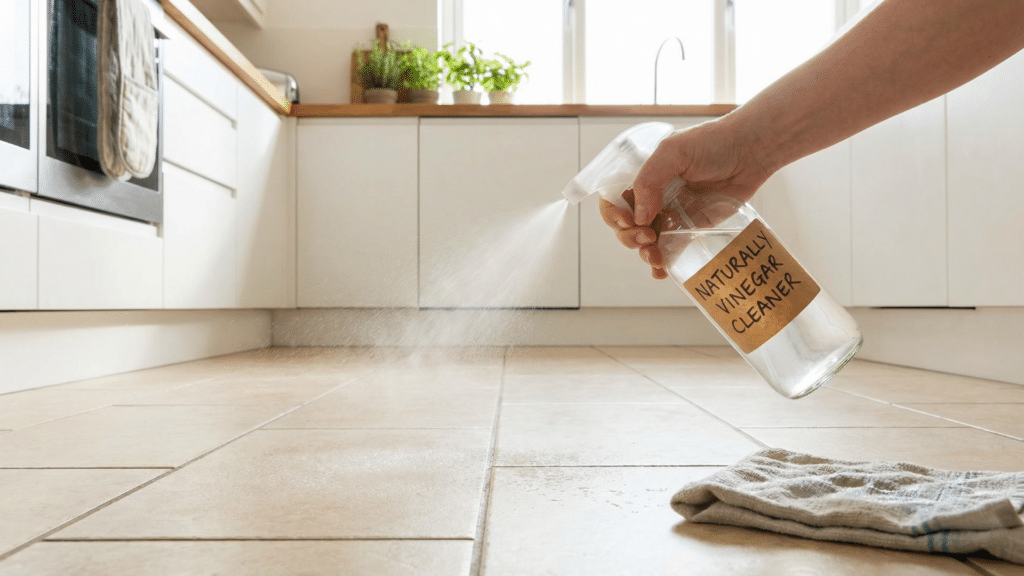
Many homeowners prefer natural cleaning solutions. Vinegar and baking soda are two of the most common options.
Using Vinegar for Grease and Buildup
Mix equal parts white vinegar and warm water. Mop lightly over ceramic tile floors. Vinegar helps cut through grease and soap residue. However, it should not be used on natural stone. Always rinse afterward to prevent residue.
Using Baking Soda for Stains
For sticky spots or surface stains:
- Sprinkle baking soda on the stain.
- Add a small amount of water to form a paste.
- Let it sit for 10–15 minutes.
- Scrub gently with a soft brush.
- Rinse thoroughly.
This method is low-cost and effective for ceramic tile floors.
Removing Common Tile Floor Stains
Tile floors can develop various stains depending on the room and daily use. Using the right cleaning method for each problem helps protect the surface and restore its appearance.
| Type of Stain | Common Cause | Recommended Solution | How to Apply |
|---|---|---|---|
| Grease Stains | Cooking oils, food spills (common in kitchens) | Warm water + mild dish soap, or baking soda paste | Mop with soapy water. For stubborn spots, apply a baking soda paste, let it sit for 10–15 minutes, scrub gently, then rinse. |
| Soap Scum | Soap residue in bathrooms | Diluted white vinegar (ceramic/porcelain only) | Mix equal parts vinegar and water, mop lightly, rinse thoroughly with clean water. |
| Hard Water Spots | Mineral buildup from water | Vinegar solution (ceramic/porcelain only) | Apply the vinegar mixture to the affected area, let it sit for a few minutes, then wipe clean and rinse. |
| Mold and Mildew | Moisture trapped in grout lines | Baking soda + hydrogen peroxide paste | Apply paste to the grout, let it sit for 10–15 minutes, scrub with a toothbrush, rinse, and dry the area well. |
| Rust Stains | Metal furniture legs, wet cans | Baking soda paste or a gentle commercial rust remover | Apply paste, let sit, scrub gently, rinse thoroughly. |
| Sticky Residue | Spilled drinks, adhesive, food | Warm water + mild soap | Mop area with warm soapy water, scrub lightly if needed, rinse, and dry. |
Mistakes That Damage Tile Floors
Cleaning tile floors seems simple, but small mistakes can cause long-term damage. Avoiding these common errors helps protect both the tile surface and the grout.
- Using too much water: Soaking the floor allows water to seep into grout lines, which can weaken them and lead to mold growth.
- Skipping the rinse step: Leaving soap residue behind creates a cloudy film that attracts more dirt over time.
- Using harsh or acidic cleaners on the wrong tile: Vinegar and strong acids can damage natural stone tiles and wear down grout if used too often.
- Scrubbing with abrasive tools: Steel wool and hard-bristle brushes can scratch tile surfaces and dull the finish.
- Letting spills sit too long: Liquids can stain grout and cause a sticky buildup if not cleaned promptly.
- Using too much cleaning product: Excess soap or cleaning agent leaves residue and makes floors look dull rather than shiny.
- Ignoring grout maintenance: Dirty or cracked grout makes the entire floor look worn, even if the tiles are clean.
Final Thoughts
Keeping tile floors clean does not require expensive products or complicated tools. With the right routine, simple supplies like warm water, mild soap, vinegar, and baking soda can deliver strong results.
The best way to clean tile floors is to stay consistent, rinse properly, and protect grout from excess moisture.
Paying attention to small details prevents buildup and keeps surfaces looking bright. Learning how to clean ceramic tile floors correctly also helps extend their lifespan and maintain their finish.
A few smart habits make a noticeable difference over time. Start applying these methods today and create a cleaning routine that works for your home.