

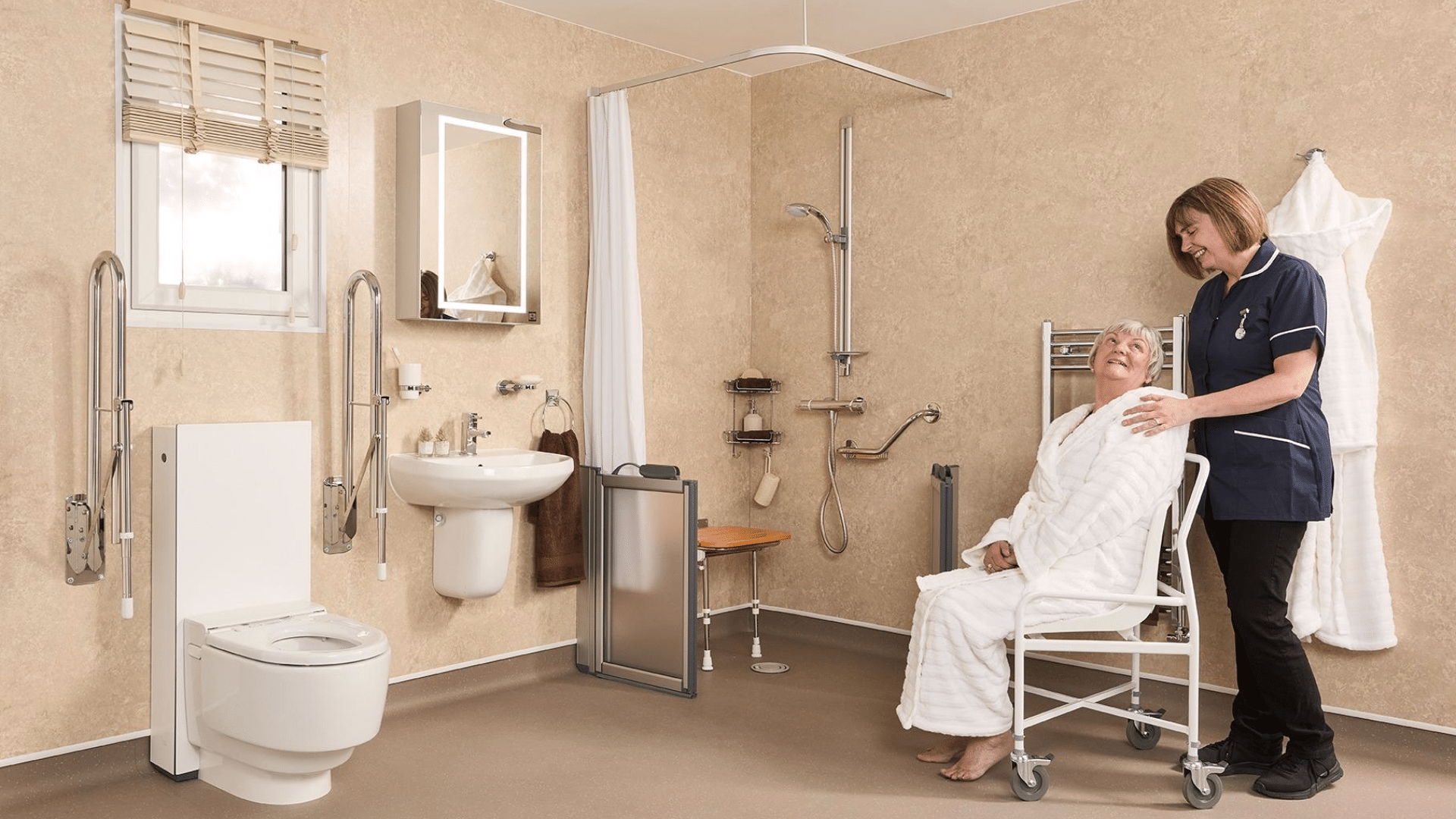
A bathroom should be a space that feels safe and easy to use, not stressful or limiting.
For people who use a wheelchair, good design can make everyday routines smoother and more comfortable.
That is why wheelchair accessible bathroom planning matters so much. Small layout choices can affect how easily someone can move, turn, and reach what they need.
In this guide, I shared how to design a bathroom that supports safety, comfort, and simple movement.
You will also learn how spacing, fixture placement, and flooring choices play a big role in daily use.
By the end, you will have a better idea of how to plan a bathroom that works well today and continues to support long-term needs without feeling complicated or overwhelming.
Standard Wheelchair Accessible Bathroom Layout
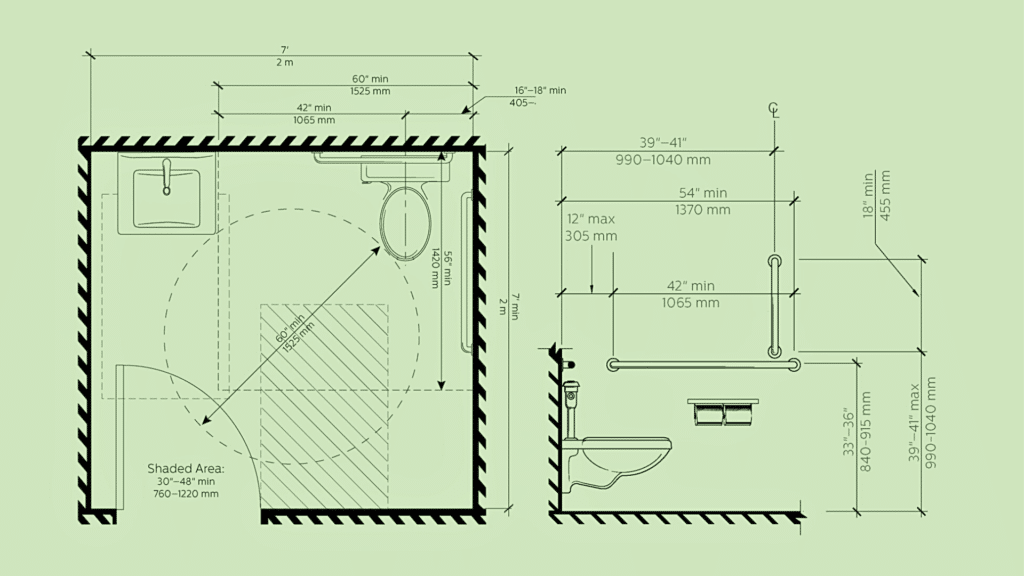
A standard wheelchair accessible bathroom layout focuses on smooth movement and clear circulation. The goal is to let a wheelchair enter, turn, and exit without tight spots or obstacles.
Fixtures should stay close to the walls so the center of the room stays open. This makes daily use safer and less tiring.
The toilet, sink, and shower need enough space around them so transfers feel controlled and calm.
Doors should open in a way that does not block movement inside the room. When everything is placed with purpose, the bathroom feels easier to use and less crowded.
Simple, open layouts also reduce accidents and make cleaning easier.
Good planning at this stage helps avoid future changes and keeps the bathroom comfortable for long-term use.
Key Specifications to Follow
- Sink knee clearance: 27 inches high minimum
- Sink depth clearance: 17–25 inches
- Toilet seat height: 17–19 inches from the floor
- Toilet centerline from side wall: 16–18 inches
- Roll-in shower size: 60 x 30 inches minimum
- Grab bar height: 33–36 inches from floor
- Shower threshold height: flush or no curb
How to Make a Bathroom Wheelchair Accessible on a Budget?
Making a bathroom wheelchair accessible does not always require a full remodel. With smart planning and a focus on function, you can improve access while keeping costs under control.
1. Focus on Small Layout Changes First
Start by working with the layout you already have. Moving fixtures can raise costs fast, so it helps to keep plumbing where it is.
Clear out tight spots and remove items that block movement. Even small changes, like adjusting door swing or removing bulky storage, can improve access.
The goal is to create smoother paths and better spacing.
These updates often cost less but still make the bathroom easier and safer to use every day.
2. Upgrade Key Fixtures Instead of Everything
You do not need to replace every fixture at once. In wheelchair accessible bathrooms, focus on the items that affect daily use the most.
A comfort-height toilet, a wall-mounted sink, or a handheld shower can improve access right away.
These updates are usually easier to install and cost less than full replacements. By upgrading in stages, you can spread out costs while still making steady progress toward a more usable bathroom.
3. Choose Simple Safety Add-Ons
Safety upgrades can be affordable and effective. Grab bars, non-slip mats, and lever-style handles are low-cost changes that improve control and balance.
These items are easy to install and do not require major construction.
Good lighting also helps reduce accidents and is often overlooked. Simple add-ons like these can make a big difference without stretching your budget too far.
Budget Tips for Wheelchair Accessible Bathroom Design
Smart planning and careful choices can help control costs while still improving comfort and usability. Focusing on long-term use helps avoid wasted effort and extra spending later.
- Planning Upgrades In Stages: Break the project into smaller phases so changes feel manageable and expenses stay spread out over time.
- Choosing Cost-Effective Materials: Pick strong, easy-to-clean surfaces that last longer and lower replacement costs.
- Prefab Vs Custom Options: Compare ready-made accessible fixtures with custom builds to find the best balance between price and fit.
- Avoiding Changes That Lead To Rework: Measure carefully and plan ahead to prevent costly fixes caused by rushed or last-minute decisions.
- Reusing Existing Fixtures When Possible: Keep items that still work well and adjust their placement instead of replacing them right away.
- Checking For Local Assistance Programs: Look into grants, rebates, or support programs that may help reduce upgrade costs.
Must-Have Features for Wheelchair Accessible Bathrooms
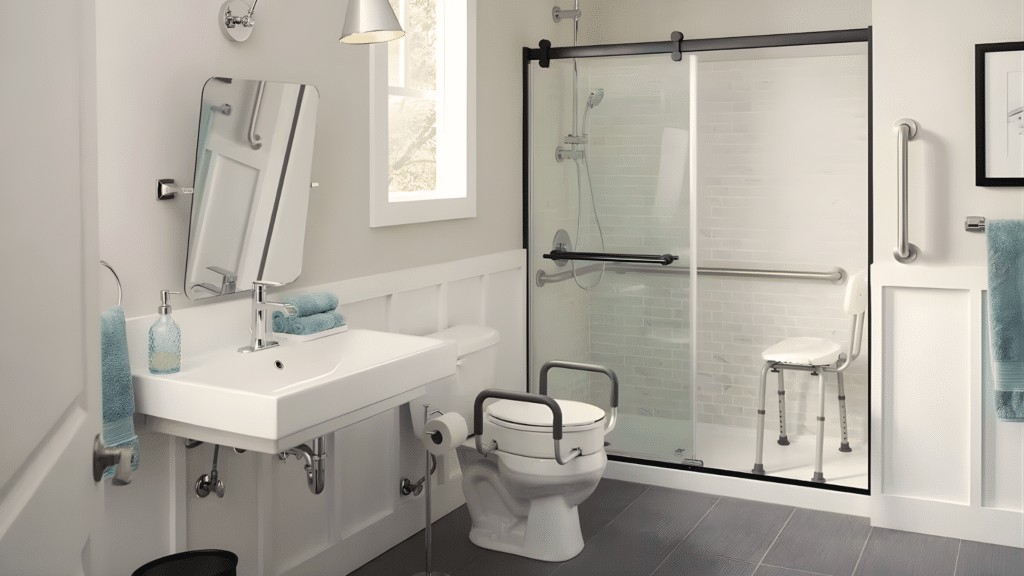
The right features make a bathroom safer and easier to use every day. These basics focus on comfort, control, and smooth movement without adding extra complexity.
1. Roll-In or Walk-In Shower Basics
A roll-in or walk-in shower removes the need to step over a tub edge. This makes entry safer and less tiring.
The shower floor should be level with the rest of the bathroom to support easy wheelchair access. A wide opening allows smooth entry, while a handheld showerhead adds control.
Built-in seating can help with comfort during use. Non-slip flooring is important to reduce fall risk.
Simple layouts work best and are easier to clean.
2. Toilet Height and Spacing
The toilet should be easy to reach and simple to use from a wheelchair.
A comfort-height toilet supports safer transfers and reduces strain on joints. There needs to be a clear space beside the toilet for side transfers.
Enough room in front of the toilet also helps with positioning. Flush controls should be easy to reach without twisting.
Good spacing here improves both safety and daily comfort without needing major changes.
3. Sink and Vanity Setup for Wheelchair Accessible Bathrooms
A wheelchair-friendly sink needs open space underneath so knees can roll in comfortably. Wall-mounted sinks work well because they remove base cabinets.
The sink height should allow easy reach without lifting arms too high. Mirror placement matters too.
It should be low enough to use while seated.
Lever-style handles or touch controls make use easier. A clear sink area supports comfortable daily use and reduces frustration.
4. Grab Bars and Support Features
Grab bars provide steady support when sitting, standing, or transferring. They should be placed near the toilet and inside the shower, where support is needed most.
Bars must be securely mounted into wall studs to handle the weight safely.
Straight bars are easier to grip than decorative styles.
Support features like these improve balance and confidence. When placed correctly, grab bars improve safety without taking up much space.
5. Easy-to-Use Faucets and Controls
In wheelchair accessible bathrooms, faucets and controls should work with minimal effort. Lever handles are easier than knobs because they do not require tight gripping.
Touch or push-style faucets can also help users with limited hand strength.
Shower controls should be reachable from a seated position. Clear labels make temperature changes safer.
Simple controls reduce strain and lower the risk of burns. Easy-to-use controls help make the bathroom feel more manageable every day.
Common Design Mistakes to Avoid
Small design choices in wheelchair accessible bathrooms can create daily frustration if they are overlooked. Paying attention to layout, safety, and reach helps prevent problems later.
- Not Leaving Enough Turning Space: Tight layouts make it hard to rotate or reposition a wheelchair without hitting fixtures or walls.
- Placing Fixtures Too High or Too Low: Incorrect heights can strain arms and shoulders and make daily tasks harder to manage.
- Choosing Slippery Flooring: Smooth surfaces increase the risk of slips, especially in wet areas like showers and sink zones.
- Ignoring Future Accessibility Needs: Designs that only meet current needs may require costly changes as mobility needs change.
- Poor Lighting and Switch Placement: Dim lighting and hard-to-reach switches reduce visibility and make the space less safe to use.
What Reddit Users Say About Wheelchair Accessible Bathrooms?
Many Reddit users shared that open space under the sink makes daily tasks much easier, since a wheelchair can roll in without hitting cabinets.
Wall-mounted sinks and vanities came up often because they save space and improve reach.
Users also liked grab bars that double as holders, such as toilet paper bars that provide support without clutter. Another common point was door choice.
Sliding or barn-style doors work better than standard swing doors in tight spaces. Several users mentioned that storage works best when it is built into walls or mirrors, keeping items within reach but off the floor.
Simple controls, like one-touch faucets and handheld showers, were praised for ease of use.
Conclusion
Designing a wheelchair accessible bathroom is not just about meeting rules or following diagrams.
It is about creating a space that feels safe, comfortable, and easy to use every single day. The right layout, proper spacing, and well-placed features can reduce stress and support independence.
Planning around real needs, not just looks, helps the bathroom work better now and in the future.
As you plan or update a bathroom, focus on how the space will be used in real life.
Small details, like reach, movement, and control, make a lasting difference. Think long term, choose simple solutions, and avoid rushing decisions.
If you have designed or used a wheelchair accessible bathroom, your experience matters.
Share what worked, what didn’t, or what you wish you had known in the comments below.