

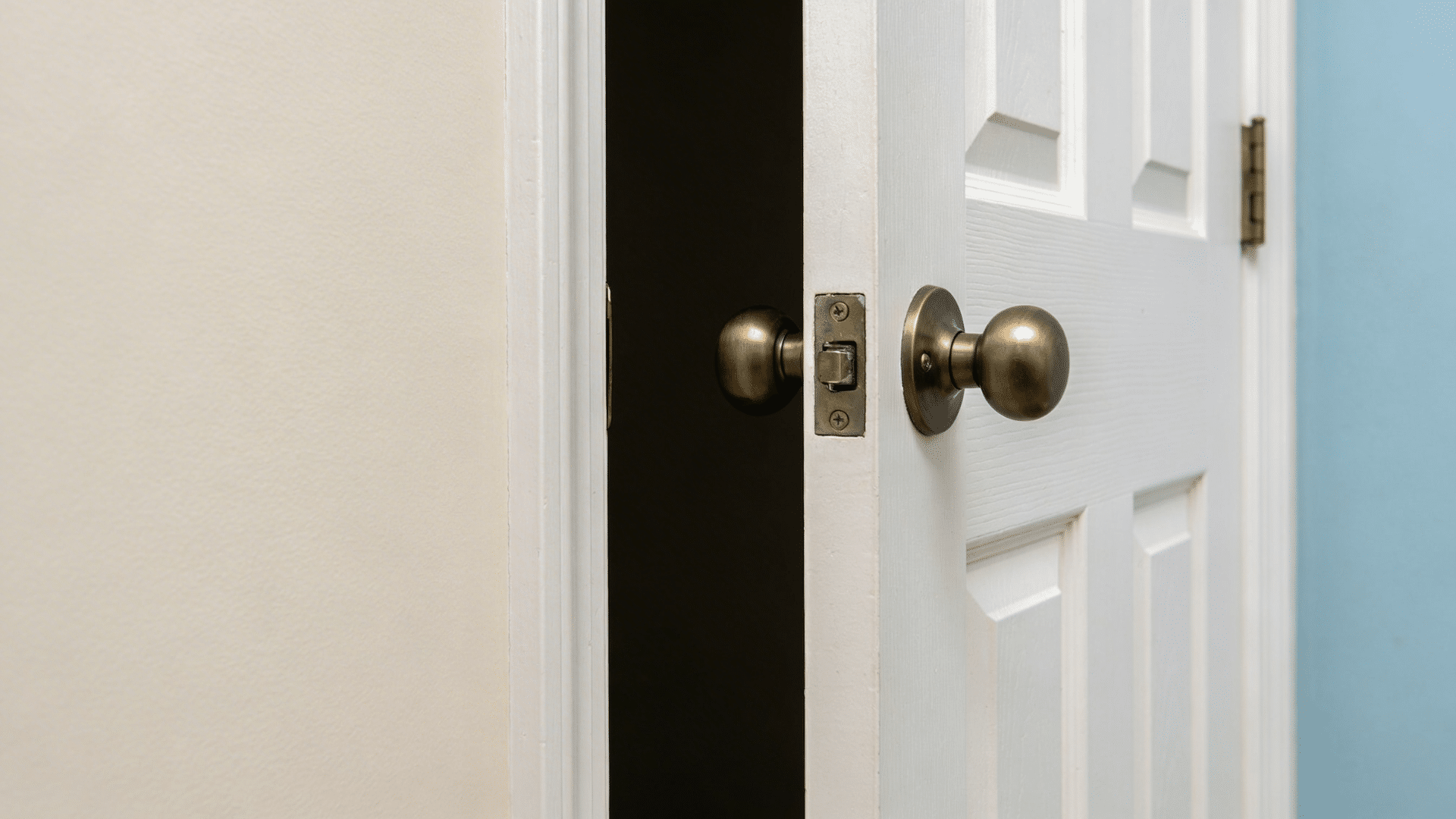
A door that won’t latch can quickly become a daily nuisance. It may not stay closed, feel loose when shut, or require extra force just to hold in place.
This issue can occur in older homes or with newer doors that weren’t installed properly. Over time, hinges can loosen, frames can shift, and latch parts can wear down.
Even small changes in alignment can stop the latch from catching properly.
While it might seem like a big problem at first, the solution is often simple. With a careful look at the door’s fit and hardware, it’s possible to fix the issue without replacing anything major.
How a Door Latch Works?
A door latch keeps a door closed by holding it in place with the strike plate on the frame. The latch bolt is the part that sticks out of the edge of the door.
When the door closes, the angled edge of the latch hits the strike plate and gets pushed in. Once it clears the opening, it springs back out and locks into place.
Turning the handle pulls the latch bolt back, allowing the door to open.
If the latch doesn’t line up with the strike plate or the bolt doesn’t move properly, the door won’t latch. Most latch problems come from misalignment, worn parts, or loose screws.
Signs of a Latching Problem
Not sure if your door latch is the issue? Look for these common signs that something isn’t working right:
- The door won’t stay closed: It swings back open or doesn’t catch when you shut it.
- You have to push or pull hard to close the door: This means the latch may not be lining up with the strike plate.
- The latch bolt misses the strike plate: You may hear a clunk or feel resistance, but the door doesn’t lock in place.
- The door rattles when it’s closed: A loose fit can mean the latch isn’t sitting fully in the strike plate hole.
- The handle feels loose or sticks: A sticking latch or a worn-out mechanism can prevent it from working smoothly.
- You see scratches near the strike plate: This is a clear sign the latch is hitting too high or too low.
If you notice any of these problems, the latch likely needs adjustment or repair.
Tools You May Need
| Tool | What It’s Used For |
|---|---|
| Phillips screwdriver | Tightening or removing screws from hinges and latch plates |
| Flat-head screwdriver | Prying or adjusting hardware |
| Drill and bits | Creating new holes when moving the latch or strike plate |
| Utility knife | Cutting paint or debris around latch areas |
| Hammer | Tapping parts gently or adjusting frame components |
| Wood block | Used with a hammer to avoid damaging surfaces |
| Chisel | Adjusting the strike plate, mortise, or latch opening |
| Wood filler | Filling old screw holes when hardware is relocated |
| Sandpaper | Smoothing edges or swollen door surfaces |
| Small level | Checking door alignment or frame level |
| Pencil or marker | Marking latch position and screw locations |
| Lubricant (e.g., WD-40) | Loosening a sticky latch mechanism |
Step-by-Step Guide: How to Fix a Door That Won’t Latch
Follow these clear and simple steps to find the problem and make the right repair. Most of the time, you can fix the issue with basic tools and a little patience.
Step 1: Check and Lubricate the Latch Mechanism
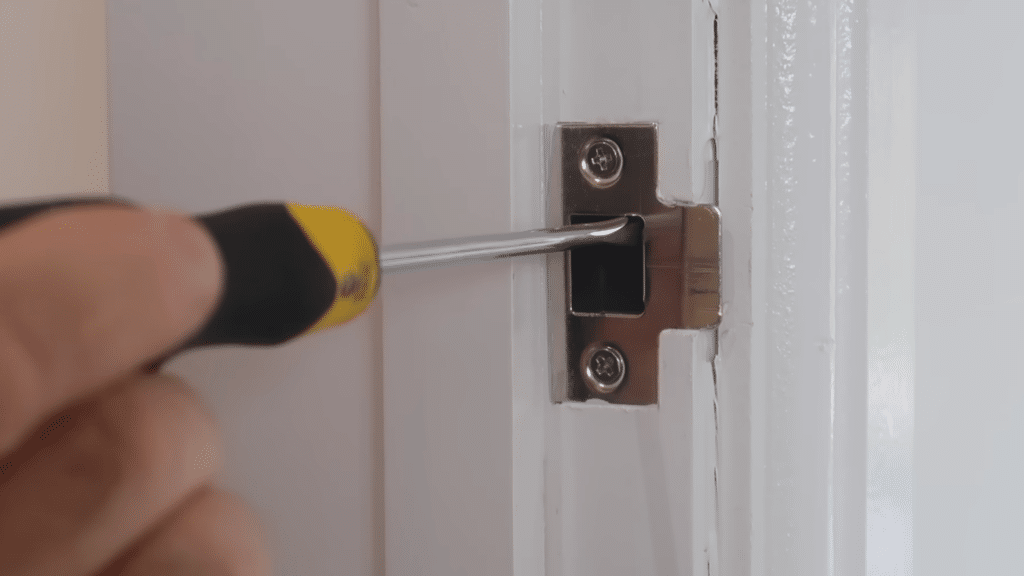
Start by inspecting the latch itself. Open and close the door while watching the latch bolt move in and out. It should slide smoothly without sticking.
If the latch feels stiff or only comes out partway, it may simply need lubrication. Spray a small amount of WD-40 or 3-in-1 oil into the latch opening, then cycle the handle several times.
Also, check that the strike plate hole is clear of wood debris or buildup that could prevent the latch from fully engaging.
Step 2: Check the Door Gap and Adjust Hinges with Shims
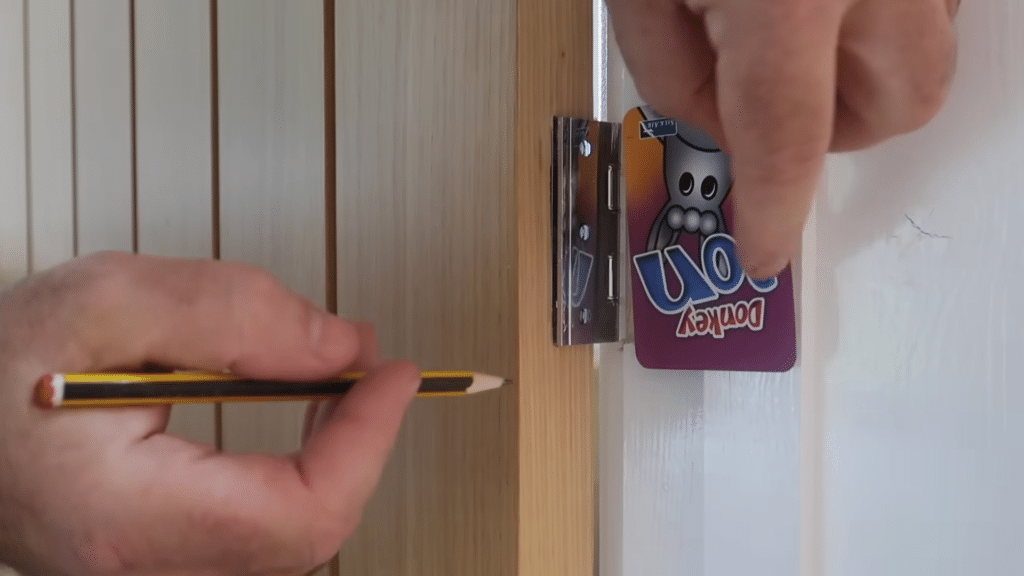
If the latch is working but not reaching the strike plate, the gap between the door and frame may be too wide. Instead of replacing the door, adjust the hinges using shims.
Open one hinge plate and place a playing card behind it. Mark the hinge shape on the card and cut it to size. Insert the card between the hinge and frame, then screw it back in place.
Adding shims moves the door slightly toward the latch side and can correct alignment by several millimeters.
Step 3: Mark the Latch Position on the Strike Plate
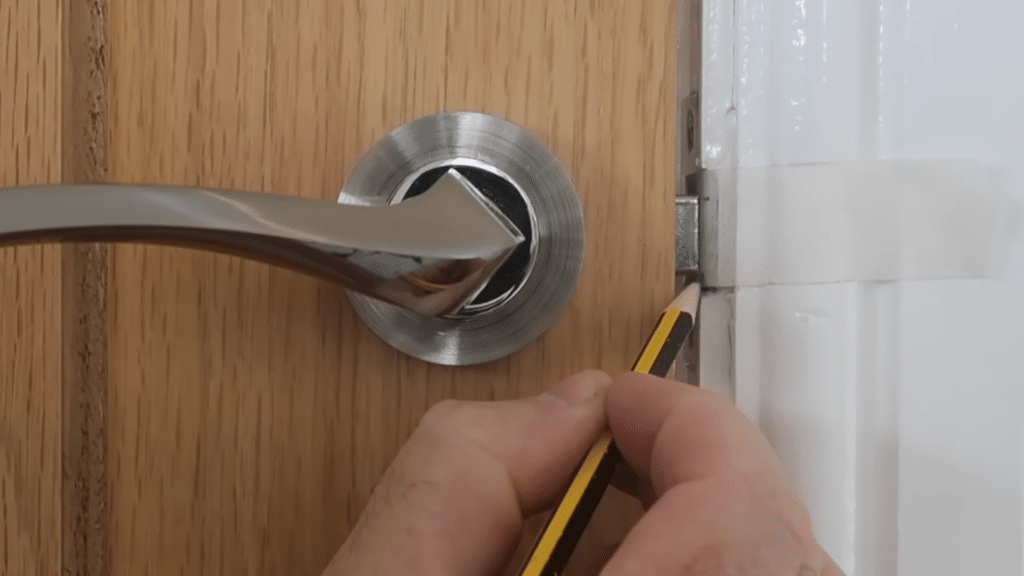
If hinge adjustment doesn’t solve the issue, check the strike plate alignment. Place masking tape over the strike plate and close the door gently.
Mark the top and bottom of the latch position with a pencil while the door is closed. Open the door and compare your marks to the strike plate hole.
If the latch is sitting too low or too high, you now know how far the plate must move. This step helps you avoid guessing and ensures accurate repositioning.
Step 4: Enlarge or Reposition the Strike Plate Opening
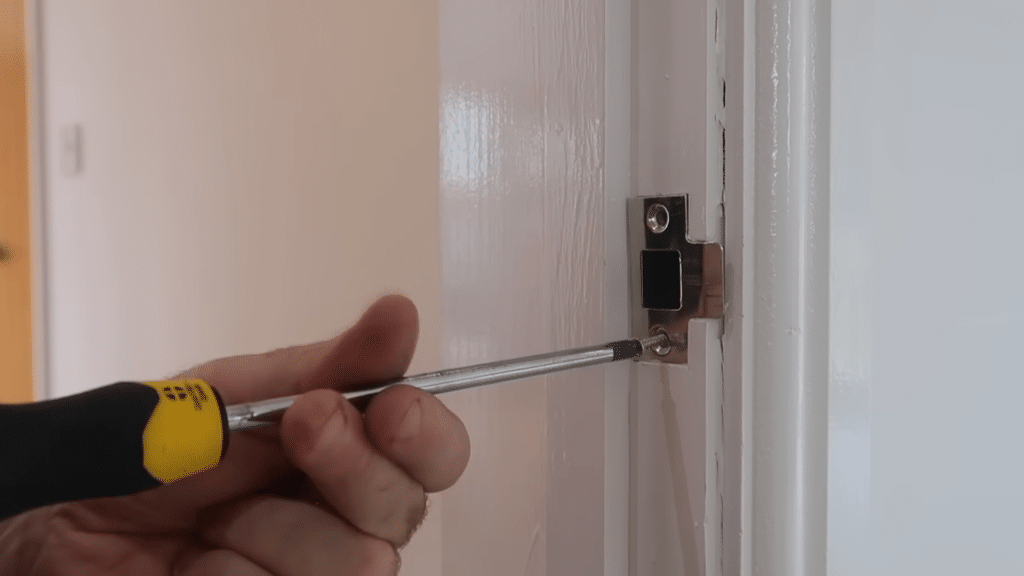
If the latch is very close to fitting, you may only need to file or grind the strike plate opening slightly larger. However, if it needs more adjustment, remove the strike plate entirely.
Position it slightly forward, backward, up, or down as needed. Mark the new outline and use a sharp chisel to carefully remove wood from the frame to match the new plate position.
If moving forward, you must also enlarge the front edge of the hole so the latch can enter properly.
Step 5: Fill Old Screw Holes and Secure the Plate Properly
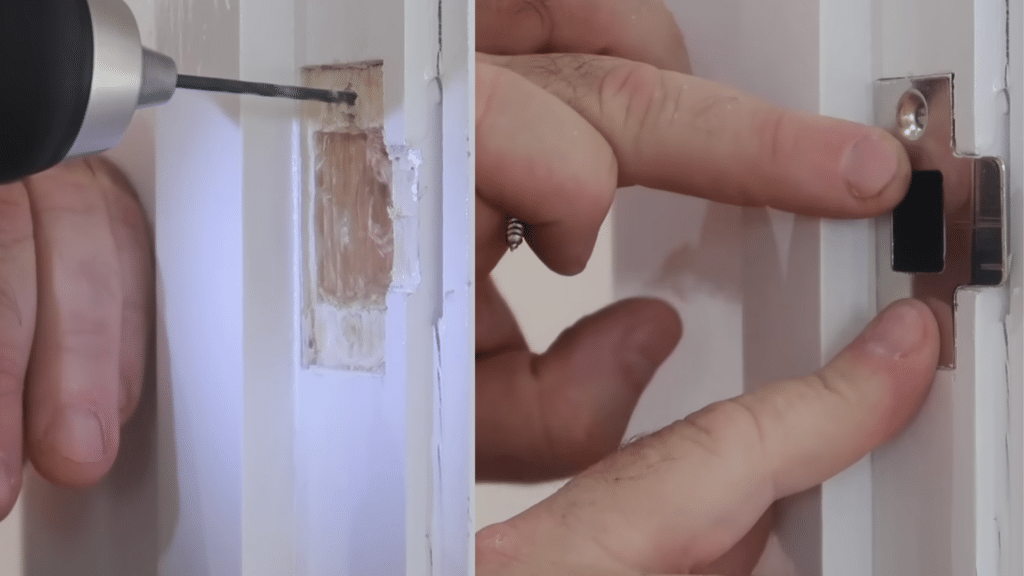
When relocating the strike plate, the original screw holes will no longer line up. If reused, they may pull the plate back into the wrong position.
Fill these holes tightly with matchsticks trimmed to size. Push them in firmly and cut them flush with a knife. Mark new pilot holes using a nail or bradawl, then drill small pilot holes before inserting screws.
Once secured, test the door. You should hear a clean, solid click with minimal movement in the closed position.
Optional Final Touch: If small gaps appear around the relocated strike plate, apply a flexible, paintable sealant. This helps create a clean finish and allows repainting later if needed.
For a more detailed guide, watch this YouTube tutorial by @ProperDIY:
When to Call a Professional
Most latch issues can be fixed with basic DIY skills. However, call a professional if:
- The door frame is cracked or split.
- There’s visible damage to the wall near the door.
- You’ve tried multiple fixes, and nothing works.
- You need to replace or rehang the entire door.
Professional help can save time and ensure proper alignment, especially for exterior doors where security is a concern.
Extra Tips for a Smooth Fix
Once you’ve made the main adjustments, these extra tips can help make sure your door works well and stays fixed over time. They’re simple steps that can help you avoid repeating problems or minor mistakes during the repair process.
- Use a marker to clearly identify latch contact points.
- Always pre-drill screw holes when moving hardware.
- Test the door often as you work, don’t wait until the end.
- Be patient; small changes can make a big difference.
Final Thoughts
A door that won’t latch can be frustrating, but it’s usually an easy problem to fix. In most cases, the cause is a loose hinge, a misaligned strike plate, or a latch that isn’t working right.
With a few tools and simple steps, you can get the door working again without calling for help. Always take time to check what’s wrong before starting.
Small adjustments often make a big difference. Don’t ignore the signs; fixing the problem early can save time later.
If this guide helped you learn how to fix a door that won’t latch, share it or leave a comment with your own tips and questions!
Frequently Asked Questions
Why Does My Door Latch Sometimes Work and Sometimes Not?
Changes in temperature and humidity can cause the door or frame to shift slightly throughout the day or over the seasons, causing the latch to fail at times.
Can I Fix a Door That Won’t Latch without Replacing Anything?
Yes, many latch problems can be solved by tightening hinges, adjusting the strike plate, or lubricating the latch; no new parts are needed.
How Long Does it Take to Fix a Door That Won’t Latch?
Most fixes take under an hour, especially if the problem is with alignment or loose parts.
Will Slamming the Door Make it Latch?
No. Forcing the door can damage the latch, frame, or hinges. It’s better to fix the alignment or hardware properly.