

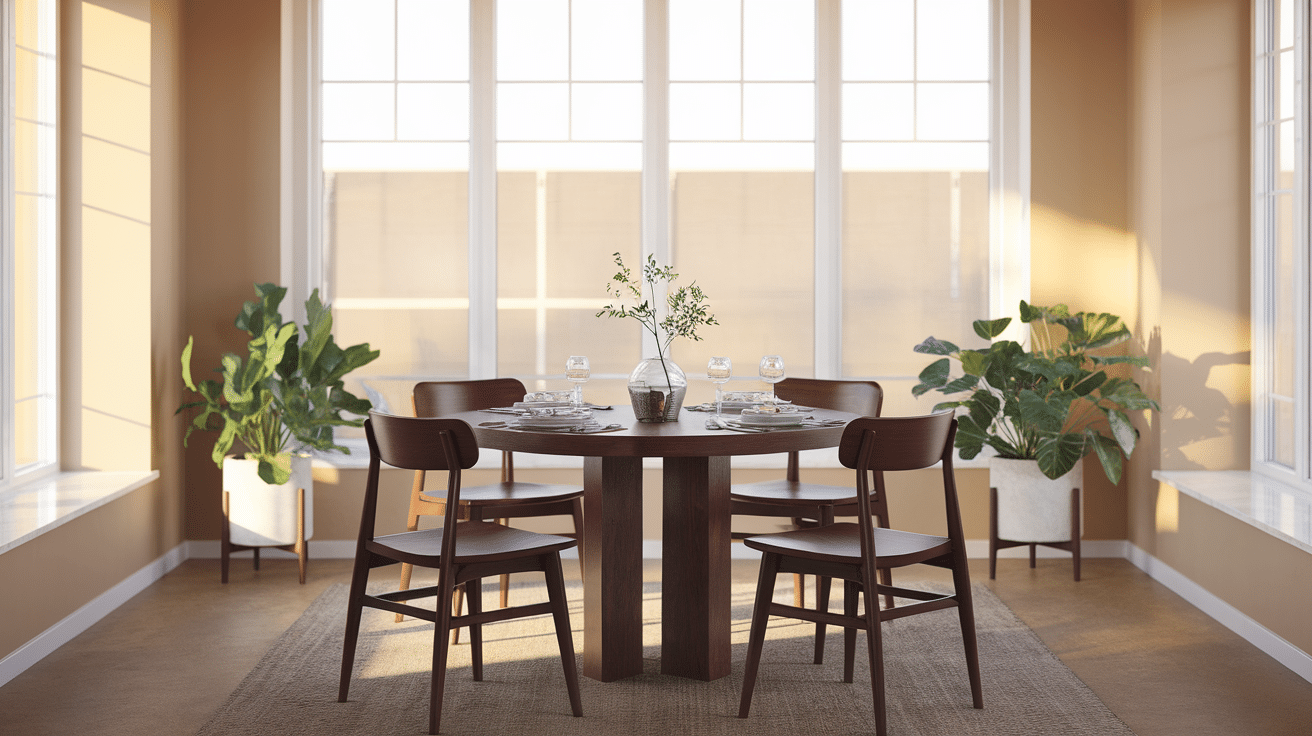
Round tables are a popular choice for homes, offices, and events. They fit well in many spaces and help people sit and talk easily.
But picking the right size can be tricky. A table that is too big might not fit in the room. One that is too small may not seat enough people.
It helps to know what sizes are out there and how they work in different settings.
This guide explains the most common round table sizes and how to choose the best one. With the right size, a round table can make any space feel more open, balanced, and helpful.
Why Round Tables are a Popular Choice?
Round tables work well in many homes, offices, and event spaces. They are easy to move around. People like them because they make talking with others easier.
No one sits at the “head” of the table, so everyone feels equal. They also help save space because there are no sharp corners.
But to get the most out of a round table, the size must be right. A table that is too large can make a room feel crowded.
A small table might not hold enough people or items. That’s why it helps to understand round table sizes before buying.
Common Round Table Sizes Explained
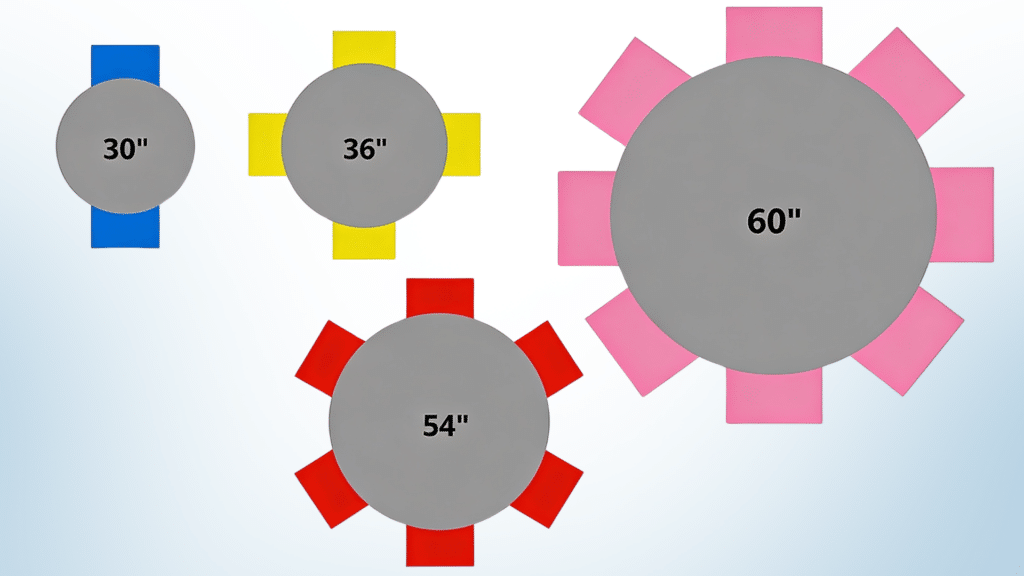
Round tables come in different sizes to fit different spaces and seating needs. Here is a quick guide to the most common sizes and how many people each one can seat:
| Table Diameter | Seats | Best For |
|---|---|---|
| 30 inches | 2 people | Small breakfast nooks or tight corners |
| 36 inches | 2–3 people | Small kitchens or apartments |
| 42 inches | 4 people | Cozy dining areas or kitchen tables |
| 48 inches | 4–6 people | Everyday family meals |
| 54 inches | 5–6 people | Medium-sized dining rooms |
| 60 inches | 6–8 people | Large dining rooms or gathering spaces |
| 72 inches | 8–10 people | Events, banquets, or big families |
How to Choose the Right Size Round Table
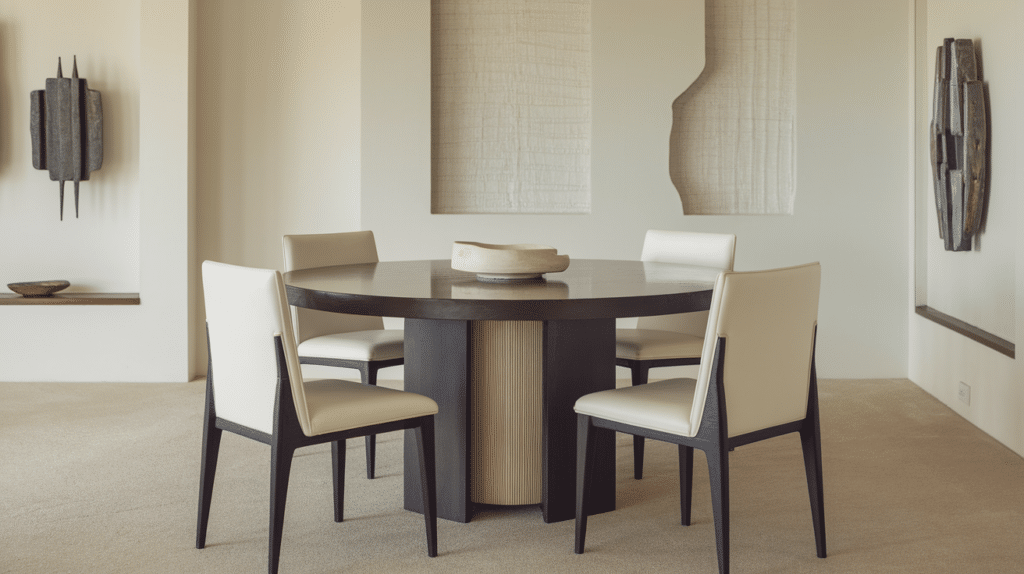
Choosing the right round table size means thinking about a few things. It’s not just about the number of seats. Room size, chair spacing, and how the table will be used all matter.
1. Measure the Room First
Always start by measuring the space where the table will go. This helps you avoid picking a table that’s too big or too small. Use a tape measure and note the width and length of the room.
- Leave at least 36 inches between the edge of the table and any wall or furniture.
- This allows people to walk around and pull out chairs with ease.
- More space (42–48 inches) is even better if you have the room.
2. Think About Seating Needs
How many people do you need to seat every day? What about during parties or holidays? Round table sizes should match both daily needs and occasional guests.
- A table for two may work daily, but consider a size that fits four if you host guests.
- For larger families or entertaining, go for a 60- or 72-inch round table.
3. Don’t Forget the Chairs
Chairs take up more room than you might expect. Each chair needs about 24 inches of space at the table for comfort.
- Make sure the table size allows enough room for chairs to be pulled in and out.
- Avoid overstuffing chairs around the table. It makes the space feel tight.
4. Consider the Table Base
Some round tables have a pedestal base, while others have four legs. This affects how people sit around it.
- Pedestal tables offer more legroom and make it easier to add chairs.
- Four-legged tables might feel crowded if there are too many people.
Round Table Sizes for Different Settings
Not all rooms are the same. Below are suggestions for different places where round tables are often used.
Dining Rooms
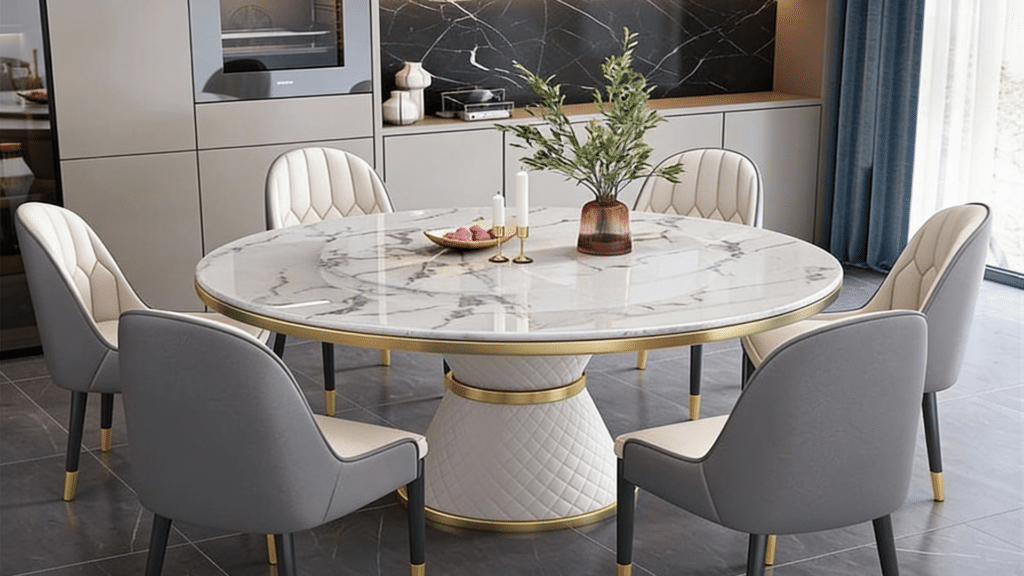
The dining room is the most common place for a round table.
- Small dining rooms (8×8 feet): 36 to 42-inch tables work well.
- Medium rooms (10×10 feet): Go for a 48 to 54-inch table.
- Large rooms (12×12 feet or bigger): 60 to 72-inch tables are ideal.
Make sure you leave walking space around the table. Add a rug if you want, but it should be large enough that all chairs stay on it even when pulled out.
Kitchens
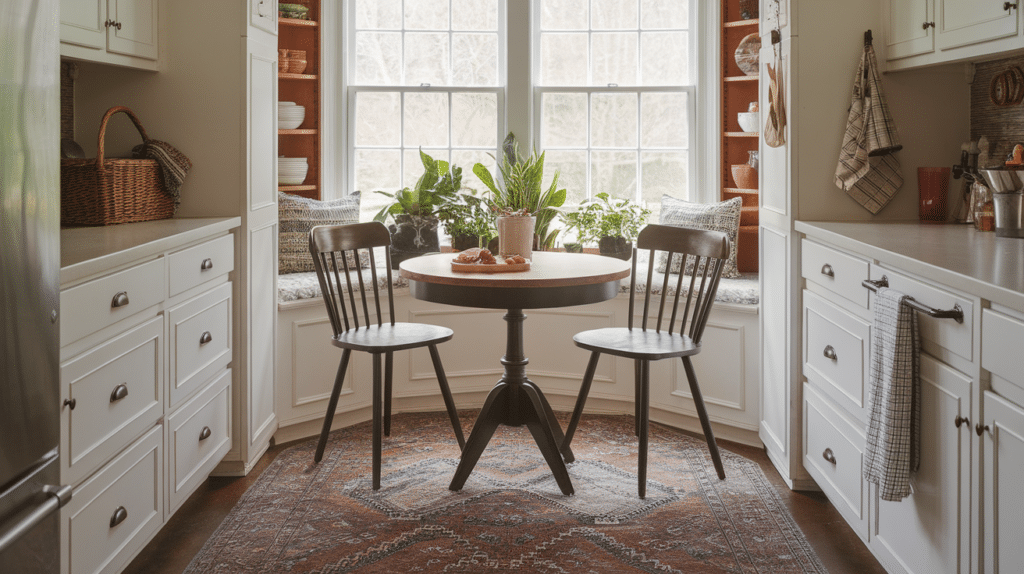
Kitchens often have smaller spaces. Round tables fit well in corners or breakfast nooks.
- Choose a 30- to 42-inch table.
- Look for foldable or drop-leaf tables if space is tight.
- Pedestal bases help make more room for legs and chairs.
Living Rooms
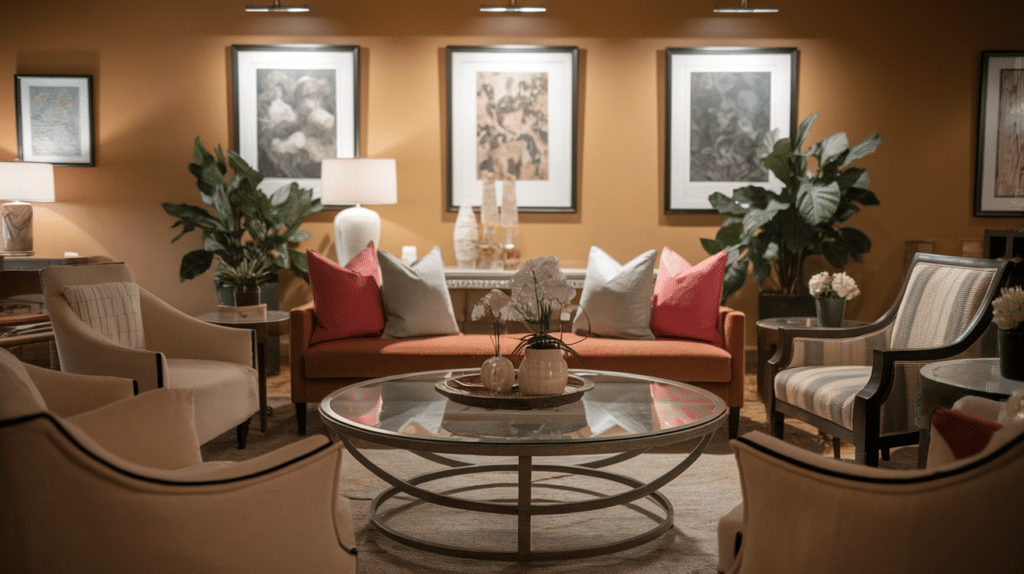
Round coffee tables and side tables are often used in living rooms.
- Coffee tables: 30 to 36 inches in diameter.
- Side tables: 18 to 24 inches.
- They help soften sharp lines and are safer for homes with kids.
Small Apartments
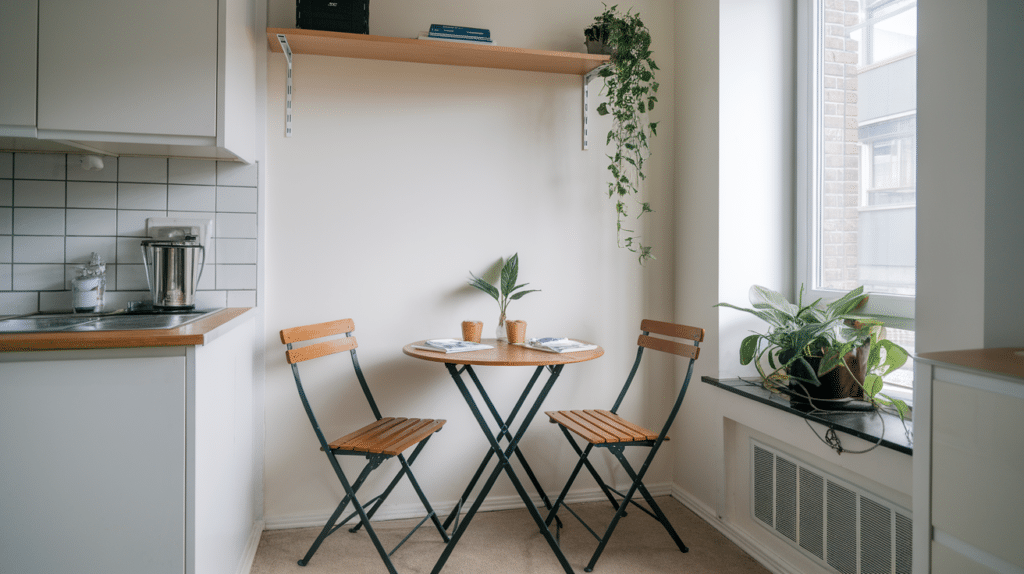
In small homes or apartments, space is limited. Round tables can help save space.
- A 36-inch table is usually enough for two people.
- Foldable round tables or wall-mounted options work well.
- Avoid large tables unless the space can handle it.
Outdoor Spaces

Patios, decks, and backyards also benefit from round tables.
- Small patios: 36 to 42 inches.
- Larger spaces: 48 to 60 inches.
- Use weather-resistant materials like metal, treated wood, or plastic.
Choosing the Right Material for Your Round Table
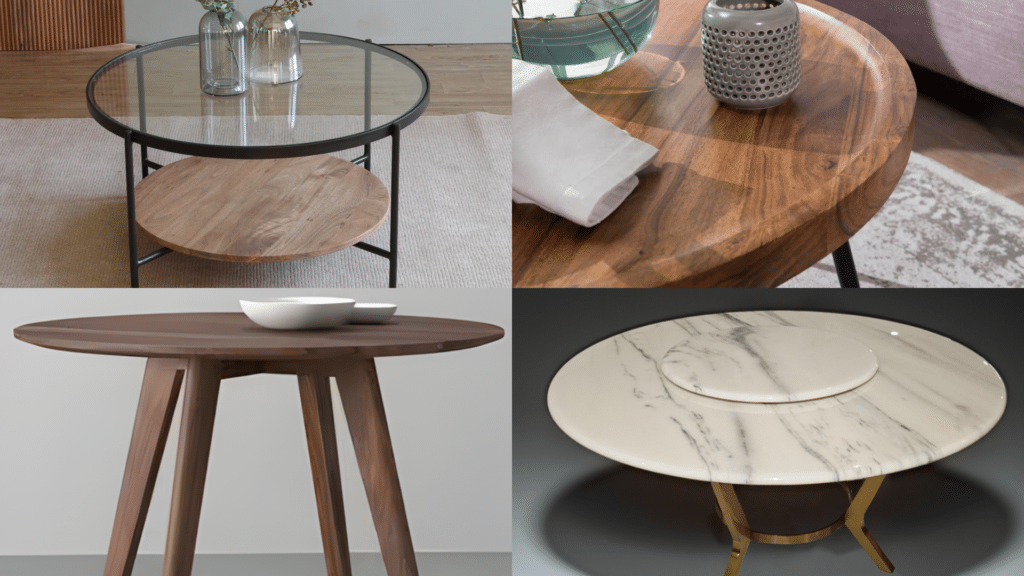
The material of a round table affects how it looks, feels, and fits in a space. Have a look at this quick guide to help you choose:
| Material | Look and Feel | Best For |
|---|---|---|
| Glass | Light, modern, makes the space feel open | Small rooms, modern or minimal styles |
| Dark Wood | Heavy, rich, takes up more visual space | Formal dining rooms, classic interiors |
| Light Wood | Warm and soft, blends well in most settings | Casual dining areas, neutral spaces |
| White Finishes | Bright, clean, makes the room feel larger | Coastal, cottage, or airy-style homes |
| Metal | Sleek, sturdy, cool-toned appearance | Industrial, outdoor, or compact spaces |
Should You Go with an Extendable Round Table?
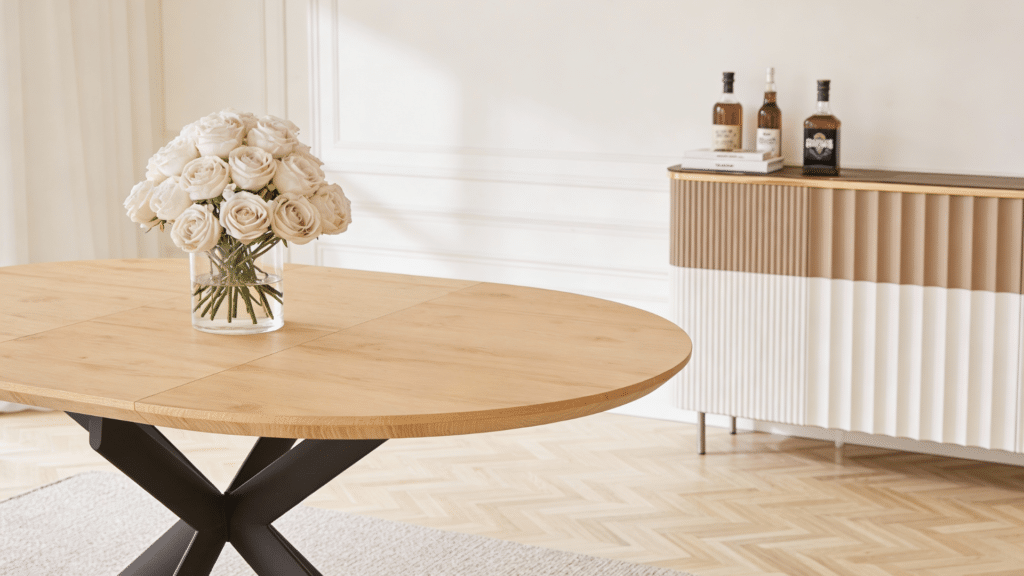
Extendable round tables have leaves that let you make the table bigger when needed.
Pros
- Saves space when small
- Seats more people during holidays or events
- Great for growing families
Cons
- May not look as clean or simple as fixed tables
- The setup and storage of the extra leaves can be tricky
If space is limited but you sometimes host guests, an extendable round table is a smart choice.
Budget Tips for Buying Round Tables
Round table sizes can affect the cost. Bigger tables cost more. Here are some budget tips:
- Shop second-hand for deals on solid wood tables
- Look for multi-use furniture (a dining table that doubles as a work desk)
- Buy a table with removable legs for easy moving
- Check clearance sales at furniture stores or online
A 36-inch table can start as low as $100. Larger ones can go above $800, depending on the material and brand.
Conclusion
Picking the right round table size can make a big difference in how a room feels and works. Think about how much space you have, how many people you need to seat, and how the table will be used.
Don’t forget to check the material and finish too, as they can change how the table looks in your room.
A table that fits well will feel comfortable and look just right. Take your time, measure carefully, and plan ahead. A good round table can last for years and make every meal or moment better.
Ready to choose? Use this guide to find the perfect round table for your space today.