

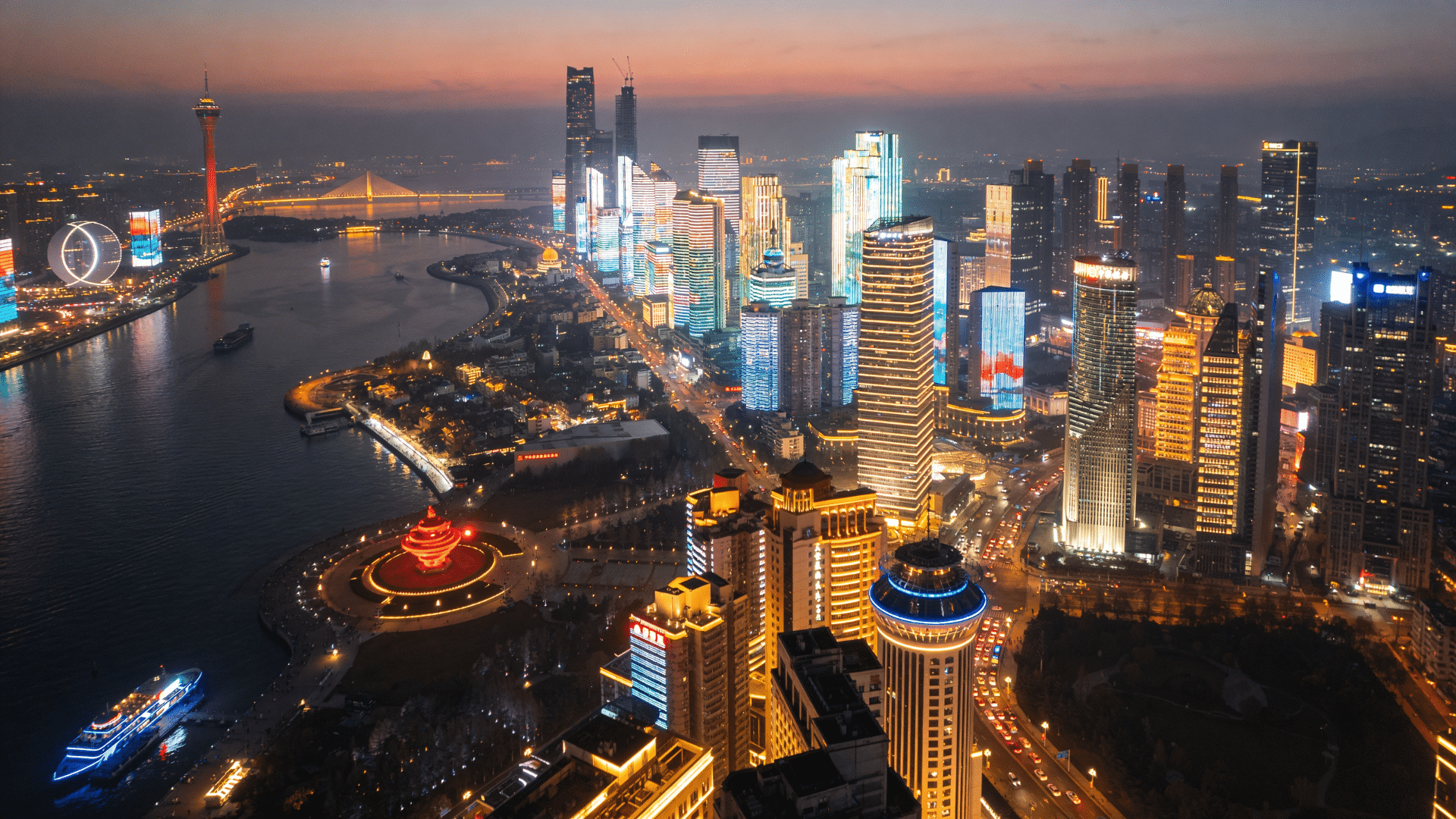
When I look at cities like Shanghai or Shenzhen, I’m always amazed by how fast things are changing. Tall glass towers, bold shapes, and smart buildings are everywhere you turn.
But what really stands out to me is how these modern designs still stay connected to China’s past. I can clearly see ideas like balance, symmetry, and nature being used in new and creative ways.
In this blog, I’ll walk you through what makes modern Chinese architecture so unique today. We’ll look at the main styles, the materials used, and the biggest trends shaping these buildings.
I’ll also explain how traditional design still plays a role and why China’s architecture is important around the world.
What Defines Modern Chinese Architecture Today?
Modern Chinese architecture is defined by a strong mix of innovation, cultural identity, and rapid urban growth.
Today’s buildings often combine traditional design principles such as symmetry, harmony, and connection to nature with modern materials like glass, steel, and reinforced concrete.
Cities across China are filled with bold skyscrapers, large public spaces, and creative structures that reflect both global influence and local heritage.
Another key feature is the focus on sustainability, with many projects using energy-efficient designs and eco-friendly materials.
Technology also plays a big role, helping architects create complex shapes and smart buildings.
Popular Architectural Styles in Modern China
Modern China features a wide range of architectural styles shaped by culture, innovation, and rapid development. These styles reflect how traditional ideas and global influences come together in today’s buildings.
1. Contemporary Urban Architecture
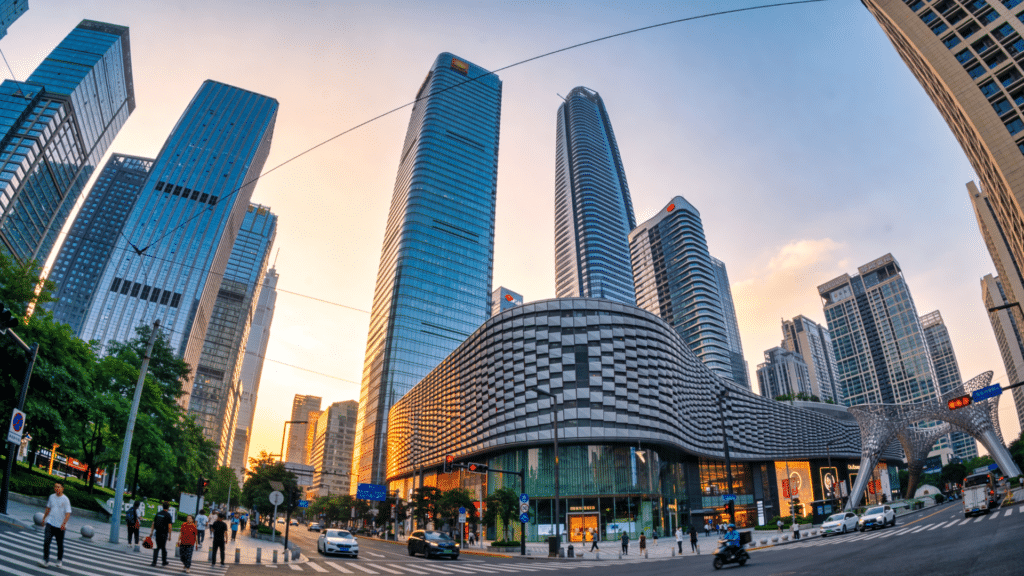
Contemporary urban architecture is the most visible style in modern Chinese cities. It focuses on clean lines, large glass surfaces, and functional layouts.
Skyscrapers, office towers, and residential complexes follow this style. The goal is to support fast-paced city life while maintaining efficiency.
Architects prioritize space usage, natural lighting, and modern aesthetics. This style is heavily influenced by global trends but adapted to China’s growing urban needs.
It represents the country’s economic growth and modern identity, especially in cities like Shanghai and Beijing.
2. Neo-Chinese Architecture
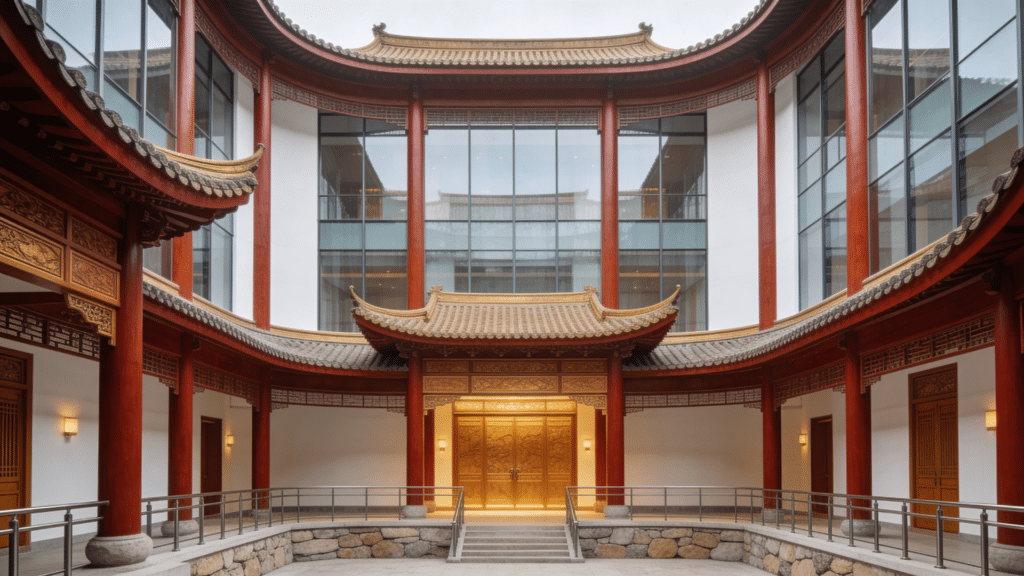
Neo-Chinese architecture blends traditional design elements with modern construction techniques. Buildings often include sloped roofs, courtyards, and wooden textures combined with concrete and glass.
This style keeps cultural identity alive while meeting present-day needs. It is popular in cultural centers, hotels, and residential projects.
Architects aim to create a sense of familiarity while still offering modern comfort. This approach helps connect people with heritage without copying old designs directly.
It’s a balanced style that respects history while moving forward.
3. Postmodern Chinese Architecture
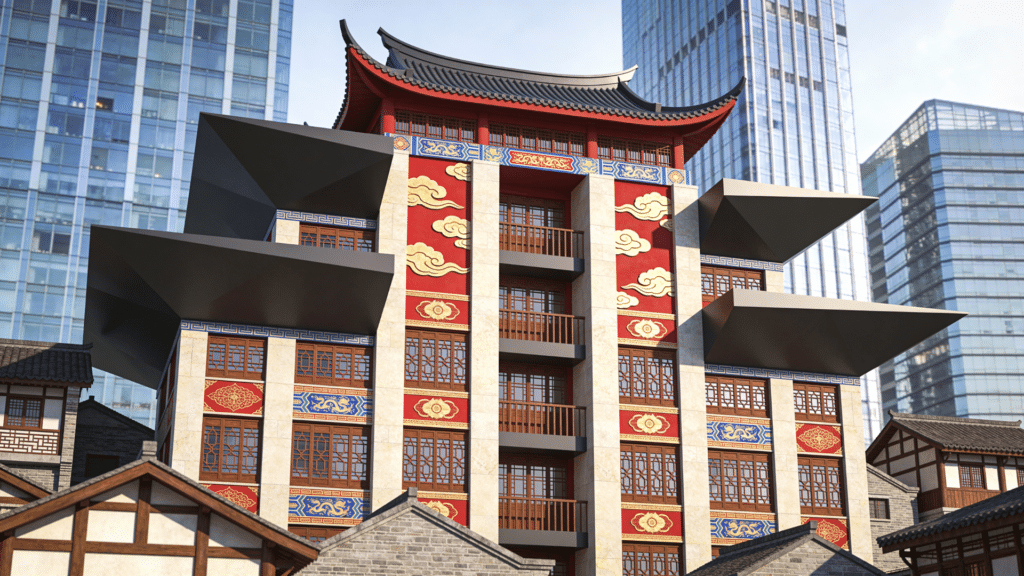
Postmodern architecture in China mixes bold designs with historical references. Unlike simple modern buildings, this style uses color, decoration, and creative forms.
Architects may include traditional motifs in unexpected ways. This style became popular as China opened up to global influences.
It allows designers to experiment while still reflecting cultural elements. Postmodern buildings often stand out due to their unique appearance.
They break away from strict design rules, offering more freedom and personality in architecture.
4. High-Tech Architecture
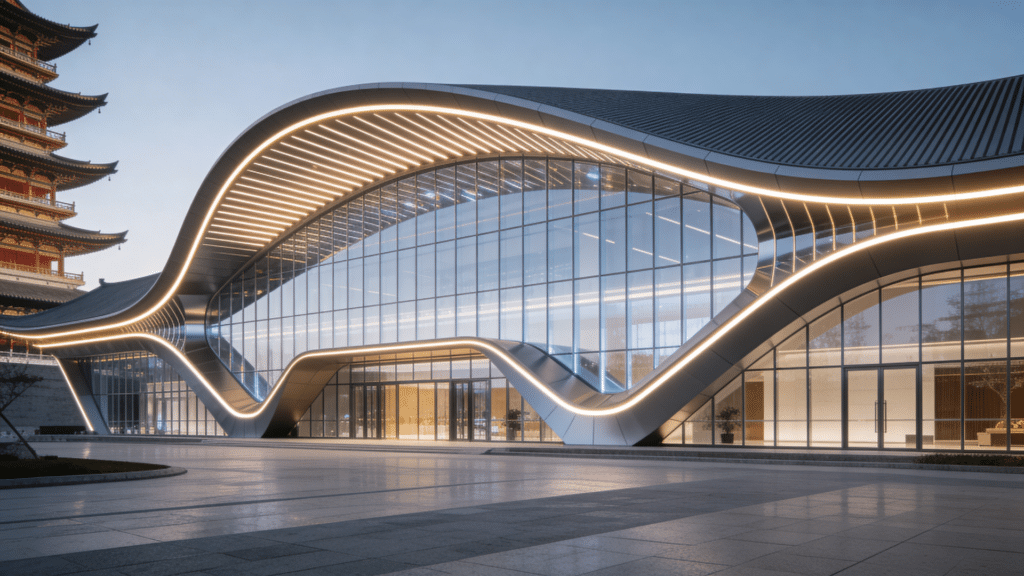
High-tech architecture focuses on advanced materials and futuristic designs. Buildings often feature exposed structures, smart systems, and innovative engineering.
Steel and glass are widely used to create sleek and modern looks. This style supports smart cities and modern infrastructure. It also includes energy-efficient systems and automation.
High-tech buildings are common in business districts and innovation hubs. They represent China’s focus on technology and progress, making cities more connected and efficient.
5. Green and Sustainable Architecture
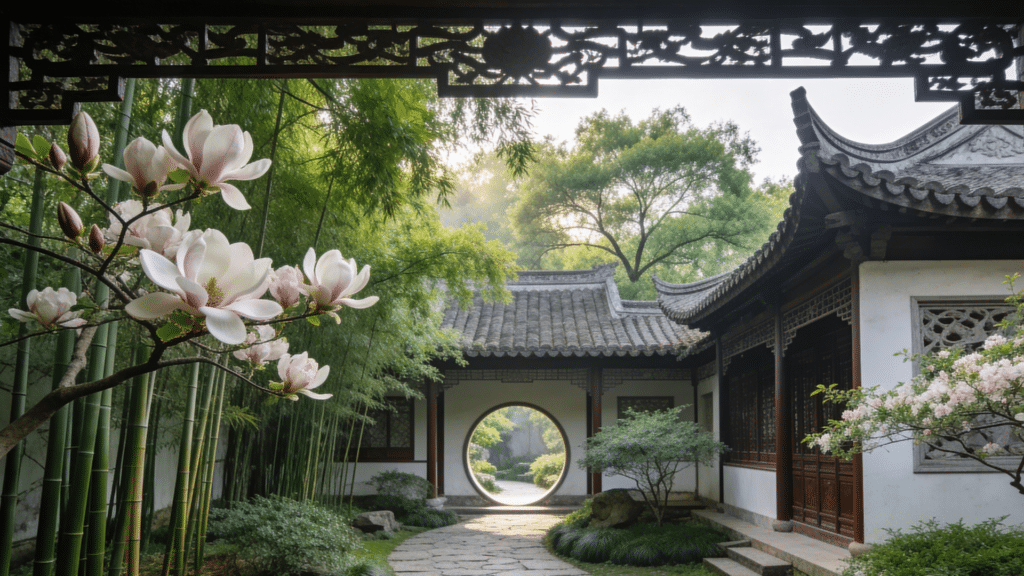
Green architecture is growing quickly in China due to environmental concerns. This style focuses on reducing energy use and protecting natural resources.
Buildings include features like solar panels, green roofs, and natural ventilation. Designers aim to create eco-friendly spaces that improve living conditions.
Materials are chosen carefully to reduce environmental impact. This style is often used in residential and public projects. It reflects a shift toward more responsible and sustainable construction practices in modern China.
6. Minimalist Architecture
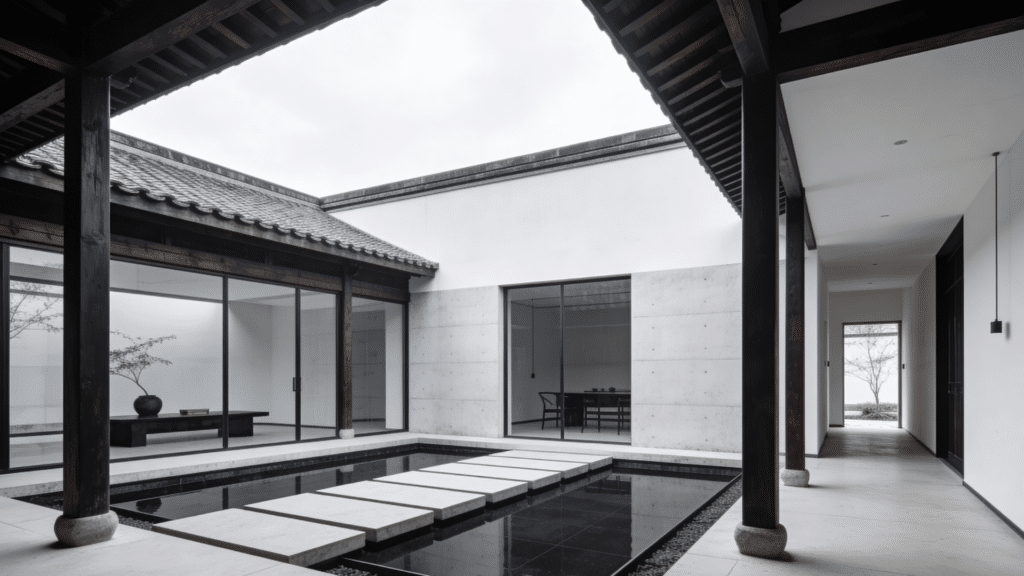
Minimalist architecture focuses on simplicity and clean design. Buildings use fewer materials, neutral colors, and open spaces.
The goal is to remove unnecessary details and create calm environments. This style is popular in homes, offices, and modern cultural spaces.
It often combines modern materials with simple layouts. Minimalism also connects with traditional Chinese ideas of balance and harmony. The result is a peaceful and functional space that feels both modern and timeless.
7. Cultural and Museum Architecture
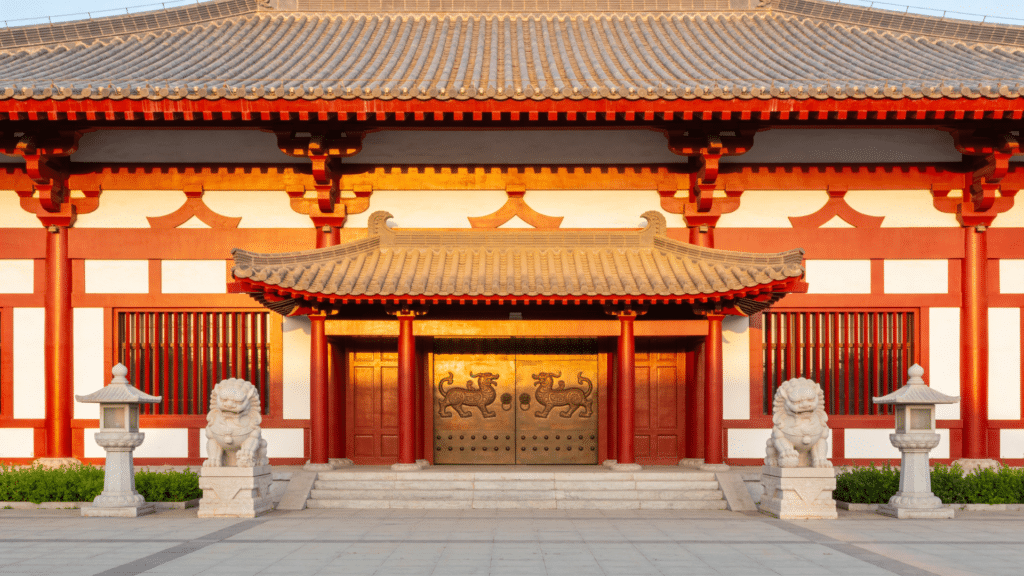
China has invested heavily in cultural institutions such as museums and art centers. These structures often feature bold and artistic designs.
Architects use unique shapes and materials to make these buildings stand out. At the same time, they reflect cultural themes and stories.
This style blends creativity with purpose, making architecture a form of expression. These buildings are designed to attract visitors and represent China’s cultural growth on a global stage.
Materials Used in Modern Chinese Buildings
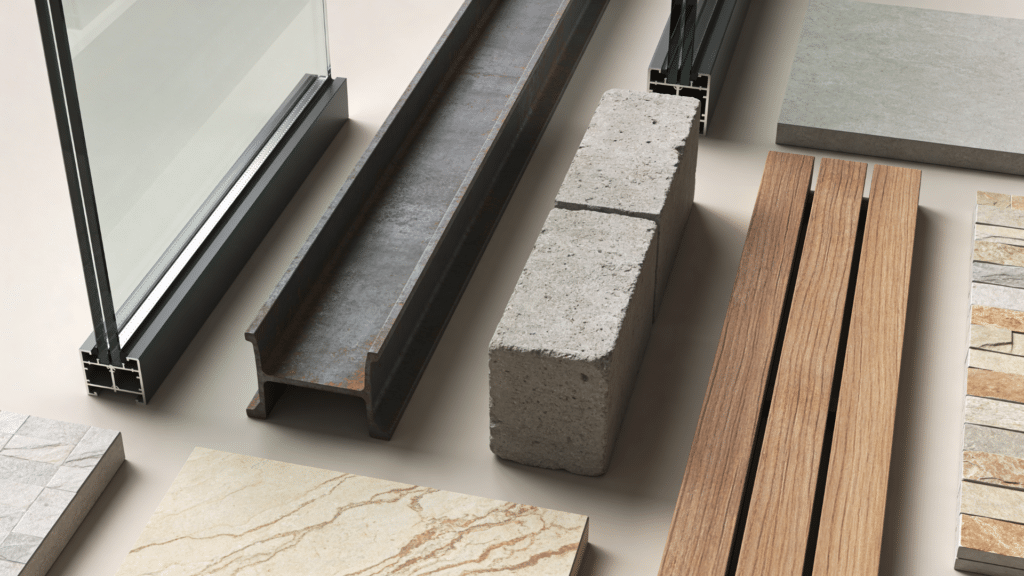
Modern Chinese buildings use a mix of strong, durable, and visually appealing materials. These materials support large structures while also helping achieve modern design goals and sustainability.
-
Concrete: Widely used for its strength and durability, it forms the backbone of most modern buildings in China. It allows architects to create tall structures, complex shapes, and long-lasting foundations while keeping construction cost-effective and efficient.
-
Steel: Essential for skyscrapers and large commercial buildings. It provides flexibility and strength, making it easier to build high-rise structures and unique architectural designs seen in major Chinese cities.
-
Glass: Glass is commonly used for facades to create sleek, modern looks. It also helps bring in natural light, making buildings feel open and energy-efficient while enhancing visual appeal.
-
Wood: Wood is making a comeback in modern designs, especially in eco-friendly projects. It adds warmth, supports sustainability, and connects buildings with traditional Chinese architecture.
-
Brick and Stone: These materials are often used to reflect cultural heritage. They provide texture and durability while helping modern buildings maintain a link to traditional design elements.
Key Trends Shaping Contemporary Chinese Architecture
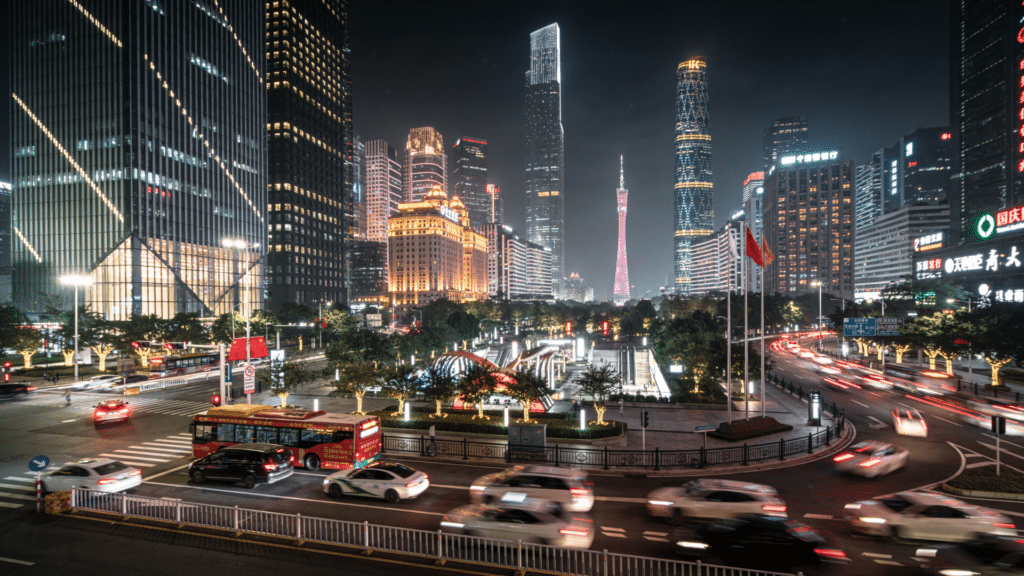
Modern Chinese architecture is evolving quickly, driven by rapid urban growth, cultural revival, and new technologies.
1. Fusion of Traditional and Modern Design
One of the most noticeable trends is the blend of traditional Chinese elements with modern architecture.
Designers often include features like curved roofs, courtyard layouts, and symbolic patterns while using modern materials such as glass and steel.
This creates buildings that feel both new and culturally rooted. Instead of copying the past, architects reinterpret traditional ideas in a simple, clean way.
This approach helps preserve cultural identity while still meeting modern needs. As a result, many buildings in China today tell a story that connects history with present-day design.
2. Rapid Urbanization and Mega Developments
China’s fast urban growth has led to the rise of large-scale construction projects across major cities. Skyscrapers, mixed-use developments, and massive public spaces are now common.
These projects are designed to support growing populations and busy urban lifestyles. Cities like Shanghai and Shenzhen showcase this trend with dense skylines and modern infrastructure.
Architects focus on efficiency, space-saving designs, and connectivity. This rapid development has made China one of the most active construction markets in the world, shaping its cities into modern urban hubs.
3. Focus on Sustainable and Green Design
Sustainability has become a major priority in Chinese architecture. Many new buildings are designed to reduce energy use and environmental impact.
Architects use eco-friendly materials, natural lighting, and ventilation systems to create greener spaces. Green roofs, solar panels, and water-saving features are also becoming common.
This trend reflects China’s effort to address environmental challenges while maintaining growth.
By focusing on sustainability, modern architecture in China is not only improving living conditions but also helping protect the environment for the future.
4. Use of Advanced Technology and Smart Design
Technology plays a big role in shaping modern Chinese buildings. Architects use digital tools, 3D modeling, and advanced construction methods to create complex and innovative designs.
Smart buildings with automated systems for lighting, security, and energy management are becoming more common. These technologies improve efficiency and make buildings more user-friendly.
They also allow for creative forms that were difficult to build in the past. As a result, China is known for producing some of the most futuristic and technically advanced structures in the world.
5. Rise of Unique and Experimental Architecture
Modern Chinese architecture is also known for bold and creative designs. Many buildings feature unusual shapes, dramatic forms, and eye-catching structures.
Architects are pushing boundaries and experimenting with new ideas to create iconic landmarks. This trend is especially visible in cultural centers, museums, and public buildings.
These designs are not just about appearance; they also reflect innovation and creativity. By embracing experimental architecture, China is building a strong identity in the global design world.
6. Revival of Natural Materials and Human-Centered Spaces
While modern materials are widely used, there is also growing interest in natural materials such as wood, stone, and brick.
Architects are focusing on creating spaces that feel comfortable and connected to nature. This includes designing buildings with open spaces, greenery, and natural light.
The goal is to improve well-being and create a better living experience. This trend shows a shift toward more human-centered design, where comfort and environment are just as important as style and structure.
7. Smart City Planning and Integrated Infrastructure
Modern Chinese architecture is closely linked with smart city planning. Cities are being designed with integrated systems that connect transport, housing, and public services.
Architects work alongside urban planners to create spaces that improve mobility and reduce congestion. Features like smart traffic systems, connected public transport, and efficient zoning are becoming common.
Buildings are no longer isolated structures but part of a larger urban network.
This approach improves daily life by making cities more organized and efficient, supporting China’s vision of highly connected and technologically advanced urban environments.
8. Transit-Oriented Development
Transit-oriented development is becoming a key trend in Chinese cities. Buildings are designed around major transport hubs, such as metro stations and rail networks.
This makes it easier for people to access work, shopping, and services without long travel times. Architects focus on creating compact, walkable communities with easy connectivity.
This reduces traffic congestion and promotes the use of public transport. It also supports sustainable urban growth.
By placing architecture around transport systems, cities become more efficient and convenient for residents.
9. Cultural Storytelling Through Design
Many modern buildings in China are designed to tell a cultural story. Architects use shapes, layouts, and materials that reflect local traditions and history.
For example, some buildings are inspired by natural forms or ancient symbols. This trend helps preserve cultural identity while still embracing modern design.
It also makes buildings more meaningful and unique. Instead of generic designs, architecture becomes a way to express heritage and values.
This storytelling approach adds depth and character to modern Chinese structures.
10. Mixed-Use Vertical Communities
Modern architecture in China often combines multiple functions within a single building or complex. These mixed-use spaces include homes, offices, shopping areas, and entertainment zones.
This trend supports busy urban lifestyles by keeping everything in one place. Architects design these spaces to be efficient and user-friendly.
It also reduces the need for long commutes. Vertical communities are especially useful in densely populated cities, where land is limited.
This approach creates more dynamic and self-sufficient urban environments.
11. Emphasis on Public Spaces and Social Interaction
There is a growing focus on designing spaces that encourage social interaction. Parks, plazas, and shared areas are integrated into modern developments.
Architects aim to create environments where people can relax, meet, and connect. These spaces improve community life and make cities more livable.
They also balance the fast pace of urban life by offering areas for rest and recreation. This trend highlights the importance of human experience in architectural design.
12. Global Collaboration and International Influence
Chinese architecture today is shaped by collaboration with international architects and firms. This brings global design ideas into local projects while still maintaining cultural identity.
Many famous buildings in China are designed by global experts working with local teams. This exchange of ideas leads to innovative and high-quality designs.
It also helps China stay connected with global architectural trends. As a result, modern Chinese architecture continues to evolve as a blend of local tradition and global influences.
Evolution of Chinese Architecture
Chinese architecture has changed over time, shaped by culture, politics, and technology. From ancient wooden structures to modern skyscrapers, each phase reflects the needs and values of its era.
| Period | Key Features | Materials Used | Focus |
|---|---|---|---|
| Ancient (Pre-1900s) | Symmetry, courtyards, wooden frameworks | Wood, stone, clay | Harmony with nature, cultural traditions |
| Early 20th Century | Western influence begins with simple layouts | Brick, concrete | Functional design, early modernization |
| 1950s–1970s | Standardized, practical buildings | Concrete, steel | Industrial growth, efficiency |
| 1980s–2000s | Rapid urban development, global styles | Glass, steel, concrete | Economic growth, modern city expansion |
| 2000s–Present | Innovative, sustainable, mixed designs | Advanced materials, eco-friendly options | Technology, sustainability, cultural fusion |
How Traditional Chinese Architecture Influences Modern Design
Traditional Chinese architecture continues to shape modern design in many meaningful ways. Concepts like symmetry, balance, and harmony with nature are still widely used in today’s buildings.
Architects often design spaces that feel calm and organized, following principles seen in ancient courtyards and layouts.
Elements such as curved rooflines, open spaces, and natural materials are also reinterpreted in modern structures.
Even when using glass and steel, designers try to keep a connection to cultural roots. Feng Shui principles still guide placement and orientation in some projects.
This influence helps modern architecture in China feel unique, blending cultural depth with contemporary style while maintaining a strong sense of identity.
Famous Examples of Modern Chinese Architecture
China is home to some of the world’s most iconic modern buildings, known for bold design and advanced engineering. These structures reflect innovation, cultural identity, and rapid urban growth.
- CCTV Headquarters: This building is known for its unusual loop design that challenges traditional skyscraper shapes.
- Beijing National Stadium: This stadium features a striking steel frame that looks like a woven nest. It became a global symbol during the Olympics and highlights the blend of art and engineering in modern design.
- Shanghai Tower: As one of the tallest buildings in the world, it uses a twisting form to improve stability and reduce wind impact. It also includes eco-friendly features for better energy efficiency.
- National Centre for the Performing Arts: This dome-shaped structure sits in water and is made of glass and titanium. Its smooth, modern look creates a calm and visually impressive environment.
- Guangzhou Opera House: Inspired by natural rock formations, this building has a flowing design. It represents creativity and shows how modern architecture can take inspiration from nature.
Why Modern Chinese Architecture Matters Globally
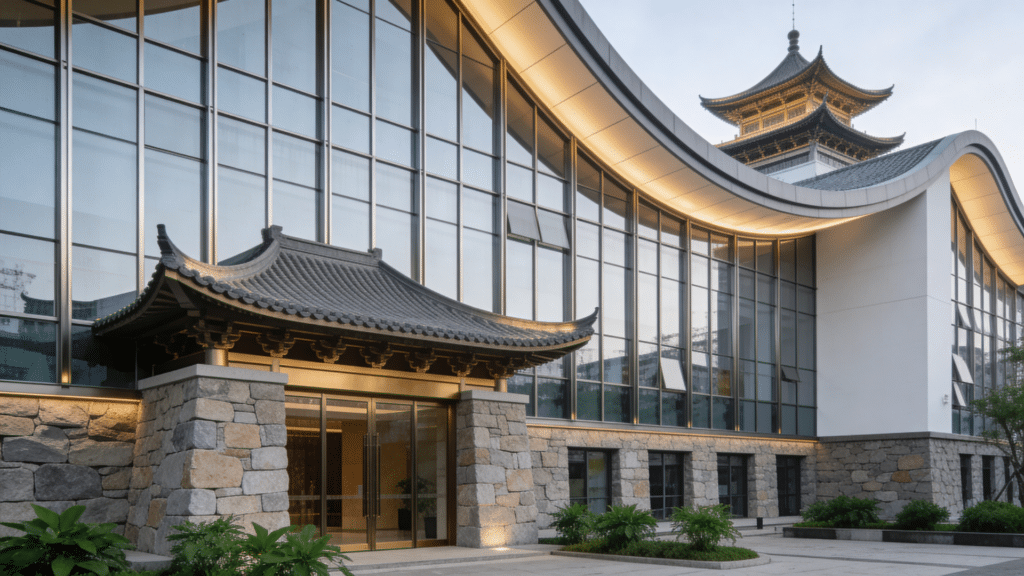
Modern Chinese architecture plays an important role on the global stage because of its scale, speed, and innovation. China has become one of the largest construction markets, influencing how cities are planned and built worldwide.
Its focus on tall buildings, smart design, and advanced technology sets new standards for urban development.
At the same time, the blend of traditional ideas with modern styles offers a fresh approach that other countries study and adapt.
Chinese projects also push forward sustainable building practices, helping shape greener cities.
Overall, modern Chinese architecture impacts global design trends while showing how culture and innovation can work together.
Future of Architecture in China
The future of architecture in China is focused on innovation, sustainability, and smarter urban living. As cities grow, designs are becoming more efficient, tech-driven, and people-focused.
- Smart Cities and AI Integration: Buildings will use AI to control lighting, security, and energy use. This will make cities more efficient, connected, and easier to manage for daily life.
- Sustainable and Green Construction: Eco-friendly materials, solar energy, and green roofs will become standard. The goal is to reduce pollution and create healthier living spaces.
- Vertical Urban Living: High-rise buildings will include homes, offices, and leisure spaces. This helps save land while supporting growing urban populations.
- Advanced Construction Technology: Methods such as modular construction and 3D printing will speed up construction. These technologies also reduce waste and improve accuracy.
- Human-Centered Design: Future spaces will focus on comfort, natural light, and greenery. Designs will aim to improve well-being and overall quality of life.
Final Thoughts
As I’ve gone through modern Chinese architecture, one thing feels very clear to me: it’s not just about building bigger or taller structures. It’s about creating spaces that reflect people, culture, and the way cities are growing.
I can see how China is using new ideas, smart technology, and better materials to shape the future, while still holding on to its traditions.
What I find most interesting is how these buildings are designed for real life—making cities more comfortable, connected, and efficient.
From green buildings to smart planning, everything seems focused on improving how people live every day.
If you’re interested in architecture or city design, I think China offers a lot to learn from. If you enjoyed this guide, feel free to share it or check out more topics like this with me.