

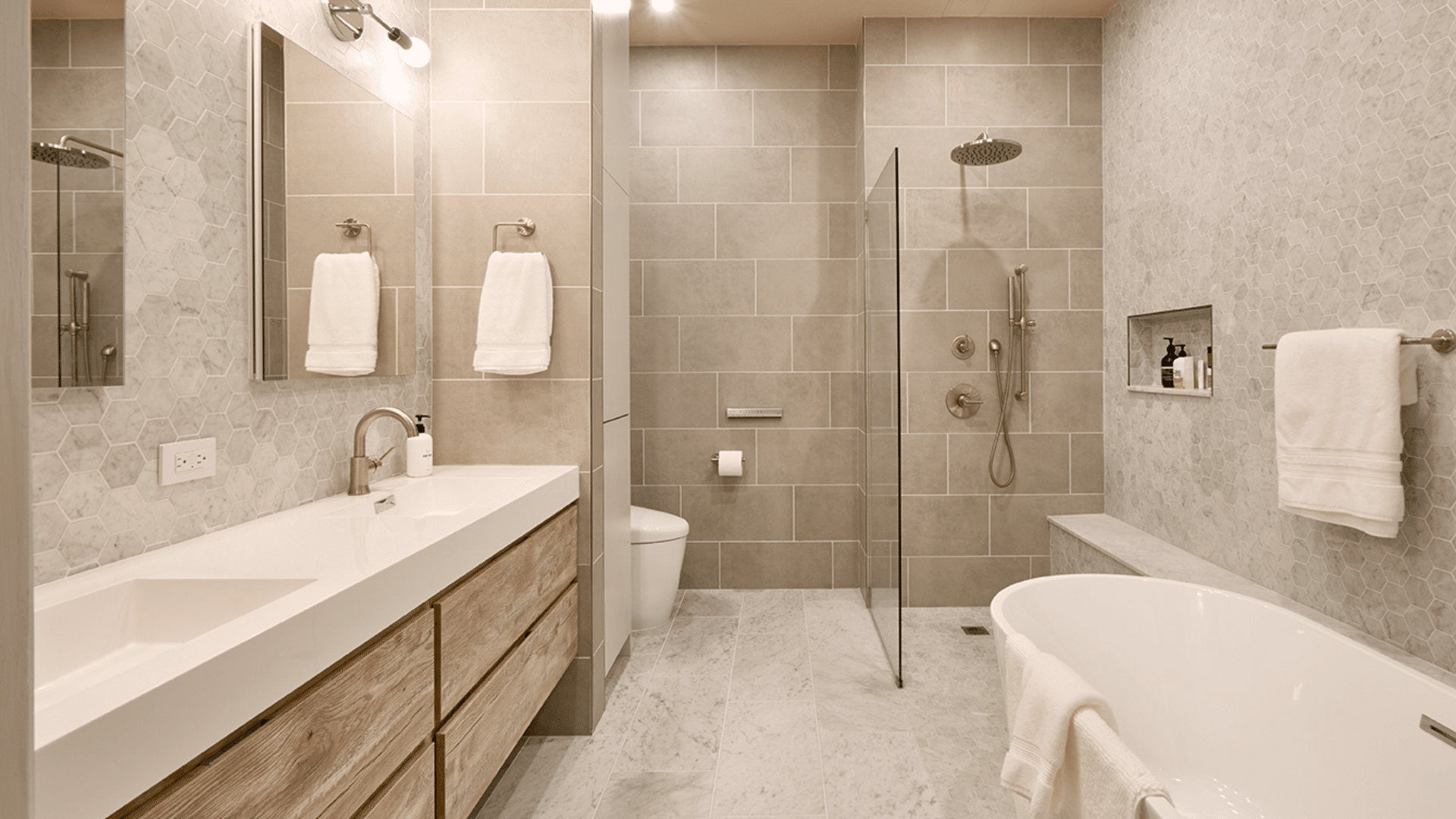
Wet room bathrooms are showing up everywhere, and I see why they catch attention.
Many homeowners ask if this style really works for everyday life, or if it just looks good online.
If you are thinking about changing your bathroom, these questions matter. In this article, I shared what wet room bathrooms are and why they have become so popular.
You’ll learn about the real pros, like open space and easy access, along with the downsides people often overlook.
I have also compared wet rooms to traditional bathrooms so you can see the differences clearly. You’ll see what real homeowners say, including common regrets and wins.
By the end, you will know if a wet room fits your home, budget, and daily routine before you decide.
What Is a Wet Room Bathroom?
A wet room bathroom is a space where the entire room is designed to handle water.
There is no raised shower tray or tub. Instead, the floor slopes gently toward a drain.
This creates an open layout where water can flow safely without barriers. The walls and floor are fully sealed using complete waterproofing systems, often called tanking, to stop leaks.
Think of it as turning the whole bathroom into a shower-safe zone.
This setup is different from a standard bathroom, where water stays inside a shower stall or tub. In a wet room, the shower blends into the room.
You may still see a glass screen, but it is optional because everything gets wet; careful planning, drainage, and waterproofing matter more than with traditional shower setups.
Pros of Wet Room Bathrooms
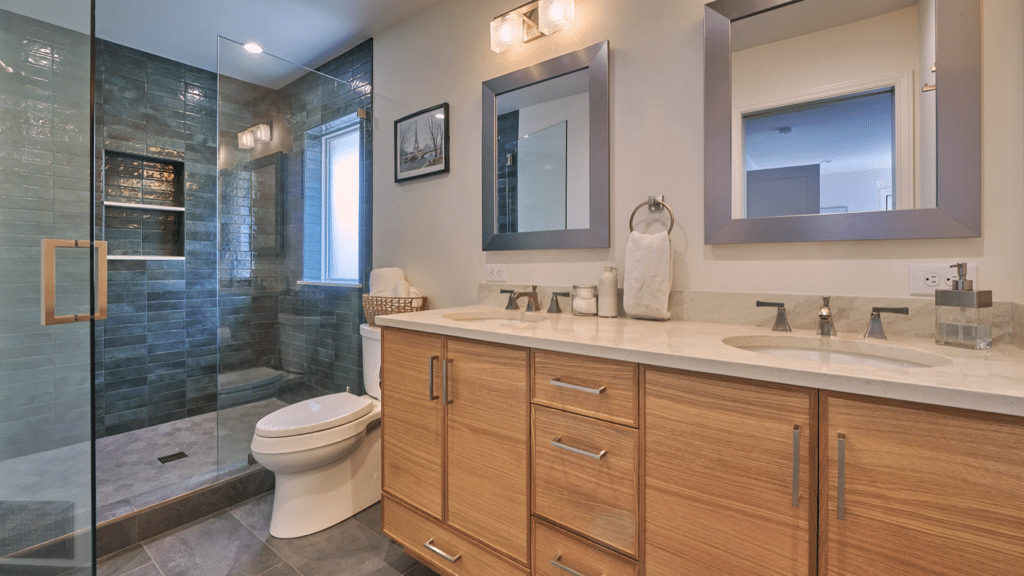
Wet room bathrooms offer practical benefits that go beyond looks. Below are the main reasons homeowners choose this layout.
1. Easy Access and Open Layout
A wet room bathroom removes steps, tubs, and raised shower trays, which makes moving around easier.
I often see this layout work well for kids, older adults, and anyone with limited mobility. The open floor plan gives you more room to move and lowers the risk of slips or trips.
Because there are fewer barriers, the space feels less tight and more comfortable to use.
This layout also makes daily routines smoother since you do not have to step over edges or deal with tight shower doors.
2. Works Well in Small Bathrooms
Wet room bathrooms can make small spaces feel larger and less boxed in. By removing bulky tubs and enclosed showers, the room opens up and feels more balanced.
I find that this layout helps natural and artificial light spread more evenly, which improves visibility.
You also get more freedom when placing sinks, toilets, or storage.
With good planning, a small wet room can still feel organized, easy to move around in, and comfortable for everyday use.
3. Easier to Clean and Maintain
Cleaning a wet room bathroom is often simpler because there are fewer parts that trap dirt.
I notice there are no shower frames, tracks, or trays that need extra scrubbing. Water flows across the floor toward the drain, helping rinse soap and residue away.
The surfaces are built to handle moisture, which reduces wear over time.
With regular cleaning and proper ventilation, a wet room can stay neat, safe, and easy to maintain without much extra work.
4. Flexible Layout and Fixture Placement
Wet room bathrooms give you more freedom when planning the layout.
Since there is no fixed shower enclosure, fixtures can be placed where they work best for your space. I often see homeowners adjust layouts to fit awkward corners or narrow rooms.
This flexibility helps create better flow and use every inch wisely.
You can also change the layout later more easily compared to a traditional setup with fixed shower units.
5. Supports Long-Term Accessibility Needs
A wet room bathroom can be a smart choice for long-term living.
I find many homeowners plan this layout so they can stay in their home as needs change.
The flat floor makes it easier to use mobility aids if needed. Grab bars, seating, and hand-held showers can be added without major changes.
This makes wet rooms a practical option for those thinking ahead about comfort and ease of use over time.
Cons of Wet Room Bathrooms
Wet room bathrooms look appealing, but they also come with real downsides. These points help explain why they may not suit every home or budget.
1. Higher Installation Costs
Wet room bathrooms usually cost more to build than standard bathrooms. I often see higher expenses because the entire room needs full waterproofing, not just the shower area.
This includes special membranes, sealed walls, and sloped flooring.
Labor costs can also be higher since the work must be precise to avoid leaks. If mistakes happen, repairs can be costly.
For many homeowners, the upfront cost becomes the biggest drawback, especially when working with a tight renovation budget.
2. Waterproofing Must Be Done Right
Waterproofing is critical in a wet room bathroom, and there is little room for error.
I notice that even small gaps or poor sealing can lead to water damage over time. Unlike standard showers, water reaches every part of the room.
This puts more pressure on floors and walls. If waterproofing fails, leaks can spread quickly and cause hidden damage.
Fixing these issues often means tearing up flooring or walls, which adds stress and extra cost later.
3. Cold and Slippery Floors
Wet room floors can feel cold, especially in cooler climates or during winter months. Because water spreads across the entire floor, it often takes longer to dry after each shower.
I find this can make the bathroom uncomfortable to use right away.
The floor may also become slippery if the wrong tile or surface is chosen. Slip-resistant tiles help, but they do not remove the risk completely.
Without proper heating and ventilation, moisture can linger, making the space feel damp and less comfortable.
4. Limited Water Control
In a wet room bathroom, water spreads beyond the shower area. I often notice splashes reaching walls, toilets, and storage units.
Even with a glass screen, water can still escape. This means you may need to wipe down more surfaces after each use.
Over time, steady moisture can wear down fixtures and finishes.
If you like keeping water contained in one spot, this setup may feel less controlled and more work during daily routines.
5. Not Ideal for Every Home
Wet room bathrooms do not suit every home layout. I often see problems in older houses where floors are hard to slope correctly or drainage options are limited.
Apartments and upper floors can also face plumbing restrictions that make installation harder.
If the structure cannot support proper drainage, leaks and water buildup may happen later.
In many cases, a traditional bathroom is easier to install and costs less. For these homes, a wet room may add stress instead of long-term value.
Wet Room vs Traditional Bathrooms
This comparison highlights everyday differences that matter during planning. Use it to understand how each option works in real homes.
| Feature | Wet Room Bathroom | Traditional Bathroom |
| Layout | Open layout with no raised shower tray or tub | Separate shower or tub with clear boundaries |
| Cost | Higher upfront cost due to full waterproofing | Lower installation cost in most cases |
| Installation | Requires floor sloping and full-room sealing | Standard plumbing and waterproofing |
| Maintenance | More surfaces get wet and need drying | Water stays mostly inside the shower area |
| Cleaning | Fewer fixtures but a larger wet area to clean | More fixtures, but a smaller wet zone |
| Comfort | Can feel cold or damp without heating | Feels warmer and dries faster |
| Water Control | Water spreads across the room | Water is contained in one area |
| Suitability | Best for accessibility or modern layouts | Works well for most home types |
| Long-Term Use | Supports aging-in-place needs | Easier for general family use |
What Real Homeowners Say About Wet Room Bathrooms?
Real homeowners on Reddit share mixed but honest views about wet room bathrooms, especially in older homes.
Many like the open layout and say it solves problems in very small bathrooms where tubs or shower doors do not fit well.
Some homeowners in century-old houses reported success when they used proper waterproofing systems, sloped floors, and heated flooring to help dry.
They stressed that good planning and the right materials made a big difference.
Others shared clear concerns. Several people mentioned cold floors, drafts, and water spreading to areas like toilets and storage.
A few said keeping items dry took extra effort. Poor drainage and puddles came up as common complaints when work was rushed. One repeated warning stood out: hire someone who understands wet rooms.
Homeowners agreed that when done right, wet rooms work well, but shortcuts often lead to regret.
Who Should Consider a Wet Room Bathroom?
A wet room bathroom can work well for certain homes and lifestyles. I often see it suited for small bathrooms where a tub or shower door takes up too much space.
The open layout helps the room feel less crowded and easier to move around in.
Wet rooms are also a good choice for people planning for long-term accessibility. The flat floor makes daily use easier for kids, older adults, or anyone with mobility needs.
Homes going through full renovations may also benefit, especially when floors and plumbing are already being replaced.
I find wet rooms fit modern remodels where clean layouts matter more than separate fixtures.
If you like simple cleaning routines and flexible layouts, a wet room may match your daily habits better than a traditional setup.
When a Wet Room Bathroom Is Not a Good Idea?
Some homes face limits that make this setup harder to manage. Knowing these limits early can help avoid costly mistakes.
- Homes with poor drainage or floors that cannot be properly sloped
- Older houses, where leveling and sealing surfaces are difficult
- Apartments or upper floors with plumbing restrictions
- Tight renovation budgets that cannot cover full waterproofing
- Homes with only one bathroom used by multiple people daily
- Spaces without good ventilation or floor heating
- Households that prefer keeping water contained in one area
Conclusion
A wet room bathroom works well in some homes, especially small or modern spaces.
At the same time, higher costs, water control issues, and the need for proper drainage can cause problems if planning falls short.
Your home layout, budget, and daily habits matter more than trends.
Before you decide, think about how the space will be used every day. Ask yourself if you are ready for extra waterproofing work and ongoing moisture care.
When done right, a wet room can feel practical and comfortable. When rushed, it can lead to regret.
If you already have a wet room or have considered one, share your experience in the comments below. Your insight can help others decide with confidence.