

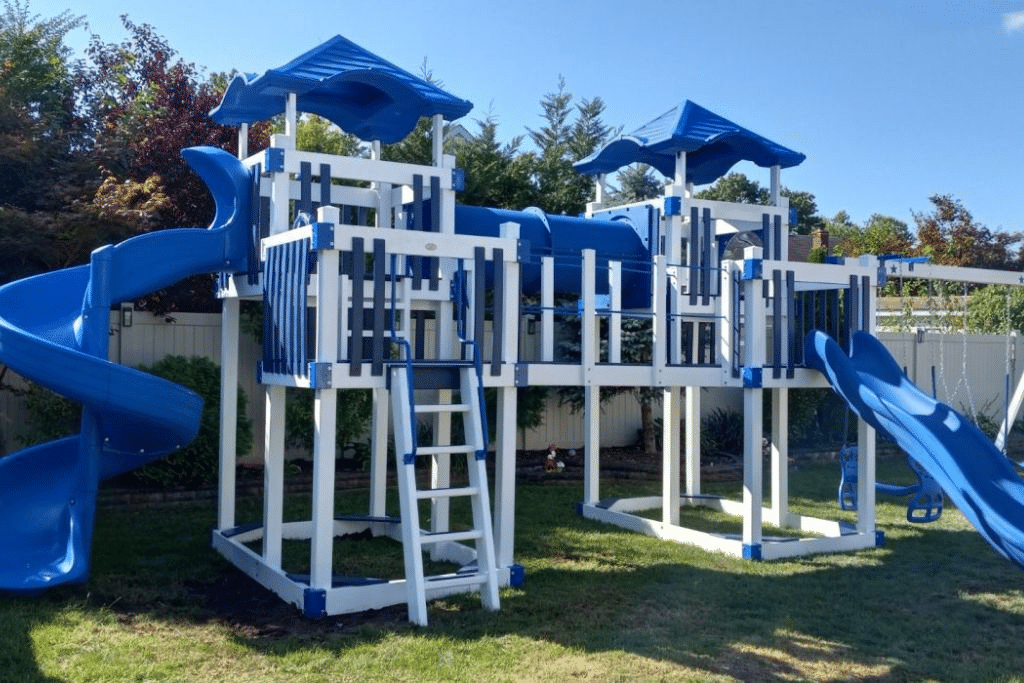
Choosing a jungle gym can feel overwhelming, but it doesn’t need to be. If anything, it should be exciting. There are numerous styles available, each offering something unique for how kids climb, move, and play.
Whether the goal is burning off energy after school or encouraging more outdoor time on weekends, knowing the main types of jungle gyms helps make the decision easier.
Classic Jungle Gym Styles
Classic jungle gyms are all about climbing, hanging, and moving from bar to bar. These designs are simple, familiar, and still popular because they encourage full-body movement and open-ended play. Kids can invent games, race across bars, or just hang upside down and laugh.
Metal Jungle Gyms
Metal jungle gyms are among the earliest designs and are renowned for their strength and durability. They are typically made from steel bars arranged in a climbing frame. While they hold up well over time, metal can heat up quickly in direct sun and needs proper ground surfacing underneath to help soften falls
Wooden Playsets
Wooden playsets bring a more natural feel to a backyard. Made from treated timber or cedar, they often include swings, ladders, slides, and small platforms. Many families prefer wood because it blends seamlessly into outdoor spaces and feels sturdy without appearing too industrial.
Plastic Modular Gyms
Plastic modular gyms are designed with flexibility in mind. Sections can be rearranged or added as kids grow, making them ideal for younger children. They are lightweight, easy to assemble, and usually stay cooler than metal during warmer months.
Climbing and Balance Jungle Gyms
If your kids love a challenge, climbing-focused jungle gyms are a great option. These designs help build strength, coordination, and confidence through movement and problem-solving. Here are some great options:
Rope and Cargo Net Climbers
Rope and cargo net climbers focus on grip and balance. Kids climb through rope ladders or nets, learning how to shift weight and plan their next move. Mesh size often varies by age, which helps match the challenge to a child’s ability.
LOg and Wall Climbers
Log and wall climbers add variety to climbing play. Log climbers use large wooden pieces arranged for crawling and climbing, while vertical wall climbers resemble rock climbing walls with handholds and footholds. Both options encourage focus, strength, and determination.
Spiral and Spinning Climbers
Spiral and spinning climbers bring movement into the climb. Spiral climbers require kids to move around a curved structure, while spinning climbers rotate as they climb. These designs are great for improving balance and body awareness, and they add an extra layer of fun.
Large and Adventure-Style Jungle Gyms
For kids who crave bigger challenges, larger jungle gyms turn playtime into an adventure. These setups typically combine several activities into a single structure, keeping children engaged for more extended periods.
Treehouse Play Structures
Treehouse play structures are a favourite for imaginative play. Raised off the ground, they often include ladders, bridges, slides, and enclosed spaces that feel like a secret hideaway. Wood is commonly used to keep that classic treehouse look and feel.
Tower and Bridge Gyms
Tower and bridge gyms focus on height and movement between platforms. Kids climb towers and cross floating or slightly wobbly bridges that test balance and coordination. Reaching the top often gives a real sense of achievement and confidence.
Adventure and Obstacle Courses
Adventure and obstacle course gyms are more open-ended and flexible in their approach. They combine climbing walls, ropes, tunnels, and balance beams in ways that allow kids to choose their own path. These gyms encourage creativity, independence, and problem-solving through play.
Ninja Warrior Gyms
Ninja warrior gyms are inspired by obstacle courses and action-based challenges. Hanging ropes, swinging bars, and climbing elements are arranged to keep kids moving and thinking. These setups are especially popular with older kids who enjoy testing their strength and agility.
Where to Find a Quality Jungle Gym?
When selecting a jungle gym, safety, durability, and thoughtful design are the most important considerations.
It helps to look for brands that understand how kids really play and design equipment that supports active movement while managing risk. Well-designed kids’ outdoor jungle gyms use quality materials, secure fittings, and layouts that grow with children rather than being outgrown too quickly.
Final thoughts
Jungle Gyms are far more than just a playground item that kids use for a year or two and then ignore. It becomes a space where kids build strength, confidence, and imagination while spending more time moving and exploring.
With numerous styles available, ranging from simple climbers to complete adventure setups, there is an option to suit almost every family and space. Taking the time to understand the different types makes it easier to choose a jungle gym that keeps kids active, happy, and engaged for years to come.