

Living rooms come in all shapes and sizes. Some feel like cozy nooks, while others stretch out like grand halls. But what’s considered typical?
Most homeowners wonder if their space measures up to standard dimensions. And that’s a fair question.
Room size affects furniture placement, decor choices, and how comfortable a space actually feels. Too cramped? The room loses its appeal. Too spacious? It might feel empty and cold. Finding that sweet spot matters.
This blog breaks down average living room dimensions and learn what factors influence these measurements across different home styles.
What is the Average Living Room Size?
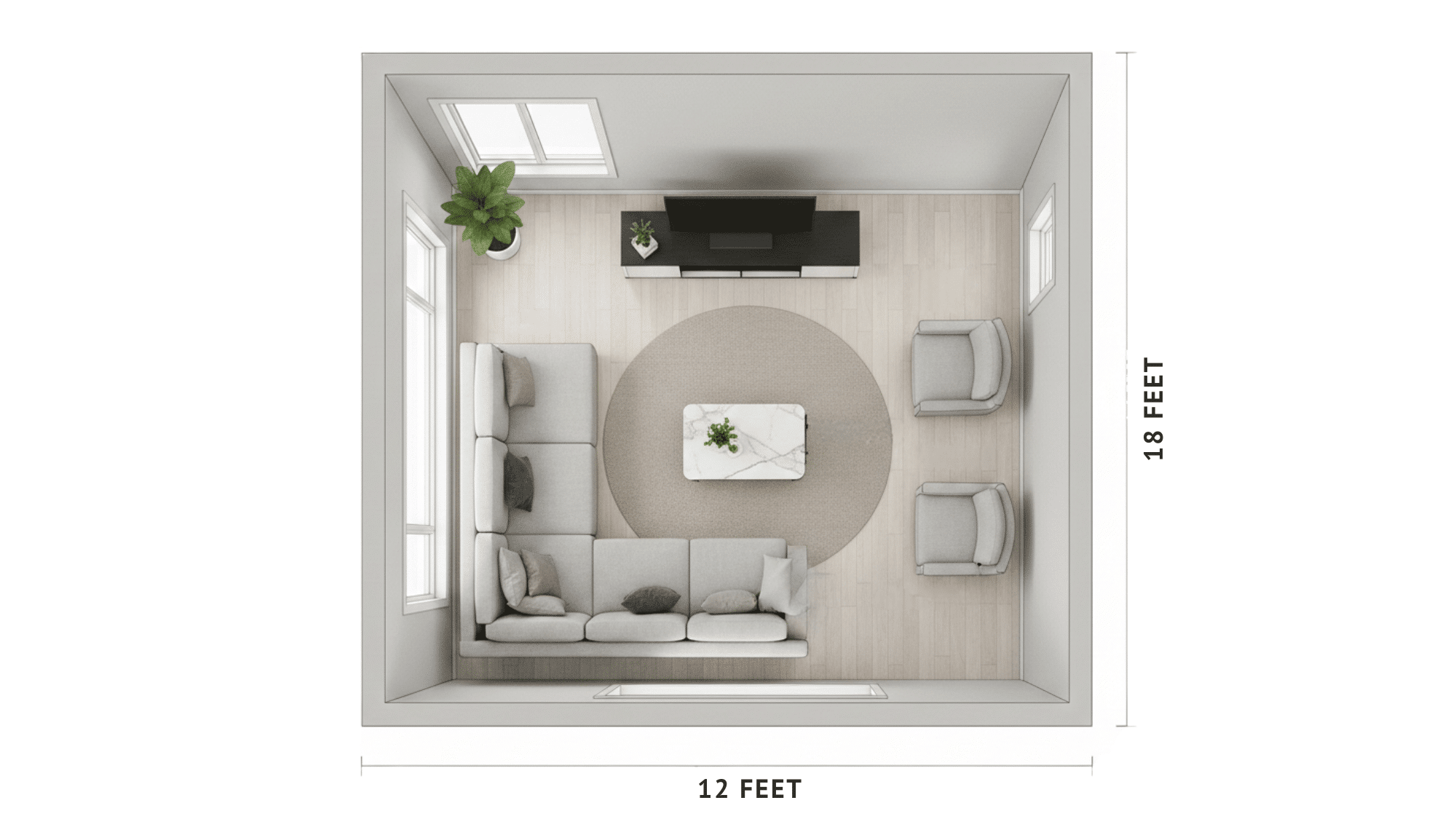
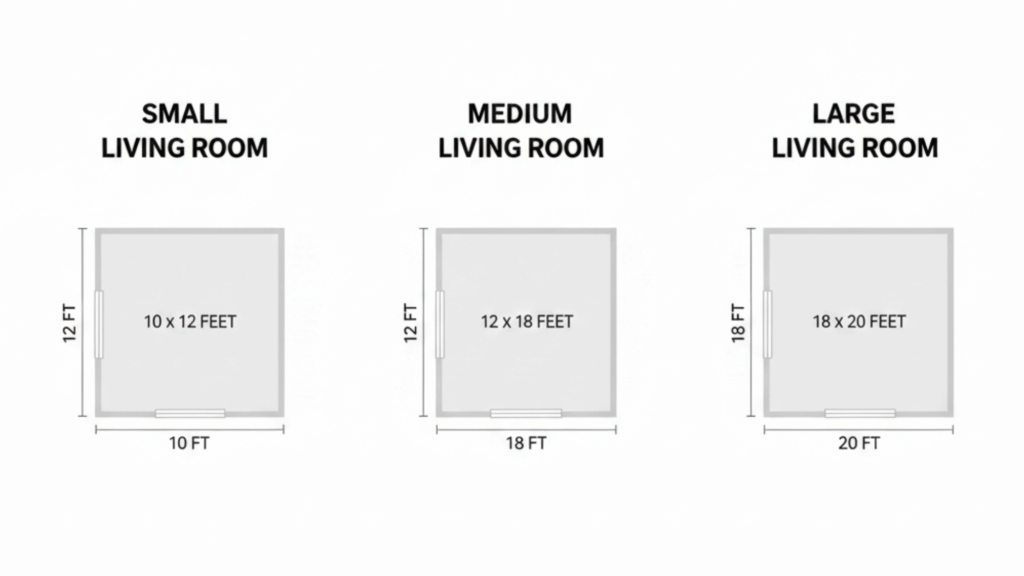
The average living room typically measures between 12 feet by 18 feet, or roughly 216 square feet. However, this number shifts based on several factors.
Older homes often feature smaller living spaces, sometimes around 10 feet by 13 feet. Newer constructions tend to go bigger, with rooms spanning 15 feet by 20 feet or more.
Apartment living rooms usually sit on the smaller end, averaging 10 feet by 13 feet. Meanwhile, suburban houses offer more generous dimensions. Location plays a role, too.
Urban homes sacrifice square footage due to space constraints, while rural properties enjoy roomier layouts.
Standard Living Room Dimensions by Room Type
Different home types come with distinct living room sizes. This is how they typically compare across various property styles.
| Room Type | Typical Dimensions | Square Footage |
|---|---|---|
| Apartment Living Room | 10′ × 13′ | 130 sq ft |
| Small House | 12′ × 18′ | 216 sq ft |
| Medium House | 15′ × 20′ | 300 sq ft |
| Large House | 16′ × 22′ | 352 sq ft |
| Luxury Home | 20′ × 25’+ | 500+ sq ft |
| Studio Apartment | 12′ × 12′ | 144 sq ft |
| Open Concept | 18′ × 24’+ | 432+ sq ft |
How to Choose the Right Living Room Size for Your Home
Selecting the perfect living room size depends on lifestyle needs, budget, and how the space will actually be used daily.
- Household Size: Larger families need more seating and circulation space, while singles or couples can work with cozier dimensions.
- Furniture Requirements: Consider what pieces you’ll include. A sectional sofa, coffee table, entertainment center, and accent chairs demand adequate floor space.
- Budget Constraints: Bigger rooms cost more to build, furnish, heat, and cool. Balance desires with financial reality.
- Home Layout: Open floor plans blend living areas with dining and kitchens, requiring larger overall dimensions but eliminating walls.
- Entertainment Habits: Frequent hosts need a generous space for guests. Homebodies who rarely entertain can opt for intimate sizing.
- Future Flexibility: Think ahead. Growing families or aging-in-place considerations might require extra room down the line.
- Natural Light Access: Larger rooms with multiple windows feel airier, while smaller spaces with limited light can seem cramped.
How Furniture Affects the Average Living Room Size
Furniture selection directly impacts how spacious a living room feels. A bulky sectional can overwhelm a 200-square-foot space, while minimal seating makes even small rooms breathable.
Standard sofas typically measure 84 to 96 inches long and need at least 30 inches of walkway clearance around them.
Coffee tables require 18 inches of space from seating for comfort. Entertainment centers, bookshelves, and accent chairs all claim their territory, too.
The furniture-to-floor-space ratio matters significantly. Designers recommend furniture covering no more than two-thirds of available floor area, leaving breathing room for movement and visual balance.
Ceiling Height and Its Impact on Living Room Dimensions
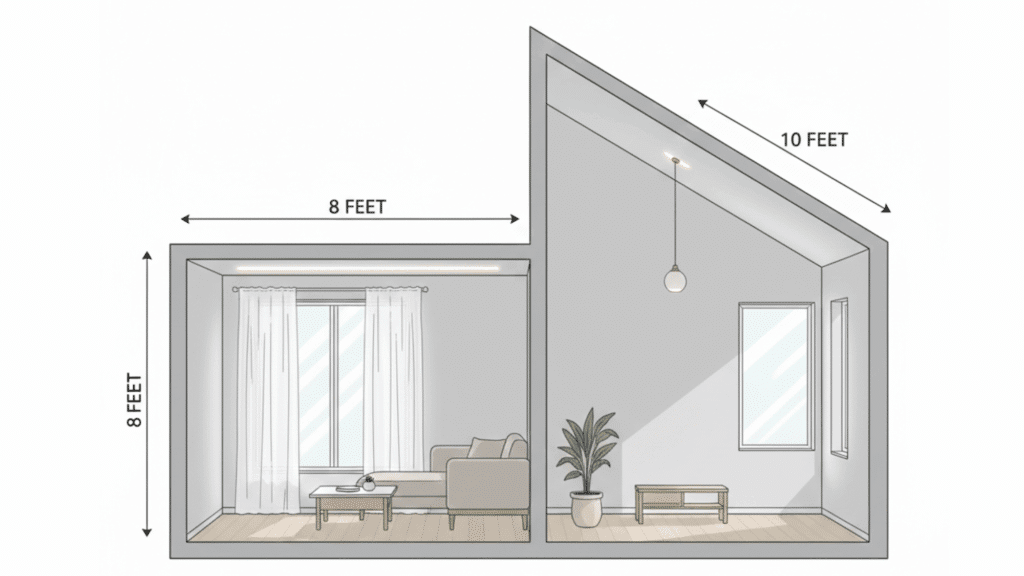
Ceiling height dramatically changes how a living room feels, regardless of square footage. Standard ceilings measure 8 to 9 feet in most homes, creating a comfortable, proportional feel.
Older houses sometimes feature 7-foot ceilings that make rooms feel cramped. Modern builds often include 10 to 12-foot ceilings, adding grandeur and openness.
Vaulted or cathedral ceilings push even higher, sometimes reaching 15 to 20 feet.
Taller ceilings allow smaller floor plans to feel more spacious through vertical volume. They also accommodate larger windows, bringing in more natural light.
But remember, higher ceilings mean increased heating and cooling costs, plus challenges with light fixtures and paint jobs.
Open Concept vs Traditional Living Room Sizes
Open concept and traditional layouts handle space differently. Each approach offers unique advantages depending on lifestyle preferences and home design.
| Feature | Open Concept | Traditional Living Room |
|---|---|---|
| Average Size | 400-600 sq ft (combined) | 200-350 sq ft |
| Walls | Minimal or none | Defined by four walls |
| Flow | Seamless between spaces | Separate, distinct rooms |
| Privacy | Limited sound barriers | Enclosed, private space |
| Furniture Placement | Flexible, zone-based | Wall-anchored layouts |
| Natural Light | More windows, brighter | Depends on wall placement |
| Noise Control | Sounds travel freely | Better sound containment |
| Resale Appeal | Modern buyers prefer | Traditional buyers favor |
| Heating/Cooling | Larger volume to manage | Easier climate control |
How to Make a Small Living Room Feel Larger
Small living rooms don’t have to feel cramped. Strategic design choices, smart furniture selection, and clever visual tricks can make limited square footage appear surprisingly spacious.
1. Use Light Colors: Paint walls in whites, creams, or soft pastels to reflect light and create an airy, open atmosphere.
2. Choose Multi-Functional Furniture: Opt for storage ottomans, sofa beds, and nesting tables that serve multiple purposes without cluttering space.
3. Hang Mirrors Strategically: Place large mirrors opposite windows to bounce natural light and create the illusion of doubled space.
4. Keep Furniture Off Walls: Float seating slightly away from walls to create depth and make the room feel less boxy.
5. Maximize Vertical Space: Install floor-to-ceiling shelving and tall bookcases to draw eyes upward and utilize overlooked storage areas.
6. Limit Accessories: Embrace minimalism by displaying fewer decorative items, reducing visual clutter, and maintaining clean sightlines.
7. Use Proper Lighting: Layer ambient, task, and accent lighting to eliminate dark corners and make every inch feel intentional and welcoming.
To Conclude
Understanding living room dimensions helps make smarter design decisions. Whether working with a compact apartment or a spacious suburban home, knowing standard measurements guides furniture purchases and layout planning.
Room size isn’t everything, though. Ceiling height, natural light, and thoughtful design choices often matter more than raw square footage.
Small spaces can feel grand with the right tricks, while large rooms can feel empty without proper furnishing. The key is to create a living room that fits specific needs and a lifestyle.
Measure carefully, plan intentionally, and remember that comfort trumps conformity. A well-designed living room works for the people using it daily.