

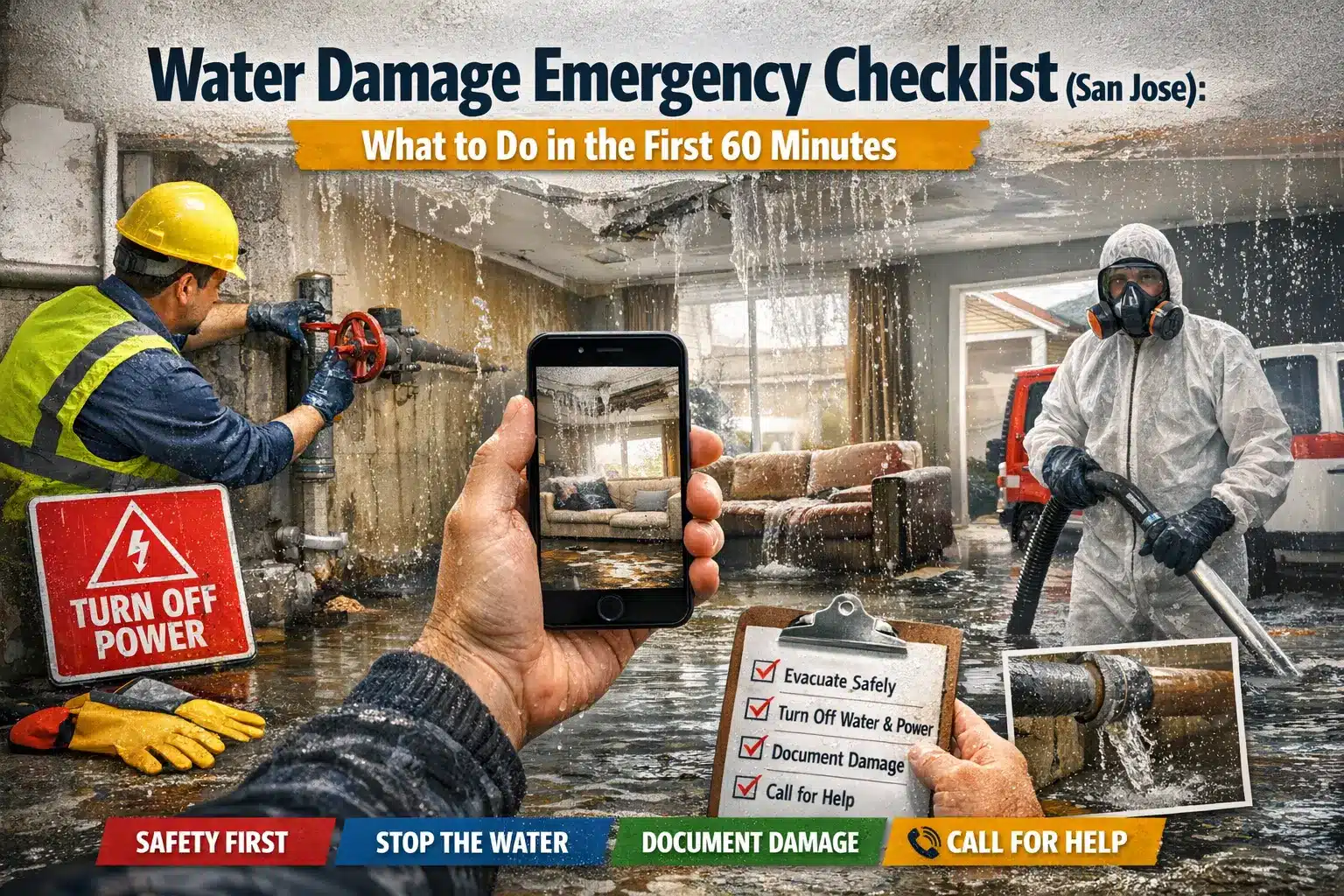
Water damage can be overwhelming, but knowing what to do in the first 60 minutes can significantly minimize the damage. This Water Damage Emergency Checklist is designed to help you act quickly and efficiently in case of an emergency. Whether you’re dealing with a flooded basement, burst pipes, or a leaky roof, the first hour is critical in preventing further loss. Follow this step-by-step guide to keep your home safe.
Safety First: Ensuring Everyone’s Safety During Water Damage
The first priority in any water damage situation is the safety of everyone involved. Even if the situation seems manageable at first, flooding can bring hidden dangers such as electrical hazards, slippery floors, and contaminated water. Here’s what to do immediately:
1. Evacuate the Area
Before you start assessing the damage, ensure that everyone is safe. Evacuate the affected area and move to higher ground if possible. If water is rising rapidly, leave the building immediately. Ensure that any pets or animals are accounted for as well. If you cannot evacuate through the affected area, look for alternate routes to get out safely. Your safety is the most important factor in the first moments of an emergency like this.
2. Turn Off the Power
If you can do so safely, turn off the electricity to the affected area. Avoid touching electrical outlets, switches, or any electrical devices while standing in water. This step is crucial to prevent electrocution. If the power source is located near water, it’s important to act swiftly. In some cases, it may be best to call a licensed electrician to turn off the power safely, especially if you are unsure of how to do it yourself.
3. Avoid Contact with Contaminated Water
Floodwater can be contaminated with bacteria, sewage, and chemicals. Avoid touching it, especially if you have open cuts or sores. Use rubber gloves and protective gear if you need to handle anything in the affected area. If you’re unsure of the water’s contamination level, err on the side of caution. Contaminated water can cause infections, and it’s essential to limit exposure. If the water has been standing for a while, the chances of contamination increase, so take extra care.
Stop the Water Source: Contain the Problem
The next step is to stop the source of the water if possible. This could be as simple as turning off a faucet or closing the main water valve. For larger leaks, the process might involve more complex measures like stopping the main water supply or stopping the power to appliances that may still be leaking. Here’s how you can contain the problem before it spreads:
1. Turn Off the Water Supply
If the source of the water damage is a burst pipe or appliance leak, turn off the main water supply immediately. The quicker you stop the flow, the less water will continue to damage your property. This step may require you to go into your basement, crawlspace, or utility room to locate the water shutoff valve. In some cases, it may be a good idea to install a water shutoff system that can be accessed quickly during emergencies.
2. Identify and Isolate the Leak
If possible, identify where the water is coming from and isolate the leak. For example, if a washing machine hose has burst, turn off the appliance to stop the water flow. This will help you control the damage and prevent more water from spreading.
If the leak is coming from a pipe behind a wall, you may need to cut through drywall to stop the water from flowing. However, if you’re not comfortable with this, it’s better to wait for a professional plumber or water damage restoration service to arrive.
3. Seal Off Leaks
If you can safely access the leak, try to contain it by sealing off small leaks using towels, plastic sheeting, or other waterproof materials. However, don’t put yourself at risk, and avoid handling appliances or systems you’re not familiar with. If needed, contact FloodDry Water Damage Restoration for fast professional assistance. This may include sealing holes in walls or floors where the water is leaking through to stop the flow while waiting for help to arrive.
Document the Damage: Capture Photos and Videos for Insurance Claims
It’s important to document the damage as soon as possible. This information will be helpful when filing an insurance claim or working with a restoration company. The more thorough your documentation, the smoother your insurance process will go.
1. Take Clear Photos and Videos
Use your phone or camera to capture clear images and videos of the damage. Make sure to get wide-angle shots and close-ups to show the extent of the damage to furniture, walls, floors, and belongings. These will help your insurance company assess the situation accurately. Taking a video of the water running into your home and damaging your property will help demonstrate the severity of the situation. Don’t forget to capture photos of the sources of damage like burst pipes or leaky appliances.
2. Avoid Moving Damaged Items
Do not move items unless they are at risk of further damage. If possible, photograph items in place. You may need these pictures for your insurance claim or restoration process. Moving items too early can make it harder for adjusters to assess the damage and could result in an incomplete claim. Make a note of each item’s condition before moving it.
3. Make a List of Damaged Items
While you document the damage, make a detailed list of all items affected by the water. Include furniture, electronics, and personal belongings. This will help when you reach out to a restoration company or insurance provider. Make sure to include serial numbers or identifying details of expensive items, as this will help your claim process go faster.
Minimize Damage: What You Can Do Yourself
While waiting for professional help, there are several steps you can take to minimize further damage to your home and belongings. However, there are also areas where professional expertise is essential. Avoid attempting repairs that could make things worse or put you at risk. If you’re unsure about anything, wait for professionals to arrive.
1. Remove Standing Water
If the flooding is manageable and not too deep, try to remove standing water. Use a wet/dry vacuum, mop, or towels to soak up as much water as possible. The sooner you remove the water, the less damage it will cause to floors and walls. This will also reduce the potential for mold growth, which can begin within 24-48 hours of water exposure.
2. Dry Out the Area
Open windows and doors to improve ventilation. If it’s safe, you can use fans and dehumidifiers to dry out the affected areas. Avoid using electrical devices if there is still standing water around. It’s crucial to maintain good airflow in the affected area to help dry out any moisture in the walls, floors, and furniture. If the water damage is extensive, consider renting industrial-grade dehumidifiers for faster drying.
3. Protect Your Belongings
Move furniture, rugs, and other valuables to a dry area if possible. This will prevent them from being damaged further by the water. Be mindful of fragile items and handle them with care. If items are too heavy to move, try elevating them off the ground using bricks or wood planks to prevent additional water absorption.
What to Avoid: Professional Help Is Required
There are certain aspects of water damage cleanup that you should avoid handling on your own. These can be dangerous and may cause more harm than good if not addressed properly. These are situations where it is best to call in professionals who have the right tools and training to handle the job.
1. Electrical Systems
Never attempt to fix or handle electrical systems in flooded areas. Water and electricity are a dangerous combination. Call a professional to ensure the power is safely turned off and repaired. Even if the power is turned off, there may still be water behind walls or ceilings that could pose a threat.
2. Ceiling and Walls
If water has soaked into the ceiling or walls, it’s best to leave the repair to professionals. Water-damaged drywall can become structurally unsound, and handling it without proper training can be risky. A professional will know how to remove the damaged material safely and restore the structure.
3. Sewage Water
If the water is contaminated with sewage, do not attempt to clean it up yourself. Sewage water contains harmful bacteria that can cause serious health issues. A professional water damage restoration company will have the necessary equipment and expertise to handle it safely.
Get Professional Help for Water Damage in San Jose
If you’re dealing with water damage in San Jose, it’s essential to act quickly to minimize the impact on your home and belongings. For emergency water cleanup, water mitigation, and professional restoration services, contact a trusted local company as soon as possible.
Conclusion
Water damage can be stressful, but knowing what to do in the first 60 minutes can make all the difference. Always prioritize safety, stop the water source, document the damage, and take steps to minimize further damage. If the situation feels overwhelming, don’t hesitate to call a professional right away — the sooner experts get involved, the better the outcome for your home and your wallet.