


Most people spend about a third of their lives in bed. That’s a long time to be uncomfortable.
Picking the right mattress feels simple until it actually isn’t. Some mattresses are too firm. Others sink too much. And most people end up going back and forth between options, never feeling fully satisfied.
That’s exactly why hybrid mattresses have been getting so much attention lately. They seem to offer a middle ground that neither foam nor spring mattresses can match on their own.
But what exactly makes a mattress “hybrid?” The answer is more interesting than most people expect. Read on to find out what sets these mattresses apart and why so many sleepers are making the switch
Hybrid Mattress Meaning: What Does “Hybrid” Actually Refer To?
The term “hybrid” simply means a combination of two or more things.
In the mattress world, it refers to a bed that pairs an innerspring coil system with one or more layers of foam or latex on top.
Think of it like combining the best parts of two different mattress types into one. The coils sit at the base and handle support. The foam or latex layers on top take care of comfort and pressure relief.
So a hybrid mattress isn’t a single material or technology. It’s a carefully built structure where each layer plays a specific role.
How Does a Hybrid Mattress Work?
A hybrid mattress combines two distinct systems in one bed.
The bottom layer uses individually wrapped coils. These coils respond to body weight and movement. They also allow airflow, which helps keep the mattress cool through the night.
On top of the coils sit comfort layers made from memory foam, latex, or both. These layers contour to the body and reduce pressure on joints like the shoulders and hips.
Together, both systems work as a team. The coils handle the heavy lifting. The foam handles the cushioning. That balance is what makes a hybrid feel different from a regular mattress.
What are Hybrid Mattresses Made Of?
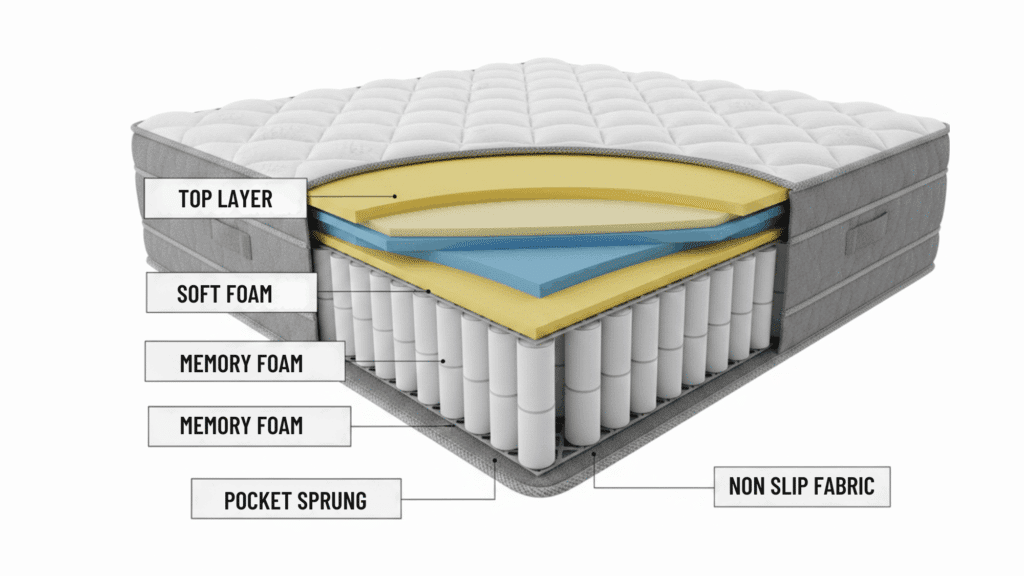
A hybrid mattress has multiple layers, and each one serves a clear purpose. Given are the layers of a hybrid mattress: a closer look at what’s inside.
1. Pocketed Coils for Support
Pocketed coils are individually wrapped springs that sit at the base of the mattress. Each coil moves on its own. This means they respond to different parts of the body separately.
That independent movement reduces motion transfer and gives targeted support where the body needs it most.
2. Memory Foam or Latex for Comfort
These materials make up the top comfort layers. Memory foam contours closely to the body and relieves pressure points. Latex feels bouncier and more responsive.
Both options add softness and cushioning. The choice between them often depends on personal preference and sleeping position.
3. Transition Layers for Balance
Transition layers sit between the coils and the comfort layers. They act as a buffer zone.
Without them, sleepers might feel the coils poking through the foam above. These layers are usually made from denser foam and help the mattress feel more even and structured from top to bottom.
Pros and Cons of a Hybrid Mattress
Hybrid mattresses come with some real strengths. But like anything, there are a few trade-offs worth knowing about.
Benefits
- Better Airflow: The coil layer creates natural gaps inside the mattress. Air moves freely through those spaces, which keeps the sleeping surface cooler. This makes hybrids a solid pick for people who tend to sleep hot.
- Great Support: The pocketed coils offer firm, structured support for the spine. This works especially well for people with back pain or those who need extra help with posture while sleeping.
- Works for Couples: Each coil moves independently, so one person shifting at night won’t disturb the other. Couples with different sleeping habits often find hybrids much easier to share.
- Durable: Hybrid mattresses tend to last longer than all-foam options. The coil system holds its shape well over time, and the comfort layers don’t break down as quickly when built with quality materials.
Drawbacks
- Usually More Expensive: Hybrid mattresses cost more than basic foam or spring options. The added materials and construction complexity push the price up, which can be a concern for budget-conscious shoppers.
- Heavier Than Foam Beds: All those layers add up in weight. Moving or rotating a hybrid mattress takes more effort, which can be a hassle during setup or when doing regular mattress maintenance.
- Quality Varies by Brand: Not all hybrids are built the same way. Some brands cut corners on materials, which affects comfort and lifespan. It’s worth researching before making a purchase decision.
Hybrid Mattress vs Memory Foam vs Innerspring
Each mattress type has its own strengths. This quick comparison makes it easier to see how they stack up.
| Feature | Hybrid | Memory Foam | Innerspring |
|---|---|---|---|
| Support | Coils + foam layers | Foam only | Coils only |
| Comfort | High | High | Moderate |
| Cooling | Excellent | Poor to moderate | Good |
| Motion Isolation | Good | Excellent | Poor |
| Bounce | Moderate | Low | High |
| Durability | High | Moderate | Moderate |
| Weight | Heavy | Moderate | Moderate |
| Price | Higher | Moderate | Lower |
| Best For | Most sleeper types | Side sleepers | Budget shoppers |
Who Should and Should Not Buy a Hybrid Mattress?
Hybrid mattresses work well for a wide range of sleepers. Back and side sleepers tend to benefit the most from the balance of support and cushioning.
Couples dealing with nighttime motion disturbance will also find hybrids worth considering. Hot sleepers who struggle with foam beds are another good match.
That said, hybrids aren’t for everyone. Strict budget shoppers may find the price hard to justify. People who prefer an ultra-soft, body-hugging feel might lean more toward an all-foam option instead.
Knowing sleep habits and priorities upfront makes the decision a whole lot easier.
To Conclude
A hybrid mattress brings together support and comfort in a way that few other options can match.
The coil base keeps the spine aligned. The foam layers take care of pressure points. And the overall build tends to hold up well over time.
That said, the right mattress always comes down to personal needs. Sleep position, budget, and body type all play a role in making the best choice.
For those still unsure, checking out a hybrid mattress in person at a store is always a good idea. Lying down on one for a few minutes says more than any description ever could.