


Looking at a room that feels just a bit off? The furniture is right, the colors work, but something’s missing. It might be the curtains.
Most people hang them too low. This common mistake makes ceilings look shorter, and rooms feel cramped. The fix is simple, but it changes everything.
Getting the curtain height right affects how spacious a room feels. It shifts the visual weight and draws the eye upward. Minor adjustments create significant differences in how a space looks and functions.
There are proven methods that work for different situations. This blog breaks down exactly where to place curtain rods for the best results.
How Curtain Height Affects Room Lighting and Privacy
Curtain height does more than change how a room looks. It controls light and privacy in ways most people don’t realize.
Hanging curtains higher means more fabric along the sides of windows. This extra coverage blocks light leaks and keeps prying eyes out. Low-hung curtains leave gaps at the top, letting in unwanted light during early mornings.
The distance between the rod and the window also matters. More space means curtains can be pulled back further without blocking the glass. This maximizes natural light when it’s wanted.
Taller curtains pool slightly on the floor or just graze it. This creates a seal at the bottom that stops drafts and light from sneaking through. Short curtains leave exposed space that compromises both temperature control and privacy.
Standard Curtain Heights for 8-Foot vs. 9-Foot Ceilings

Ceiling height determines where curtain rods should go. The difference between 8-foot and 9-foot ceilings changes the entire approach to hanging bedroom curtains.
Most homes have 8-foot ceilings. These standard rooms need rods placed 4 to 6 inches below the ceiling, landing at 90 to 92 inches from the floor. This placement makes walls look taller without creating awkward gaps at the top.
Homes with 9-foot ceilings offer more flexibility. Rods can go 6 to 8 inches below the ceiling, sitting at 100 to 102 inches high. The extra foot of ceiling space means more room to play with proportions.
Curtain length matters just as much as rod height.
The goal stays the same regardless of ceiling height. Create vertical lines that draw eyes upward and make bedrooms feel more spacious and luxurious.
How High to Hang Curtains in Other Rooms
Curtain height isn’t one-size-fits-all. Different rooms have different needs based on ceiling height, window style, and how the space gets used.
1. Living Room

Living rooms benefit from curtains mounted 4 to 6 inches above the window frame.
For 8-foot ceilings, place rods at 92 to 96 inches from the floor. With 9-foot ceilings, it goes up to 102 to 108 inches. This creates height without overwhelming the space.
Extend rods 3 to 6 inches beyond each side of the window to maximize light when curtains are open.
2. Kitchen

Kitchens work best with practical curtain placement. Mount rods 2 to 4 inches above the window frame, typically at 80 to 84 inches for standard windows.
This keeps fabric away from counters and sinks while still framing the window nicely.
Shorter café curtains should sit at the window’s midpoint. Keep side clearance minimal, about 2 inches per side, to avoid fabric near cooking areas.
3. Bathroom
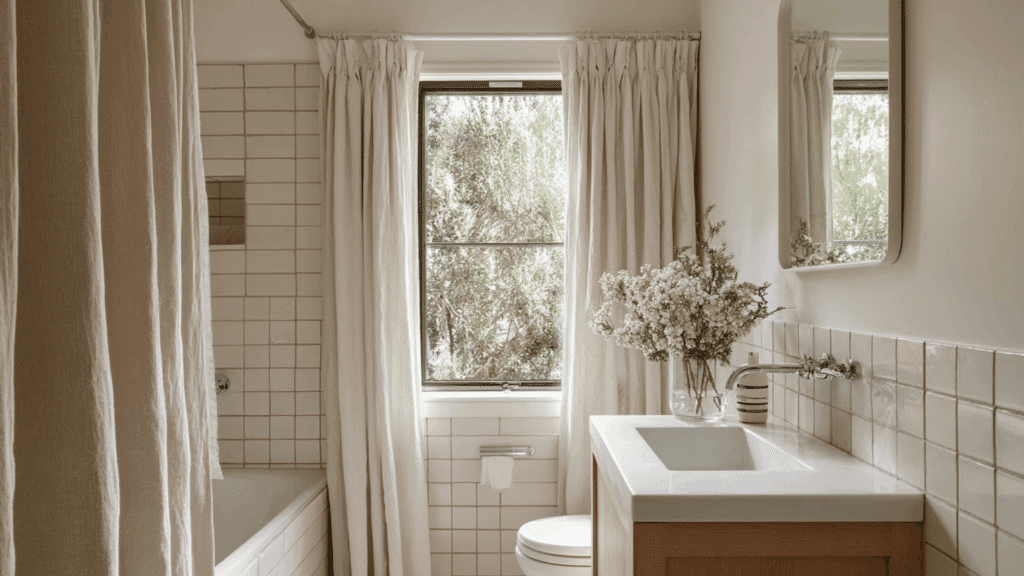
Bathrooms require moisture-resistant curtains hung strategically.
Place rods 3 to 5 inches above the window frame, usually at 76 to 80 inches for typical bathroom windows. This provides privacy without excess fabric that collects humidity.
For small bathroom windows, mount rods closer to the frame. Ensure curtains end 1 inch above windowsills or counters to prevent water damage and mildew growth.
4. Dining Room

Dining rooms call for elegant curtain placement that doesn’t interfere with furniture.
Mount rods 5 to 7 inches above the window frame, reaching 94 to 100 inches on 8-foot ceilings. For formal dining spaces with 10-foot ceilings, go up to 112 to 118 inches.
Allow curtains just to kiss the floor or break slightly, creating a refined pooling effect that adds drama without tripping hazards.
Pros and Cons: High vs. Low Curtain Placement Table
High and low curtain placement each has trade-offs. Understanding both helps make the right choice for specific bedroom needs.
| Placement | Pros | Cons |
|---|---|---|
| High Placement (6-8 inches above frame) |
|
|
| Low Placement (2-4 inches above frame) |
|
|
Common Curtain Hanging Mistakes and Fixes
Getting the curtain height wrong is easy. These common mistakes make rooms look smaller and less polished, but the fixes are straightforward.
- Hanging rods at window frame height: Move rods 4 to 8 inches higher to create the illusion of taller ceilings and larger windows.
- Using curtains that are too short: Replace with panels that reach within half an inch of the floor for a complete, finished look.
- Placing rods too close to the window sides: Extend rods 3 to 6 inches beyond each side so curtains can fully clear the glass when open.
- Ignoring ceiling height when choosing rod placement: Adjust rod height based on whether ceilings are 8, 9, or 10 feet for proper proportions.
- Letting curtains puddle excessively on the floor: Trim or hem curtains to a slight break or hover for a cleaner appearance that won’t collect dust.
- Mounting hardware without checking the level: Use a level tool during installation to prevent crooked rods that make the entire room look off-balance.
To Conclude
Getting the curtain height right transforms how a bedroom looks and functions. Those extra inches above the window frame make ceilings feel higher and spaces more open.
But the principle stays the same: hang higher for better results. Avoiding common mistakes like short panels or low placement saves money and frustration.
Proper measurements and installation create professional-looking results that improve light control and privacy.
Small changes in rod placement shift the entire feel of a room. Take the time to measure correctly, mount securely, and choose the right curtain length. The impact is immediate and lasting.