

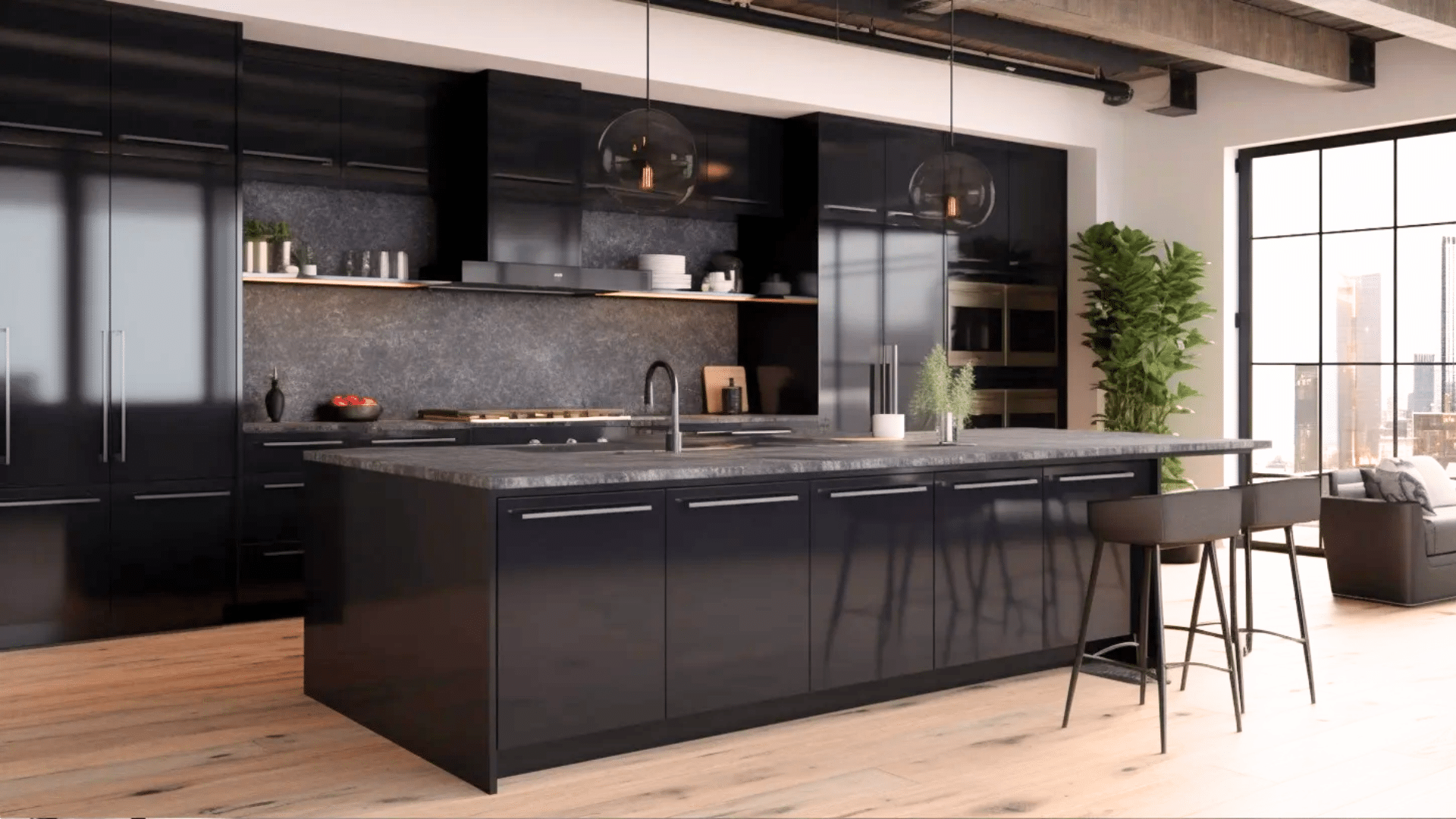
I looked into an all black kitchen because I wanted a space that feels clean, steady, and easy to manage. With so much mixed advice and strong opinions, the decision can feel confusing.
An all black kitchen uses black for cabinets, counters, or finishes to create one clear look. It is not about drama or showing off.
Many people like it because it hides stains, looks organized, and does not need constant styling to feel finished.
That is why this kitchen style is getting more attention in everyday homes, not just magazines.
In this guide, I have shared what an all black kitchen really means, why people choose it, and what makes it work in real spaces.
You will learn about layout, lighting, materials, and mistakes to avoid, so you can decide if it fits how you live.
Why Choose an All Black Kitchen?
Choosing an all black kitchen makes sense when you want a space that looks neat and put together every day.
Black creates a strong, clean look because it keeps the focus on shape and layout instead of many colors. It helps cabinets and counters feel solid and clear.
In small kitchens, black can actually feel calmer when paired with good lighting, simple lines, and fewer visual breaks.
In larger kitchens, black fills the space without making it feel empty or cold. This balance is why black works at many sizes.
Modern homes often use open layouts, simple finishes, and mixed materials, and black fits right in.
It pairs well with wood, stone, metal, and soft lighting.
The style stays flexible and easy to update with small changes like hardware or stools, which makes it practical for long-term use in real homes.
Top All Black Kitchen Design Ideas and Inspiration
These ideas focus on balance, comfort, and everyday use. Each one shows how black can feel practical, not heavy, when paired with the right details.
1. Matte Black Cabinets with Warm Wood Accents
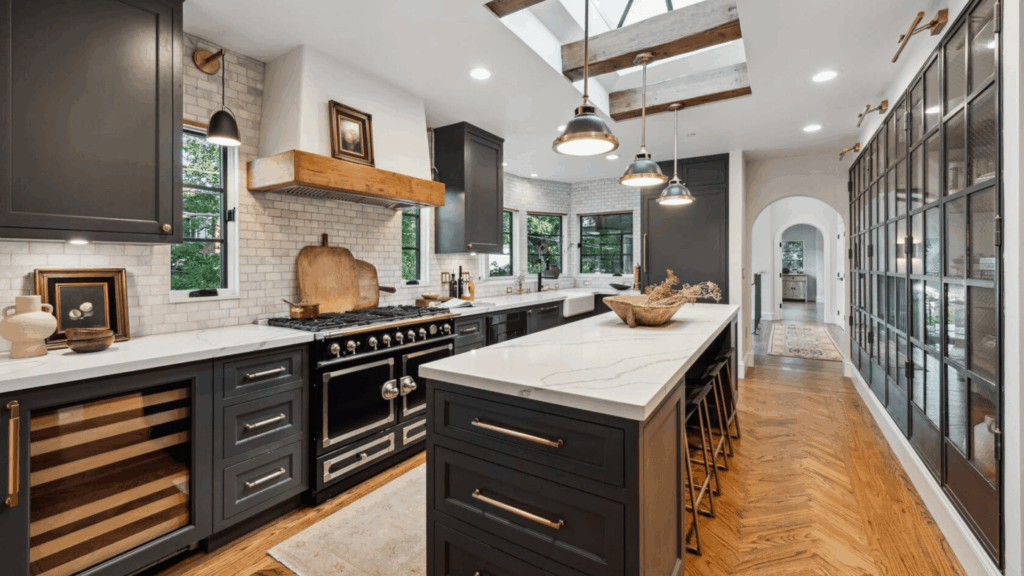
Matte black cabinets create a calm base that feels solid and clean. When you add warm wood accents, the space will feel more balanced and easier to live with.
Wood shelves, ceiling beams, or a butcher block island help soften the dark color without breaking the look.
This mix works well in both small and large kitchens because it adds contrast in a simple way.
The matte finish also reduces glare and fingerprints, which makes daily cleaning easier while keeping the kitchen looking neat and grounded.
2. Black Cabinets Paired with Light Stone Countertops
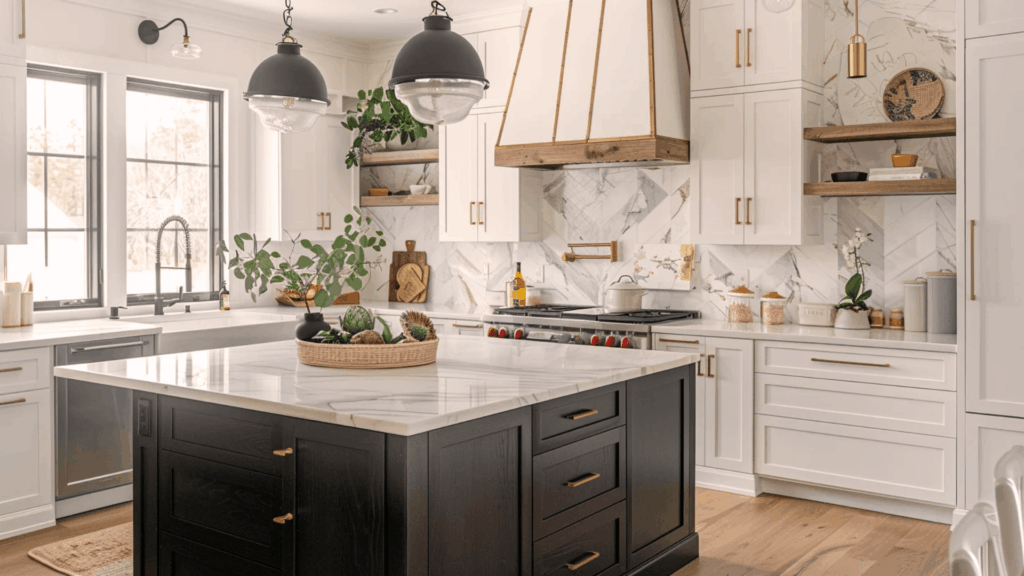
Black cabinets paired with light stone countertops create a clear and balanced look. I like this combination because the lighter surface breaks up the dark color without feeling busy.
Stone options like marble, quartz, or light granite reflect light and help the kitchen feel more open.
This pairing works especially well in smaller kitchens where contrast matters more. The stone also adds texture, which keeps the space from looking flat.
Together, black cabinets and light counters create a kitchen that feels clean, steady, and easy to maintain.
3. All Black Kitchen with Brass or Gold Hardware
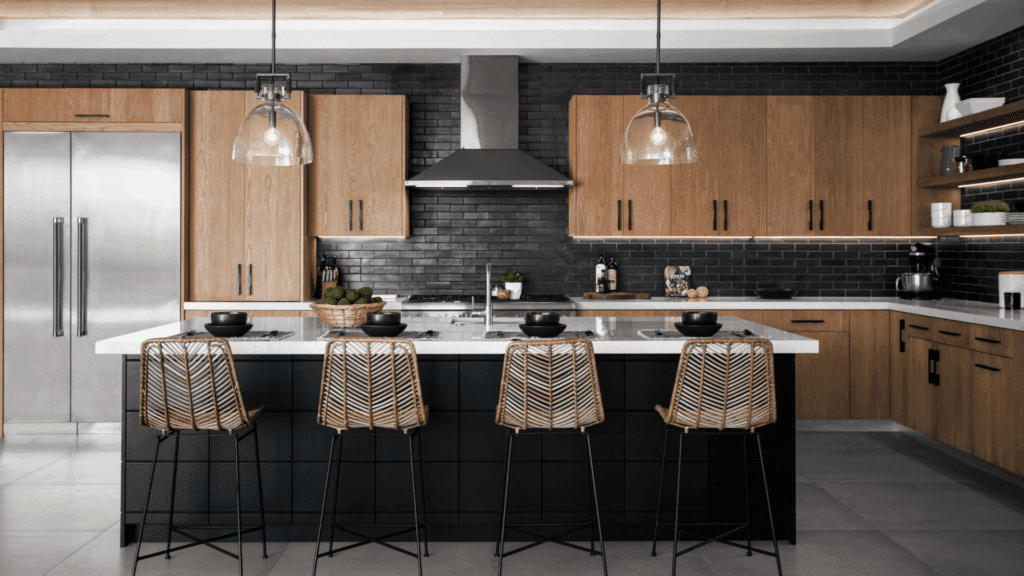
An all black kitchen feels warmer when brass or gold hardware is added. These finishes stand out without overpowering the space.
Handles, knobs, or faucets in warm metal tones break up the dark surfaces and add contrast in a simple way.
This choice works well in modern homes that still want a bit of softness. The metal also reflects light, which helps the kitchen feel brighter.
Small details like this can make an all black kitchen feel more welcoming and less heavy.
4. Black Cabinets and Black Backsplash in One Finish
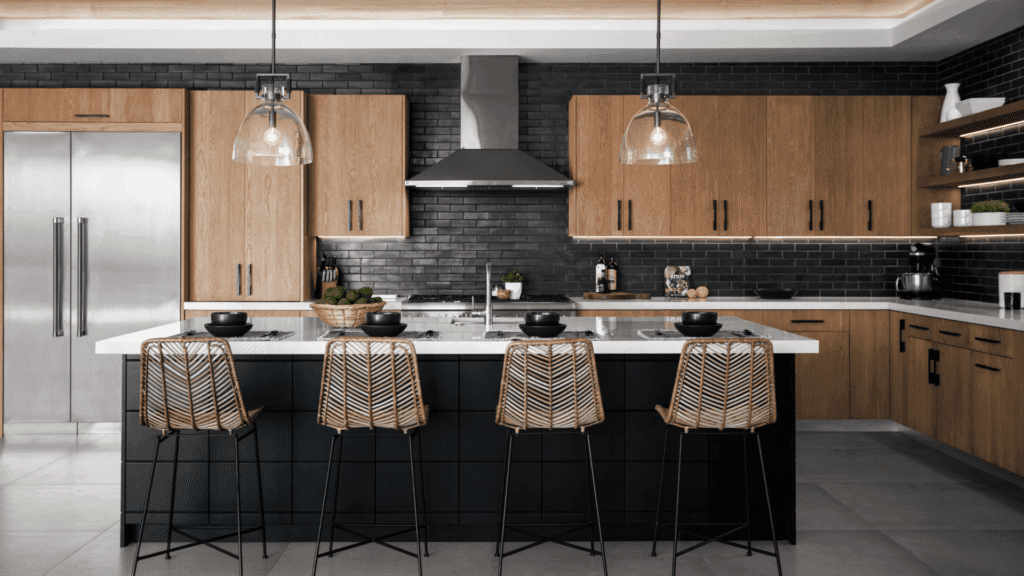
Using the same black finish for cabinets and the backsplash creates a smooth and connected look. I find this approach works best when the kitchen has good lighting and clean lines.
Keeping the finishes consistent reduces visual breaks, which helps the space feel calm and organized.
This idea suits modern kitchens with simple layouts and minimal decor.
To avoid a flat look, mixing textures like matte cabinets with a slightly textured backsplash makes a big difference while keeping the color uniform.
5. Black Kitchen with Open Wooden Shelves
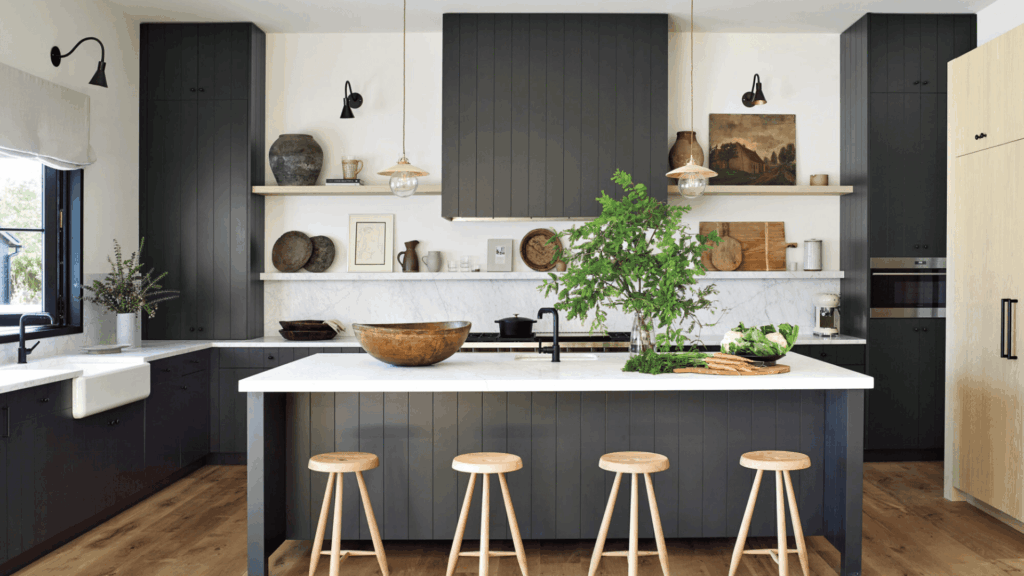
Open wooden shelves bring balance to an all black kitchen. It lightens the space without adding another color.
Wood shelves give the eye a place to rest and make the kitchen feel more lived in. They also allow you to show everyday items like dishes or jars, which adds warmth in a natural way.
This works well in smaller kitchens where closed black cabinets may feel too heavy. The mix keeps the kitchen open and easy to use.
6. Black Lower Cabinets with Lighter Upper Cabinets
Black lower cabinets paired with lighter upper cabinets help balance the space. I like this setup because it keeps the kitchen grounded while making the top feel open.
The lighter uppers reflect light and prevent the room from feeling closed in.
This idea works well in kitchens with low ceilings or limited windows. It also makes the space feel taller.
Keeping the lower cabinets black helps hide scuffs and wear, while the lighter top keeps the overall look clean and easy to live with.
7. All Black Kitchen with Large Windows
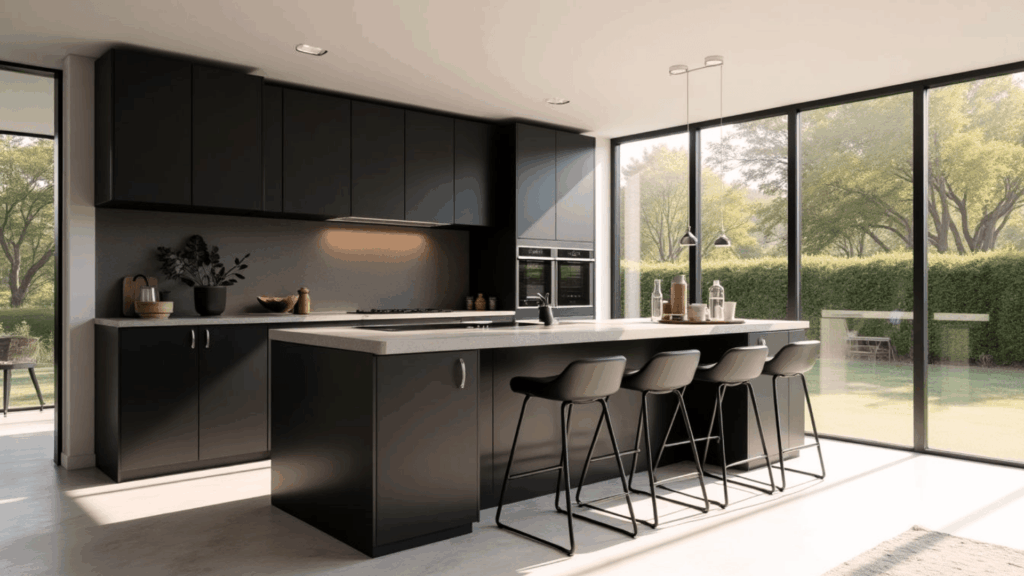
Large windows make an all black kitchen feel open and comfortable. Natural light changes how black surfaces look throughout the day.
Sunlight softens the color and keeps the kitchen from feeling dark.
This idea works best when windows are left simple, without heavy coverings. The view outside also adds contrast and depth.
With enough natural light, black cabinets and counters feel calm and fresh, even in smaller spaces where light matters the most.
8. Black Cabinets with Concrete Countertops
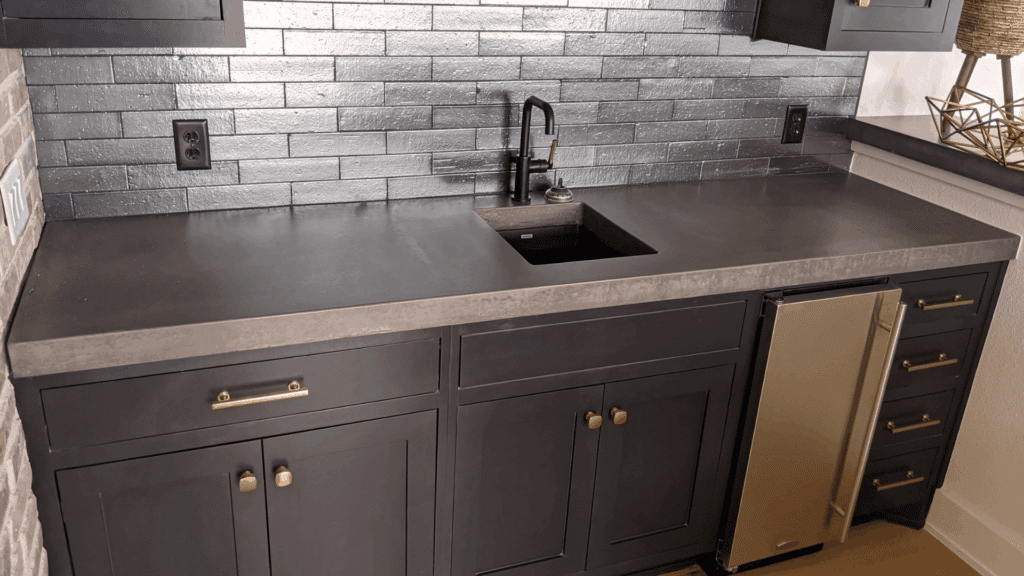
Concrete countertops pair well with black cabinets for a clean and steady look. I like this mix because concrete adds texture without adding color.
The slightly rough surface keeps the kitchen from feeling too smooth or flat. This style fits modern and industrial homes well.
Concrete is also durable and handles daily use with ease.
When combined with black cabinets, the kitchen feels strong, simple, and practical for everyday cooking and cleaning.
9. Black Kitchen Island with Seating Contrast
A black kitchen island creates a strong center point in the space. Adding seating in a lighter or natural material balances the dark color.
Wood stools, light fabric seats, or metal frames help break up the black without taking attention away from the island.
This contrast keeps the kitchen feeling open and welcoming. It also makes the island more inviting for daily meals or quick chats.
The mix of dark and light makes the island useful and visually comfortable.
10. Glossy Black Cabinets for a Modern Look
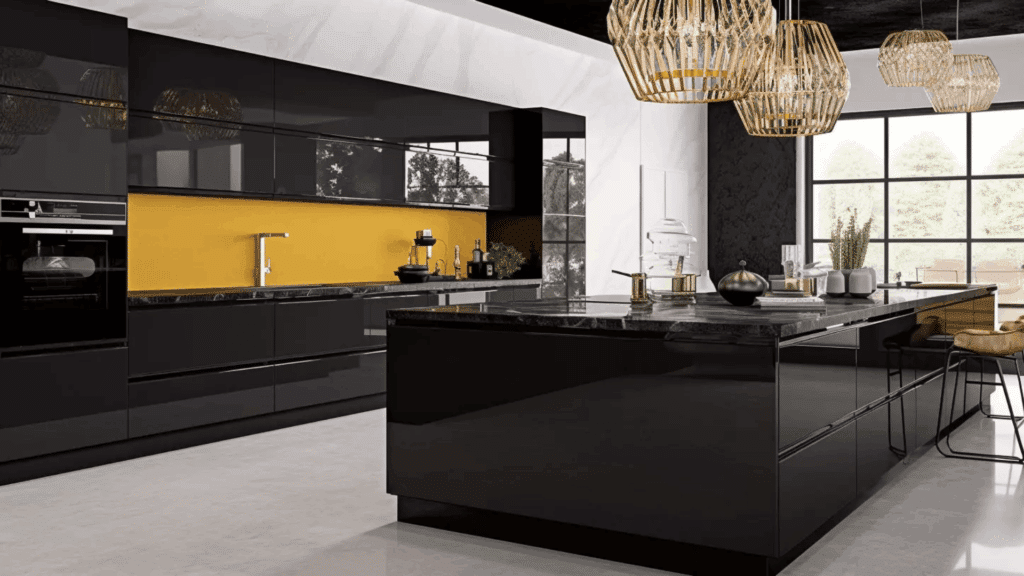
Glossy black cabinets bring a smooth and modern feel to the kitchen. You will notice that they reflect light, which helps the space feel brighter than matte finishes.
This works well in kitchens with good lighting or open layouts.
The shine adds depth and keeps the black from feeling heavy. While glossy finishes may show fingerprints more easily, regular wiping keeps them clean.
This style fits homes that want a sharp, clean look with minimal detail.
11. Black Cabinets with Stainless Steel Appliances
Black cabinets paired with stainless steel appliances create a clean and practical look.
Stainless steel reflects light and keeps the kitchen from feeling too dark. This setup works well in modern and transitional homes.
Appliances combine in but still stand out enough to break up the black surfaces.
The result is a balanced kitchen that feels easy to use and simple to maintain.
12. Black Kitchen with Soft Under-Cabinet Lighting
Soft under-cabinet lighting makes an all black kitchen easier to use and enjoy.
This lighting helps countertops stand out and keeps the space from feeling dark. Warm light works best because it softens the black surfaces.
It also adds a calm glow in the evenings. Under-cabinet lighting improves function while making the kitchen feel more welcoming without changing the color scheme.
13. Black Cabinets with Patterned Tile Backsplash
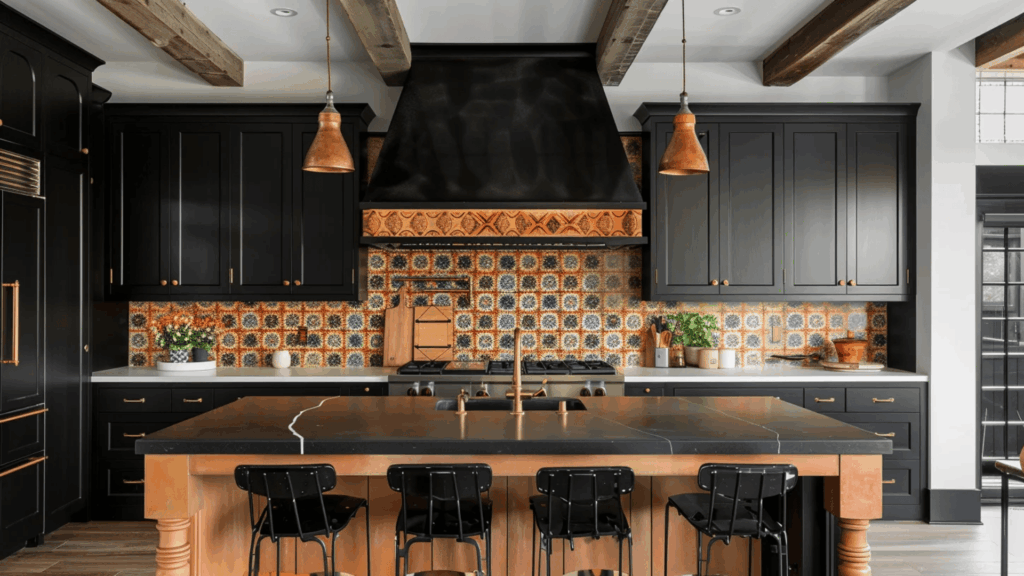
A patterned tile backsplash adds interest to black cabinets without overwhelming the space.
Light or neutral tiles create contrast and keep the kitchen from looking flat. The backsplash becomes a focal point while the cabinets remain steady.
This idea suits kitchens that want a bit of detail without adding clutter.
The pattern adds depth while keeping the overall look balanced.
14. Black Kitchen with Mixed Matte and Smooth Finishes
Mixing matte and smooth finishes helps an all black kitchen feel layered.
This contrast adds depth without adding new colors. Different finishes reflect light in different ways, which keeps the space from feeling dull.
This approach works well in modern kitchens that rely on texture instead of color.
The mix keeps the kitchen interesting while staying clean and simple.
15. Black Cabinets with Light Wood Floors
Light wood floors pair well with black cabinets by adding warmth and balance. I like how the lighter floor keeps the kitchen from feeling too heavy.
Wood tones soften the black and make the space feel more comfortable.
This combination works well in open layouts where the kitchen connects to other rooms. The contrast also helps define the kitchen area without using walls.
Light wood floors are practical and make the black cabinets feel easier to live with every day.
16. Black Kitchen with Handle-Free Cabinets
Handle-free cabinets give an all black kitchen a clean and smooth look.
Without handles, the cabinets feel more modern and less busy. This works well in small kitchens where details can add noise.
Push-to-open or recessed pulls keep the space functional.
The result is a kitchen that feels calm, organized, and easy to maintain with fewer surfaces to clean.
17. Black Cabinets Paired with Stone Walls or Accents
Stone walls or accents add texture and balance to black cabinets. It breaks up the dark color without adding strong contrast.
Natural stone adds depth and keeps the kitchen from feeling flat. This idea works well in larger kitchens where extra texture helps fill the space.
The mix of stone and black creates a steady and grounded look that feels natural and lasting.
18. Black Kitchen with Industrial-Style Lighting
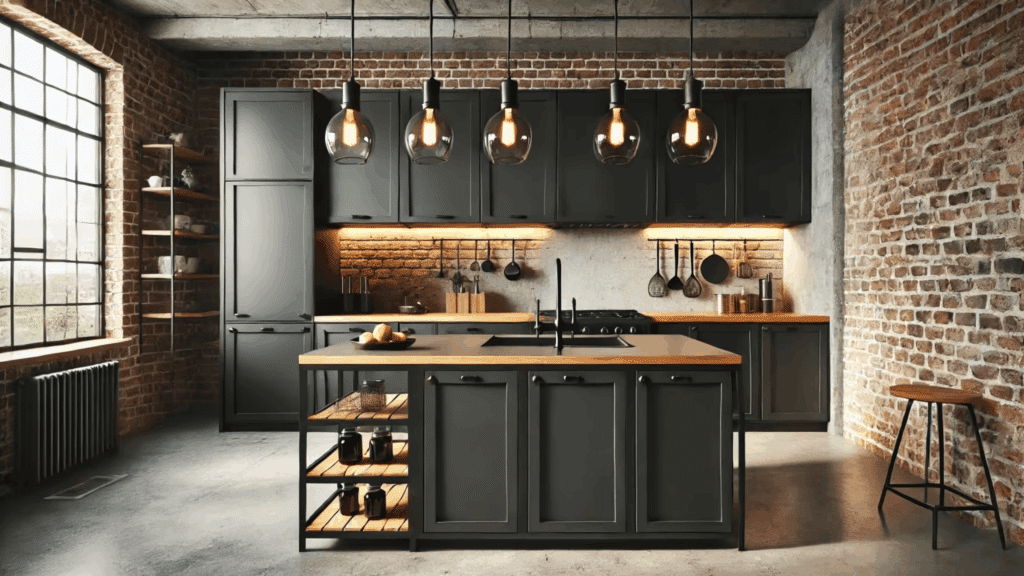
Industrial-style lighting adds structure to an all black kitchen. I like using metal pendants or simple exposed bulbs to bring in contrast without adding color.
These fixtures stand out against black surfaces and help define key areas like the island or sink.
The lighting also adds a practical edge, making the kitchen easier to work in.
This style works well in modern or loft-style homes where clean lines and simple materials matter. The result feels balanced, not harsh.
19. Black Cabinets and Black Sink for a Clean Flow
Using a black sink with black cabinets creates a smooth and connected look.
The sink blends in, which makes the space feel calm and organized. Matte finishes work best because they reduce water spots and glare.
This idea suits kitchens that aim for a simple, steady look with fewer visual breaks and an easy-to-maintain setup.
20. Black Kitchen with Subtle Gray or Charcoal Tones
Adding subtle gray or charcoal tones helps soften an all black kitchen. Using these shades in counters, walls, or backsplashes creates a gentle contrast.
The colors stay close enough to black to keep the look unified.
This approach works well when pure black feels too strong on its own.
Gray tones reflect light slightly better, which helps the kitchen feel open while still keeping the dark color scheme intact.
21. All Black Kitchen Balanced with Plants or Greenery
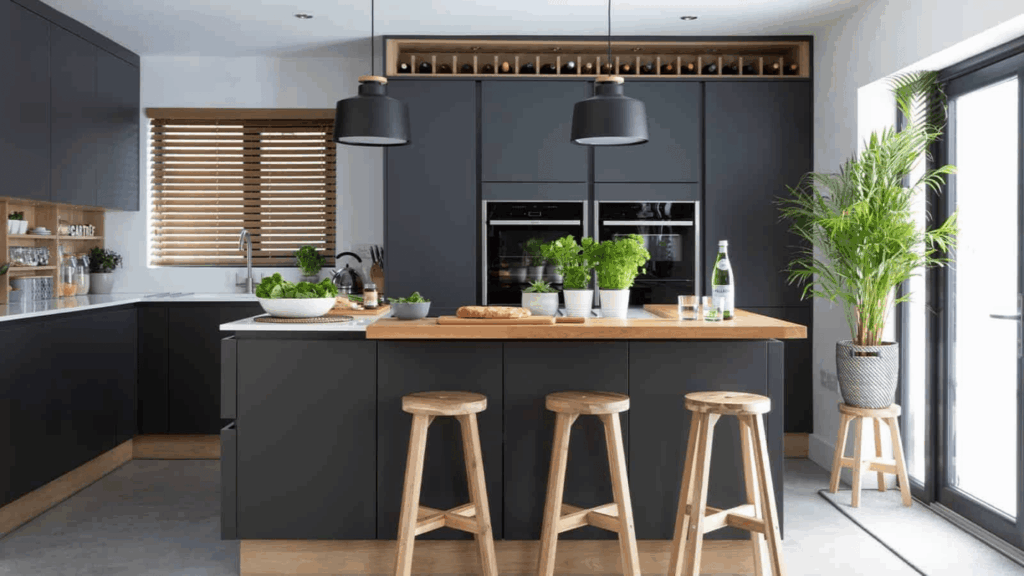
Plants or greenery bring life into an all black kitchen without changing the color scheme.
I like adding small potted plants, herbs, or a simple branch near a window. Green stands out against black and makes the space feel fresh and lived in.
This works well in both small and large kitchens because plants do not take up much space.
Natural light helps them thrive and keeps the kitchen from feeling too dark or closed in.
Pros and Cons of an All Black Kitchen
An all black kitchen can feel simple and steady when planned well. This section helps you weigh the good and the not-so-good before choosing it.
|
Aspect |
Details |
|
Pros |
Black hides stains, marks, and wear better than light colors. It keeps the kitchen looking neat even on busy days. It also creates a clean, pulled-together look that works well with wood, stone, and metal finishes. |
|
Cons |
Without enough lighting, black can make a kitchen feel closed in. Fingerprints, dust, and water spots can show more on some black finishes, which may mean more frequent wiping. |
|
Best for |
This style suits people who like simple color palettes and low visual clutter. It works well for those who prefer modern layouts and do not want to change colors often. |
How to Balance an All Black Kitchen?
Balancing an all black kitchen is about making small choices that keep the space comfortable. Texture plays a big role because flat black surfaces can feel dull on their own.
Using wood grain, stone, or matte finishes adds depth without breaking the color scheme.
Contrast also helps, even in small amounts. Light countertops, metal hardware, or a simple backsplash can break up the black and guide the eye.
These small changes keep the kitchen from feeling heavy. Lighting matters more than color in this style.
Natural light, under-cabinet lights, and warm bulbs prevent the space from feeling dark or closed in.
Good lighting keeps black looking clean and usable while making the kitchen feel open enough for daily cooking and gathering.
Tips to Design an All Black Kitchen
Good planning makes this style easier to live with. Small choices early on can prevent issues later.
- Plan layout first: Keep the work triangle clear so cooking feels easy. Open paths help black surfaces feel less closed in.
- Choose finishes carefully: Mix matte and smooth surfaces to add depth. Wood, stone, and metal keep the space from looking flat.
- Pay attention to lighting: Add under-cabinet and ceiling lights. Good lighting keeps the kitchen bright and usable.
- Avoid using only one texture: Too much of the same finish can make the kitchen feel dull and heavy.
- Do not skip contrast: Light counters, hardware, or stools help balance the dark color.
- Test samples first: Black shades vary, so check them in your lighting before committing.
Conclusion
An all black kitchen stands out because it keeps things simple while still feeling strong and put together.
You have seen how this style creates a clean look, works in both small and large spaces, and fits well in modern homes when planned with care.
What matters most is not copying a photo, but thinking through how you use your kitchen every day.
When you plan the layout, lighting, and materials first, black becomes easier to live with and enjoy long-term.
If you are thinking about a refresh or a full redesign, take your time and make choices that support how you cook, clean, and gather.
I would love to hear your thoughts. Have you tried an all black kitchen, or are you still deciding?
Share your experience or questions in the comments below.