

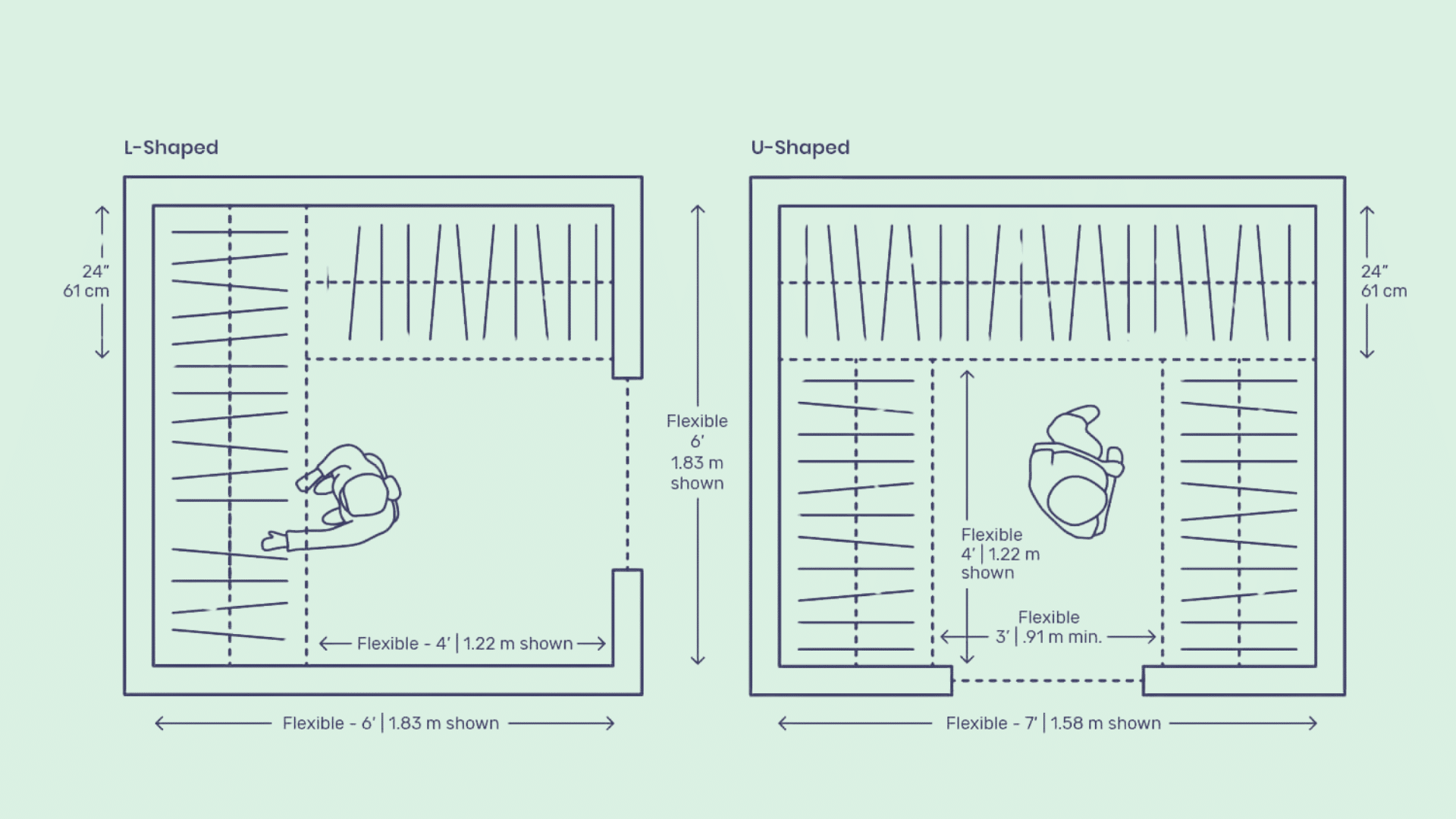
Planning a walk-in closet takes more than guessing how much space looks right. I’ve seen many layouts fail simply because the dimensions were off.
If the space is too small, moving around feels tight. If it’s too large, storage can feel spread out and awkward.
That’s why getting the measurements right from the start matters for you.
This guide explains walk-in closet dimensions in a clear and simple way. I cover standard sizes, minimum space needs, and common layout options used in homes today.
You’ll also learn how much room is needed for hanging clothes, shelves, and clear walkways.
The goal is to help you plan smarter and avoid sizing mistakes that are hard to fix later.
By the end, you’ll know what dimensions work best for your space and how to plan a closet that feels comfortable and easy to use every day.
What Is a Walk-In Closet?
A walk-in closet is a storage space you can step into to store clothes, shoes, and accessories.
Unlike smaller closets, it gives you enough room to walk inside and move around comfortably.
This is the main difference between a walk-in closet and a reach-in closet, and it’s where walk-in closet dimensions play an important role.
A reach-in closet stays shallow, and you access items from outside using sliding or hinged doors.
A walk-in closet feels more like a small room made for storage. In modern homes, walk-in closets are often used for more than just hanging clothes.
Many people use them for shoe storage, folded items, drawers, mirrors, and even small seating areas.
Some walk-in closets also double as dressing spaces, making daily routines easier.
The added space helps keep items organized and easy to reach, which is why they are popular in master bedrooms and new home designs.
Standard Walk-In Closet Dimensions
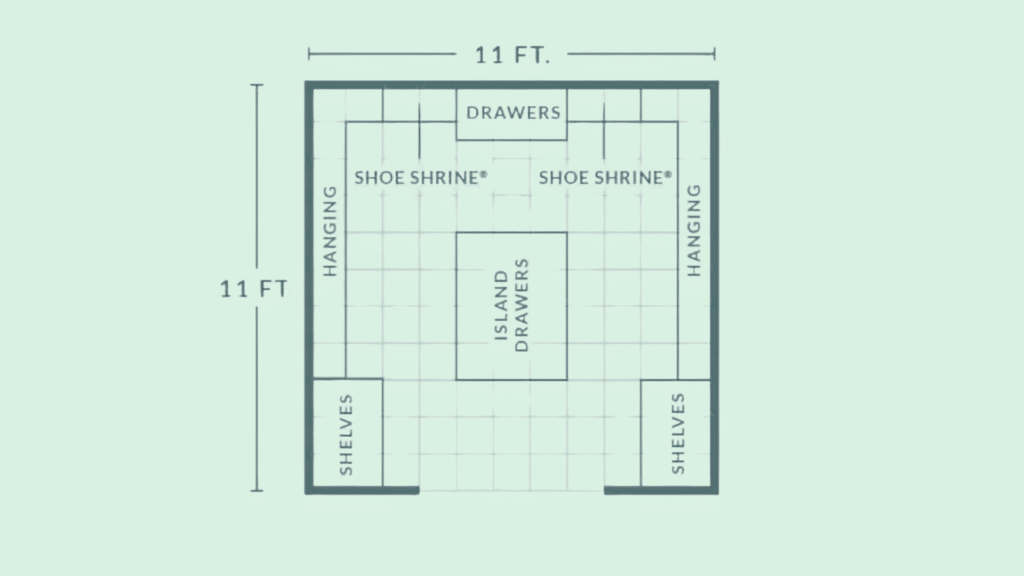
Standard walk-in closet dimensions help make the space easy to use and not feel cramped. The minimum size for a walk-in closet usually starts at about 4 feet by 4 feet.
This allows basic hanging space and a small walking area. Anything smaller often feels tight and hard to move in.
In most homes, the average walk-in closet size ranges from 5 feet by 7 feet to 6 feet by 8 feet.
This size works well for hanging clothes on one or two sides with a clear path in the middle. It fits everyday storage needs without wasting space.
For daily comfort, a comfortable walk-in closet size is closer to 7 feet by 10 feet or larger.
This gives better walking space, room for shelves and drawers, and makes getting dressed feel easier and less crowded.
Factors that Affect Ideal Walk-In Closet Dimensions
Several practical details shape how large a walk-in closet should be. These points help match the closet size to real daily use, not just floor plans.
- Room Size and Available Floor Space: The bedroom layout limits how much space you can dedicate to a closet. Walls, windows, and nearby doors all affect usable floor area.
- Number of Users: A shared closet needs more hanging space, shelves, and walking room than one used by a single person.
- Storage Needs: Hanging clothes requires depth, while shelves and drawers need width. Shoe racks and accessories also add to space needs.
- Door Type and Clearance: Swing doors need extra clearance, while sliding or pocket doors help save space inside the closet.
Walk-In Closet Dimensions by Layout Type
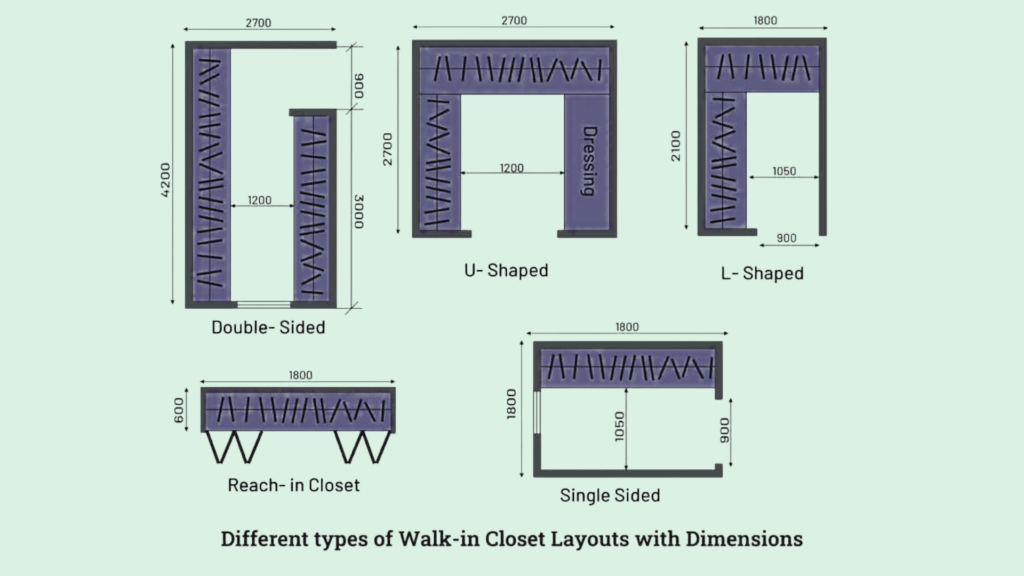
Different layouts need different amounts of space to work well. Knowing how each option functions makes planning easier and helps avoid tight walkways or wasted areas.
1. Single-Sided Walk-In Closet Size
A single-sided walk-in closet has storage on one wall and open space on the other. This layout works best in narrow rooms.
The recommended width is at least 4 feet, with storage taking up about 24 inches and the rest left for walking.
A length of 6 to 8 feet is common.
This setup keeps things simple and easy to reach. It’s a good choice for small bedrooms where space is limited but a walk-in feel is still desired.
2. Double-Sided Walk-In Closet Size
A double-sided layout places storage on two opposite walls with a walkway in between. Walk-in closet dimensions matter here because this layout needs more width to stay comfortable.
The ideal width is around 6 to 7 feet, allowing two 24-inch storage areas and a clear path in the center.
Length usually ranges from 6 to 10 feet.
This design works well for shared closets and offers balanced storage. It allows better organization without feeling cramped when moving around.
3. U-Shaped Walk-In Closet Size
A U-shaped closet uses three walls for storage, which maximizes space. This layout needs more room to avoid tight corners.
The minimum dimensions of a U-shaped walk-in closet should be about 7 feet, with a depth of 7 to 10 feet.
The open center space is important for movement and access.
This design suits larger bedrooms and works well for people with heavy storage needs. It allows room for drawers, shelves, and hanging areas together.
4. Corner and Custom Layout Considerations
Corner and custom layouts depend heavily on the room shape.
Sloped ceilings, angled walls, or unused corners change how space is used, which makes walk-in closet dimensions especially important.
The key focus should be on keeping at least 36 inches of clear walking space.
Storage depth still matters, even in custom designs. These layouts work best when planned carefully to avoid awkward gaps.
They are useful in older homes or rooms with unusual layouts where standard designs won’t fit.
Tips to Choose the Right Walk-In Closet Size
Smart planning helps the closet feel open and easy to use. Small choices made early can prevent tight walkways and wasted storage later.
- Balance Storage and Walking Space: Leave at least 36 inches for walking. Too much storage can make the space feel crowded and hard to move through.
- Plan for Future Needs: Think about how storage needs may change. Extra shelves or adjustable rods help the closet stay useful over time.
- Choose Layout Over Extra Square Footage: A well-planned layout often works better than a larger but poorly organized space. Focus on access and flow first.
How to Design the Best Walk-in Closet?
A good design makes daily use easier and keeps the space organized. Focusing on layout, storage, comfort, and walk-in closet dimensions helps the closet work well over time.
1. Plan the Layout First
Start with the layout before choosing shelves, drawers, or finishes.
The layout controls how you move inside the closet and how easy it feels to use, and walk-in closet dimensions help guide these decisions.
Make sure there is at least 36 inches of walking space so doors and drawers open without blocking movement.
Choose between a single-sided, double-sided, or U-shaped layout based on room width.
A clear path matters more than adding extra storage. Good flow keeps the closet comfortable and easy to use every day.
2. Choose Storage that Fits Your Needs
Storage should match how you use your clothes. Long hanging space works best for dresses and coats, while shelves fit folded items.
Use adjustable rods and shelves so the layout can change as needs change.
Drawers help organize small items like socks and accessories.
Avoid filling every wall with storage units. Leaving some open areas improves movement and keeps the space from feeling crowded or hard to manage.
3. Keep Lighting Simple and Effective
Lighting helps you see clearly and use the closet with ease. Use overhead lighting to brighten the entire space.
Add lights near shelves, drawers, and hanging rods to reduce shadows. Even lighting makes it easier to find items and keeps the space feeling open.
Avoid placing lights only in the center, as corners may stay dark.
Good lighting improves both function and comfort during daily use.
4. Focus on Function Over Style
A good-looking closet should also work well. Choose materials that are strong and easy to clean.
Doors and drawers should open smoothly without blocking walkways. The main goal is easy access to everything inside.
Simple designs often work better than complex ones.
When function comes first, the closet stays useful, organized, and comfortable long after styles change.
Common Walk-In Closet Dimensions Mistakes
Small planning errors can make a closet hard to use every day. Paying attention to layout and lighting helps avoid long-term frustration.
- Ignoring Walkway Clearance: Narrow walkways make moving around uncomfortable. Always keep at least 36 inches clear for easy access.
- Overcrowding Storage Areas: Too many shelves and rods can block movement. Crowded storage also makes items harder to reach.
- Poor Lighting Placement: Bad lighting creates shadows in storage areas. Lights should cover hanging space, shelves, and walkways evenly.
- Choosing Style Over Function: Good looks matter, but function comes first. Storage and access should always work before design details.
Conclusion
Getting the size right is what makes a closet work well every day. The right walk-in closet dimensions give you enough room to move, reach your clothes, and keep everything organized.
Standard sizes, clear walkways, and the right layout all play a big role in how the space feels and functions.
When these basics are planned early, you avoid tight corners, wasted space, and storage that never feels quite right.
Before building or remodeling, take time to measure carefully and think about how you will use the closet now and later. A little planning goes a long way.
Use this guide as a reference while designing your layout and storage.
If you’ve planned or built a walk-in closet before, share what worked or didn’t in the comments below. Your experience could help others plan smarter.