

Your home gym shouldn’t double as a place where laundry goes to die.
Yet somehow that bench press becomes a very expensive clothes hanger when the room feels off. Bad design kills motivation faster than a 5 am alarm.
When you’re tripping over dumbbells or squeezing between equipment, workouts become a chore before they start.
Good design isn’t about looking like a fitness magazine. It’s about creating a space where you actually want to train.
Wise equipment choices matter too. Multifunctional systems replace multiple machines, giving you more breathing room and less clutter.
Whether you’re working with a spare bedroom or a basement corner, the proper layout paired with the right gear makes all the difference.
Let’s break down design approaches that work for real spaces.
Understanding the Role of Design in Home Gym Planning
Creating a functional workout space at home isn’t just about fitting equipment into a room.
Effective home gym design starts with understanding how equipment scale, room flow, and visual balance work together.
Think of it like arranging furniture; you wouldn’t cram a king-sized bed into a small bedroom just because you want one. The same logic applies here.
Here’s what makes the difference:
- Start with equipment research early: Browsing a wide range of home gym setups commonly used in residential spaces gives you a realistic sense of what fits where. This helps you make layout decisions before you’re stuck rearranging heavy dumbbells.
- Avoid the overcrowding trap: When equipment is packed too tightly, your workout space becomes stressful instead of motivating. Leave breathing room between pieces.
- Keep it flexible: Your training style might evolve. A good design supports strength training today and yoga tomorrow without requiring a complete overhaul.
The goal is to create a space that enhances your routine rather than limiting it. When design and function align, you’re more likely to actually use the space consistently.
Home Gym Design Ideas for Different Personal Styles
Your training environment should reflect how you work out. These design approaches cater to different aesthetics and workout preferences, helping you create a space that actually motivates you to train.
1. Pink-Themed Home Gym for a Bright and Inclusive Space
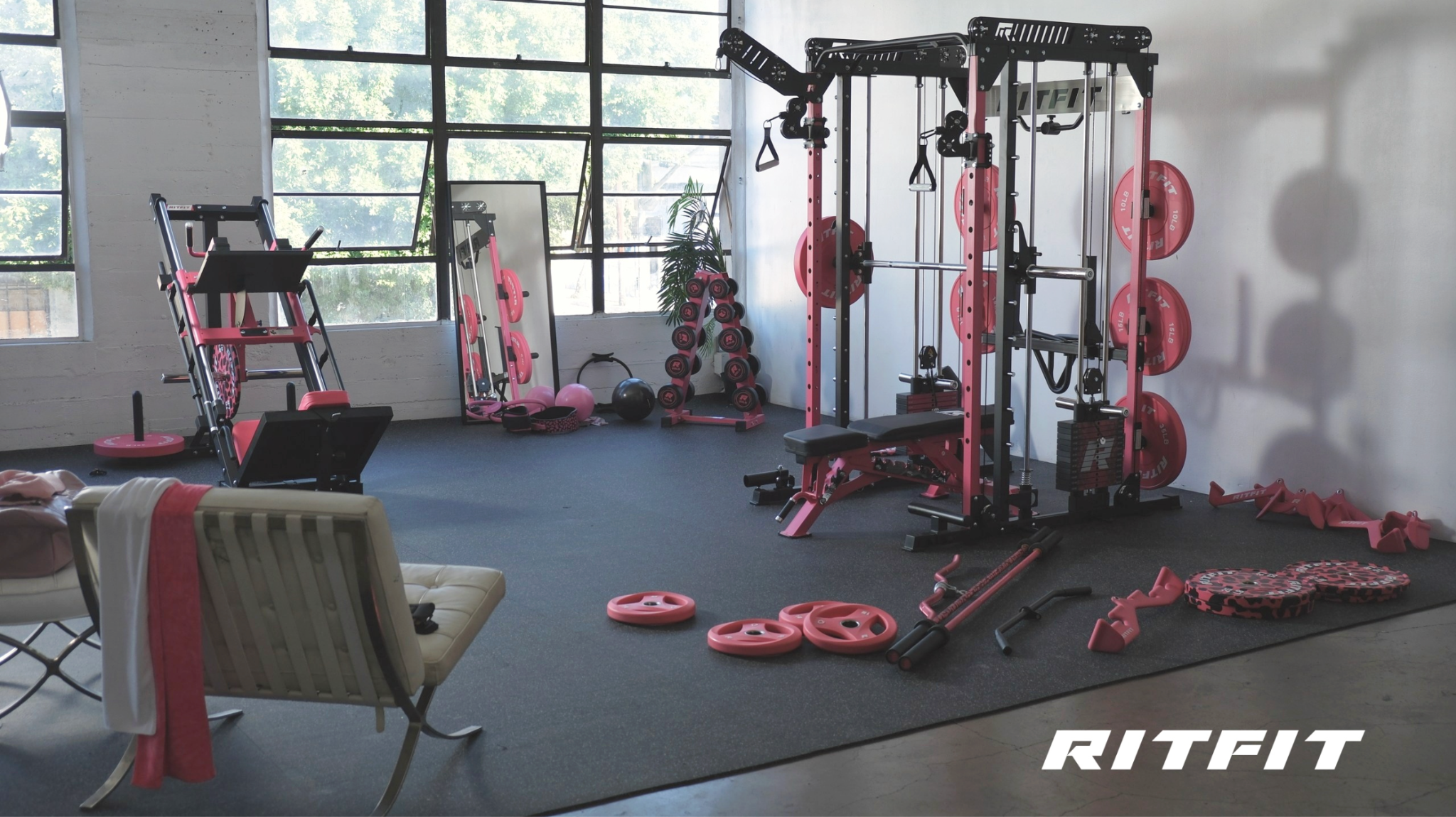
Pink equipment creates an uplifting workout space that breaks away from typical dark gym vibes. Start with soft pink walls, then add the RITFIT BUFFALO power rack in pink as your strength centerpiece.
Line one wall with matching pink dumbbells and kettlebells. Use white or light gray flooring to keep things bright, and add mirrors to expand the space visually.
- Best for: High-energy workouts and creating an empowering training environment.
- How RITFIT can help: RITFIT pink equipment collection includes the BUFFALO rack, dumbbells, and resistance bands for your complete feminine-energy gym.
2. Graffiti-Inspired Home Gym With an Urban Look
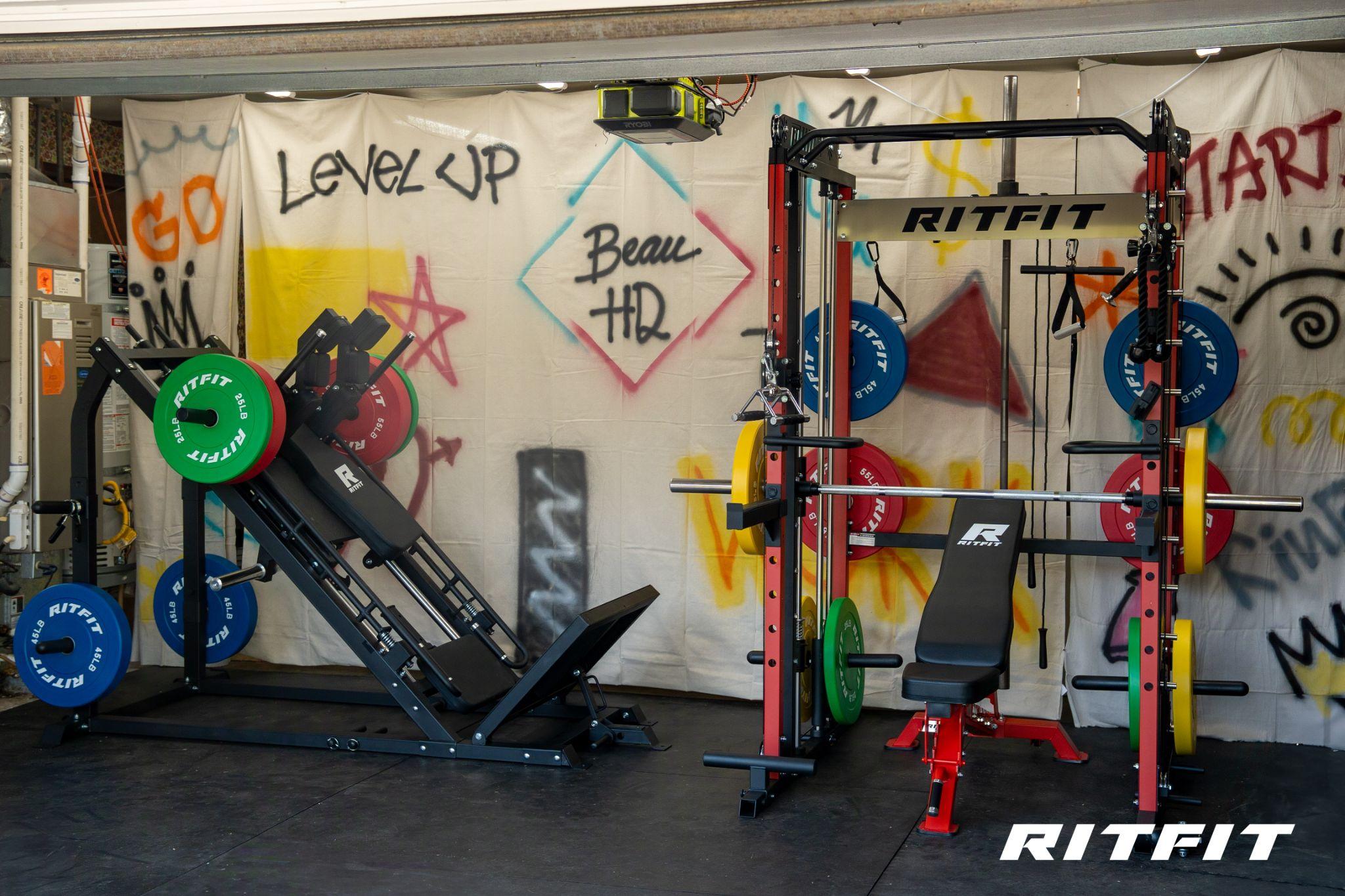
Bold wall art transforms your gym into a creative space with street energy. Paint one or two walls with graffiti-style murals while keeping others neutral for balance.
Install the RITFIT M1 Smith Machine against a plain wall as your functional anchor. Add colorful resistance bands, battle ropes, and bright kettlebells for urban flair. Finish with industrial lighting and black rubber flooring.
- Best for: Functional and mixed training styles.
- How RITFIT can help: The M1 Smith Machine’s sleek black frame anchors your space while colorful RITFIT accessories add urban energy.
3. Tech-Inspired Home Gym With a Central Training System
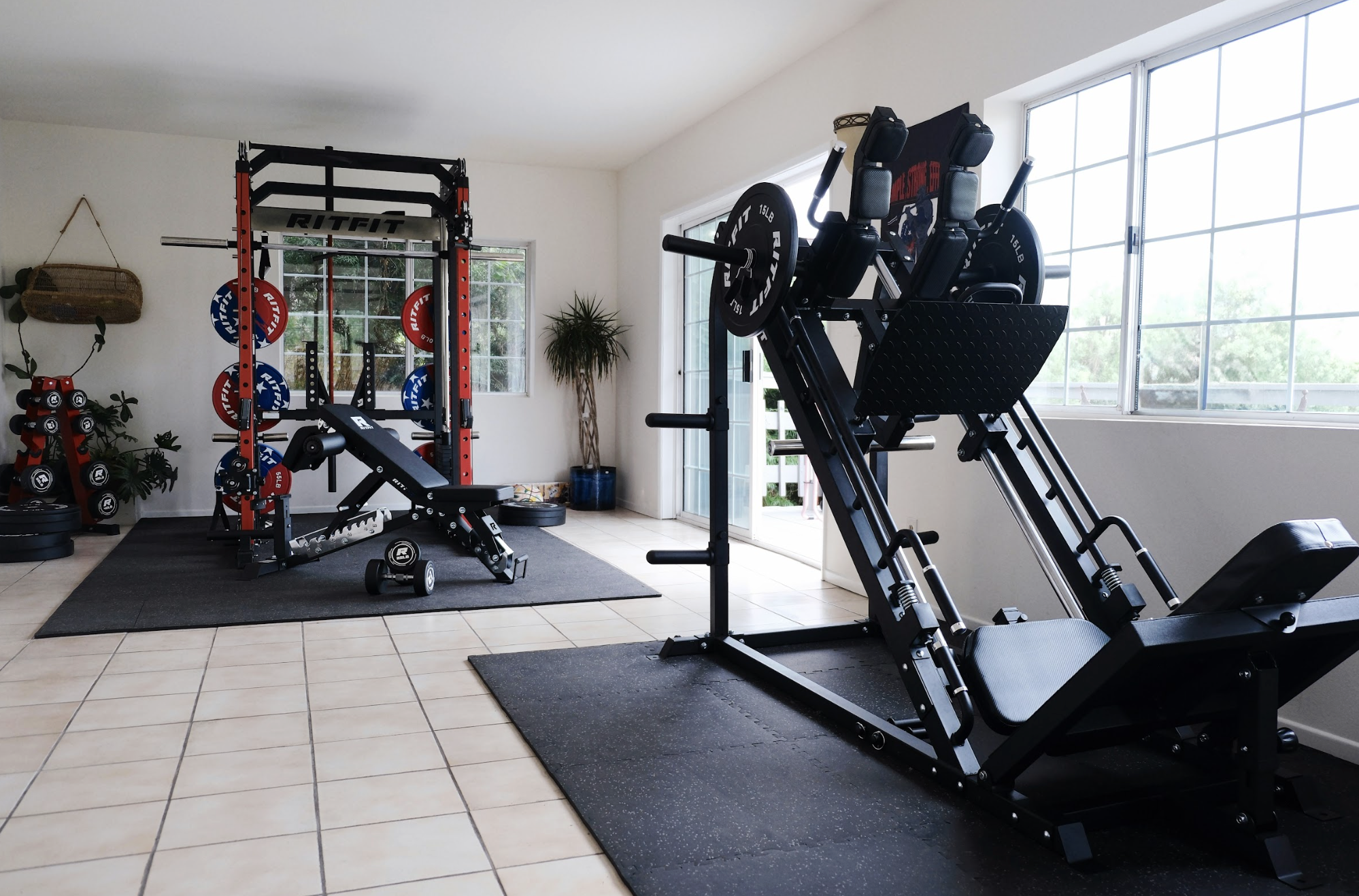
Clean lines and smart design create efficiency where everything has purpose. Center your layout around the RITFIT M1 Smith Machine as your multifunctional strength hub.
Add chrome finishes and LED strip lighting for a futuristic feel. Include a wall-mounted tablet for tracking workouts. Use black or gray rubber flooring, mount a large mirror, and organize cables with clips for that polished look.
- Best for: Strength-focused routines and serious lifters.
- How RITFIT can help: The M1 Smith Machine handles multiple exercises in one compact footprint, perfect for streamlined, tech-forward training spaces.
4. Natural Home Gym Using Wood and Neutral Finishes
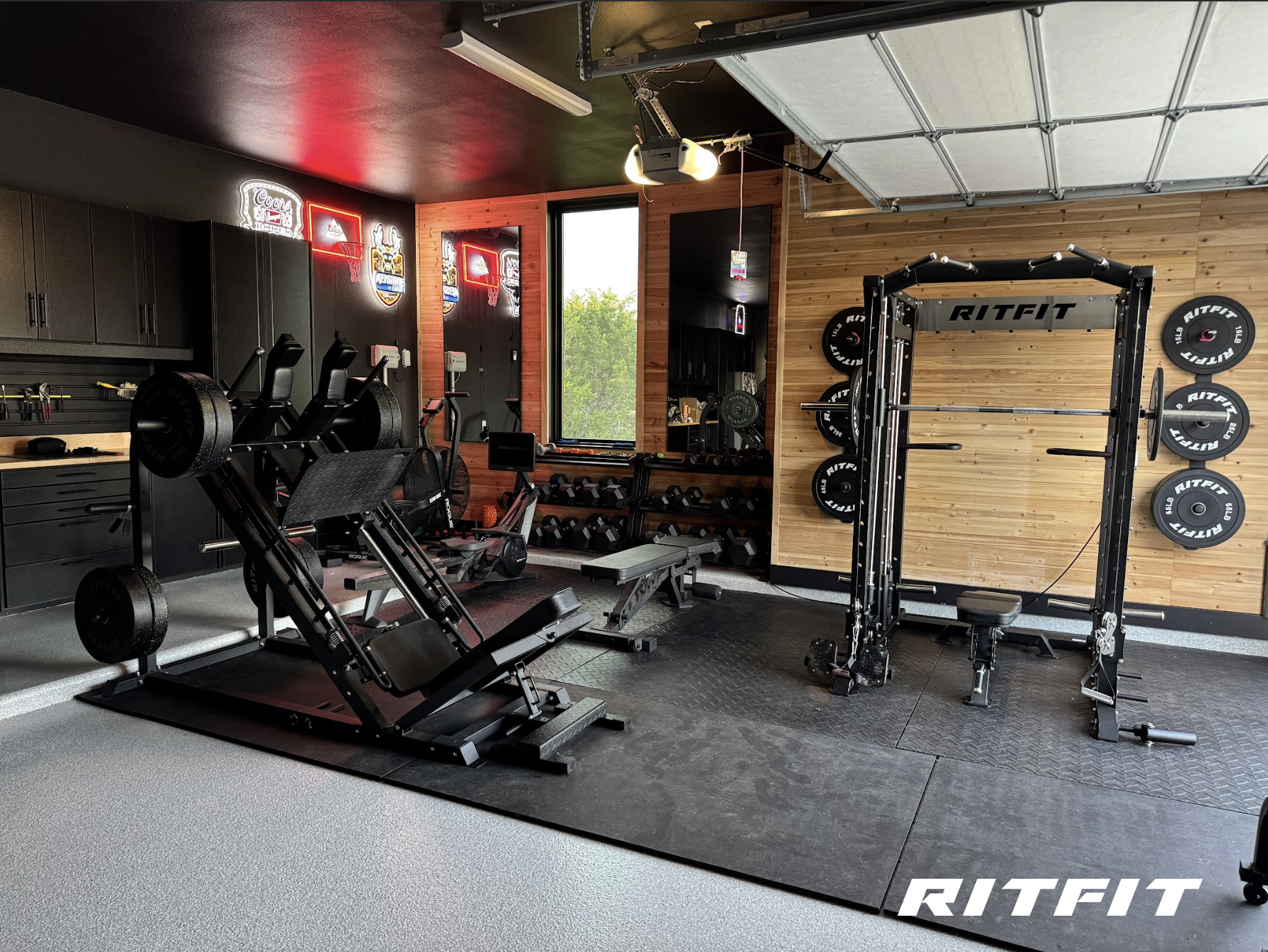
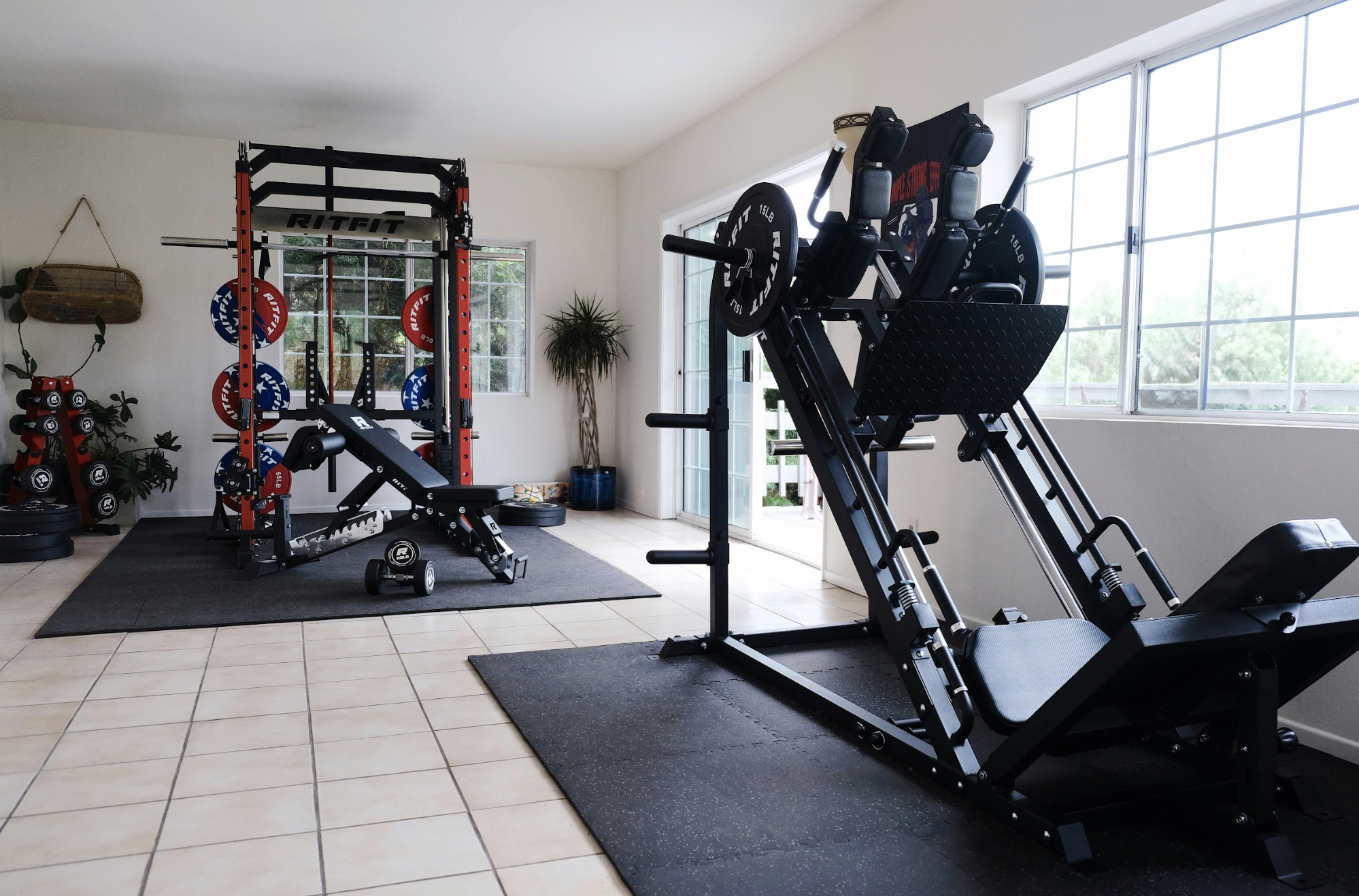
Warm tones and natural textures create a calm space that blends into your home. Start with wood-look flooring or cork mats, then paint walls in beige, cream, or light gray. Add the RITFIT BUFFALO rack in neutral colors as your strength station.
Include wood shelves, potted plants in corners, and natural fiber baskets for storage. Maximize natural window light for that back-to-nature feel.
- Best for: Controlled and low-impact training like yoga or bodyweight exercises.
- How RITFIT can help: RITFIT neutral-colored equipment options blend seamlessly with wood accents and earth tones for a peaceful, home-integrated workout zone.
5. Additional Home Gym Design Ideas
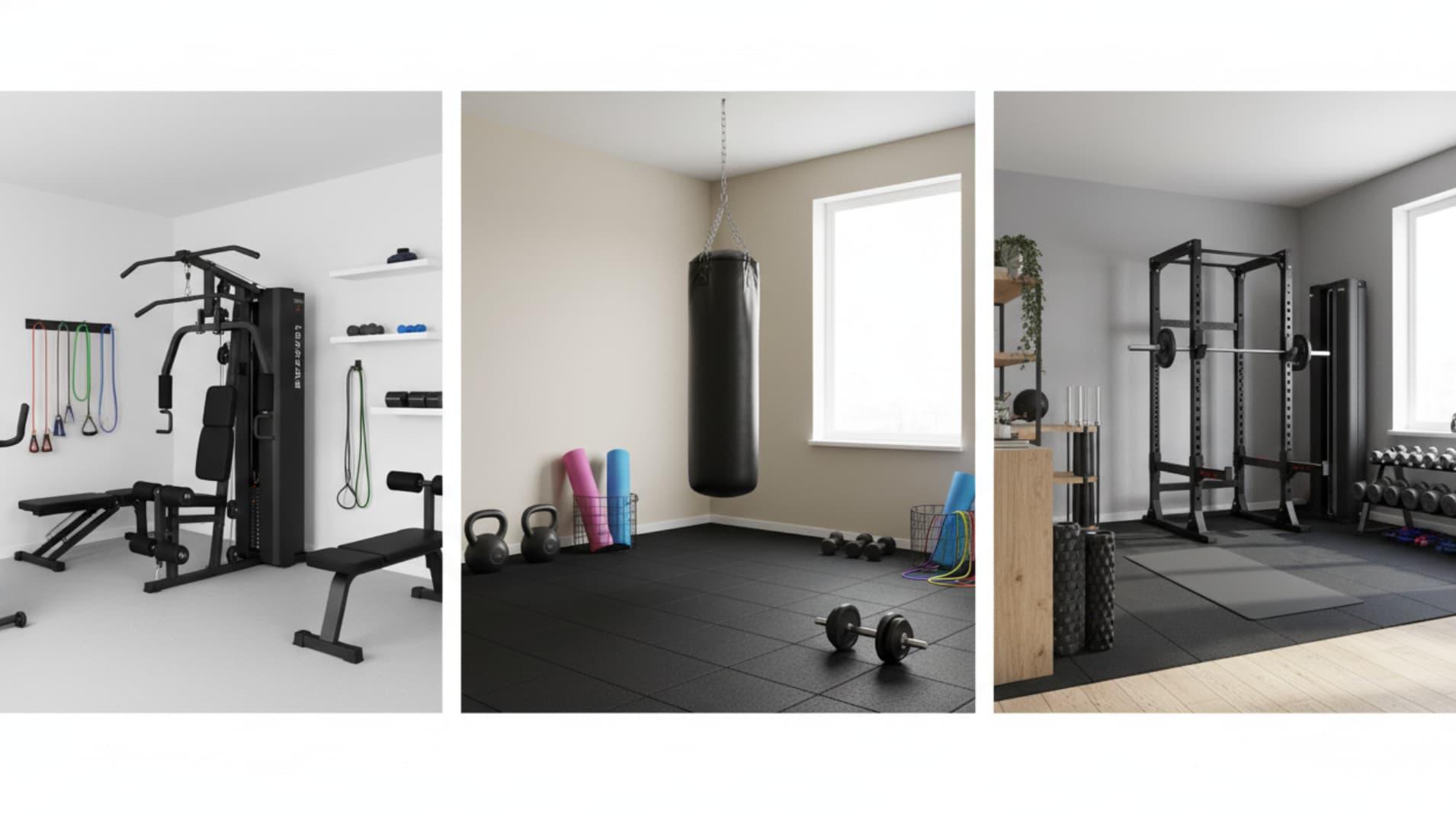
Beyond the main style categories, these three layouts address specific challenges like limited space, workout variety, and balancing different training goals in one room.
Space-Efficient Home Gym for Small Rooms
Compact layouts maximize usable floor space, often using a versatile multifunctional strength setup.
These designs prioritize equipment that serves multiple functions, allowing you to get a full workout without filling every corner with machines.
- Best for: Small rooms and apartments
- Common mistake: Multiple single-use machines. Buying separate equipment for chest press, leg extension, lat pulldown, and cable work quickly fills a small room. A single multifunctional system handles all these exercises while using a fraction of the space.
Creative Studio-Style Home Gym
Flexible layouts support both workouts and open movement.
These spaces adapt easily, whether you’re doing kettlebell training, yoga, or shadowboxing, giving you freedom to switch up your routine without rearranging everything.
- Best for: Varied training styles
- Common mistake: Fixed layouts. Bolting equipment to walls or creating permanent stations locks you into specific workout patterns.
Hybrid Strength and Recovery Home Gym
Zoned layouts separate lifting and recovery areas.
One side handles weights and resistance training, while the other accommodates stretching, foam rolling, and mobility work for a complete training experience.
- Best for: Balanced routines
- Common mistake: Poor zone separation. When lifting and recovery areas blend, you end up foam rolling next to your weight rack or stretching where dumbbells are stored.
Once you’ve chosen a design direction, there are practical factors that determine whether your gym actually works day-to-day.
Key Considerations When Applying These Design Ideas
Design style sets the tone, but functionality keeps you training consistently. These considerations help you avoid common oversights that only become obvious after your gym is set up.
1. Define your primary training focus upfront: Are you mainly lifting, doing cardio, or mixing multiple workout types throughout the week? Your answer determines equipment choices and layout priorities.
2. Factor in noise and vibration impact: Dropping weights, jumping movements, and treadmill use create noise that travels through floors and walls. If your gym shares a wall with a bedroom or sits above a living space, you’ll need rubber flooring or strategic equipment placement.
3. Map out power access early: Treadmills, smart bikes, monitors, fans, and sound systems all require dedicated outlets. Plan outlet locations based on where the equipment will actually sit to avoid extension cords creating trip hazards.
4. Built-in maintenance requirements: Rubber flooring needs regular cleaning to prevent odor buildup, while upholstered benches collect sweat and require wiping. Choose materials and finishes that match the time you’re willing to spend on upkeep.
5. Align the design with your actual training habits: Your space should support the routine you’ll realistically maintain, not an idealized version that adds pressure. Build for three sessions per week if that’s your reality, not daily two-hour commitments.
Conclusion
Building a functional home gym takes more than good intentions and a credit card.
The design choices you make now determine whether your space supports your fitness goals or works against them. Start with one clear vision rather than trying to accommodate every possible workout style.
Choose equipment that fits your actual training patterns, not aspirational routines you might never follow.
Pay attention to the practical details because those minor oversights create big frustrations later.
Your home gym should make training easier, not harder.
Take time to plan the layout correctly, and you’ll create a space that genuinely improves your routine.
Ready to get started? Pick one design idea from this guide and map out your space this week.