

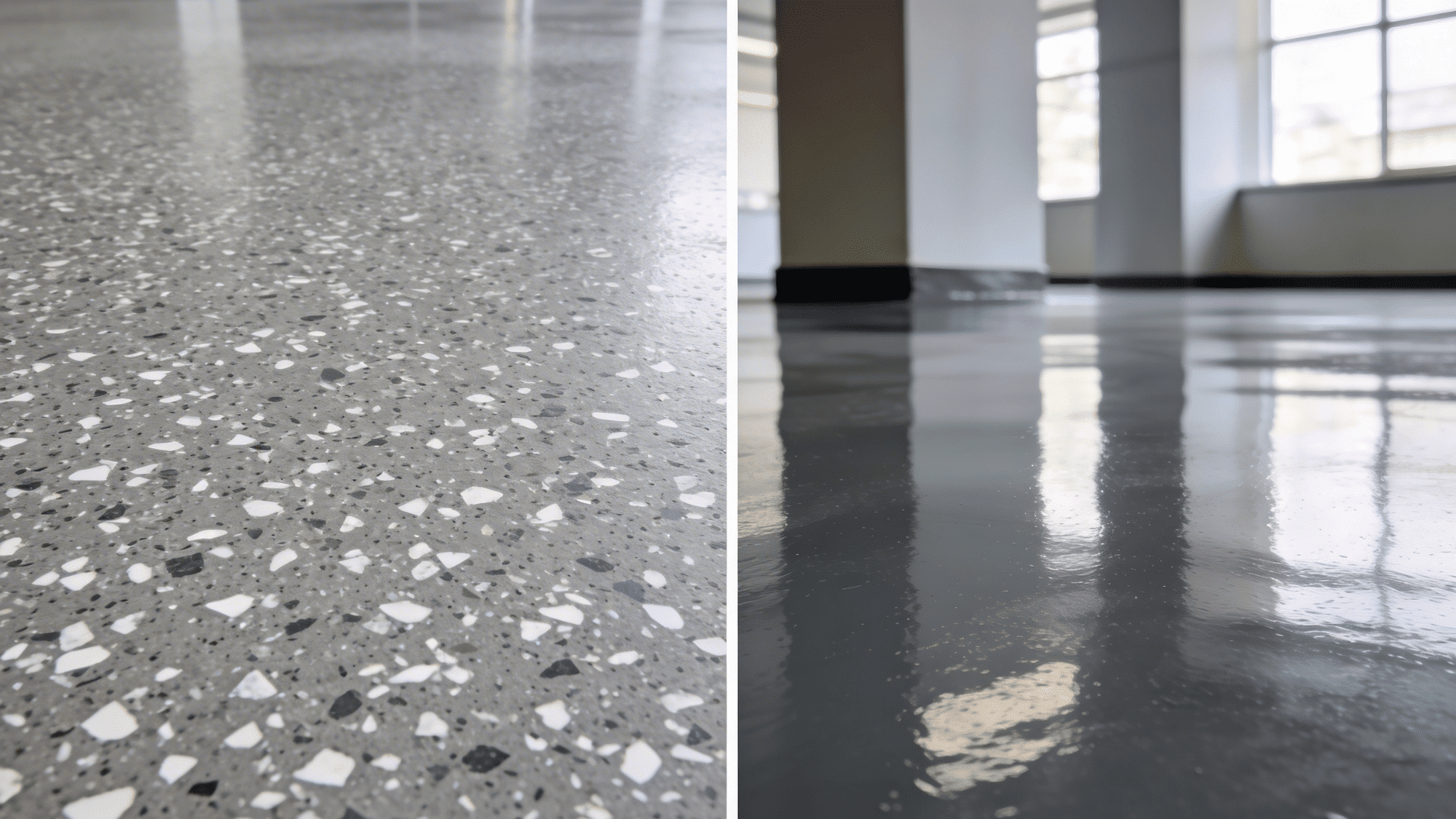
Garage floors and industrial spaces take a beating. Spills, tire marks, heavy equipment, and daily wear turn bare concrete into an eyesore fast.
That’s where floor coatings come in. But choosing between polyaspartic and epoxy isn’t always straightforward. Both options promise durability and protection, yet they work differently.
Epoxy has been the go-to choice for years, while polyaspartic coatings are the newer player gaining serious attention. Each has strengths that make it better for specific situations.
So which one actually delivers better results in 2026? The answer depends on factors like climate, curing time, and long-term performance. This comparison breaks down everything needed to make the right choice.
What is the Main Difference Between Polyaspartic and Epoxy?
The main difference lies in their chemical makeup and how they cure.
Epoxy is a two-part thermosetting resin that hardens through a chemical reaction between resin and hardener. It creates a thick, rigid coating that bonds strongly to concrete surfaces.
Polyaspartic, on the other hand, is a type of aliphatic polyurea. It’s also a two-part system, but it cures much faster due to its unique molecular structure.
Epoxy takes longer to dry and requires careful temperature control during application. Polyaspartic coatings cure rapidly, even in cold conditions, and offer better UV resistance.
Both create protective layers, but their chemical differences affect everything from application time to long-term performance and appearance retention.
Polyaspartic vs Epoxy: Pros and Cons
Understanding the advantages and disadvantages of each coating helps homeowners and contractors make informed decisions based on their specific project requirements.
Polyaspartic Coating
Polyaspartic coatings offer speed and flexibility but come with higher upfront costs that might not fit every budget or project timeline.
Pros:
- Cures in hours, not days, allowing faster project completion
- Works in cold weather and varying temperatures
- Superior UV resistance prevents yellowing and fading
- Highly flexible, resists cracking from movement
- Excellent chemical and abrasion resistance
Cons:
- Significantly more expensive than epoxy coatings
- Short pot life requires experienced, fast application
- Limited time to fix mistakes during installation
- Fewer color and finish options available
- Strong odor during the application process
Epoxy Coating
Epoxy has proven reliability and affordability, making it popular for decades, though it requires patience and specific conditions for proper curing.
Pros:
- More affordable and budget-friendly option
- Longer working time for easier application
- Wide variety of colors and decorative options
- Excellent adhesion to concrete surfaces
- Proven track record of long-term durability
Cons:
- Takes 3-7 days for full cure
- Temperature-sensitive during application and curing
- Yellows when exposed to UV light
- Less flexible, can crack over time
- Requires more coats for optimal protection
Understanding the Differences Between Polyaspartic vs Epoxy
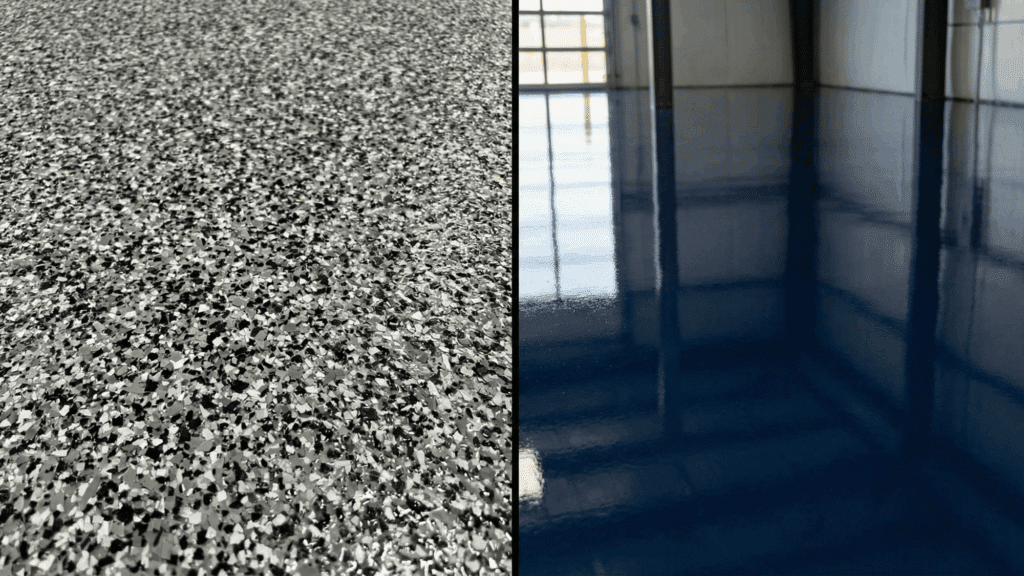
Beyond basic definitions, real-world performance sets these coatings apart. Here’s how they stack up in critical areas that affect your investment.
1. Durability Comparison: Which Coating Lasts Longer?
Polyaspartic coatings typically last 10-20+ years with proper surface preparation, while epoxy floors usually hold up for 5-10 years. The difference comes down to flexibility.
Polyaspartic’s elastic properties allow it to move with concrete as it expands and contracts, preventing cracks. Epoxy creates a harder but more rigid surface that can crack when concrete shifts.
Polyaspartic also absorbs impacts better, reducing chipping from dropped tools. It measures 4-6 times harder on scratch resistance tests while maintaining clarity.
Epoxy handles harsh chemicals better but wears faster under heavy traffic.
2. Cure Time and Installation Speed
Polyaspartic cures in hours, often 20-60 minutes per coat, enabling one-day installations with same-day or next-day vehicle parking.
Epoxy requires 12-24 hours per coat with 2-7 days total downtime between layers. The longer pot life makes epoxy better for DIY projects since beginners can work slowly.
Polyaspartic’s rapid cure demands professional installers who can work quickly and avoid mistakes.
Dust contamination during epoxy’s extended cure time can ruin the finish, while polyaspartic’s speed minimizes exposure to airborne particles and debris.
3. UV Stability and Yellowing
Polyaspartic is aliphatic and fully UV-stable, preventing yellowing or fading even under direct sunlight for years. It works perfectly for both indoor and outdoor applications.
Epoxy uses aromatic compounds that yellow quickly when exposed to UV rays, making it suitable only for indoor use. Outdoors, epoxy fades, cracks, or peels after just months.
Garage floors near open doors show amber discoloration in sun-exposed areas while shaded sections stay clear. This uneven aging creates an unattractive appearance that costly UV-protective topcoats can’t fully prevent.
4. Cost Comparison: Polyaspartic vs Epoxy
Epoxy materials cost $1-3 per square foot, with installation running $2-5, totaling $3-8 per square foot. Polyaspartic materials run $2-5 with installation at $3-7, totaling $5-12 per square foot installed.
However, polyaspartic’s 2x lifespan and minimal maintenance create better long-term value. Epoxy requires repairs and recoating every 3-7 years, adding hundreds or thousands in recurring costs.
Polyaspartic needs only hosing off and occasional mopping. The initial savings from epoxy are eroded by maintenance expenses within 10 years of installation.
Polyaspartic vs Epoxy: Commercial and Industrial Use Comparison
Different work environments demand specific coating properties. This is how each performs in commercial and industrial settings across various applications.
Polyaspartic Commercial Applications:
- Retail stores and showrooms requiring fast overnight installations
- Commercial garages with heavy daily vehicle traffic
- Warehouses needing a quick turnaround between tenants
- Outdoor patios and walkways with sun exposure
- Food processing facilities require chemical resistance
- Auto dealerships showcasing vehicles on floors
- Medical facilities needing antimicrobial surfaces
- Schools and universities with limited closure windows
Epoxy Industrial Applications:
- Manufacturing plants with harsh chemical spills
- Aircraft hangars require extreme durability
- Pharmaceutical facilities needing sterile environments
- Commercial kitchens with grease and oil exposure
- Laboratories handling corrosive substances daily
- Automotive repair shops with heavy equipment
- Storage facilities with forklift traffic patterns
- Indoor warehouses without UV exposure concerns
Which One is the Best Option For You?
Choosing between polyaspartic and epoxy depends on specific project needs, budget, and timeline.
Polyaspartic makes sense for spaces requiring quick installation, UV exposure resistance, or maximum longevity. It’s ideal for residential garages with limited downtime, outdoor applications, or areas near windows and open doors.
The higher upfront cost pays off through reduced maintenance and longer lifespan.
Epoxy works better for budget-conscious projects, indoor-only spaces, or DIY installations. It handles harsh chemicals exceptionally well and offers more color options.
For basements, interior workshops, or commercial spaces without sun exposure, epoxy delivers solid performance at a lower initial investment. Consider long-term costs, usage patterns, and environmental factors before deciding.
Conclusion
Selecting the right floor coating comes down to matching product strengths with project requirements.
Polyaspartic delivers speed, UV protection, and exceptional durability for those who can afford the premium price. Epoxy provides reliable performance and budget-friendly pricing for indoor applications without sun exposure.
Both coatings protect concrete effectively when installed properly. Consider how quickly the space needs to be operational, whether sunlight hits the floor, and what the long-term maintenance budget allows.
The best choice isn’t about which coating wins overall; it’s about which one fits specific needs and circumstances better.