

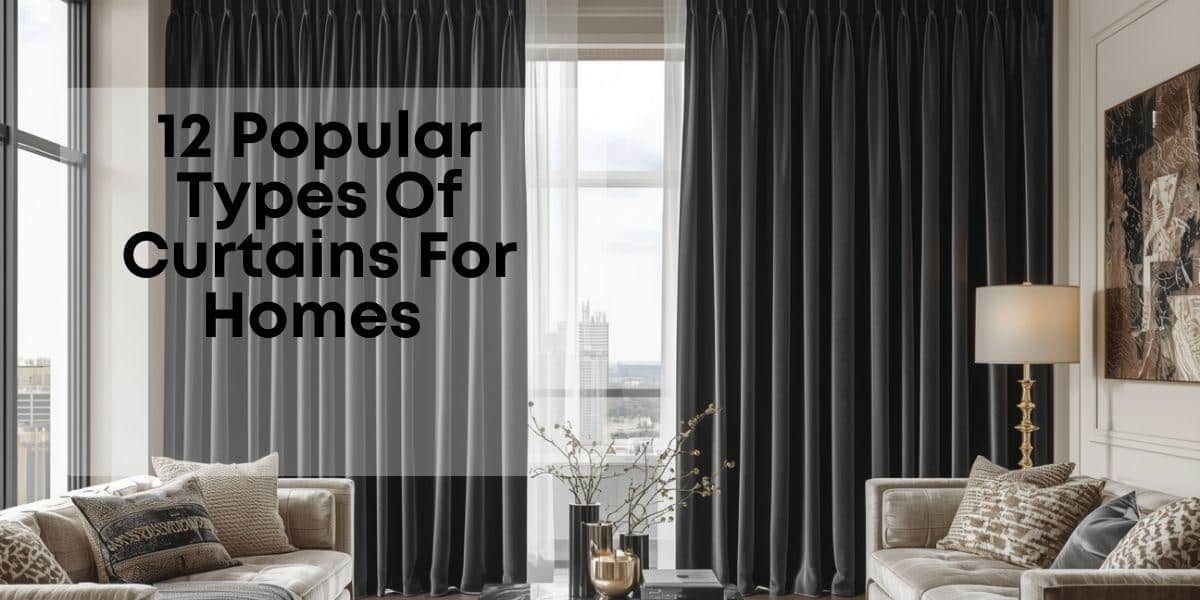
Curtains do more than just cover your windows. They control light, ensure privacy, improve insulation, reduce noise, and define your room’s entire aesthetic. From elegant sheer curtains for a soft, airy look to thicker blackout curtains for better light control, you can choose any style. With dozens of curtain styles available in 2025, understanding each type helps you make decisions that match your needs and budget.
This comprehensive guide explores 12 popular curtain types for modern homes. You’ll learn what makes each style unique, where they work best, their benefits, and how to choose the perfect curtains for every room. From the living room to kitchen and home office to the bedroom curtains, this guide covers everything you need to know.
Why Your Curtain Choice Defines Your Home’s Comfort?
Light Control: Blackout curtains block 95-100% light for bedrooms. Sheer curtains filter soft light for living rooms. Match curtain opacity to your lighting needs.
Privacy Protection: Ground-floor rooms need complete privacy curtains. Upper floors can use semi-transparent fabrics. Choose based on your location and visibility concerns.
Energy Efficiency: Thermal curtains reduce heat transfer by 25-35%, lowering HVAC costs significantly. They pay for themselves within 2-3 years through energy savings.
Noise Reduction: Heavy curtain fabrics absorb sound, reducing outside noise by 15-25%. This matters for rooms facing busy streets or noisy areas.
Aesthetic Impact: Curtains occupy significant visual space. The right style, color, and fabric complement your interior design, while wrong choices make rooms feel mismatched.
12 Popular Curtain Types That Transform Your Space
1- Blackout Curtains
2- Sheer Curtains
3- Thermal Insulated Curtains
4- Eyelet/Grommet Curtains
5- Pinch Pleat Curtains
6- Tab-top Curtains
7- Rod Pocket Curtains
8- Cafe Curtains
9- Valance Curtains
10- Tie-Top Curtains
11- Motorized Curtains
12- Layered Curtains
1. Blackout Curtains
Thick, tightly woven fabric with a special coating blocks 95-100% of light. These curtains work perfectly for bedrooms, nurseries, and home theaters needing complete darkness for quality sleep or entertainment.
Key Benefits:
- Block 95-100% incoming light
- Improve sleep quality significantly
- Reduce energy costs through insulation
- Minimize outside noise by 25-30%
- Protect furniture from UV damage
Cost: $25-80 per panel (ready-made), $60-150 (custom)
Design Recommendation: Layer with sheer panels for daytime flexibility. Install rods 4-6 inches above the window frame to prevent light gaps at the top.
2. Sheer Curtains
Lightweight, semi-transparent fabric filters natural light while maintaining daytime privacy. These curtains suit living rooms, dining rooms, sunrooms, and spaces needing natural light with daytime privacy.
Key Benefits:
- Filter harsh sunlight, creating a soft glow
- Maintain natural room brightness
- Provide daytime privacy
- Create an elegant, flowing aesthetic
- Most affordable curtain option
Cost: $15-45 per panel (ready-made), $40-90 (custom)
Professional Advice: Layer with heavier drapes for day-night versatility. Choose white or cream for maximum light transmission and an airy feel.
3. Thermal Insulated Curtains
Special lining reduces heat transfer through windows. These curtains work best for homes in extreme climates, rooms with large windows, energy-conscious households, and spaces with temperature control issues.
Key Benefits:
- Reduce energy costs by 25-35%
- Block window drafts effectively
- Provide moderate light control
- Reduce outside noise by 15-20%
- Maintain consistent temperatures
Cost: $30-85 per panel (ready-made), $70-140 (custom)
Installation Guide: Extend 3-6 inches beyond the window frame on each side for maximum insulation. Install on ceiling-mounted rods to minimize heat escape.
4. Eyelet/Grommet Curtains
Metal or plastic rings inserted in fabric slide onto rods, creating a contemporary appearance with uniform pleats. These curtains suit modern homes, contemporary interiors, casual spaces, and rooms wanting easy-operation curtains.
Key Benefits:
- Very easy, smooth operation
- Create uniform contemporary pleats
- Work with standard curtain rods
- Available in many fabrics and colors
- Suitable for light and heavy materials
Cost: $20-60 per panel (ready-made), $50-110 (custom)
Expert Suggestion: Choose a grommet size matching the rod diameter for smooth gliding. Space grommets 6-8 inches apart for optimal pleating and works beautifully with bold colors.
5. Pinch Pleat Curtains
Fabric pinched and sewn at regular intervals creates a tailored, elegant appearance. These curtains work perfectly for traditional homes, formal living rooms, dining rooms, master bedrooms, and classic interior styles.
Key Benefits:
- Create an elegant, tailored appearance
- Provide structure,d formal look
- Works well with heavy fabrics
- Offer excellent fullness and draping
- Suit traditional and formal settings
Cost: $35-90 per panel (ready-made), $80-180 (custom)
Designer Insight: Space pleats 4-6 inches apart for luxury fullness. Works beautifully with velvet, silk, and heavy linen in deep, rich colors.
6. Tab Top Curtains
Fabric loops sewn onto the curtain top slide directly onto the rod. These curtains suit casual spaces, cottage-style homes, children’s rooms, kitchens, and relaxed living areas perfectly.
Key Benefits:
- Simple casual aesthetic
- Easy to slide open and close
- Showcase decorative rods
- Works well with lightweight fabrics
- Affordable and widely available
Cost: $18-50 per panel (ready-made), $45-95 (custom)
Practical Tip: Tab spacing of 6-8 inches creates a balanced look. Keep rod diameter under 1.5 inches for easy operation with cotton or linen fabrics.
7. Rod Pocket Curtains
Sewn channel along top edge holds curtain rod. These curtains work best for casual spaces, country-style homes, kitchens, bathrooms, and windows not requiring frequent opening and closing.
Key Benefits:
- Affordable and widely available
- Create a soft, gathered appearance
- Hide the curtain rod completely
- Simple installation process
- Work with standard rods
Cost: $15-45 per panel (ready-made), $40-85 (custom)
Implementation Note: Choose a rod diameter 1 inch smaller than the pocket width for easy installation. Best for stationary windows where curtains rarely move.
8. Cafe Curtains
Cover only the bottom half or two-thirds of the window, maintaining privacy while allowing light through the top. These curtains suit kitchens, bathrooms, street-facing windows, breakfast nooks, and rooms needing privacy with natural light.
Key Benefits:
- Provide privacy with natural light
- Perfect for small windows
- Allow air circulation
- Create cottage-style charm
- Use minimal fabric, reducing costs
Cost: $12-35 per panel (ready-made), $30-65 (custom)
Application Strategy: Pair with valance covering the top portion for complete treatment. Choose cheerful patterns like gingham or florals for kitchen charm.
9. Valance Curtains
Short decorative fabric covering only the top 12-18 inches of the window. These curtains work perfectly for kitchens, bathrooms, small windows, layering over blinds or shades, and adding decorative touches.
Key Benefits:
- Add decoration without blocking light
- Hide curtain rods and hardware
- Layer beautifully over blinds
- Require minimal fabric
- Available in many styles
Cost: $15-40 (ready-made), $35-75 (custom)
Coordination Advice: Match valance fabric with room colors and other window treatments. Extend 3-4 inches beyond window frame on each side for proper proportion.
10. Tie-Top Curtains
Fabric ties attach to curtain top and tie around rod creating charming appearance. These curtains suit children’s rooms, nurseries, cottage-style homes, craft rooms, and casual creative spaces beautifully.
Key Benefits:
- Create charming decorative appearance
- Showcase curtain rod
- Easy to adjust tie tightness
- Work with any standard rod
- Perfect for DIY projects
Cost: $20-50 per panel (ready-made), $45-90 (custom)
Creative Approach: Choose contrasting ribbon color for visual interest. Tie consistent bow styles across panel for uniform playful look in kids’ spaces.
11. Motorized/Smart Curtains
Operate electronically via remote, smartphone app, or voice commands. These curtains work ideally for hard-to-reach windows, tech-smart homes, luxury properties, and people with mobility limitations.
Key Benefits:
- Open/close without physical effort
- Schedule automatic operation
- Integrate with smart home systems
- Control multiple windows simultaneously
- Perfect for high or difficult-to-reach windows
Cost: $200-500 per window (basic), $500-1,500+ (premium smart)
Technology Integration: Ensure curtain weight matches motor capacity. Consider battery options for rentals and integrate with sunrise/sunset automation for energy efficiency.
12. Layered Curtains
Combine two curtain types on the same window creating versatile light control. These curtains work excellently for master bedrooms, living rooms, spaces needing flexible light control, and homes wanting layered designer looks.
Key Benefits:
- Maximum light control flexibility
- Enhanced insulation from double layers
- Create designer high-end appearance
- Combine different fabrics and colors
- Adapt to different times easily
Cost: $60-150 per window (ready-made), $150-350 (custom)
Layering Strategy: Choose white or neutral inner layer for light transmission. Ensure the outer layer extends 2-3 inches beyond the inner layer on sides for complete coverage.
Essential Curtain Components Every Homeowner Should Know

Before exploring various types, understanding basic components helps you make informed choices.
Fabric: Cotton, linen, polyester, silk, velvet, and blended materials each offer different properties. Natural fabrics breathe better but require more care. Synthetic fabrics resist fading and wrinkles while costing less.
Lining: Unlined curtains allow maximum light transmission. Lined curtains improve insulation and light blocking. Blackout lining blocks nearly all light. Interlining adds extra thickness for superior insulation and sound absorption.
Header Style: The top portion attaching curtains to rods affects appearance and functionality. Eyelet, pinch pleat, pencil pleat, tab top, and rod pocket headers create different looks and draping styles.
Length: Curtains should reach floor level or puddle slightly for formal elegance. Sill-length curtains work in kitchens and bathrooms where floor-length fabric creates issues. Standard lengths include 63, 84, 95, 108, and 120 inches.
Width: Proper fullness requires a curtain width 2-2.5 times your window width. Skimpy curtains look cheap and don’t close properly. Adequate fabric creates beautiful folds and complete coverage.
How To Choose Perfect Curtains In 7 Steps
Step 1: Identify Primary Needs
Bedrooms need light blocking. Living rooms balance aesthetics with privacy. Kitchens need easy-clean options. List your top 2-3 priorities.
Step 2: Measure Accurately
Width: Extend 4-8 inches beyond frame on each side. Length: Measure from rod position to floor. Add 3-6 inches above the frame for rod placement.
Step 3: Match Interior Style
|
Interior Style |
Best Curtain Types |
Color Palette |
|---|---|---|
|
Modern |
Eyelet, Rod Pocket, Motorized |
Neutrals, Monochrome, Bold Accents |
|
Traditional |
Pinch Pleat, Valance, Layered |
Rich Colors, Jewel Tones |
|
Minimalist |
Simple Rod Pocket, Flat Panels |
White, Beige, Light Gray |
|
Bohemian |
Tab Top, Tie-Top, Layered |
Earth Tones, Vibrant Patterns |
|
Farmhouse |
Cafe, Tab Top, Valance |
Soft Pastels, Cream, Natural |
Step 4: Set Budget
- Budget: $20-50 per panel (ready-made basics)
- Mid-Range: $50-120 per panel (quality with lining)
- Premium: $120-250 per panel (custom, luxury fabrics)
- Luxury: $250+ per panel (designer, motorized, specialty)
Step 5: Consider Maintenance
- Machine washable: Cotton, polyester, synthetic blends, basic blackout
- Dry clean only: Silk, velvet, lined curtains, pleated styles
- Choose a level matching your lifestyle and budget.
Step 6: Factor Climate Needs
- Hot climates: Thermal curtains reflecting heat, light colors
- Cold climates: Heavy lined curtains trapping warmth.
- Variable climates: Layered systems offering flexibility
Step 7: Avoid Common Mistakes
- Curtains should be 2-2.5 times window width
- Always choose lined curtains except sheers
- Install rods 4-6 inches above window frame
- Floor-length curtains should touch or puddle slightly
- Match fabric properties to room conditions
Curtain Fabric Quick Comparison
|
Fabric |
Light Control |
Insulation |
Durability |
Maintenance |
Cost |
|---|---|---|---|---|---|
|
Cotton |
Moderate |
Good |
Good |
Machine wash |
Low-Medium |
|
Polyester |
Varies |
Good |
Excellent |
Machine wash |
Low |
|
Silk |
Light |
Fair |
Delicate |
Dry clean only |
High |
|
Velvet |
Excellent |
Excellent |
Good |
Dry clean only |
High |
|
Blended |
Moderate-Good |
Good |
Excellent |
Machine wash |
Low-Medium |
|
Blackout |
Excellent |
Excellent |
Very Good |
Machine wash |
Medium |
Concluding Remarks
Choosing the right curtains transforms your rooms’ appearance and functionality. Understanding different types, their benefits, and applications helps you make informed decisions. Whether you prioritize light control, energy efficiency, or aesthetics, the perfect curtain solution exists for every window. Take time measuring accurately, assessing priorities, and exploring options before purchasing for results you’ll enjoy for years to come.
Frequently Asked Questions
1. How do I choose between blackout and thermal curtains?
Choose blackout for light blocking needs (bedrooms, theaters). Choose thermal for energy efficiency and temperature control. Many combine both features. Blackout: $25-80 per panel. Thermal: $30-85 per panel.
2. Can I machine wash all the curtains?
No. Cotton, polyester, and synthetics are machine washable. Silk, velvet, and pleated styles need dry cleaning. Always check care labels.
3. What curtain length looks best?
Floor-length curtains work best in living rooms, dining rooms, and bedrooms. They should touch the floor or puddle 1-2 inches. Sill-length suits kitchens and bathrooms.
4. How many panels do I need per window?
Most windows need two panels. Each panel should measure 1-1.25 times window width for proper fullness and coverage.
5. Should curtains match walls or contrast?
Both work. Matching creates a spacious feel. Contrasting adds visual interest. Curtains 2-3 shades lighter or darker than walls create subtle sophistication.
6. How often should I replace curtains?
Quality curtains last 5-8 years with proper care. Replace when fabric shows fading, tears, or permanent stains. Update sooner if style feels dated.