

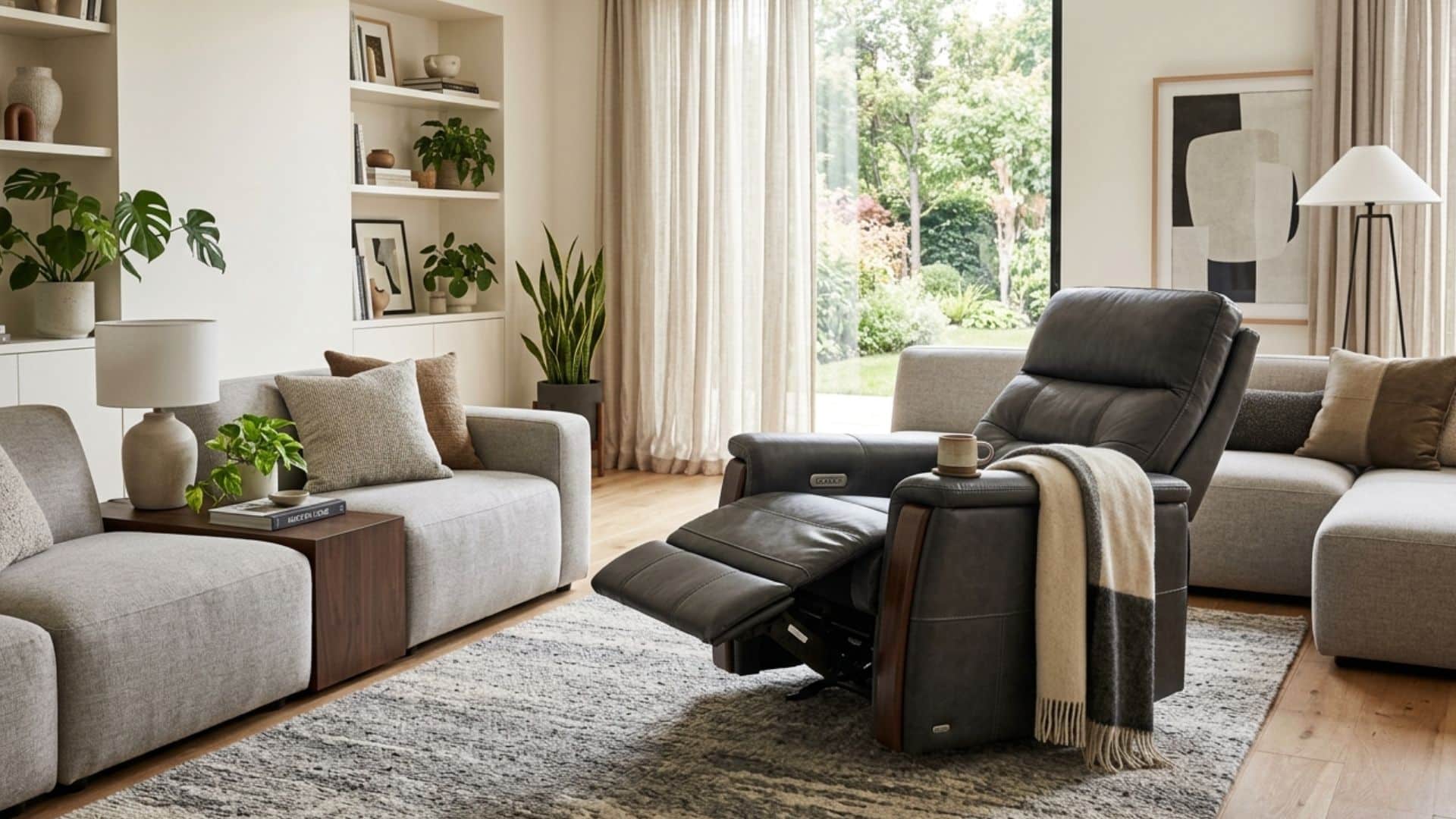
I never paid much attention to recliners until my back started giving me trouble. That is when I realized just how much the right chair can change your daily comfort.
A recliner chair is designed to give your body the support it needs while letting you fully relax.
But not all recliners are the same. Some are built for small spaces, others for full-body support, and some even help you stand up with ease.
In this article, I will explain the different types of recliner chairs and the key features that really matter.
I’ll keep things clear so you can understand how each type works and which one fits your space and needs.
By the end, you will have a better idea of what to look for and how to choose a recliner that feels right for you and your home.
What Is a Recliner Chair?
A recliner chair is a type of chair designed for comfort and support. It lets you lean back while raising the footrest at the same time. This helps your body relax after a long day.
I see many people choose recliners because they offer better comfort than regular chairs.
Most recliner chairs come with a backrest that tilts and a footrest that pops up. Some work with a simple push or lever, while others use buttons for smooth control.
You can adjust the position based on how you want to sit or rest. Recliners are often used for watching TV, reading, or even taking short naps.
They support your back, neck, and legs in one position.
This makes them a popular choice for living rooms and personal spaces where comfort matters most.
Key Features of a Recliner Chair
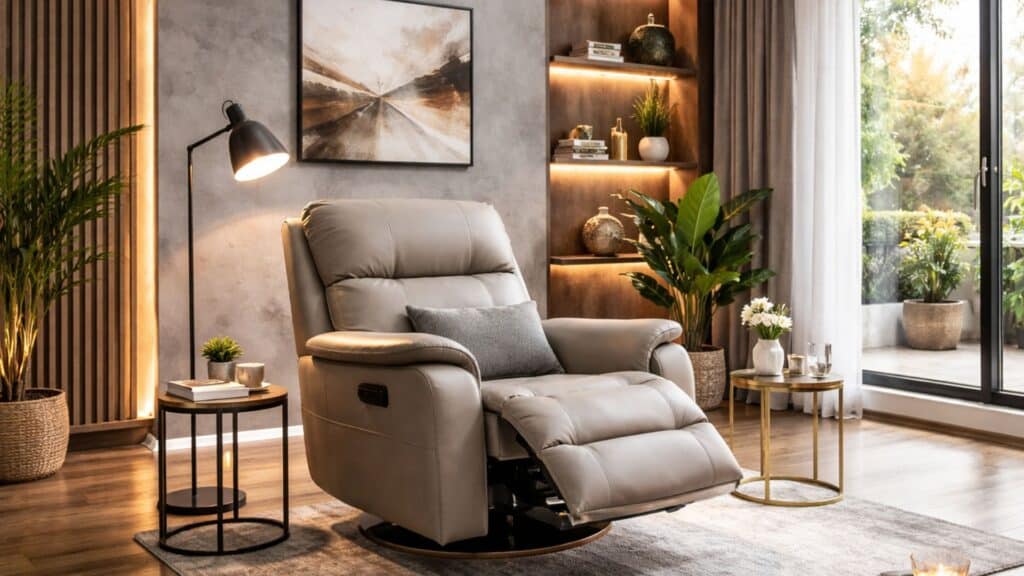
Recliner chairs stand out because they focus on comfort and support. They come with features that help your body relax in different positions.
1. Adjustable Reclining Positions
A recliner chair allows users to adjust the backrest to different angles for better comfort. It can move from an upright position to a fully relaxed position with ease.
This helps reduce pressure on the spine and supports the body properly.
Smooth reclining makes it easy to switch between sitting and resting.
It also supports better posture during long sitting hours. This feature is useful for reading, watching TV, or relaxing after a busy day at home.
2. Built-In Footrest
A built-in footrest lifts the legs to a comfortable level and supports the lower body. This helps improve blood flow and reduces pressure on the knees and feet.
The footrest moves along with the chair, so no extra support is needed.
It adds more comfort while sitting for long hours. This feature is helpful for reducing tiredness after standing or walking.
It also makes the chair suitable for relaxing, reading, or watching TV in a more comfortable position.
3. Cushioning and Padding
Recliner chairs include thick cushioning and soft padding for better comfort. The seat, back, and armrests are designed to support the body properly.
This helps reduce pressure on the back and neck during long sitting hours.
Good padding also helps maintain posture and prevent discomfort. It adds a soft feel that makes the chair more relaxing for daily use.
Over time, proper cushioning can help reduce stiffness and body pain caused by sitting for extended periods.
4. Manual or Power Controls
Recliner chairs come with manual or power controls for easy adjustment. Manual recliners use a lever to change positions, while power recliners use buttons for smooth movement.
Power controls require less effort and are easy to operate. Manual options are simple and do not need electricity.
Both types allow users to adjust the chair based on comfort needs.
The choice depends on ease of use, personal preference, and budget. Each option provides flexibility for different sitting positions.
5. Lumbar and Neck Support
A recliner chair provides proper support for the lower back and neck. This helps keep the spine in a better position while sitting or reclining.
Good support reduces strain on the back and prevents stiffness in the neck.
Some recliners also include added headrests for extra comfort. This feature is important for long sitting hours and daily use.
It helps improve posture and reduces the chances of back pain, making the chair more comfortable and supportive overall.
6. Extra Features and Storage
Many recliner chairs include extra features for added convenience. These may include cup holders, side pockets, USB ports, or massage options.
Side pockets help keep small items like remotes or phones within reach.
Cup holders are useful while watching TV or relaxing. Some recliners also offer heat and massage functions for added comfort.
These features make the chair more practical for everyday use. They improve comfort and make relaxing at home more enjoyable and easy.
What Is a Lounger?
A lounger is a chair made for relaxing your body. It lets you sit in a laid-back position with your legs stretched out.
This makes it more comfortable than a regular chair. The main purpose of a lounger is to help you rest without putting pressure on your back or legs.
Most loungers have a long seat or a part that supports your legs. Some come with adjustable backs so you can sit up or lie down.
You will often find loungers in living rooms, patios, or near pools.
They are easy to use and do not need much effort to adjust.
Loungers are best for reading, resting, or taking short breaks during the day. They are a simple way to stay comfortable at home.
Types of Recliner Chairs

Recliner chairs come in different styles to match comfort needs and room space. Each type works a bit differently and offers its own benefits.
- Manual Recliner: A manual recliner uses a lever or push-back system to adjust the chair. It is simple to use and does not need electricity.
- Power Recliner: A power recliner works with buttons to move the backrest and footrest. It offers smooth control and needs a power source.
- Rocker Recliner: A rocker recliner can move back and forth in a gentle motion. It is often used for relaxing or soothing movement.
- Wall Hugger Recliner: A wall-hugger recliner needs less space behind it to recline. It is a good choice for small rooms or tight spaces.
- Lift Recliner: A lift recliner helps you stand up by tilting forward. It is useful for older adults or anyone with mobility issues.
How Do Recliner Chairs Work?
Recliner chairs use simple mechanisms to adjust the backrest and footrest for comfort. These parts work together to support your body in different sitting and resting positions.
1. Reclining Mechanism
The reclining mechanism is the main part that allows the chair to move backward. It connects the backrest and seat frame using metal joints and springs.
When pressure is applied or a control is used, the backrest tilts smoothly.
This movement helps shift your body into a relaxed position. The mechanism is designed to move in a controlled way to avoid sudden jerks.
It supports your weight evenly and helps maintain balance while reclining for long periods of use.
2. Footrest Operation
The footrest works along with the reclining system to lift your legs. It is usually connected through a set of hinges and metal links under the seat.
When the chair reclines, the footrest moves upward at the same time. In some models, it can also be adjusted separately.
This movement helps support your lower body and improves comfort.
The design ensures smooth lifting and lowering. It also helps reduce strain on your knees and feet during long sitting sessions.
3. Manual Control System
Manual recliner chairs use a lever or push-back system to adjust positions. When the lever is pulled or pressure is applied, the internal mechanism activates.
This allows the backrest to tilt and the footrest to rise. The system is simple and does not need electricity.
It relies on body weight and mechanical parts for movement.
This makes it easy to use and maintain. The design is durable and works well for everyday use without the need for complex controls.
4. Power Control System
Power recliner chairs use an electric motor to control movement. Buttons placed on the side of the chair help adjust the backrest and footrest smoothly.
The motor moves the internal mechanism with minimal effort. This allows precise control over different positions.
It is helpful for users who need easy adjustments without physical strain.
The system runs on electricity and may include backup options. It ensures quiet and steady operation for better comfort during daily use.
5. Frame and Support Structure
The frame of a recliner chair holds all the moving parts together. It is usually made from wood or metal for strength and durability.
This structure supports the weight of the user and keeps the chair stable.
It also helps the reclining mechanism function properly. A strong frame ensures long-term use without damage. It keeps the chair balanced during movement.
This support structure is important for both comfort and safety while using the recliner regularly.
6. Springs and Cushion Support
Springs and padding inside the recliner help provide comfort and flexibility. The springs absorb pressure and allow smooth movement of the seat and backrest.
They also help the chair return to its original position after use. Cushion layers add softness and support to the body.
Together, these parts improve sitting comfort and reduce strain.
The design helps maintain shape over time. Proper spring support also ensures that the chair feels stable and comfortable during daily use.
Recliner Chair vs Regular Chair
This comparison helps you understand how comfort and support differ between the two options. It also makes it easier to choose the right chair based on daily use and needs.
| Feature | Recliner Chair | Regular Chair |
| Comfort Level | Offers high comfort with adjustable positions | Basic comfort with fixed seating position |
| Back Support | Supports back, neck, and legs together | Supports mainly the back |
| Reclining Function | Can recline and adjust angles | Does not recline |
| Foot Support | Comes with a built-in footrest | No footrest included |
| Usage | Ideal for relaxing, resting, and long sitting | Suitable for short sitting tasks |
| Space Required | Needs more space to recline fully | Takes up less space |
| Price Range | Usually more expensive | More budget-friendly |
| Features | May include massage, heat, or storage options | Limited features |
| Mobility | Can be heavy and harder to move | Lightweight and easy to move |
| Power Requirement | Some models need electricity | No power needed |
Things to Consider Before Buying
Before buying a recliner chair, it helps to think about your space, comfort needs, and budget. This makes it easier to pick the right option without confusion.
- Size and Space: Make sure the recliner fits well in your room and has enough space to open fully. I always check the wall distance before placing one.
- Material and Fabric: Recliners come in leather and fabric options, each with a different feel and care level. Leather is easy to clean, while fabric feels softer and warmer.
- Budget and Features: Set a budget and compare features like manual or power controls. This helps you get the best value without overspending.
- Comfort and Support: Always test how the chair feels when you sit and recline. Good support for your back and legs makes a big difference in daily use.
Conclusion
By now, you have a clear idea of what a recliner chair is and how it can improve your comfort at home.
From simple manual options to power recliners with added features, there is something for every need and space.
I believe the right recliner can make your daily routine more relaxing, especially after long hours of work or activity.
When choosing one, focus on what feels comfortable for you and fits your lifestyle. Small details like space, material, and support can make a big difference over time.
Take your time before making a decision so you end up with something you truly enjoy using every day.
If you already use a recliner chair, I would love to hear your experience. Share your thoughts or tips in the comments below.
Frequently Asked Questions
Can You Sleep in a Recliner Chair?
Yes, many people sleep in recliners. They can be helpful for people with back pain or breathing issues.
Are Power Recliners Safe to Use?
Yes, power recliners are safe. They often include safety features like slow movement and backup power options.
What Is the Difference Between Manual and Power Recliners?
Manual recliners use a lever or push-back to adjust positions. Power recliners use buttons and need electricity for smoother control.
How Much Space Does a Recliner Need?
A recliner usually needs 1 to 3 feet of space behind it to open fully. Wall-hugger models need less space.