

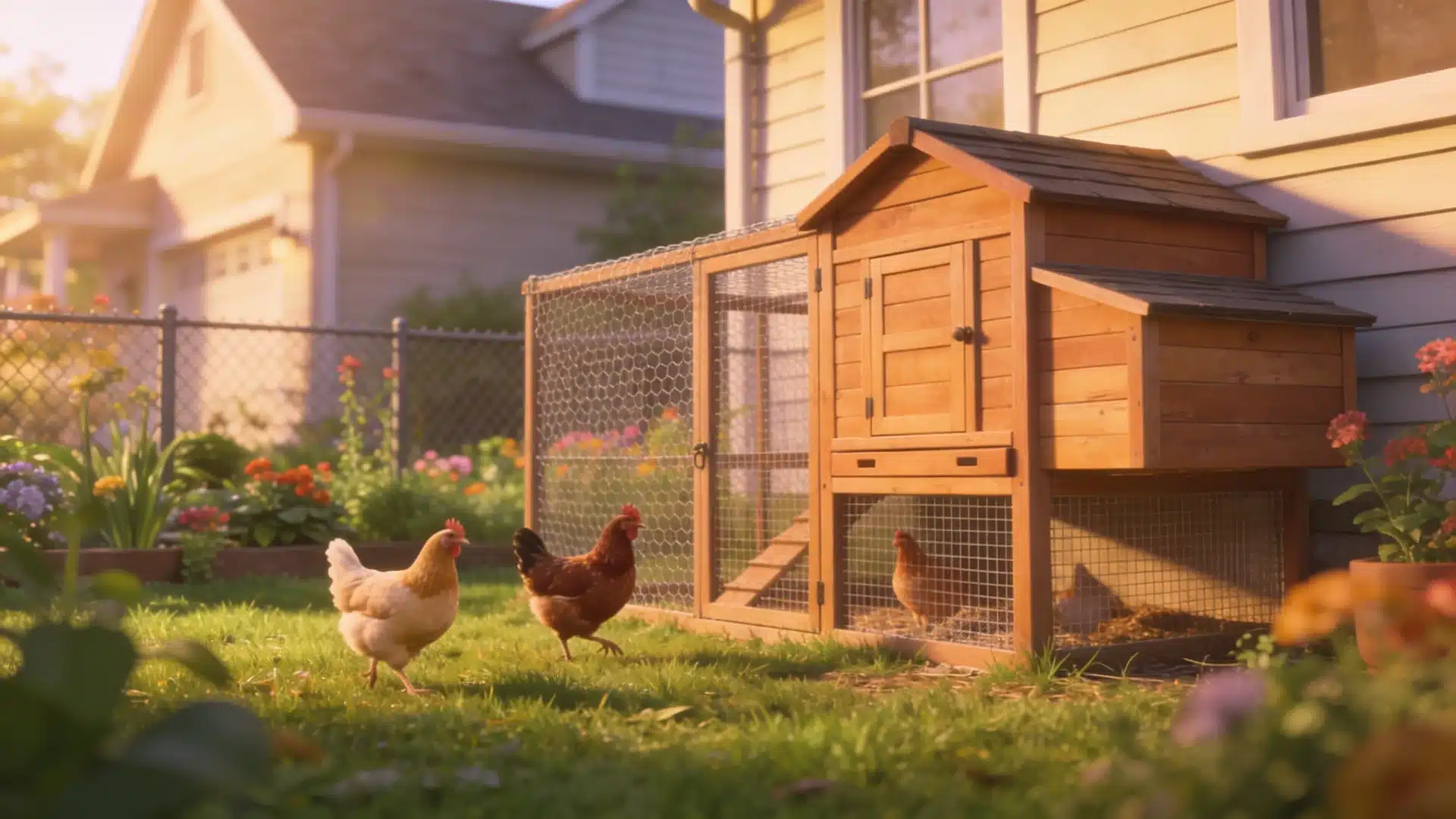
I’ve learned that a good setup makes a big difference when raising chickens. If your run is too small or not secure, it can cause stress for your flock and more work for you.
That’s why I put together these chicken run ideas to help you build a space that works well and lasts.
In this guide, you’ll find simple designs, budget options, and more advanced setups. I’ll walk you through ideas for small yards, large spaces, and everything in between.
Whether you’re just starting or looking to upgrade, you’ll get practical ideas you can actually use. The goal is to help you keep your chickens safe, active, and comfortable every day without overcomplicating things.
What is a Chicken Run?
A chicken run is a safe, enclosed outdoor space where chickens can move around, scratch the ground, and enjoy fresh air while staying protected.
It is usually attached to a coop and surrounded by wire mesh or fencing to keep predators out and chickens in.
Chicken runs give birds room to exercise, which helps improve their health, egg production, and overall behavior. Without a proper run, chickens may feel stressed or become easy targets for animals like dogs, foxes, or hawks.
Runs can be simple or detailed, depending on your space and budget.
Some are small and basic, while others include covers, perches, and shaded areas. No matter the size, a good chicken run keeps your flock safe, active, and comfortable every day.
Things to Consider when Building a Chicken Coop
Planning helps you build a safe, comfortable, and long-lasting space for your chickens.
- Make sure each chicken has enough room to move freely. Overcrowding can lead to stress, pecking, and health issues. A general rule is at least 2–4 square feet per bird inside the coop, plus extra space in the run for movement.
- Good airflow helps remove moisture, heat, and harmful gases like ammonia. Without proper ventilation, chickens can develop breathing problems.
- Use strong wire mesh, solid walls, and secure locks to deter predators such as dogs, foxes, and snakes. Cover all gaps, including the roof area, to prevent attacks from above.
- Design the coop so cleaning is simple and quick. Features such as wide doors, removable trays, and lift-up panels make it easier to maintain hygiene and reduce odors.
- Plan your budget before building. Decide whether to go for a DIY setup or a ready-made coop, and balance cost with quality to ensure long-term use.
Best Chicken Run Ideas
These simple ideas help create a secure space that supports healthy movement and easy care.
1. Wooden Frame Chicken Run
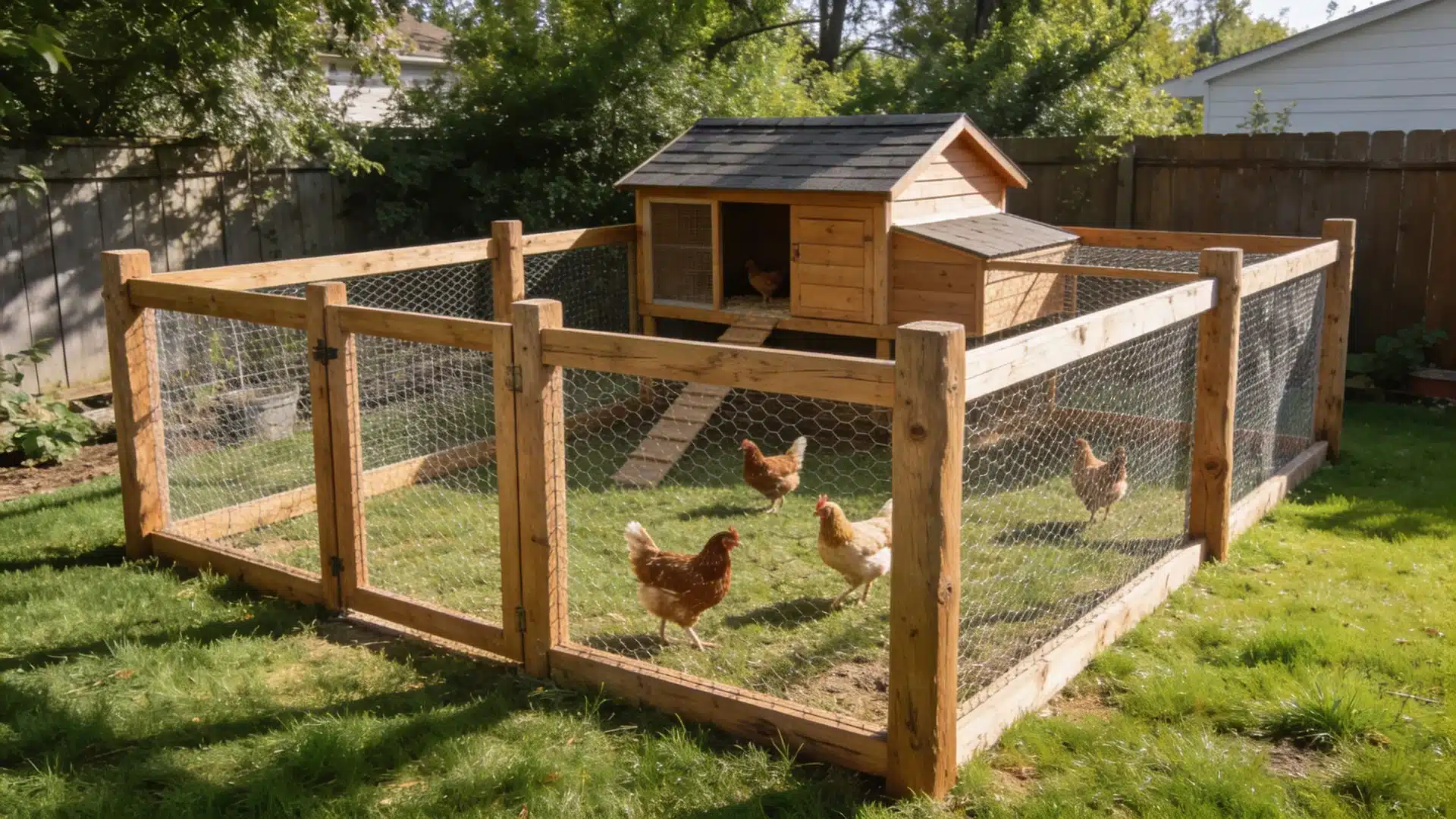
A wooden-frame chicken run is a strong, classic option that blends well with most backyards. It uses sturdy wooden posts with wire mesh attached to the sides for safety and airflow.
This design is easy to customize, so you can adjust the size, add a roof, or include doors for easy access. It provides a secure space where chickens can move freely while staying protected from predators.
With proper sealing and maintenance, a wooden frame run can last for years.
- Chicken Capacity: 6–10 chickens
- Dimensions: 8 ft x 10 ft (can be expanded)
- Difficulty: Intermediate
2. DIY PVC Pipe Chicken Run
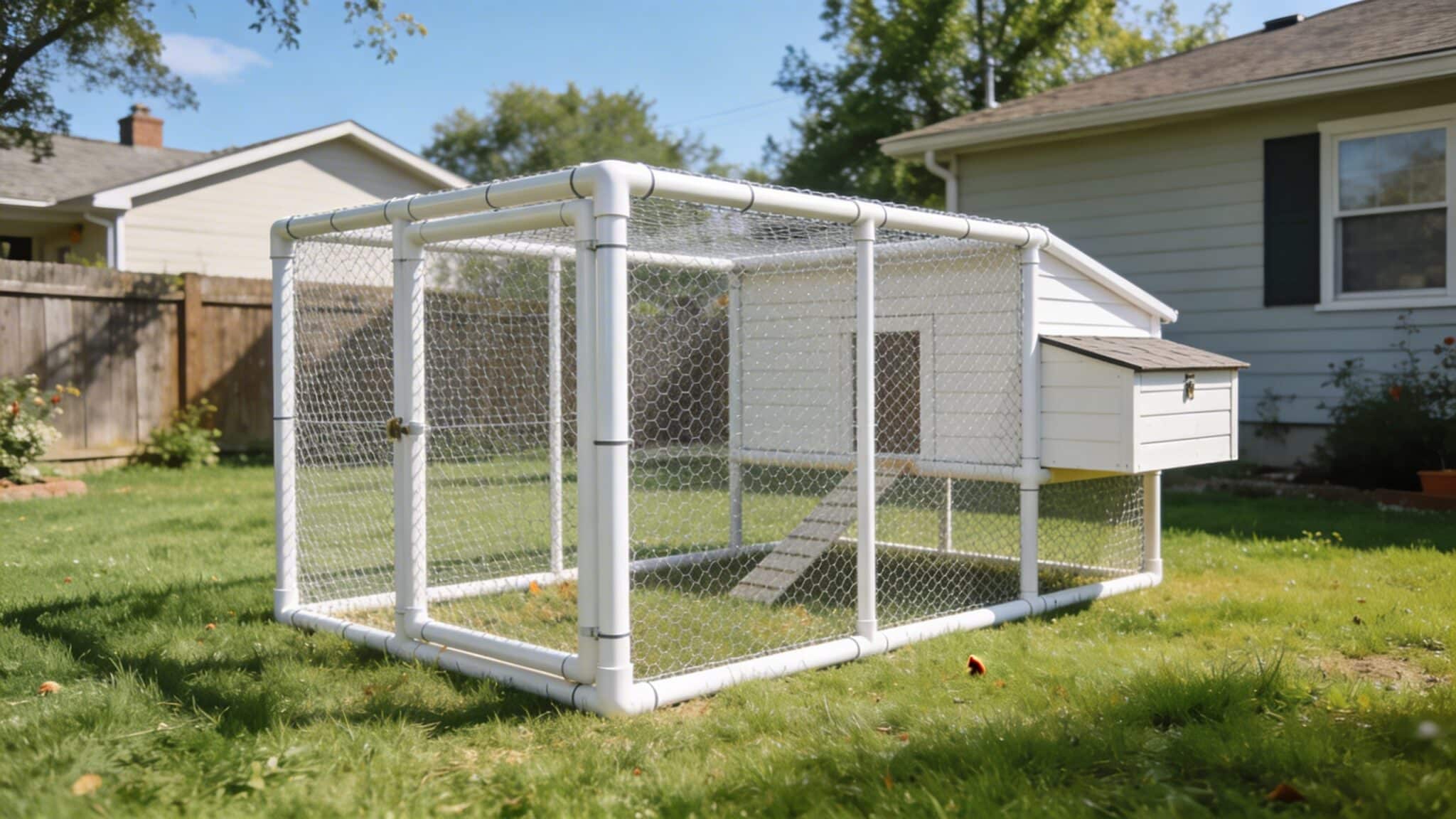
A DIY PVC pipe chicken run is a lightweight and budget-friendly option that is easy to build. It uses PVC pipes to create a frame, which is then covered with wire mesh or netting.
This design is great for beginners because it requires simple tools and basic skills.
It is also easy to move if needed, making it useful for rotating grazing areas. While not as strong as wood or metal, it works well for small flocks in low-risk areas.
- Chicken Capacity: 4–8 chickens
- Dimensions: 6 ft x 8 ft
- Difficulty: Easy
3. Walk-In Chicken Run
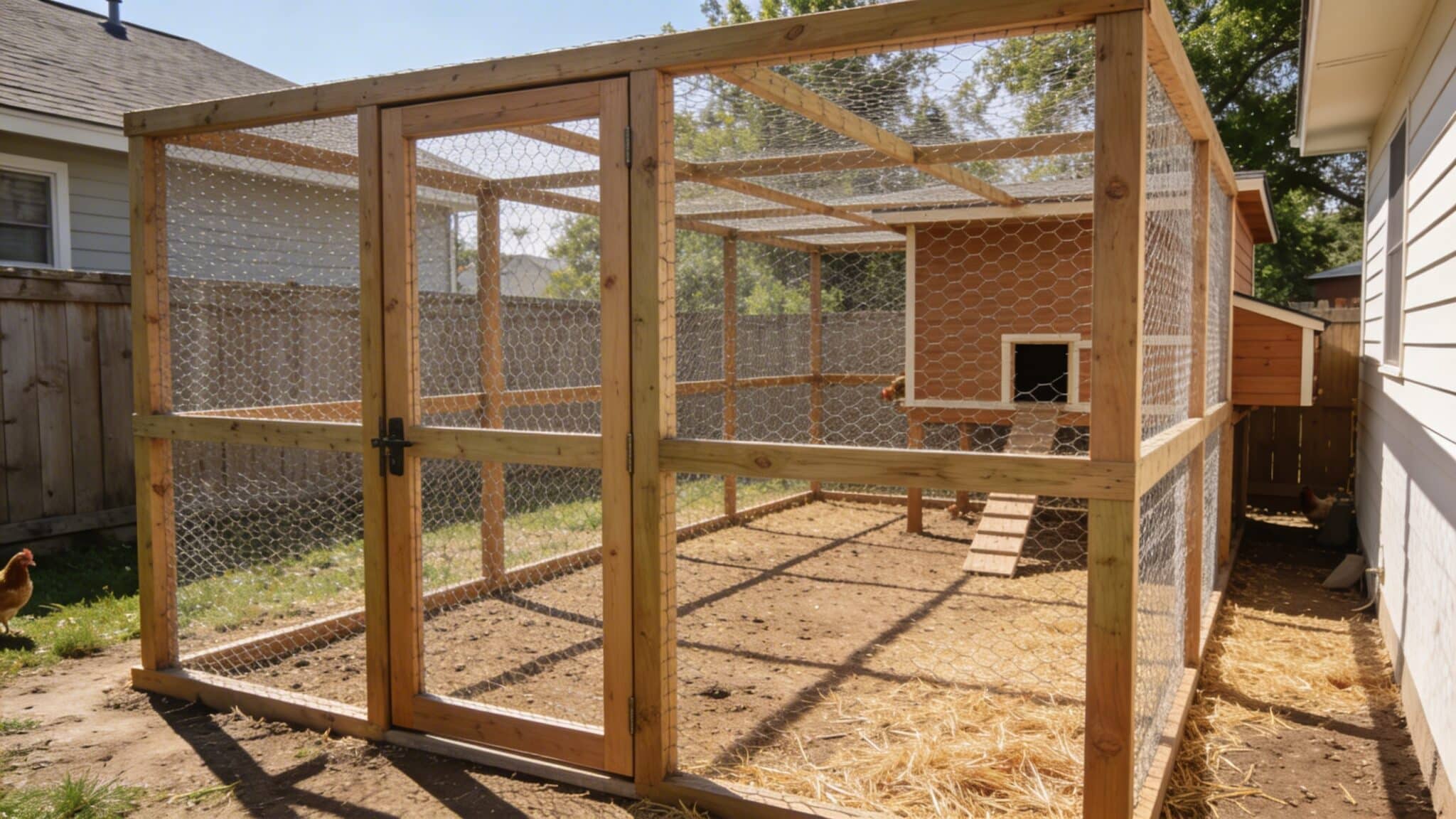
A walk-in chicken run is a spacious and practical design that allows you to enter the enclosure comfortably for feeding, cleaning, and maintenance.
It usually features a tall frame with a secure door and strong wire mesh on all sides. This setup gives chickens plenty of room to move, flap, and stay active while keeping them safe from predators.
It’s ideal for medium- to large-sized flocks and makes daily care much easier than in smaller runs.
- Chicken Capacity: 10–20 chickens
- Dimensions: 8 ft x 16 ft (6 ft height or more)
- Difficulty: Intermediate
4. Small Backyard Chicken Run
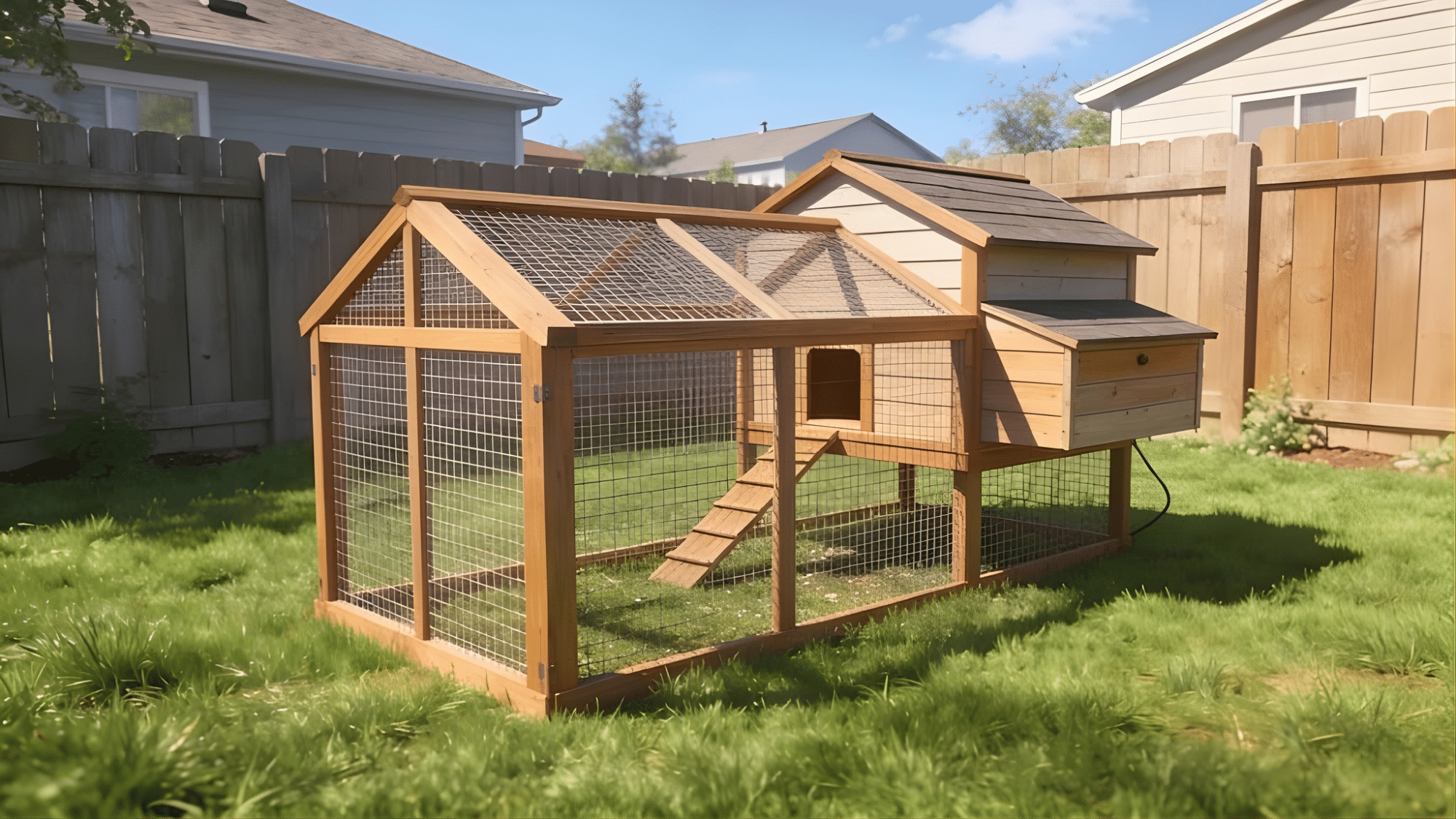
A small backyard chicken run is perfect for limited spaces, providing chickens with a safe place to move around. It is usually compact but well-designed with proper fencing and a secure top to keep predators out.
You can place it next to a coop or build it as an attached extension.
Even in a smaller area, adding perches, a dust bath, or shade can keep chickens active and comfortable. This setup works well for urban homes or small yards.
- Chicken Capacity: 3–5 chickens
- Dimensions: 4 ft x 6 ft
- Difficulty: Easy
5. Large Free-Range Style Chicken Run
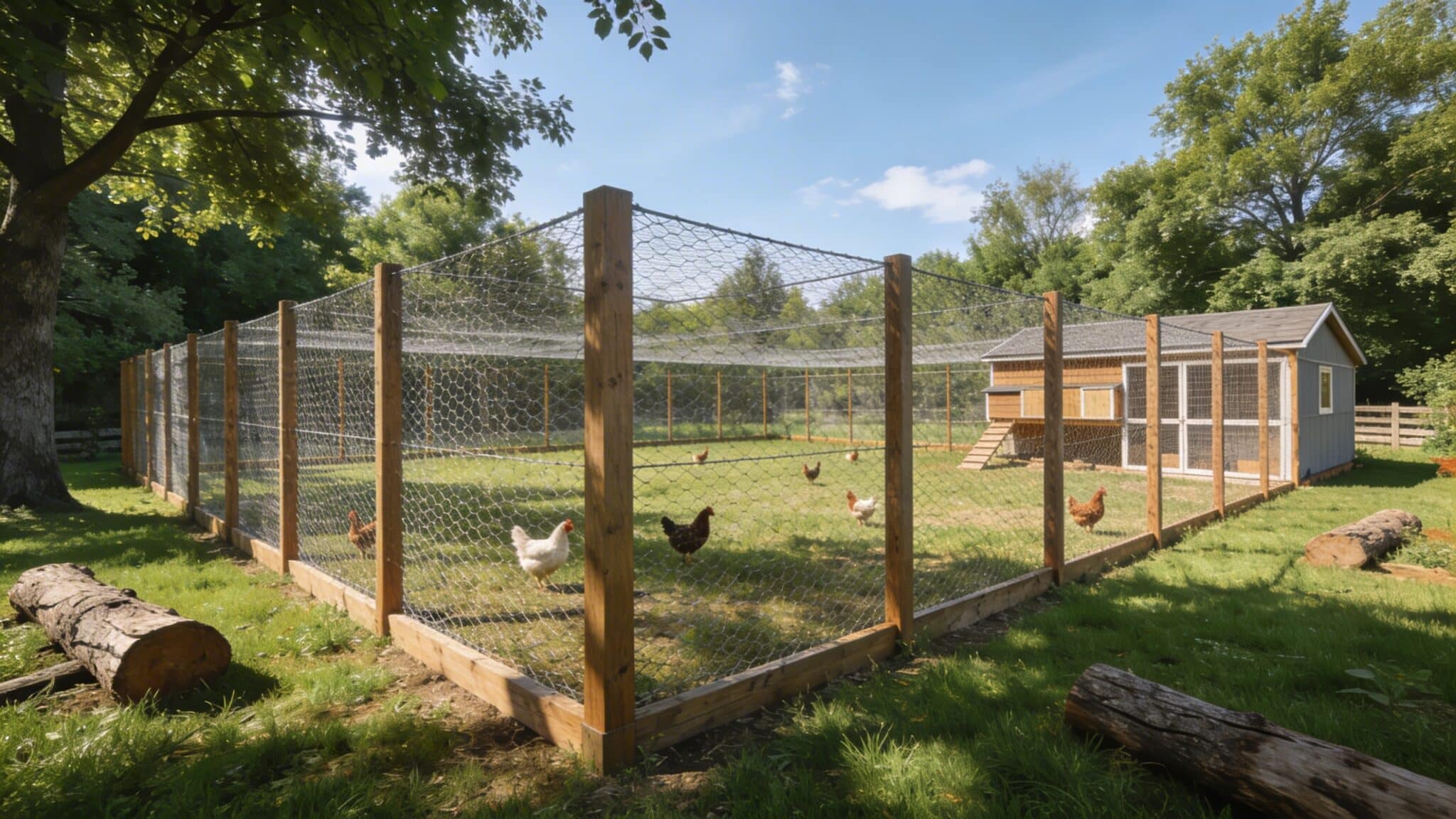
A large, free-range-style chicken run gives chickens plenty of space to roam while keeping them safely enclosed. It mimics a natural environment, allowing birds to scratch, forage, and stay active throughout the day.
This type of run often includes grassy and shaded areas, as well as enrichment features such as logs or perches.
It’s a great option for improving chicken health and reducing stress. Strong fencing and a secure top are important for protecting against predators in larger, open spaces.
- Chicken Capacity: 15–30 chickens
- Dimensions: 12 ft x 20 ft or larger
- Difficulty: Difficult
6. Predator-Proof Chicken Run with Hardware Cloth
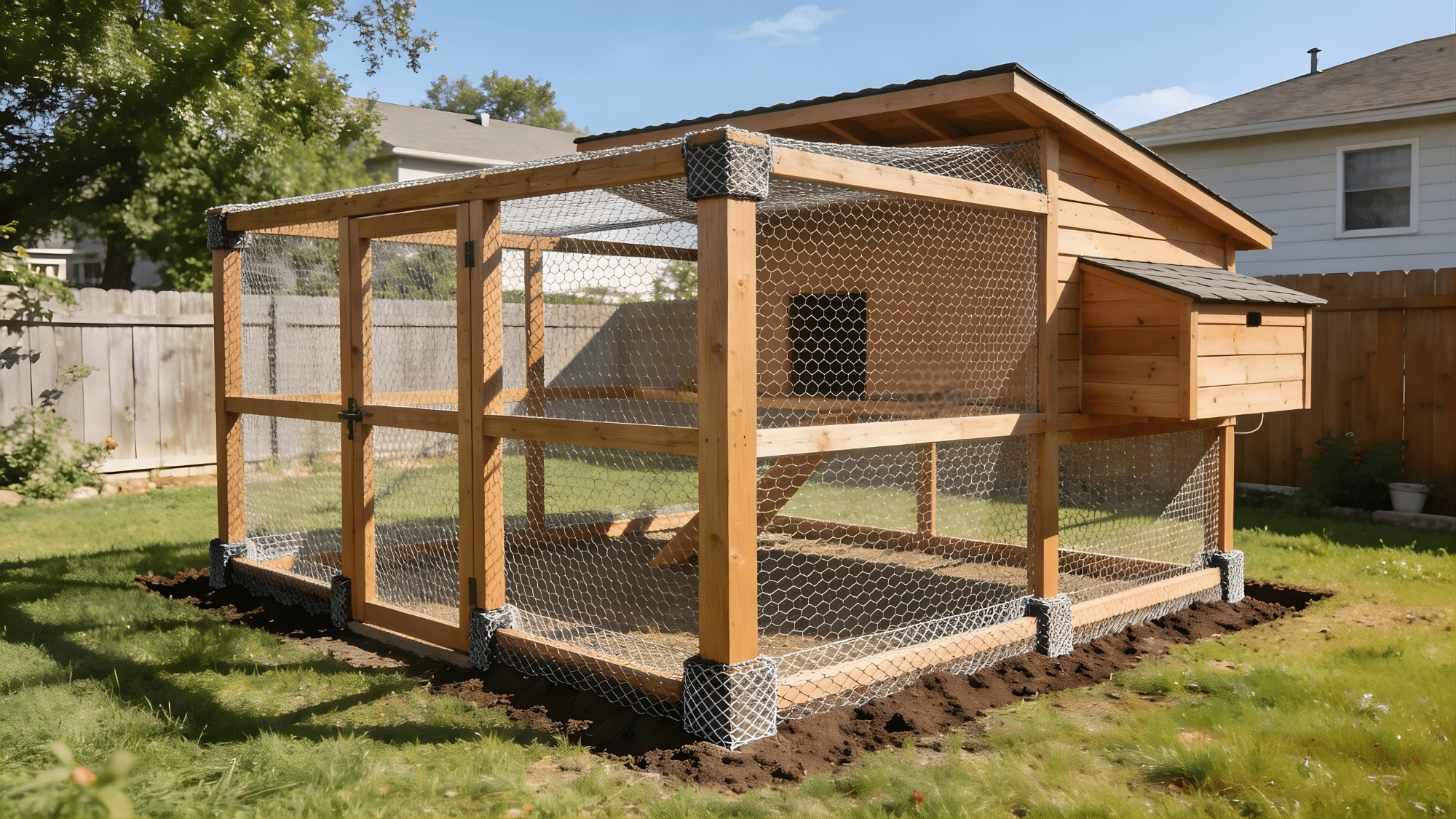
A predator-proof chicken run with hardware cloth offers maximum safety for your flock. Unlike regular chicken wire, hardware cloth has smaller gaps that prevent predators such as snakes, rats, and raccoons from entering.
It is installed on all sides, including the roof, and sometimes even buried underground to stop digging animals.
This design is ideal for areas with high predator activity. While it may cost more and take extra time to build, it provides strong, long-term protection.
- Chicken Capacity: 6–12 chickens
- Dimensions: 8 ft x 10 ft
- Difficulty: Difficult
7. Chicken Run with Shade Cloth Cover
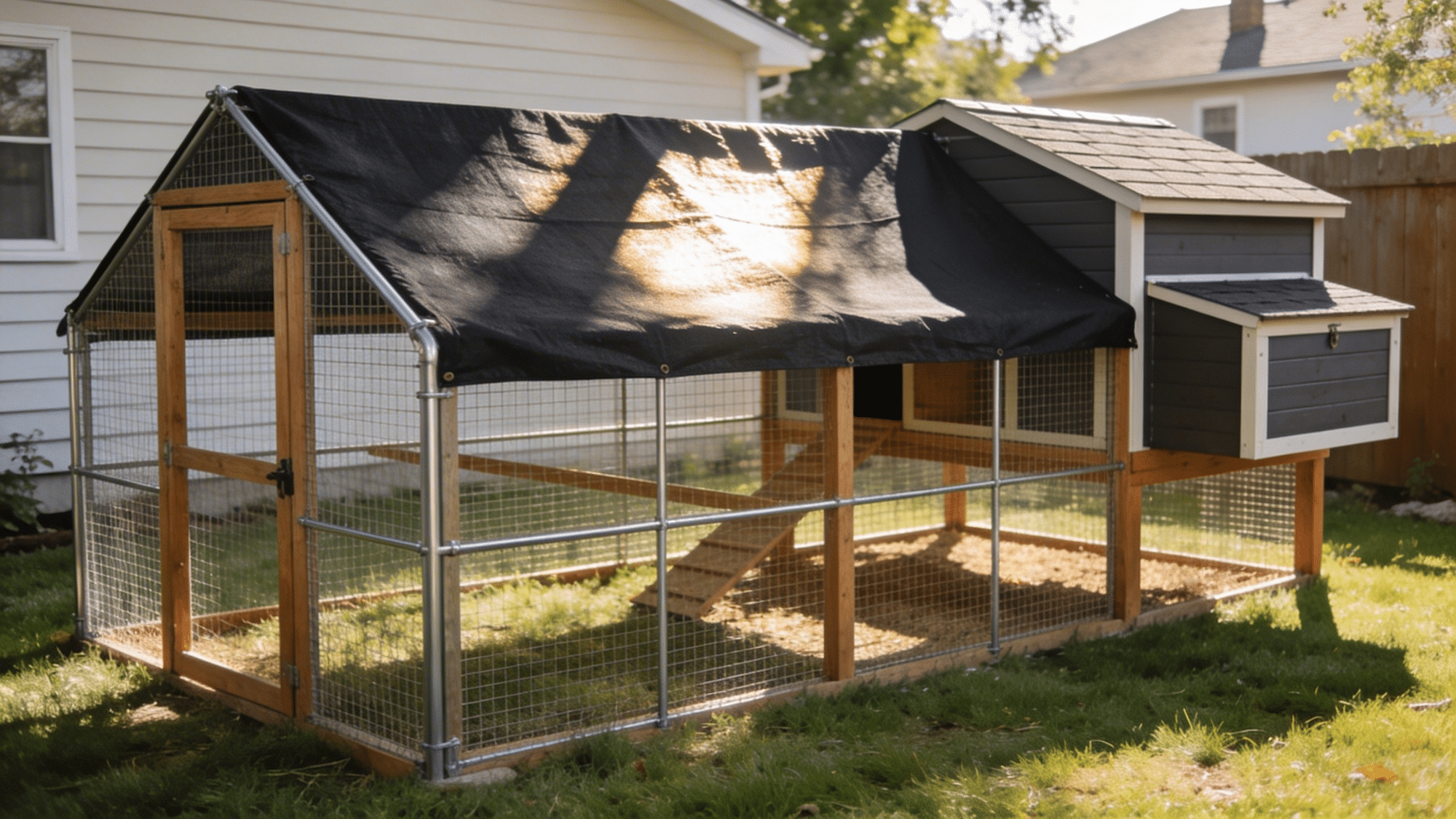
A chicken run with a shade cloth cover is a simple way to protect your flock from harsh sunlight while keeping the space cool and comfortable.
The breathable fabric allows air to pass through while blocking direct sun, helping reduce heat stress during hot days. It can be easily attached to a wooden or metal frame and adjusted as needed.
This setup is great for warmer climates and can be combined with natural shade for better comfort and protection.
- Chicken Capacity: 6–10 chickens
- Dimensions: 6 ft x 10 ft
- Difficulty: Easy
8. A-Frame Chicken Run Design
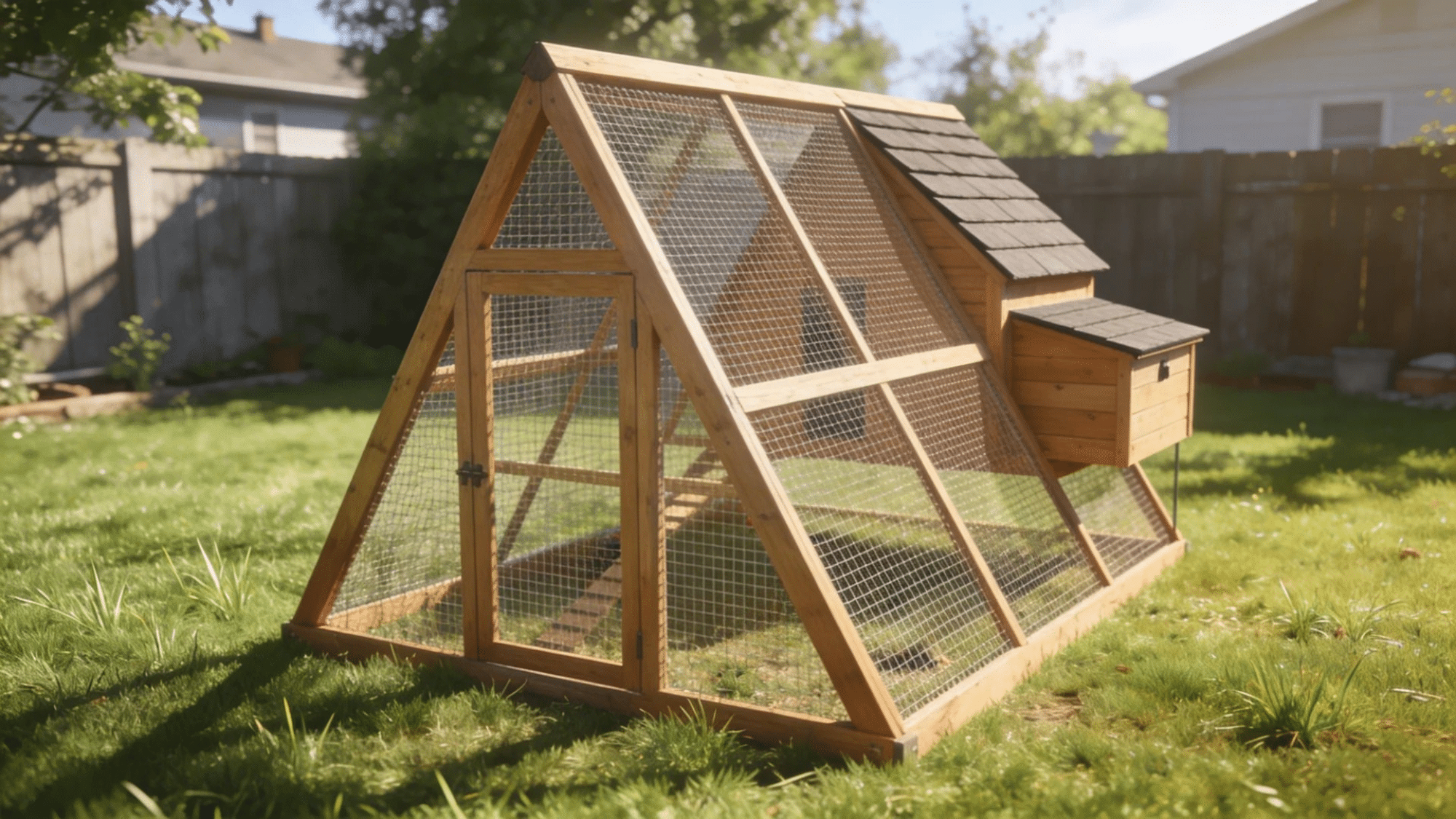
An A-frame chicken run design features a triangular shape that is both simple and sturdy. The sloped sides make it easy to shed rain and provide natural strength without the need for heavy materials.
It is usually lightweight, making it easy to move around the yard for fresh grazing.
This design works well for small flocks and is great for beginners who want a quick setup. The compact structure also helps keep chickens safe while giving them enough space to roam.
- Chicken Capacity: 3–6 chickens
- Dimensions: 4 ft x 6 ft
- Difficulty: Easy
9. Garden Tunnel Chicken Run
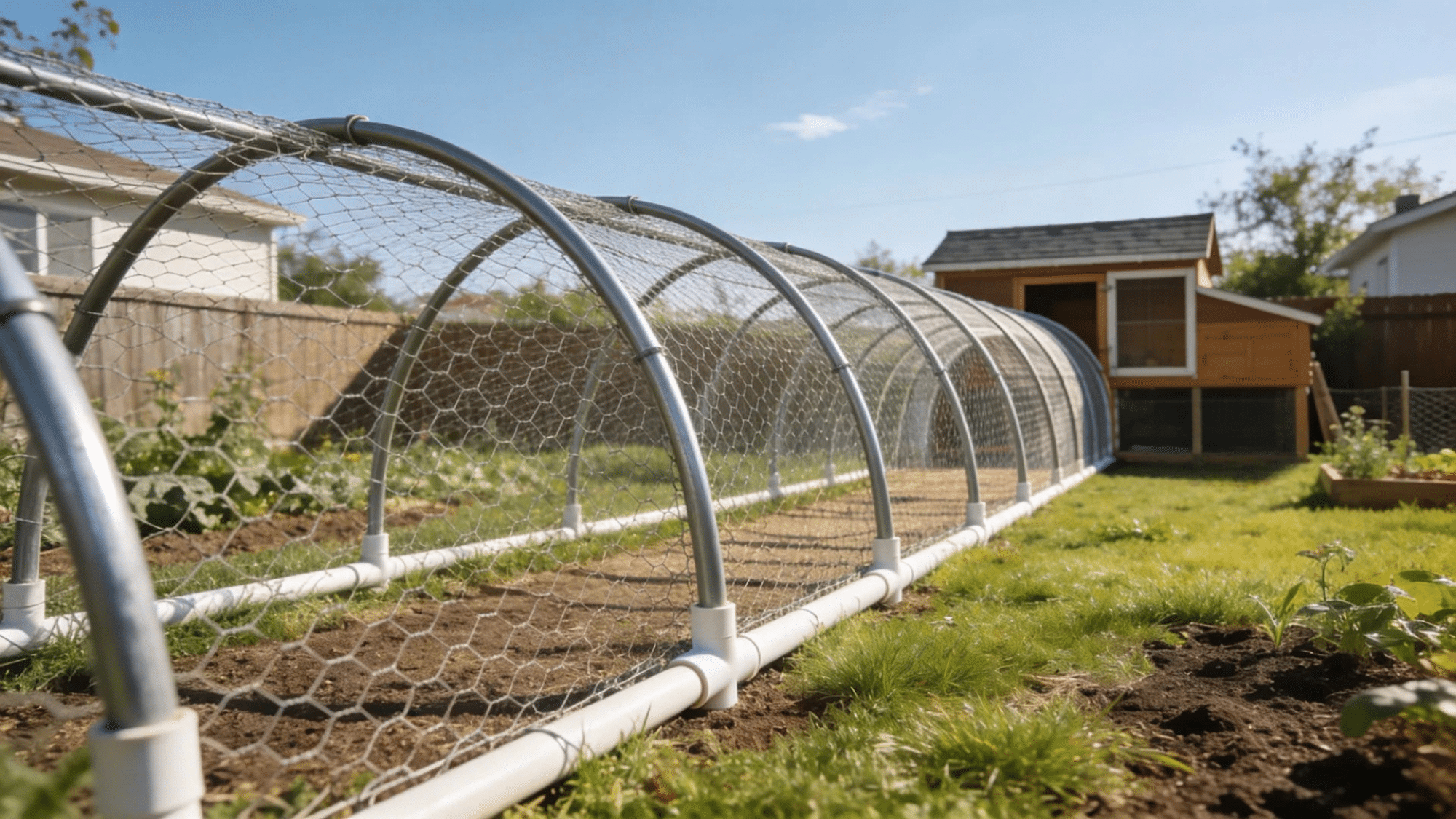
A garden tunnel chicken run is a long, narrow enclosure that allows chickens to roam safely through garden areas. It is usually made using a curved or arched frame covered with wire mesh or netting.
This design lets chickens help with pest control and soil turning while keeping them away from delicate plants. It’s a great way to combine gardening and chicken keeping.
The tunnel can connect different sections of your yard and be moved or extended as needed.
- Chicken Capacity: 4–8 chickens
- Dimensions: 3 ft x 12 ft (tunnel style, extendable)
- Difficulty: Intermediate
10. Rustic Farm-Style Chicken Run
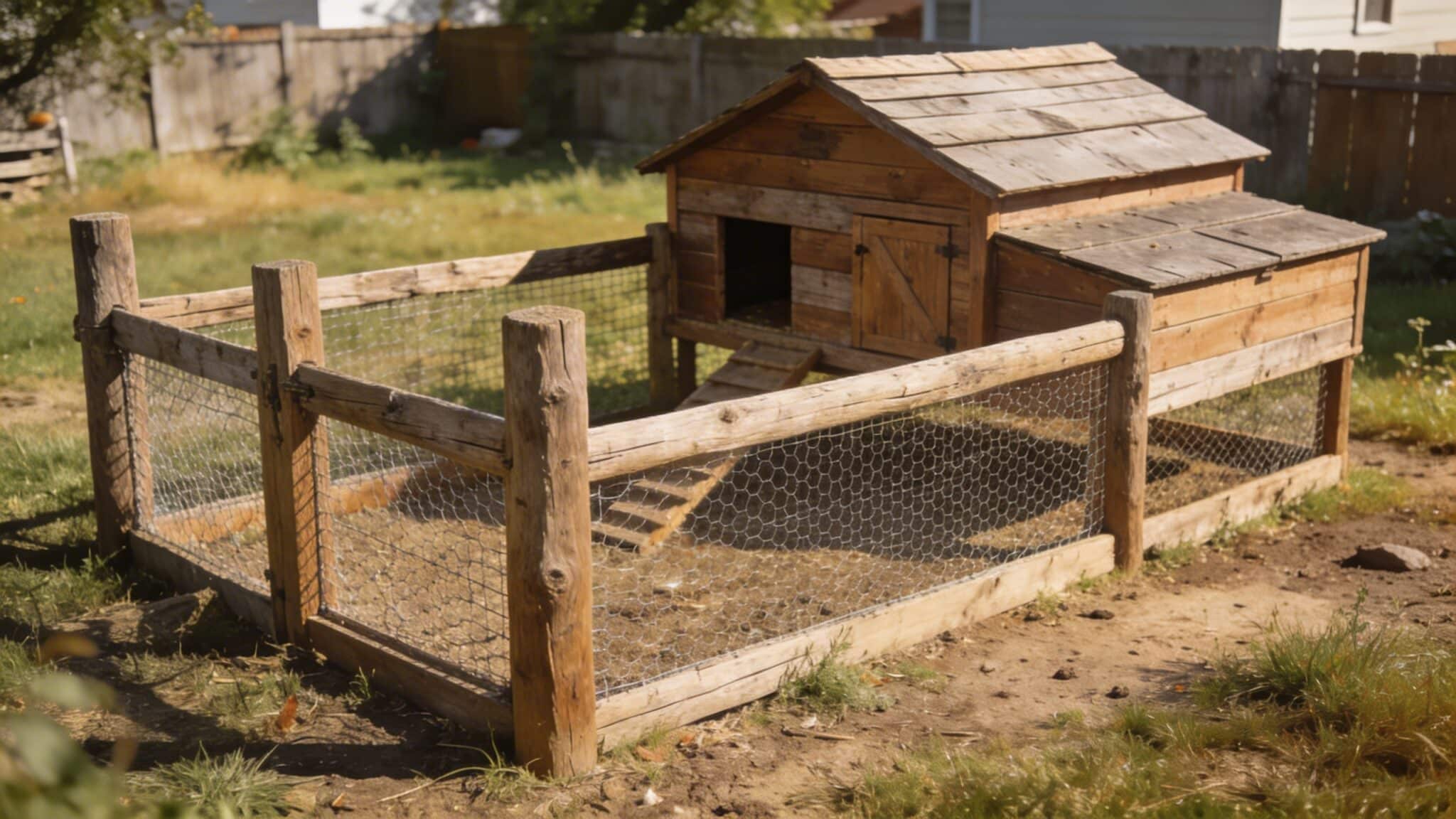
A rustic farm-style chicken run adds a natural, traditional look to your backyard while providing a sturdy, functional space for your chickens.
It uses wood, wire mesh, and reclaimed materials to create a countryside feel. This design mixes well with gardens or farm settings and can include features like wooden posts, simple gates, and shaded areas.
- Chicken Capacity: 6–12 chickens
- Dimensions: 8 ft x 10 ft
- Difficulty: Intermediate
11. Chicken Run with Sand Flooring
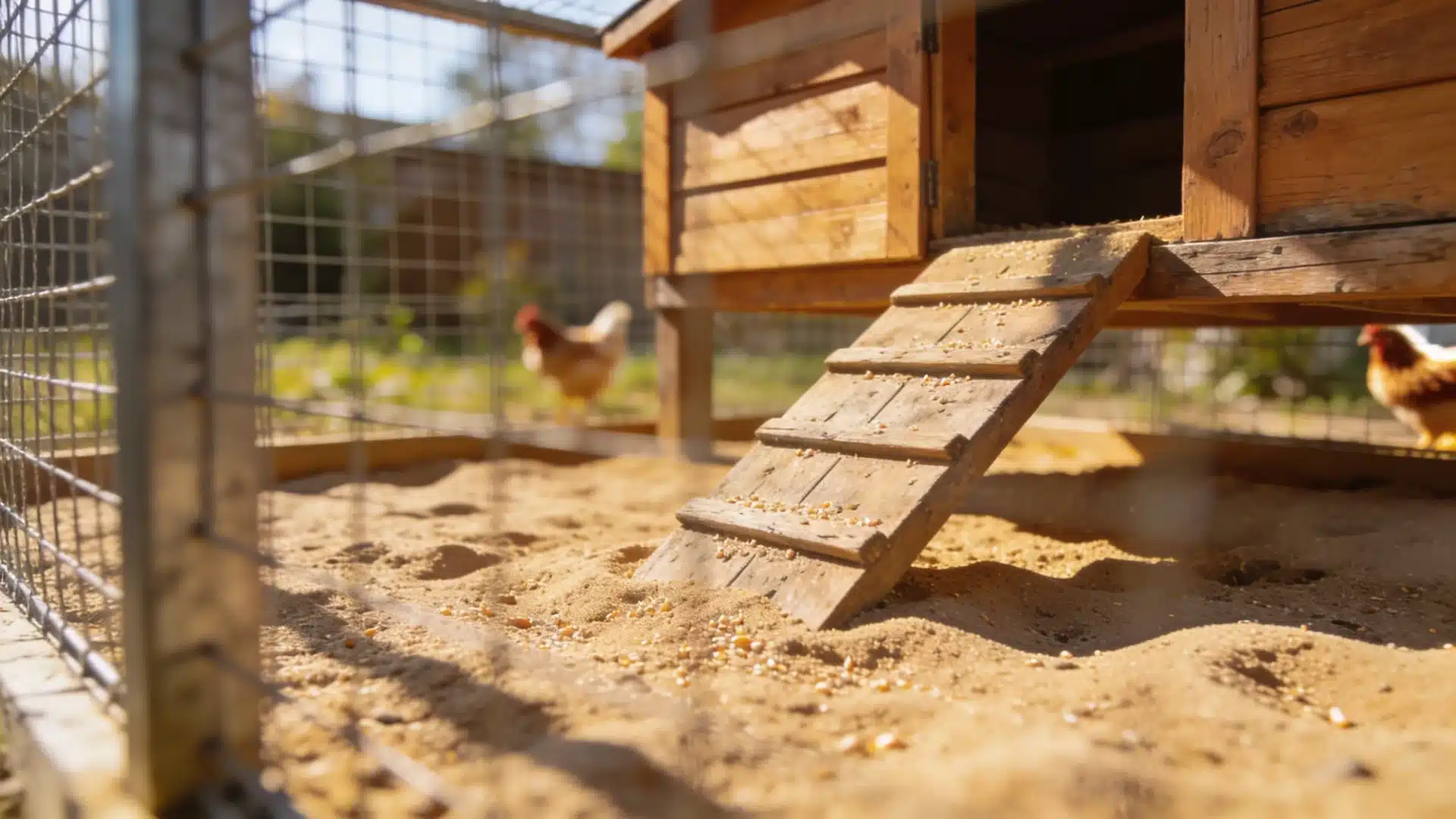
A chicken run with sand flooring is a low-maintenance option that helps keep the area clean and dry. Sand provides excellent drainage, reduces odor, and makes it easier to remove waste with simple raking.
It also provides a comfortable surface for chickens to walk and scratch.
This setup works well in both small and large runs and helps control mud, especially during rainy seasons. Regular cleaning keeps the sand fresh and supports a healthier environment for your flock.
- Chicken Capacity: 6–10 chickens
- Dimensions: 6 ft x 10 ft
- Difficulty: Easy
12. Multi-Level Chicken Run
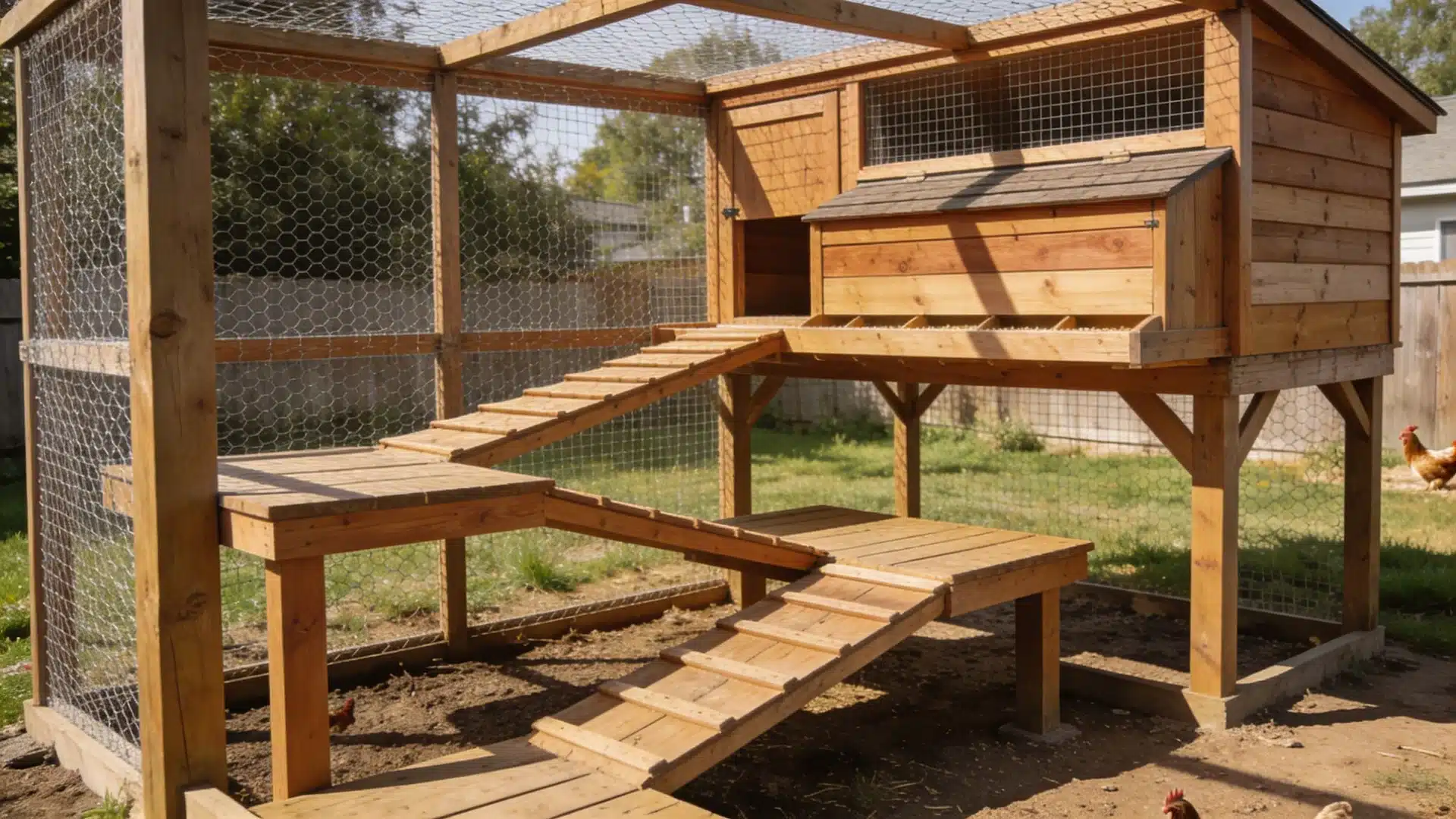
A multi-level chicken run adds vertical space, giving chickens more room to move, perch, and stay active. It includes ramps, platforms, and raised sections that encourage natural behaviors like climbing and exploring.
This design is especially useful when ground space is limited, as it maximizes the usable area.
It can also reduce boredom and improve flock health. Strong construction and secure ramps are important to keep chickens safe while moving between levels.
- Chicken Capacity: 8–15 chickens
- Dimensions: 8 ft x 10 ft (with multiple levels)
- Difficulty: Difficult
13. Urban Balcony Chicken Run
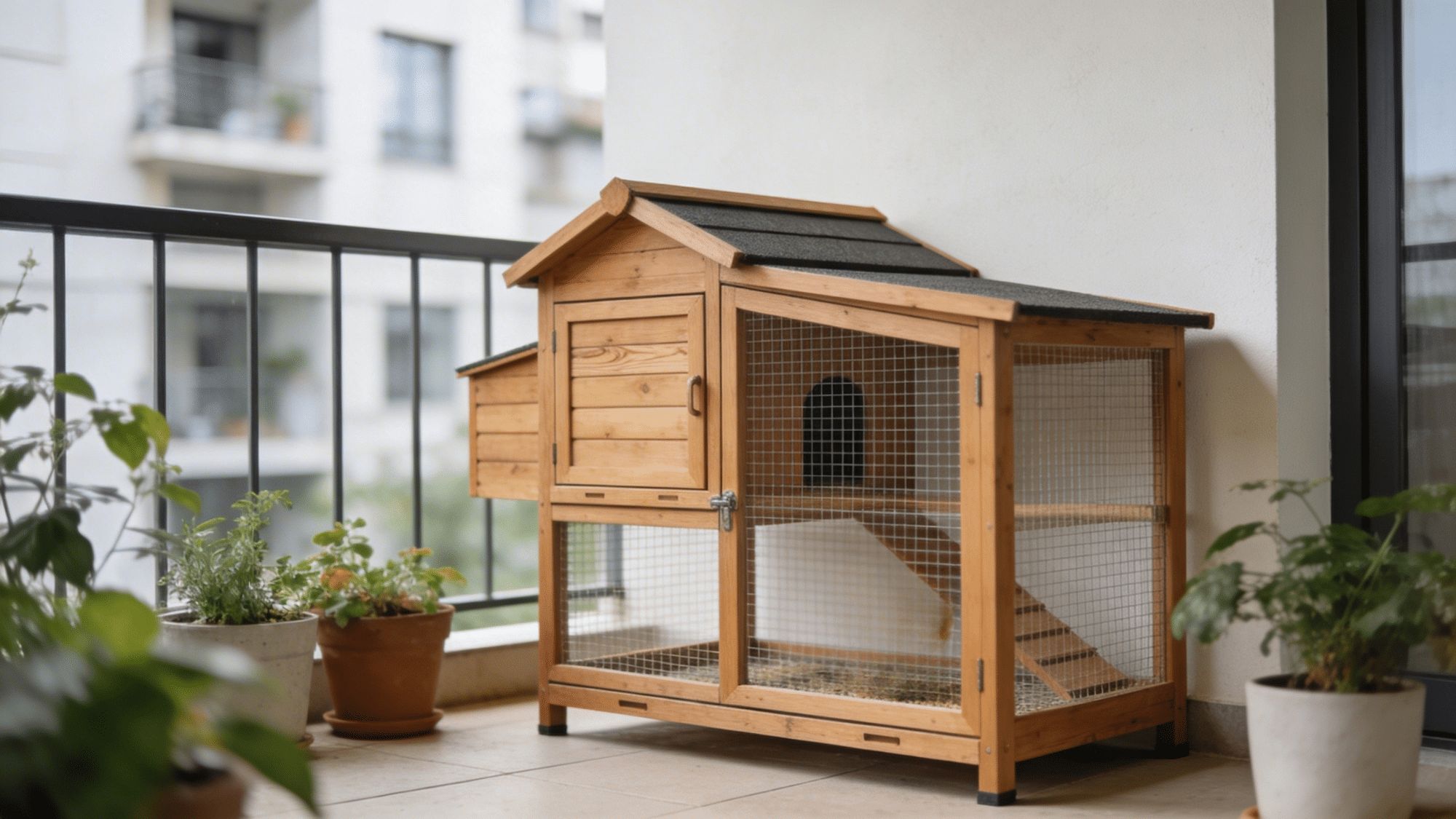
An urban balcony chicken run is a compact setup for small spaces, such as balconies or terraces. It uses a lightweight frame with secure wire mesh to keep chickens safe while allowing fresh air and sunlight.
This design is ideal for city living and usually includes a small coop, perch, and easy-to-clean flooring.
Proper planning is important for managing noise, odor, and space constraints. It’s best suited for a few chickens and works well with regular cleaning and care.
- Chicken Capacity: 2 chickens
- Dimensions: 3 ft x 5 ft
- Difficulty: Intermediate
14. Chicken Run with Dust Bath Area
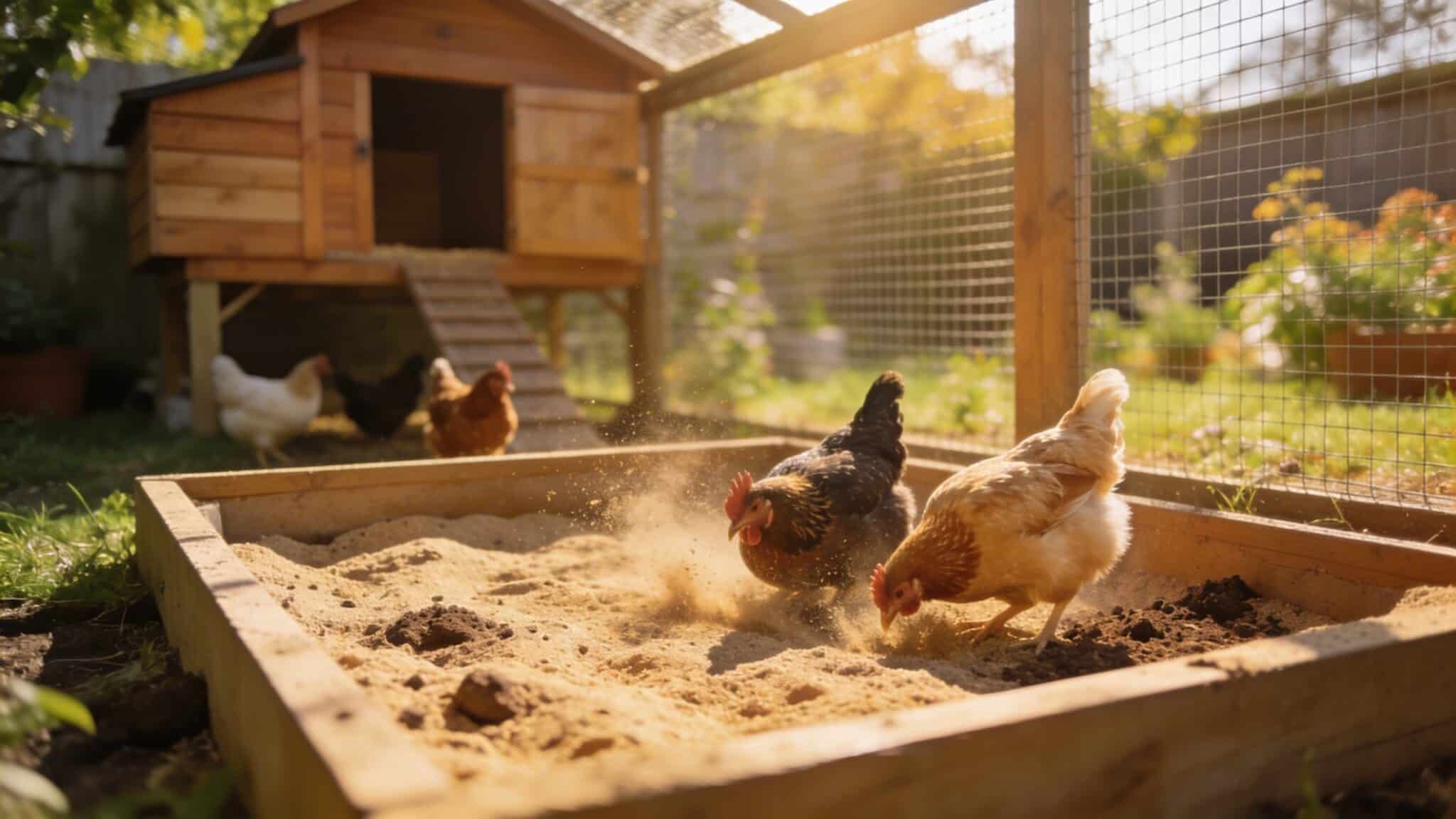
A chicken run with a dust bath area gives chickens a dedicated space to clean themselves and stay healthy. Chickens naturally use dust baths to remove parasites and keep their feathers in good condition.
This setup includes a section filled with sand, dirt, or ash where they can roll and groom. It helps reduce stress and supports natural behavior.
The area should stay dry, so adding a small cover or sheltered section works best for year-round use.
- Chicken Capacity: 6–10 chickens
- Dimensions: 6 ft x 10 ft (with dust bath section)
- Difficulty: Easy
15. Chicken Run with Feeding Station
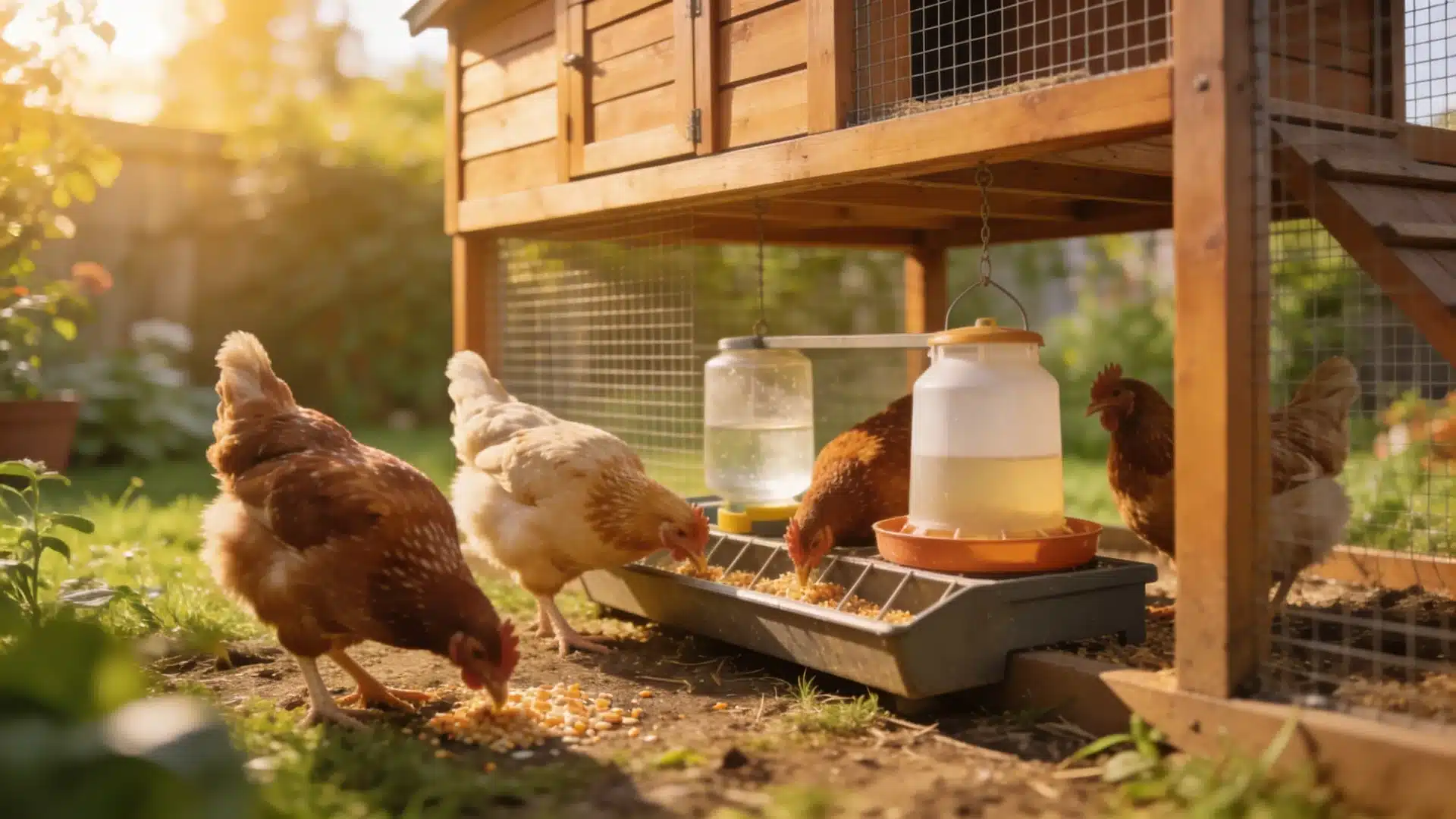
A chicken run with a feeding station keeps food and water organized while reducing waste and mess. The station is usually placed in a sheltered area to protect the feed from rain and dirt.
It helps prevent chickens from scattering food on the ground, which can attract pests.
Elevated feeders and waterers also keep supplies clean and easy to access. This setup makes daily care more efficient and supports better hygiene within the run.
- Chicken Capacity: 6–12 chickens
- Dimensions: 6 ft x 10 ft
- Difficulty: Easy
16. Chicken Run with Rain Shelter
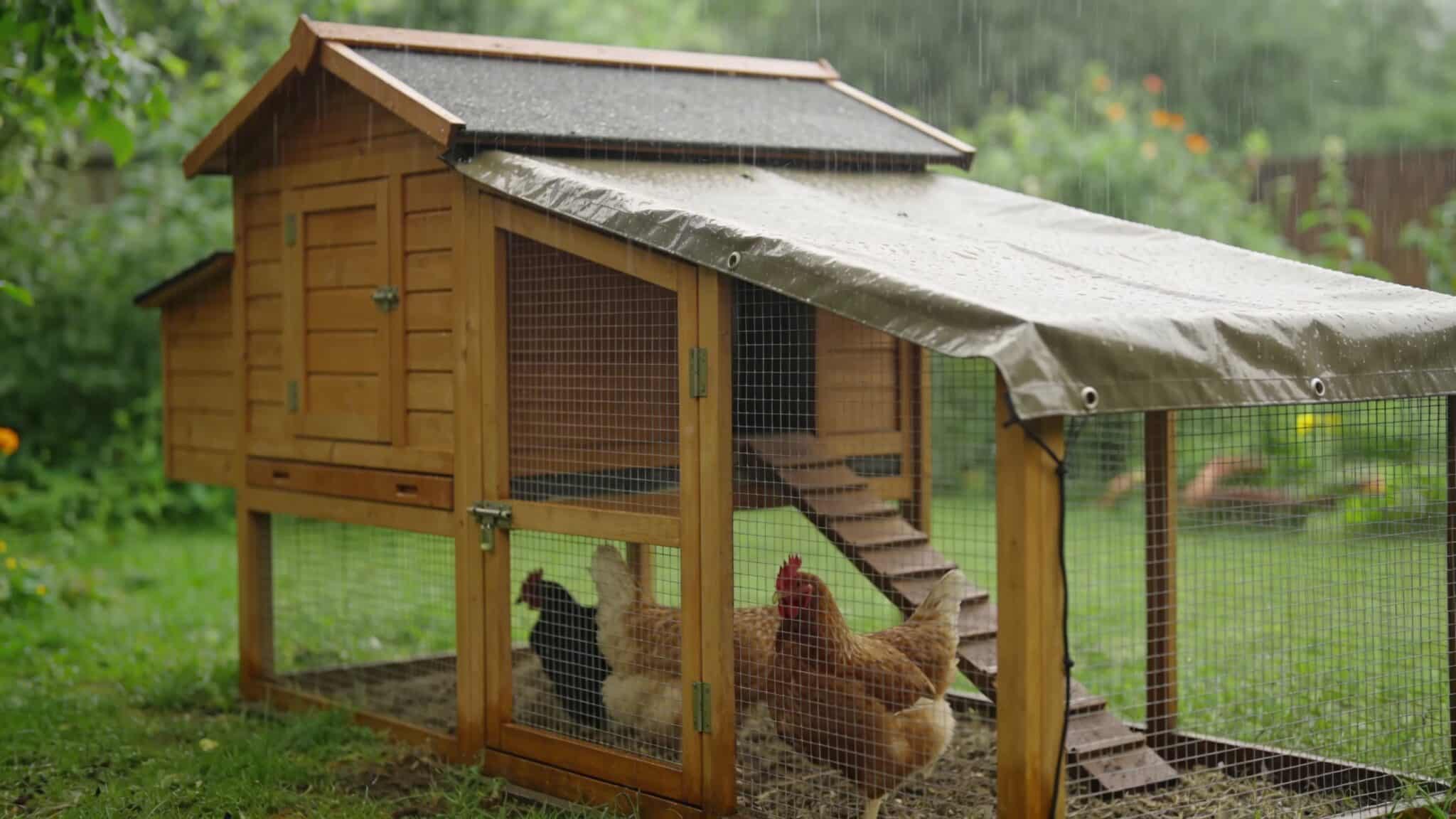
A chicken run with a rain shelter provides a dry and comfortable space for chickens during wet weather. It includes a covered section using materials like metal sheets, plastic panels, or tarps to protect against rain.
This helps prevent muddy conditions, reduces odor, and keeps feed and bedding dry.
Chickens can stay active even during rainy days without stress. It’s a practical addition for areas with frequent rainfall and can be combined with open sections for better airflow.
- Chicken Capacity: 6–12 chickens
- Dimensions: 6 ft x 10 ft
- Difficulty: Easy
DIY Chicken Run: Step-by-Step Guide
Follow these steps to safely expand your chicken run and keep your chickens protected.
Tools and Materials You’ll Need
- Tape measure: Measure and mark run
- Stakes & string: Outline corners and perimeter
- Post digger: Dig 2–2.5 ft holes for posts
- Level: Keep posts vertical
- Hammer & wire cutters: Secure and cut fencing
- Rake: Level ground inside run
- Posts (landscape timber or 4×4): Support fence structure
- Chicken wire / hardware cloth: Enclosure and predator protection
- Boards (deck boards or 2x4s): Reinforce top & bottom of fence
- Rocks: Prevent digging under fence
Step 1: Plan and Mark the Area
Measure the space so it lines up with the chicken coop and property boundaries. Place stakes at every corner and run string around them. This lets you see exactly how big the run will be and where the posts will go.
Step 2: Dig and Install Posts
Use a post digger to dig holes 2–2.5 feet deep. The hole only needs to be the width of the post. Place the post in the hole, check it is perfectly vertical with a level, and backfill with dirt. Repeat for each corner and along the perimeter.
Step 3: Add Fencing
Wrap the run with fencing to keep chickens in and predators out. If the fence holes are large, attach hardware cloth or chicken wire along the bottom two feet to prevent predators from reaching in.
Step 4: Reinforce the Fence
Attach boards along the top and bottom of the fence. Cut deck boards in half if needed to save money. This prevents the fence from bowing and keeps it sturdy against animals leaning or pushing.
Step 5: Cover the Top
Protect chickens from climbing animals and hawks by covering the top with chicken wire. Install a post in the center and run a beam across for support so the wire doesn’t sag.
Step 6: Prevent Digging and Finish Up
Level the ground inside the run to stop chickens from digging accidental holes. Spread large rocks around the perimeter to prevent predators from digging underneath. Make sure everything is secure before letting chickens in.
To see the process in action, watch the video tutorial below:
Conclusion
Building the right chicken run doesn’t have to be complicated. With the ideas shared above, you now have plenty of options to create a space that fits your yard, budget, and flock size.
The key is to focus on safety, comfort, and enough room for your chickens to stay active and healthy.
Start simple if you need to, and improve your setup over time. Even small changes can make a big difference in how your chickens live and behave.
Now I’d love to hear from you; what kind of chicken run are you using or planning to build? Share your experience in the comments below!
Frequently Asked Questions
What Is the Best Flooring for A Chicken Run?
The best flooring options include sand, grass, or gravel. These materials help with drainage, reduce odor, keep the run clean, and support chickens’ natural scratching behavior.
Do Chicken Runs Need a Roof?
A roof is recommended to protect chickens from rain, sun, and aerial predators. It also helps keep the ground dry and improves overall comfort inside the run.
Do Chicken Runs Smell Bad?
Chicken runs can smell if not cleaned regularly. Proper flooring, good drainage, and routine maintenance help control odor and keep the environment fresh and comfortable for chickens.