

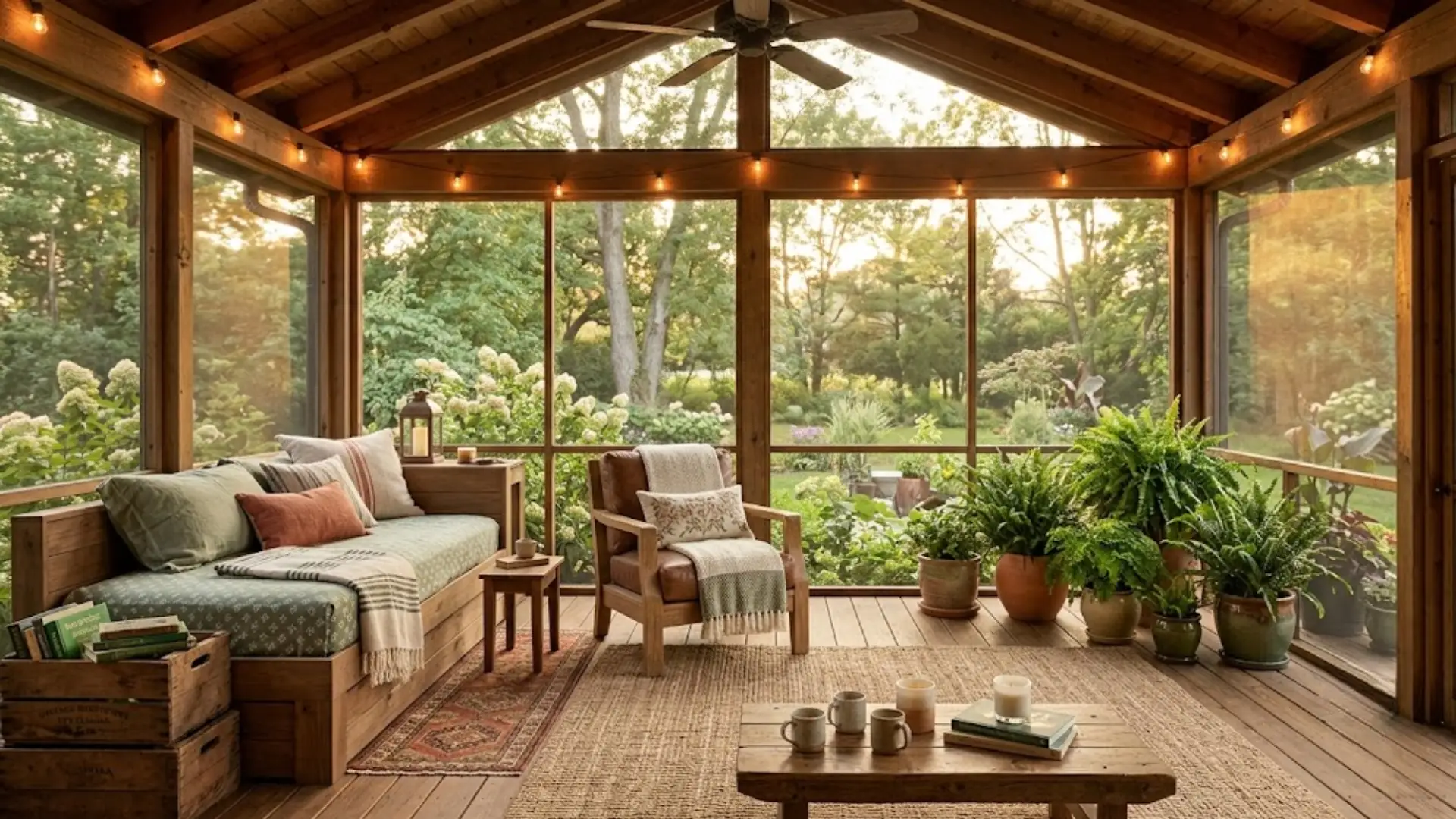
A porch should be a place where you actually want to spend time, not a spot that ends up storing extra furniture and forgotten decorations.
I’ve found that the best screen porch ideas focus on comfort, function, and simple design choices that make the space useful every day. If your porch feels unfinished, cramped, or difficult to decorate, a few practical updates can make a noticeable difference.
You’ll learn how to choose the right layout, furniture, colors, lighting, flooring, plants, and privacy features that work together.
By the end, you’ll have ideas that help you create an outdoor room that feels comfortable, inviting, and easy to enjoy throughout the year.
Screened Porch or Screened Patio: What’s Actually Different
People often use screened porch and screened patio to mean the same thing, and in everyday conversation, that is usually fine.
The difference is mainly in how the space is built. A screened porch is usually raised above the ground, attached to the house, and covered by a roof.
It often has a finished floor, similar to a deck or an indoor room that opens to the outdoors. A screened patio, on the other hand, usually sits at ground level on a concrete slab, pavers, or stone.
It may still be attached to the house, but the structure is usually simpler. This difference matters more during construction than decorating.
Raised porches need different flooring and moisture protection than ground-level patios. For layout, furniture, lighting, colors, rugs, plants, and decor, most screen porch ideas work well for both spaces.
Screen Porch Ideas for Every Layout and Furniture Style
The best screen porch ideas start with layout, because even pretty furniture fails if the space feels cramped or awkward.
1. Zone the Space by How You’ll Use It
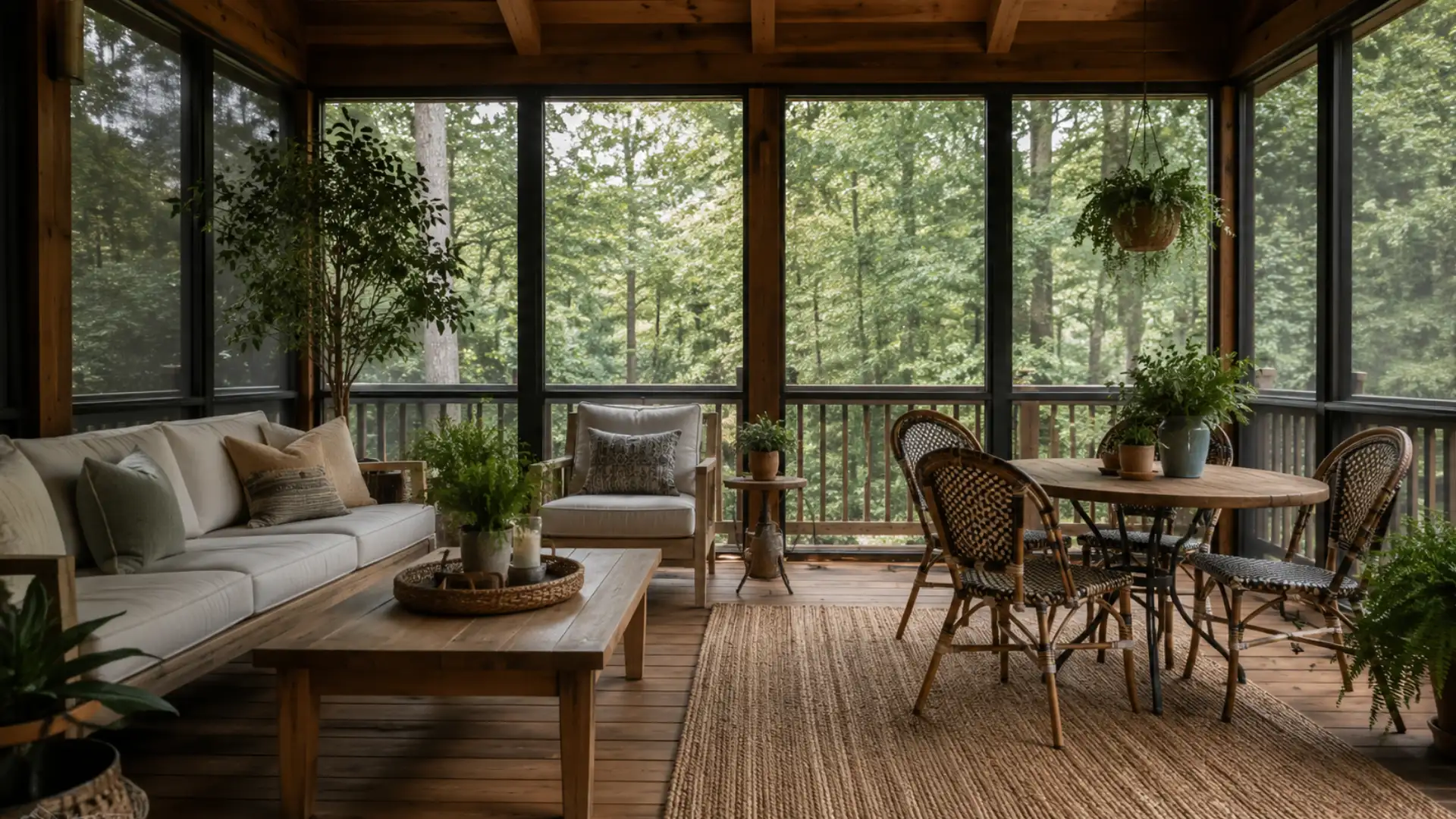
Before buying anything, decide what the porch is mostly for: morning coffee, family dinners, or a spot to read after the kids are in bed.
A person trying to do everything at once usually ends up doing nothing well. If the space is large enough, split it into two zones with a rug or a change in furniture height, so a lounge area and a small dining spot can coexist without competing.
This zoning approach aligns with the broader shift in outdoor living trends toward covered, multi-use rooms rather than single-purpose patios, and it works just as well for outdoor deck ideas as it does for spaces behind a screen.
2. Anchor the Layout with a Daybed or Porch Swing
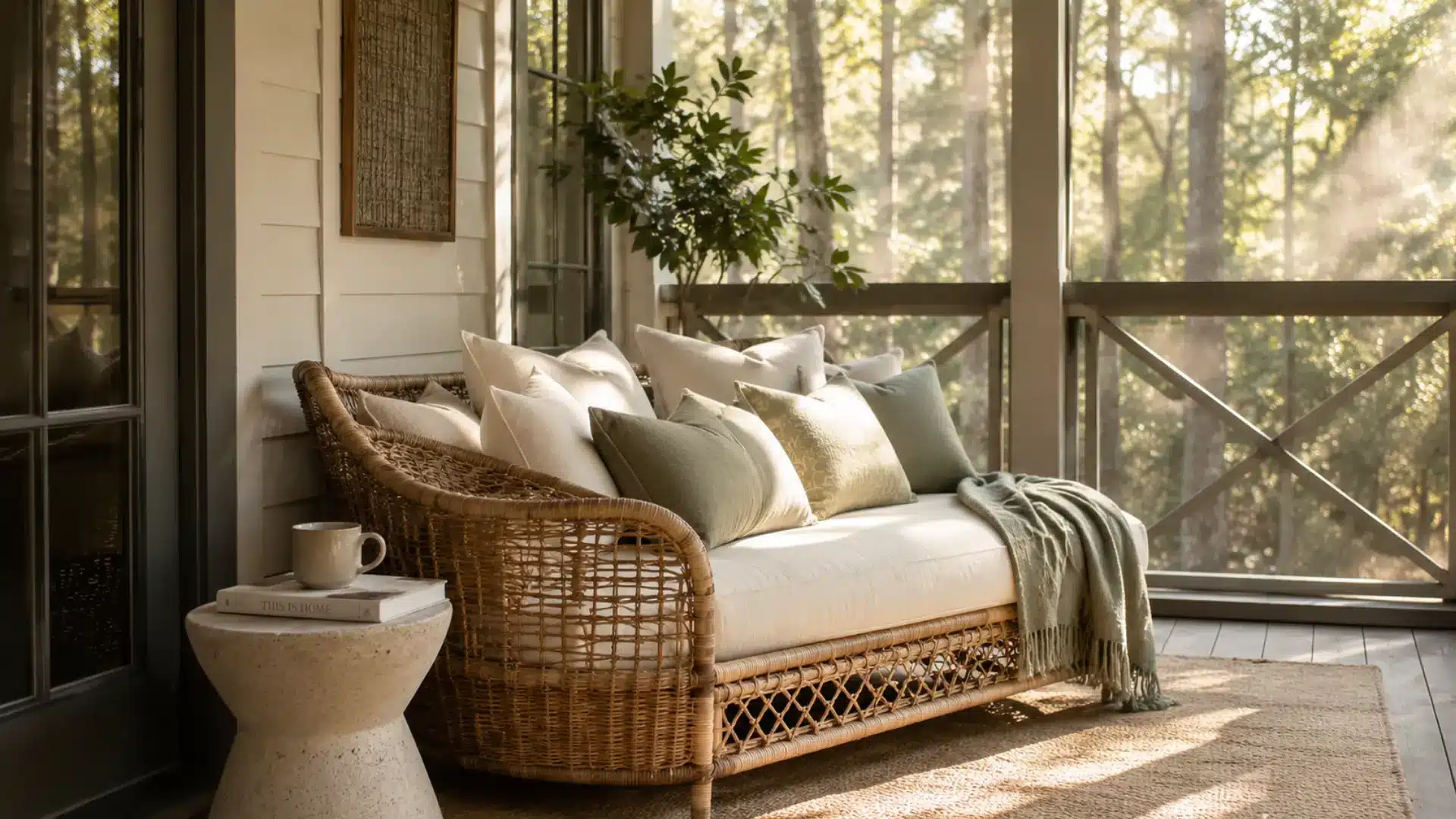
A daybed or swing does double duty as seating and as the visual anchor of the room, the piece around which everything else gets arranged.
It also signals that the porch is meant for staying a while, not just passing through. If floor space is tight, a hanging chair takes up less footprint while still giving the space a clear focal point.
3. Pick Furniture and Fabrics Built for Outdoor Weather
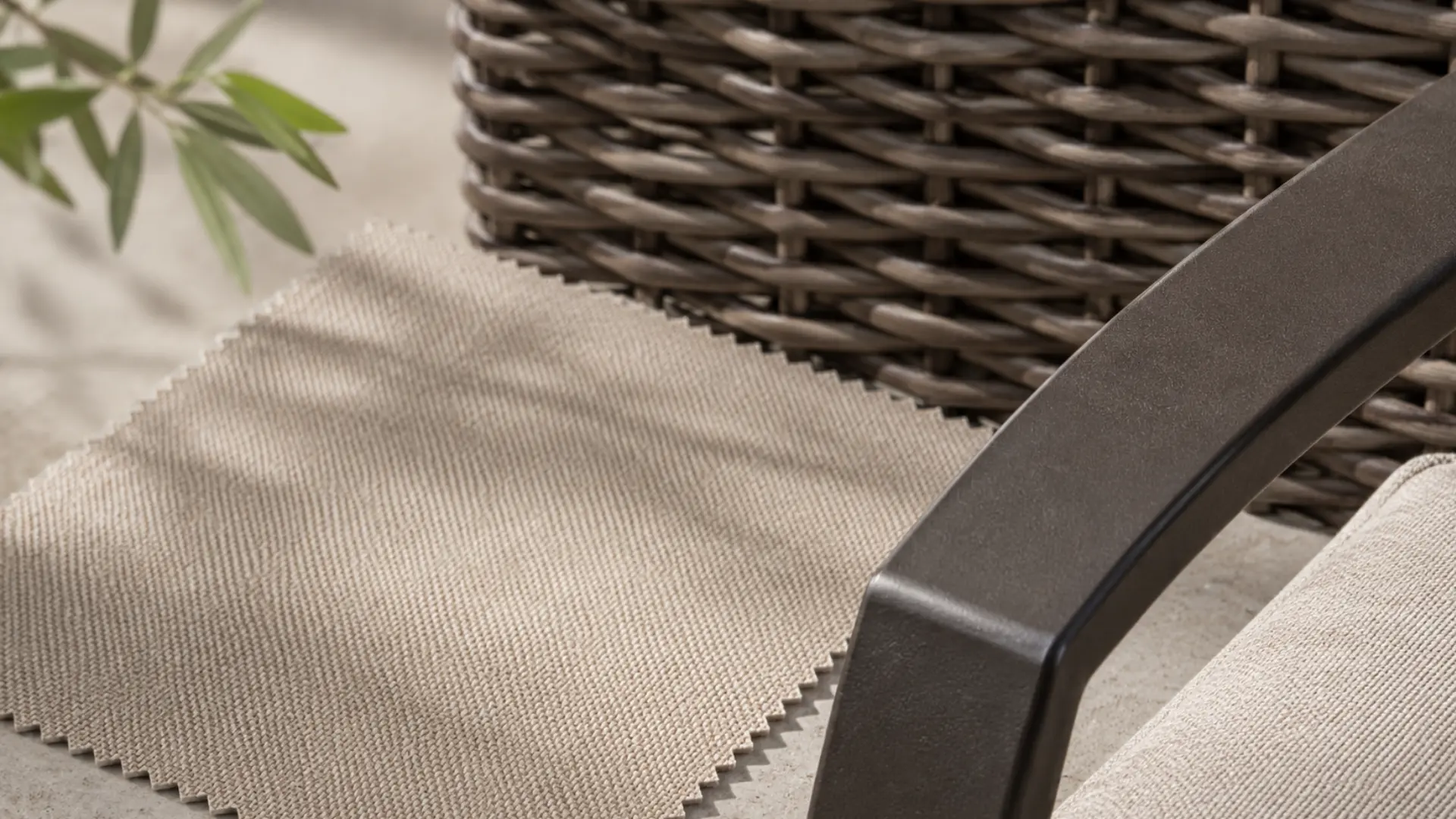
Even under a roof, a screened porch still experiences humidity, dust, and temperature fluctuations, so indoor furniture will not always hold up well.
Choose solution-dyed acrylic fabrics for fade and mildew resistance, powder-coated aluminum frames for rust resistance, removable cushion covers for easier cleaning, and woven resin wicker instead of natural rattan when moisture is a concern.
4. Make a Small Screened Patio Feel Full, Not Cramped
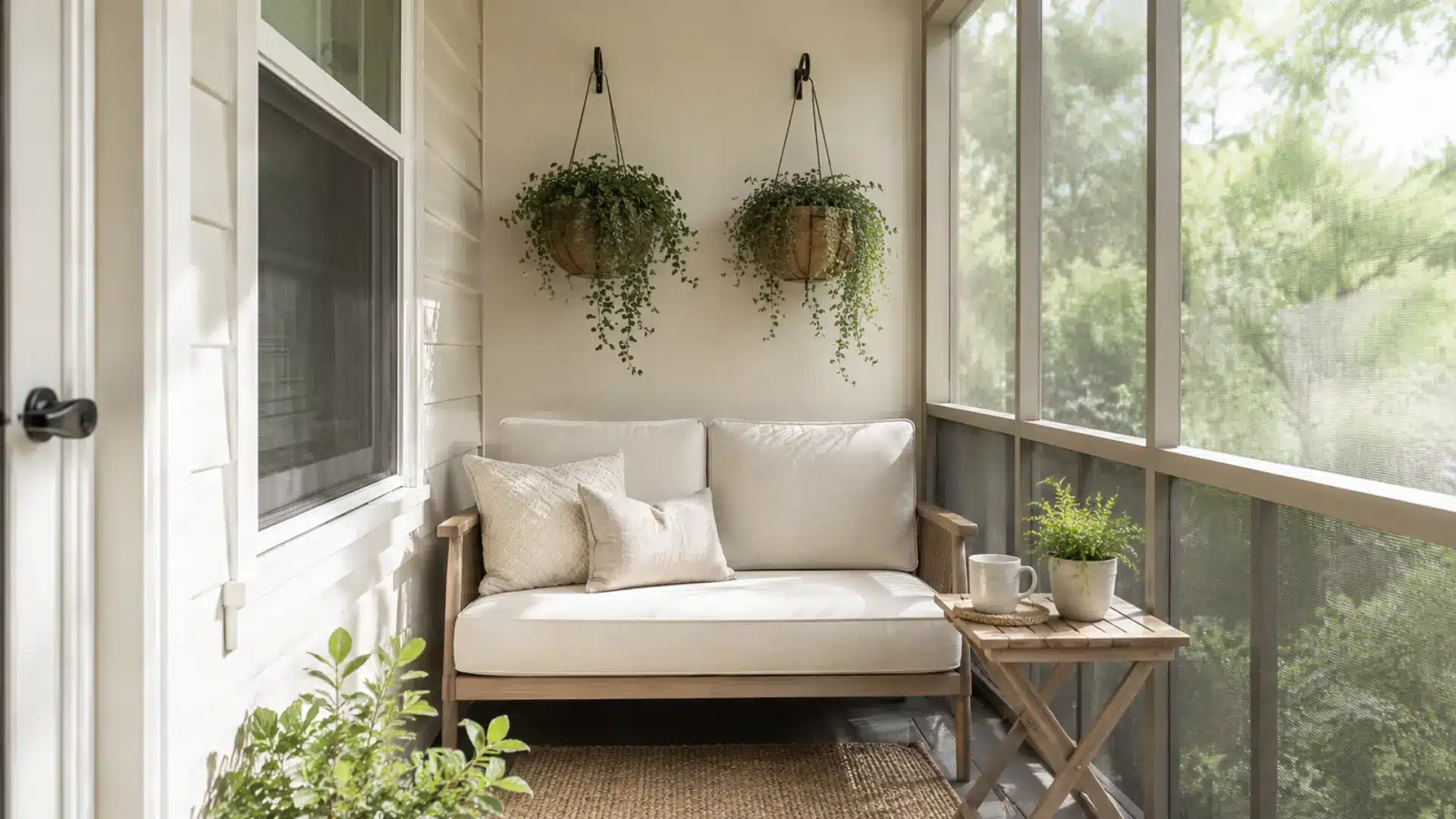
A compact screened patio does not need less styling; it needs smarter choices that keep the floor open.
Wall-mounted or folding furniture, one larger seating piece, vertical storage, and a light color scheme can make the space feel calmer and easier to use.
Once the layout works, the porch feels less like an outdoor corner and more like a real sitting room.
Color, Materials, and Finishing Touches
Color and material choices decide whether a screened porch feels bright and casual, cozy and rustic, or polished enough to match the house.
5. Bring in a Grounded, Natural Color Palette
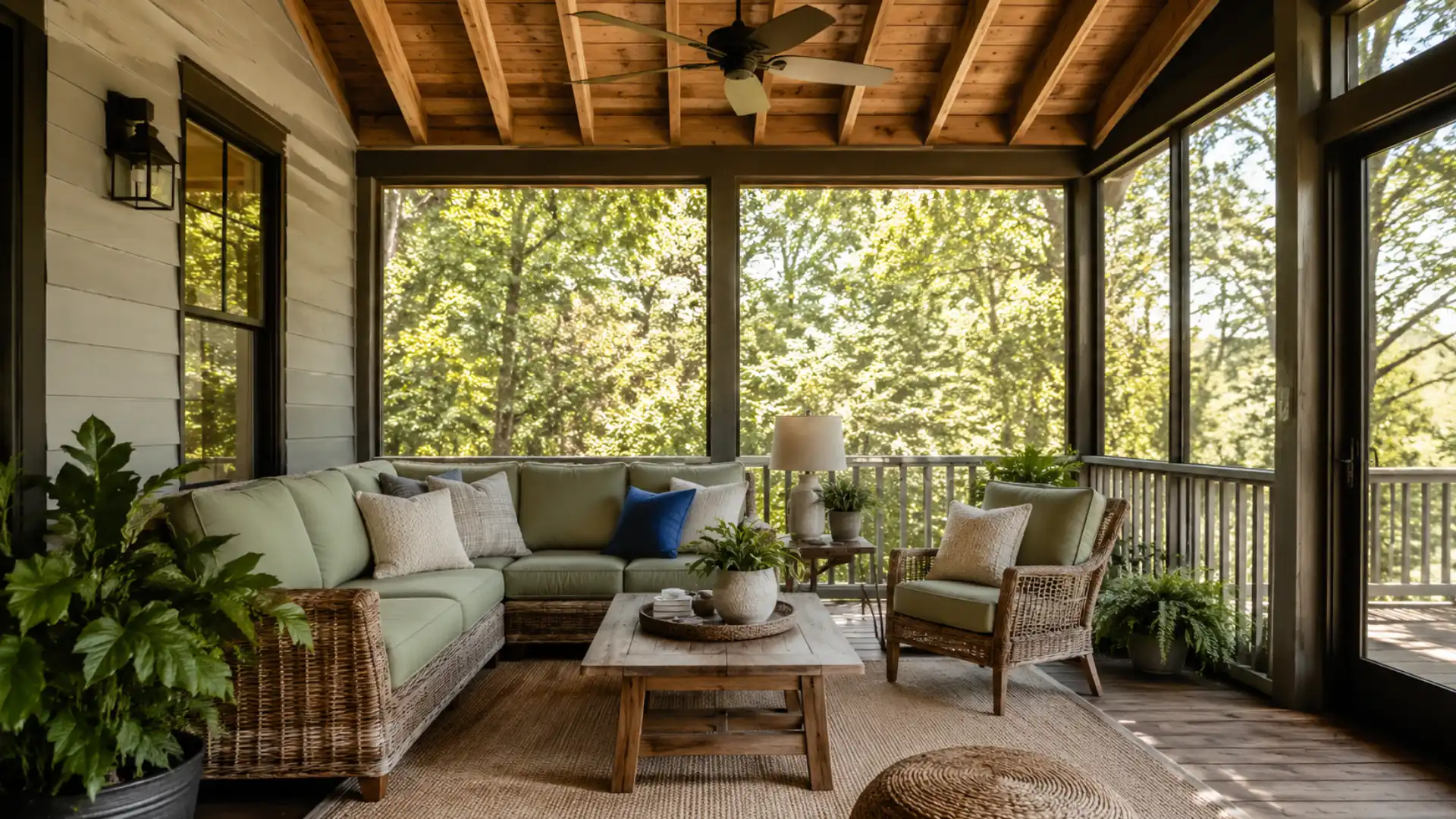
Screened patios get filtered light all day, which makes bright white or heavily saturated colors look flat by afternoon. Warm neutrals, sage, and soft blues hold up better because they read true in both direct and shaded light.
If the porch faces a garden or water view, borrowing from coastal interior design works particularly well, since those palettes are already built around filtered, outdoor light.
Keep wood tones consistent with whatever is closest to the porch, whether that’s decking or siding, so the space feels attached to the house rather than dropped onto it.
6. Add Shelving or a Ledge for Everyday Objects
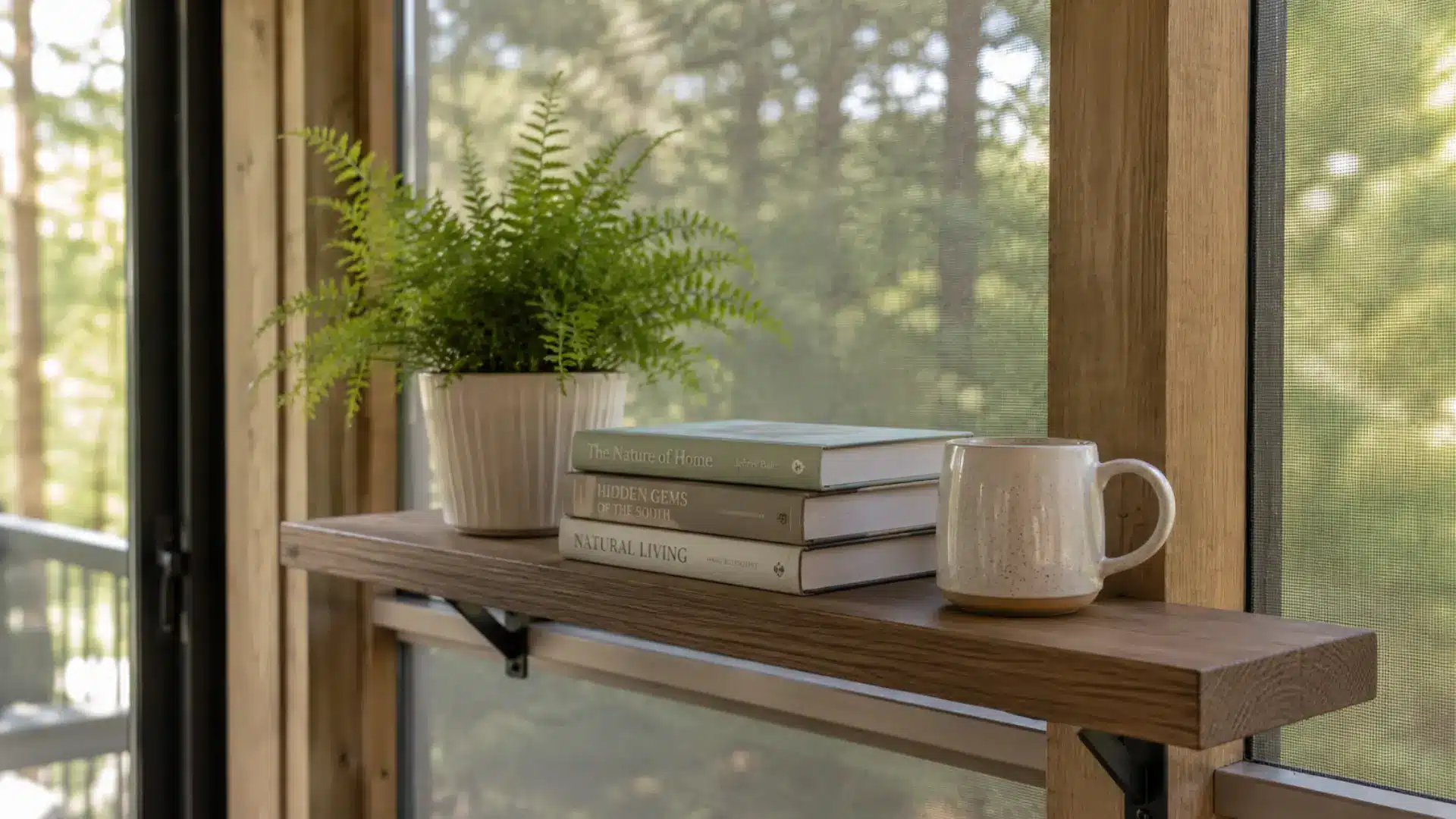
A porch without storage turns into a dumping ground for cushions, citronella candles, and whatever else got carried out and never carried back in.
A single floating shelf or a narrow ledge along one wall gives plants, books, and drinkware a place to live without cluttering the seating area.
The same principles used to decorate indoor shelves apply outdoors, just with more attention to materials that can handle humidity swings.
7. Rethink Flooring and Add a Rug to Ground the Space
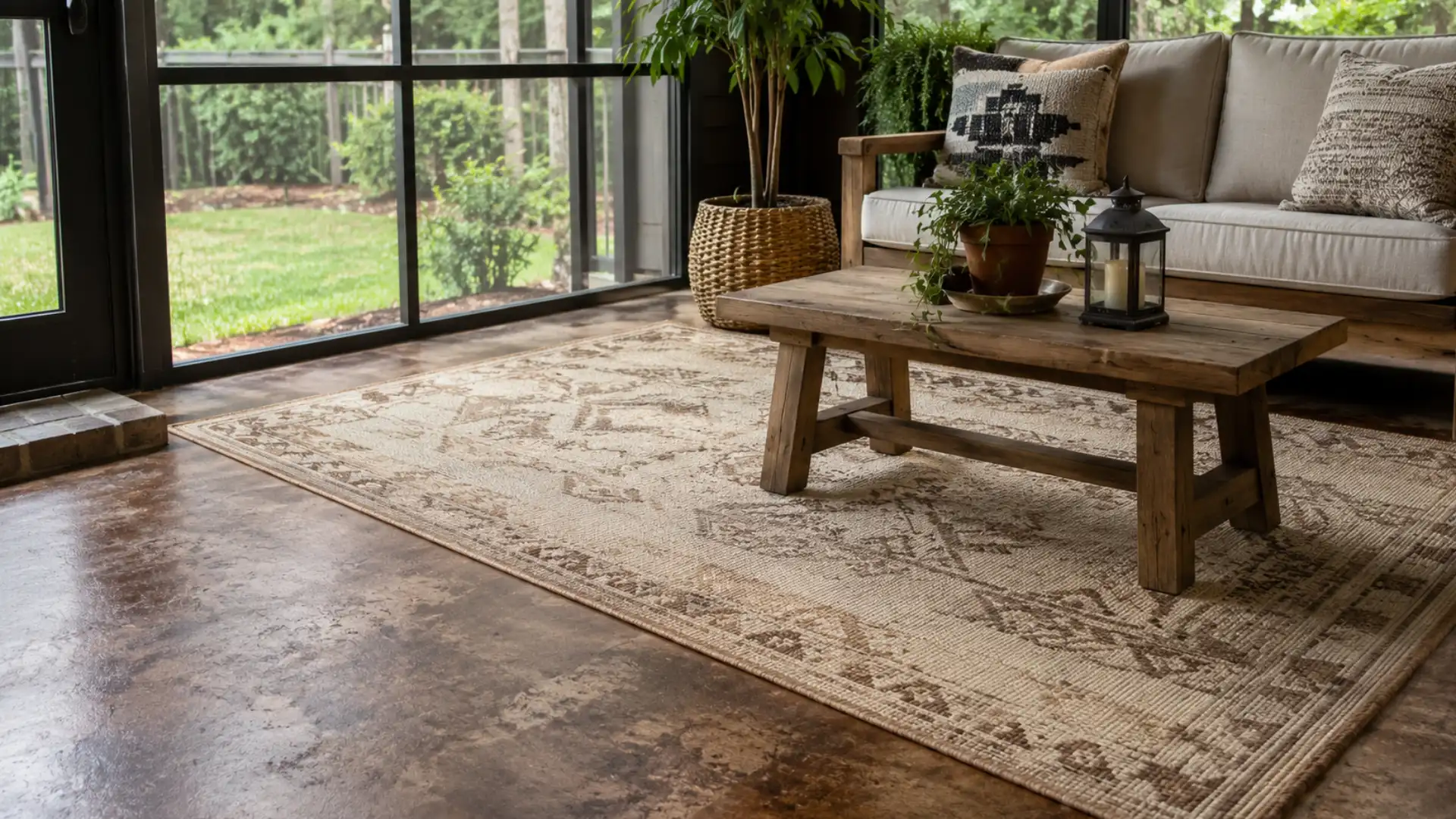
Bare concrete or unfinished decking can make even a well-furnished porch feel incomplete, so the floor deserves the same attention as the furniture.
An outdoor-rated rug can define the seating area, painted or stained concrete can refresh an old slab, composite decking works well in humid areas, and interlocking deck tiles offer an easy, renter-friendly fix.
Small finishing details like rugs, pillows, trim, and wall decor are what make the space feel intentional instead of unfinished.
Lighting and Comfort Add-Ons
A screened porch becomes much more useful when it has evening lighting and comfort features for changing weather.
8. Layer Lighting for Daytime and After Dark
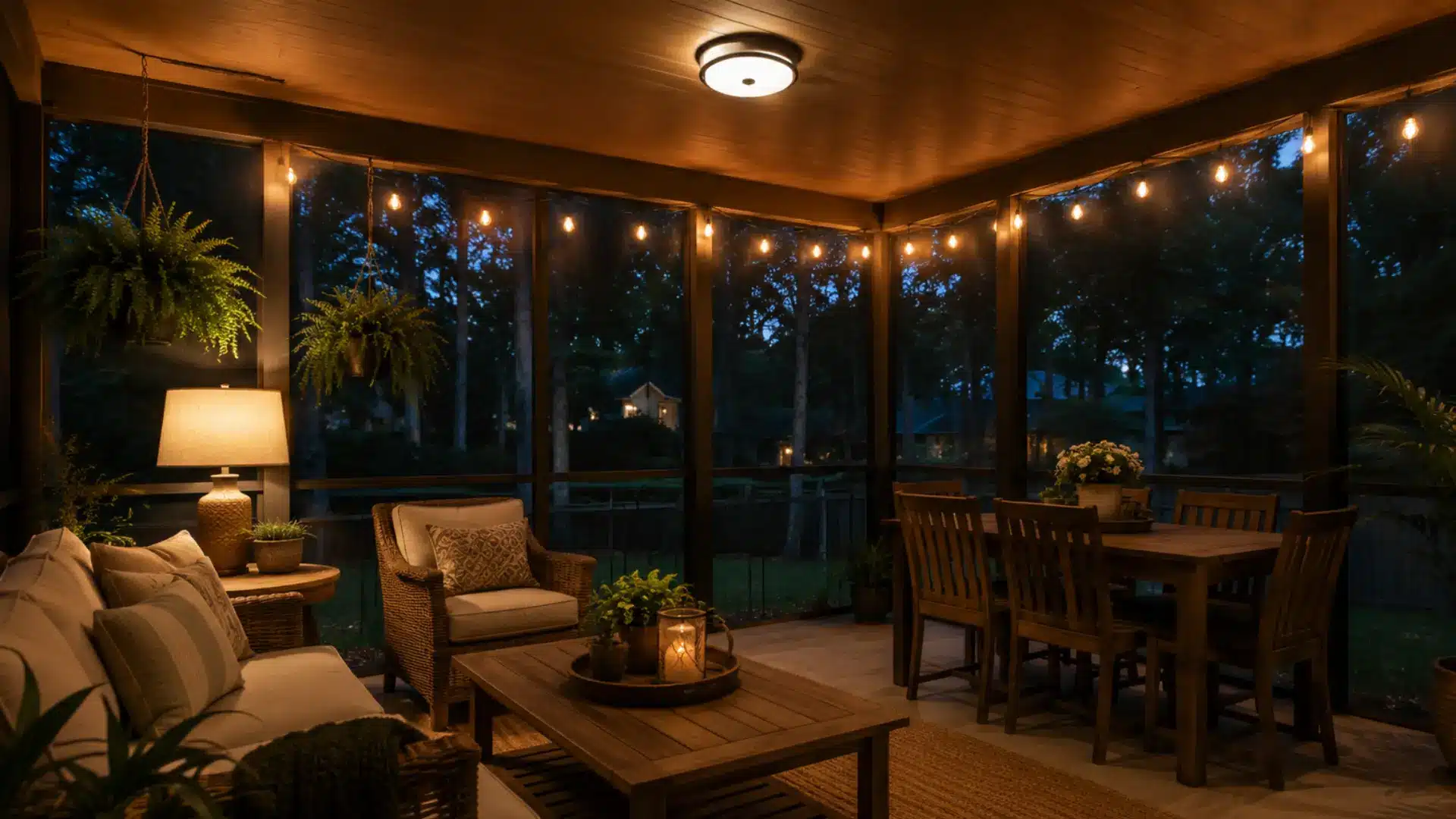
A single overhead fixture leaves a screened patio either too bright or too dim, with nothing in between.
Layering a flush-mount fixture, a couple of table lamps rated for damp locations, and dimmable string lights gives the space the same range of moods that room decor ideas bring to interior rooms, from a bright morning coffee spot to a low-lit evening hangout.
9. Add a Ceiling Fan for Airflow You Control
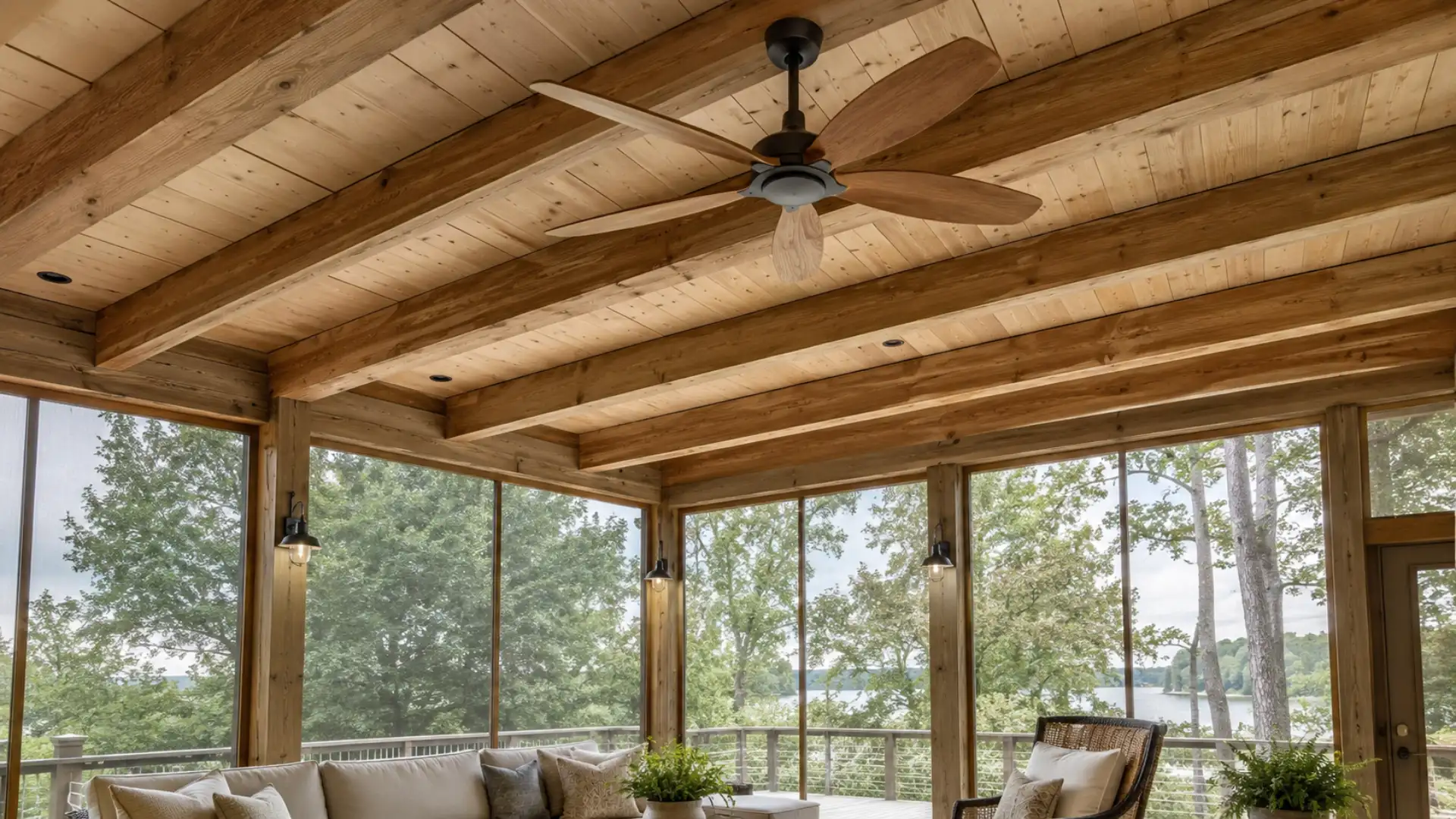
Screening keeps bugs out, but it doesn’t move air on a still summer evening. A ceiling fan rated for damp or outdoor locations pulls double duty, cooling the space in summer and keeping it from feeling stagnant during humid stretches in spring and fall.
Look for a fan with a reversible motor, since running it clockwise on low in cooler months pushes warm air back down without creating a draft.
10. Bring in a Fireplace or Fire Feature for Cooler Nights
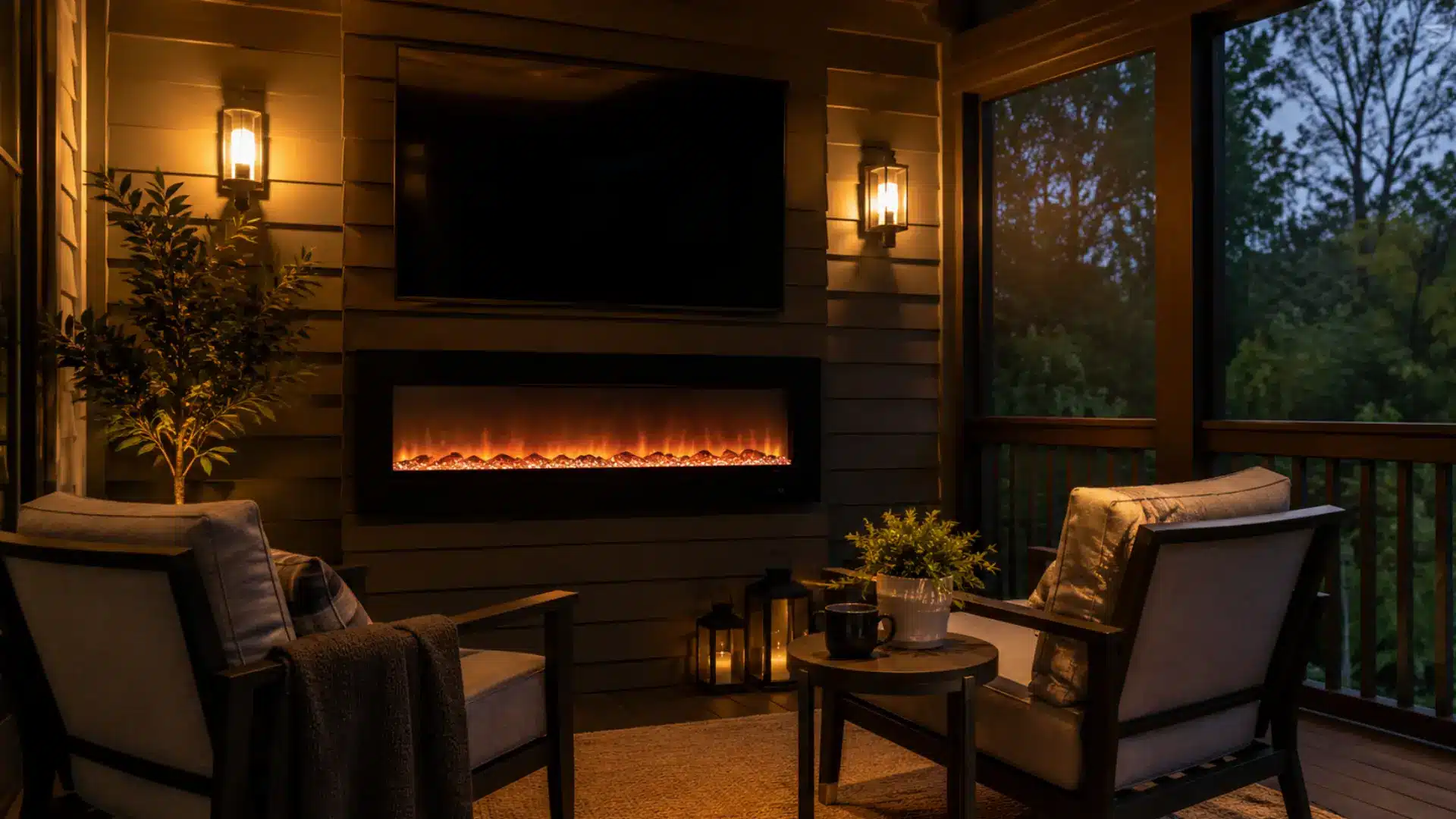
Extending the porch’s usable months usually comes down to adding the right heat source. A wall-mounted electric fireplace works well if you want warmth and ambiance without venting, smoke, or an open flame.
For a more flexible setup, a freestanding propane heater can be moved around as needed and stored away when the weather warms up.
A built-in gas fireplace costs more, but it can turn the porch into a true year-round room and create a strong focal point.
The goal is to make the porch easy to use at different times of day, not just when the weather is perfect.
Plants and Screening Choices
Plants and screen choices affect both the look and the comfort of the porch, especially when sun, privacy, and airflow matter.
11. Choose Plants that Actually Hold up Behind a Screen
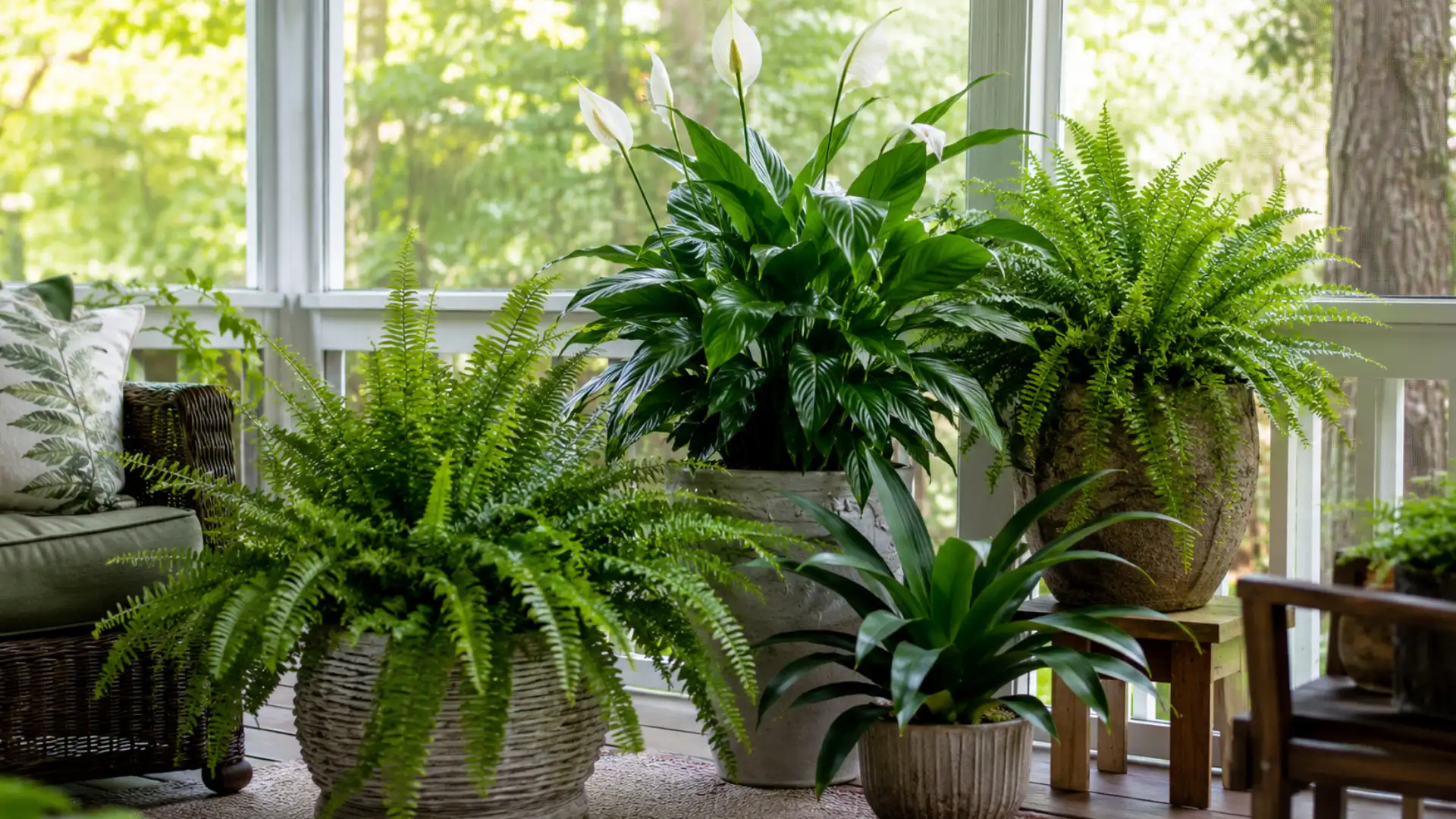
Screened patios filter sunlight the same way a covered porch roof does, which rules out plants that need six or more hours of direct light to bloom.
Shade-tolerant plant varieties such as ferns, peace lilies, and cast iron plant are built for filtered light and humidity swings, and they hold their shape far longer than anything marketed for full sun.
Grouping a few pots at different heights, rather than lining them along the screen wall, gives the space more depth without eating into floor space.
12. Get the Screen Mesh Right for Your Climate
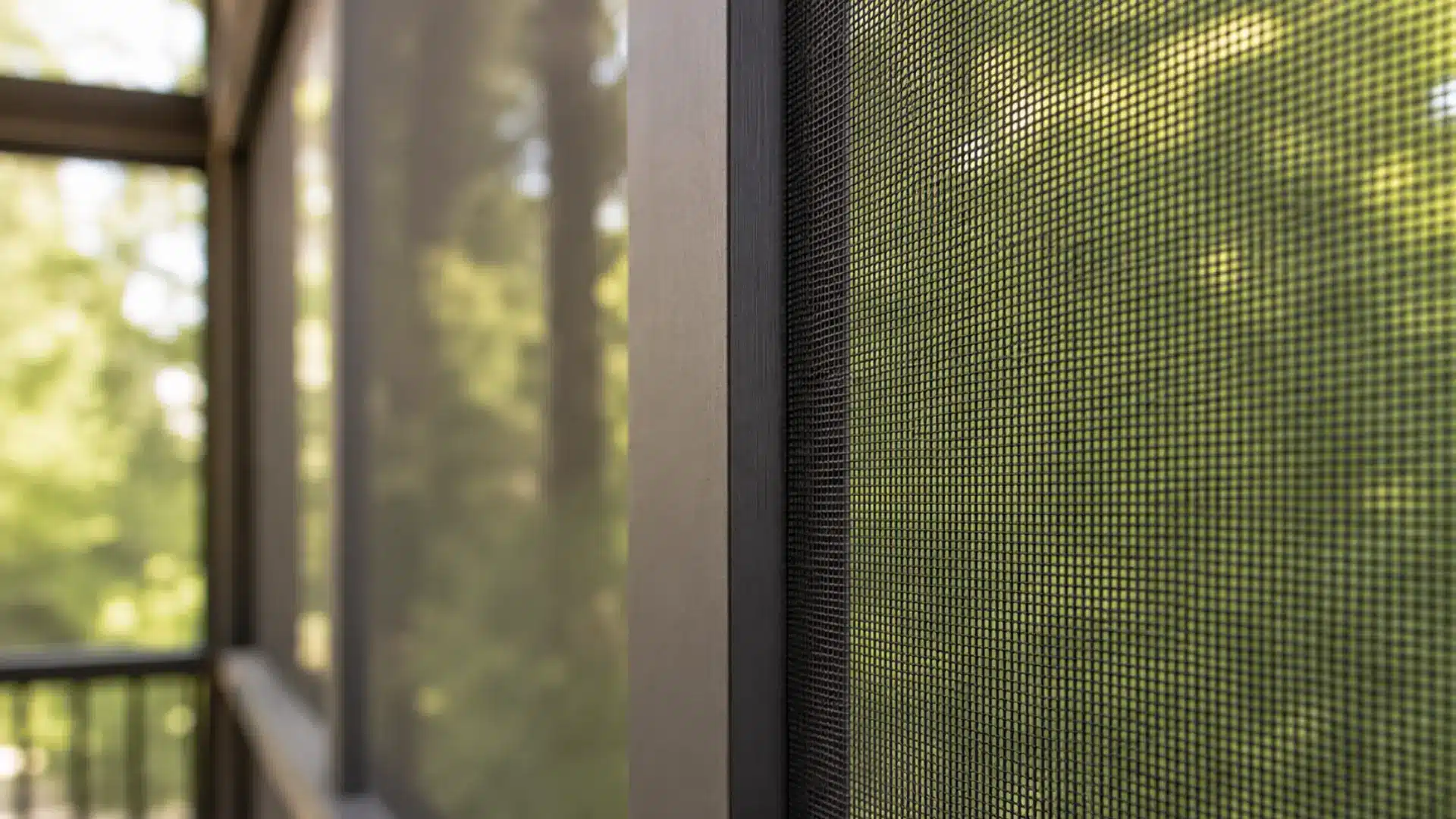
Not all screening does the same job. Standard fiberglass mesh works for general insect control, but finer mesh, sometimes called no-see-um screening, matters in regions with smaller biting insects.
Homes near the coast tend to do better with vinyl-coated polyester over metal screening, since materials like brass and bronze corrode faster in salt air.
13. Keep Pest Control Screen-Friendly
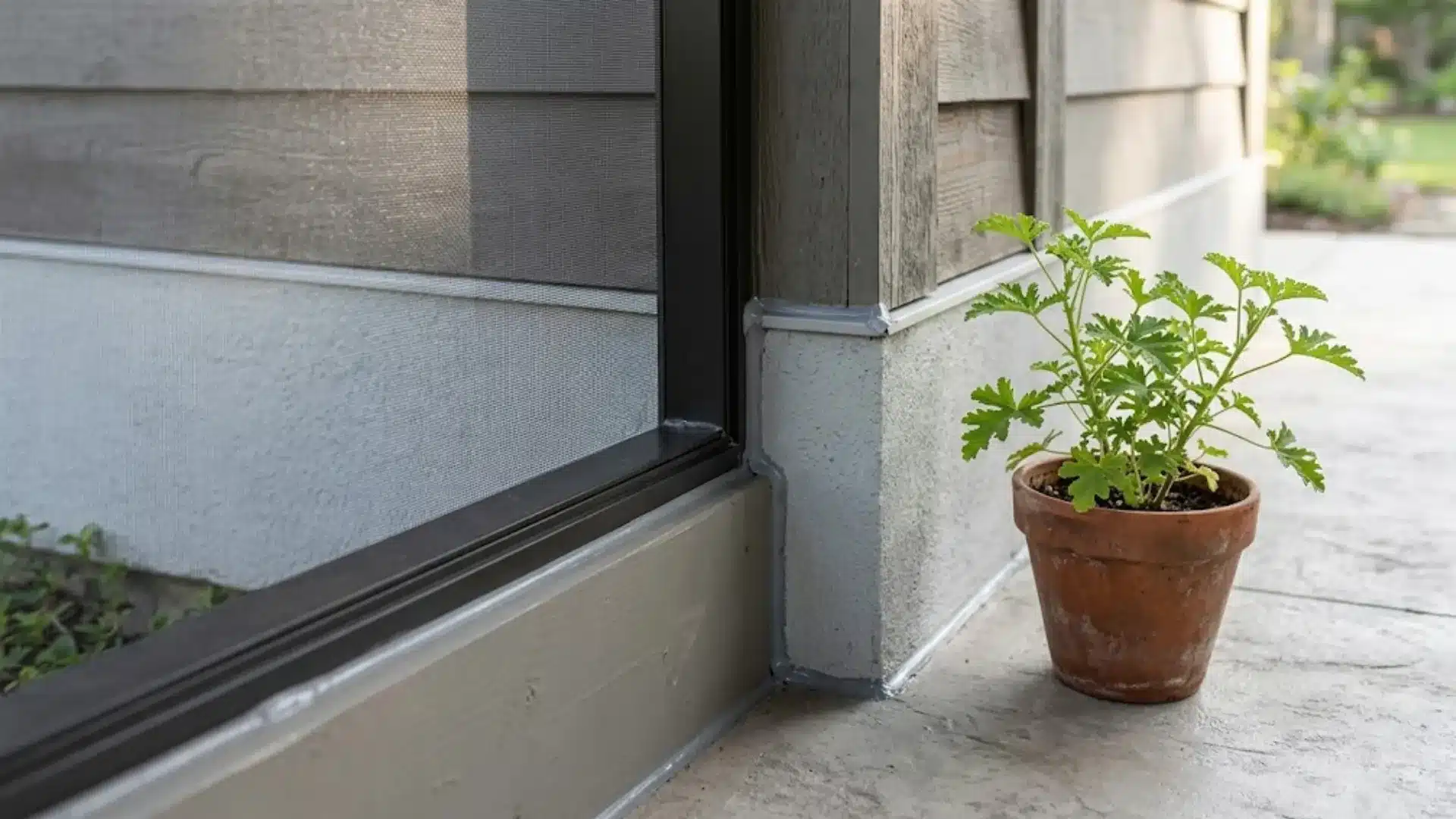
A screened porch cuts down on flying insects, but it doesn’t do much for ants, spiders, or anything that comes up through gaps in decking or baseboards.
Skip foggers and heavy pesticide treatments near the screen itself, since some chemical sprays can degrade certain mesh coatings over time.
Citronella plants or a small fan near seating areas cover the rest for flying insects that get in when a door opens.
Pet owners are usually better off with a reinforced, pet-resistant screen, since standard mesh tends to tear under claws within a season.
Privacy and View Ideas
A screened porch still has sightlines to think about, whether that’s shielding the space from a neighbor’s window or making the most of a yard worth looking at.
14. Add Outdoor Curtains for Extra Privacy and Shade
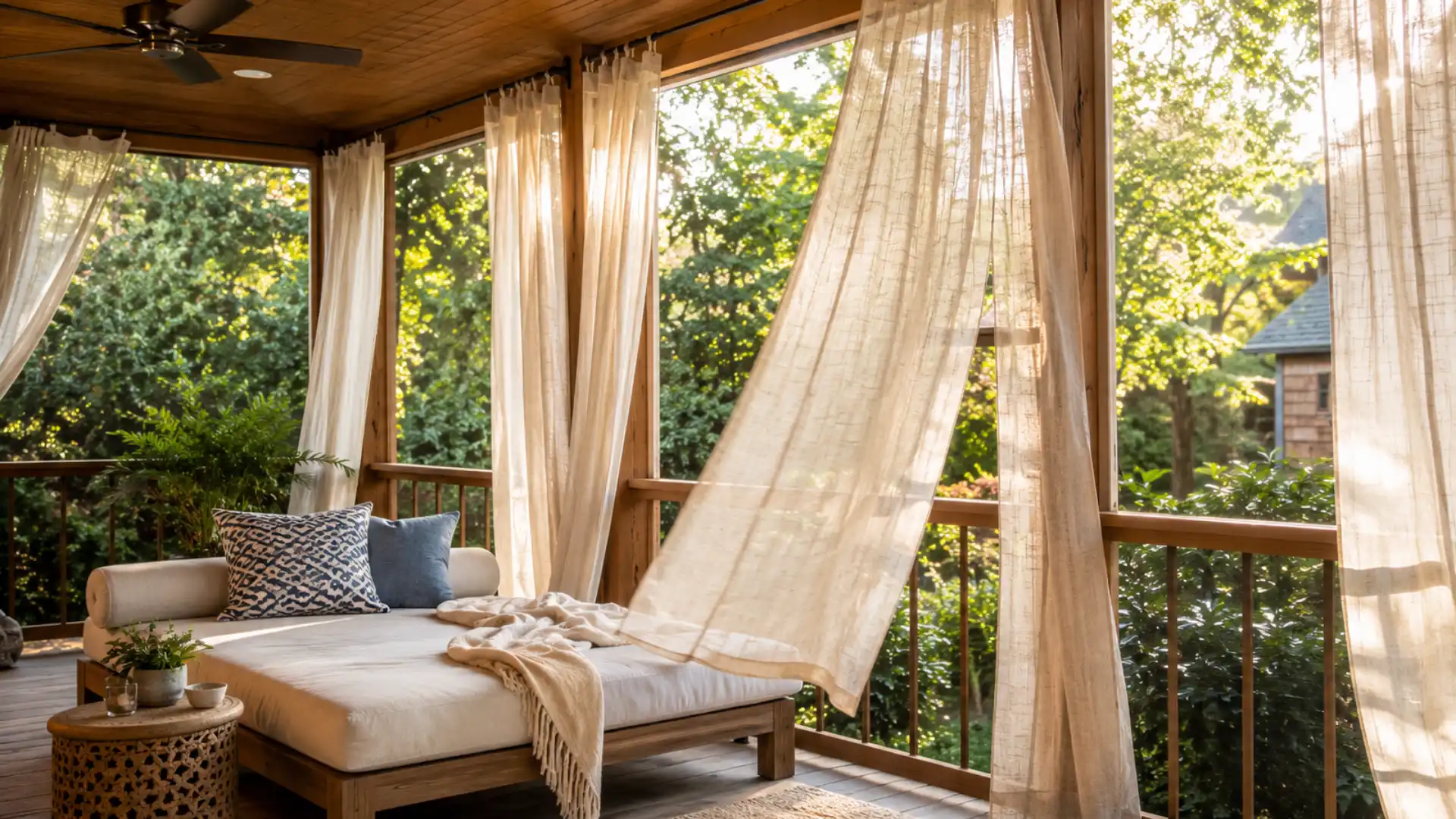
Sheer or mid-weight outdoor curtains hung along the screen line soften the harsh afternoon sun and add privacy without blocking airflow, as solid panels would.
They also give a screened porch a finished, room-like edge that mesh alone doesn’t provide. Look for fabric rated for outdoor use, since standard curtain fabric will fade and mildew faster than a screen ever would.
Tying them back during the day and letting them down in the evening also gives the space two distinct looks without changing anything else.
15. Frame the View Instead of Blocking It
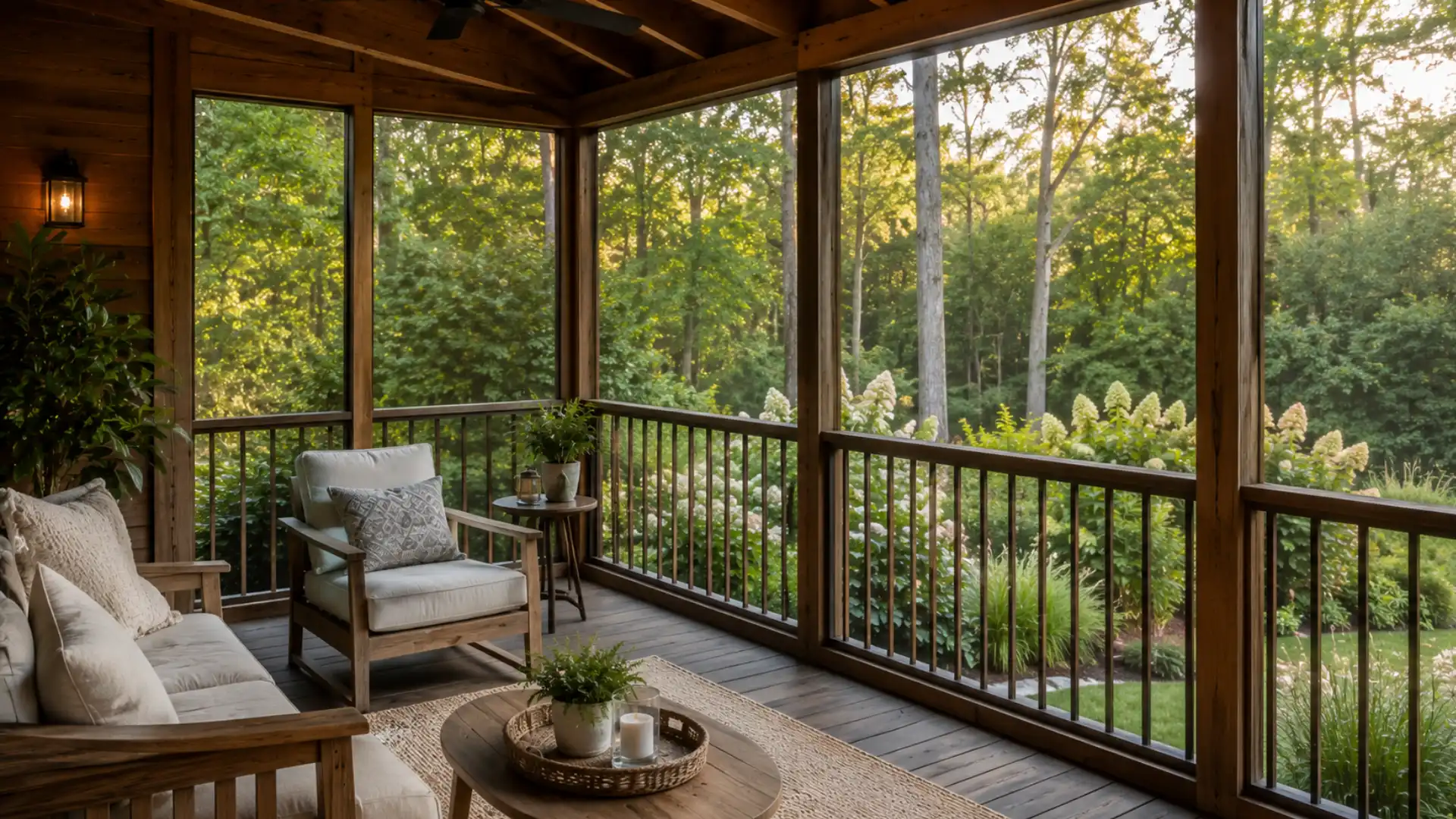
If the porch faces a yard, garden, or tree line worth looking at, the layout should point toward it rather than compete with it.
Positioning the main seating to face outward, rather than toward a TV or an interior wall, makes the view part of the room rather than background noise.
A single accent chair angled toward the best sightline works even in a small screened patio where a full seating group can’t be arranged around it.
16. Use a Planter Wall or Folding Screen for Street-Facing Porches
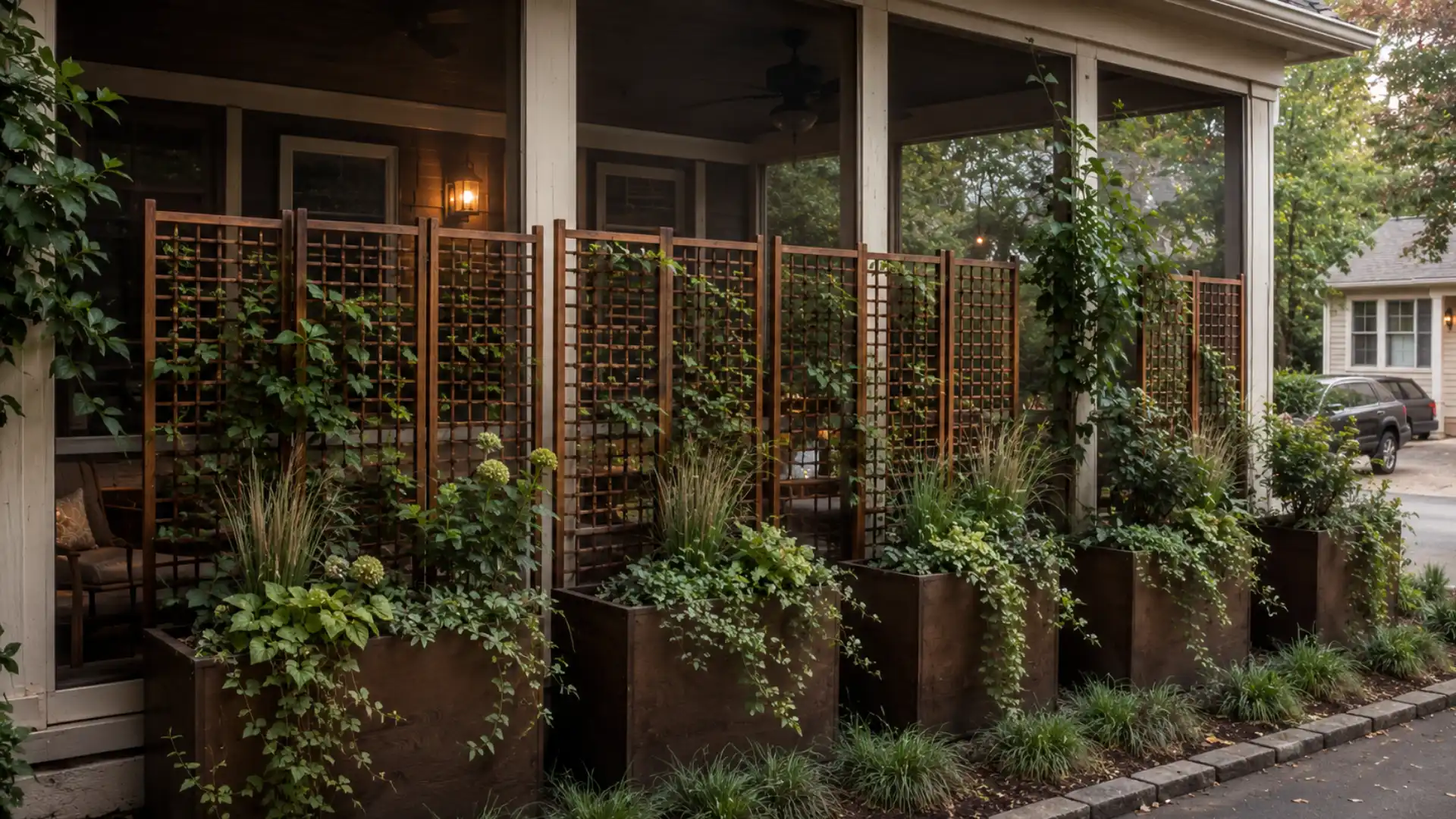
A screened porch that faces the street or a close neighbor needs a different kind of privacy than one facing a backyard.
A row of tall planters, a folding wood screen, or a section of lattice with climbing vines blocks sightlines without needing solid walls or blinds.
This keeps the porch feeling open and screens patios facing busier areas so they don’t feel like they’re on display.
Personal Touches that Make It Feel Finished
Furniture and lighting make a screened porch functional, but a few smaller details are usually what make it feel like an actual room instead of a furnished screen box.
17. Layer in Textiles Beyond Seat Cushions
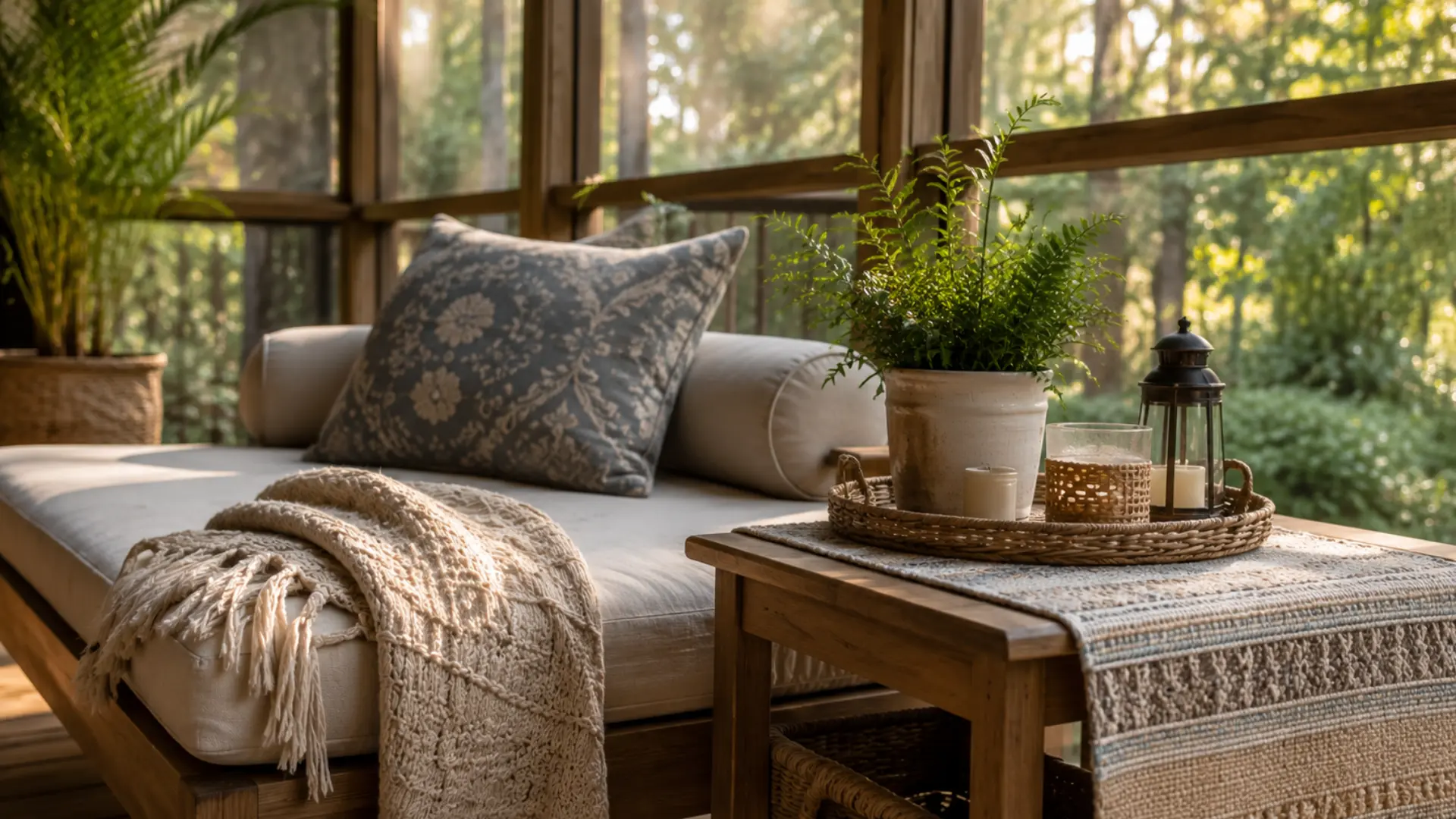
Cushions do much of the visual work on a screened porch, but a throw blanket, a table runner, or a patterned outdoor pillow with a contrasting texture keeps the space from looking like a single furniture set dropped into a room.
These smaller textiles are also the easiest and cheapest way to update the look each season without touching the furniture itself.
18. Add Outdoor-Rated Art or Mirrors
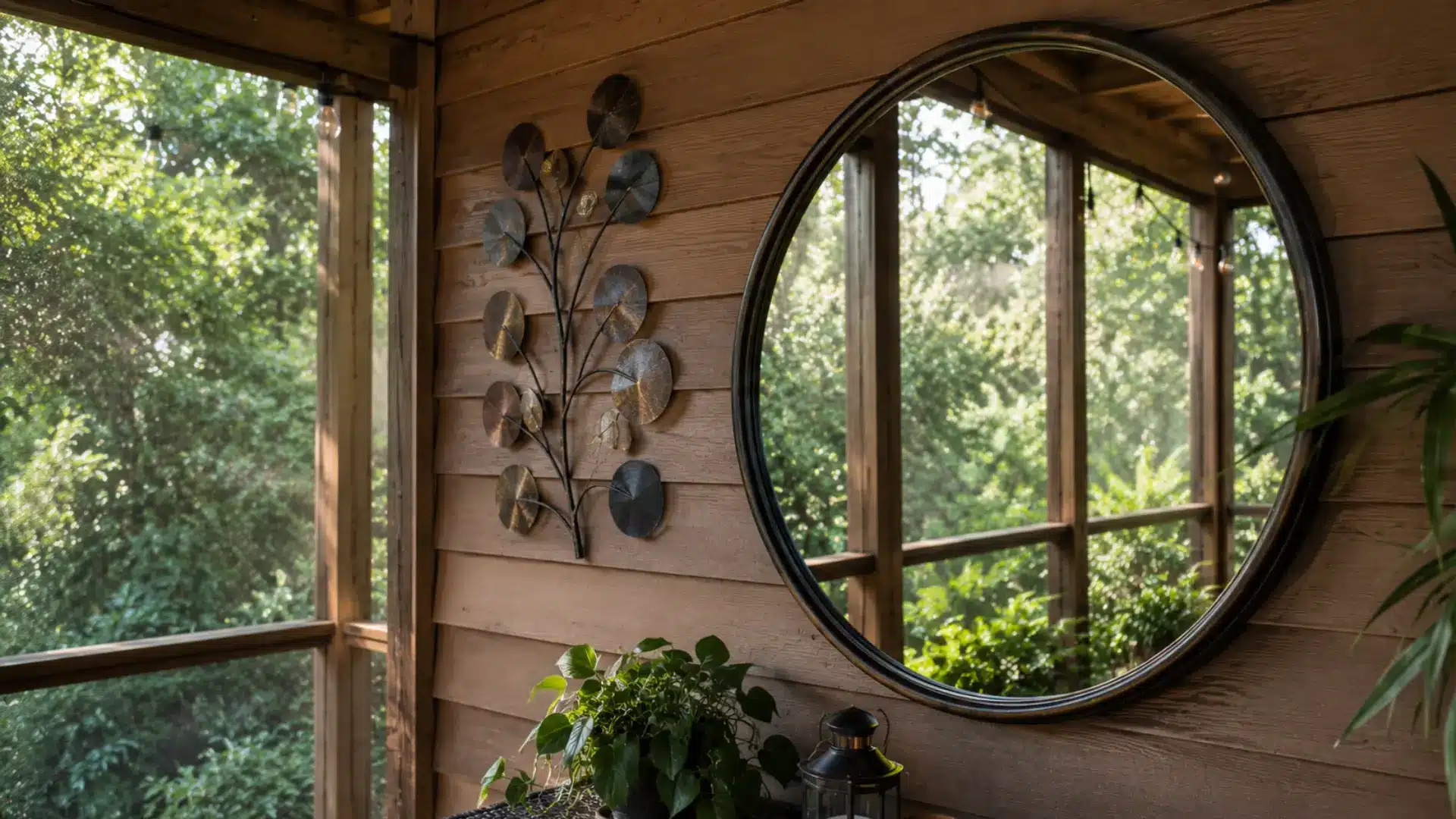
A bare screen wall can leave the porch feeling unfinished, even with good furniture in place.
A weatherproof piece of art, a metal wall sculpture, or an outdoor-rated mirror gives the eye somewhere to land and, in the case of a mirror, can make a small screened patio feel larger by reflecting light and greenery back into the space.
19. Bring in a Sound or Scent Element
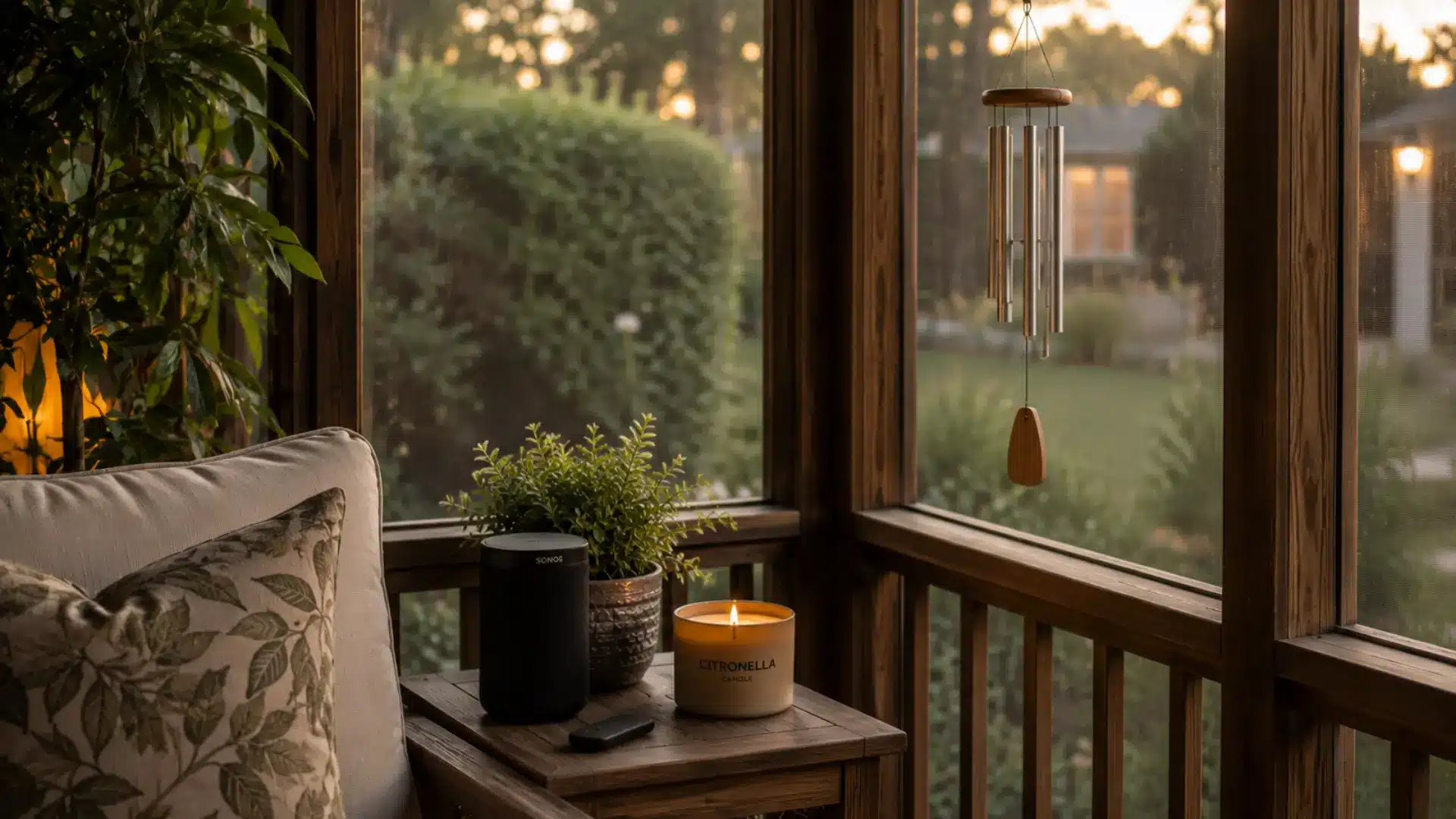
A small element like a wind chime, a citronella-based candle, or a compact outdoor speaker adds another layer to the space beyond how it looks.
These details are easy to skip during the main setup, but they’re often what makes a porch feel like somewhere to linger rather than just somewhere to sit.
Mistakes that Make a Screened Porch Feel Unfinished
A few small oversights are usually what separates a screened porch that gets used daily from one that quietly turns into storage.
- Skipping a rug or floor treatment: Bare concrete or unfinished decking reads as unfinished no matter how good the furniture looks.
- Using indoor-only fabrics: Fading and mildew show up fast on fabrics that weren’t made for humidity and filtered sun. Fading and mildew show up fast on fabrics that weren’t made for the swings in humidity and mold growth conditions a screened space goes through
- Relying on a single light source: One overhead fixture leaves the space either too bright or too dark, with no in-between.
- Forgetting airflow: Without a fan, a screened space can feel stagnant even with the bugs kept out.
- Leaving storage as an afterthought: Cushions and citronella candles end up piled in a corner instead of tucked into a shelf or ledge.
A screened porch feels finished when every detail works together, from the seating and lighting to the floor, walls, and small accents that make the space feel intentional.
Conclusion
Creating a porch you actually enjoy is less about following trends and more about choosing features that fit your daily routine.
I prefer keeping the space simple with comfortable seating, warm lighting, and a few natural touches because that makes it inviting throughout the year.
The most practical screen porch ideas are the ones that improve comfort without adding unnecessary clutter or maintenance.
Focus on one upgrade at a time, test how it works, and build from there as your needs change. Even small improvements can make the porch feel like an extension of your home rather than an unused area.
Which upgrade would you try first? Share your favorite ideas, renovation plans, or questions in the comments.
Frequently Asked Questions
How much does it cost to screen in an existing patio?
Costs vary widely based on size and materials, but screening an existing covered patio typically runs a few thousand dollars for a mid-size space, including framing and installation. Choosing standard fiberglass mesh over specialty screening keeps costs lower, while adding features like a ceiling fan or fireplace increases the total.
Can a screened porch be used in winter?
It depends on the climate and whether the porch has heat. Adding a heater or fireplace and switching to insulated or interchangeable panels can extend use into cooler months, though a screened porch alone won’t stay comfortable in freezing temperatures the way a fully enclosed sunroom would.
Do screened porches add home value?
Screened porches are consistently among the most common outdoor features on new homes and are viewed favorably by buyers, particularly in regions with heavy insect pressure. The value added depends on local buyer expectations and how well the porch is finished compared to the rest of the home.
What’s the most durable screen material for pets?
Reinforced, pet-resistant screening, usually a heavier vinyl-coated polyester, holds up far better against claws than standard fiberglass mesh. It costs more upfront but avoids the repeated tearing and patching that comes with lighter screening in a home with cats or dogs.