

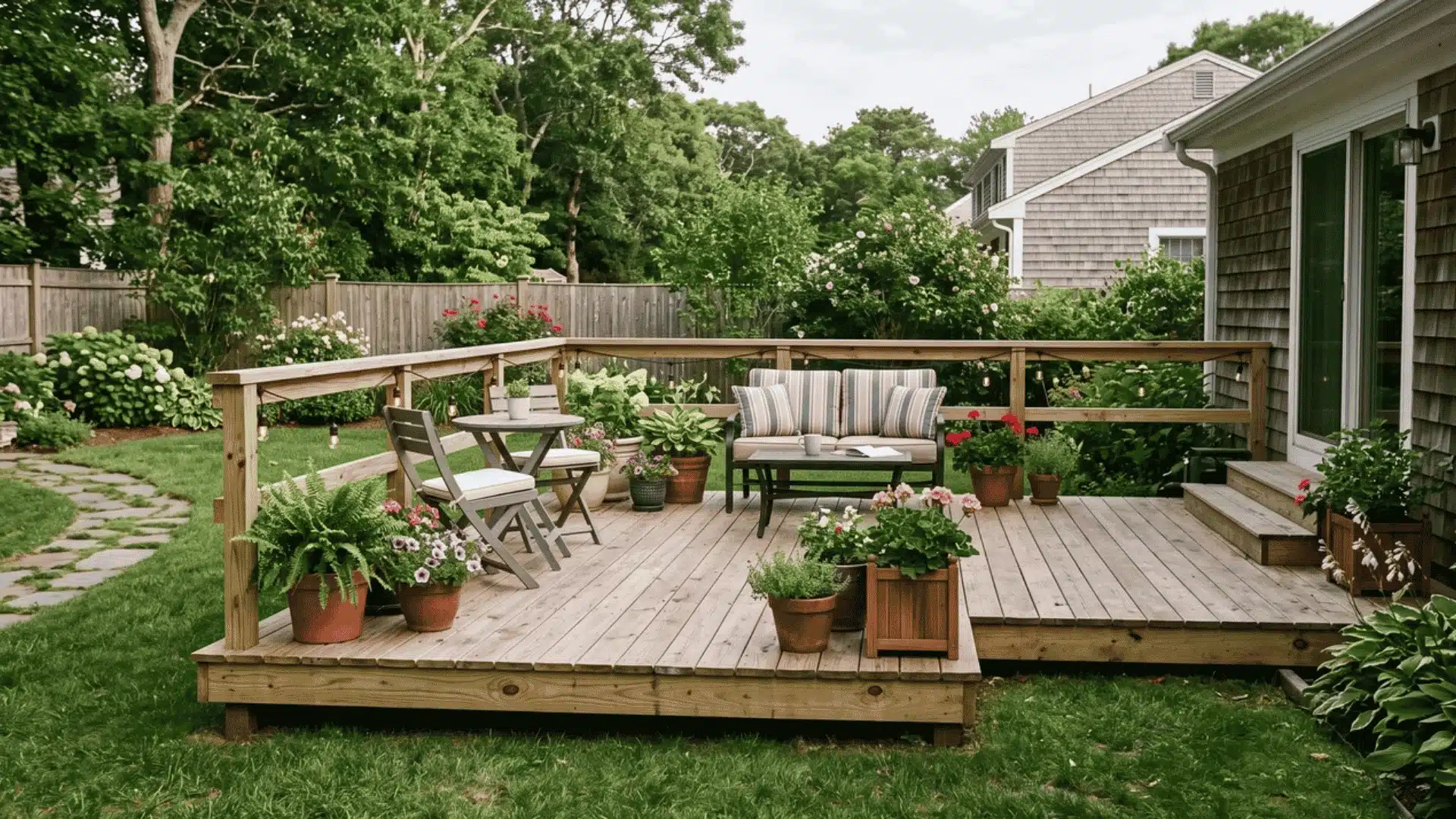
A deck quote can turn a simple backyard plan into a $15,000 decision before you’ve bought a single board. Backyard deck ideas on a budget exist for exactly this reason: real ways to get a usable deck without that number.
Most people either give up on the idea or panic-buy lumber with no real plan. You don’t need either. I’ve built decks both ways, and the cheap-looking shortcuts aren’t always the smart ones.
You’ll see what each idea actually costs, and which ones need a contractor. These ideas are split by what your yard actually needs: new builds, quick refreshes, decor, privacy, and lighting.
What Actually Drives the Cost of Backyard Deck Ideas on a Budget
Backyard deck ideas on a budget all share one trait once you strip away the styling: they keep the structure low and put the saved money into the surface, not the framing.
Height is what drives cost up, not the wood species you argue about at the lumber yard. I’ve watched homeowners spend weeks comparing composite to pine, then get blindsided by a footing-and-framing bill that had nothing to do with either one.
A deck built close to the ground skips deep concrete footings entirely. Skip the footings, and in most jurisdictions you skip the permit too, though local height and setback rules still apply, so check before you dig. If you already have a deck and the frame underneath is sound, don’t rebuild it. A proper refresh gets you most of the way there for a fraction of the cost.
| Cost Note: Figures in this article are estimates and national averages from contractor cost-guide data (HomeGuide, Ergeon, Angi, Homewyse, Inch Calculator). Actual costs vary significantly by region, contractor, materials, and project scope. Always get at least three quotes before committing to any project above $1,000. |
That regional swing matters most when you’re comparing surfaces, because the material you pick changes both the upfront number and what you’re dealing with two winters from now.
Material and Surface Comparison for Budget Backyard Decks
| Material / Surface | Cost per sq ft (materials, DIY) | Lifespan | Maintenance | Climate Suitability |
| Pressure-treated pine | $3 – $9 | 10 – 15 years | Reseal every 2 years | Good in most climates; avoid standing water |
| Cedar | $5 – $7 | 15 – 20 years | Reseal every 2 – 3 years | Naturally rot-resistant; fades without upkeep |
| Composite decking | $10 – $20 | 25 – 30+ years | Occasional wash, no staining | Handles humidity and freeze-thaw well |
| Reclaimed pallet wood | $0 – $2 | 2 – 5 years | Frequent inspection, reseal often | Small, low-traffic, covered spots only |
| Pea gravel | $1 – $3 | 8 – 10 years before topping off | Rake and top off yearly | Excellent drainage; poor on slopes |
| Poured concrete | $4 – $16 (installed) | 25 – 30 years | Reseal every 3 – 5 years | Cracks in freeze-thaw without a proper gravel base |
| Interlocking composite tiles | $3 – $8 | 15 – 20 years | Occasional wash | Needs a flat, solid base underneath |
Pressure-treated pine wins on upfront cost, but it’s the frame underneath, not the boards on top, that decides whether any of these budget backyard deck ideas are still standing in five years.
What Fails Two Winters Later
Skipping a proper ground cover base under the deck blocks lets frost heave shift the whole platform out of level by the second winter. Pallets left unsealed on bare soil wick up moisture and soft-rot from the underside before you see it from above.
Pea gravel laid without edging migrates into the lawn within a season, and a fire pit set directly on unprotected decking scorches the boards underneath no matter how careful you think you’re being.
Budget-Friendly Backyard Deck Ideas: New Builds
These builds keep the height low and skip the parts of a deck project that cost the most. Pick based on what your yard already gives you.
1. Ground-Level Floating Deck
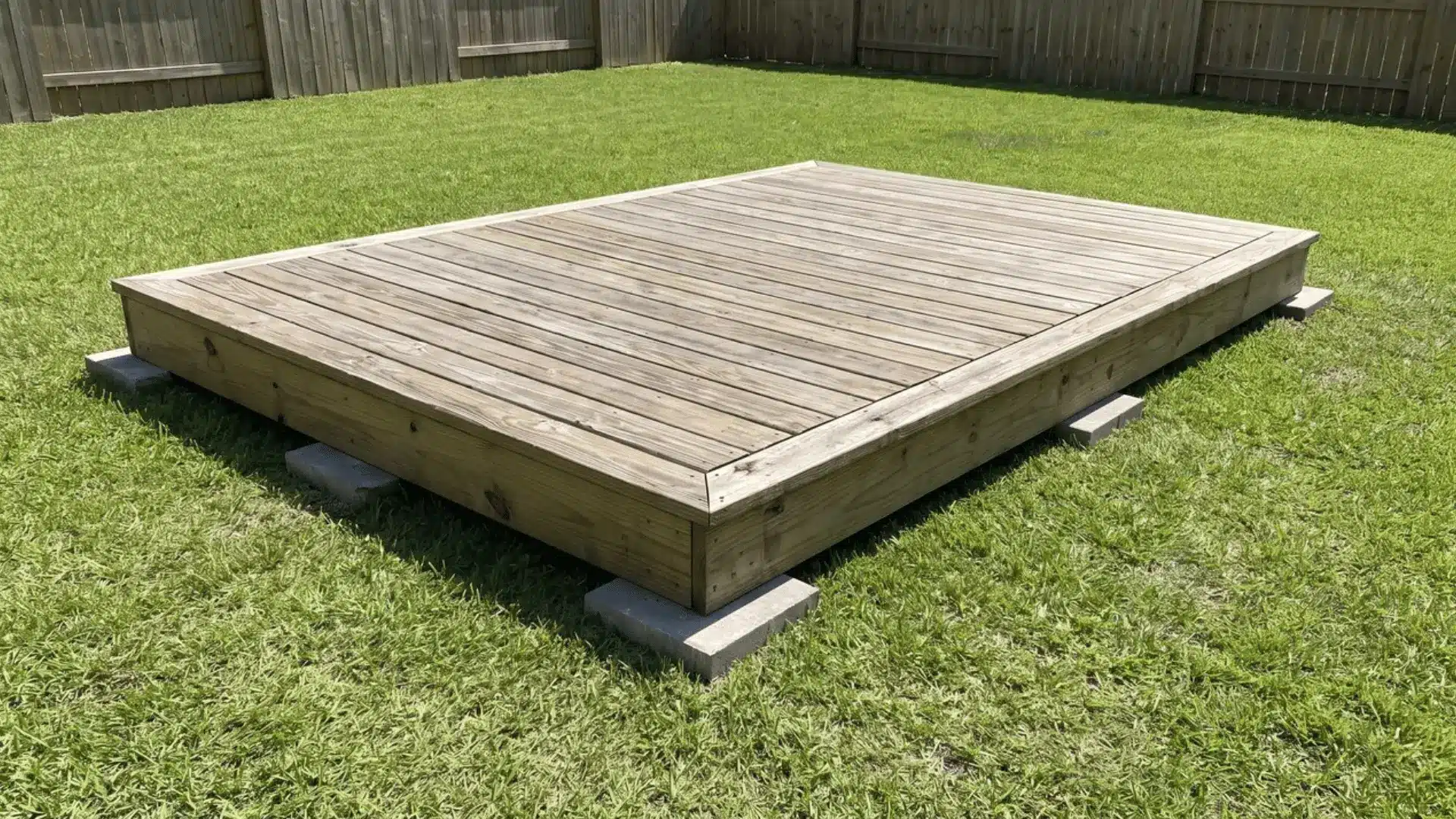
This deck sits low, resting on blocks instead of buried footings, which cuts out the heaviest digging and concrete work involved.
Because it stays close to the ground, many areas skip the permit requirement entirely, though local rules still vary. It works best on fairly flat yards, since uneven ground means grading and leveling before you can start building anything at all.
2. Interlocking Deck Tiles Over an Existing Base
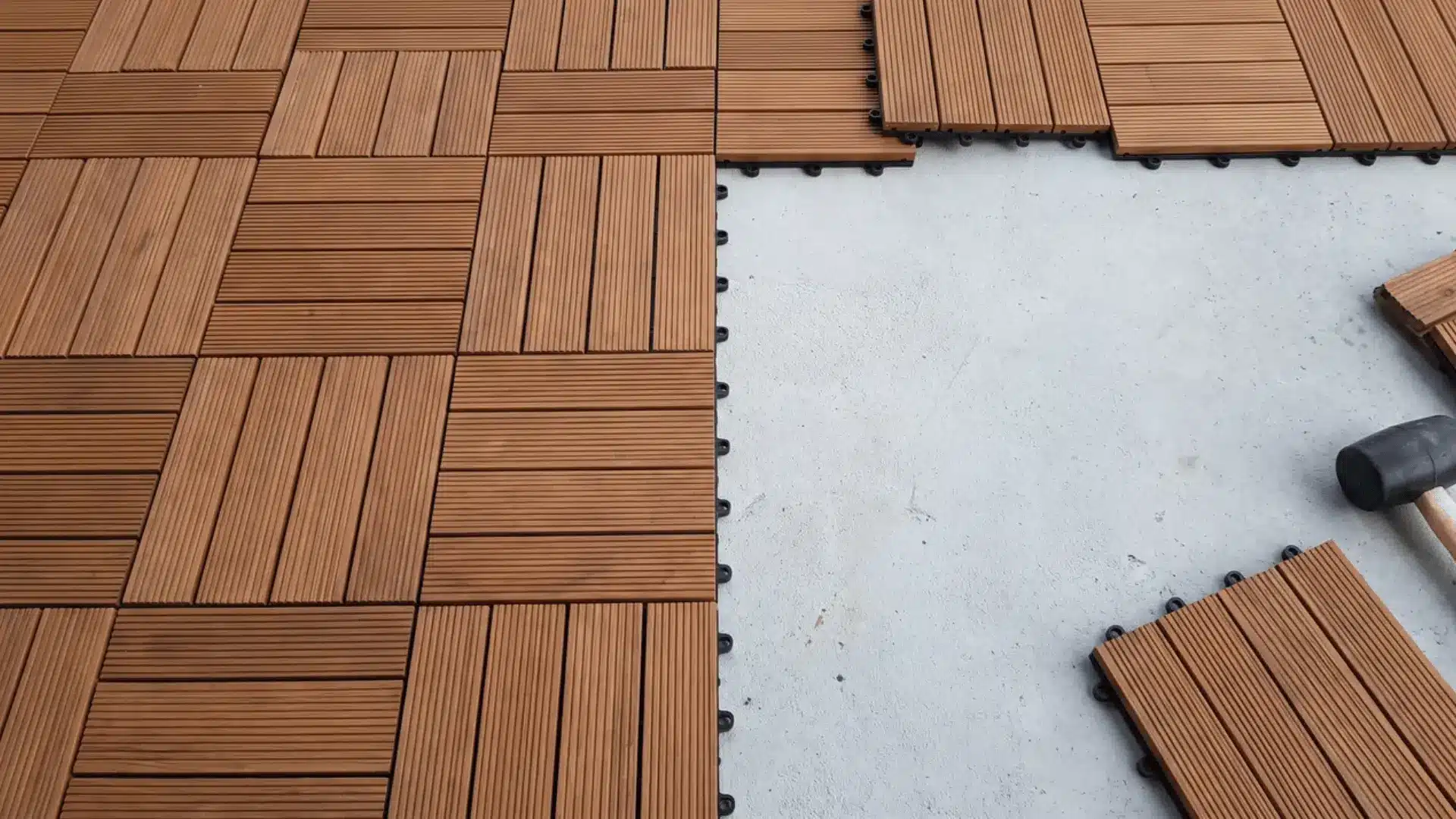
These tiles snap together and sit right on top of a slab or pavers, with no framing or footings required at all. They’re ideal if you already have a flat concrete patio sitting unused, since you get a finished deck look in an afternoon.
They won’t work on bare dirt or grass, though, since the surface underneath needs to be solid and level before you start.
3. Reclaimed Pallet Platform
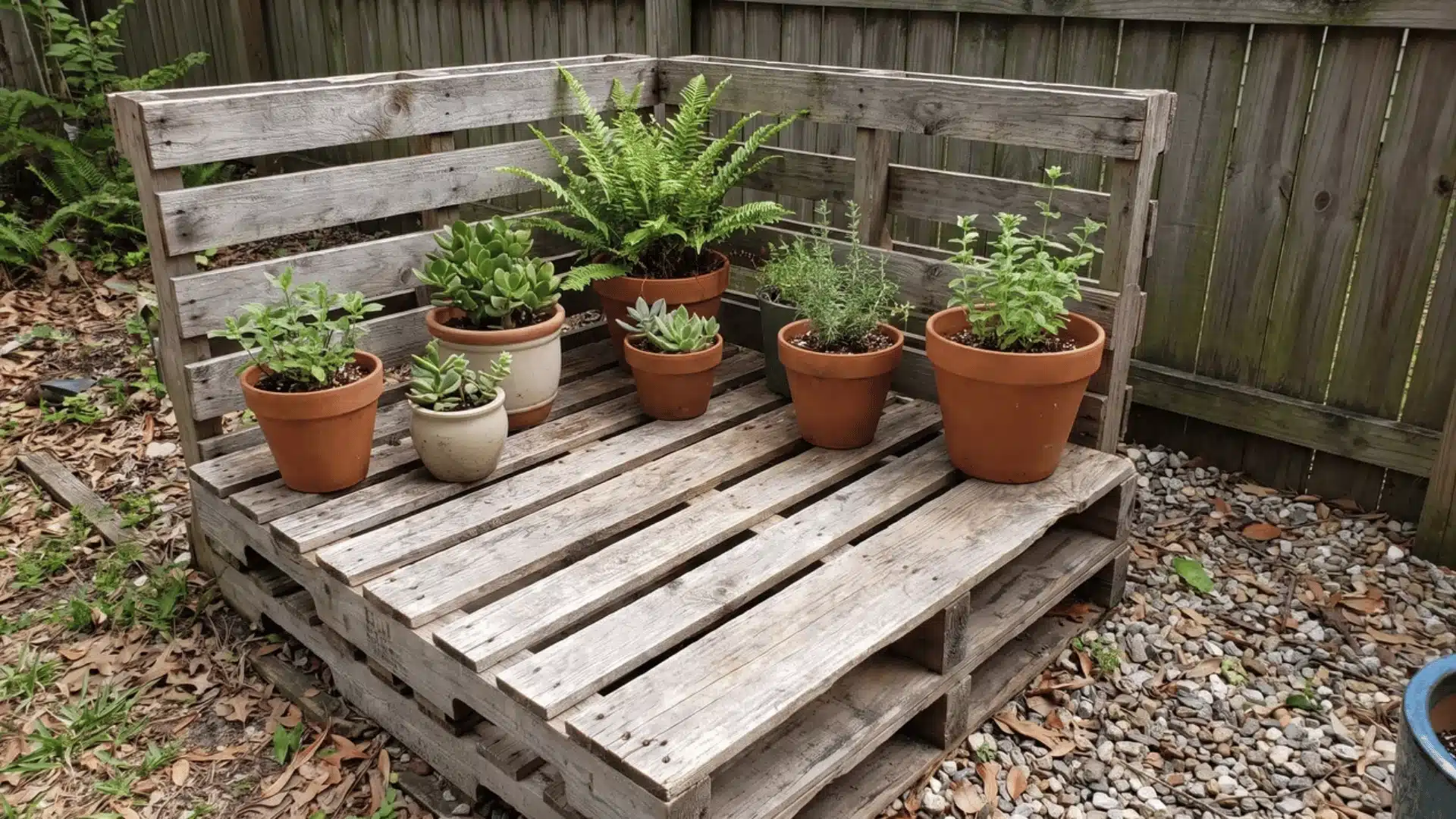
Clean, untreated pallets can become a small platform at almost no material cost, making this the cheapest option on this list.
Check pallets carefully before using them, since some are treated with chemicals you don’t want sitting around in your yard long-term. This works best for small, low-traffic spots, like a reading nook or a quiet place to keep a few potted plants.
4. Modular Deck Sections
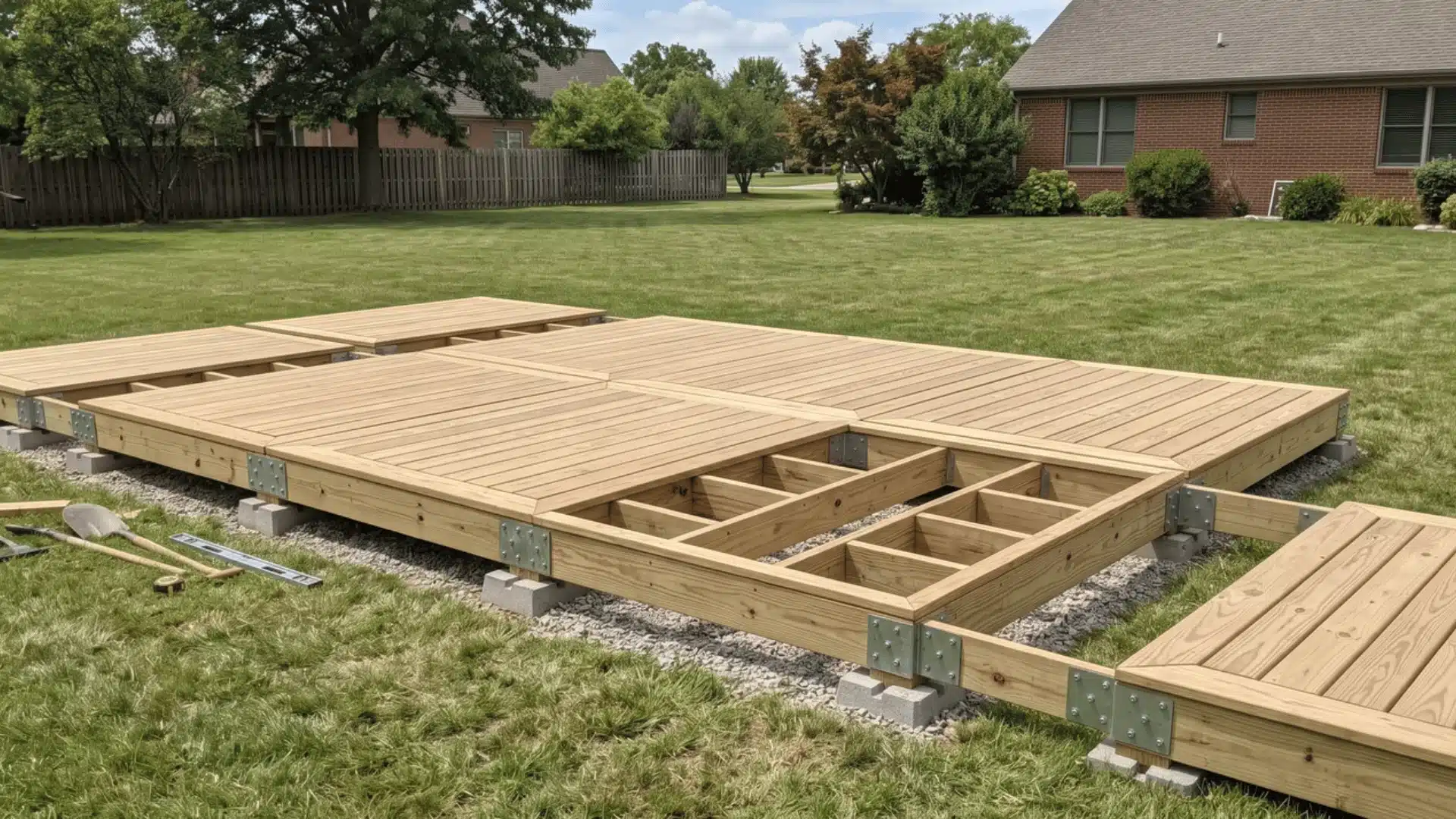
Modular sections let you build in pieces instead of committing to one full layout right from the very start of the project. This suits anyone unsure how much space they’ll actually need, since you can start small and add sections as your budget allows.
It also makes repairs easier down the line, since you can swap out one section without touching anything else nearby.
5. Freestanding Deck With No Attached Ledger Board
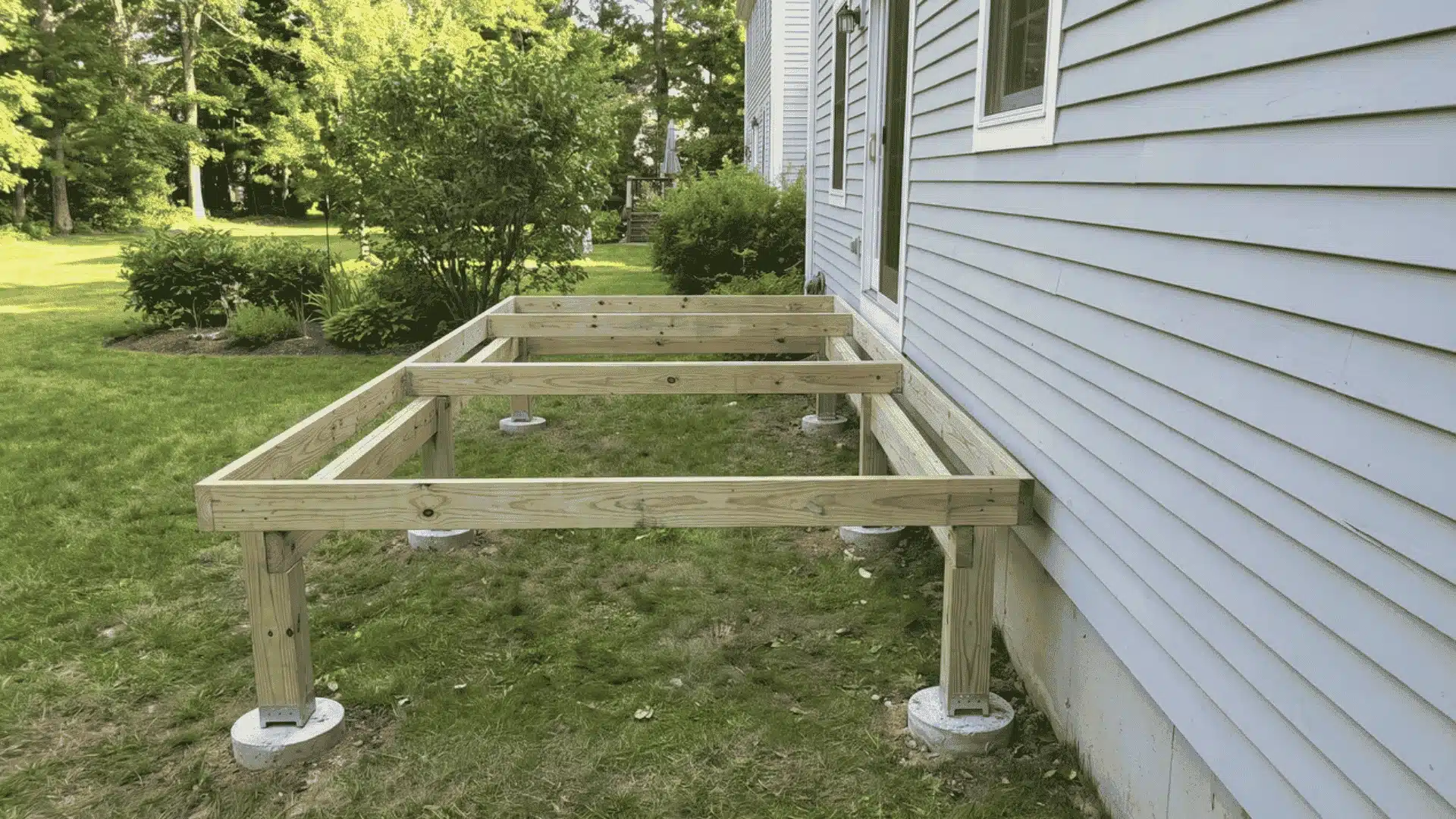
This design stands on its own without tying into your house’s structure, removing a tricky, code-heavy step from the process.
Skipping the ledger board connection means fewer inspection requirements in most areas, which keeps the entire build simpler from start to finish.
It does mean adding extra support underneath for stability, which is a small tradeoff for a much simpler overall process to manage.
6. Deck-and-Gravel Hybrid Layout
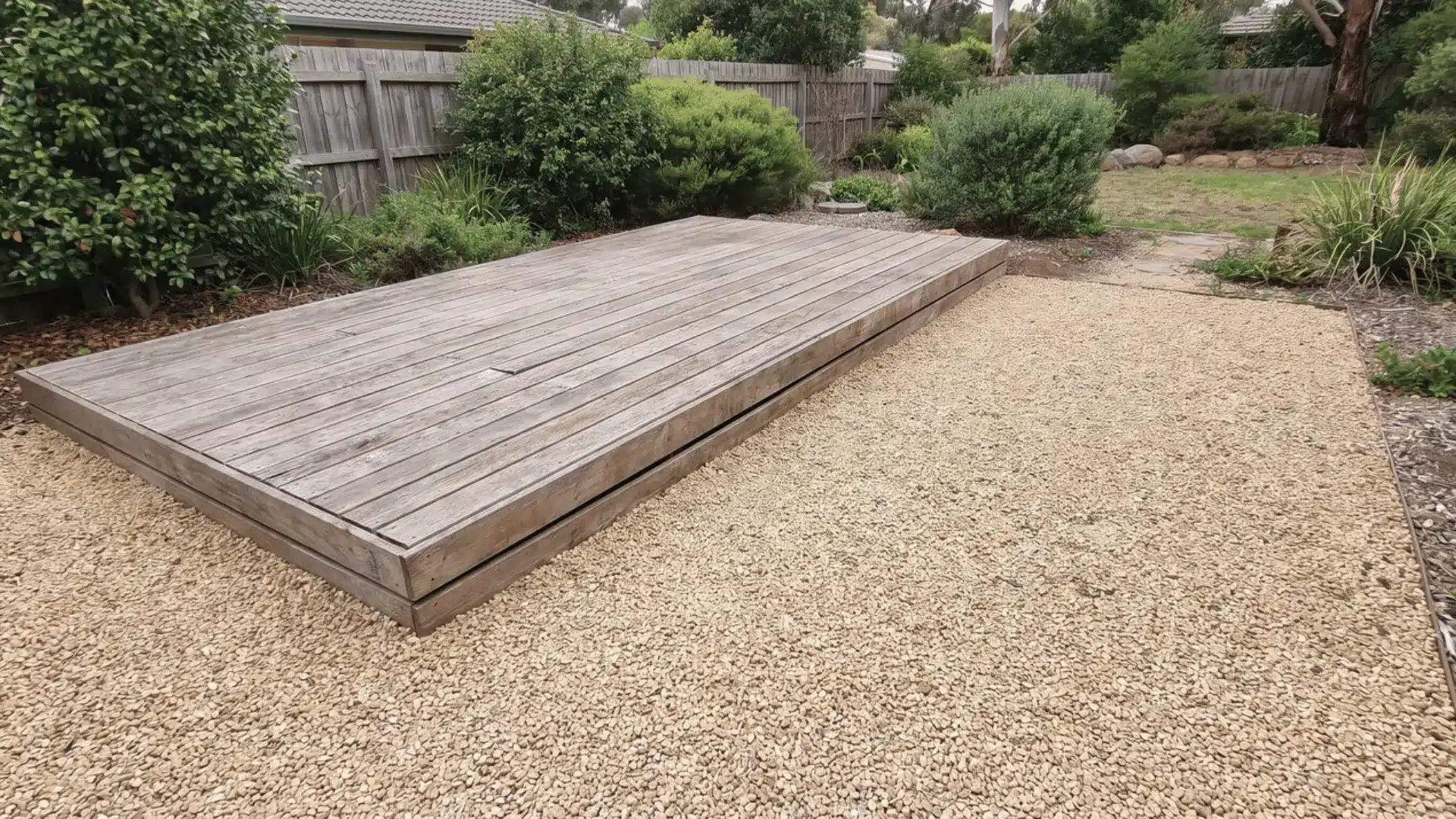
Pairing a small wood platform with an adjacent pea gravel zone cuts your expensive lumber square footage while still giving you a defined, walkable surface.
The gravel section handles drainage the deck can’t, which matters if your yard already holds water after rain. It’s also the easiest way to expand a small deck’s footprint later without touching the existing frame.
7. Stock Tank Soak Deck
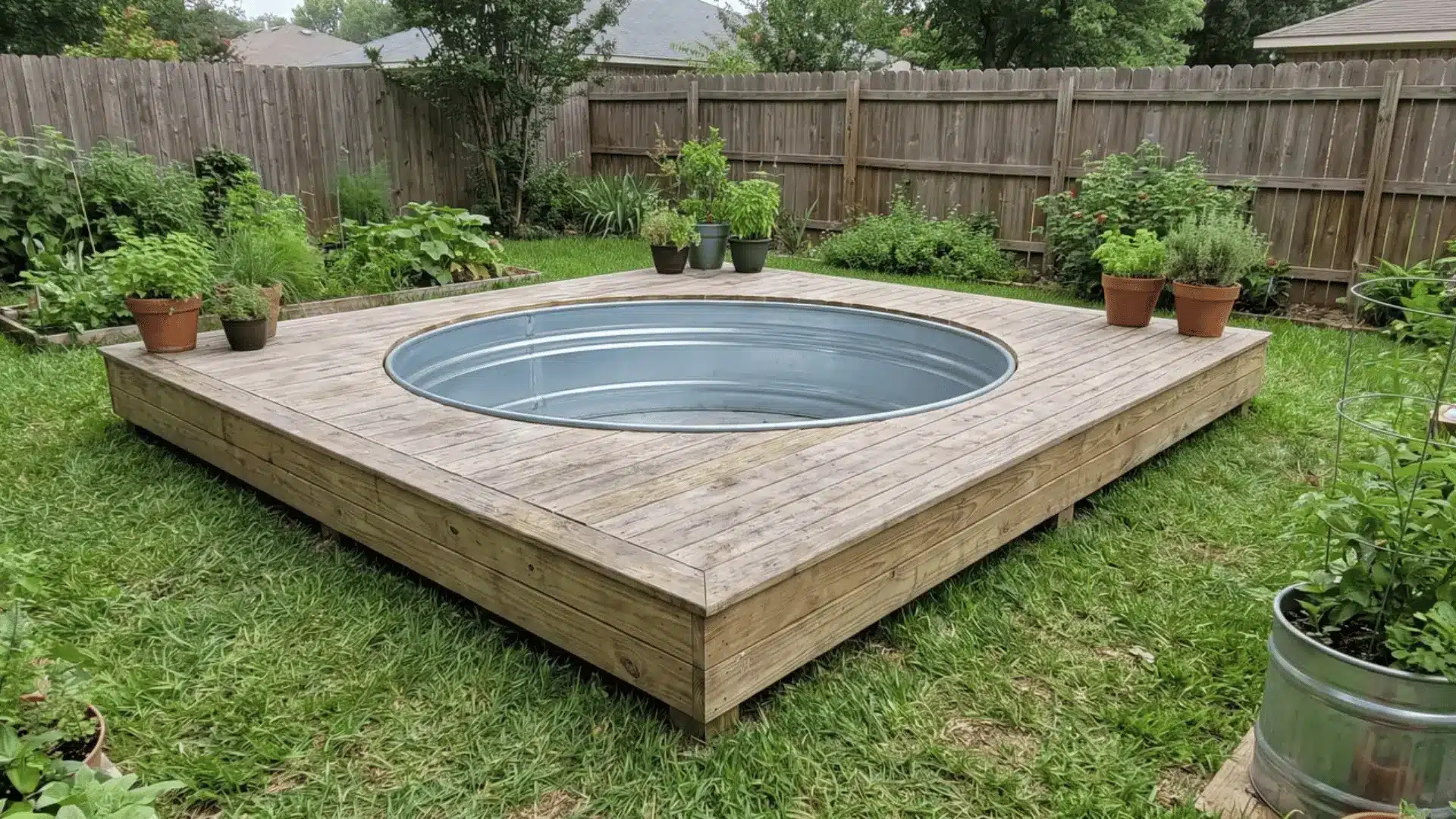
Building a low, rim-height deck around a galvanized stock tank turns a $300 to $600 farm trough into a genuine backyard cooling-off spot for a fraction of an in-ground pool.
Most DIY builders spend $500 to $1,500 on the surrounding deck itself, using pressure-treated lumber or composite for water exposure. This is the one build here where I’d bring in an electrician if you’re running a pump or heater off a dedicated circuit.
| Safety Note: Any stock tank deck with standing water deep enough to submerge a child needs to meet your local pool barrier or fencing code, and any electrical work for a pump or heater near water requires a GFCI circuit installed by a licensed electrician in most jurisdictions. |
8. DIY Gravel Fire Pit Zone Beside the Deck
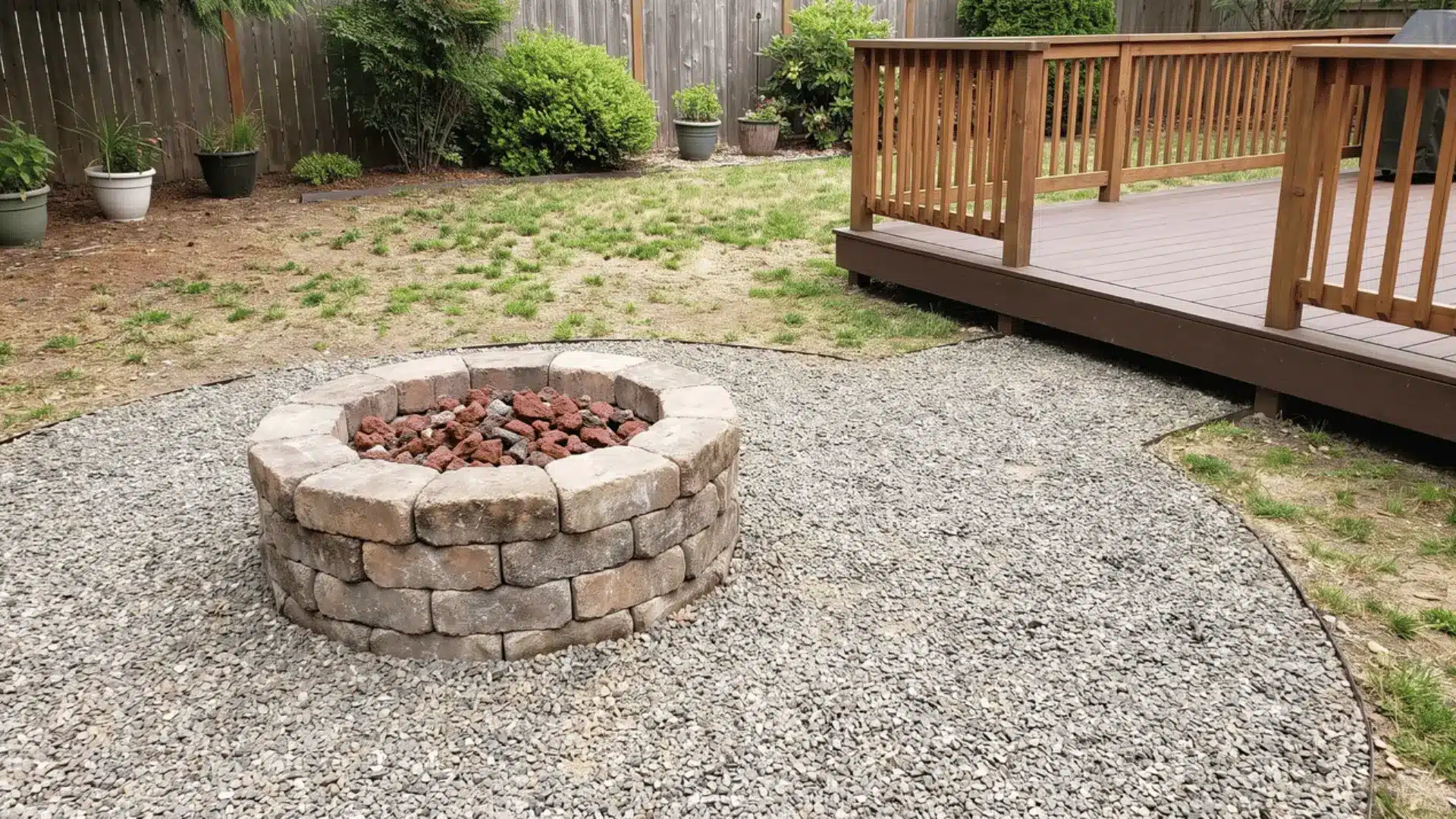
A ring of landscape blocks or pavers filled with lava rock or gravel gives you a simple backyard fire feature for well under $500 in materials, far below the $830 national average for a professionally installed pit.
Keep it on its own gravel or paver pad, never directly on deck boards, and hold at least 10 feet of clearance from the deck and any structure. This is the highest-impact idea on the list for the money, and it’s the one most likely to end up as the deck’s main gathering spot once the sun goes down.
Ways to Lower the Cost of a New Build
These aren’t standalone deck ideas on their own; they’re the material and construction choices that make the builds above cheaper.
- Deck blocks instead of poured footings: Deck blocks sit directly on the surface instead of being buried in concrete, cutting labor and material costs, and working best on level, well-drained ground.
- Pressure-treated pine framing: Pressure-treated pine resists rot and insects for years without the price tag of cedar or composite, making it a durable, budget-friendly framing choice.
| Line Item | Low End | High End | What Drives Variation |
| Ground-level floating deck | $800 | $2,500 | Size, lumber grade, number of deck blocks |
| Interlocking deck tiles | $300 | $1,200 | Square footage, tile material |
| Deck-and-gravel hybrid | $600 | $2,000 | Ratio of decking to gravel, edging material |
| Stock tank soak deck | $900 | $2,700 | Tank size, deck height, pump and electrical |
| Low stepped platform (sloped yard) | $1,200 | $3,000 | Grade change, extra framing and excavation |
| DIY gravel fire pit zone | $150 | $600 | Ring material, pit type, size |
| Cosmetic refresh | $150 | $600 | Extent of board damage, stain grade |
| Decor, furnishing, and built-in bench | $100 | $700 | How much is thrifted vs. built vs. bought new |
| Privacy screens and lighting | $50 | $300 | Materials chosen, screen length |
Get a local quote before locking in a firm number; lumber and gravel prices shift by region and by season, sometimes by 15 to 20 percent in either direction.
Cosmetic Refresh Ideas for an Existing Deck
If the frame is solid, none of these require a permit, and all of them cost less than a single new deck board would suggest.
9. Power Washing Before Resealing

Power washing strips away years of grime, mildew, and loose fibers before you put any new finish on the wood. Skipping this step means the new sealer sits on dirt instead of clean wood, which shortens how long that finish actually lasts.
Keep the pressure moderate on softer woods, since too much force can gouge the surface and leave visible marks behind.
10. Solid-Color Stain Over Weathered Wood
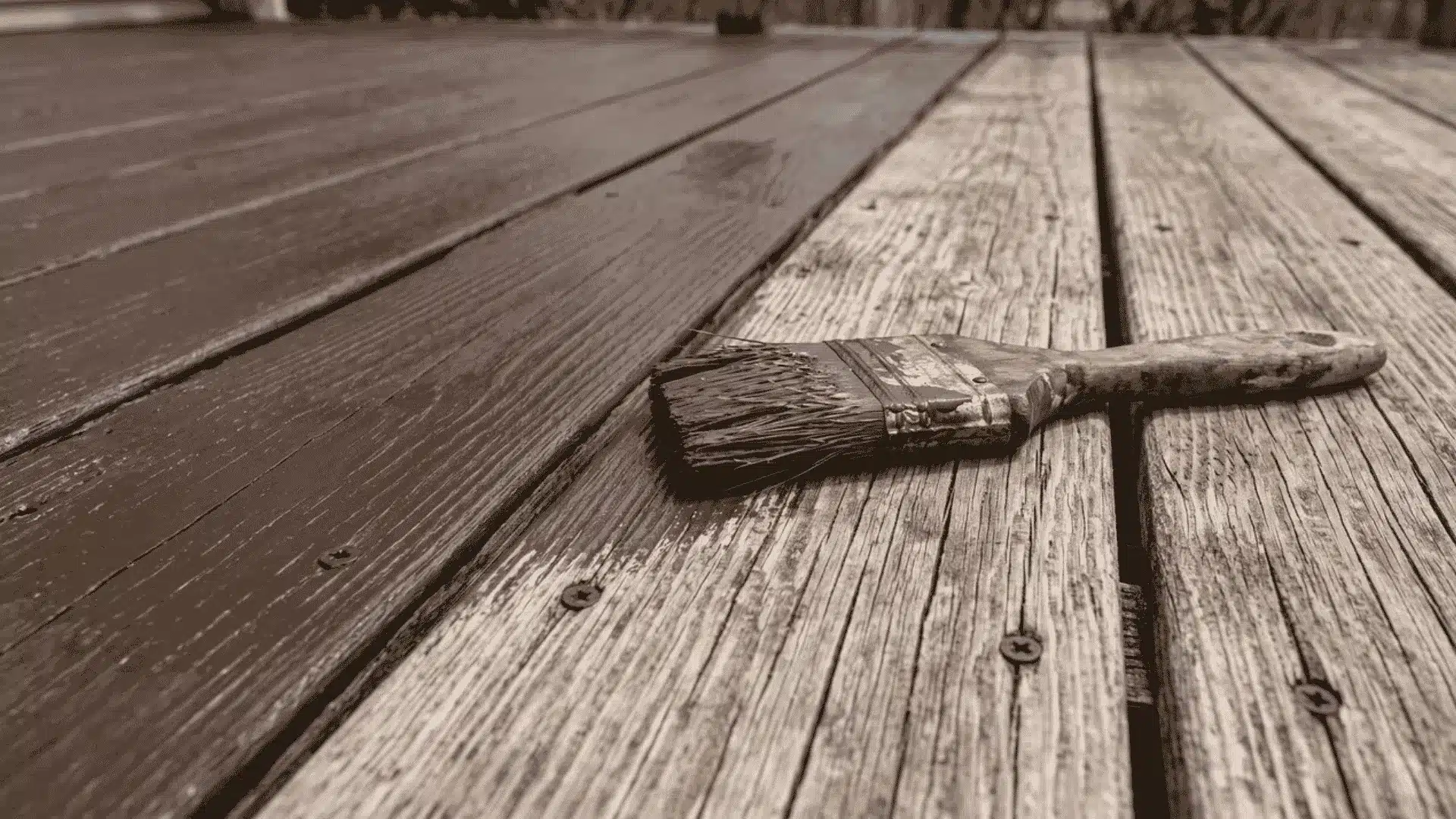
A solid-color stain covers gray, weathered boards completely, hiding years of sun damage without stripping the wood back to bare.
It holds up longer than clear sealers, too, since the pigment blocks UV rays that cause fading and cracking over time. This works best when the wood is still structurally sound. Stain can’t fix rot, only cover what’s cosmetic on the surface.
11. Swapping Only the Damaged Boards
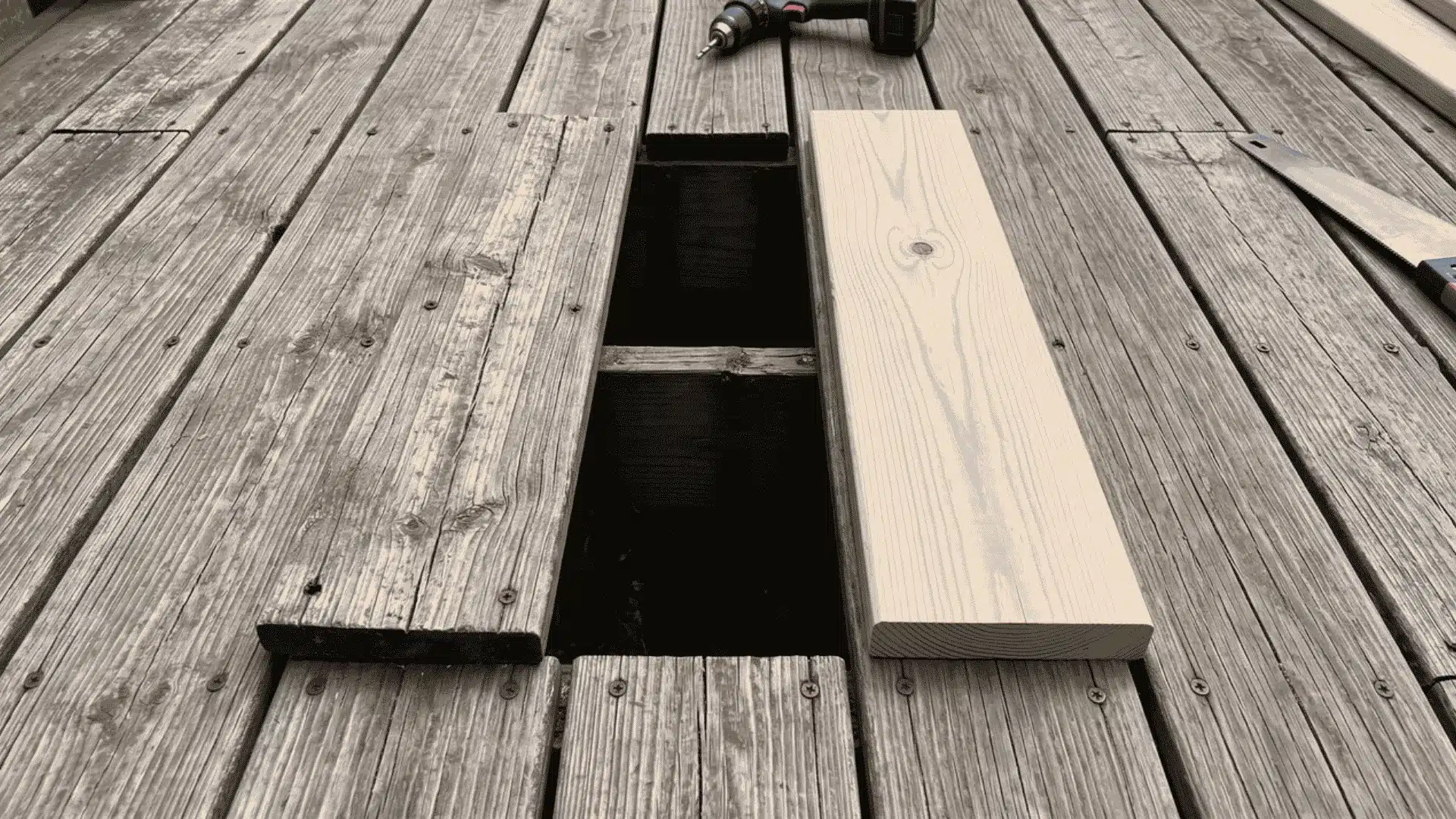
Not every board on a deck ages at the same rate, so replacing just the worn ones saves you real money.
Focus on boards that flex, splinter, or hold water, since those are the ones most likely to fail next season. This approach keeps the rest of your deck intact, and it blends in well once everything gets a fresh coat of stain.
12. Sanding and Refinishing Railings
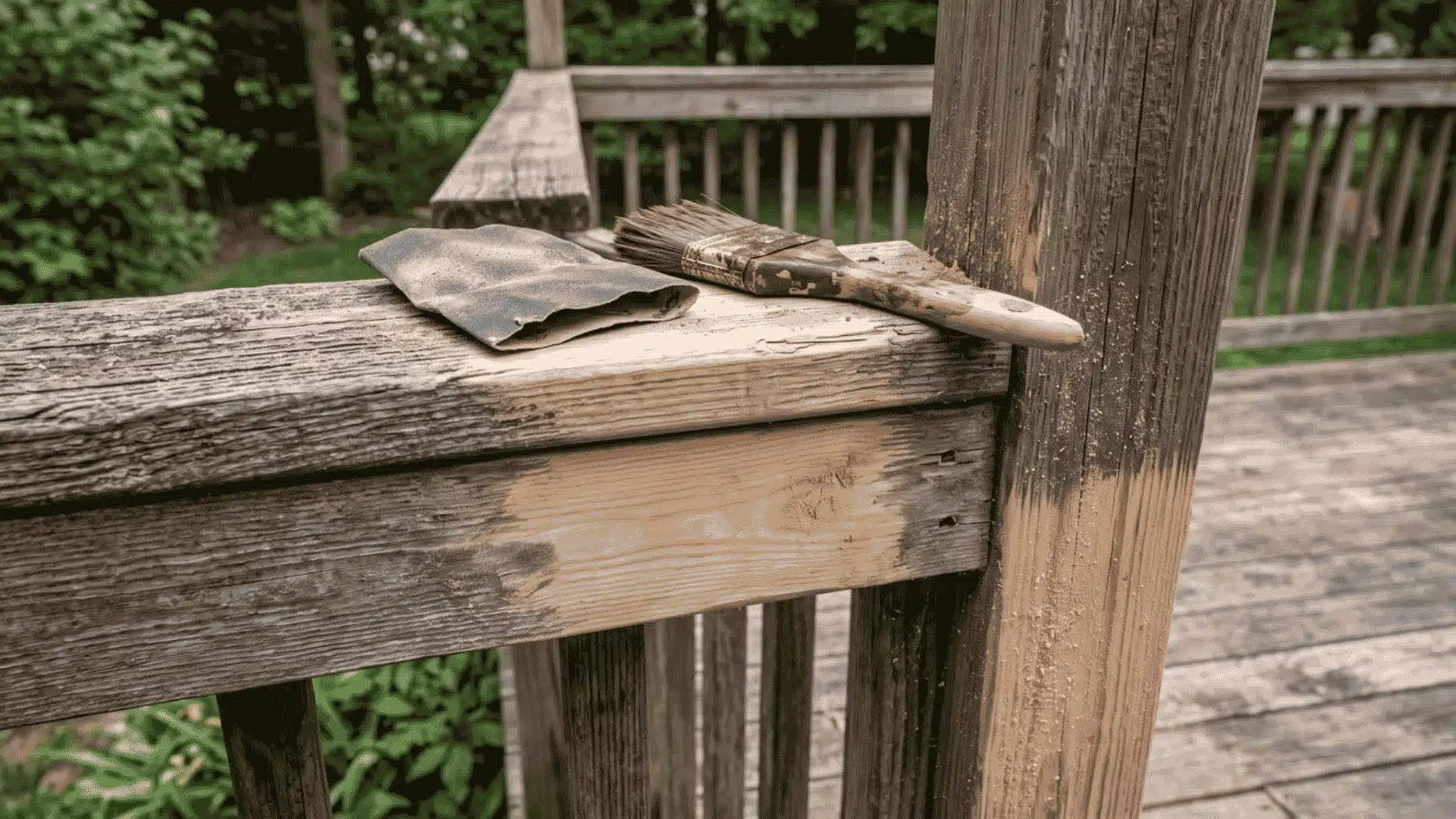
Railings take a beating from hands, weather, and sun, so they often look worse than the deck surface itself.
A light sanding smooths out splinters and rough patches, giving new stain or paint something clean to grip onto. This small fix changes how the whole deck looks, since railings sit right at eye level for anyone standing nearby.
13. Adding a Simple Skirt to Hide the Underside
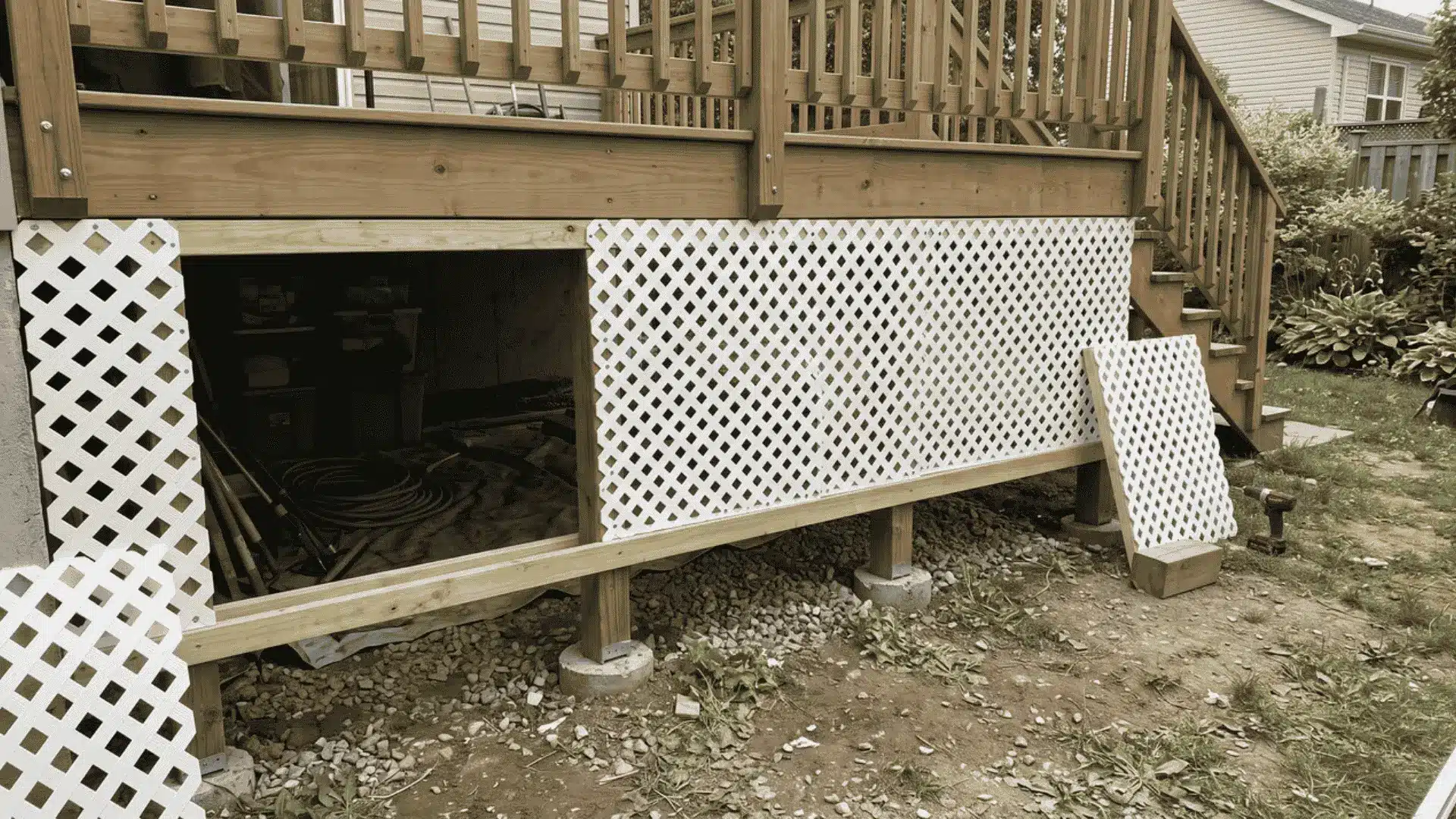
A deck skirt covers the open space underneath, hiding storage, pipes, or uneven ground that shows below the boards.
Lattice panels or leftover deck boards both work well here, and neither requires much in the way of tools or skill. This one change makes a deck look finished, even when nothing structural underneath it has actually been touched.
Decor and Furnishing Ideas for Any Deck
These ideas need no tools, just thinking about how the space gets used daily. Small furniture and layout changes can make a deck feel finished.
14. Outdoor Rug to Define the Seating Area
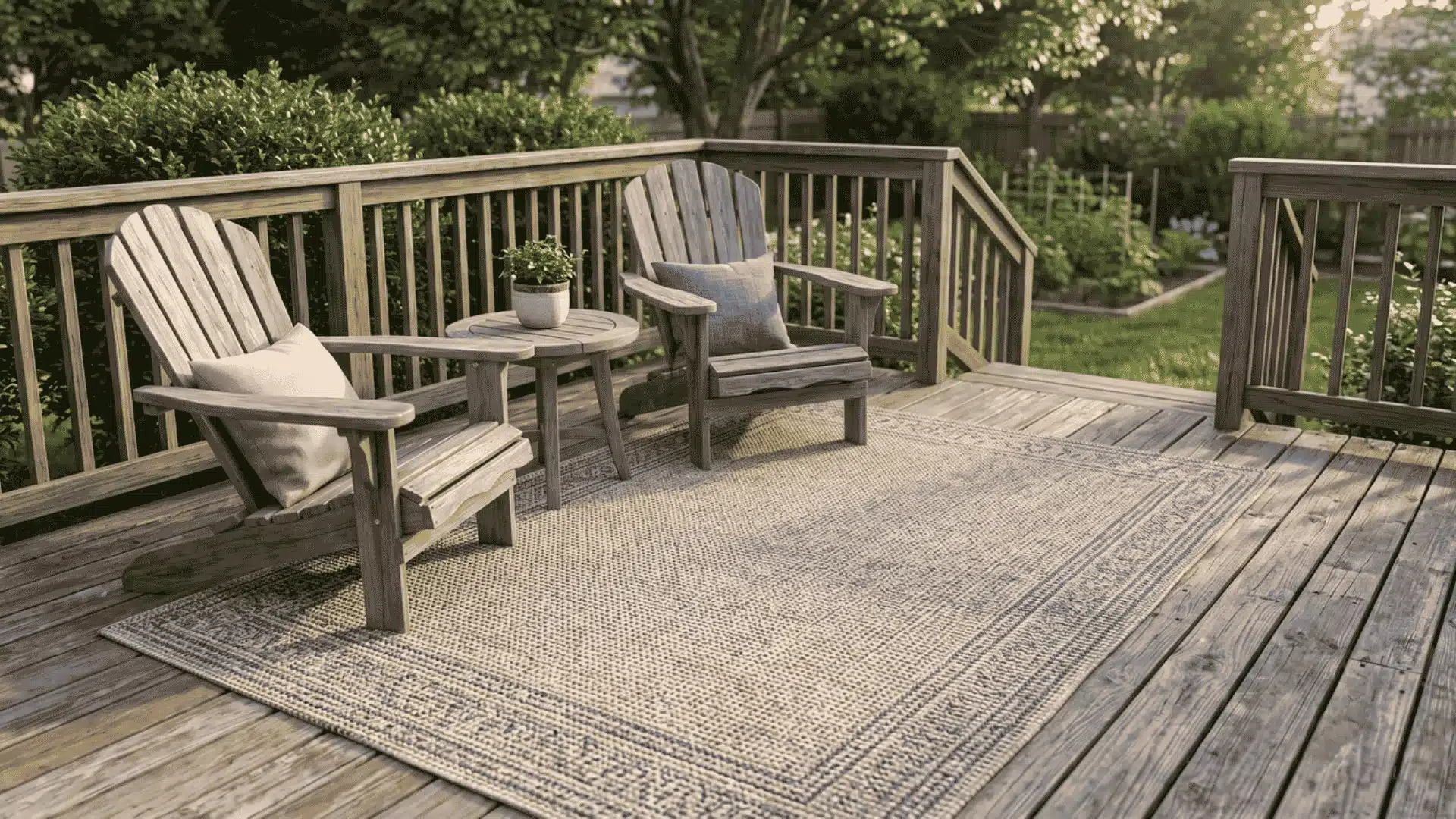
A rug pulls a seating area together, making it feel like a real room instead of just open decking space.
Pick a weather-resistant material, since regular indoor rugs trap moisture and fall apart fast when left outside. This works especially well on larger decks, where furniture alone can feel scattered without something grounding it visually.
15. Thrifted or Repurposed Outdoor Furniture
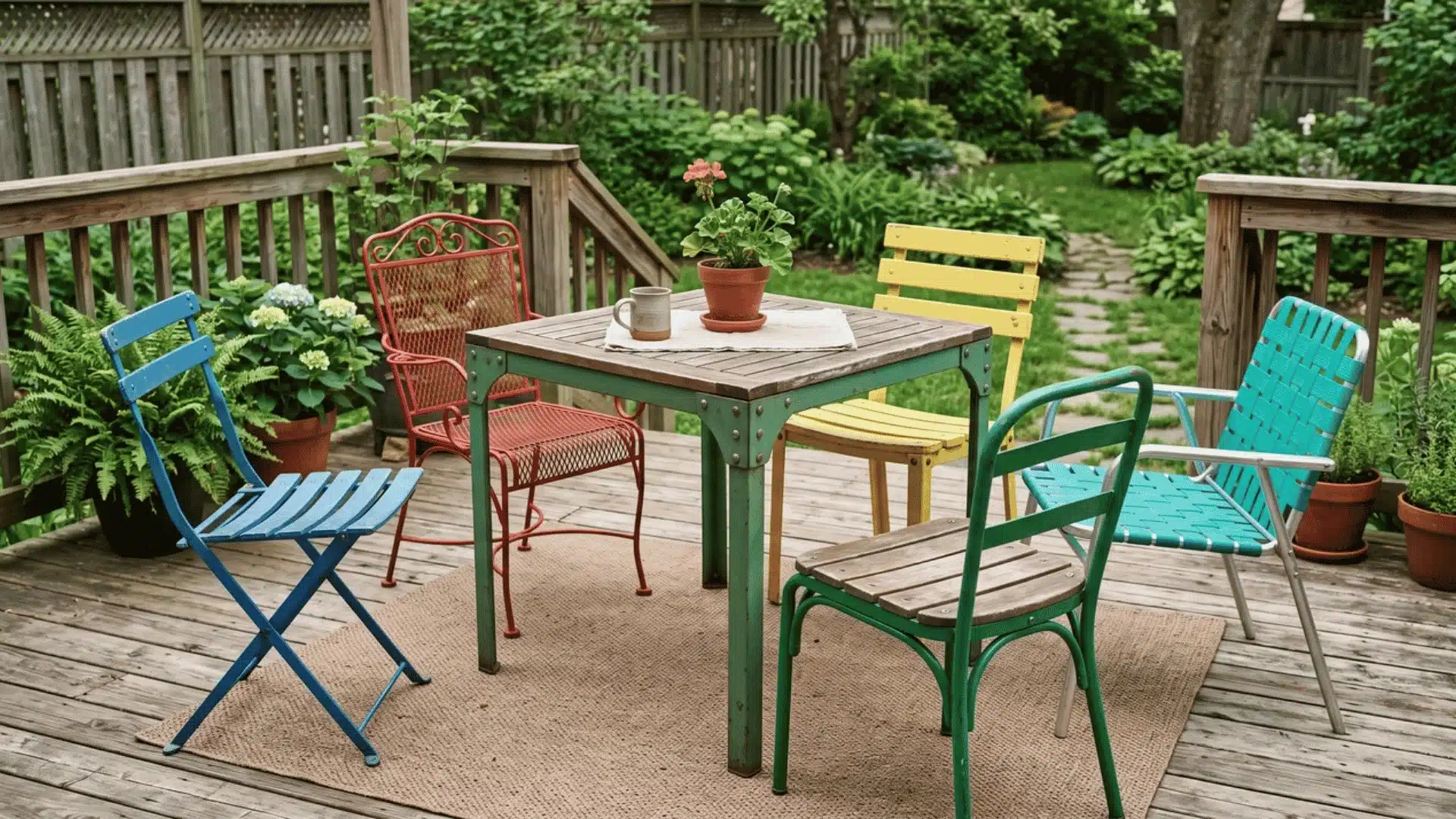
Secondhand furniture often costs a fraction of new pieces, and a coat of paint hides most of its wear.
Check joints and hardware carefully before buying, since rust or loose frames can turn a bargain into a hazard. This approach also lets you mix styles freely, since a curated, eclectic look reads as intentional rather than mismatched.
16. Grouped Container Planters
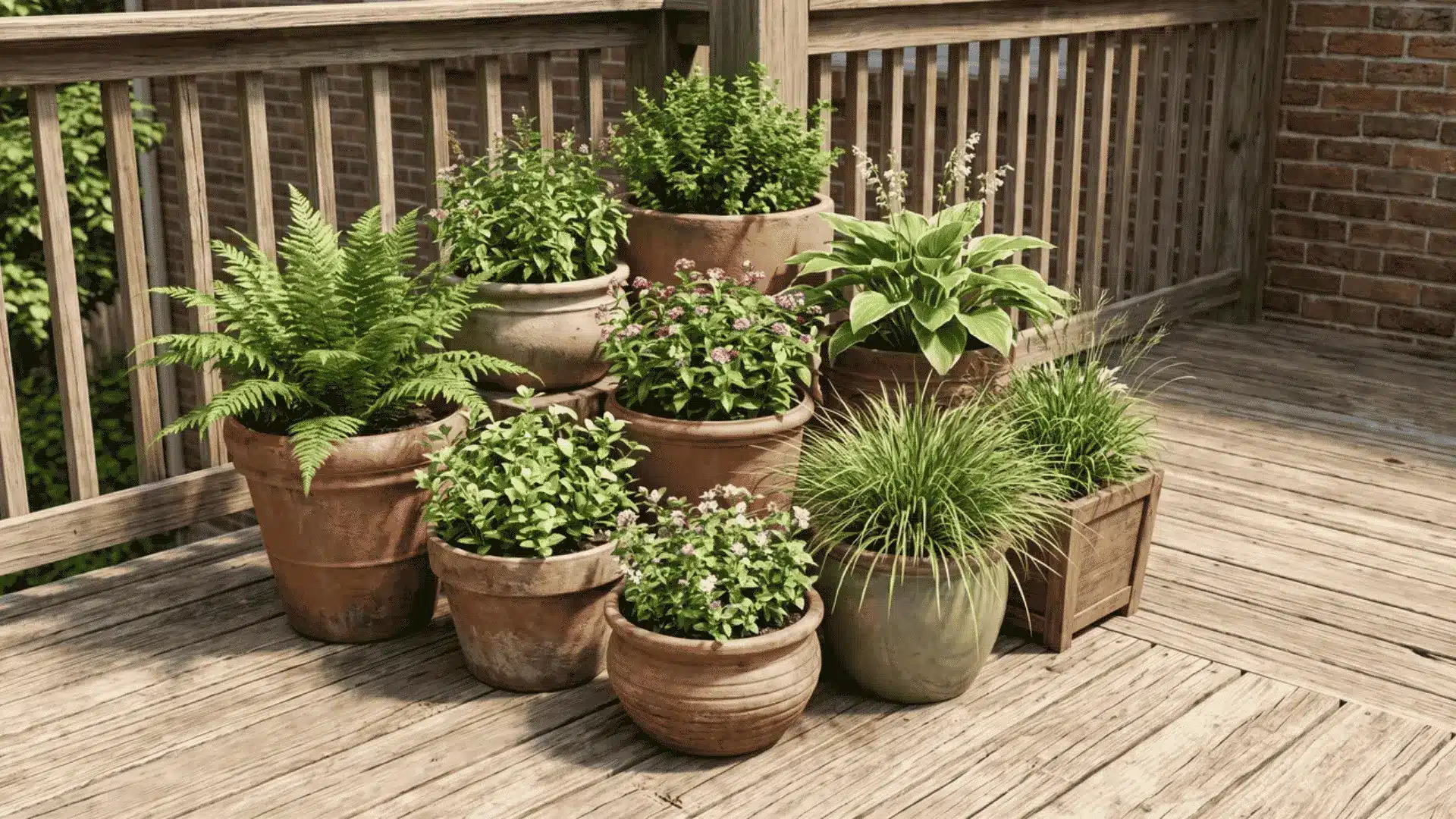
Grouping several planters creates more visual impact than scattering single pots around the edges of the deck.
Vary the heights and pot sizes within each cluster, since uniform rows tend to look flat and less natural. This trick works in small spaces too, letting you add greenery without giving up much usable floor room.
17. Folding or Stackable Furniture for Small Decks
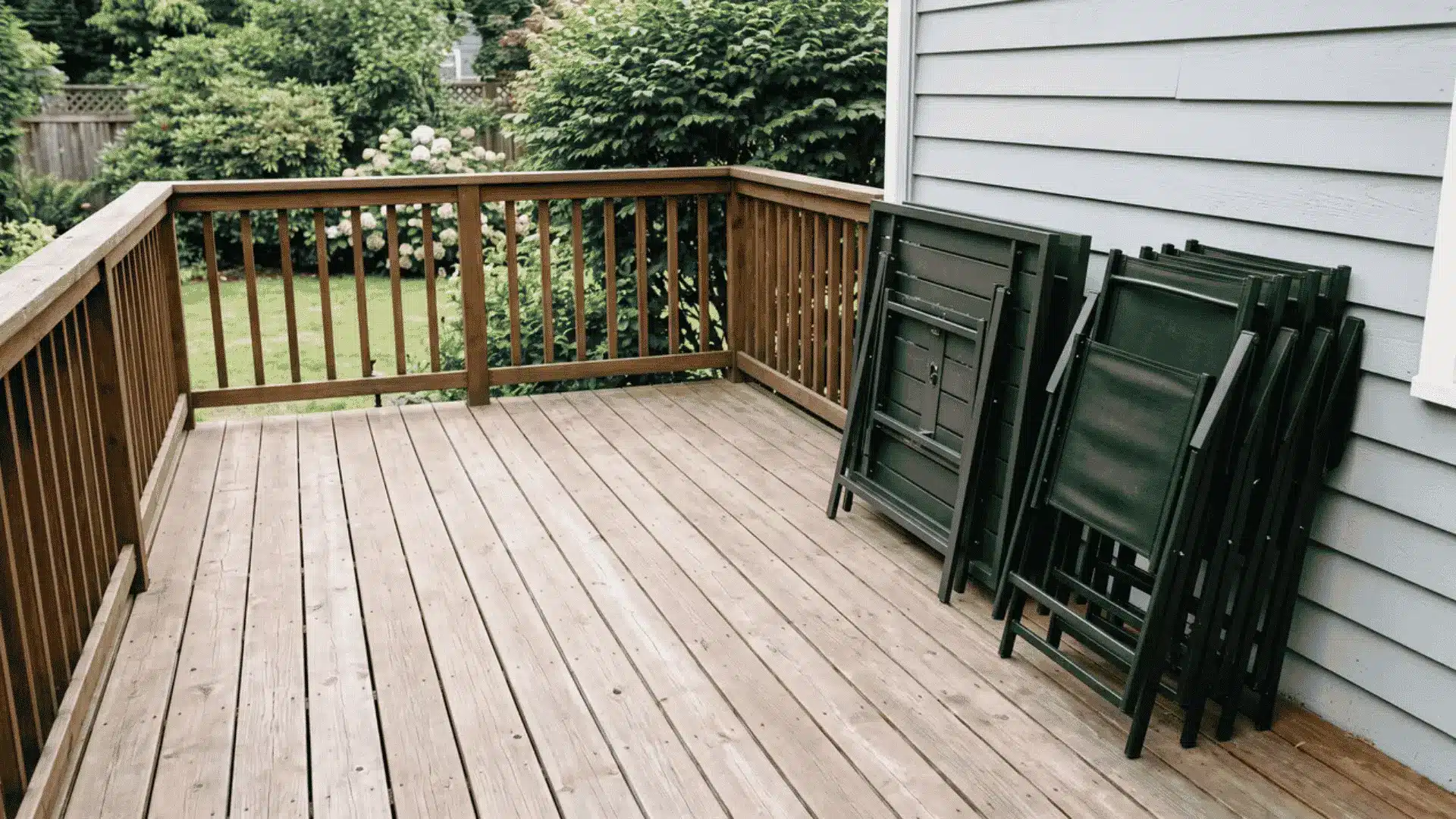
Folding furniture lets a small deck serve multiple purposes, since you can clear space when you need room to move.
Stackable chairs work well for storage too, tucking away easily against a wall or inside a nearby shed. This matters most on decks under a certain size, where every square foot of open space counts.
18. DIY Built-In Bench Seating Along the Deck’s Edge
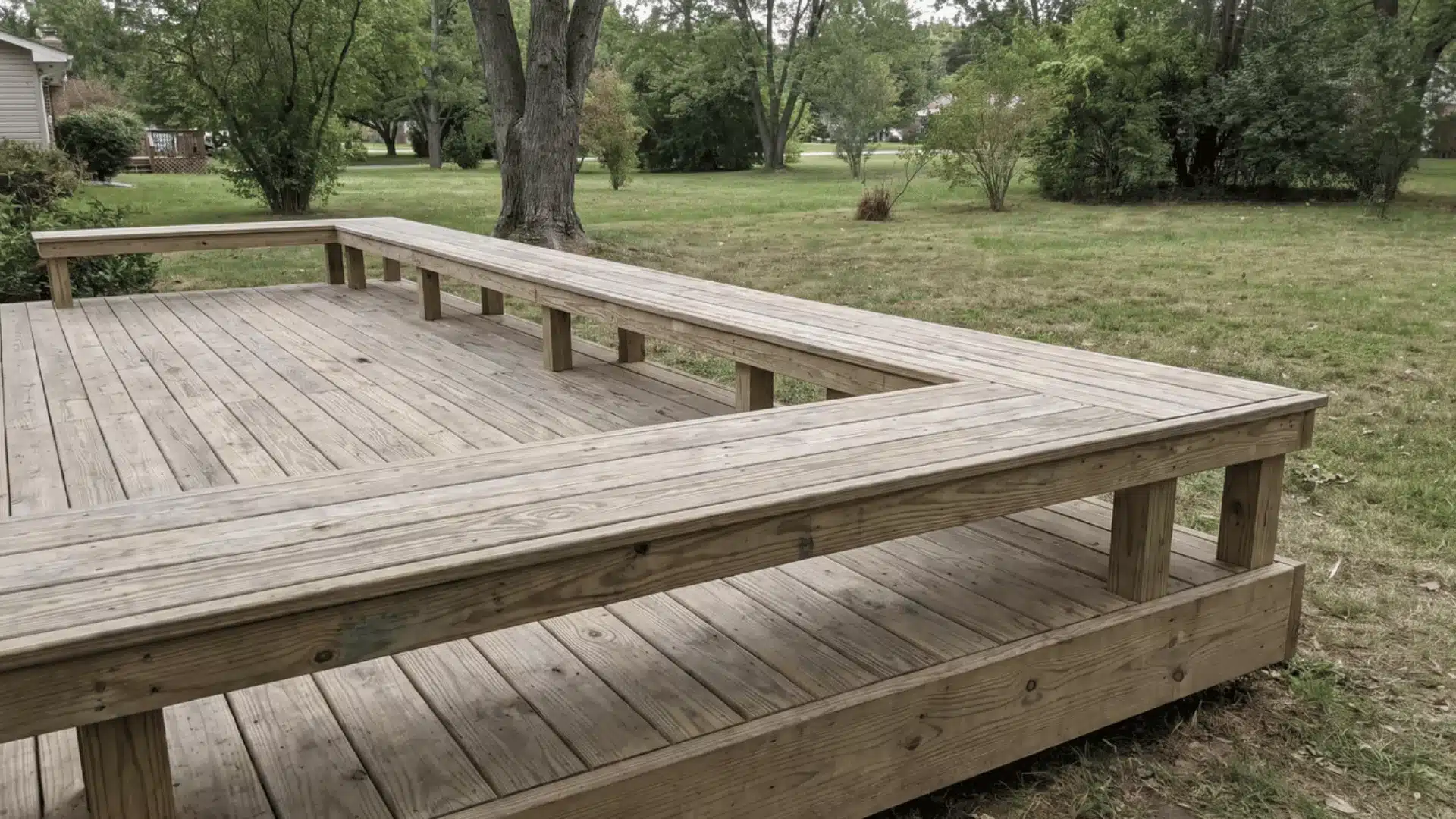
Framing a bench into the deck’s rim joist gets you seating without buying furniture, and it doubles as a low guardrail on a deck under 30 inches high.
Budget roughly $150 to $400 in pressure-treated lumber for a full perimeter run. It’s a weekend project for anyone comfortable with a circular saw and a drill.
Privacy and Lighting Ideas
These work on rentals too, since none touch the deck’s structure or require permanent changes, and they’re easy to take along if you move often.
19. Trellis With Climbing Vines
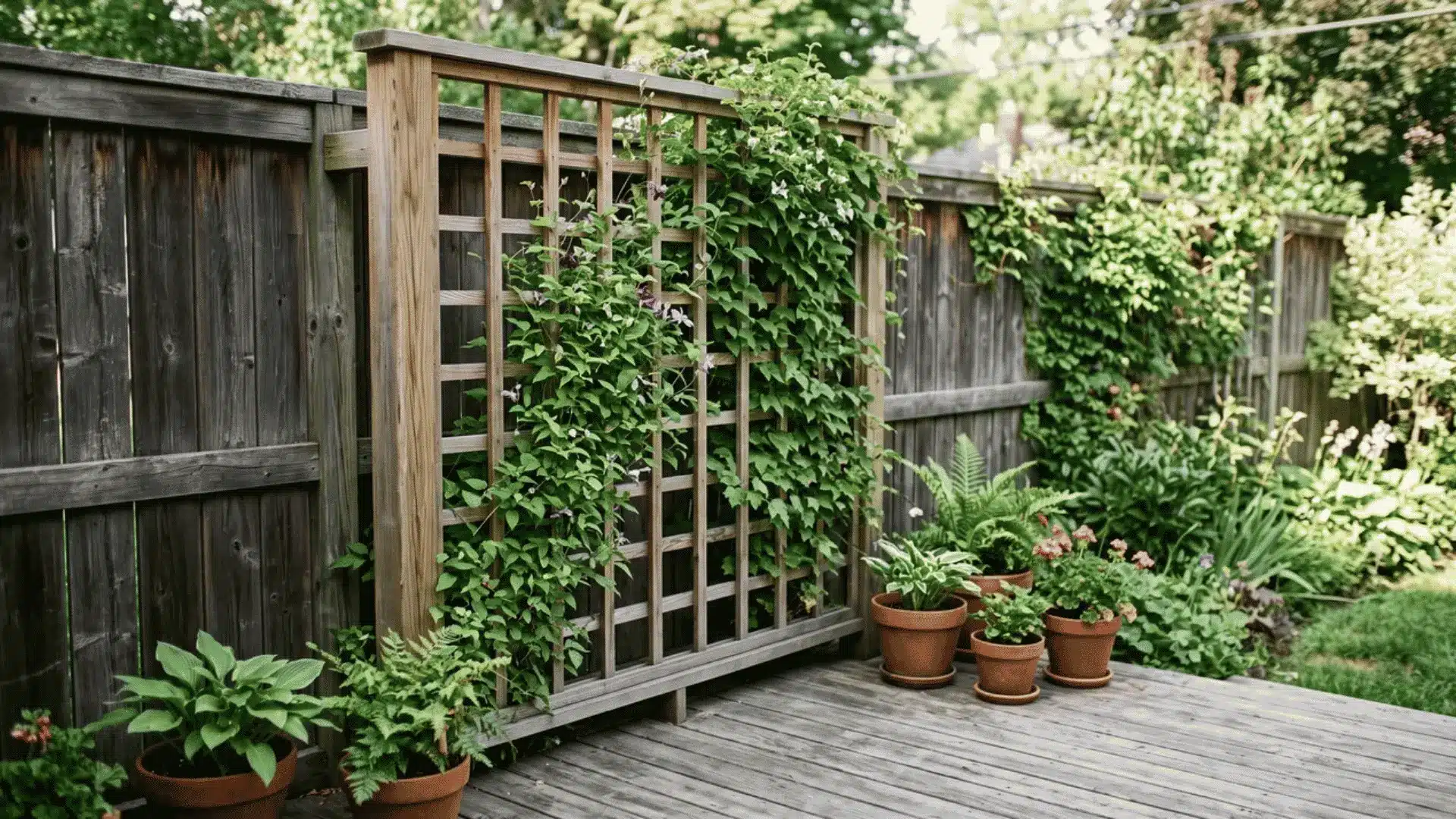
A trellis creates a living wall that blocks sightlines while adding real greenery to an otherwise bare corner.
Fast-growing vines fill in within a season or two, so the privacy effect builds naturally over time. This works best when placed against a fence or wall, giving the vines something sturdy to climb onto.
20. Tall Potted Plants as Corner Screens
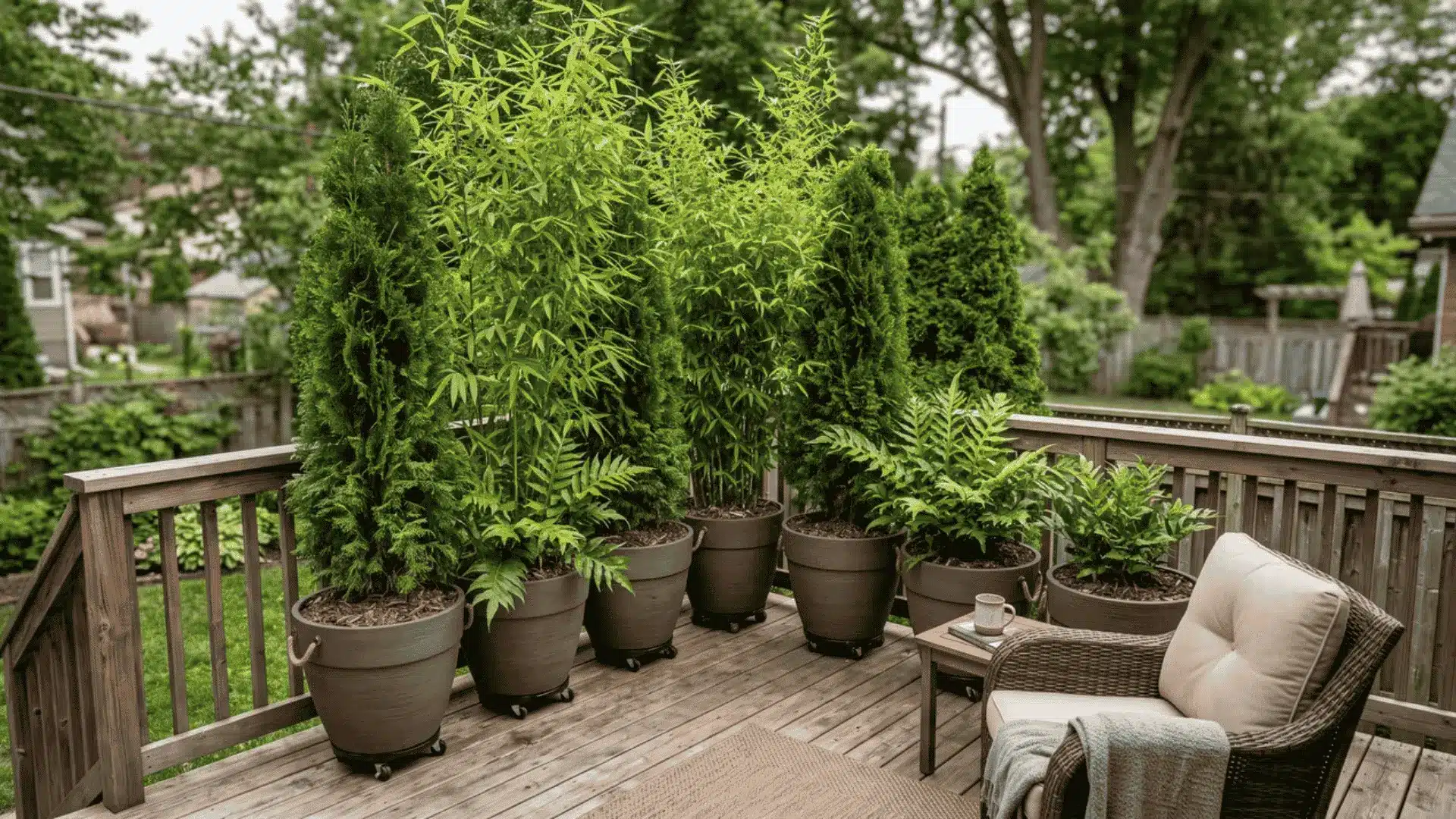
Tall plants in large pots create instant screening without any building or attaching anything to your deck.
They’re also fully portable, so you can shift them around as your privacy needs change through the seasons. This option suits renters especially well, since nothing gets fixed in place or left behind when you move.
21. Portable Bamboo Privacy Screen
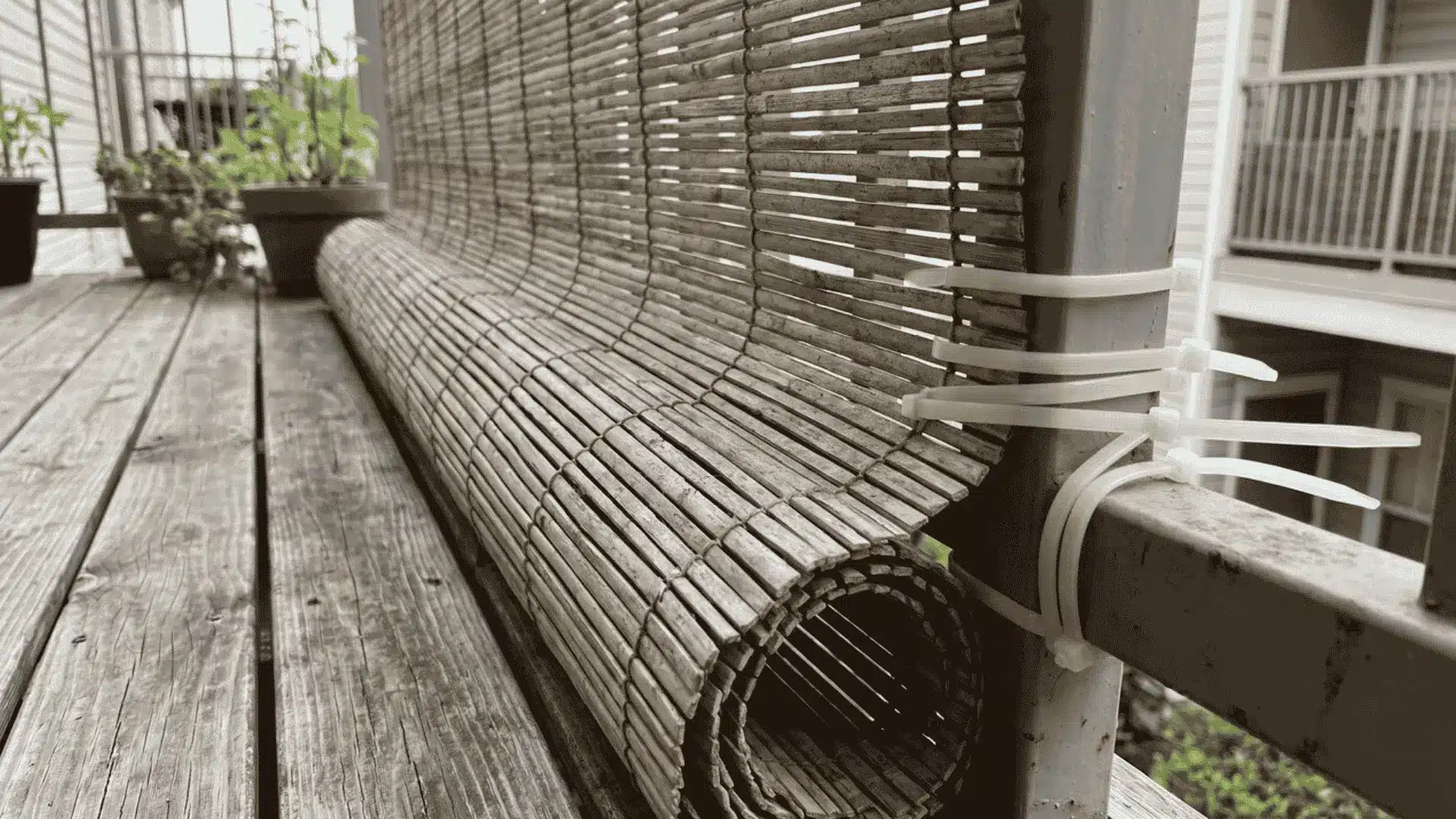
Bamboo screens roll or fold flat, making them easy to attach along a railing without any real installation work.
They block sightlines effectively while still letting light and air move through, unlike a solid wood or vinyl panel. This works well for apartment balconies, too, since most screens attach with zip ties instead of screws or nails.
22. Solar String Lights Along the Perimeter
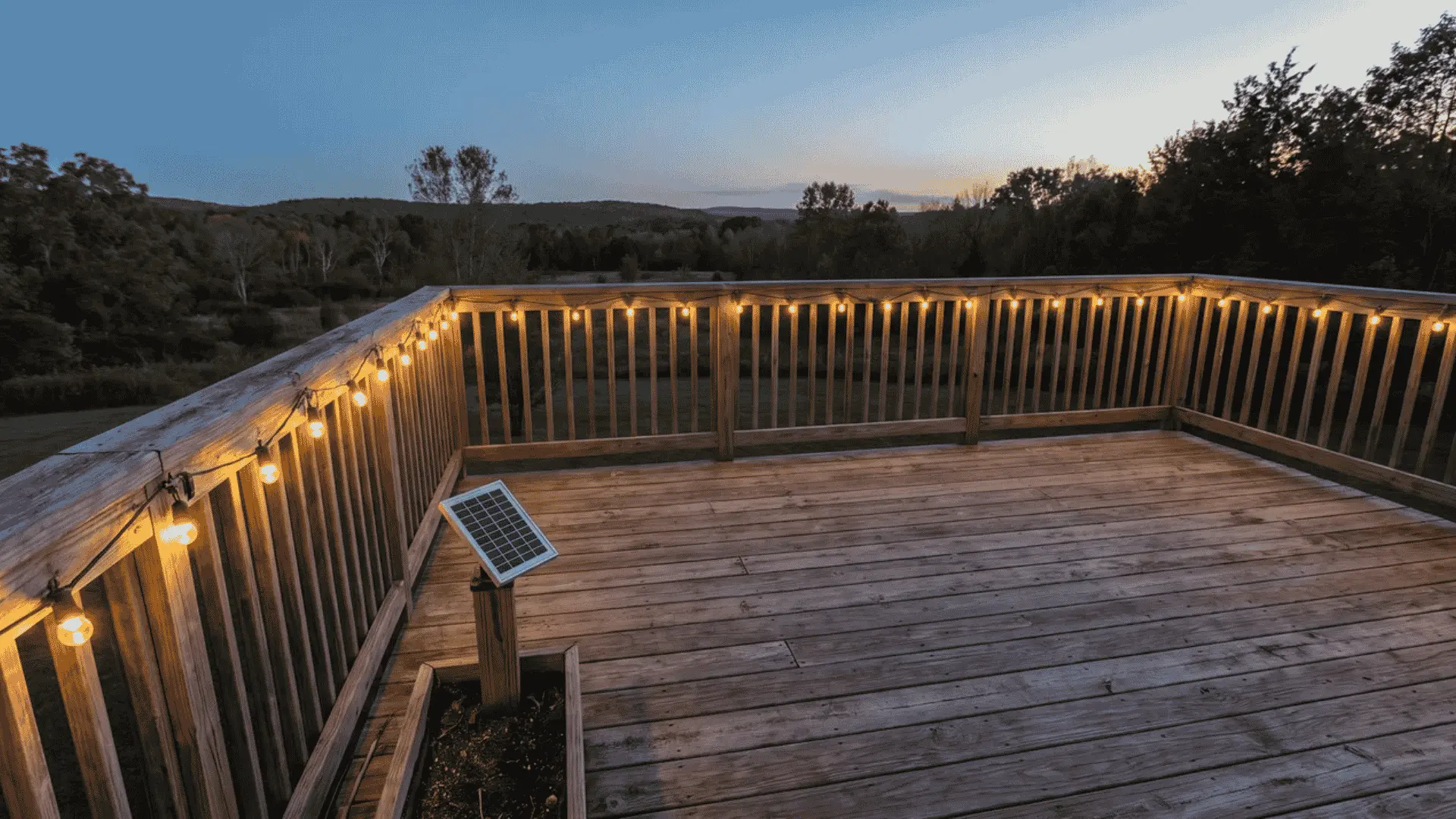
Solar lights charge during the day and turn on automatically at dusk, with no wiring or outlet needed at all.
Running them along a railing or fence line outlines the whole deck, making it feel larger after dark. This is one of the cheapest ways to change how a deck feels once the sun goes down.
23. Lanterns or Flameless Candles on Tables
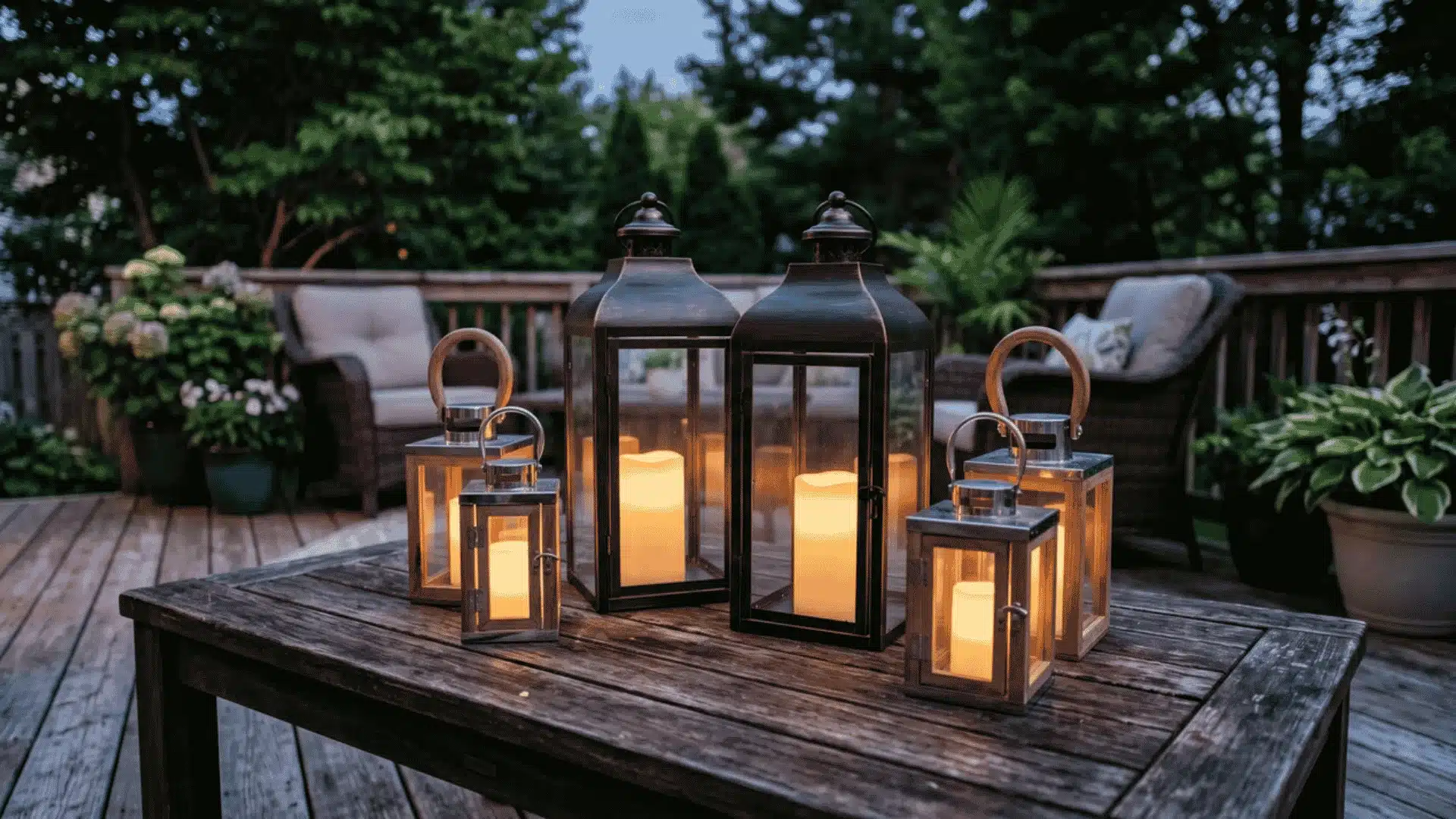
Lanterns add warm, low light at table height, which feels different from the brighter glow of string lights above.
Flameless candles remove any fire risk, making them a safer choice around kids, pets, or windy conditions. Grouping a few on one table creates more impact than spreading single lanterns across the whole deck.
24. Clip-On Spotlights for Stairs or Entry Points
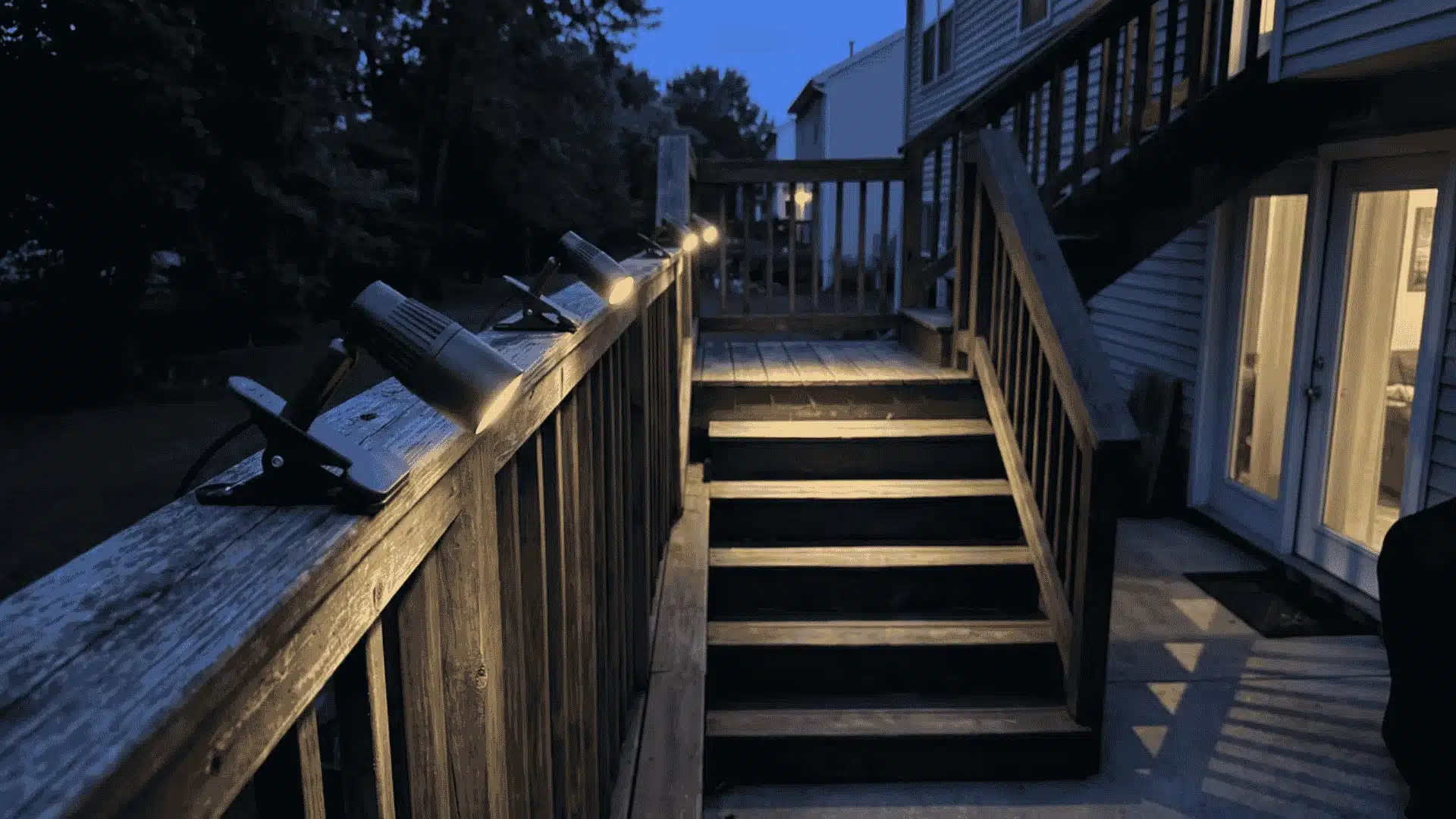
Clip-on spotlights solve a real safety issue by lighting steps and entry points that ambient lighting often misses.
In most cases, they attach without tools, clipping directly onto railings or the edge of a step. This small addition matters most on decks with stairs, where poor lighting becomes a real tripping hazard.
DIY vs. Licensed Contractor: What to Ask Before You Build
Ground-level builds, interlocking tiles, gravel hybrids, cosmetic refreshes, and every decor or lighting idea on this list are DIY-able for anyone comfortable with basic tools and a weekend.
Bring in a licensed contractor for anything involving a ledger board attached to the house, electrical work near a stock tank, or any deck built high enough to trigger a guardrail requirement in your area.
Before hiring anyone, ask for their local permit number, whether they pull the permit or expect you to, and what happens if an inspector flags the footings after the concrete’s already poured.
Deck Maintenance Tips to Keep Costs Down Long-Term
- Sweep debris regularly: Leaves and dirt trap moisture against the boards, which speeds up rot in wood decking over time.
- Check for standing water: Pooling water after rain usually means poor drainage, which can warp boards or rust hardware underneath.
- Reseal every couple of years: A worn sealer stops protecting the wood, letting sun and rain damage the surface faster than expected.
- Tighten loose hardware: Screws and bolts loosen with temperature changes, and catching this early prevents wobbly boards or railings.
- Trim nearby plants: Overgrown branches or vines trap moisture against the deck surface, encouraging mold and speeding up wood decay.
- Inspect the frame yearly: Soft spots or dark staining underneath usually signal early rot, and catching it early saves the whole structure.
Final Verdict
The bottom line on backyard deck ideas on a budget is that the cheap-looking shortcuts and the genuinely smart ones aren’t always the same thing.
A ground-level deck on properly set blocks holds up for a decade; the same deck on skipped footings racks out of square by the second winter.
If you’re starting from scratch, decide your height and your grade first, since those two factors determine your permit situation, your framing cost, and which ideas on this list actually apply to your yard before you’ve bought a single board.
Frequently Asked Questions
What is the cheapest way to build a backyard deck on a budget?
A ground-level floating deck on deck blocks is the cheapest structural build, typically $800 to $2,500 for a small footprint. It skips concrete footings and often skips permits since it sits low enough to avoid guardrail and elevation triggers in most areas.
How much would a 14×20 deck cost?
A professionally built 14×20 deck, about 280 square feet, runs roughly $8,500 to $20,000 depending on material, per 2026 contractor cost guides. A DIY ground-level version in pressure-treated pine at that size lands closer to $2,800 to $4,500 in materials alone.
What is the 3-4-5 rule for a deck?
The 3-4-5 rule squares a deck corner using the Pythagorean theorem: mark 3 feet on one side, 4 feet on the adjoining side, and adjust until the diagonal between the marks reads exactly 5 feet, confirming a true 90-degree angle.
Is it cheaper to pour concrete or build a deck?
Concrete is almost always cheaper upfront, running about $4 to $16 per square foot installed versus $25 to $50 for a wood deck. A sloped or uneven yard narrows that gap fast, since grading adds cost to the concrete side too.
Can I improve an old deck without rebuilding it?
Yes, if the frame underneath is still solid. Power washing, a solid-color stain, and swapping only the damaged boards usually fix a tired deck for a fraction of a full rebuild, and none of it requires a permit.
How much does a small budget deck cost?
A small ground-level deck typically runs $800 to $2,500 in materials, depending on size and lumber grade. Interlocking deck tiles over an existing slab cost even less, usually $300 to $1,200 for a full patio-sized area.
Do you need a permit for a budget deck?
It depends on height and local code, not on your budget. Many jurisdictions waive permits for decks built low enough to skip footings, stairs, and guardrails, but rules vary by city, so confirm with your local building department first.
How far should a fire pit be from a wooden deck?
Most 2026 cost and safety guides recommend at least 10 feet of clearance between a fire pit and any structure, including a wood deck, with a non-combustible base like gravel, pavers, or concrete underneath the pit itself.
Can I build a budget backyard deck on a sloped yard?
Yes, with a low stepped platform instead of one tall elevated deck. Stepping down the grade in two low tiers avoids the deep footings, tall railings, and stair codes that push full multi-level decks to $30 to $75 per square foot.