

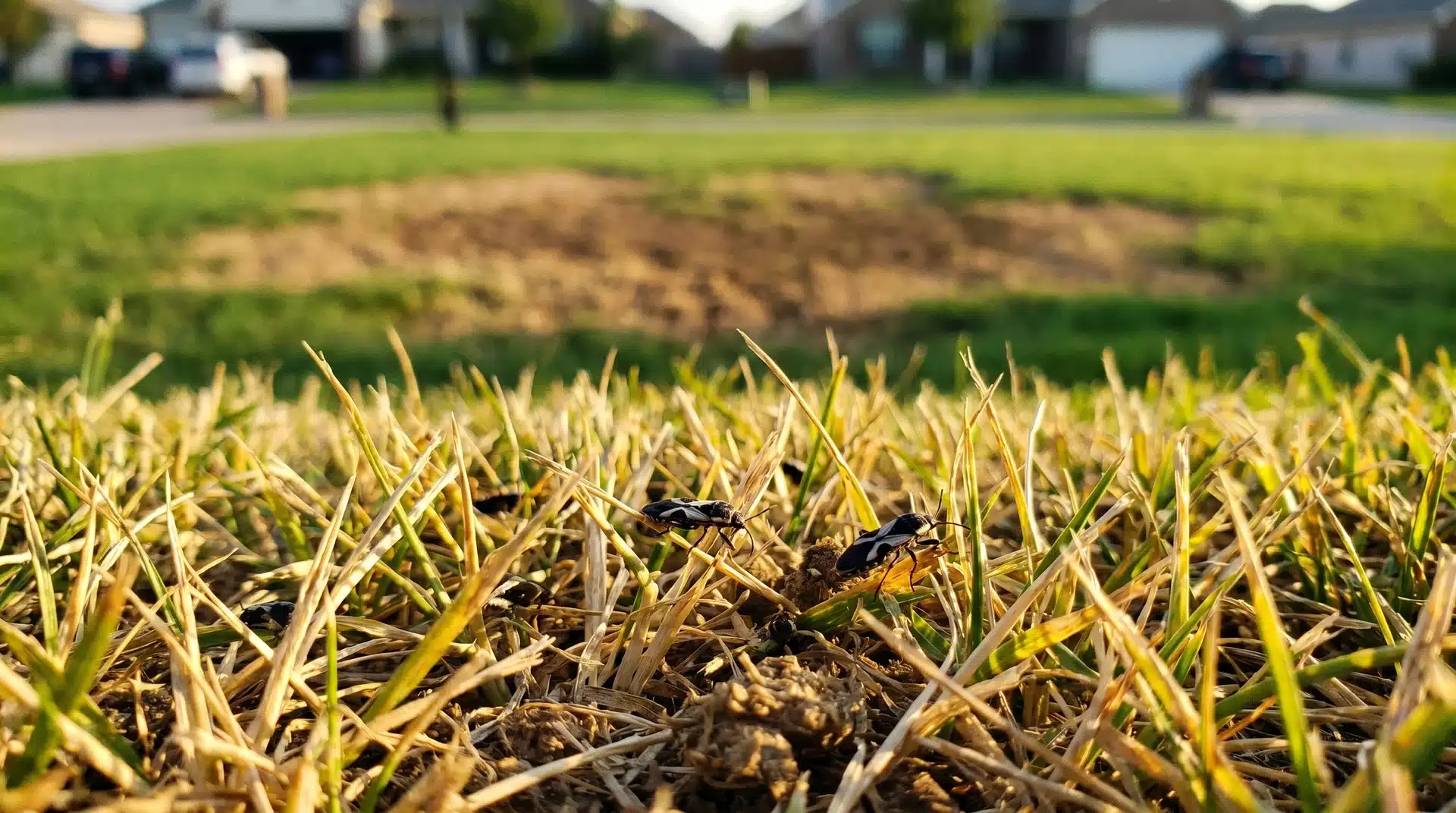
Dealing with brown patches that won’t go away no matter how much you water your lawn can be frustrating, especially when you’ve been keeping up with the maintenance.
It might seem like drought is the problem, but you could be facing a chinch bug infestation instead. These tiny insects can drain your grass of nutrients and moisture, leaving behind yellowing and dying patches.
This guide will help you identify chinch bugs, understand how to spot the signs, and offer solutions to deal with them.
Whether you’re a seasoned gardener or a beginner, knowing how to treat and prevent chinch bug damage will keep your lawn healthy and thriving through the summer.
What Are Chinch Bugs?
Chinch bugs are tiny lawn insects that feed by piercing grass blades and pulling out the plant’s fluids.
As they feed, they also push a toxic substance into the plant that blocks water movement inside the grass, which causes it to yellow, dry out, and die.
Fully grown adults are about 1/8 inch long, with black bodies and white wings. Young nymphs start out bright orange with a white stripe on their back before gradually turning black as they mature.
They live in the thatch layer and are most active during hot, dry weather.
Types of Chinch Bugs Found in U.S. Lawns
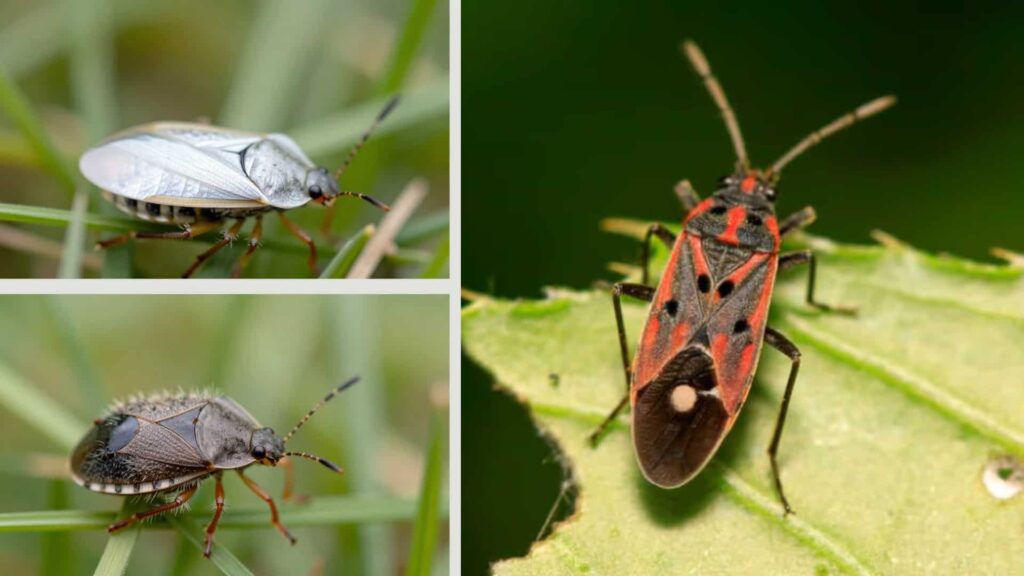
Not all chinch bugs are the same. The species damaging your lawn depends a lot on where you live in the U.S. Here’s a quick look at the three types you’re most likely to run into.
Southern Chinch Bug: The most destructive species in the southern U.S. and one of the most damaging lawn pests in Florida, Georgia, and Texas. Adults can be confused with big-eyed bugs, but southern chinch bugs have shiny white wings.
Hairy Chinch Bug: The go-to pest for homeowners in the Northeast. Adults are about 1/6 inch long with fine hairs covering the body. Nymphs are brick-red with a white band across the back.
Common Chinch Bug: Found mainly in the Midwest. This species attacks turf grasses but also feeds on corn and sorghum, making it a broader agricultural concern.
Chinch Bug Life Cycle (Egg to Adult)
Knowing the life cycle matters because the timing of your treatment depends on which stage the bugs are in. Catching them early, during the nymph stage, gives you a much better shot at stopping them before widespread damage sets in.
| Stage | What Happens | Timeframe |
|---|---|---|
| Egg | Female lays eggs in soil at the base of grass stems | Hatches in 1 to 2 weeks |
| Nymph (5 stages) | Bright red/orange with white stripe, turns black through 5 molts | 4 to 6 weeks to reach adult |
| Adult | Black body, white wings, fully mobile and feeding | Active spring through fall |
| Overwintering | Adults hide in thatch and leaf litter | Active again when temp reaches 50°F |
A single female can lay up to 300 to 500 eggs over her adult life. In warm southern states like Florida and Texas, chinch bugs produce three to five overlapping generations per year. That is why populations can grow from a small patch to a full-blown infestation fast.
Which Grasses Do Chinch Bugs Target?
St. Augustine grass takes the hardest hit, it’s by far the most attacked turf in the South. Beyond that, chinch bugs also feed on Kentucky bluegrass, perennial ryegrass, fescues, and creeping bentgrass.
In the Midwest, they occasionally attack corn, sorghum, wheat, and barley as well.
One useful thing to note: broadleaf plants and weeds in your lawn will not be affected, which can actually help you confirm an infestation (the weeds will look fine while the grass around them dies).
How to Spot Chinch Bugs in Your Lawn
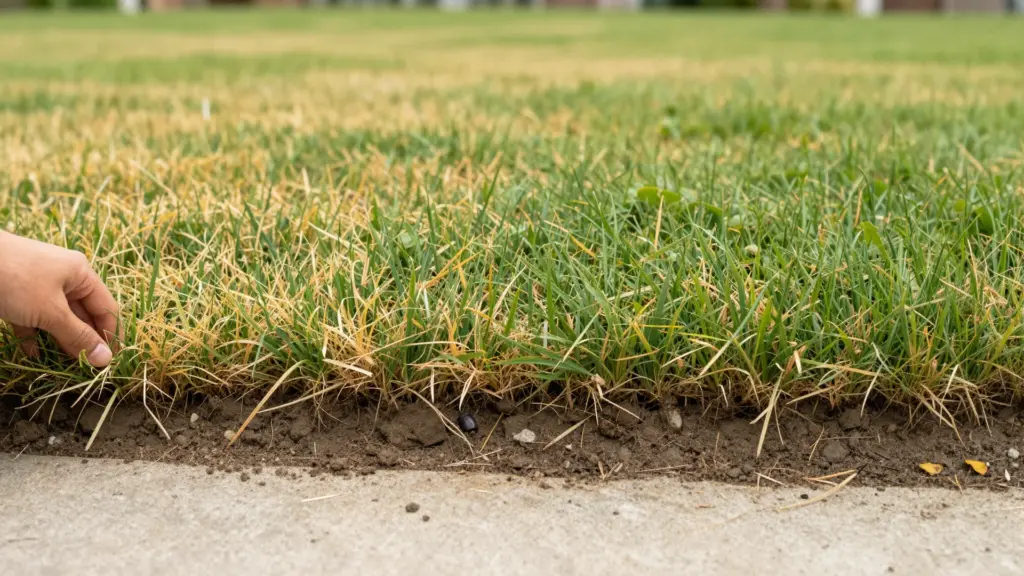
Chinch bugs are small and stay hidden in the thatch, so you won’t spot them just walking past your lawn. You need to know where to look and what to look for. Here are the main signs to check for.
1. Irregular Yellow and Brown Patches
Yellow patches that turn brown and keep spreading are the first sign. These patches often show up near driveways, sidewalks, and the edges of your home, areas that absorb more heat.
Chinch bugs are drawn to warm, sunny spots, and those heat-reflecting surfaces create exactly the conditions they prefer. The patches grow outward from the center as bugs move to new feeding areas.
2. Grass That Won’t Recover After Watering
If you’ve been watering regularly and the damaged areas are still dying, that’s a strong signal. Drought-stressed grass bounces back within a day or two after watering.
Chinch bug damage does not. The toxin they inject blocks water movement inside the plant, so watering doesn’t help, the grass can’t use it.
3. Bugs at the Edge of the Damage
The active feeding happens at the border between healthy and dead grass. Spread the blades apart at that edge and look at the soil level.
On a warm, sunny day you may even see adults crawling across nearby concrete surfaces like driveways or foundation walls. They are small, but visible once you know what you’re looking for.
Signs of Chinch Bug Damage vs. Drought Stress
These two problems look nearly identical at first glance, which is why so many homeowners treat the wrong thing. Here’s how to tell them apart before you spend money on the wrong fix.
| Sign | Chinch Bug Damage | Drought Stress |
|---|---|---|
| Recovers after watering | No | Yes, quickly |
| Patches expanding | Yes, outward from center | Usually stays uniform |
| Visible insects at damage edge | Yes | No |
| Broadleaf weeds in patch affected | No | Sometimes |
| Brown color | Straw-like, dry | Similar, but rebounds |
| When it appears | Hot, dry summer months | Any dry period |
The easiest test: Water the area and wait 48 hours. If it’s drought stress, you’ll see improvement. If it’s chinch bugs, the grass stays dead.
How to Test for Chinch Bugs?
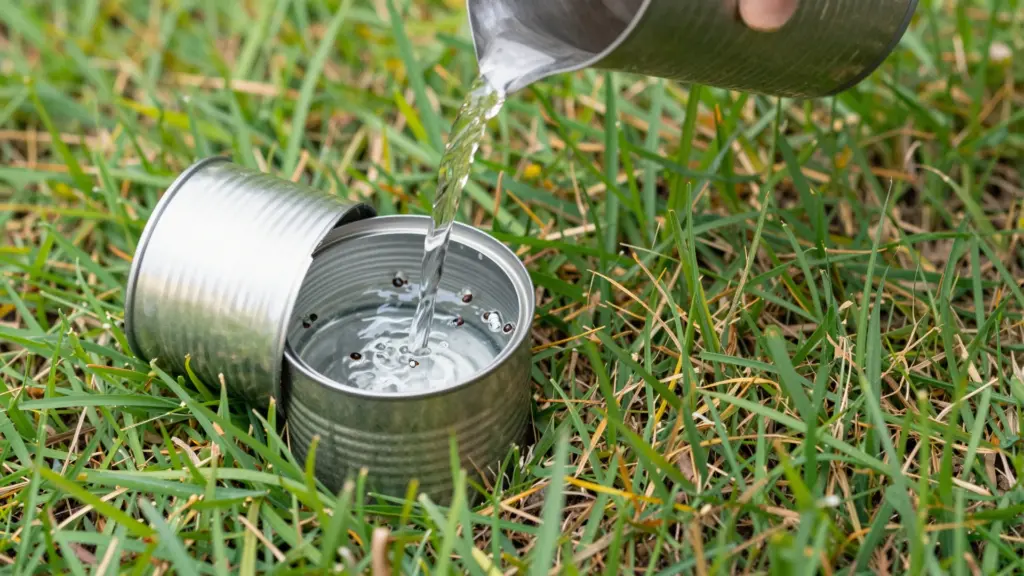
Seeing yellow patches doesn’t confirm chinch bugs. You need to check directly before treating, because the fix is completely different depending on what’s actually there. Here are three methods that work.
1. The Float Test (Most Reliable)
This is the most widely used method among lawn care professionals and extension offices.
- Cut both ends off a metal coffee can or soup can.
- Push one end about two inches into the soil at the damaged area.
- Fill the can completely with water.
- Wait five to ten minutes.
- If chinch bugs are present, they will float to the surface.
Count the adults and nymphs that float up. Fifteen to twenty insects per square foot is the threshold where treatment is needed. Refill the can if the water soaks into the ground before the time is up.
Important: Do not confuse chinch bugs with big-eyed bugs. Big-eyed bugs are beneficial, they actually prey on chinch bugs. Big-eyed bugs have very wide, prominent eyes on the sides of a broad head. Chinch bug heads are narrow.
2. The Parting Method
Part the grass at the border between the healthy and damaged areas and look down at the soil surface and the base of the grass stems.
On a warm, sunny morning this works well because bugs are most active and easier to see moving around. You may need to look closely, they blend in with thatch.
3. Send a Sample to Your Local Extension Office
If you’re still not sure, pull a small section of affected turf including the roots and send it to your local county extension office.
This is especially useful when the damage could be a fungal disease instead of an insect. It’s affordable, and it removes all the guesswork.
When Are Chinch Bugs Most Active?
Chinch bugs follow a fairly predictable seasonal pattern, which helps you plan treatments at the right time rather than reacting after the damage is already bad.
| Season | What’s Happening |
|---|---|
| Early spring (50°F soil temp) | Adults leave overwintering sites, begin mating |
| Late spring (65°F) | Active feeding begins, eggs being laid |
| Late June through September | Peak feeding season, most visible damage |
| Early August | Heaviest lawn damage typically appears |
| Fall (cooler temps) | Adults move into thatch and leaf litter to overwinter |
| Winter | Dormant in thatch, no feeding activity in most regions |
In Florida and southern Texas, chinch bugs stay active well into December because temperatures stay warm. Three to five generations can overlap in a single season there. In the Northeast, two generations per year is more typical, with a possible partial third during long, warm summers.
Chinch Bug Treatment: Your Full Plan
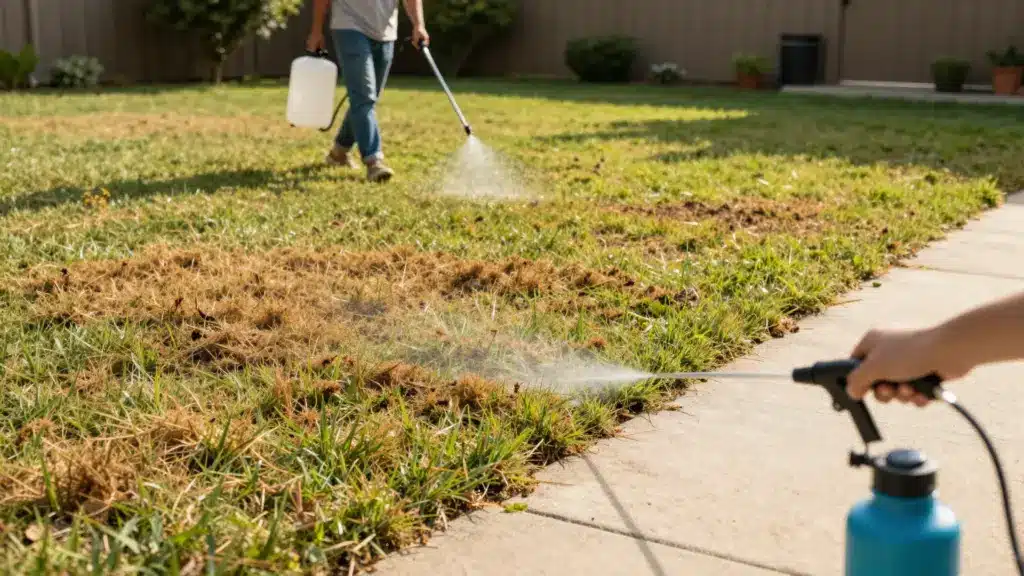
Seeing the damage means the bugs have been feeding for a while already. Speed matters here. A layered approach, starting with lawn care adjustments, then natural controls, and using chemicals only when needed, gives you the best results without destroying the beneficial insects that would otherwise help keep chinch bugs in check.
Cultural Controls: Start Here First
Before reaching for any product, fix the conditions that allowed chinch bugs to build up in the first place.
Dethatch your lawn. Thatch is where chinch bugs live, hide, lay eggs, and survive winter. If your thatch layer is more than half an inch thick, it needs to go. Use a dethatching rake for small areas or rent a power dethatcher for larger lawns. This alone exposes bugs to predators and sun, which cuts their numbers fast.
Adjust your mowing height. Cutting grass too short stresses it and makes it far more vulnerable to pest damage. Mow at the highest recommended setting for your grass type. For St. Augustine grass, that’s typically three to four inches.
Water deeply but less often. Chinch bugs prefer dry, stressed lawns. Watering deeply once or twice a week encourages deeper roots and keeps the grass healthier than frequent shallow watering does. Avoid overwatering though, saturated soil creates its own set of problems.
Go easy on nitrogen fertilizer. High nitrogen fertilizer speeds up thatch buildup and makes the grass more appealing to chinch bugs as a food source. Use a slow-release formula during summer, or apply smaller amounts only when needed.
Aerate compacted soil. Core aeration pulls plugs from the lawn, improving water absorption and root growth. It also disrupts thatch and exposes insects to predators.
Natural and Biological Controls
These methods work well for light infestations and as a follow-up layer after treating more severely affected areas.
- Big-eyed bugs are the best natural predator for chinch bugs. They feed directly on them and live in the same areas. To keep them in your lawn, avoid broad-spectrum insecticides and plant flowering herbs like sage, parsley, clover, marigolds, and cosmos nearby. A birdbath or small water source also helps attract beneficial insects.
- Ladybugs and lacewings also prey on chinch bugs. You can buy these at garden centers, but keeping your lawn free of harsh chemicals is what really keeps them around.
- Birds eat chinch bugs too. Sparrows, robins, and starlings will actively feed on them when populations are high enough to be visible.
- Neem oil can work as a spot treatment for small, contained areas. It won’t clear a full infestation but can slow early-stage activity without harming beneficial insects.
Do not use natural predators at the same time as chemical treatments — the insecticides will kill them along with the chinch bugs.
Chemical Treatments: For Active, Spreading Damage
When the damage is actively spreading and cultural controls aren’t keeping up, insecticides become necessary. The threshold is 15 to 20 chinch bugs per square foot confirmed by the float test.
Active ingredients that work:
- Bifenthrin works well for active infestations. It kills on contact and has some residual activity.
- Imidacloprid works at the root level and is better suited for prevention or stopping early-stage infestations before feeding damage becomes severe.
- Cyfluthrin, lambda-cyhalothrin, and permethrin are also effective pyrethroids for contact control.
Granular vs. liquid: Granular insecticides go down with a fertilizer spreader and need to be watered in after application. Liquid sprays use a hose-end sprayer and give more targeted coverage. A small amount of dish soap added to your liquid spray improves coverage and contact.
When to apply: Early morning or late afternoon works best. Midday heat reduces effectiveness. Water the product into the thatch layer after applying, this is where the bugs live, and surface application alone often misses them.
Rotate products. Chinch bugs can build resistance to a specific active ingredient quickly. If you need to treat more than once in a season, switch to a different chemical class for the second application.
Chinch Bug-Resistant Grass Varieties
If your lawn deals with chinch bugs every year, the grass you’re growing may be part of the problem. Switching to a less attractive variety won’t solve an active infestation, but it makes a real difference over time. Here’s what to consider when overseeding or replanting.
| Grass Type | Resistance Level | Region | Notes |
|---|---|---|---|
| Tall fescue with endophytes | High | Northeast, Transition zone | Endophytes are fungi toxic to insects |
| Fine fescue with endophytes | High | Northeast, cool climates | Works well in shaded areas too |
| Perennial ryegrass with endophytes | High | Northeast, Pacific Northwest | Fast germination, good for overseeding |
| Zoysia grass | Moderate | South, Transition zone | Dense growth makes it harder to infest |
| Bahiagrass | Moderate | Southeast, Florida | More tolerant than St. Augustine |
| St. Augustine (standard) | Low | South, Florida | Most commonly attacked in the South |
Endophyte-containing grasses carry beneficial fungi between their plant cells. These fungi produce compounds that are toxic to insects feeding on the grass, including chinch bugs.
When shopping for seed, look for packages that note “naturally insect-resistant” or “endophyte-enhanced” on the label.
A local extension agent can tell you which varieties perform best in your specific area and soil type. What works in North Carolina may not be the right fit for central Florida.
How to Prevent Chinch Bugs From Coming Back?
Once you’ve cleared an infestation, staying ahead of the next one comes down to keeping your lawn healthy enough that chinch bugs don’t find it worth attacking. Keep thatch below half an inch by dethatching once a year.
Mow at the tallest setting for your grass type, water deeply one or two times a week rather than daily, and skip the heavy nitrogen fertilizer in summer.
Aerate once a year to keep soil from compacting and to cut down thatch buildup. Inspect the lawn every few weeks from June through September, catching a new infestation when there are 10 bugs per square foot is a lot easier than treating it when there are 50.
Summing It Up
Chinch bugs are small, but the damage they leave behind is hard to miss. The key is catching them before the brown patches take over.
If your lawn isn’t responding to water and the damage keeps spreading through summer, do a float test before assuming drought or disease is the cause.
Fix the conditions first, thatch, mowing height, fertilizer, and you’ll cut down on infestations naturally. When chemical treatment is needed, time it right and water it in properly. That combination works far better than applying products after the fact.
Got patchy brown spots you can’t explain? Try the float test this week. It takes five minutes and gives you a clear answer.