

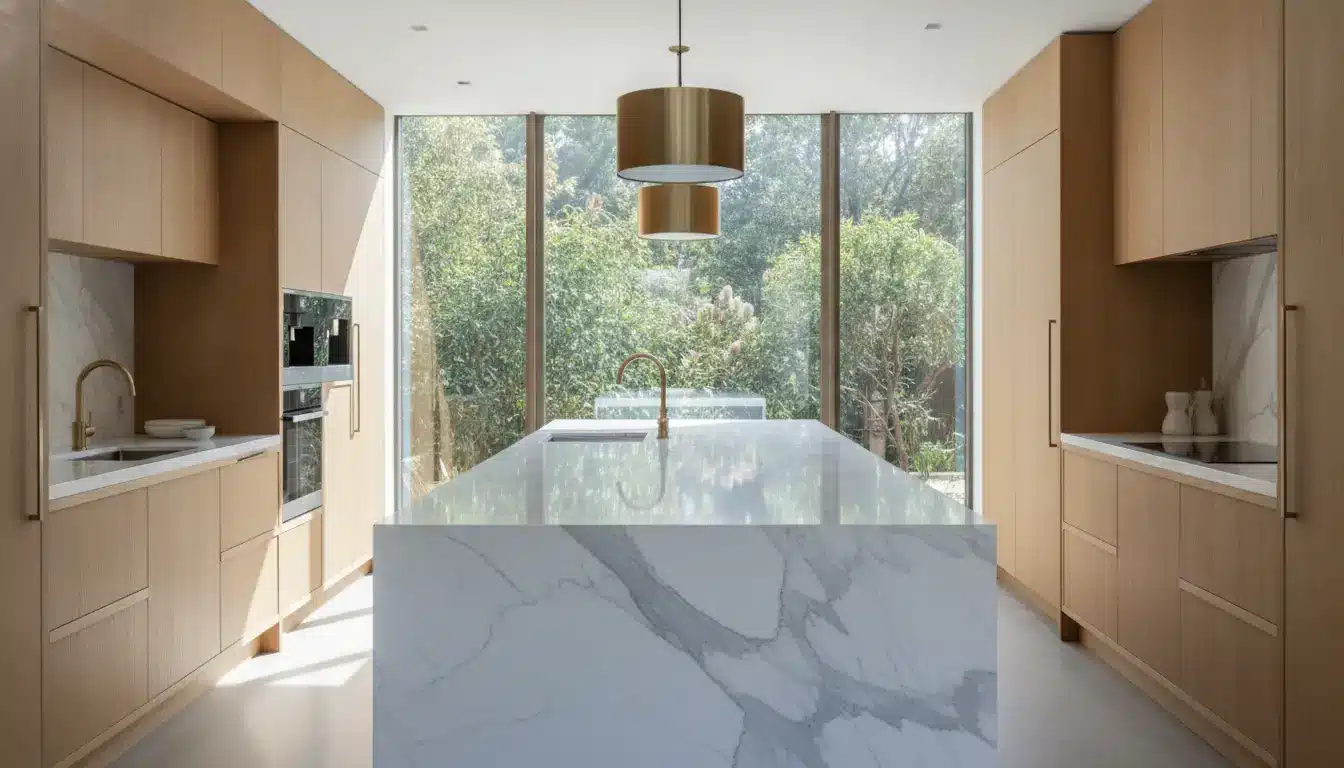
Few materials carry the quiet authority of Carrara marble. Quarried from the Apuan Alps in Tuscany since before the Roman era, this celebrated white stone has been shaping refined interiors for more than two thousand years. It gave Michelangelo the surface for his David and lined the halls of the Pantheon, yet it feels just as at home in a contemporary Sydney kitchen as it did in Renaissance Italy.
A Look Defined by Restraint
What makes Carrara so distinctive is its restraint. The stone is prized for its very fine crystalline structure and soft, feathery grey veining that drifts across a cool white-to-blue-grey base. Where bolder marbles demand attention, Carrara is sophisticated, seamless and subdued. That subtlety is precisely why designers return to it again and again. It pairs with almost any palette, from warm timber and brass through to crisp monochrome, and it never dates.
Beauty That Earns Its Place
Practical benefits sit alongside the beauty. Carrara’s light-reflective surface helps bounce natural light through a room, making compact spaces feel brighter and more open. The stone also stays naturally cool to the touch, a quality that suits Australia’s warmer climate and makes it a comfortable choice for benchtops and flooring alike. Because each block is cut into sequential slabs, larger projects such as waterfall island benchtops, feature walls and vanity tops can be book-matched for striking visual continuity.
Understanding the Carrara Family
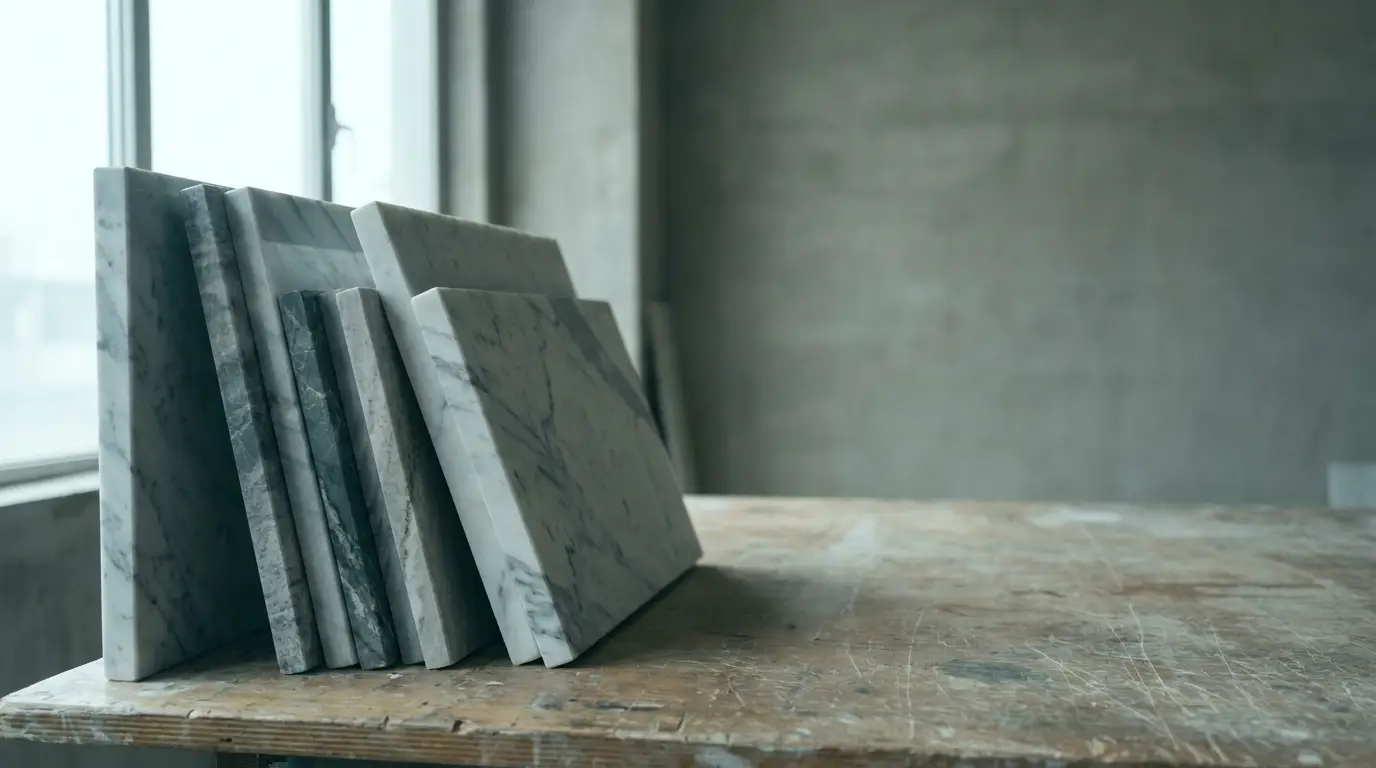
It is also worth understanding the family. The most common variety is Bianco Carrara, sold in grades that range from a softer white background through to a greyer tone with more pronounced veining. Its better-known relatives, Calacatta and Statuario, are quarried in the same region but command higher prices for their brighter bases and more dramatic patterning. Classic Carrara remains more abundant and more budget-friendly, which is why it has become a staple in Australian homes without sacrificing that unmistakable Italian pedigree.
One of a Kind, and Built to Last
As a natural material, every Carrara slab is one of a kind. No two pieces share the same veining, so each installation becomes genuinely individual. The stone does ask for a little care. It is porous and can etch if acidic spills such as lemon, wine or vinegar are left to sit, so prompt cleaning and proper sealing keep it looking its best. In return, Carrara develops a soft patina over the years and, when looked after, only improves with age. That longevity makes it a more sustainable option than many engineered surfaces that are eventually torn out and replaced.
See It in Person Before You Choose
Choosing the right slab is best done in person, where you can see the veining, base tone and finish for yourself rather than relying on a photograph. Homeowners, architects and designers can view full slabs of premiumCarrara marble at a dedicated stone gallery, where each piece is hand-picked rather than ordered sight unseen.
Whether you are sourcing a single statement bathroom vanity or matching slabs for an entire renovation, Carrara marble offers a timeless elegance that quietly elevates every space it touches.