

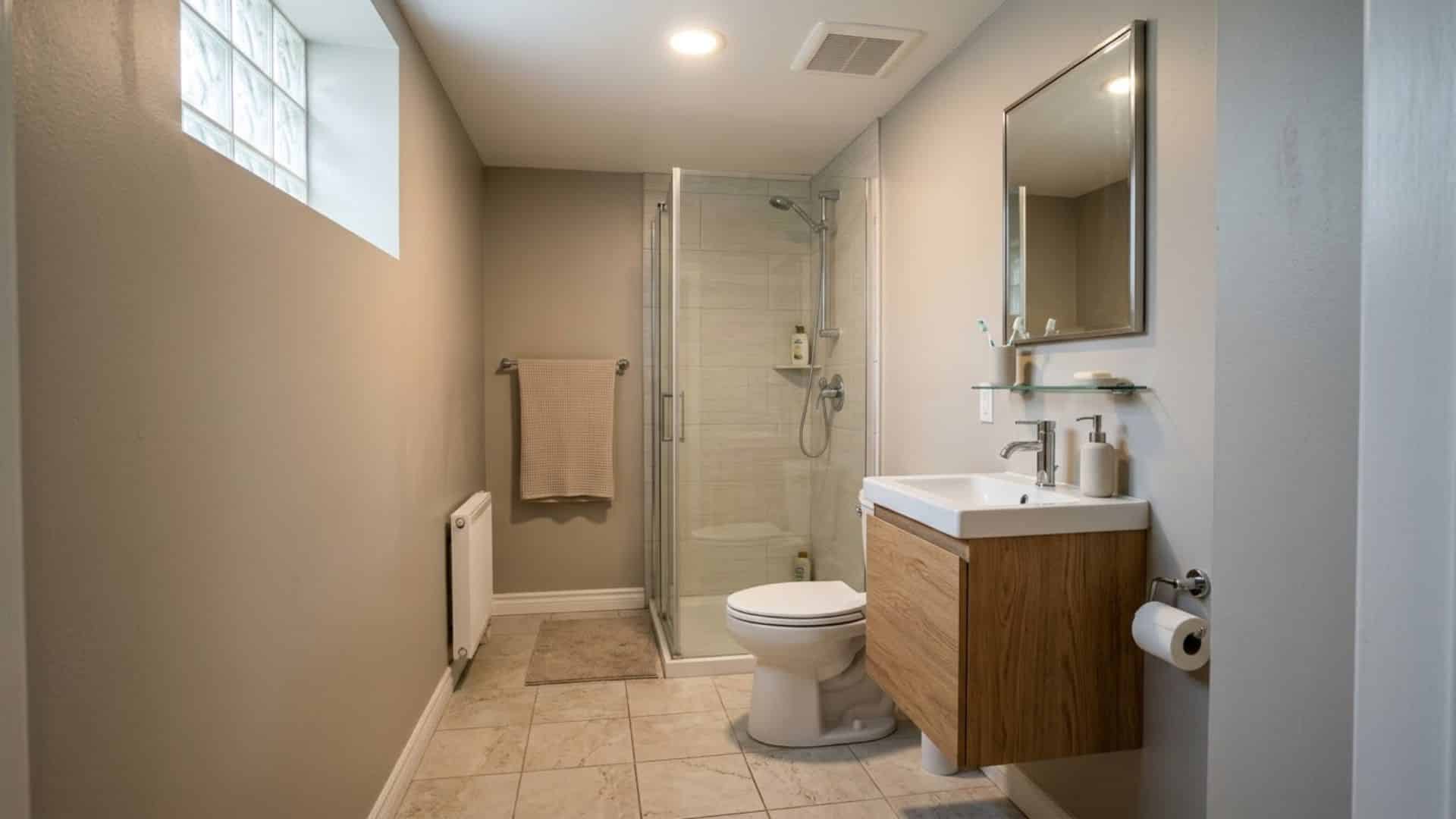
I’ve seen how an empty or dark basement can feel like wasted space, and you might be thinking the same. It often feels hard to know where to start or how much to spend.
You don’t need a big budget. The right basement bathroom ideas can turn unused space into a comfortable, practical room.
In this guide, I’ll share simple and useful ways to design your basement bathroom without overcomplicating things.
You’ll find ideas for small layouts, different styles, and upgrades that fit low to high-budget needs.
I’ll also go over smart planning tips and mistakes you should avoid. By the end, you’ll have a clear path to create a space that looks good, works well, and adds real value to your home.
Turn Your Basement Into a Bathroom You’ll Actually Love
Turning a basement into a bathroom you actually enjoy using can completely change how your home feels.
With the right basement bathroom ideas, even a small, dark space can become bright, fresh, and comfortable.
It’s not only about making it look good but also about creating a space that works well every day. Smart layouts, better lighting, and simple design choices can make a big impact.
Whether you want a quick refresh or a full remodel, there are options for every budget.
With the right approach, your basement bathroom can feel just as inviting and useful as any other room in your home.
Basement Bathroom Ideas for Every Style and Budget
Whether you’re working with a tight budget or planning a full upgrade, these ideas cover low-cost fixes, mid-range updates, and high-end designs that can fit any basement space.
1. Light Color Palette for a Brighter Feel
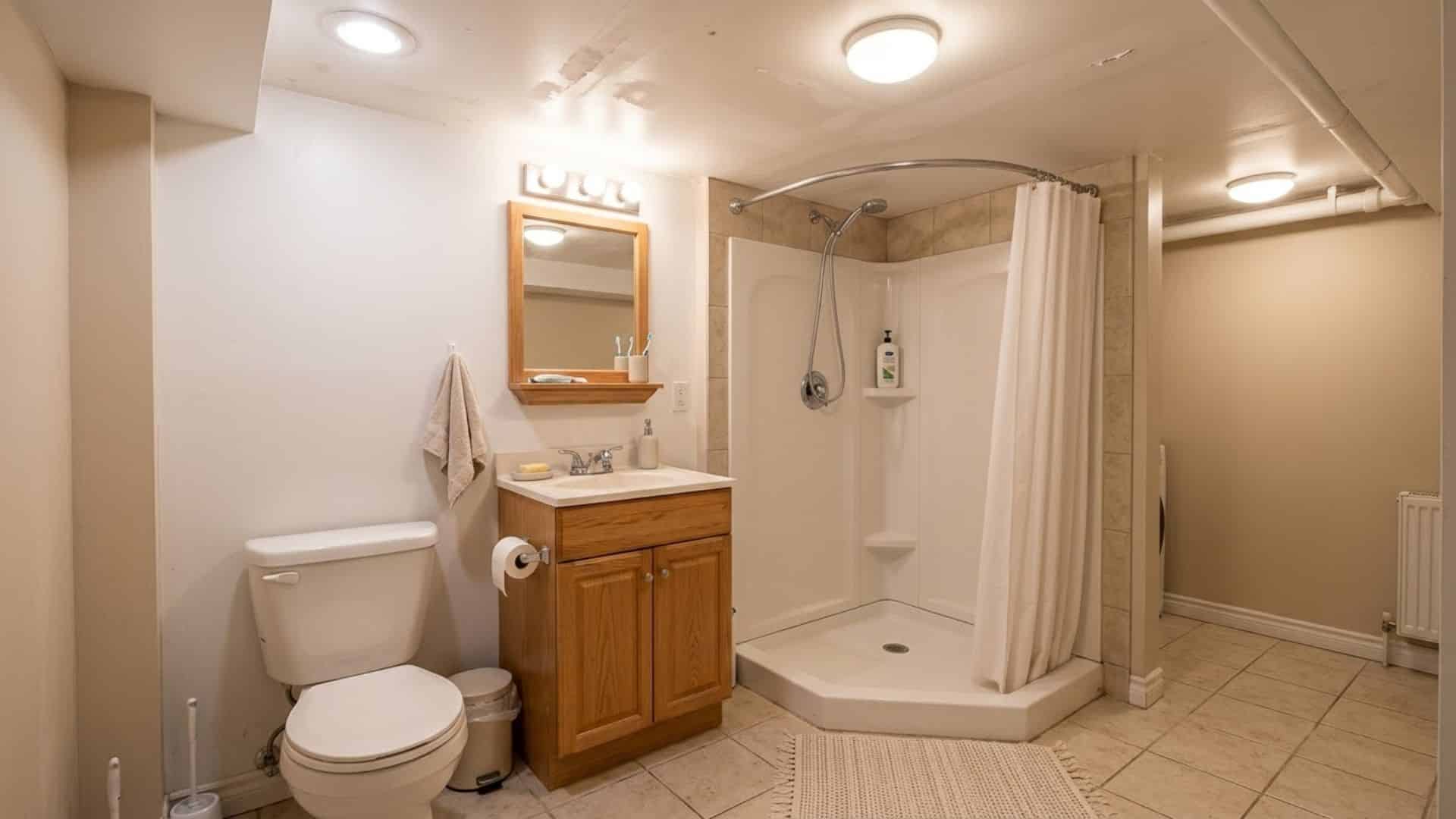
Using light shades like white, beige, or soft gray can make a basement feel more open and less cramped. Since basements often lack natural light, these colors help reflect whatever light is available and brighten the space.
You can pair light walls with simple tiles, a neutral vanity, or soft-toned flooring to keep everything balanced.
This approach works well for small bathrooms and is easy to apply without major changes. Even a fresh coat of paint can improve the overall look quickly.
Approx budget: $50–$300 depending on paint and minor updates.
2. Floating Vanity for More Floor Space
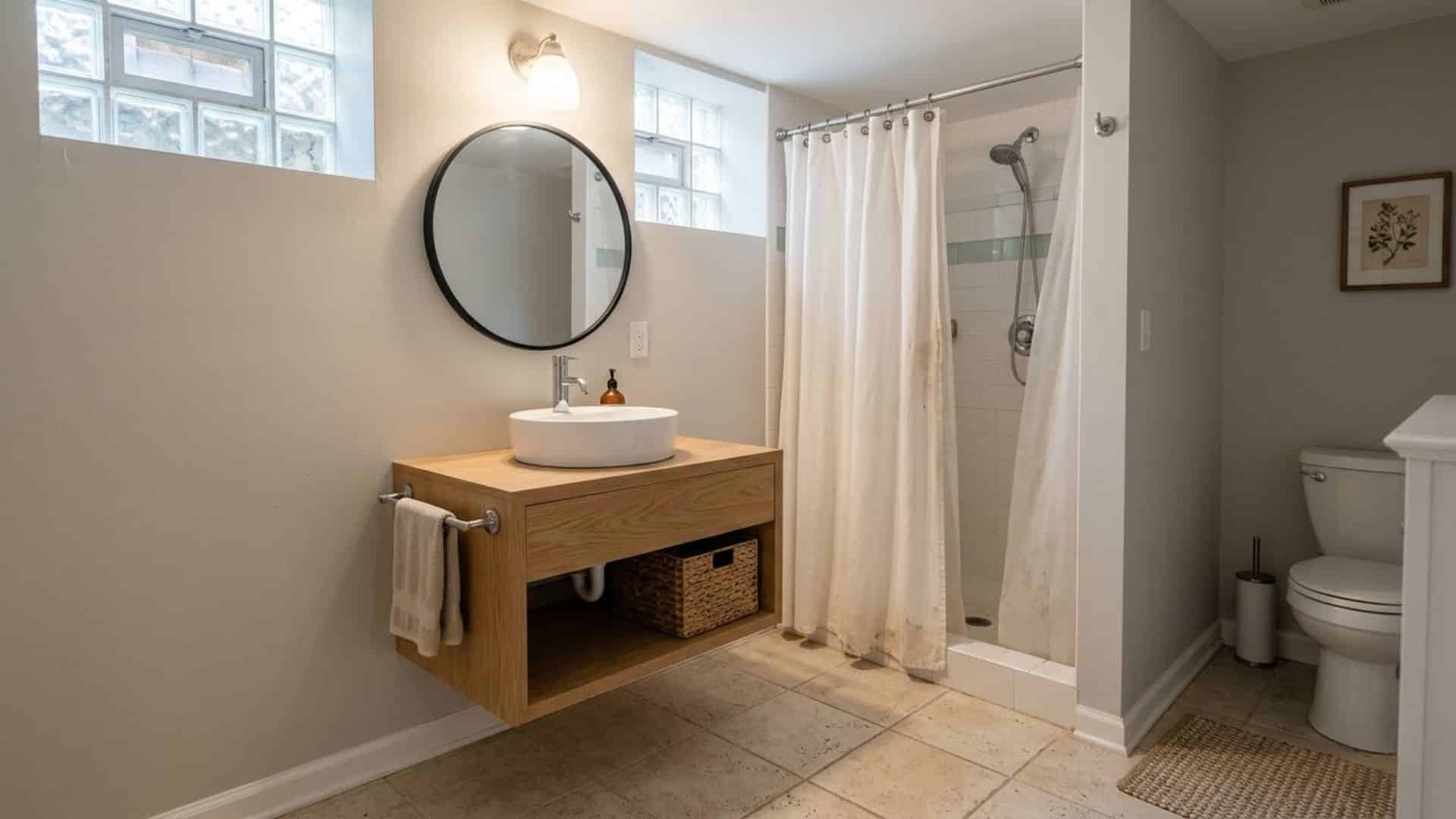
A floating vanity is attached to the wall, leaving the floor visible underneath. This simple change can make a small bathroom look more spacious and less cluttered.
It also makes cleaning easier since you can reach under it without any trouble. I’ve seen this make a noticeable difference in how open a tight space feels.
You can choose a sleek modern design or a simple wooden finish depending on your style.
This idea adds a clean and updated feel without taking up too much room, making it great for compact basement layouts.
Approx budget: $200–$800 based on design and installation.
3. Walk-In Shower with Glass Doors
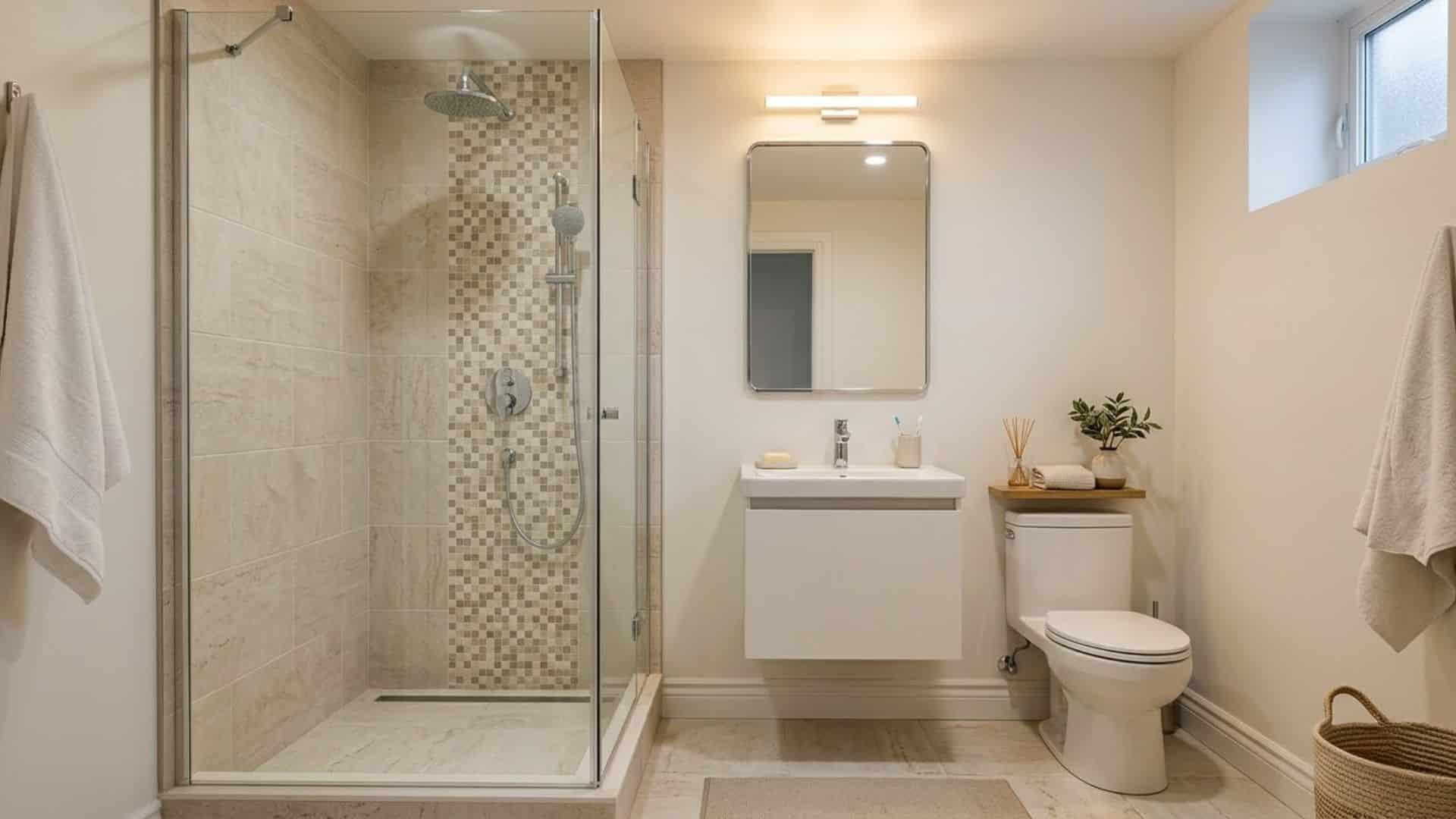
A walk-in shower with clear glass doors can make a basement bathroom feel bigger and more open. Unlike shower curtains, glass does not block light or break up the space visually.
This helps the room feel less crowded, especially in smaller layouts. You can keep it simple with basic tiles or add a feature wall for extra style.
It’s a practical upgrade that improves both the look and usability of the space while keeping things modern and clean.
Approx budget: $800–$2,500 depending on materials and size.
4. Compact Corner Sink Setup
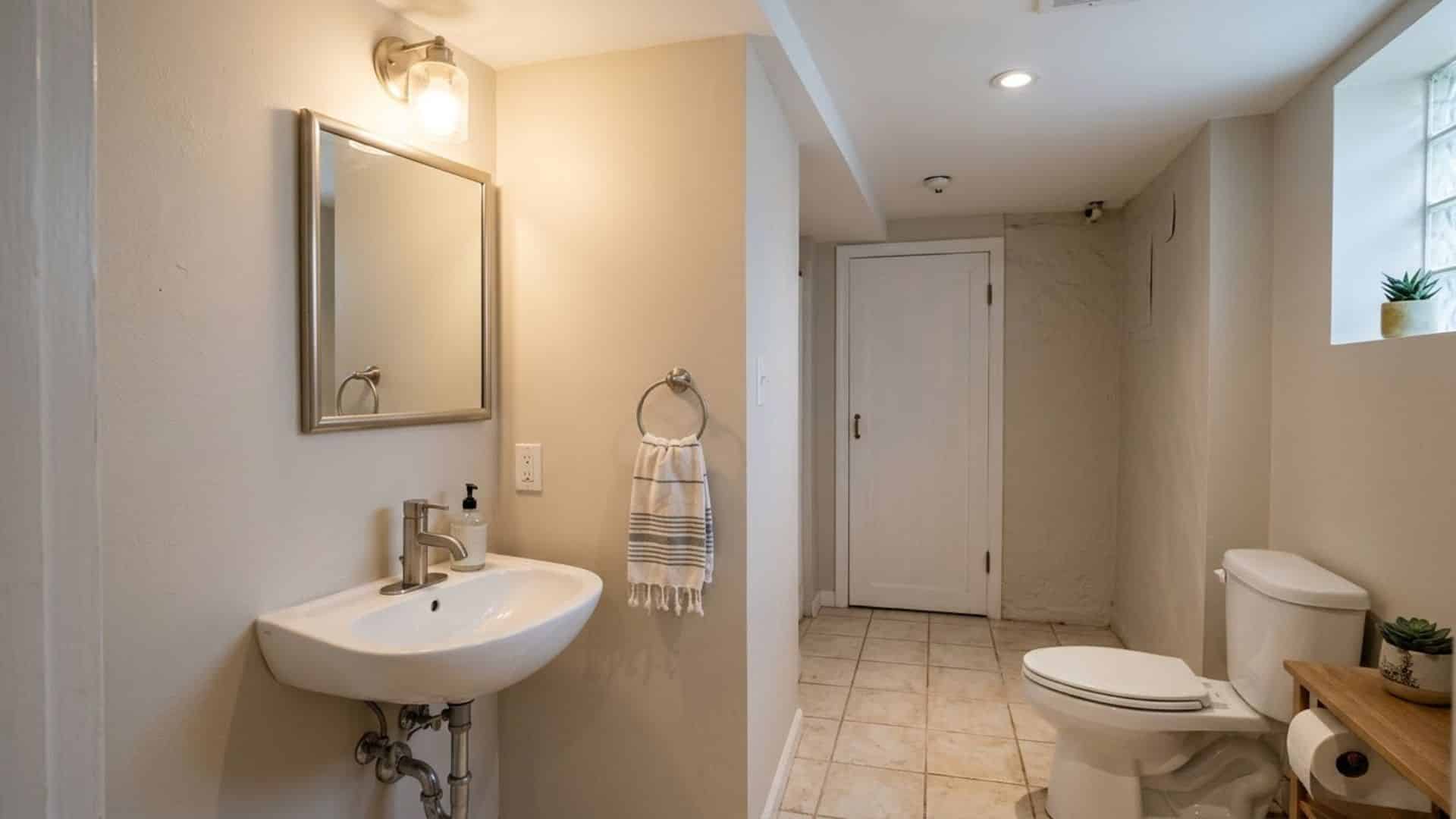
A corner sink is a smart way to use space that might otherwise go unused. It fits neatly into tight areas and leaves more room for movement, which is helpful in small basement bathrooms.
This setup works well in half baths or narrow layouts where every inch matters.
You can choose a simple, space-saving model or a more stylish design to match your theme. It improves flow without needing major structural changes.
Approx budget: $100–$400 including basic installation.
5. Industrial-Style Exposed Pipes
Exposed pipes can be turned into a design feature instead of something to hide. This style gives the bathroom a bold, industrial look that feels modern and unique.
You can pair the pipes with metal fixtures, dark tones, and simple finishes to complete the look. It also helps reduce costs since you don’t need extra materials to cover plumbing.
This idea focuses more on style and character while still being practical for basement setups.
Approx budget: $0–$300 depending on finishing touches and fixtures.
6. Warm Rustic Wood Accents
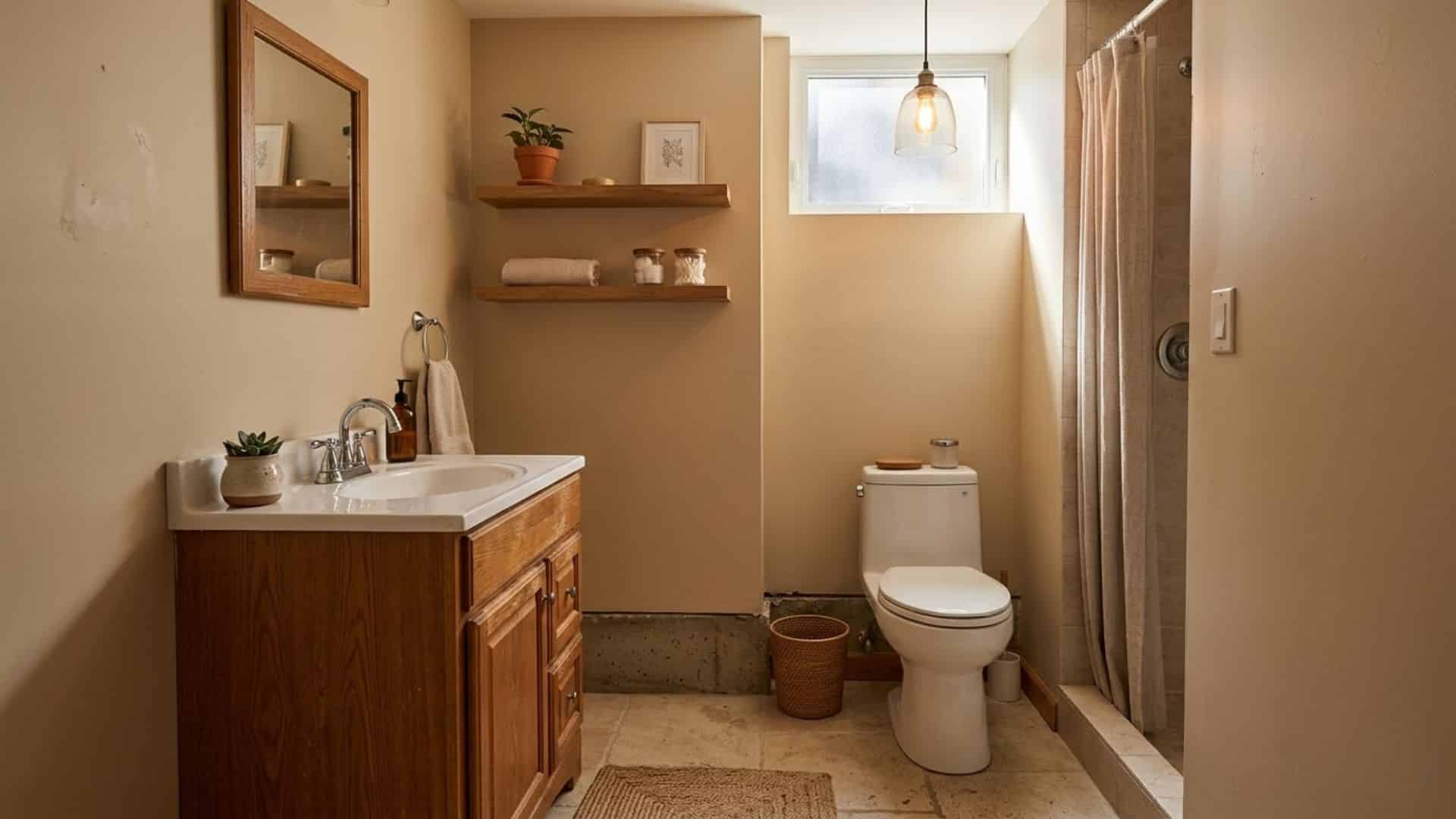
Adding wood accents can make a basement bathroom feel warm and inviting instead of cold. You can use wooden shelves, a vanity, or even small wall panels to bring in a natural touch.
Choose moisture-resistant or treated wood so it lasts longer in a humid space. This idea focuses on creating a cozy feel rather than changing the layout or lighting.
It works well if you want a relaxed and comfortable style without going too modern or plain.
Approx budget: $150–$700 based on materials and size.
7. Minimalist Black and White Theme
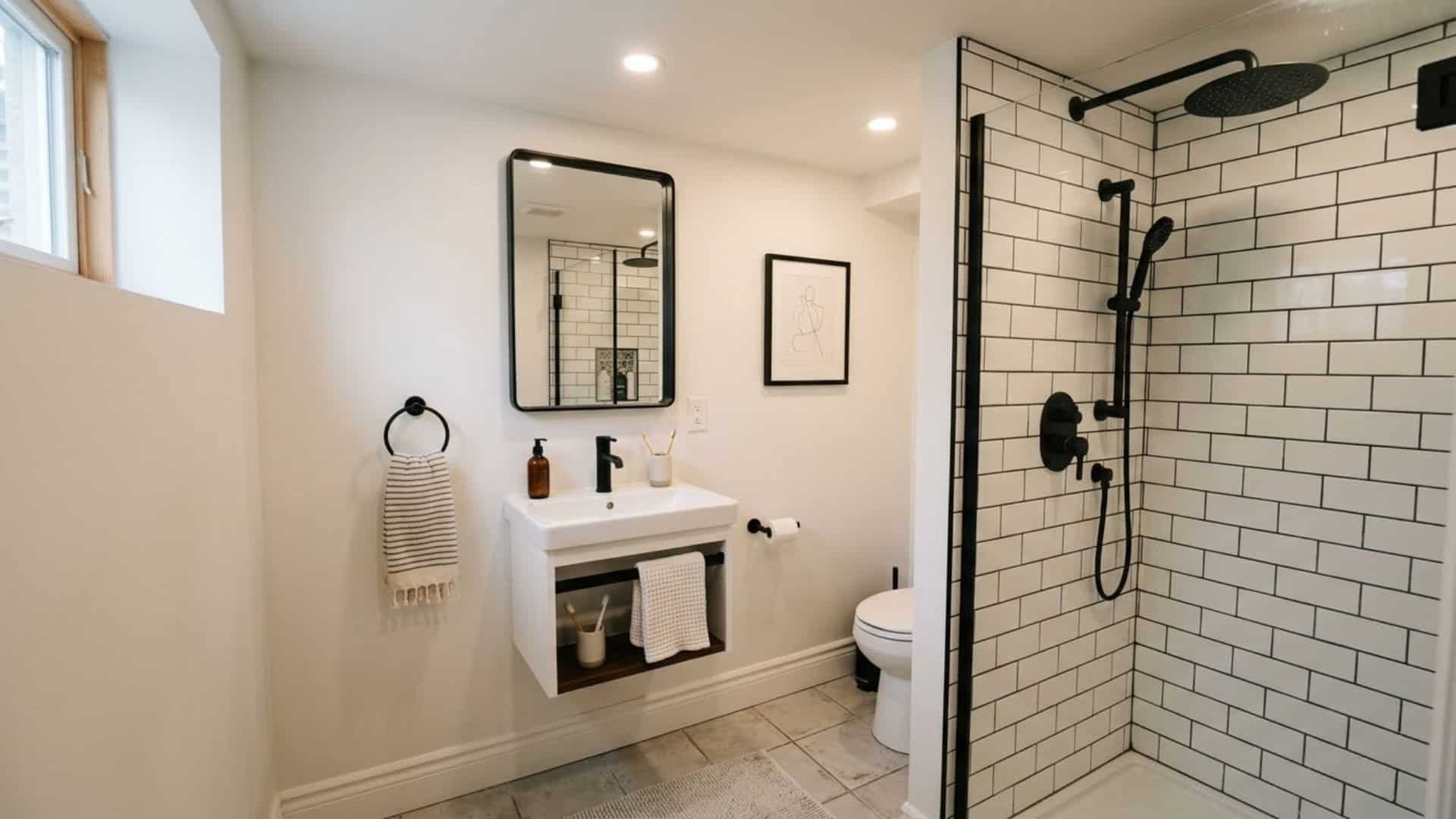
A black-and-white theme keeps the bathroom simple, clean, and easy to style. You can use white walls with black fixtures or tiles to create contrast without adding too many elements.
This design works well in both small and large basements because it avoids visual clutter.
It also makes it easier to update decor later without changing everything. This idea focuses on color balance and simplicity rather than structure or storage.
Approx budget: $100–$600 depending on finishes and fixtures.
8. LED Mirror for Better Lighting
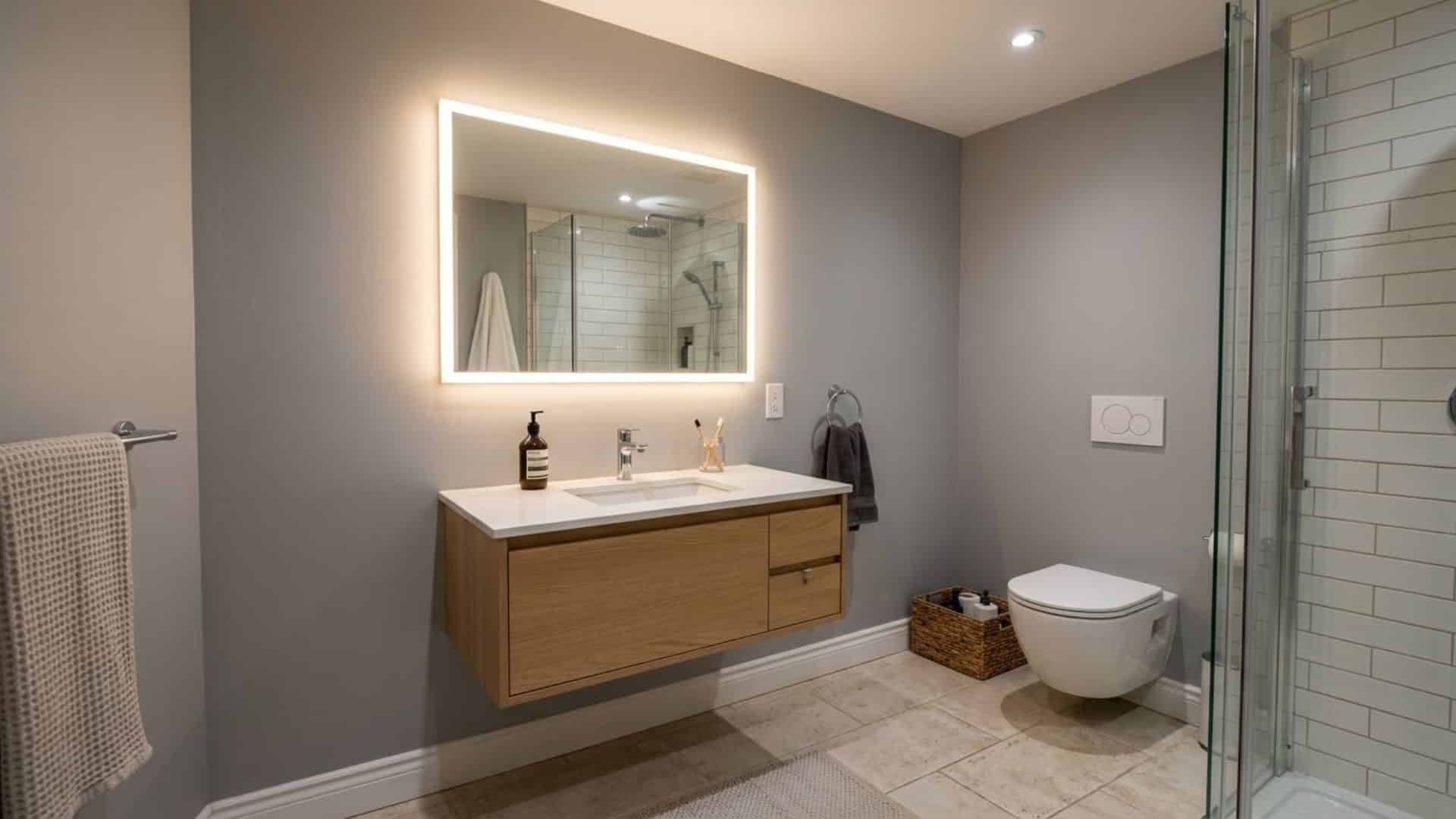
An LED mirror adds soft, even lighting that helps brighten the entire bathroom. This is especially useful in basements where natural light is limited.
It improves visibility for daily use while also giving a modern look. Many LED mirrors come with built-in features like touch controls or anti-fog options.
This idea focuses on improving lighting at the mirror level rather than overall room lighting. It’s a simple upgrade that makes a noticeable difference.
Approximate budget: $100–$500, with pricing varying by size and added features.
9. Built-In Wall Shelves for Storage
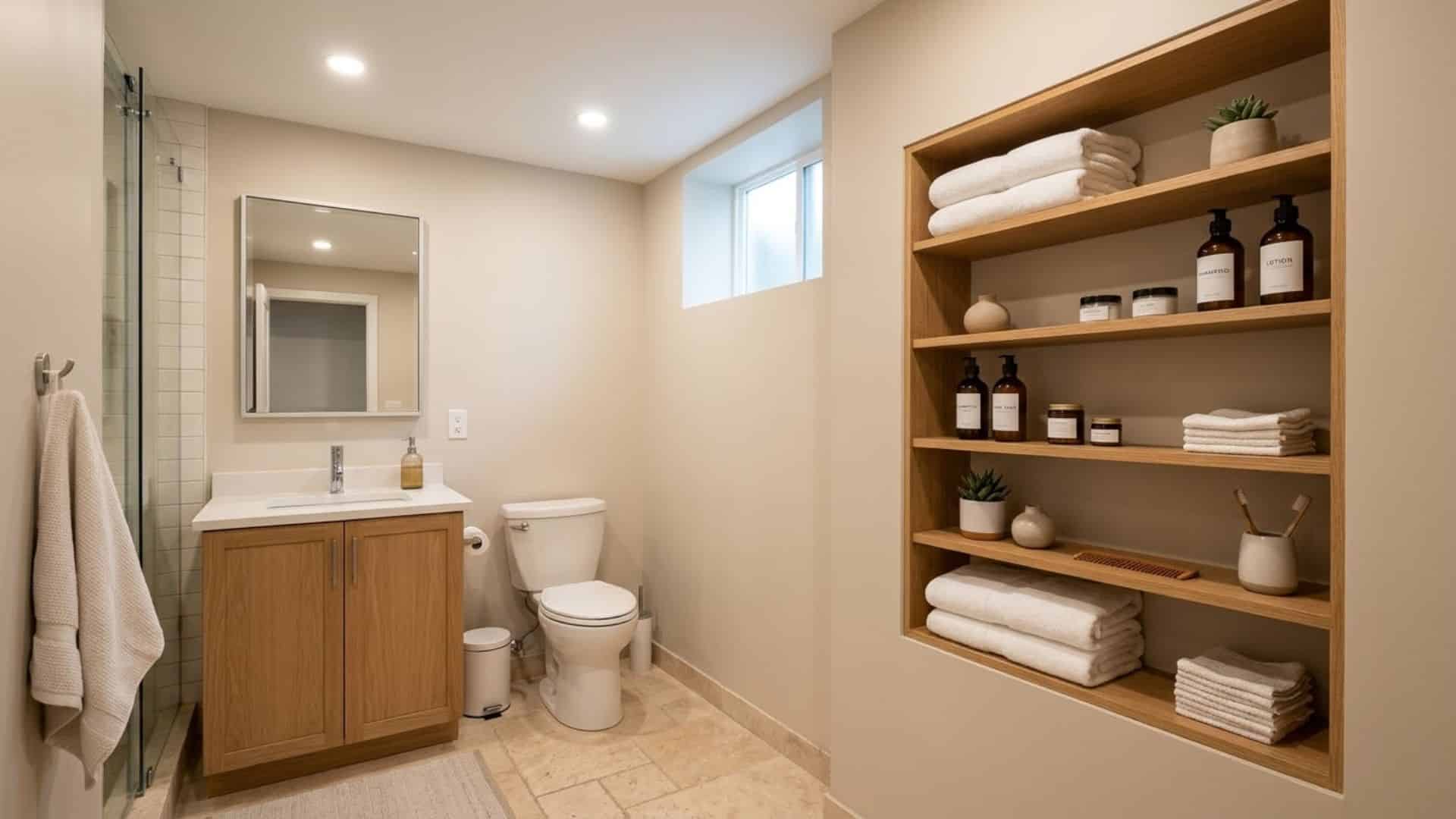
Built-in shelves help you store items without taking up extra space on the floor. They can be added inside walls or between studs to keep things neat and organized.
You can use them for towels, toiletries, or small decor items. I’ve found this especially helpful in tight spaces where adding extra storage is not an option.
This idea focuses on storage without adding bulky furniture, making it ideal for smaller basements.
It also gives the bathroom a clean and finished look while keeping everything within easy reach.
Approx budget: $150–$600 depending on size and finish.
10. Pocket or Sliding Door to Save Space
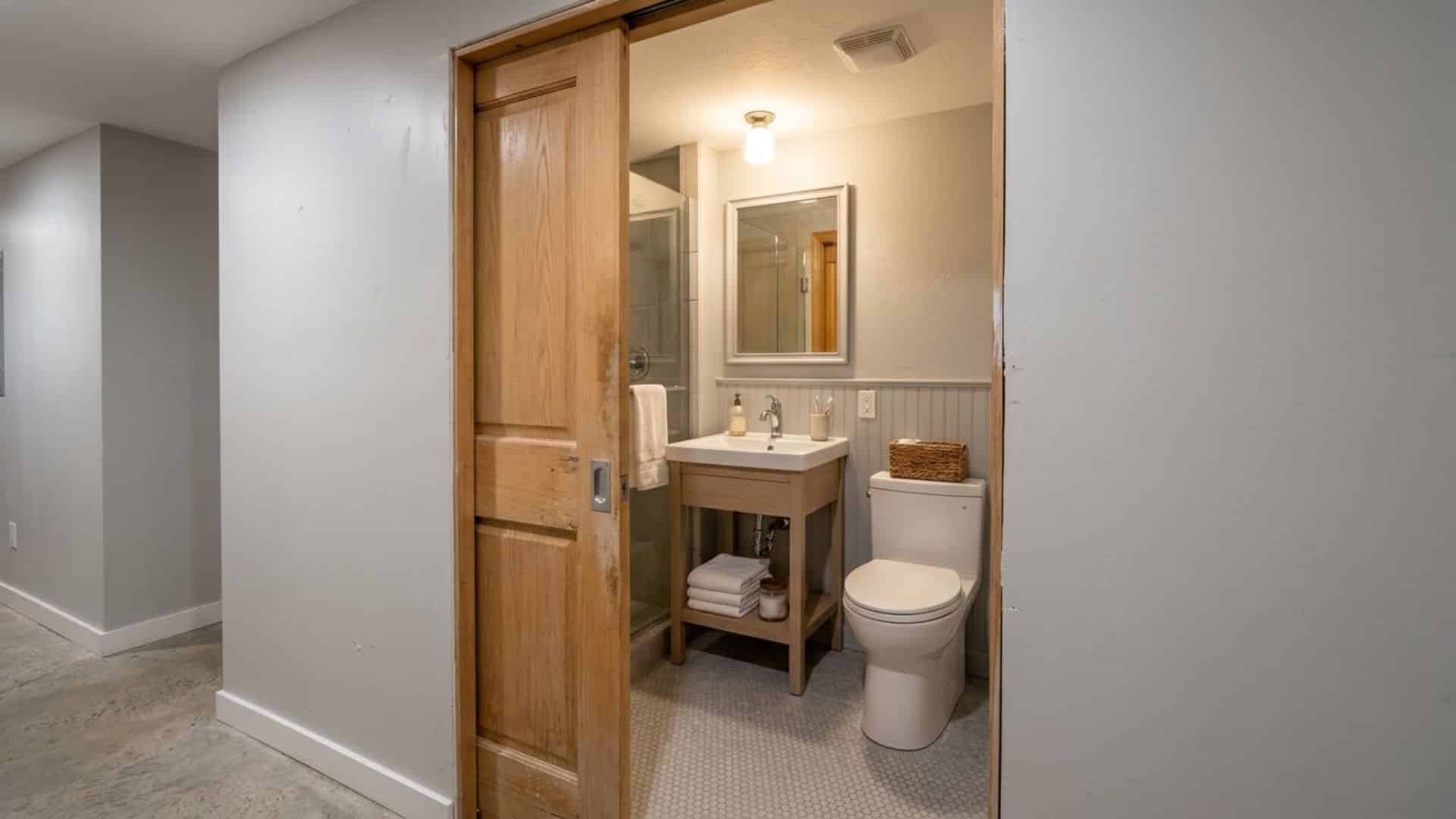
A pocket or sliding door is a smart way to save space in a basement bathroom, especially when the layout is tight. Unlike regular doors, it does not swing open, so it doesn’t take up extra room or block pathways.
This makes it easier to move around and keeps the space feeling open and functional. Sliding doors can also add a clean, modern touch to the design.
You can choose simple styles for a budget-friendly option or go for glass or wood finishes to match your overall look and improve the visual appeal.
Approx budget: $200–$1,000, depending on door type and installation.
11. Half Bath Under the Stairs
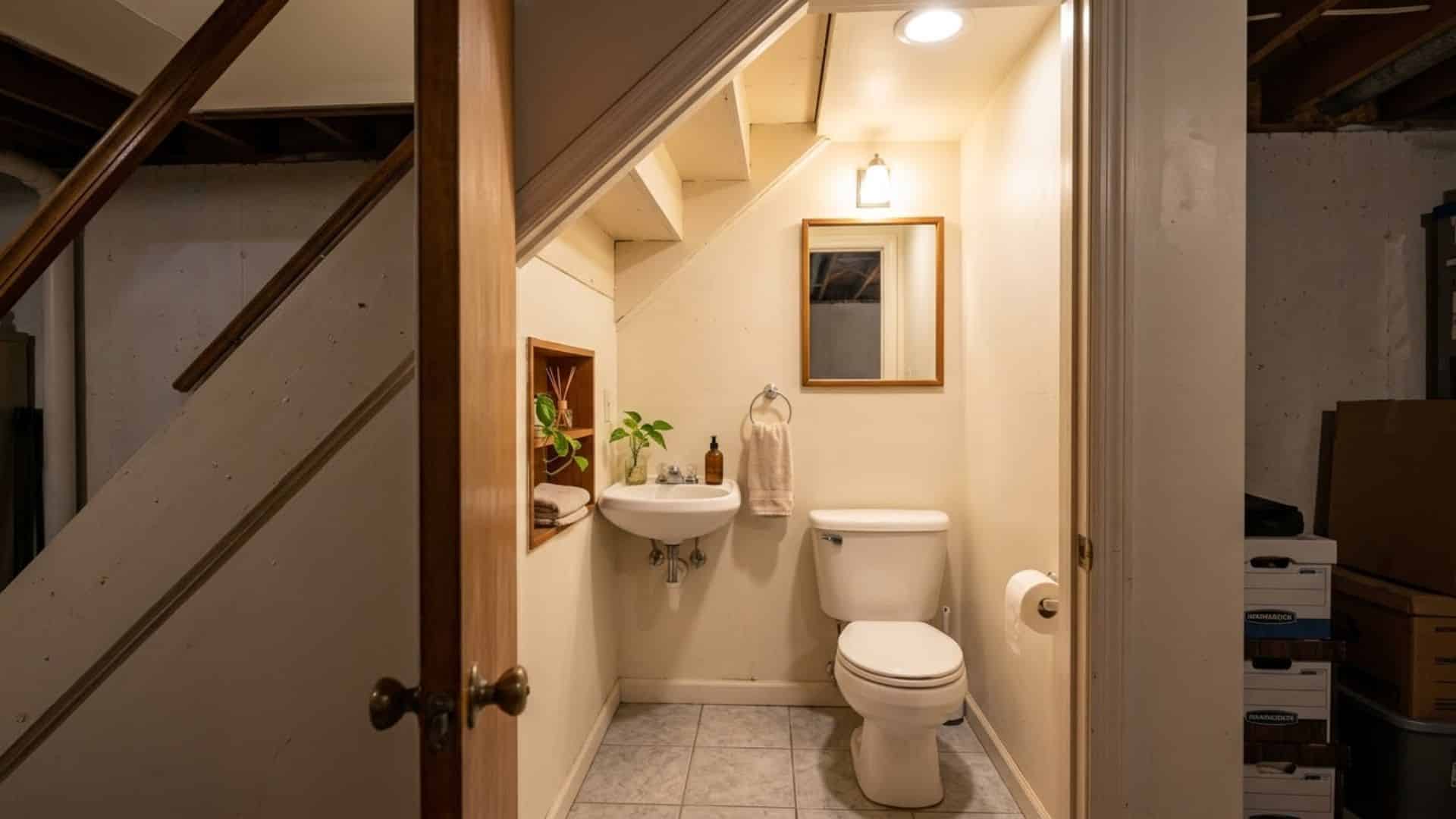
Creating a half bath under the stairs is a smart way to use space that often goes unused. This setup usually includes a toilet and a small sink, making it perfect for guests or quick use.
It works well in basements where space is limited, and it doesn’t require as much room as a full bathroom. With proper planning, even a tight area can feel comfortable and functional.
You can keep the design simple with light colors and compact fixtures to avoid a cramped feel.
Approx budget: $1,000–$3,000, shaped by plumbing access and fixture choices.
12. Statement Tile Wall for Visual Interest
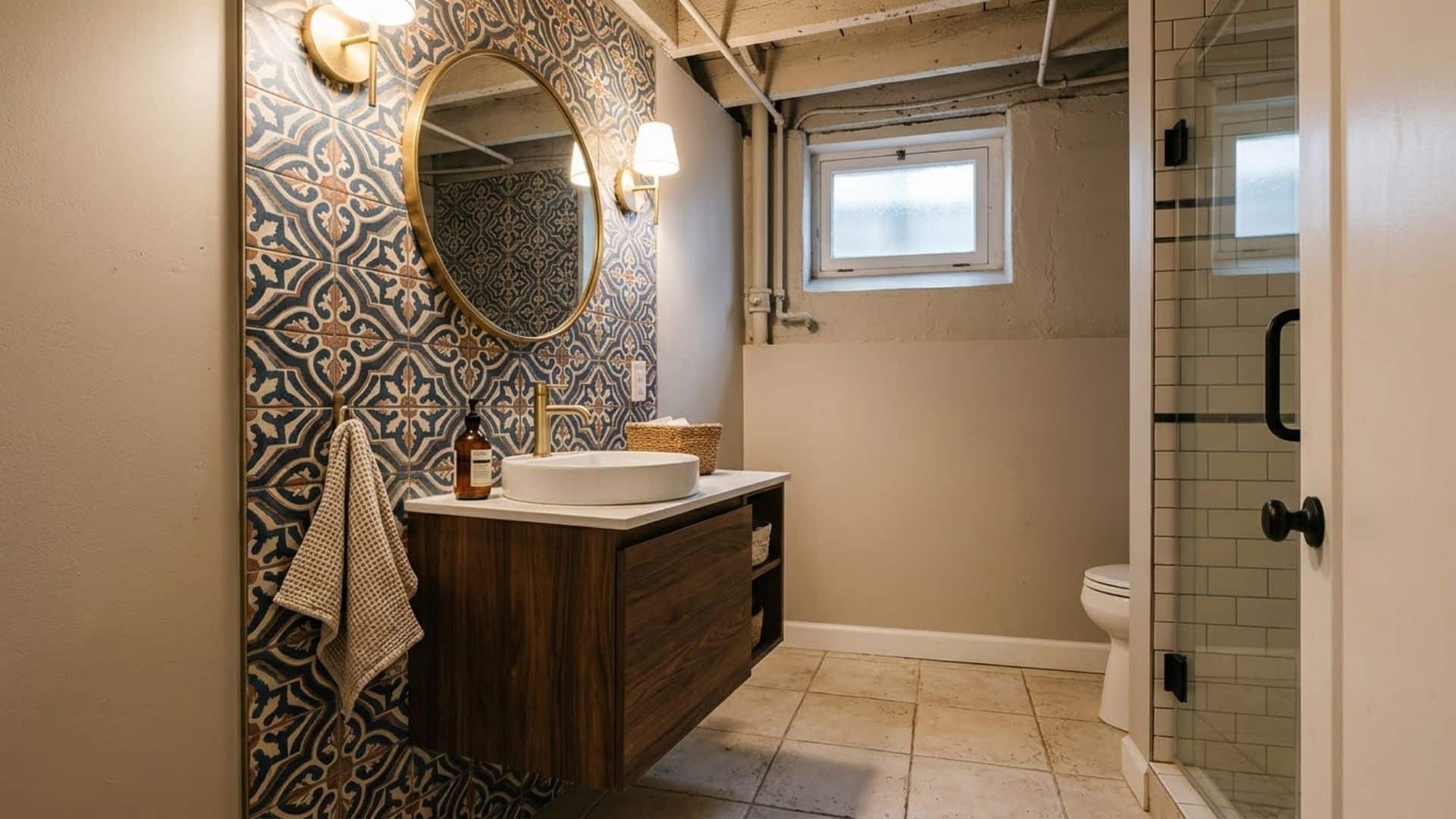
A statement tile wall can instantly draw attention and give your bathroom a strong design focus. You can use patterned, textured, or bold-colored tiles behind the sink or inside the shower area.
This adds personality without changing the entire space. It’s a great option if you want to upgrade the look without a full remodel.
Pair it with simple fixtures so the tiles stand out without overwhelming the room. This idea focuses on visual style rather than layout or storage.
Approximate budget: $300–$1,200, based on tile type and wall size.
13. Waterproof Vinyl Flooring for Durability
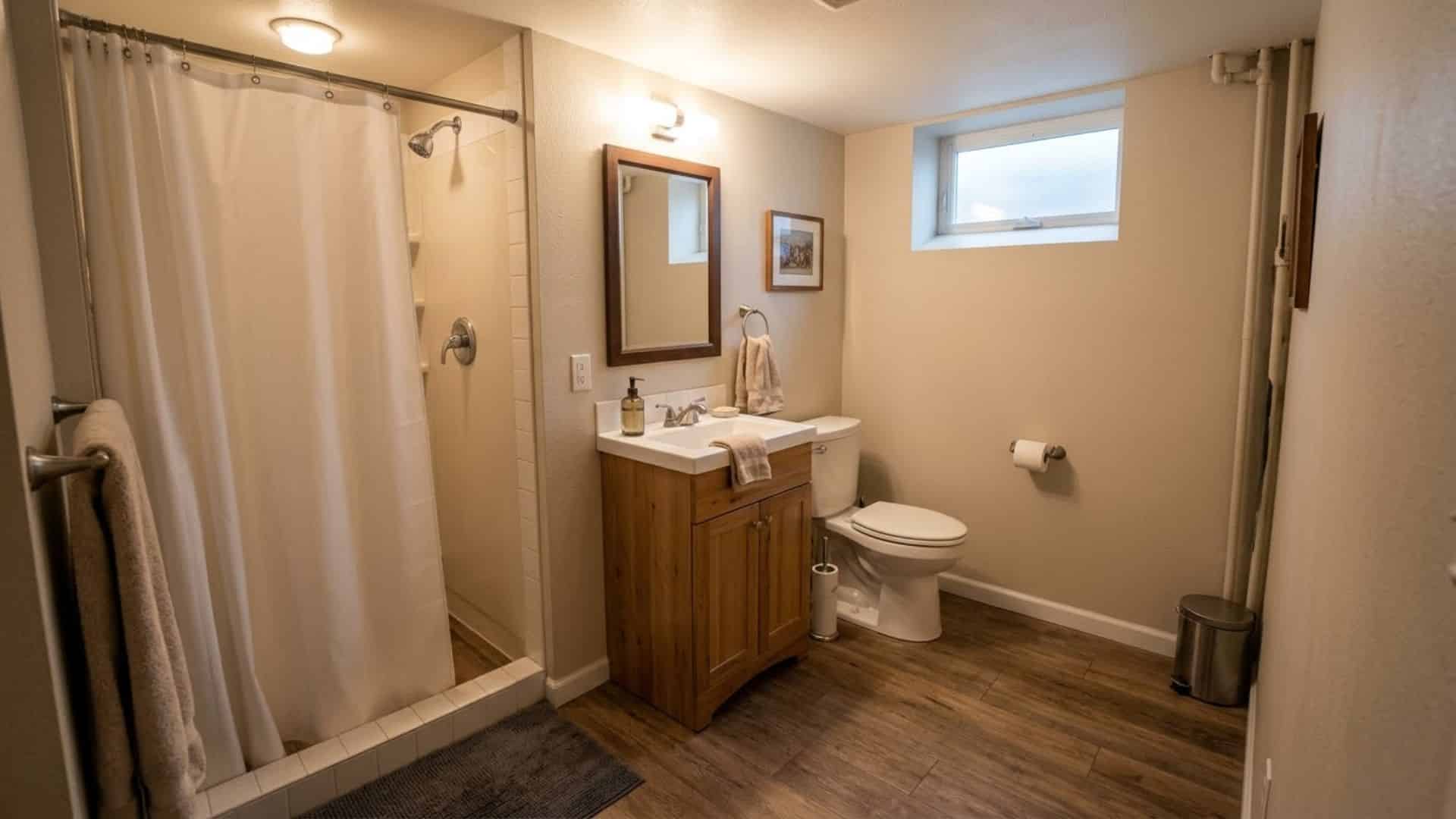
Waterproof vinyl flooring is a practical choice for basement bathrooms where moisture can be an issue. It resists water damage and is easy to clean, making it ideal for long-term use.
Vinyl comes in many styles, so you can match your design without spending too much.
I’ve noticed this option works great in busy homes where floors need to handle daily wear without much upkeep.
It also feels softer underfoot compared to tile, which adds comfort. This idea focuses on durability and maintenance rather than style changes alone.
Approx budget: $200–$800, depending on quality and floor area.
14. Open Shower Design for a Clean Look
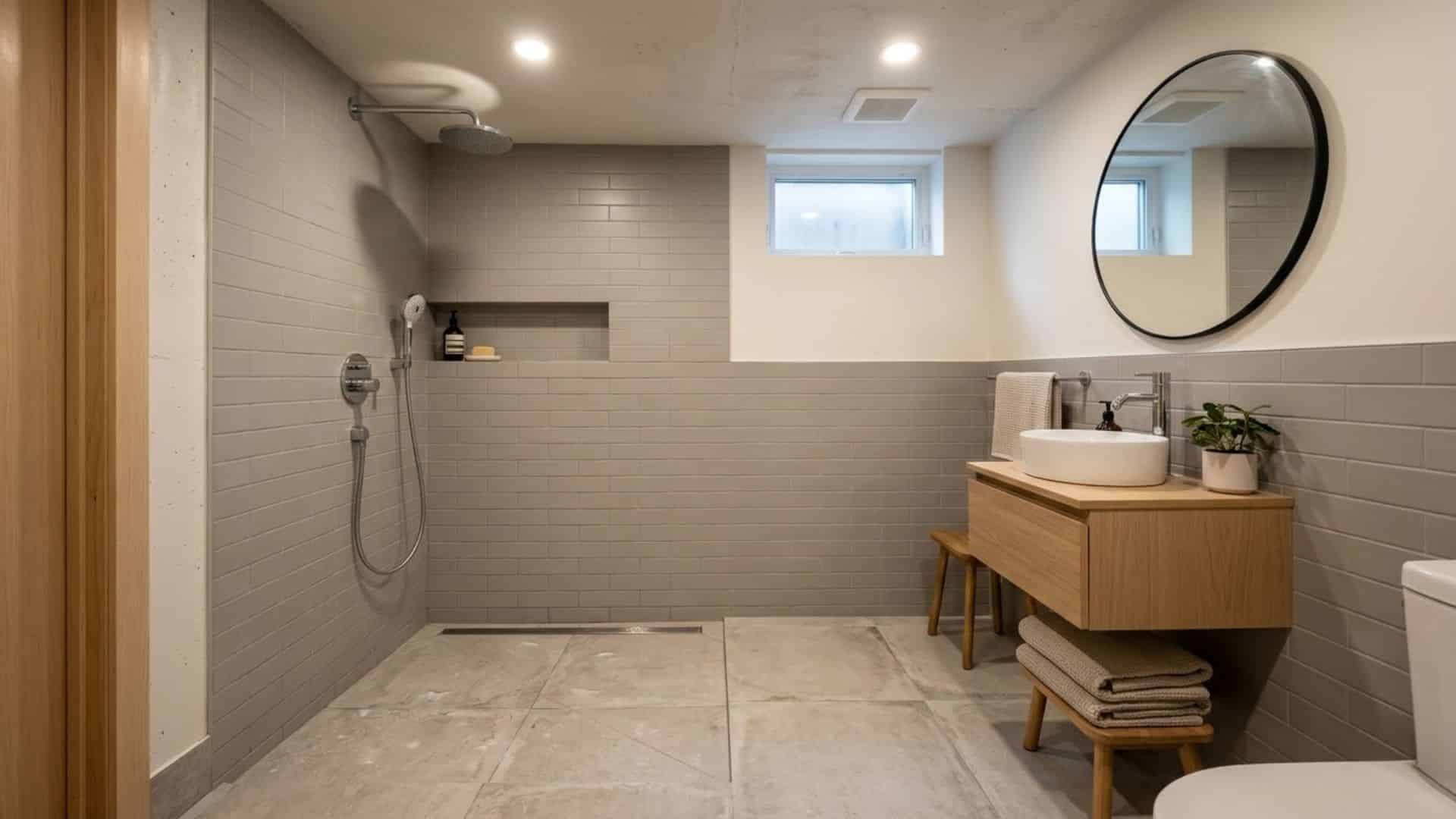
An open shower design removes barriers like doors or curtains, creating a smooth and modern look. This makes the bathroom feel less divided and more spacious.
It works best when paired with proper drainage and slight floor slopes to control water flow.
You can use simple tiles for a clean finish or add texture for more style.
This idea focuses on openness and layout flow rather than lighting or storage, making it a unique upgrade for modern spaces.
Approx budget: $700–$2,000, shaped by tile work and drainage setup.
15. Double Vanity for Shared Use
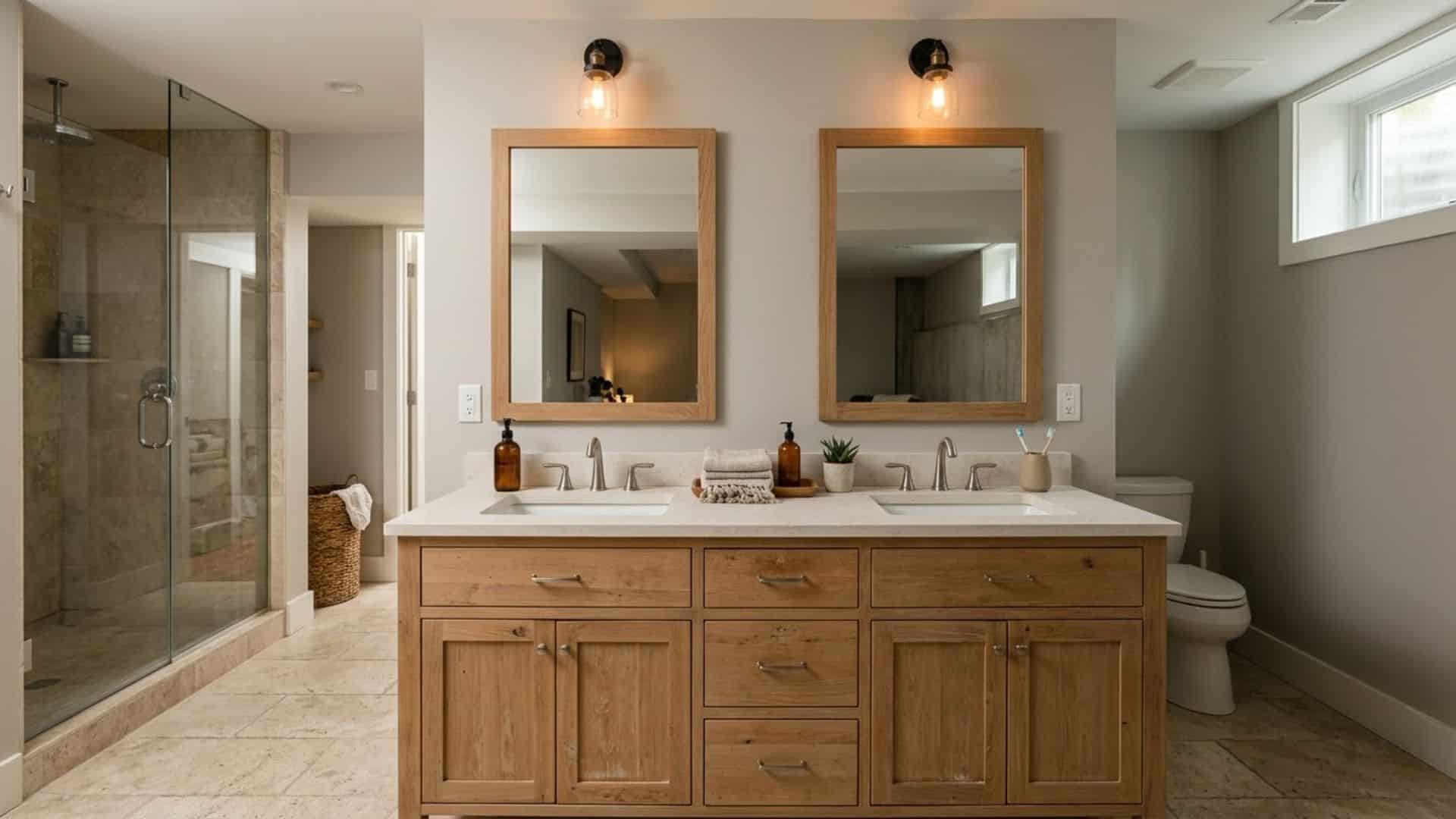
A double vanity is a great addition if your basement bathroom is used by more than one person. It provides two sinks, allowing multiple users to get ready at the same time without crowding.
This setup works best in larger basement layouts where space is not as tight. You can choose matching mirrors and storage to keep the design balanced.
This idea focuses on convenience and usability rather than saving space, making it ideal for family homes.
Approx budget: $800–$2,500, based on size, materials, and installation.
16. Matte Black Fixtures for a Modern Touch
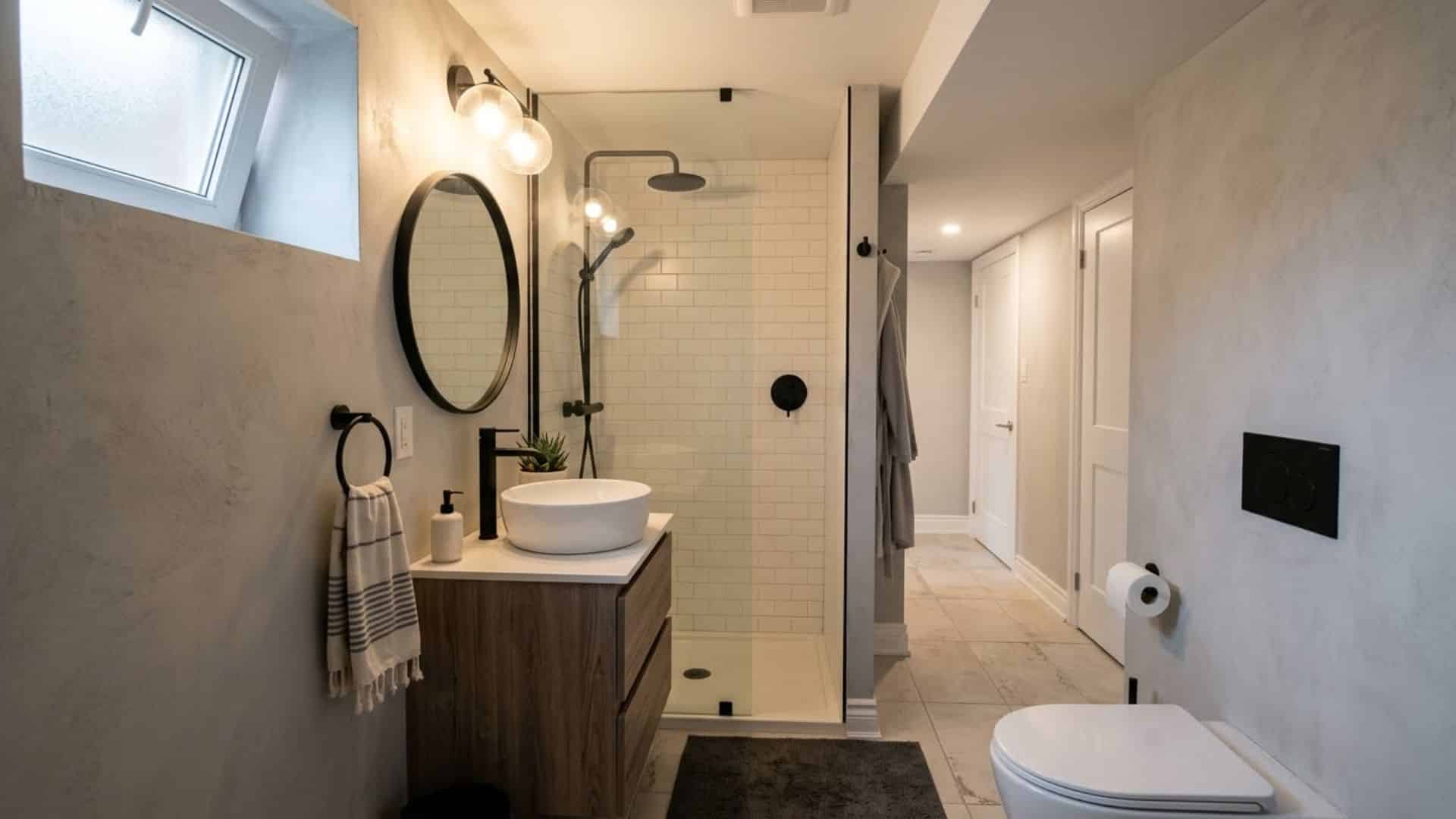
Matte black fixtures like faucets, showerheads, and handles can instantly update the look of a basement bathroom.
They create a strong contrast against light walls or tiles, making the design feel more modern and clean. This idea focuses on upgrading small details rather than changing the entire space.
It’s a simple way to refresh the bathroom without major work.
Matte finishes are also good at hiding fingerprints and water spots, which helps with maintenance.
Approx budget: $100–$400 depending on brand and number of fixtures.
17. Farmhouse-Style Sink for Character
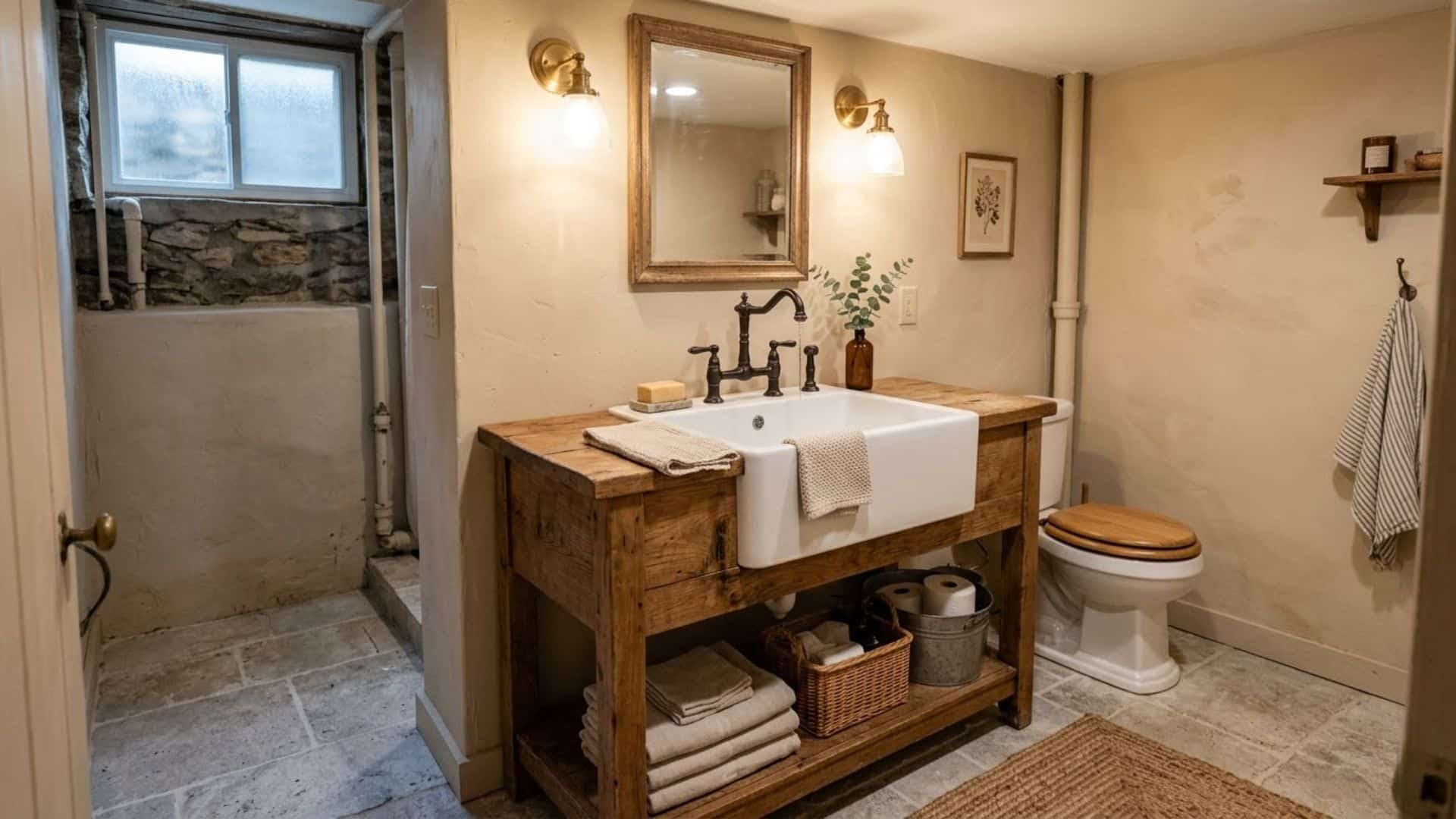
A farmhouse-style sink adds a classic and cozy feel to the bathroom. It usually has a deep basin and a simple, clean shape that stands out as a design feature.
You can pair it with wood accents or soft colors to create a warm and welcoming look. This idea focuses on adding character rather than saving space or improving layout.
It works well if you want a bathroom that feels more relaxed and less modern.
Approximate budget: $300–$1,000 depending on material and installation style.
18. Hidden Storage Cabinets for a Clean Look
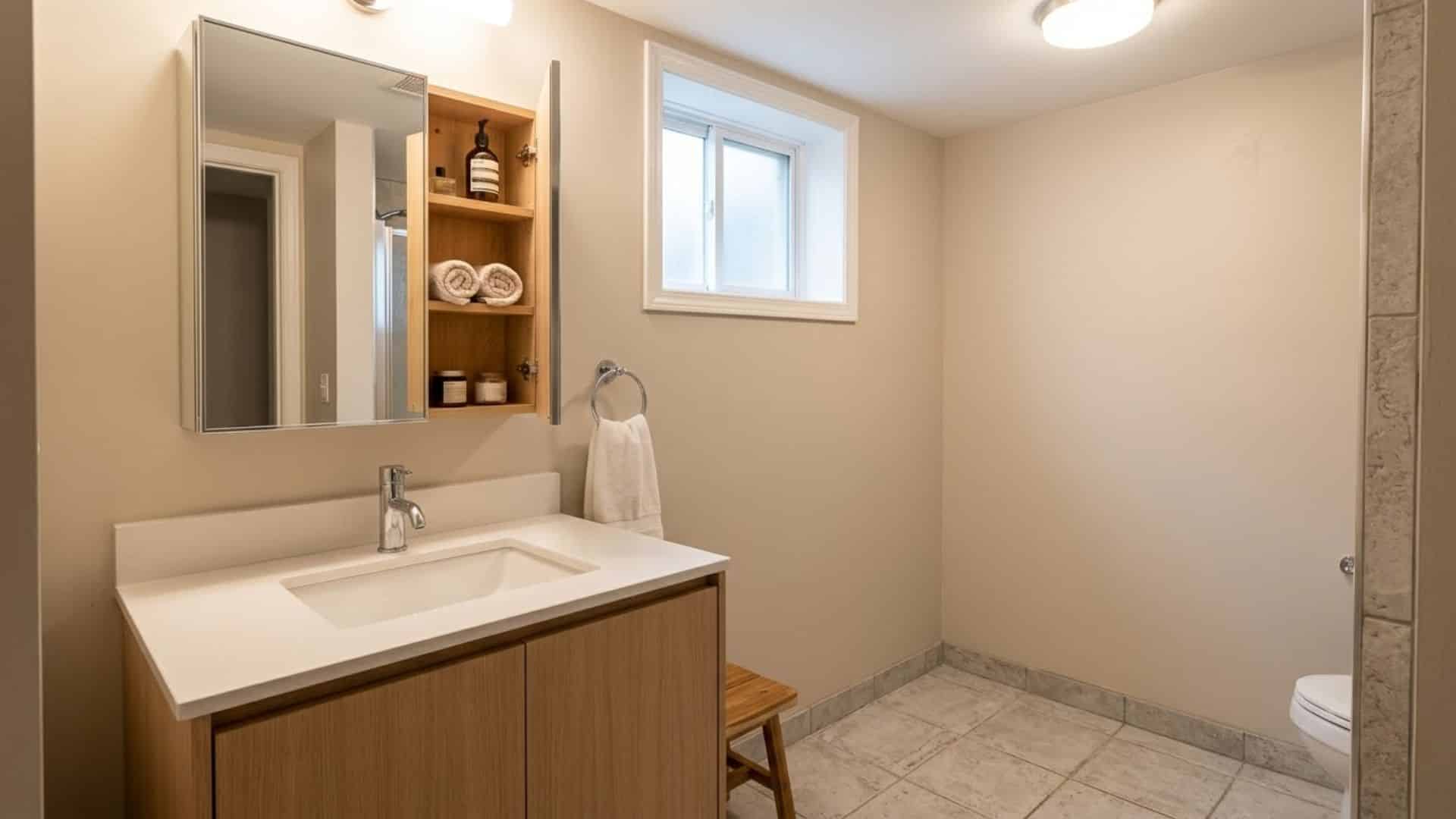
Hidden storage cabinets help keep the bathroom neat without adding visible clutter. You can place them behind mirrors, inside walls, or under sinks to store daily items.
This keeps surfaces clear and makes the space look more organized. This idea focuses on maintaining a clean appearance rather than adding extra shelves or furniture.
I’ve seen this work really well in compact spaces where every inch matters and clutter builds up quickly.
It works especially well in smaller basements where too many items can make the space feel crowded.
Approx budget: $200–$800 depending on size and customization.
19. Accent Lighting Strips for Soft Glow
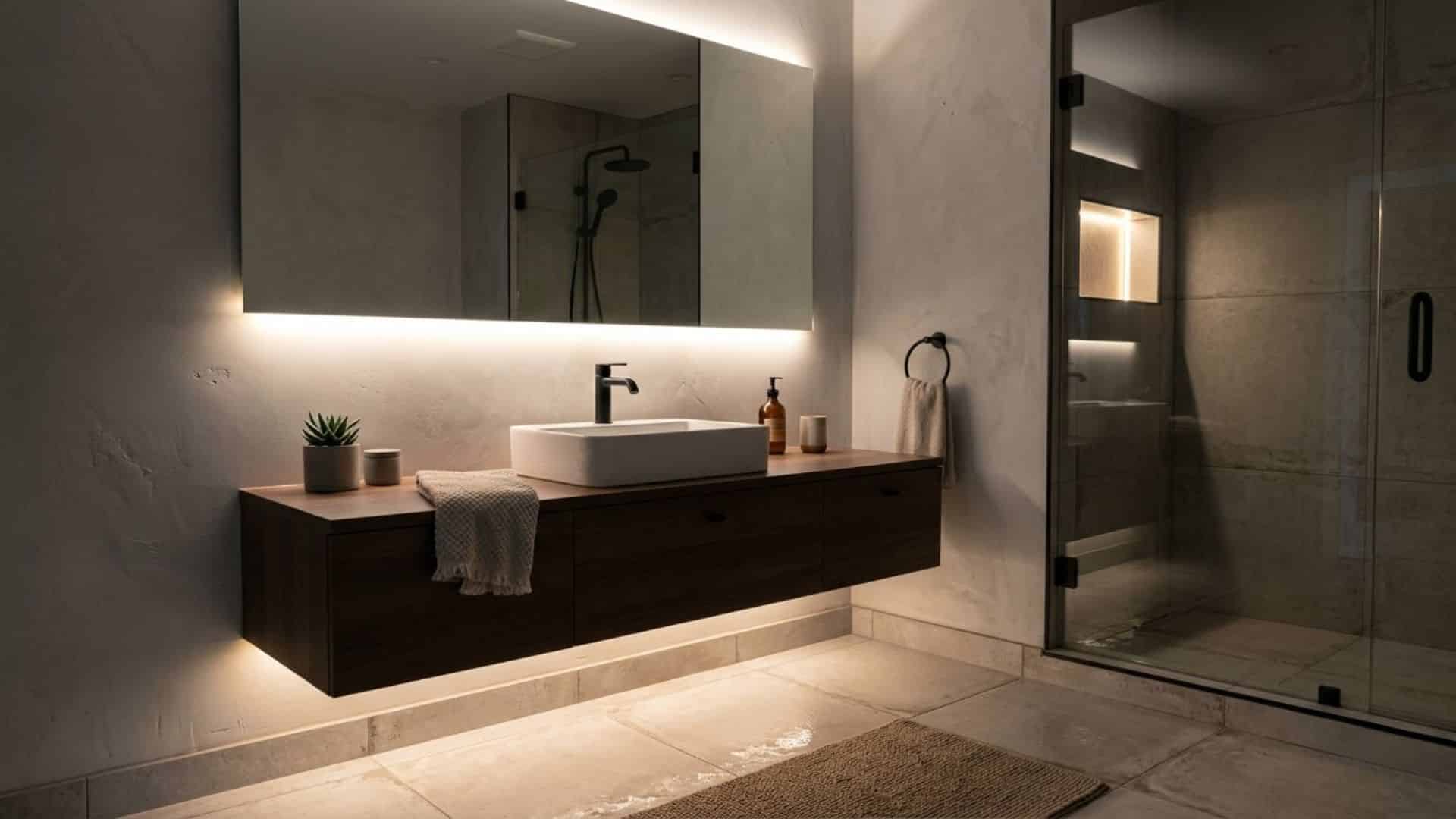
Accent lighting strips can add a soft and modern glow to your basement bathroom. You can place them under vanities, along mirrors, or near the floor to highlight certain areas.
This type of lighting creates a relaxed mood without being too bright. It also improves visibility at night without needing overhead lights.
This idea focuses on adding atmosphere rather than main lighting, making it different from functional lighting upgrades.
Approx budget: $50–$300 depending on length and lighting quality.
20. Concrete Finish for an Industrial Feel
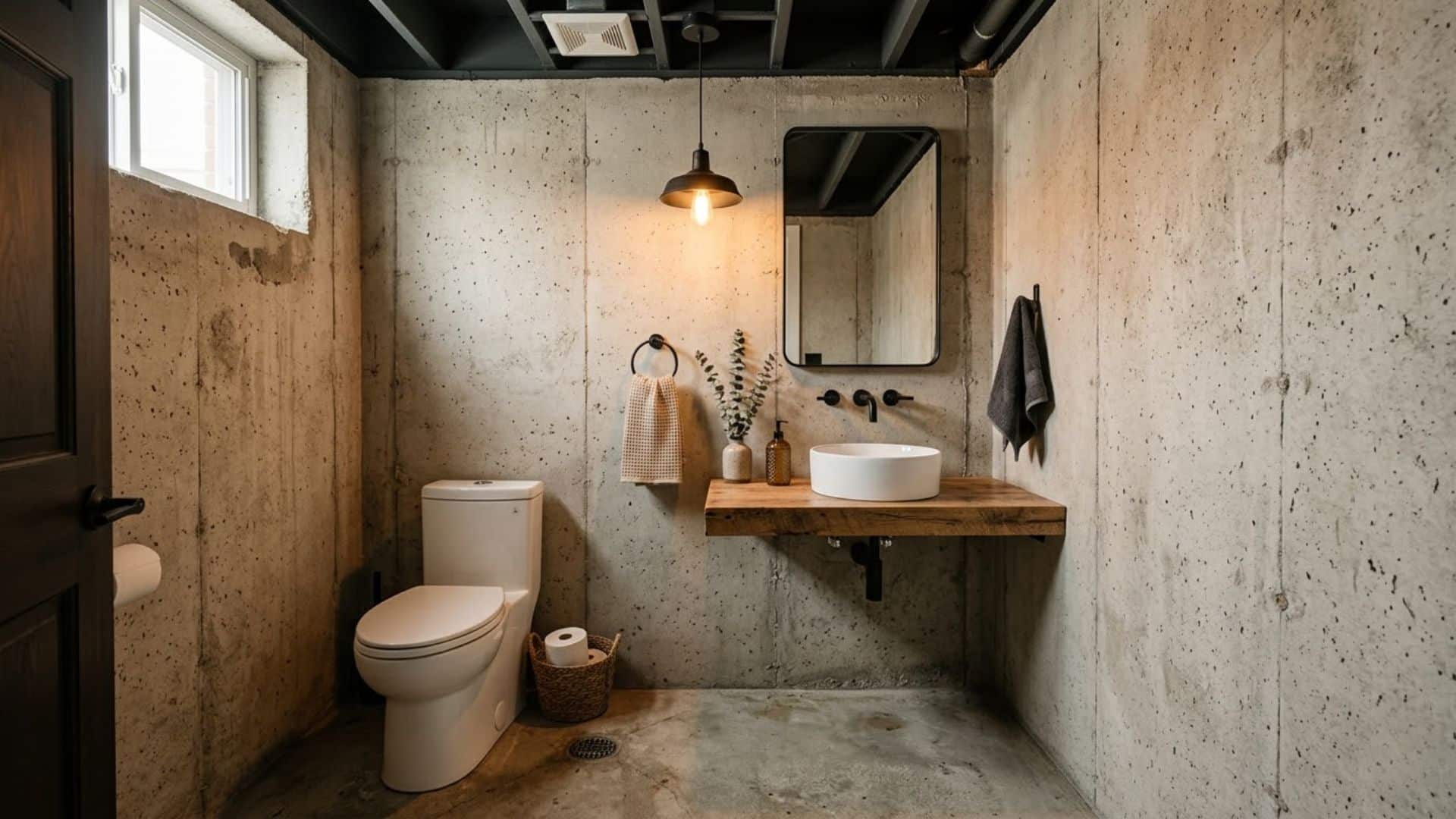
A concrete finish on walls or floors gives a strong, modern look with an industrial feel. It works well with simple fixtures and neutral tones to create a clean and bold design.
You can use real concrete or concrete-style coatings to get a similar effect at a lower cost. This idea focuses on texture and surface style rather than layout or storage.
It’s a good option if you want a bathroom that feels unique and different from traditional designs.
Approx budget: $200–$1,000 depending on finish type and coverage area.
21. Bold Wallpaper for Added Personality
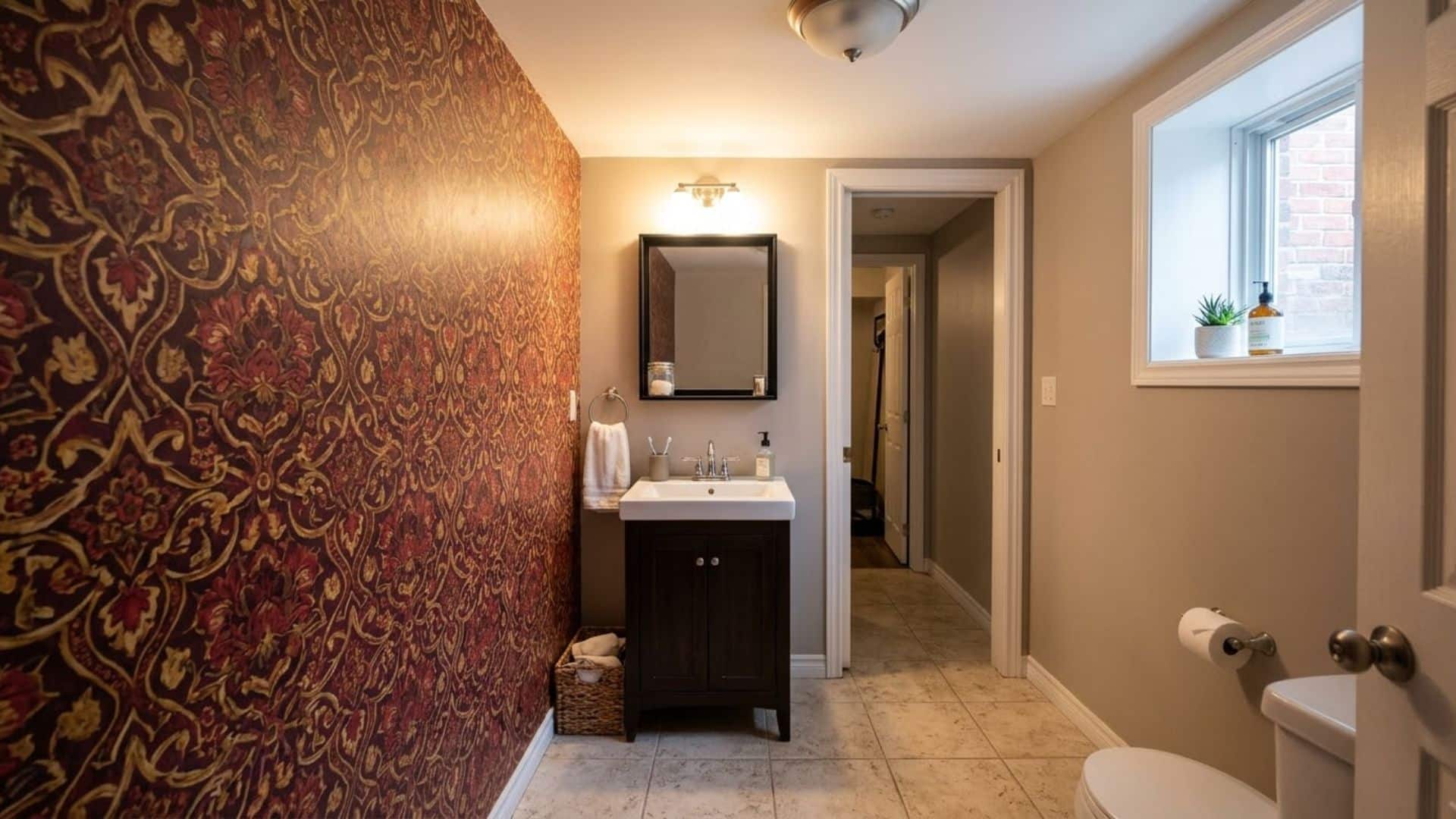
Bold wallpaper is a quick and easy way to give your basement bathroom a strong and unique look. You can choose patterns like florals, geometric prints, or textured designs to create a focal point on one wall.
This works best when the rest of the space is kept simple, so the design does not feel overwhelming.
It’s also a flexible option since wallpaper can be changed later if you want a new style. This idea focuses on adding personality without changing the layout or fixtures.
Approx budget: $80–$400 based on wallpaper quality and wall coverage.
22. Spa-Style Neutral Tones for a Relaxing Feel
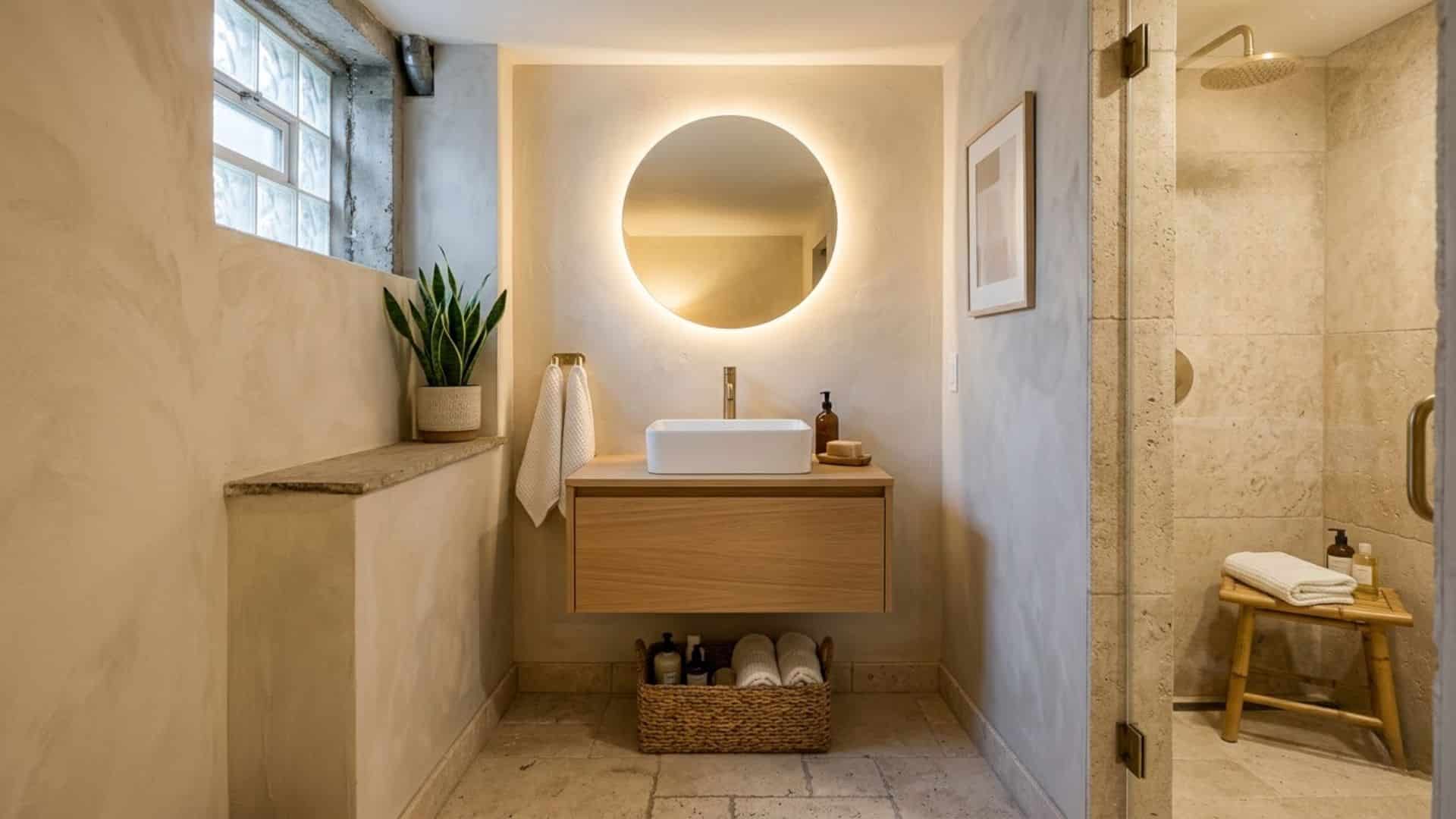
Using soft neutral tones like beige, cream, and light gray can turn your basement bathroom into a calm and relaxing space.
These colors help create a clean and peaceful environment, similar to what you would find in a spa.
You can pair them with soft lighting, simple decor, and minimal accessories to complete the look.
This idea focuses on creating a soothing mood rather than adding bold design elements. It works well for anyone who wants a quiet and stress-free space.
Approx budget: $100–$600 depending on paint, fixtures, and finishing touches.
23. Raised Platform Shower for Better Drainage
A raised platform shower is a practical solution for basement bathrooms where drainage can be a challenge. By lifting the shower area slightly, water can flow more easily toward the drain, reducing the risk of pooling.
It also helps define the shower space without needing walls or heavy dividers. You can tile the platform to match the rest of the bathroom for a clean and seamless look.
This idea focuses on improving function while still keeping the design simple and neat.
Approximate budget: $500–$1,500, with cost varying by materials and installation work.
24. Glass Block Windows for Privacy and Light
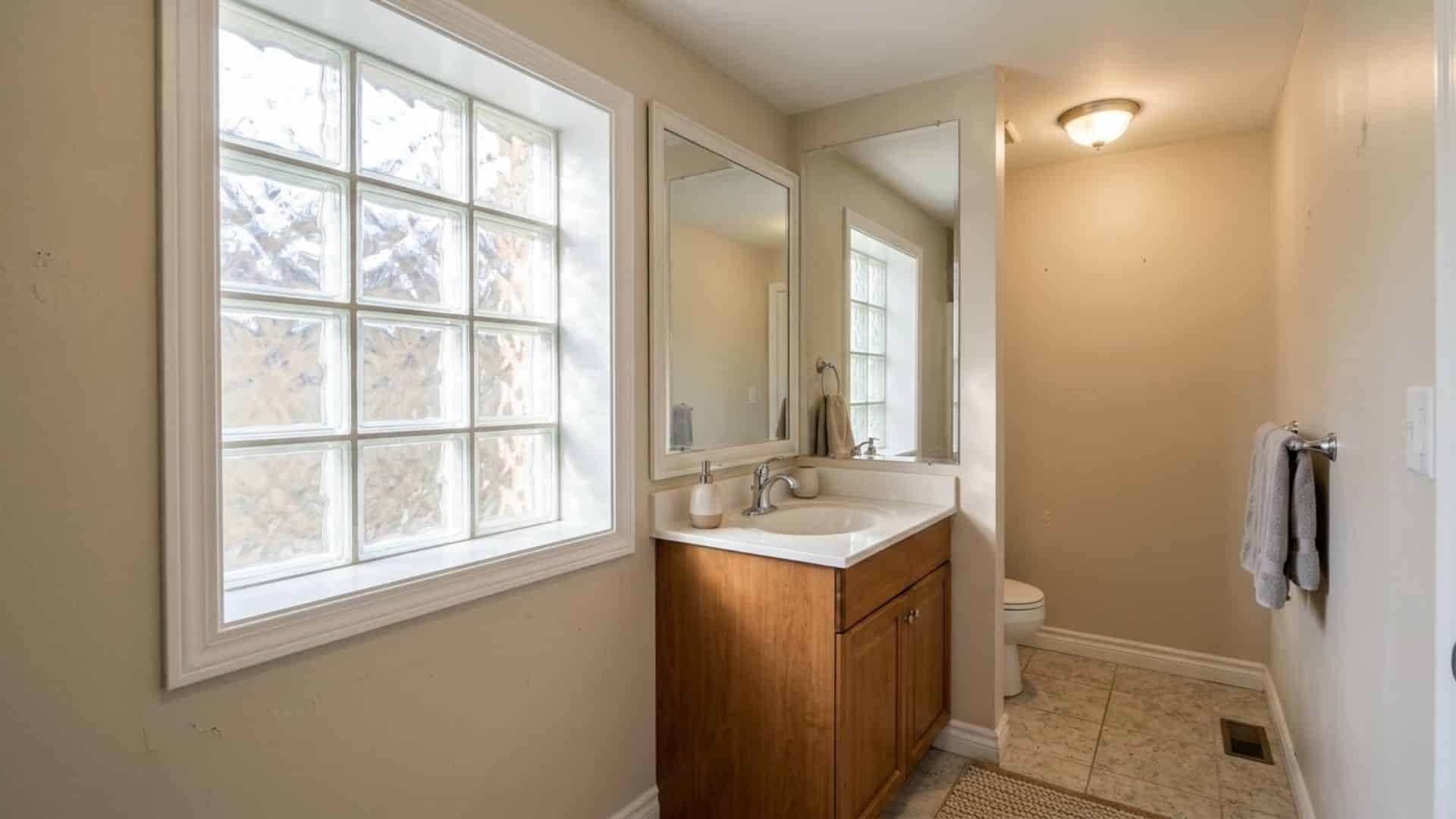
Glass block windows are a smart choice for basement bathrooms because they allow natural light to enter while still keeping privacy.
They work well in spaces where regular windows may not be suitable due to location or safety concerns.
The textured surface of the blocks diffuses light, making the room feel brighter without being too harsh.
This idea focuses on bringing in natural light rather than relying only on artificial lighting. It also adds a subtle design element to the space.
Approx budget: $200–$800 depending on window size and installation needs.
25. Ceiling-Mounted Rainfall Shower for Comfort
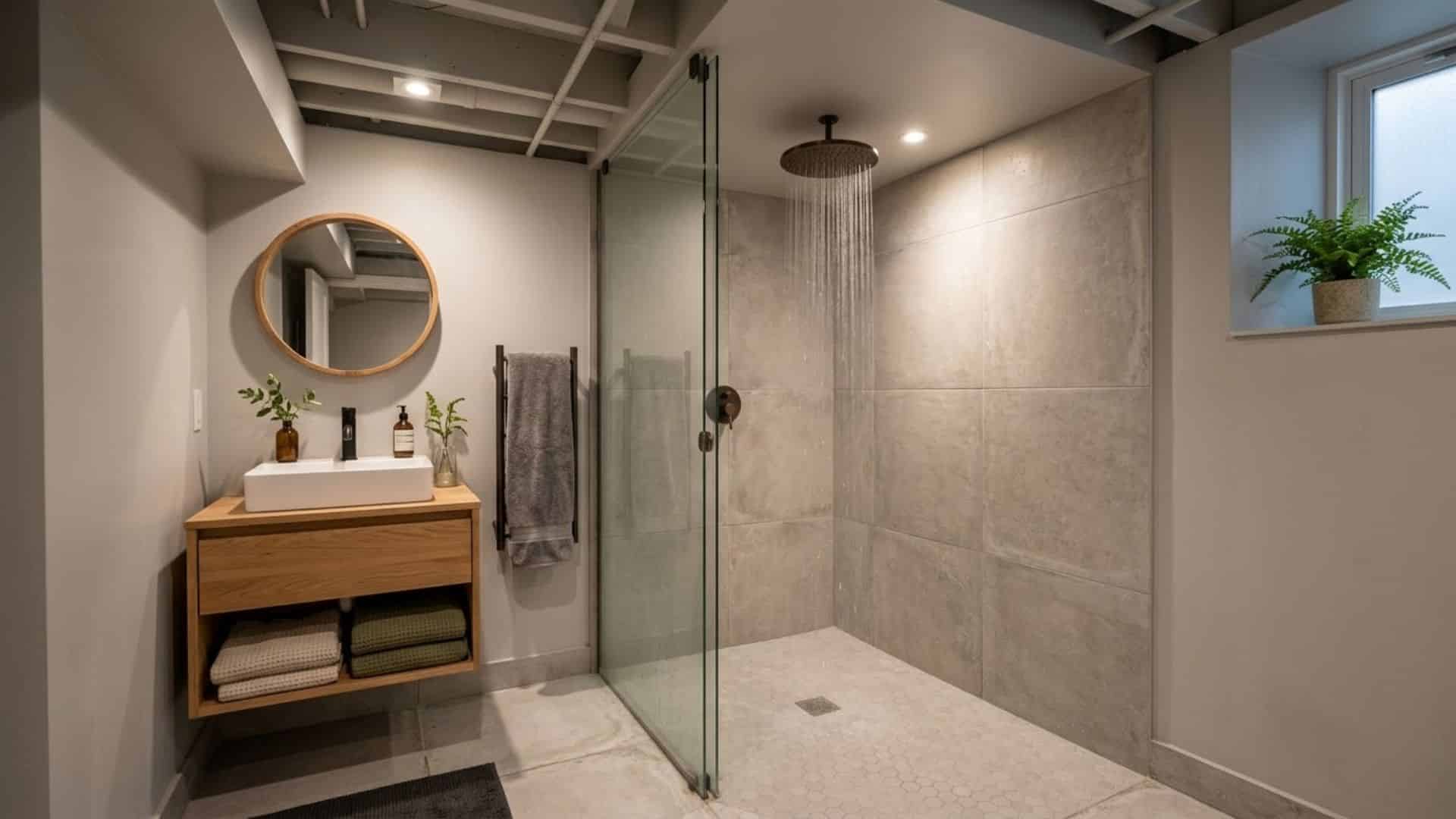
A ceiling-mounted rainfall shower can make your basement bathroom feel more relaxing and comfortable. It spreads water evenly, creating a soft and steady flow that feels gentle.
This feature adds a touch of luxury without requiring a full renovation. It works well with both modern and spa-style designs and can improve the overall shower experience.
This idea focuses on comfort and user experience rather than layout or storage changes.
Approx budget: $150–$700 depending on fixture quality and plumbing adjustments.
26. Mix of Textures for Visual Depth
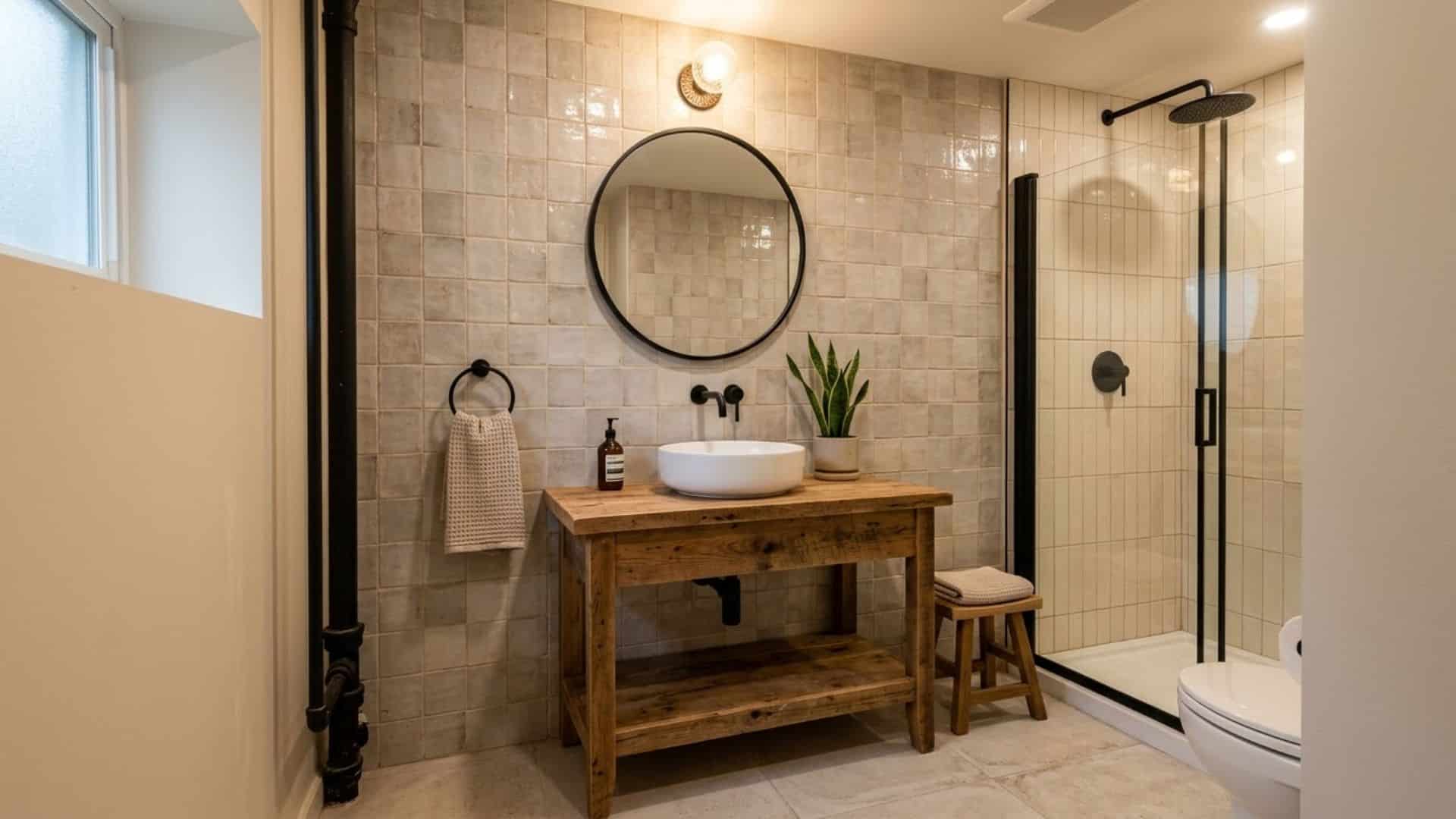
Combining different textures like wood, tile, and metal can make a basement bathroom feel more interesting and well-designed.
Instead of using one material throughout, mixing finishes adds depth and keeps the space from looking flat.
For example, you can pair wooden cabinets with tiled walls and metal fixtures for balance.
This idea focuses on creating visual variety rather than changing the layout or lighting. It helps give the bathroom a layered and complete look.
Approx budget: $300–$1,200 depending on materials used and coverage area.
27. Smart Storage Niches in the Shower
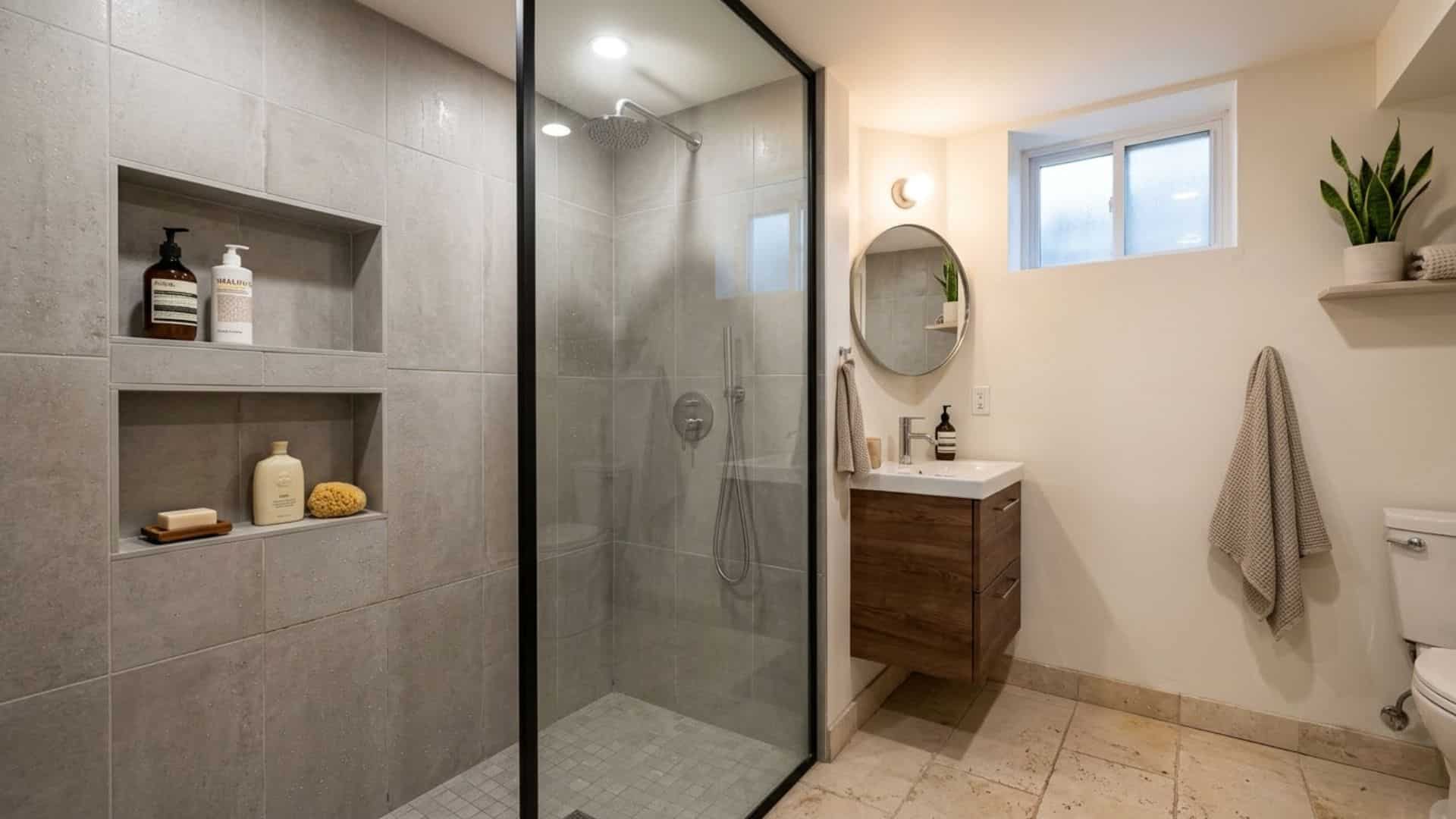
Built-in niches inside the shower are a simple way to keep items organized without adding extra shelves.
These recessed spaces can hold shampoo, soap, and other essentials while keeping everything within easy reach. They also help maintain a clean and uncluttered look.
You can design the niche to match your tiles so it blends smoothly with the rest of the shower. This idea focuses on practical storage within the shower area.
Approx budget: $150–$500, with pricing based on size and tile work.
Budget Tips to Save Money on Your Basement Bathroom
Saving money on your basement bathroom is easier when you plan smart. Small choices can reduce costs while still giving you a clean, functional, and stylish space.
| Tip | Description |
|---|---|
| Reuse fixtures where possible | If your sink, toilet, or vanity is still in good shape, reuse or refinish it with new paint or hardware to save money without replacing everything. |
| Go DIY for simple upgrades | Handle easy tasks like painting, installing shelves, or adding decor yourself to reduce labor costs, while leaving plumbing and electrical work to professionals for safety. |
| Choose cost-friendly materials | Use materials like vinyl flooring, laminate countertops, or standard tiles that offer durability and style while keeping your overall renovation cost lower and more manageable. |
Mistakes to Avoid when Designing a Basement Bathroom
Avoiding common mistakes can save you time, money, and stress. Paying attention to key details will help you create a bathroom that works well and lasts longer.
- Poor ventilation: Without proper airflow, moisture can build up quickly, leading to mold and odors. Installing an exhaust fan helps keep the space dry and comfortable.
- Bad lighting: Relying on one light source can make the bathroom feel dark and uninviting. Use a mix of overhead, mirror, and accent lighting for better visibility.
- Ignoring moisture control: Basements are prone to dampness, so skipping waterproofing can cause damage over time. Use moisture-resistant materials and seal surfaces.
- Poor layout planning: A cramped or awkward layout can make the bathroom hard to use. Plan enough space for movement, fixtures, and storage before starting.
- Choosing the wrong materials: Regular materials may not handle basement conditions well. Use tiles, paints, and finishes that resist moisture and last longer.
Conclusion
A basement bathroom can be simple. Use these ideas to create a space that fits your style and budget.
The goal is not to do everything at once, but to make smart choices that improve how the space looks and works.
I always believe that small, thoughtful changes can go a long way. Even simple upgrades like better lighting or smart storage can make your bathroom more useful and comfortable.
Take your time, plan each step, and focus on what matters most to you and your home.
If you’re ready to move forward, start with one idea that feels easy and build from there. Try a small update today and see how it changes your space.
Frequently Asked Questions
What Is the Cheapest Way to Put a Bathroom in the Basement?
The cheapest way is to build a half bath near existing plumbing, use budget-friendly fixtures, and handle simple tasks like painting yourself to reduce labor costs.
Do Basement Bathrooms Need Special Ventilation?
Yes. Proper ventilation helps control moisture, reduces odors, and lowers the risk of mold growth. An exhaust fan is usually recommended.
Does a Basement Bathroom Add Home Value?
Yes. A basement bathroom can increase your home’s value and make the basement more functional for family members and guests.
How Much Does It Cost to Build a Basement Bathroom?
The cost can range from $3,000 to $15,000 or more. The final price depends on plumbing, fixtures, materials, and the size of the bathroom.