

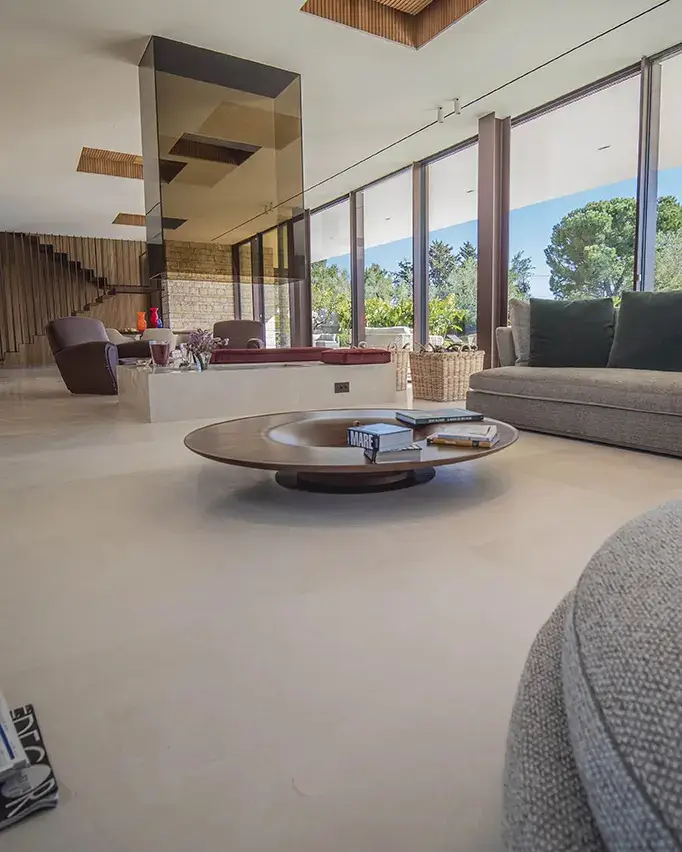
There is a moment in every renovation when thoughts shift away from walls to be demolished, systems to be rebuilt, or colors to be chosen, and technical decisions give way to emotion. It is the moment when you decide which surfaces will accompany your daily life for decades to come. Choosing a floor, a bathroom covering, or a living area surface is not just about aesthetics. It means defining the character of a home, its identity, and even how it will be perceived over time.
In recent years, architects and designers have rediscovered materials that once seemed to belong to the past but now perfectly meet the demands of contemporary living. Among these, natural stone stands out, increasingly chosen for the renovation of city apartments, villas, country homes, and second homes by the sea or in the hills.
Material Quality Matters: Natural Stone as a Sustainable and Durable Choice
Those undertaking a renovation often focus on the most visible elements: furnishings, lighting, wall colors. In reality, it is surfaces that determine the perceived quality of a space. A natural stone floor is not merely a covering; it is a living material, characterized by shades, veins, and color variations that make each slab unique. Unlike industrial materials, stone retains its personality over time. It does not follow fleeting trends and does not risk appearing outdated after just a few years. This is one of the reasons many designers favor it for high-end renovations.
One of the factors bringing Trani stone, travertine, and other natural stones back to the forefront of interior design is their sustainability. Stone is a natural material that requires limited processing compared to many industrial products. It also offers a highly valued feature: longevity. A stone floor can last for generations while maintaining its appeal. Historic centers, traditional farmhouses, and heritage buildings clearly demonstrate how these materials withstand time, wear, and climate changes.
Contrary to common belief, natural stone is also easy to maintain. With proper installation and suitable treatments, routine cleaning requires minimal effort. It is therefore a practical solution for those seeking elegant spaces without the need for constant or costly maintenance.
Why Choose Trani Stone
Among the most sought-after varieties, Trani Biancone stands out for its light, compact, and particularly luminous tone. Its characteristics make it an ideal solution for floors, wall coverings, staircases, sinks, and a wide range of custom design elements.
In this context, a historic company in the Apulian stone sector plays a key role. Musicco extracts, processes, and supplies Trani Biancone, a high-quality natural stone suitable for floors and coverings (https://www.lapietraditrani.com/). The company operates directly in Apulia and has extensive experience in quarrying and processing stone from its own quarries. This direct supply chain allows full control of the material from extraction to final processing, ensuring consistently high quality standards.
The most immediate application is interior flooring. In modern homes, natural stone can be used in large formats to visually expand spaces and enhance natural light. In country homes, it helps create an authentic and welcoming atmosphere. Trani Biancone is particularly suited to both contemporary and traditional settings thanks to its ability to harmonize with materials such as wood, iron, glass, and resins.
From Floors to Bathrooms, the Most Appreciated Applications
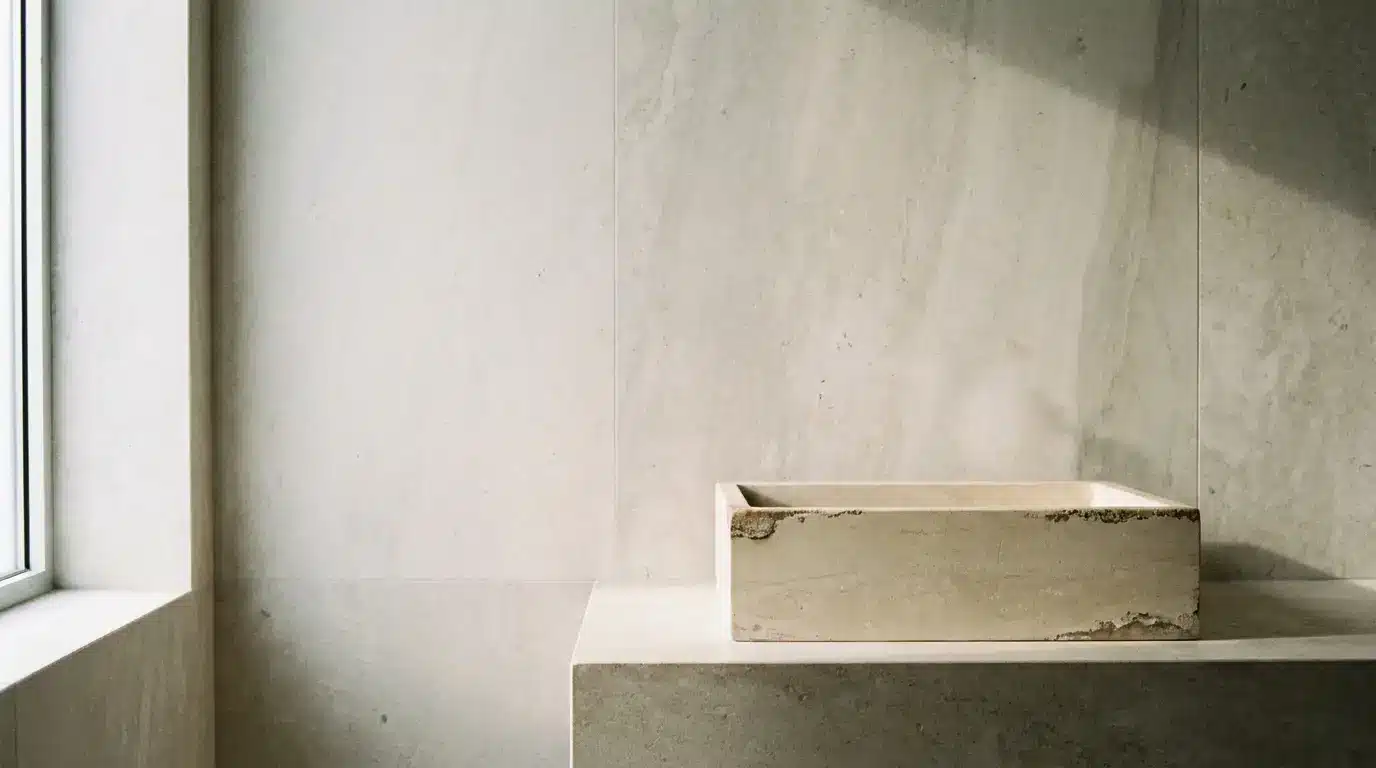
One of the greatest strengths of natural stone is its design versatility. Interior flooring is perhaps the most well-known application. Large formats and bright tones can visually enlarge spaces and create refined environments.
Bathrooms have also become one of the preferred settings for stone. Today, it is no longer limited to wall coverings. Increasingly, designers are creating shower trays, sinks, countertops, and coordinated details that contribute to a cohesive and elegant space. The result is an environment reminiscent of modern spas, enriched by the warmth and authenticity of natural materials.
Another key trend in contemporary architecture is the continuity between indoor and outdoor spaces. Natural stone makes it possible to maintain the same aesthetic language both inside and outside the home. For this reason, it is used not only in living rooms and bathrooms, but also for pool edges, terraces, porticoes, walkways, and outdoor living areas. The final effect is a home that seamlessly interacts with its surrounding landscape.
A Material for Every Style
One of the main strengths of Trani stone is its versatility. In contemporary homes, it enhances clean lines and minimalist furnishings. In rustic settings, it evokes the tradition of Mediterranean dwellings. In country-style interiors, it adds authenticity and warmth, while in shabby chic spaces, it helps create bright and natural atmospheres.
It is precisely this ability to transcend styles and trends that continues to make it one of the most appreciated choices in renovation projects. Because when a home is designed to last, the quality of its surfaces cannot be overlooked or treated as secondary. It is, in fact, the foundation from which everything else takes shape.