

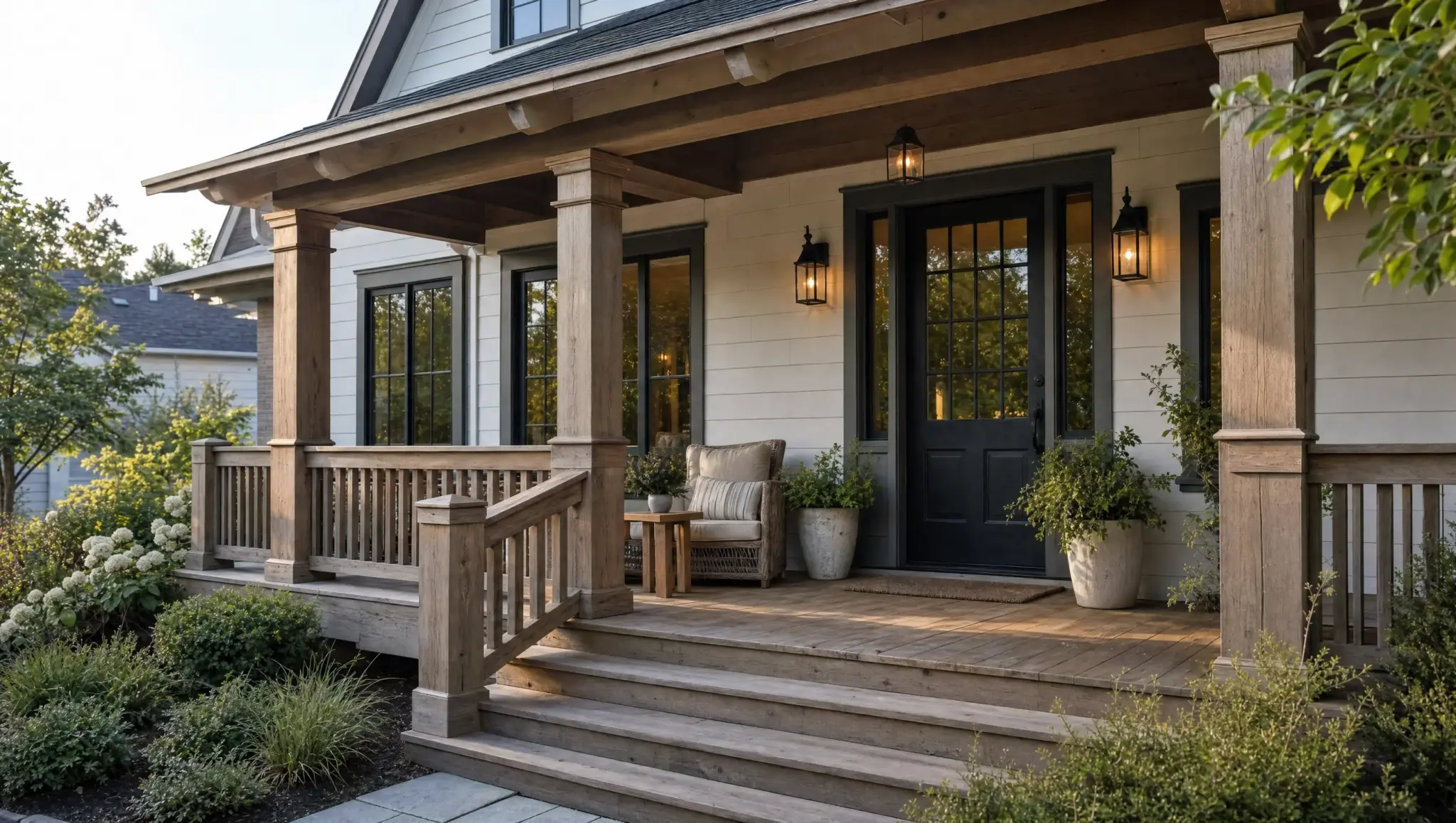
A plain entrance can make the whole house feel less welcoming. The right wood front porch ideas can change that without pushing you into a costly or oversized remodel.
I know it is easy to save dozens of attractive designs and still feel unsure about what will suit your home. You need more than pretty photos. You need options that match your space, exterior style, budget, and maintenance expectations.
Here, you will find practical designs for small entries, wide covered porches, modern homes, cottages, and traditional exteriors.
You will also learn how materials, railings, steps, seating, finishes, and upkeep shape the final result, helping you choose a porch with greater confidence.
Why Wooden Front Porches Work So Well
Wooden front porches bring natural warmth and character to a home while offering plenty of design flexibility.
Wood complements farmhouse, Craftsman, cottage, traditional, and modern exteriors, depending on the stain, paint, railing, and column style used.
If your own exterior leans toward that relaxed, lived-in look, it’s worth browsing farmhouse and cottage porches for how other homeowners have handled the same siding and roofline. Wood can also be shaped into custom steps, built-in seating, planter boxes, decorative railings, and detailed decking patterns.
However, the right wood species and protective finish are essential for lasting performance. Exterior-grade wood must be sealed to protect against moisture, sunlight, insects, and temperature fluctuations.
With proper drainage, regular cleaning, timely repairs, and occasional resealing, a wooden porch can remain safe, attractive, and welcoming for many years.
Front Porch Ideas That Actually Fit Your Home
One smart upgrade can make your entire home feel more welcoming. Every porch idea below solves a different design goal.
Some work best for small entryways; others suit wide covered porches or full remodels. Pick ideas that match your home’s style instead of copying every trend.
1. Wraparound porch
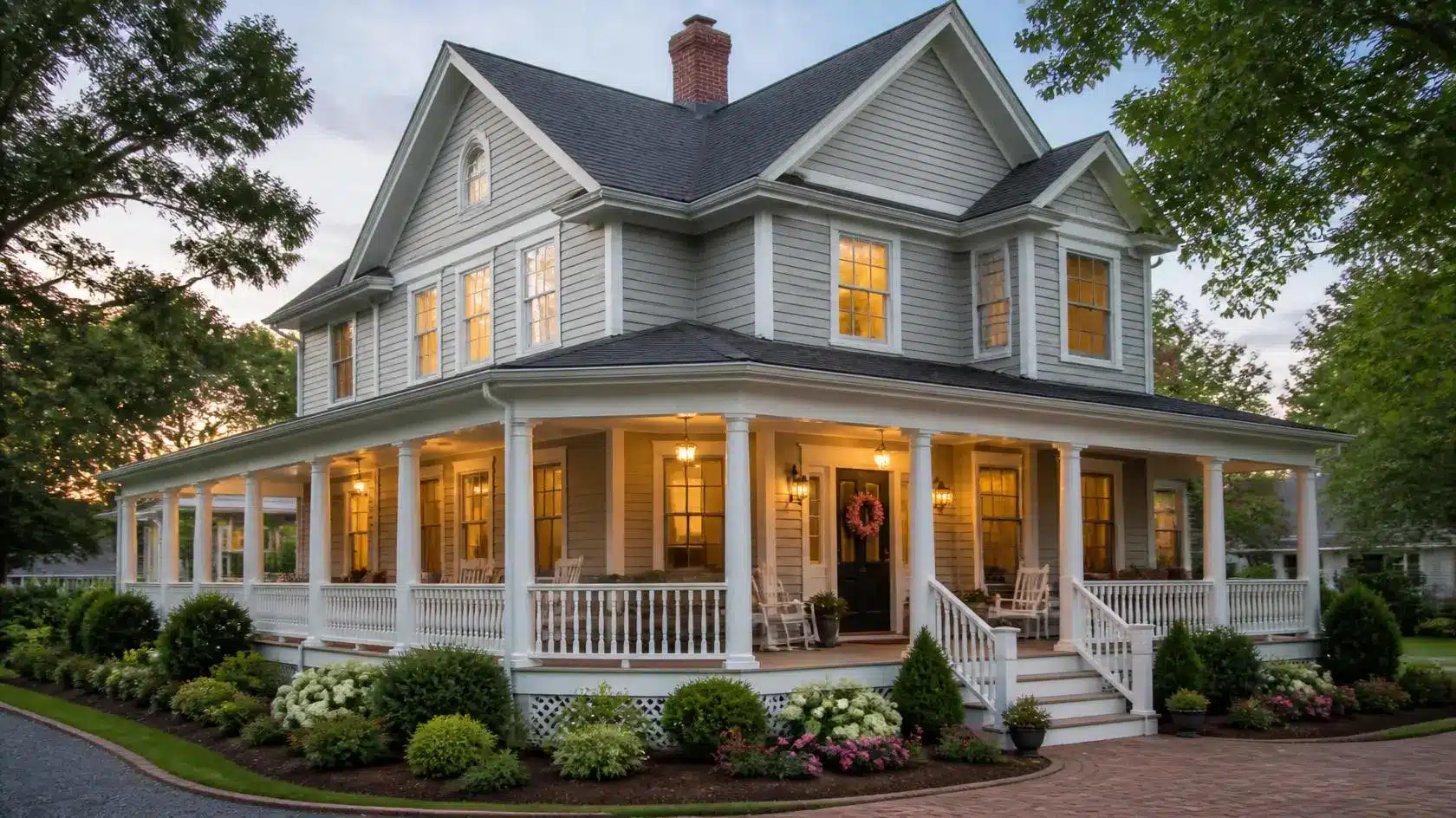
Stepping outside your front door and having the freedom to follow the shade, the breeze, or just the best view in your yard. That’s exactly what a wraparound porch gives you. It hugs multiple sides of your home, creating distinct seating zones you and your family can use every single day.
If you’re weighing this against a smaller footprint, a closer look at wraparound porch design options can help you decide how much of the house you actually want to wrap.
- Cost: Higher than a standard porch due to larger size and stronger foundation needs
- Best for: Farmhouse, cottage, and traditional home styles
- Effort: Needs careful roof connections and regular maintenance across a bigger surface area
2. Craftsman wood porch
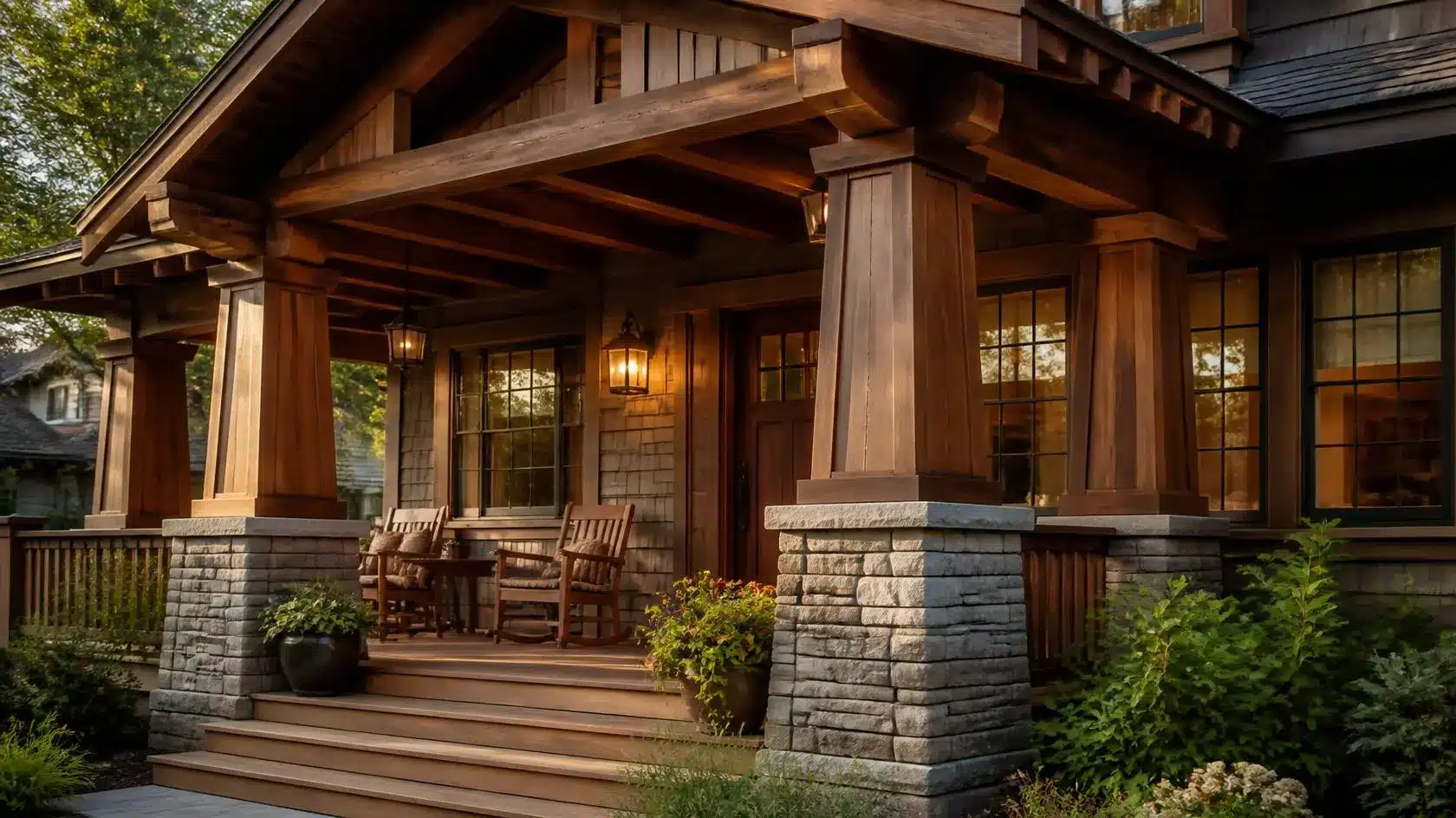
If your home has stone, brick, or wood siding, a Craftsman porch might be exactly what it’s been missing. Those thick tapered columns, exposed beams, and warm natural stains don’t just look good; they make your entire exterior feel solid, intentional, and truly put together.
- Cost: Mid-to-high range depending on column size, wood type, and detailing
- Best for: Homes with stone, brick, or wood siding
- Style: Thick tapered columns, exposed beams, and warm natural wood finishes
3. Stained Wood Flooring With White Railings
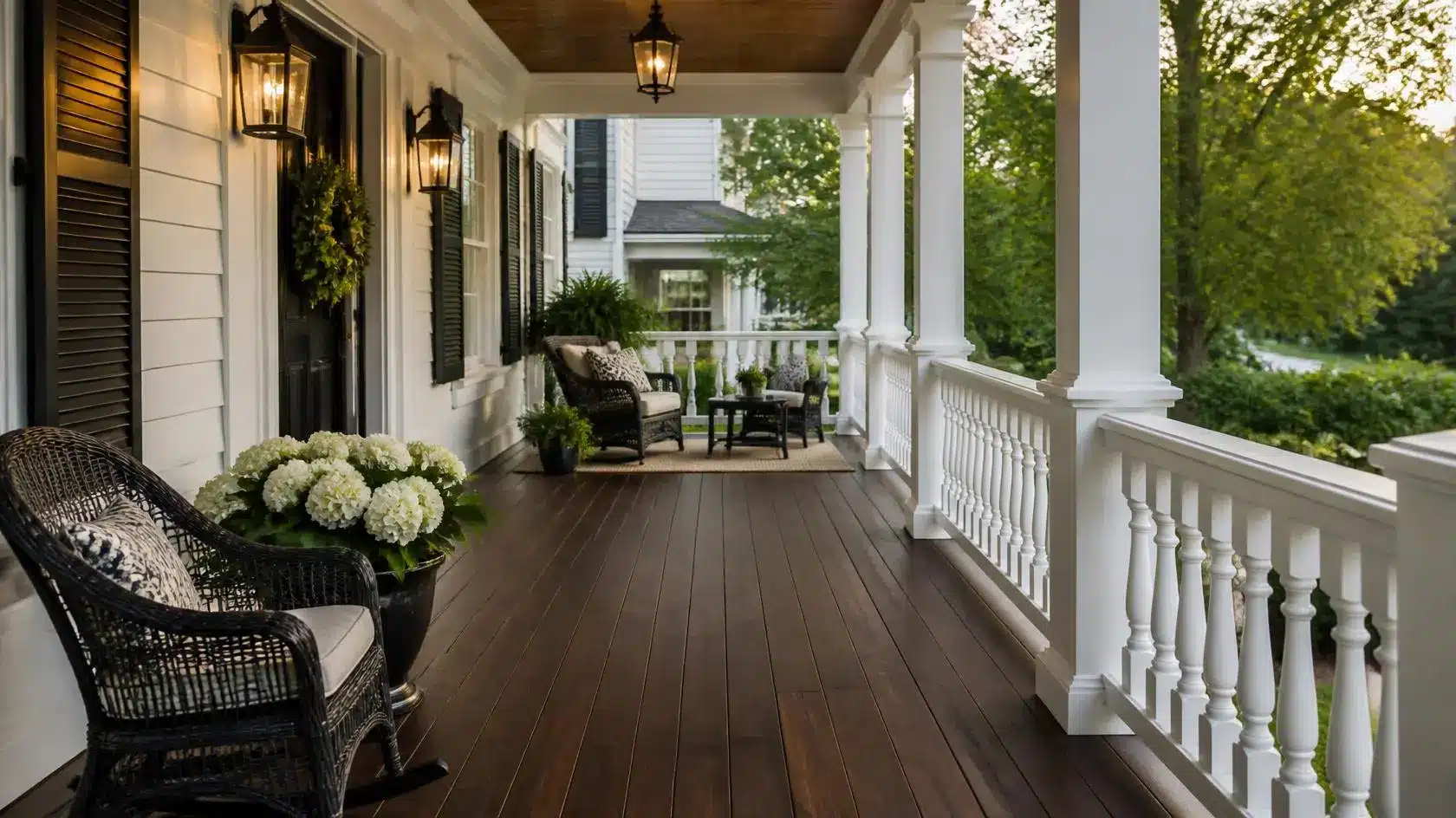
Sometimes the simplest combination makes the biggest impact. Stained wood floors paired with crisp white railings instantly give your porch that bright, classic look that never goes out of style, and the contrast makes your whole entrance feel more open and welcoming.
- Cost: Budget-friendly depending on wood species and stain choice
- Best for: Any home style, especially traditional and cottage designs
- Style: Warm wood tones against clean white railings for a timeless, classic finish
4. Natural cedar porch
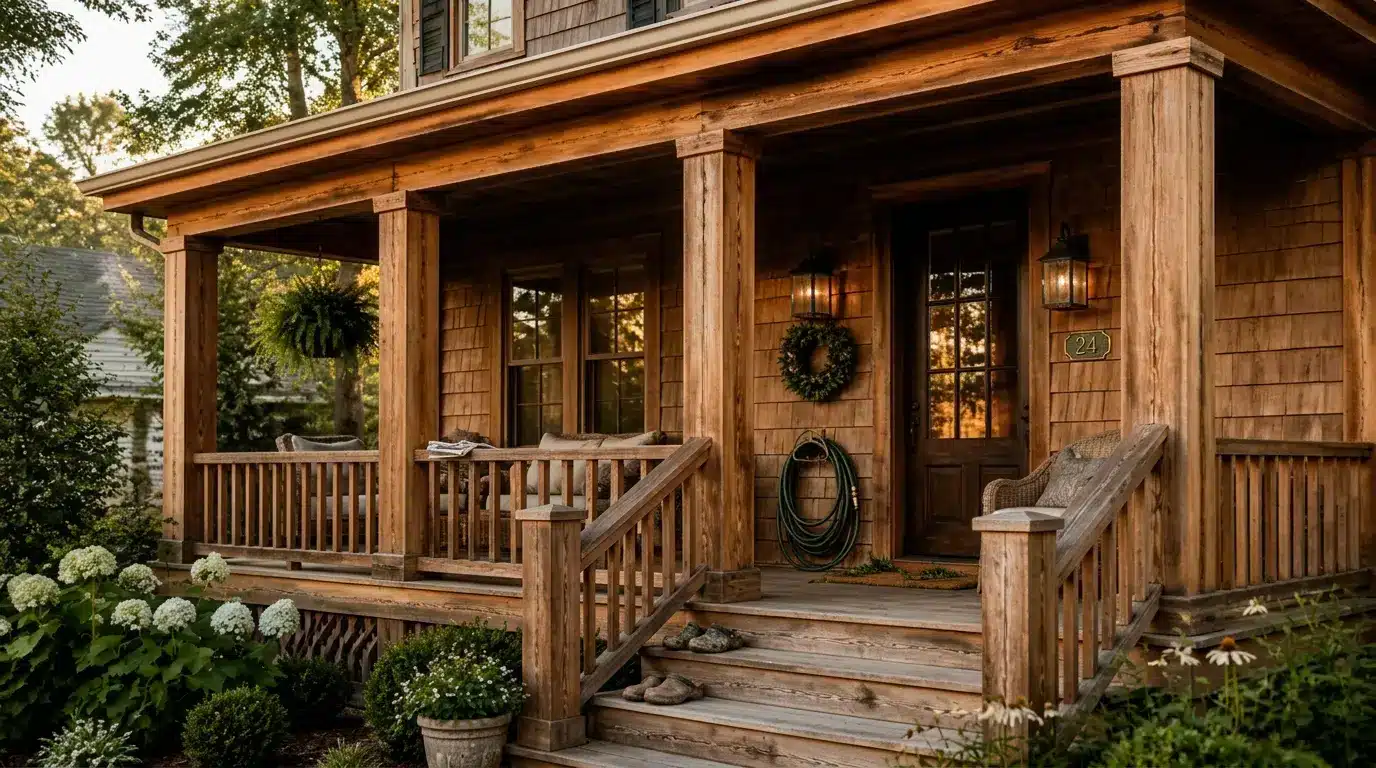
If you want a porch that looks beautiful and actually holds up over time, cedar is worth every penny. It has this warm, natural grain that gets better with age, and unlike a lot of other woods, it handles moisture, insects, and changing weather without giving you constant headaches.
- Cost: Mid-range, pricier than pine but worth it for long-term durability
- Best for: Homeowners who want low-maintenance beauty with natural weather resistance
- Style: Warm honey tones that age gracefully with routine sealing
5. Tapered porch columns
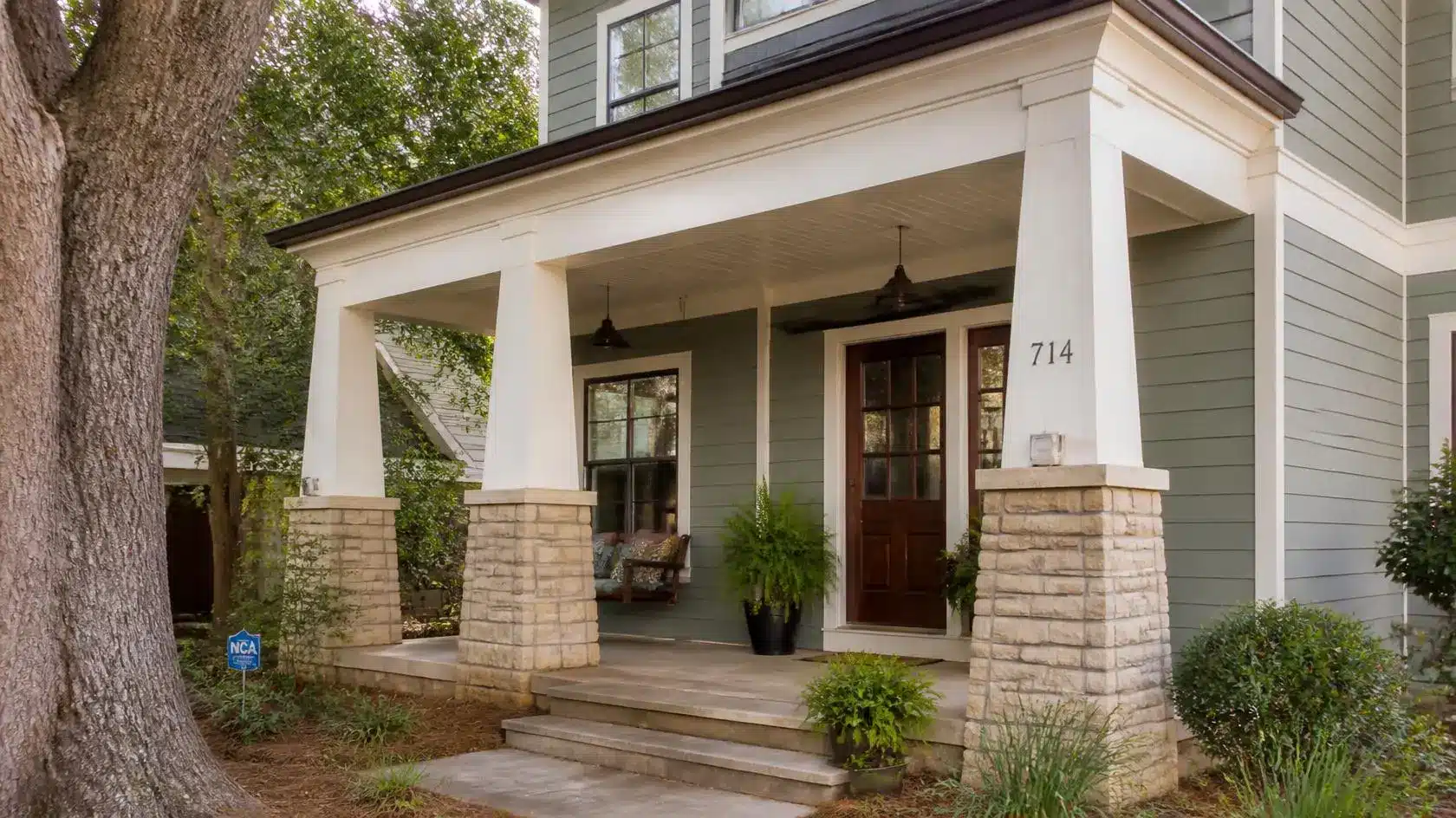
How much a column can change the entire feel of your porch. Tapered columns are wider at the base and narrower at the top and that simple detail instantly gives your entrance more character, more weight, and a much stronger first impression than a plain post ever could.
- Cost: Moderate, depending on wood type, size, and whether they’re load-bearing
- Best for: Craftsman, bungalow, and traditional style homes
- Style: Wide bases that add visual depth and a solid, grounded appearance
6. Horizontal wood slat railings
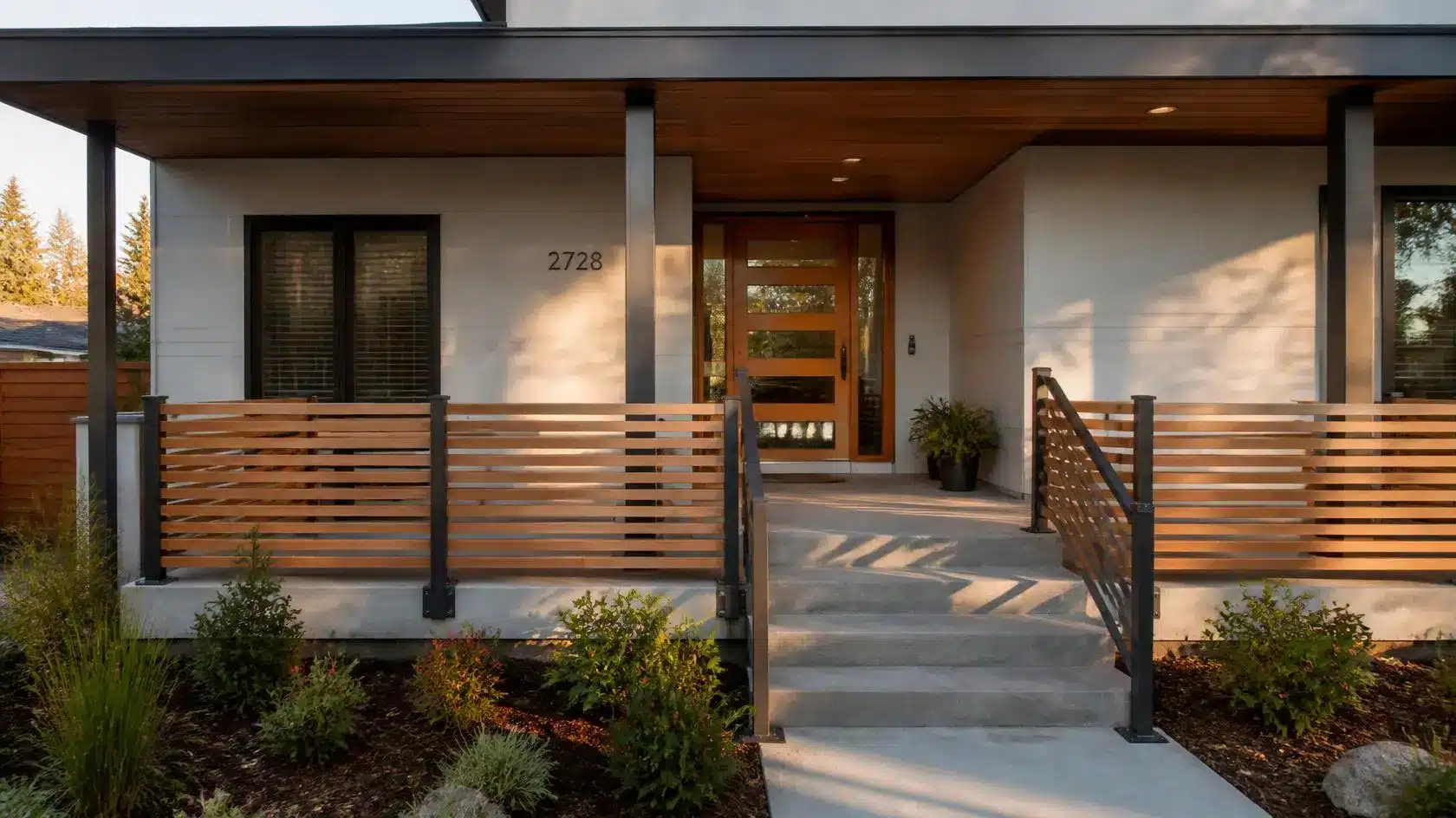
If your home has a modern or contemporary vibe, this one’s going to feel like it was made for you.
Horizontal wood slat railings swap out the traditional look for clean, evenly spaced lines that keep your porch feeling open, airy, and effortlessly stylish without overdoing it. Before you finalize the spacing, it helps to check current deck railing height codes, since porch railings above a certain height are held to the same rules.
- Cost: Moderate; natural wood slats with dark or metal posts stay budget-friendly
- Best for: Contemporary, mid-century, and minimalist home styles
- Style: Natural wood slats paired with black posts for a sleek, high-end finish
7. Black trim with warm wood tones
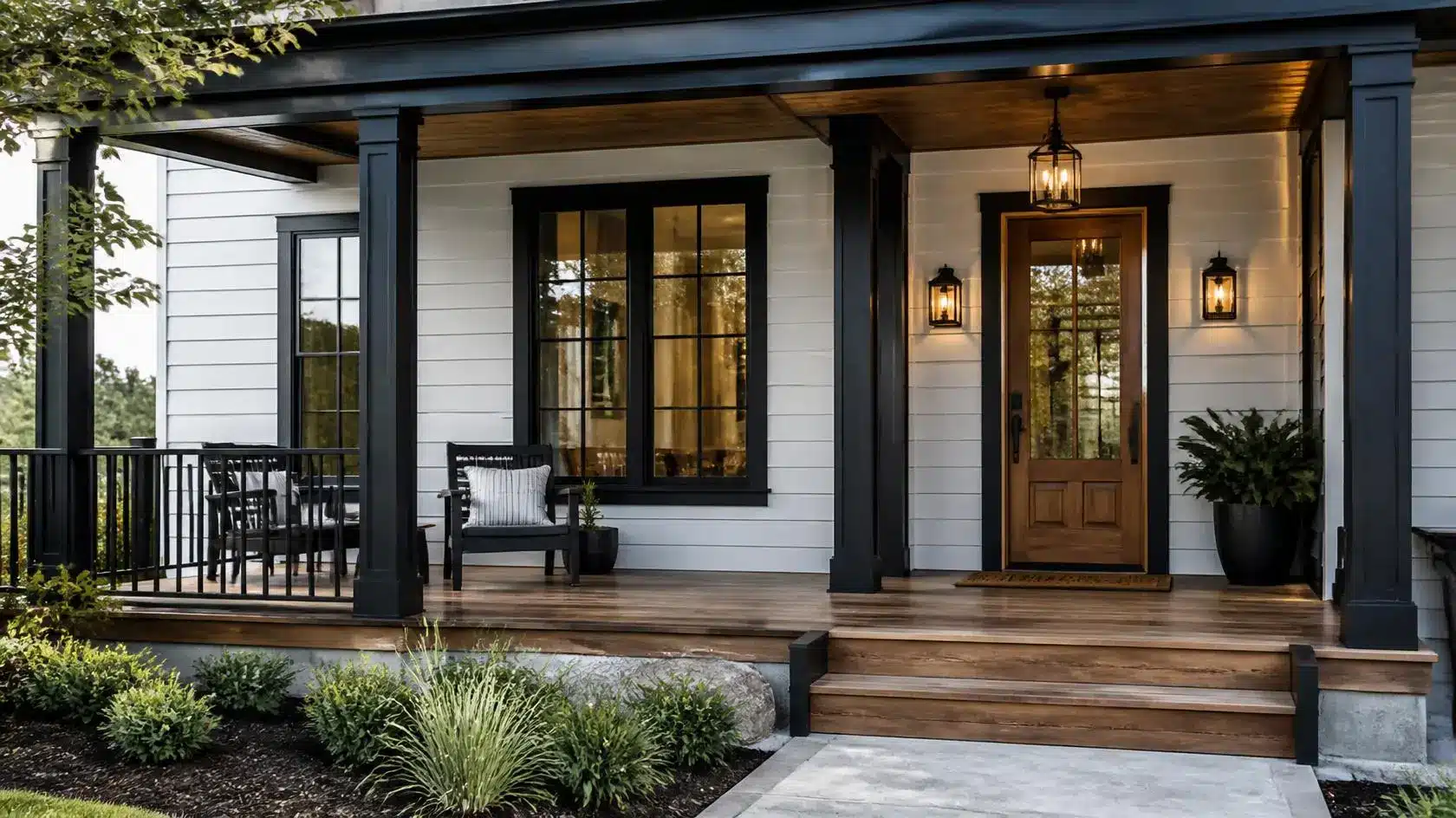
If you’ve ever scrolled past a porch and thought “what makes that look so good? “This is probably it. Black trim paired with warm wood tones creates that bold, high-contrast look that works beautifully against white, gray, or beige siding without ever feeling too much.
- Cost: Budget-friendly, mostly a finishing and paint choice rather than a structural one
- Best for: Modern farmhouse, contemporary, and transitional home styles
- Style: Deep black trim with warm wood flooring or beams for a striking, balanced contrast
8. Floating wood steps
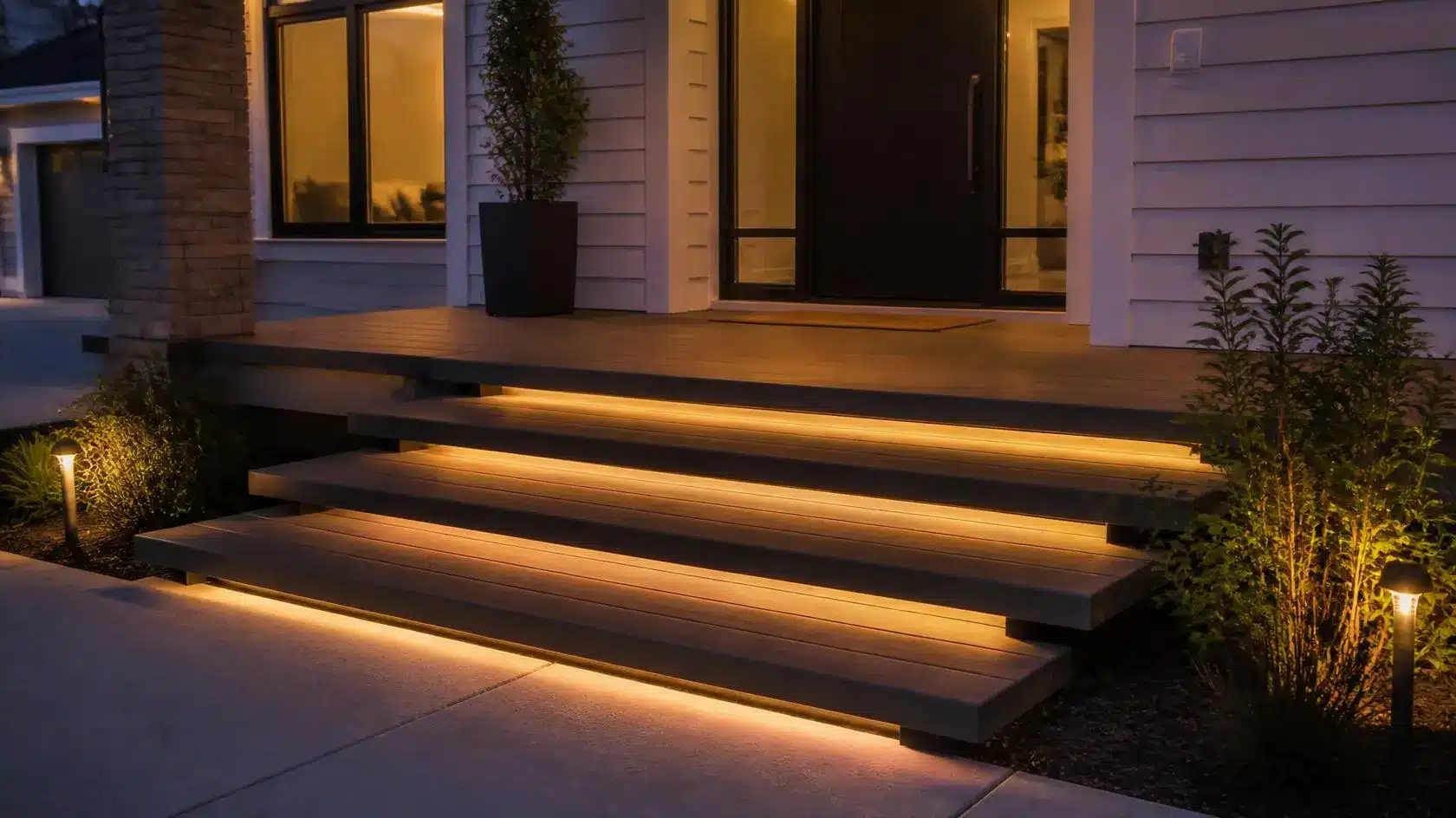
If you want your porch entrance to stop people in their tracks, floating wood steps are the way to do it. The open spacing between each step gives the illusion that they’re suspended in mid-air, and that one detail makes your whole entrance feel modern, clean, and genuinely unique.
- Cost: Moderate to high; requires precise construction and outdoor-rated wood
- Best for: Low-rise porches and contemporary home styles
- Style: Open-riser steps with optional built-in LED lighting underneath for a warm nighttime glow
9. Wood paired with concrete
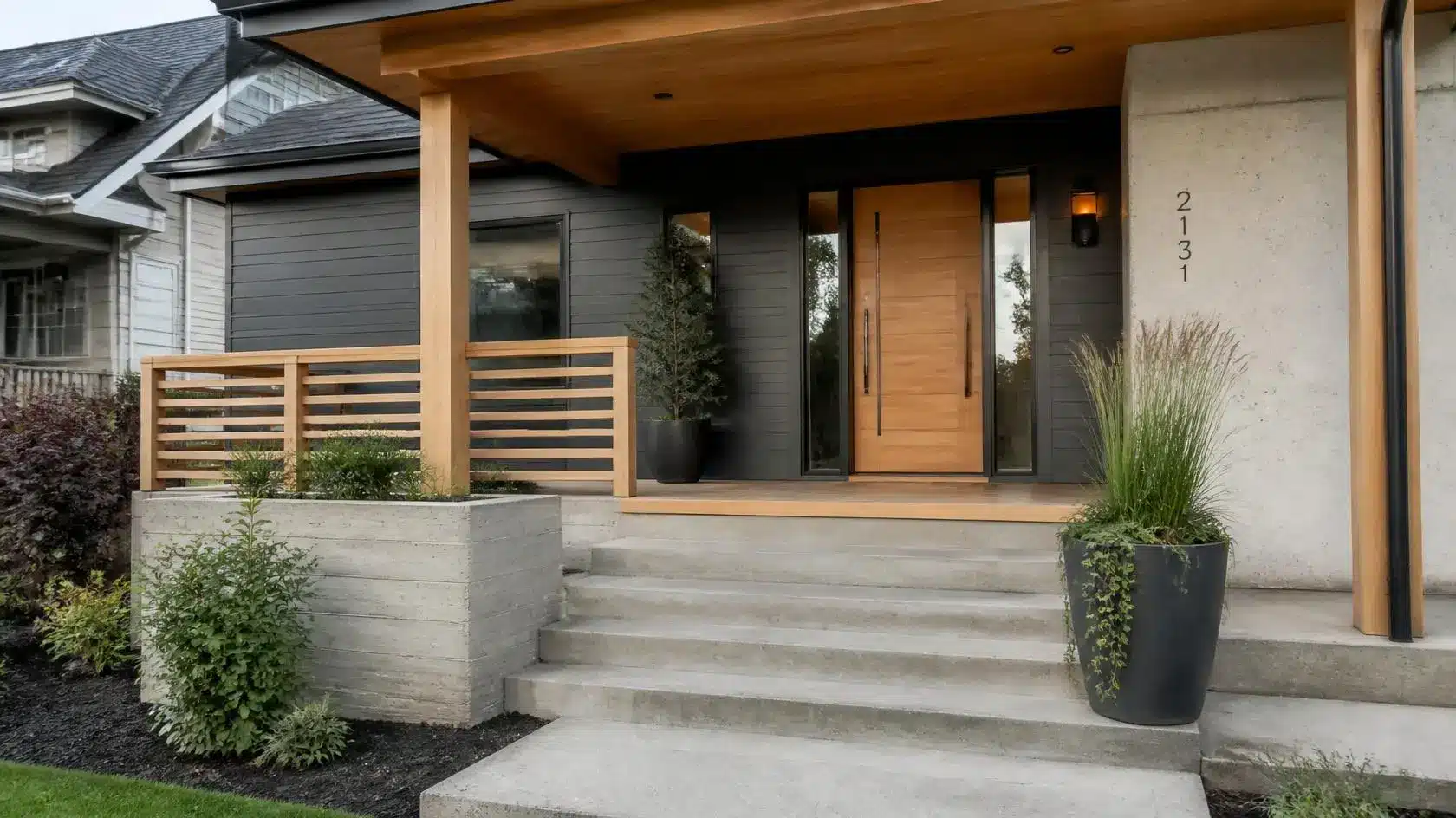
Can’t choose between the warmth of wood and the clean edge of concrete? You don’t have to. This combination gives you the best of both worlds; concrete handles the durability, while wood softens the look and makes your porch feel like an actual place you want to sit in, not just walk through.
- Cost: Moderate, depending on concrete work and wood elements used
- Best for: Contemporary, minimalist, and modern farmhouse home styles
- Style: Wood decking, steps, or benches layered over concrete for a balanced, modern finish
10. Wide-plank porch decking
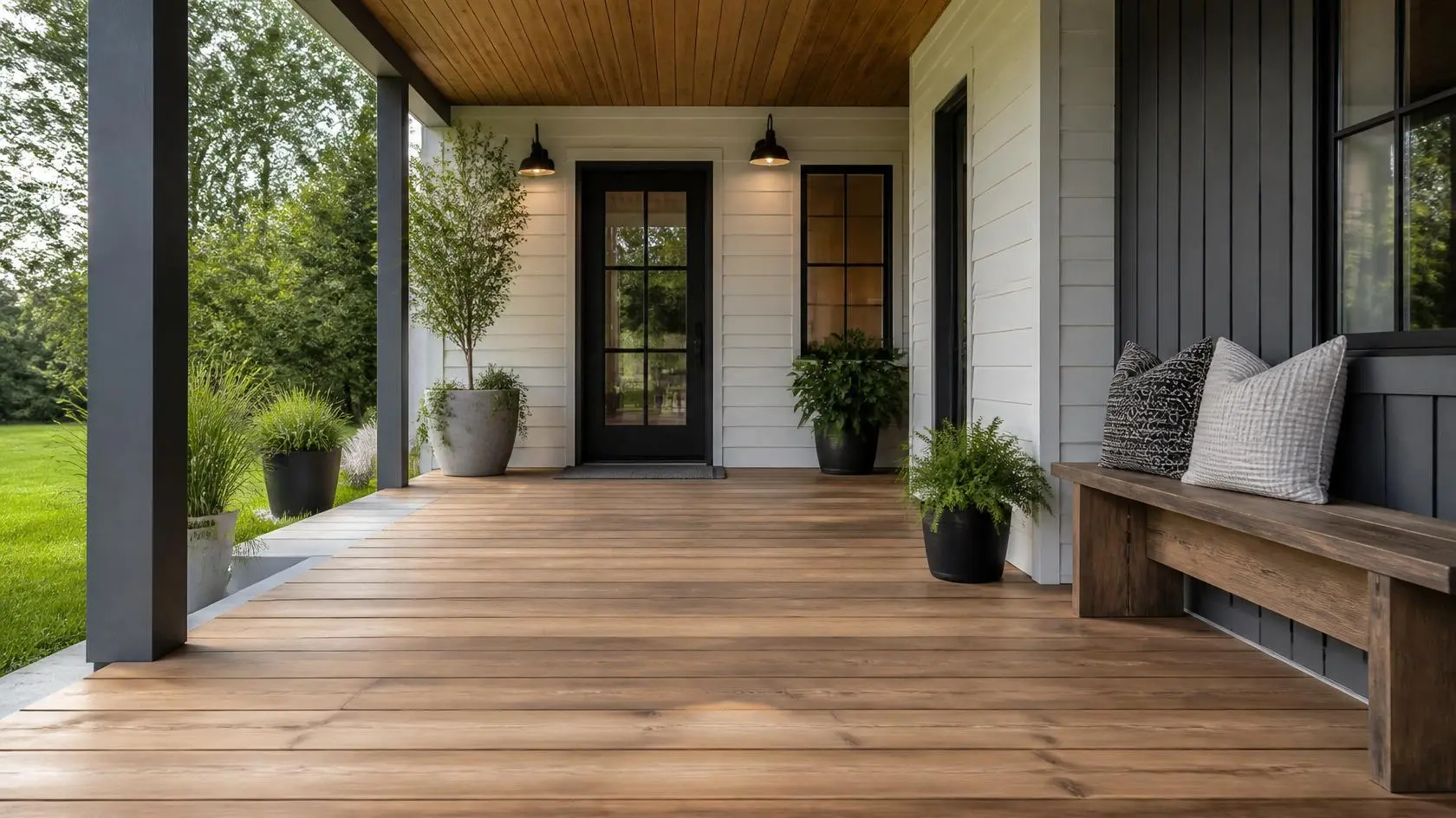
Sometimes it’s the floor that makes the whole porch. Wide-plank decking uses broader boards that reduce seams and let the natural wood grain do all the talking. The result is a surface that feels smoother, more spacious, and honestly just more premium than standard decking ever could.
- Cost: Moderate to high; wider boards cost more but require fewer of them
- Best for: Farmhouse, Craftsman, and contemporary home styles
- Style: Broad, smooth boards that highlight natural wood grain for a refined, spacious finish
11. Built-in bench seating
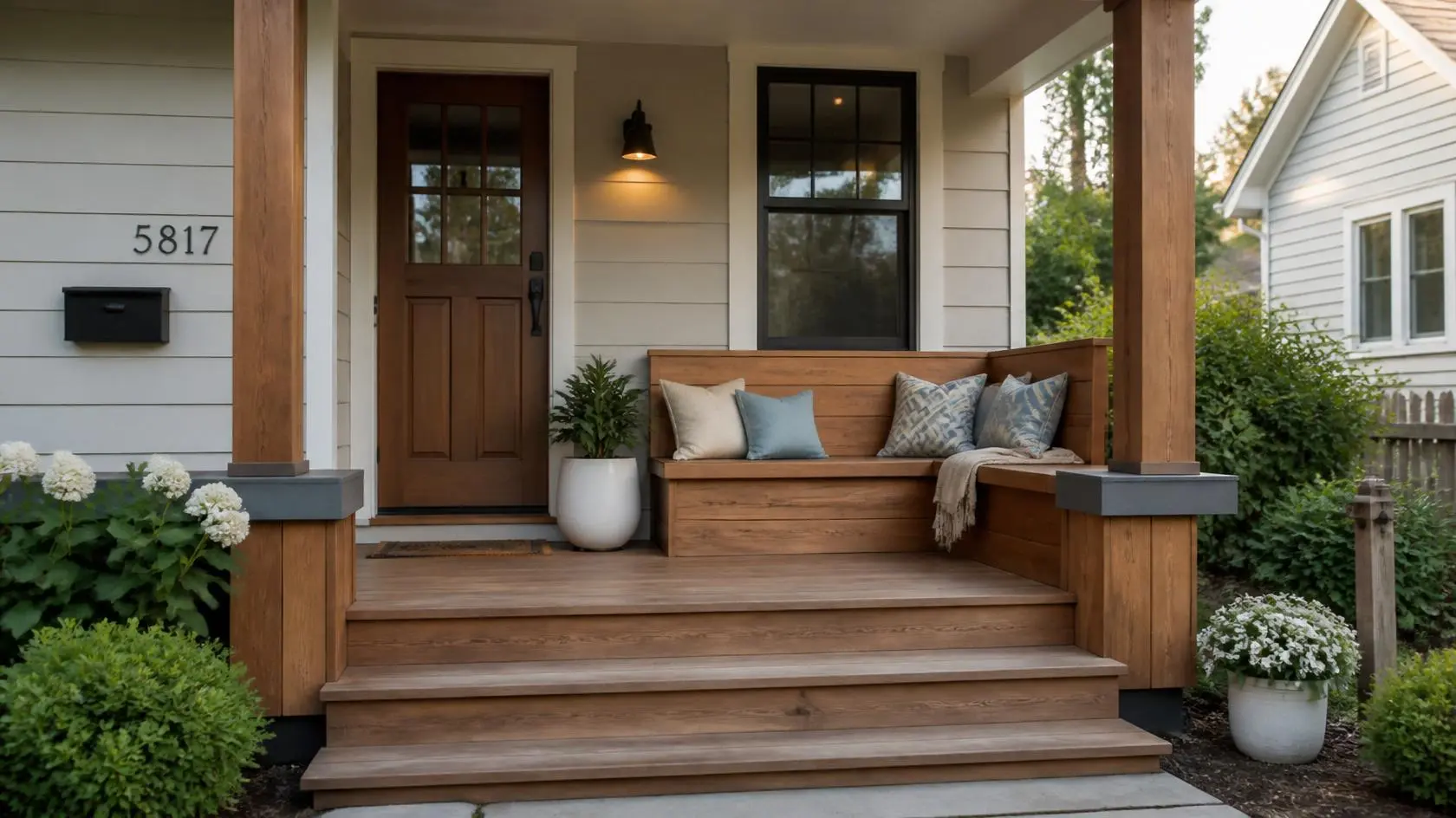
If your porch is on the smaller side, this one’s a game changer for you. Built-in benches sit flush against your walls or railings, giving you comfortable seating without eating up your floor space. Add some outdoor cushions underneath for storage and you’ve got a porch that’s as practical as it is cozy.
- Cost: Budget-friendly, especially when built during initial porch construction
- Best for: Small porches, farmhouse, Craftsman, and modern wooden home styles
- Style: Clean, built-in look with optional storage underneath and cushions on top
12. Wood Porch With Integrated Planter Boxes
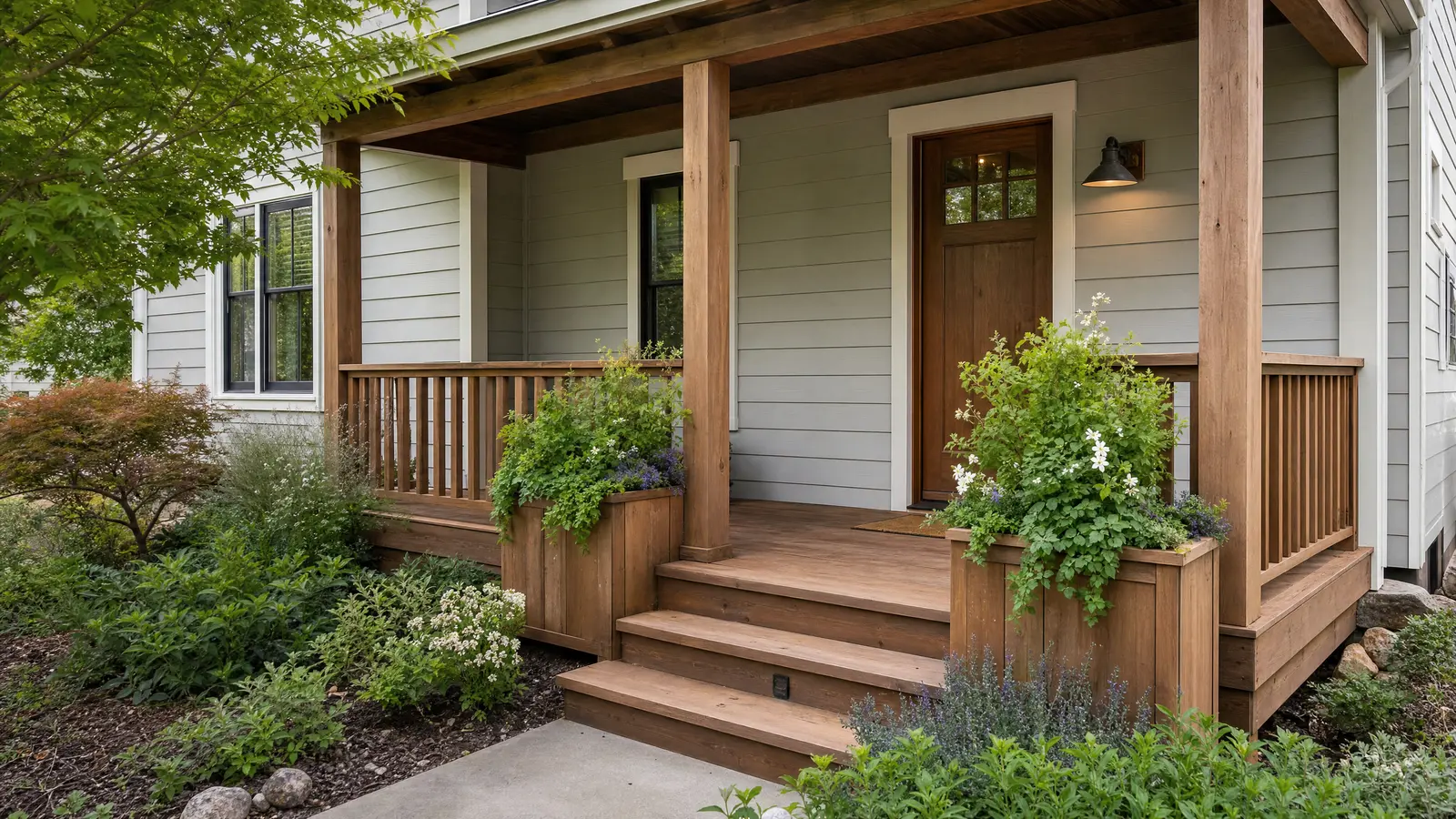
If you’ve always wanted your porch to feel a little more alive, built-in planter boxes are exactly what you need. They sit neatly along the edges, beside your steps, or under your railings, adding greenery and color to your entrance without taking up a single inch of your walking space.
- Cost: Budget-friendly, especially when built with cedar or sealed wood during construction
- Best for: Small porches where floor space is limited
- Style: Low flowers, herbs, or compact shrubs that frame your entrance without overwhelming it
13. Exposed timber beams
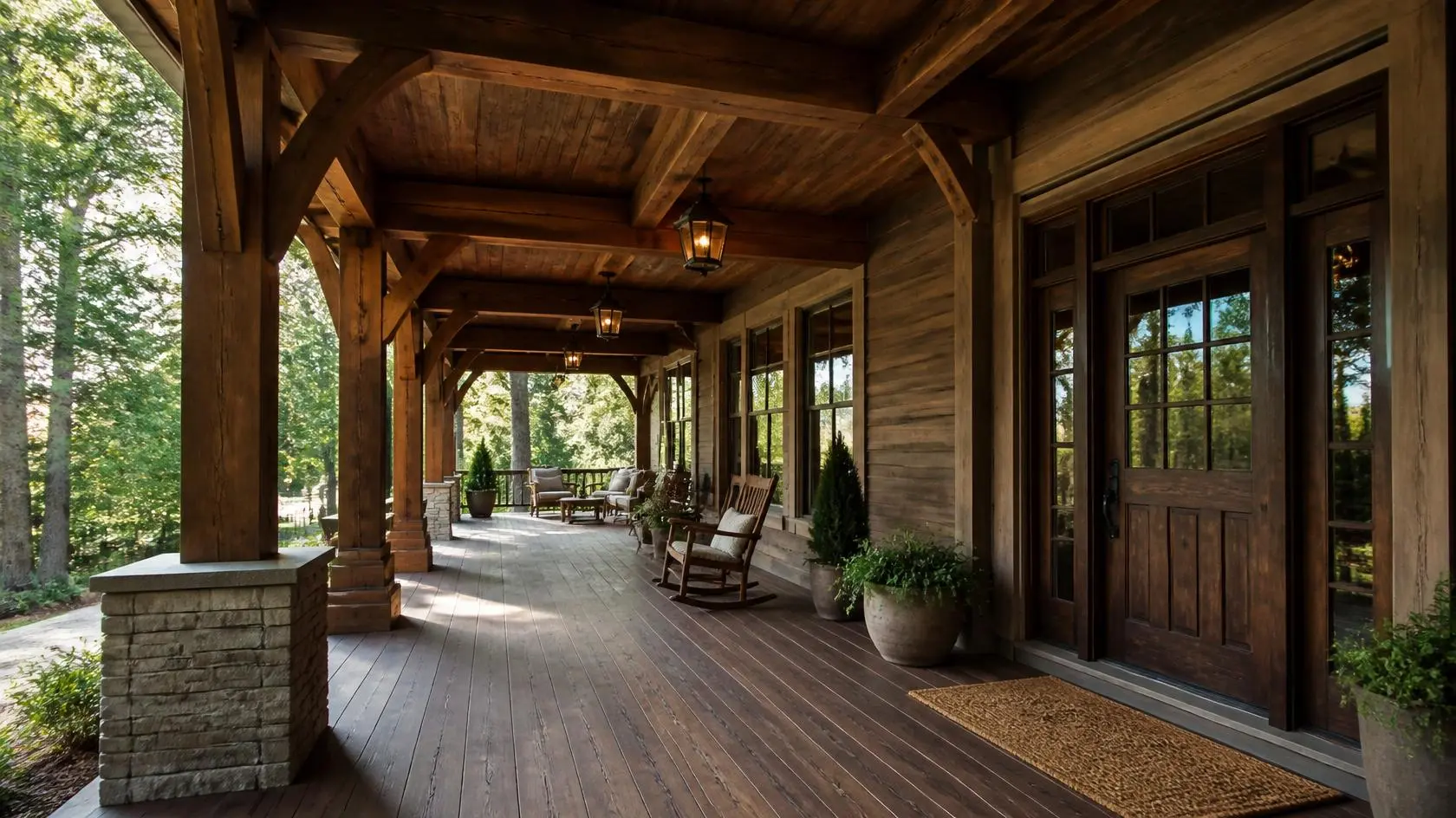
There’s something about exposed timber beams that makes a porch feel like it was built to last a lifetime. They draw your eye upward, show off the natural structure of your ceiling, and add that handcrafted, rugged warmth that you simply can’t fake with any other material or finish.
- Cost: Moderate to high; depends on beam size, wood species, and installation
- Best for: Farmhouse, rustic, and Craftsman-style homes
- Style: Thick visible wood beams on the ceiling that add texture, warmth, and architectural character
14. Small Gable Roof Porch
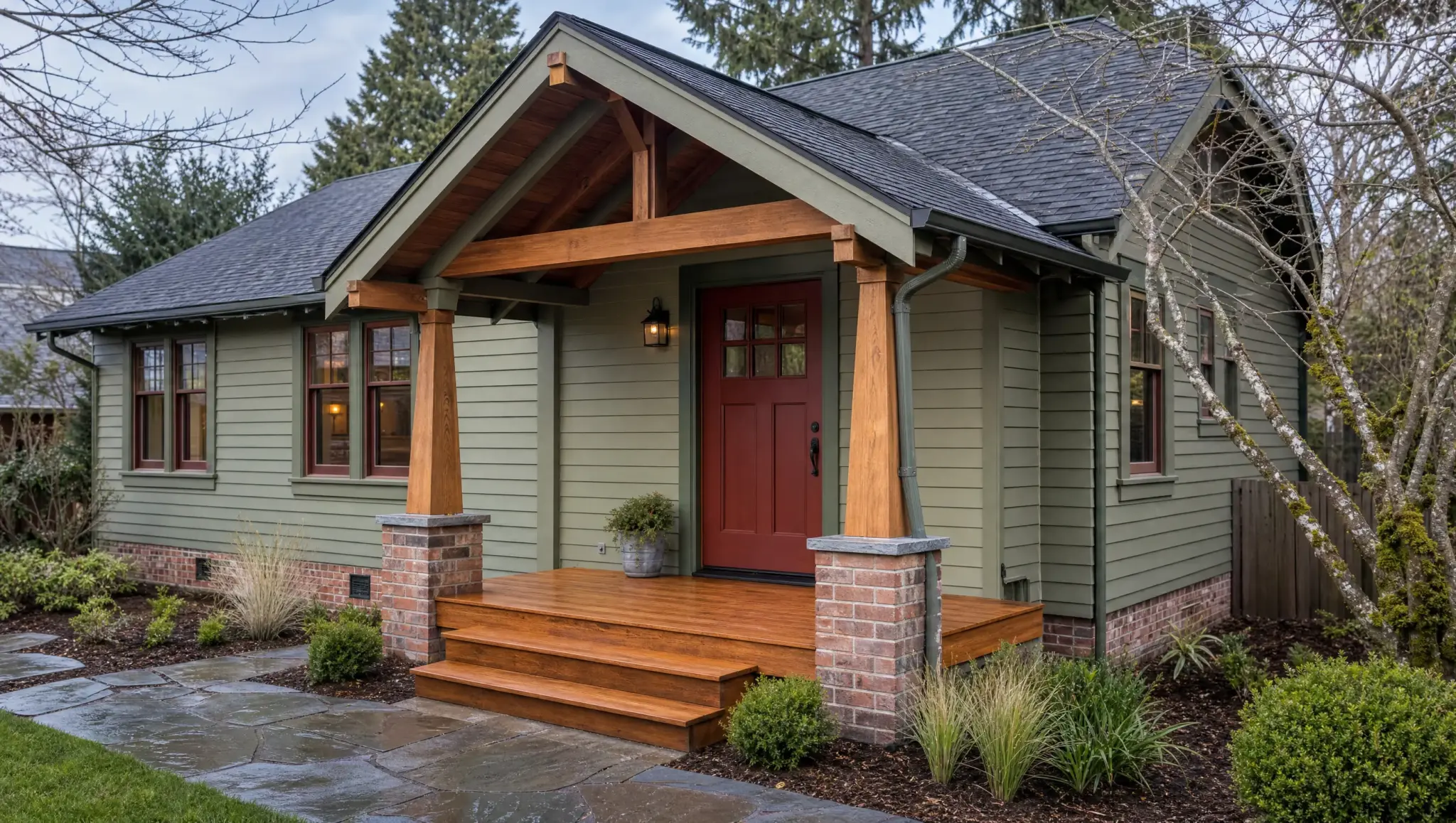
If your front entrance feels a little plain and undefined, a small gable roof is one of the simplest ways to fix that. That classic triangular shape above your door instantly creates a focal point that makes your whole home look more finished, more intentional, and a whole lot more inviting.
- Cost: Moderate; compact size keeps costs manageable compared to full covered porches
- Best for: Traditional homes, cottages, farmhouses, and Craftsman-style houses
- Style: Triangular roof paired with wooden posts and exposed rafters for a clean, defined entrance
15. Small Screened Wooden Porch
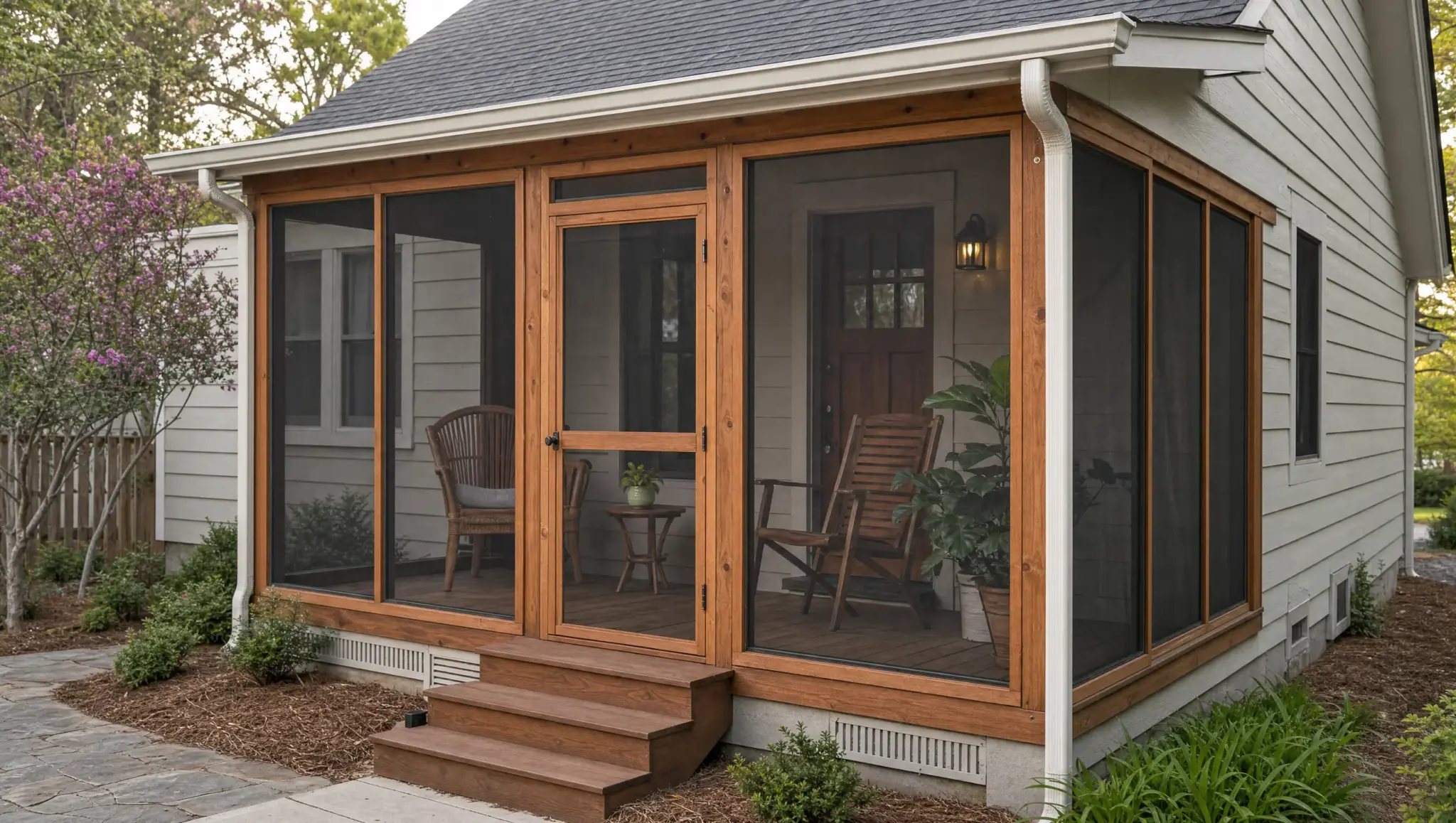
If bugs, leaves, and light rain have been keeping you from actually enjoying your porch, this one solves all of that. A screened wooden porch gives you that comfortable outdoor feeling you’ve always wanted- fresh air, natural light, and your morning coffee- without anything uninvited joining you.
- Cost: Moderate- simple wood framing and durable screens keep it affordable
- Best for: Homeowners in humid, buggy, or rainy climates
- Style: Simple wood framing with durable screens and comfortable furniture for a cozy, private outdoor space
Common Wood Front Porch Mistakes
Small porch mistakes can lead to safety issues, early damage, and unnecessary repairs. Check these common problems before building or updating your porch.
| Mistake | Problem | Better Choice |
|---|---|---|
| Untreated wood | Can crack, swell, fade, or rot. | Use exterior-grade wood with paint, stain, or sealer. |
| Poor drainage | Causes standing water, mold, and slippery boards. | Maintain proper slope, board gaps, gutters, and airflow. |
| Small posts | May look uneven or lack proper support. | Match post size to the porch and roof load. |
| Slippery finishes | Become unsafe when wet or icy. | Choose textured, slip-resistant outdoor finishes. |
| Too much furniture | Blocks movement and makes the porch feel crowded. | Use furniture of the correct size and keep paths clear. |
Correcting these details early helps protect the wood, improve safety, and keep the porch practical, balanced, and easier to maintain.
Wooden Porch Maintenance Tips
Regular maintenance protects wooden porch surfaces from moisture, sunlight, insects, and daily wear while preserving their color, strength, safety, and overall appearance.
- Sweep and wash regularly: Remove dirt, leaves, pollen, and debris, then clean the decking with a mild wood-safe solution to prevent staining and moisture buildup.
- Inspect for damage: Check boards, railings, columns, steps, and fasteners for cracks, splinters, looseness, rust, rot, or signs of insect activity.
- Reseal exposed wood: Apply a suitable exterior wood sealer every few years, depending on the product, climate, sun exposure, and condition of the finish.
- Repair peeling finishes: Sand loose paint or stain, prepare the surface carefully, and apply a compatible exterior coating before moisture reaches the bare wood.
- Improve water drainage: Keep gutters clear, direct downspouts away from the porch, and prevent planters, rugs, or furniture from trapping moisture against wooden surfaces.
- Control plant growth: Trim shrubs and climbing plants away from posts, railings, and decking to improve airflow and reduce prolonged dampness or insect access.
- Protect high-traffic areas: Use outdoor mats carefully, move furniture occasionally, and repair worn steps or loose boards before minor damage becomes a safety concern.
A simple seasonal inspection and timely repairs can extend the porch’s lifespan, reduce expensive structural problems, and keep the entrance looking clean and welcoming.
Final Porch Thought
A well-planned porch should improve your entrance, suit the house, and remain practical through use. I believe the best design is not always the largest or most expensive one. It is the option that fits your space, budget, climate, and maintenance routine.
The wood front porch ideas covered here show how decking, columns, railings, steps, seating, planters, and contrasting materials can shape the final look. Proper drainage, exterior finishes, regular cleaning, and timely repairs also help protect the structure and preserve its appearance.
Choose the feature that would make the biggest difference to your entrance, then build the design around it. Try your favorite idea and share which porch style suits your home best.
Frequently Asked Questions
Should a wooden porch be painted or stained?
Paint offers stronger color coverage, while stain highlights the wood grain and is often easier to refresh as the surface ages.
Can wood decking be paired with metal railings?
Yes, metal railings can add contrast, reduce visual bulk, and give a wooden porch a cleaner modern or transitional appearance.
How can you add privacy to an open front porch?
Use wood screens, slatted panels, tall planters, outdoor curtains, or carefully positioned climbing plants without fully enclosing the space.
What lighting works best for a wooden front porch?
Wall sconces, recessed ceiling lights, step lights, and warm LED fixtures improve safety while creating a comfortable, welcoming entrance.
Which porch colors make a small entrance feel larger?
Light stains, soft neutrals, white railings, and limited contrast can make a compact porch appear brighter, wider, and less crowded.