

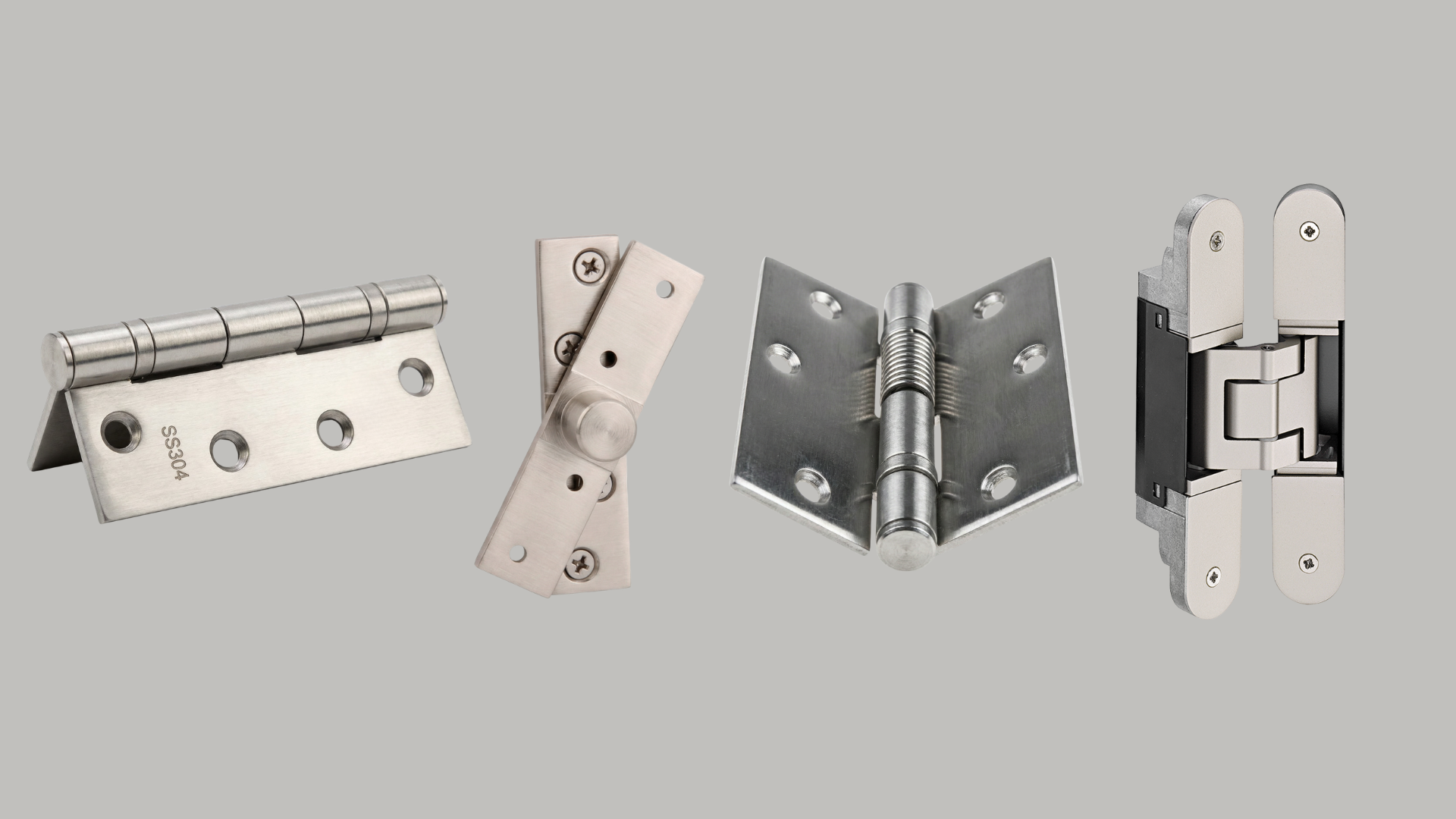
Hinges are small parts that play a big role in how doors and cabinets open and close. They allow smooth movement, support weight, and help keep panels aligned over time.
In homes and commercial spaces, the right hinge can affect durability, appearance, and overall performance.
At that point, understanding the options becomes important. There are many types of hinges designed for different purposes and materials.
This guide provides clear information to help readers understand how hinges differ and why selecting the correct type matters for long-term function and reliability.
What is a Hinge?
A hinge is a mechanical device that connects two solid parts and allows them to rotate around a fixed axis.
In most homes, hinges are used on doors, cabinets, gates, windows, and storage boxes. While they look simple, hinges are carefully designed to handle weight, repeated movement, and long-term wear.
Most hinges consist of two plates, called leaves, joined by a central pin. The pin allows the leaves to pivot.
When installed correctly, the hinge supports the door or panel and keeps it aligned with the frame. The type of hinge used affects strength, range of motion, and visibility of the hardware.
The Importance of Selecting the Proper Hinge
Selecting the correct hinge is not just about appearance. It directly impacts:
- Load capacity
- Smoothness of movement
- Noise level
- Security
- Durability
- Ease of installation
Using the wrong hinge can cause sagging doors, loose screws, poor alignment, or early failure. For cabinets, an incorrect choice can affect how the doors open and close. For entry doors, it can affect security and safety.
Door Hinges Types
Doors are heavier than cabinet panels, so they require stronger hinges. Below are the most common types of door hinges used in residential and commercial buildings.
1. Butt Hinges
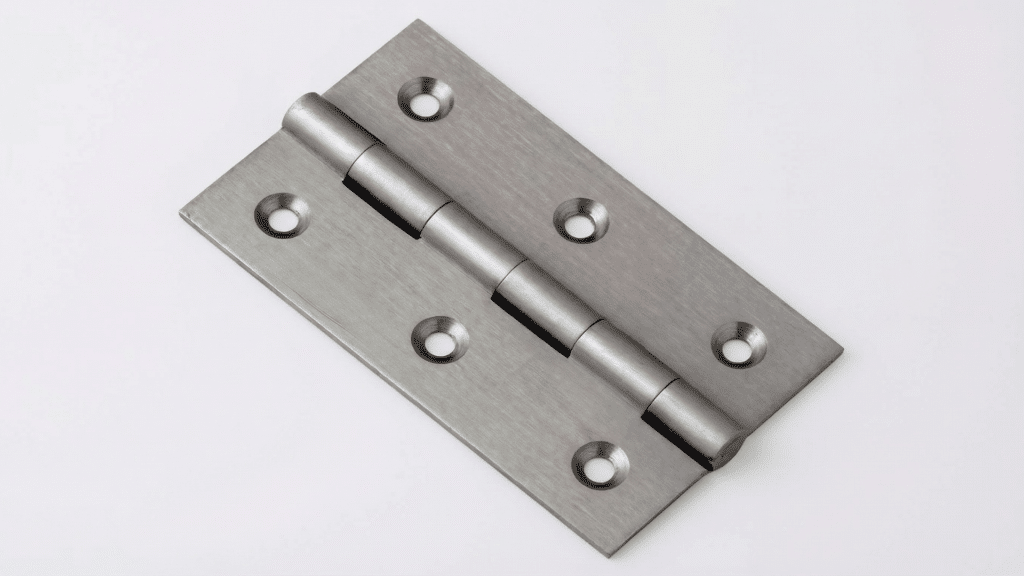
Butt hinges are the most common door hinge type. They are used on interior and exterior doors.
Key Features:
- Two rectangular leaves
- A central pin
- Mounted into a recess (mortise) in the door and frame
When the door is closed, only the barrel (the knuckle) is visible. Butt hinges come in different sizes and materials depending on the door weight.
They are strong, reliable, and easy to replace. Most standard home doors use three butt hinges for proper support.
2. Ball Bearing Hinges
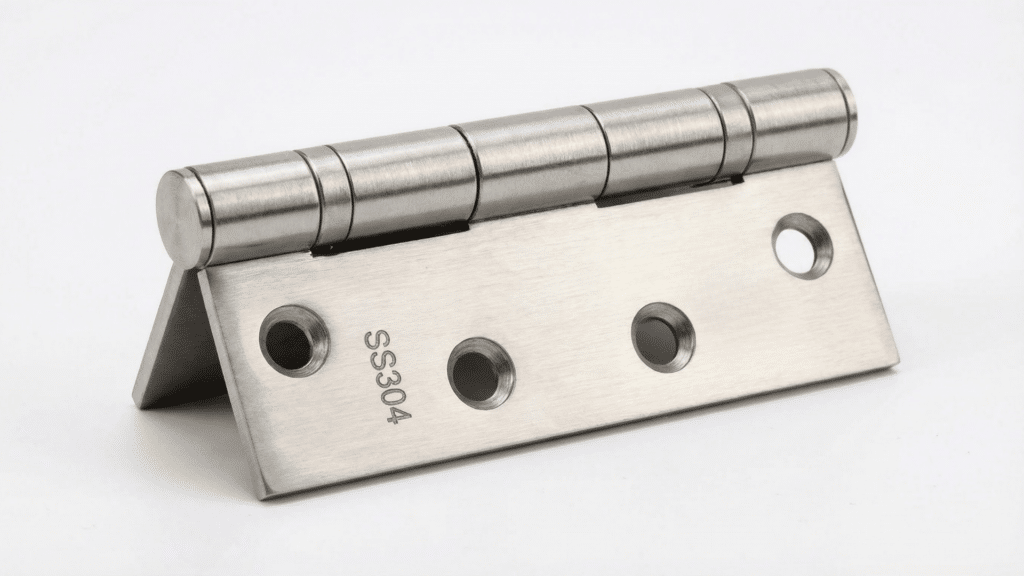
Ball bearing hinges are a heavy-duty version of butt hinges. They include small ball bearings between the knuckles.
Why They Matter:
- Reduce friction
- Provide smoother movement
- Handle heavier doors
- Increase durability
These hinges are often used on exterior doors or high-traffic areas where doors open and close frequently. They last longer than standard butt hinges and are less likely to squeak.
3. Spring Hinges
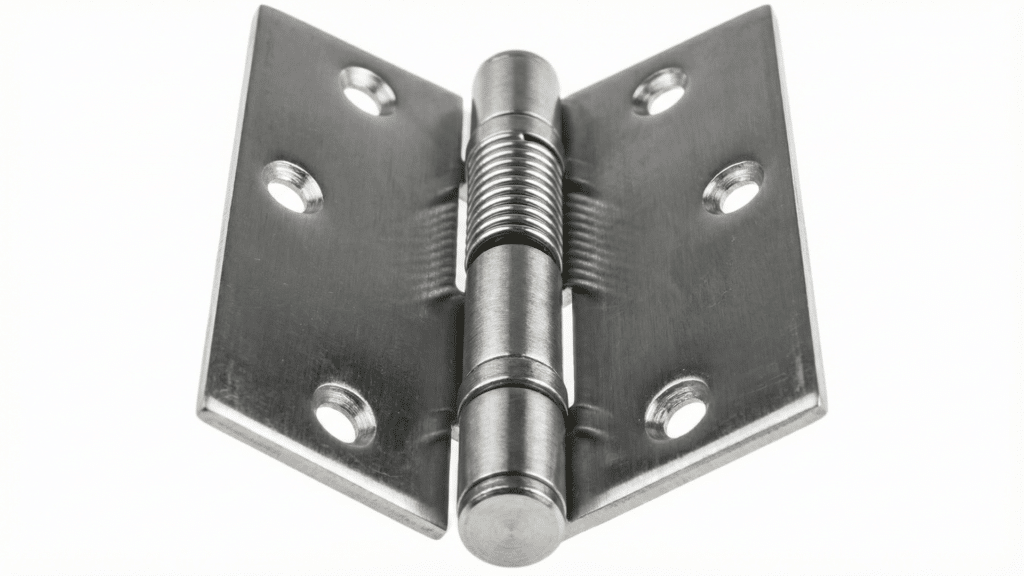
Spring hinges close the door automatically using a built-in spring mechanism.
Common Uses:
- Garage doors
- Screen doors
- Fire-rated doors
- Commercial buildings
These hinges can be adjusted to control closing speed. They improve safety by ensuring the door does not remain open.
4. Continuous Hinges (Piano Hinges)
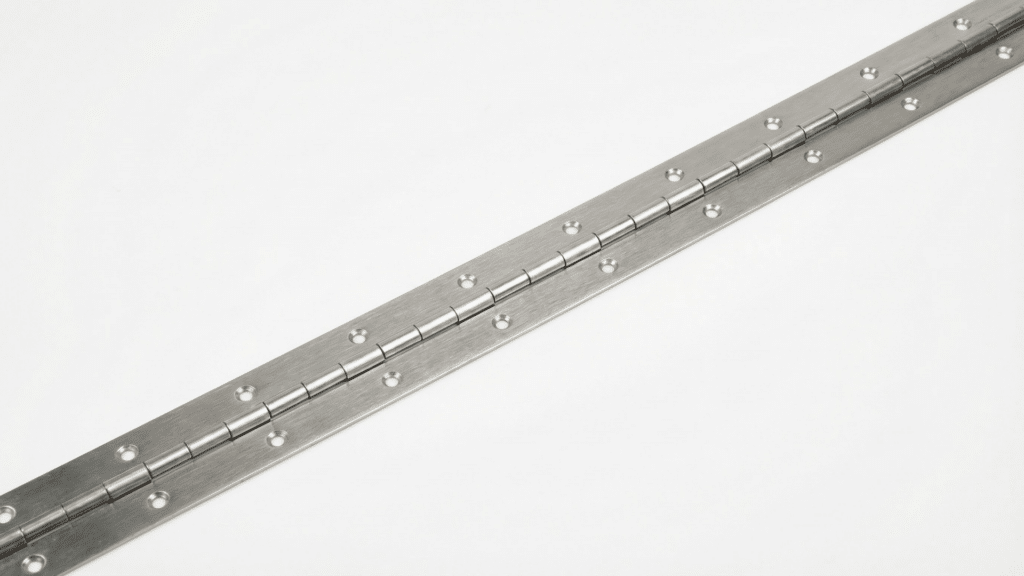
Continuous hinges run along the full length of the door. They are also known as piano hinges.
Advantages:
- Even weight distribution
- Increased strength
- Reduced stress on screws
They are often used for heavy doors, security doors, or long panels. Because the weight is spread across the entire length, sagging is less likely.
5. Concealed Door Hinges
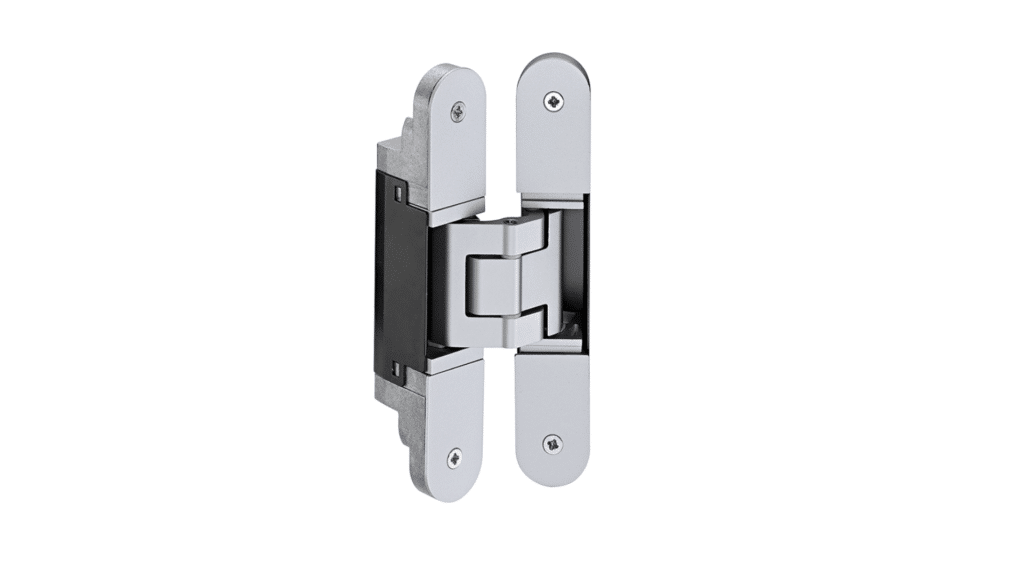
Concealed hinges are hidden when the door is closed. They are common in modern and minimalist designs.
Benefits:
- Clean appearance
- Improved security
- Hidden hardware
These hinges are installed inside the door and frame. They are more complex to install but provide a sleek finish.
6. Pivot Hinges
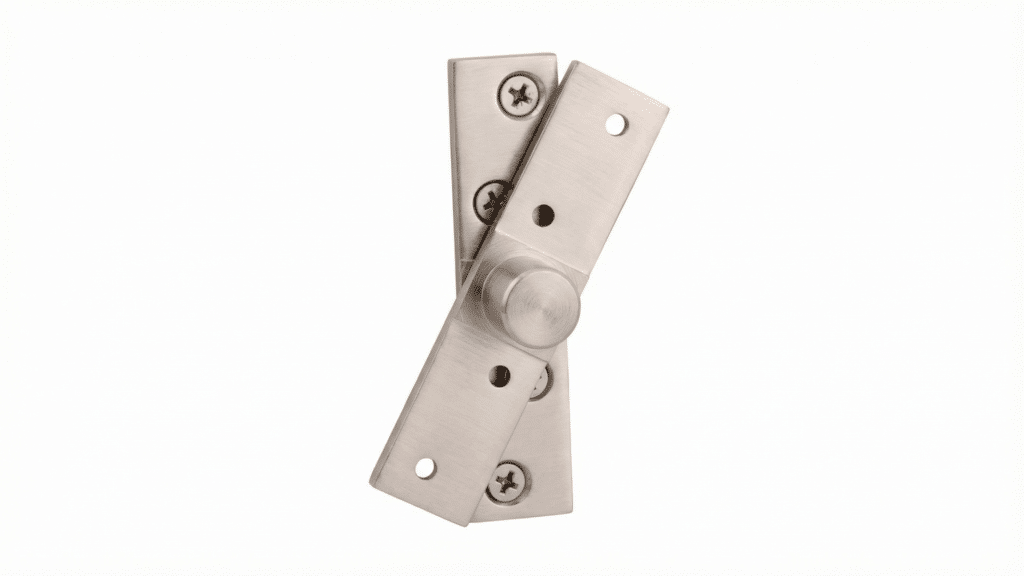
Pivot hinges allow the door to rotate from a point at the top or bottom rather than from the side.
Key Characteristics:
- Modern look
- Supports large doors
- Smooth rotation
They are often used in commercial spaces or high-end homes where a unique door movement is desired.
7. Strap Hinges
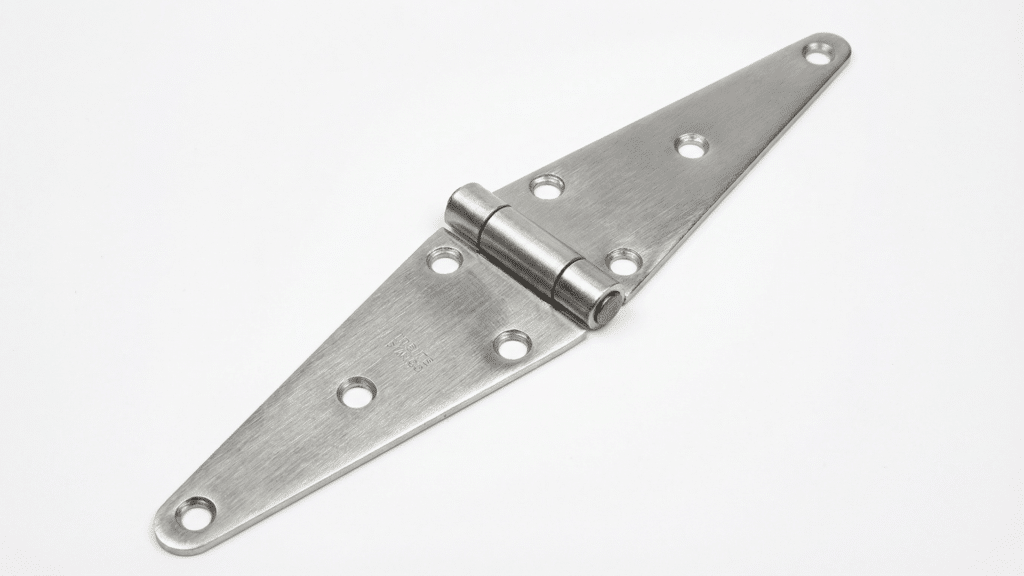
Strap hinges have long, visible arms that extend across the door surface.
Common Applications:
- Barn doors
- Gates
- Rustic designs
They are decorative and functional. The long arms provide strong support, especially for wide or heavy doors.
8. Security Hinges
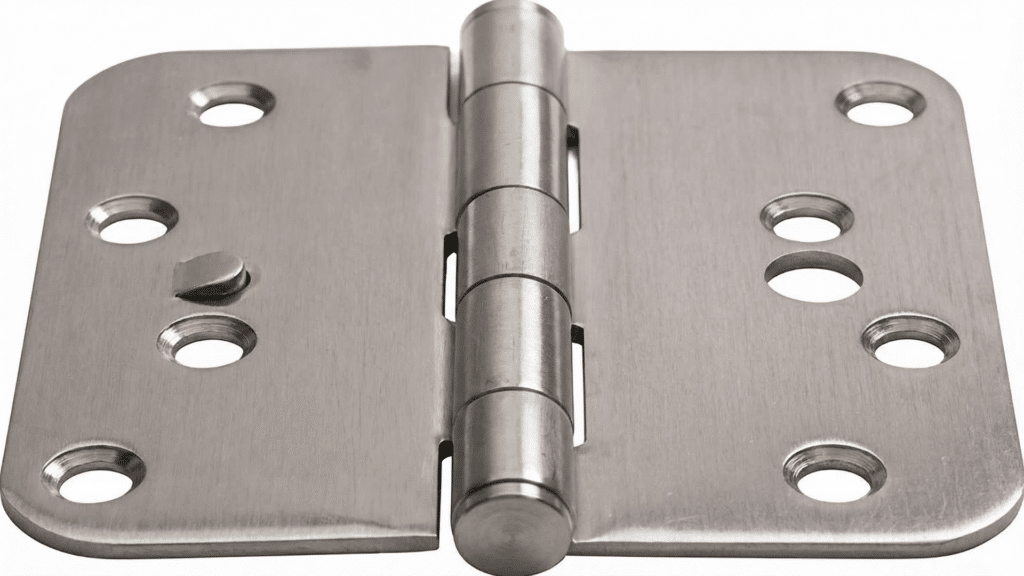
Security hinges are designed to prevent tampering or forced removal.
Security Features:
- Non-removable pins
- Reinforced knuckles
- Heavy-duty materials
These are commonly used for exterior doors where safety is a concern.
9. Rising Butt Hinges
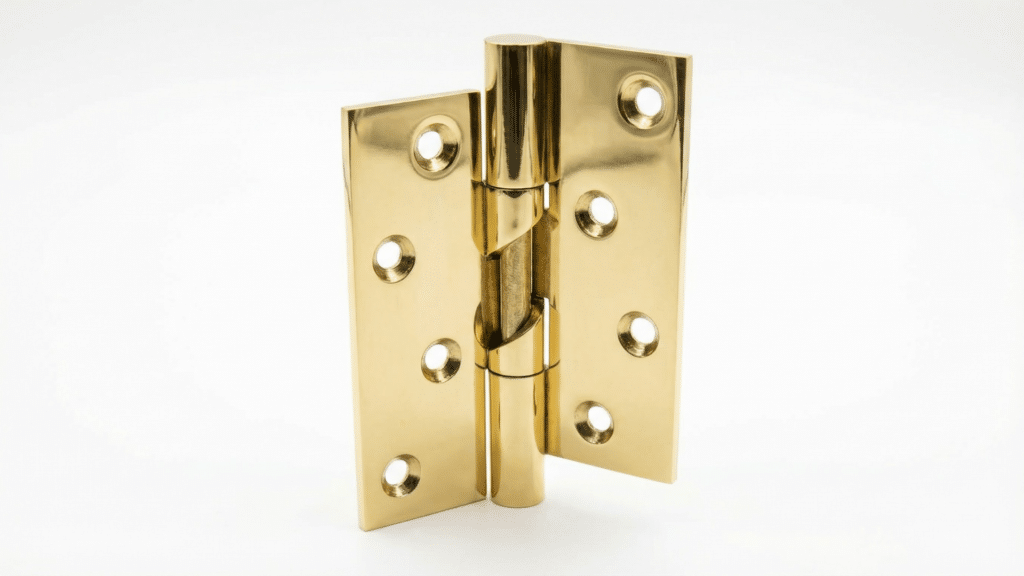
Rising butt hinges slightly lift the door as it opens.
Why Use Them:
- Helps clear thick carpets
- Useful on uneven floors
When the door closes, it settles back into position.
Cabinet Hinges Types
Cabinets require different hinge designs than doors. They are smaller, lighter, and often need to remain hidden. Understanding cabinet hinge types is important for kitchen and furniture projects.
1. Concealed Cabinet Hinges (European Hinges)
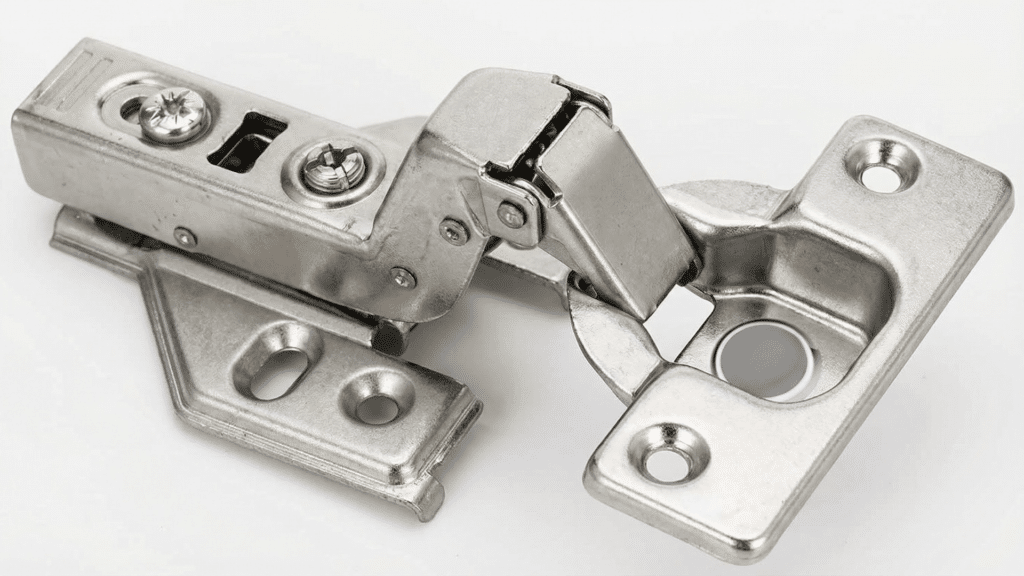
Concealed hinges are the most common cabinet hinge type in modern kitchens.
Key Features:
- Hidden when closed
- Cup installed inside the door
- Adjustable alignment
They provide a clean appearance and allow fine adjustments after installation. Many include soft-close features.
2. Overlay Hinges
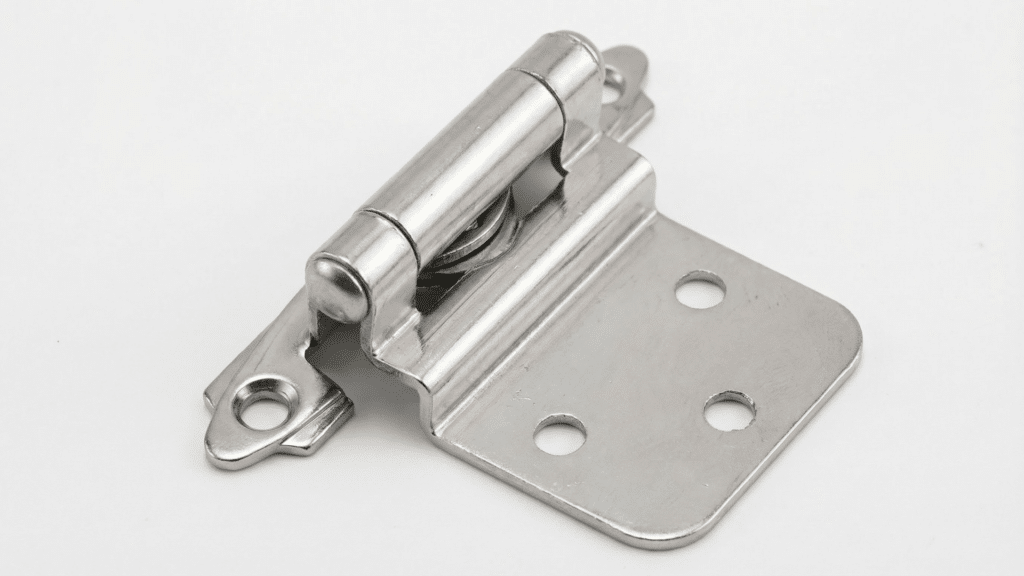
Overlay hinges allow the cabinet door to sit over the cabinet frame.
Types of Overlay:
- Full overlay
- Partial overlay
These hinges are common in frameless cabinets. They help maximize storage space.
3. Inset Hinges
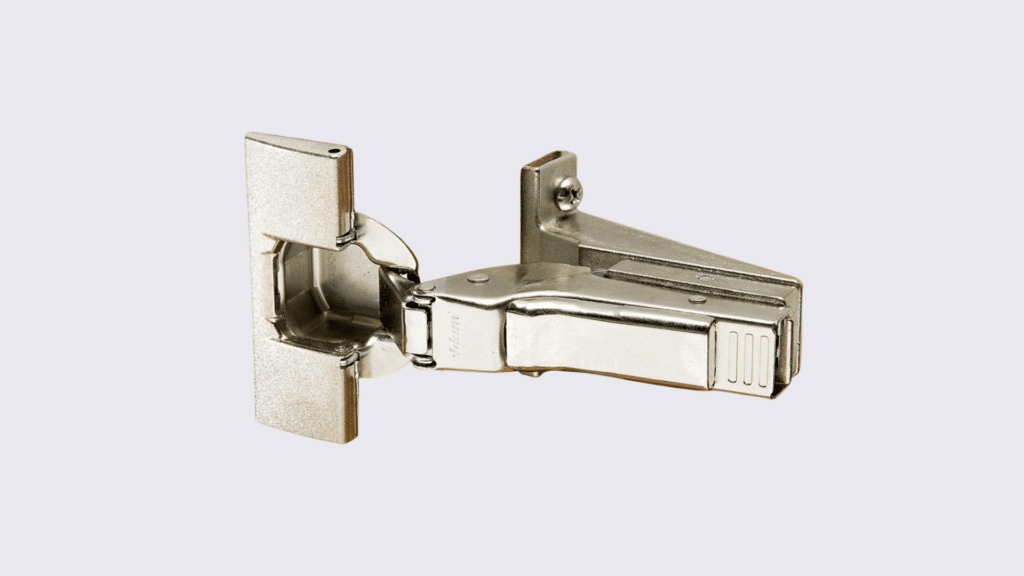
Inset hinges are used when the cabinet door sits flush inside the frame.
Benefits:
- Classic appearance
- Clean lines
- Precise alignment
These hinges require accurate installation because the door must fit perfectly within the frame.
4. Semi-Concealed Hinges
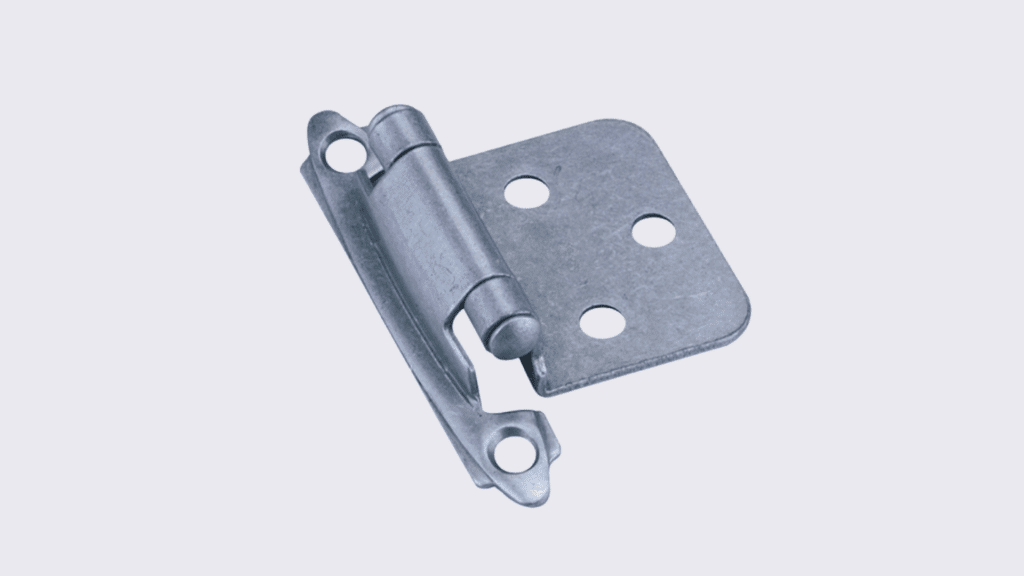
Semi-concealed hinges are partially visible when the cabinet is closed.
Common Uses:
- Face-frame cabinets
- Traditional kitchens
They are easier to install than fully concealed hinges and cost less.
5. Soft-Close Hinges
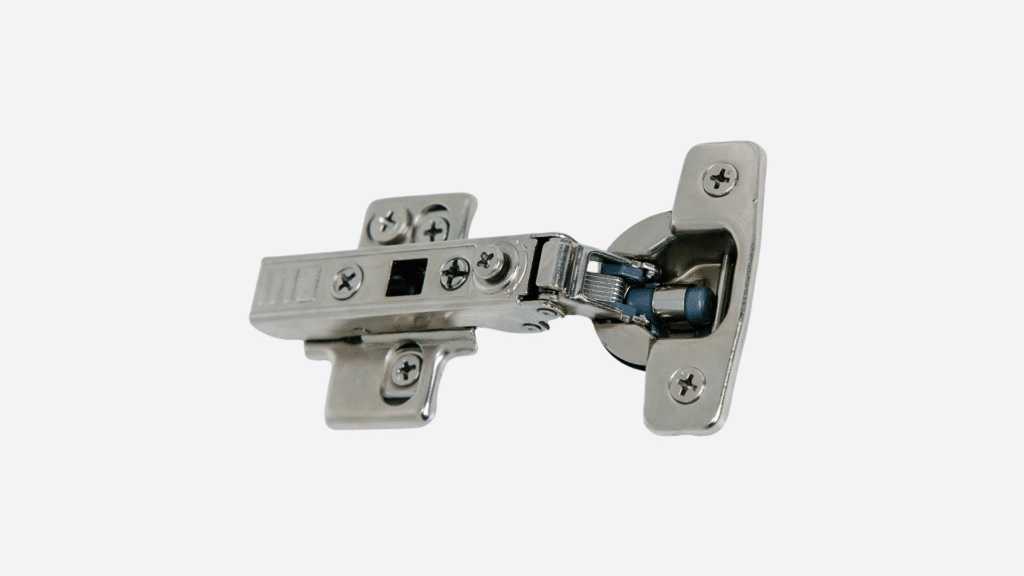
Soft-close hinges prevent cabinet doors from slamming shut.
Why They are Popular:
- Reduce noise
- Protect the cabinet structure
- Increase durability
Many modern cabinet hinge types include built-in soft-close mechanisms.
6. Wrap-Around Hinges
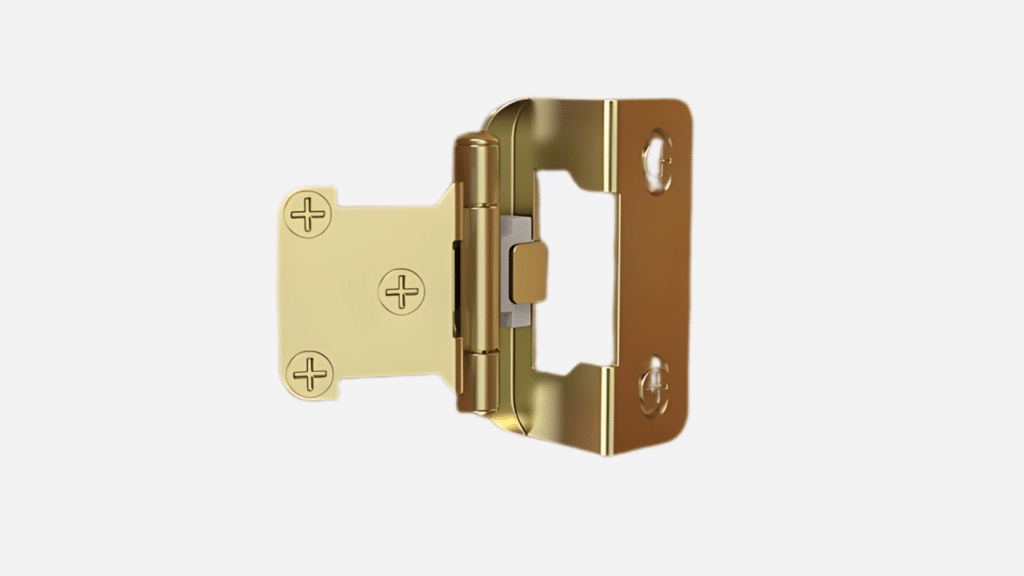
Wrap-around hinges wrap around the cabinet frame for added strength.
Advantages:
- Strong grip
- Easy installation
- Good for face-frame cabinets
They are durable and stable, especially for heavy cabinet doors.
7. Self-Closing Hinges
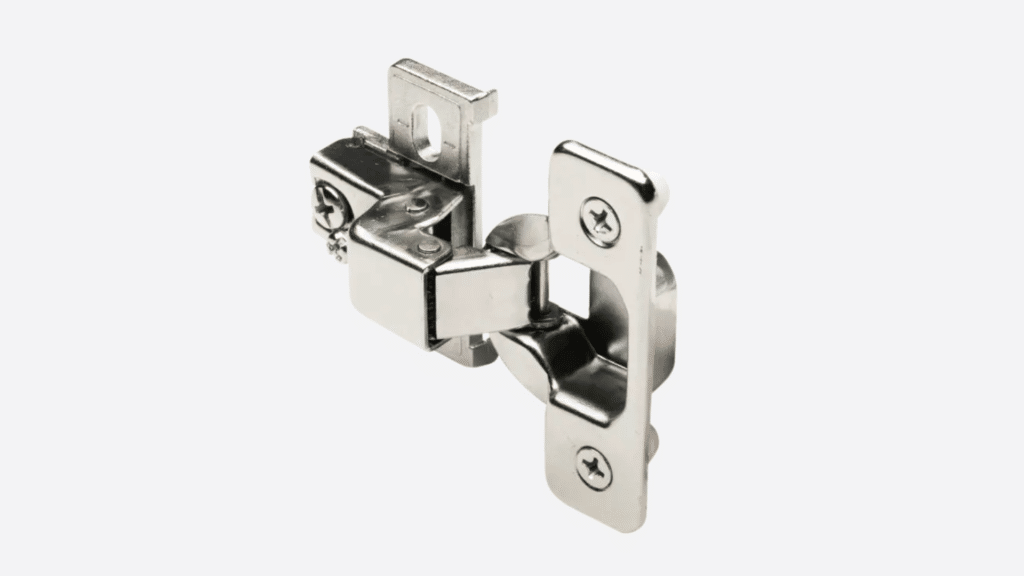
Self-closing hinges are designed to pull the cabinet door shut once it reaches a certain closing point. They contain a built-in spring mechanism that helps guide the door into the closed position.
Advantages:
- Helps prevent doors from staying open
- Improves cabinet alignment over time
- Reduces daily wear from slamming
They are practical in kitchens and bathrooms, where cabinet doors are opened and may be left slightly ajar.
Specialty Hinge Types
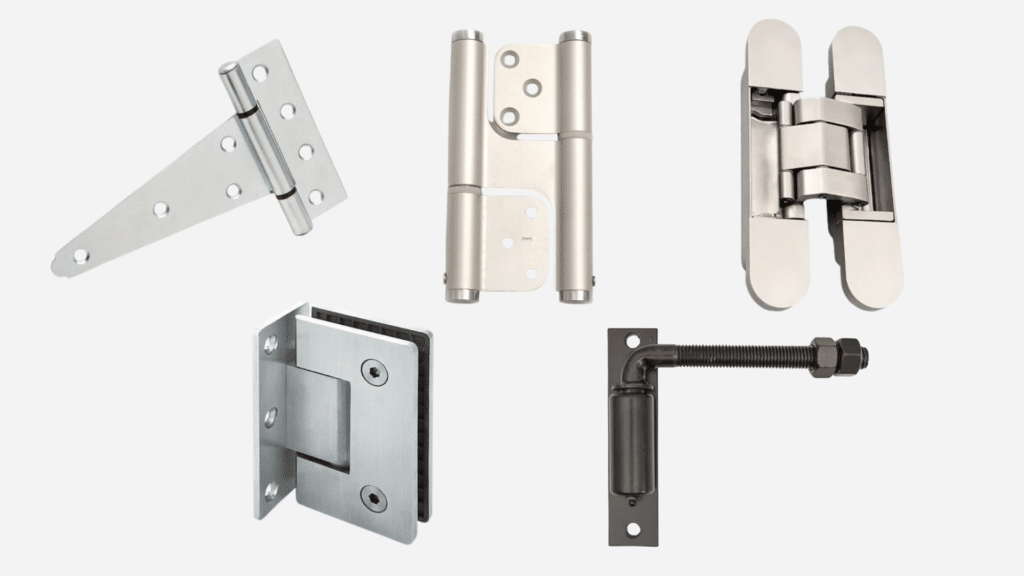
In addition to standard door hinge types and cabinet hinge types, there are specialty hinges designed for specific applications. These hinges serve unique purposes and are often used in custom builds, commercial settings, or decorative projects.
| Specialty Hinge Type | Description | Common Uses | Key Benefits |
|---|---|---|---|
| T-Hinges | T-shaped hinge with a long strap and short leaf. | Sheds, gates, barn doors | Strong support and decorative appearance |
| Double-Acting Hinges | Allows the door to swing in both directions. | Restaurant doors, saloon doors | Two-way movement and convenience |
| Invisible Hinges | Fully hidden inside the door and frame. | Hidden doors, secret panels | Clean appearance and added security |
| Glass Door Hinges | Designed to clamp onto glass without drilling. | Glass cabinets, display cases | Safe glass support and sleek design |
| Heavy-Duty Gate Hinges | Reinforced hinges built for outdoor weight loads. | Driveway gates, metal gates | High load capacity and weather resistance |
Load Capacity and Size Considerations
When selecting door hinge types, consider:
- Door height
- Door thickness
- Door weight
Heavier doors require larger hinges or additional hinges. Standard interior doors often use three 3.5-inch butt hinges. Heavier exterior doors may require ball bearing hinges.
For cabinet hinge types, consider:
- Door thickness
- Overlay style
- Weight of the panel
Installation Considerations
Proper installation is critical for long-term performance. Even a high-quality hinge can fail if it is not installed correctly. Careful measurements and correct placement help prevent alignment issues and early wear.
For Door Hinges:
- Align hinges evenly: Position each hinge straight and level to prevent door sagging.
- Use the correct screw length: Screws should be long enough to anchor securely into the frame studs.
- Ensure proper mortise depth: The hinge should sit flush within the cut-out area to avoid gaps or binding.
- Check door swing clearance: Confirm the door opens and closes smoothly without rubbing against the frame.
For Cabinet Hinges:
- Measure cup hole placement carefully: Accurate drilling ensures proper alignment.
- Adjust alignment screws: Fine-tune height, depth, and side-to-side positioning after installation.
- Check door spacing: Maintain even gaps between cabinet doors for a clean appearance.
- Test the soft-close or self-closing features: Ensure the mechanism functions properly.
Poor installation often leads to misalignment, uneven gaps, sticking doors, and premature hinge damage.
How to Choose the Right Hinge
Choosing the right hinge requires more than picking a style that looks good. The hinge must match the function, weight, and environment of the door or cabinet. Careful selection helps improve durability and long-term performance.
Key Factors to Consider
- Application: Determine if the hinge is for a door or a cabinet. Door hinge types are built for heavier loads, while cabinet hinge types are designed for lighter panels and smoother operation.
- Weight Load: Consider the size and weight of the door or cabinet panel. Heavier doors require strong, heavy-duty hinges.
- Desired Appearance: Decide if the hinge should be visible or concealed. Decorative hinges may suit rustic designs, while concealed hinges create a clean, modern look.
- Opening Angle: Some hinges allow a wider opening than others. Make sure the hinge supports the required swing range.
- Environment: Outdoor doors require rust-resistant materials, such as stainless steel. Indoor cabinets may not require the same level of protection.
- Frequency of Use: High-traffic doors and busy kitchen cabinets need durable hinges that can handle repeated movement.
Practical Examples
- Exterior entry doors often benefit from heavy-duty ball bearing or security door hinges for added strength and safety.
- Kitchen cabinets commonly use concealed soft-close cabinet hinges to reduce noise and protect the cabinet structure.
Selecting the correct hinge ensures smoother operation, improved safety, and longer service life.
To Conclude
Hinges are a critical detail in any door or cabinet project. A well-matched hinge supports daily use, keeps panels aligned, and reduces long-term maintenance issues.
Paying attention to structure, material, and installation method makes a noticeable difference in performance.
Small decisions at the hardware stage often determine how smoothly a door swings or how securely a cabinet closes years later.
Clear knowledge leads to better planning and fewer adjustments after installation. Before making a purchase, compare your options carefully and confirm the hinge fits your exact needs.