

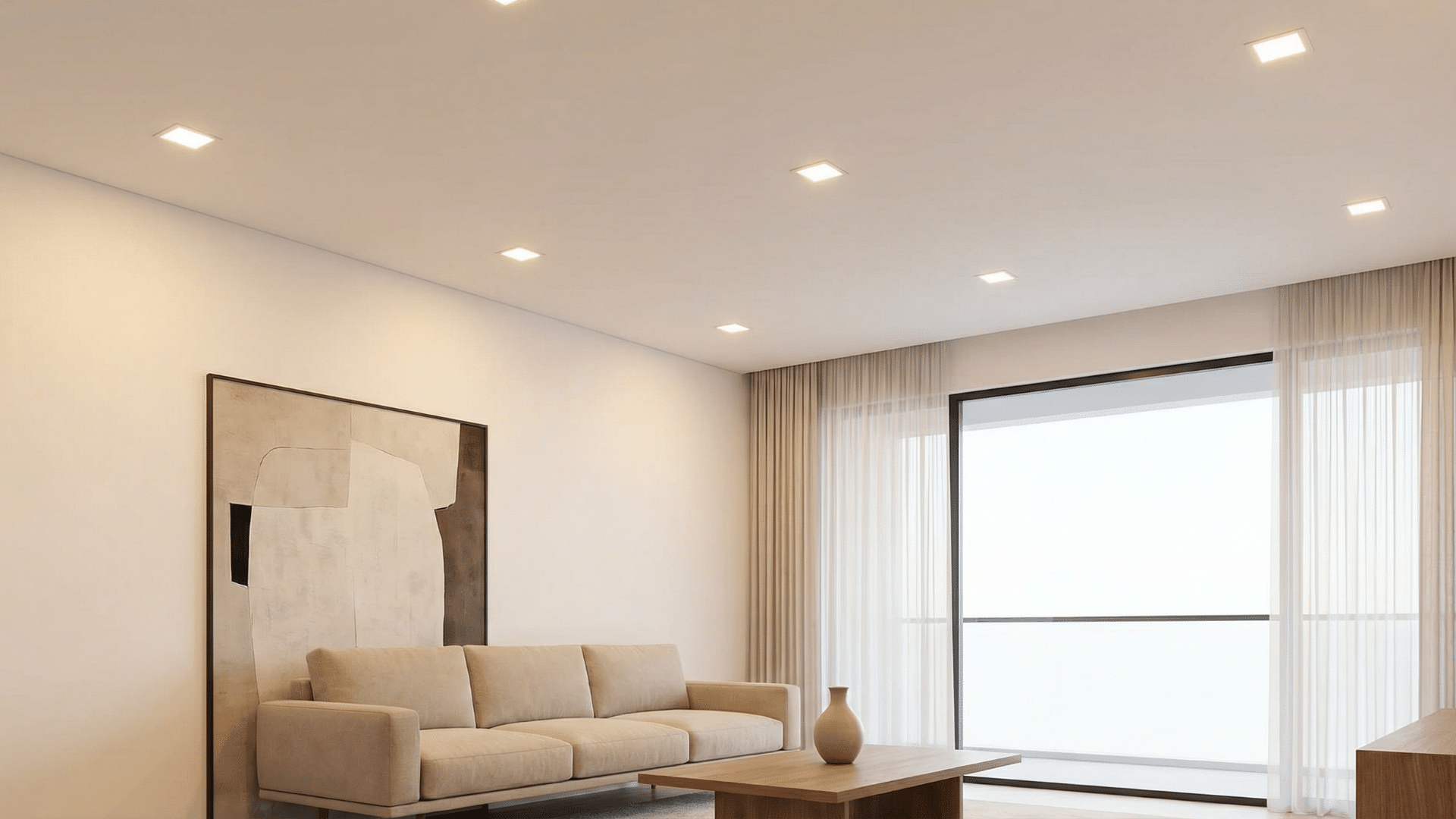
Lighting shapes the mood, comfort, and function of a space in subtle but important ways. Recessed lighting, installed directly into the ceiling, offers a clean, modern solution that keeps the visual focus on the room rather than the fixture.
Because it blends into the surface, it is often used in spaces where a simple and uncluttered look matters.
However, recessed lighting is not a single, uniform product. It includes different trims, housings, and design variations that serve specific lighting needs.
This guide outlines the main types of recessed lighting and explains how each option fits different spaces and purposes.
How Recessed Lighting Works?
Recessed lighting, often called can lights or downlights, is installed inside a hollow opening in the ceiling. Instead of hanging down, the fixture sits flush with the ceiling, giving the room a clean, streamlined appearance.
This design makes recessed lighting a common choice in modern, transitional, and even traditional homes where subtle lighting is preferred over decorative fixtures.
Before reviewing the types of recessed lighting, it is important to understand that each fixture consists of several parts.
These parts work together to control how the light looks, where it shines, and how it performs. The main components include the housing, the trim, and the light source.
Each of these elements comes in multiple options, and the combination chosen will determine the final result.
Main Components of Recessed Lighting
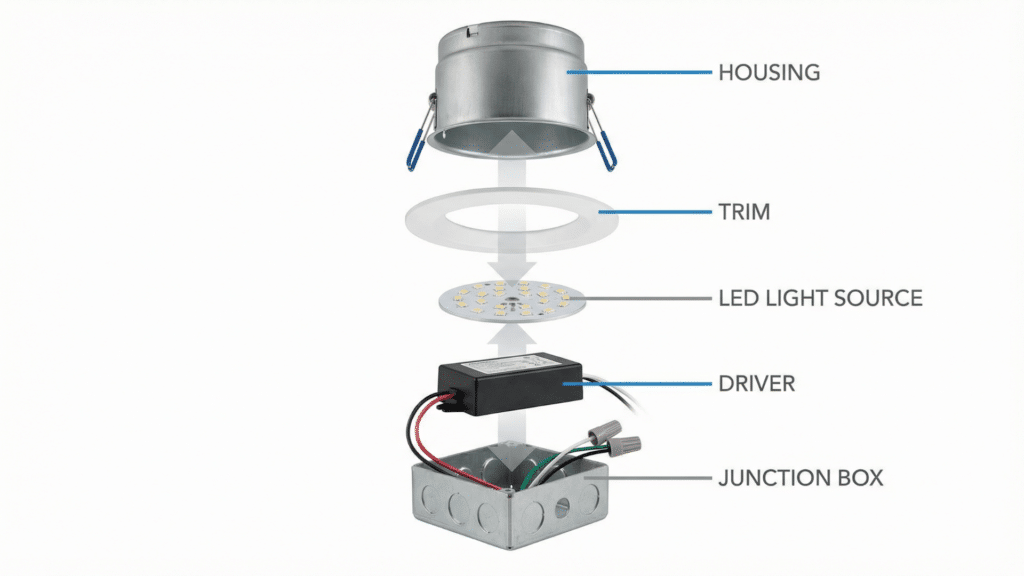
Every recessed lighting fixture consists of a few essential parts that determine how it functions, looks, and performs over time.
| Component | Description | Why It Matters |
|---|---|---|
| Housing | The metal enclosure installed above the ceiling holds the electrical connections and light source. It is hidden from view once installed. | Determines installation type (new construction or remodel), insulation compatibility (IC or non-IC), and overall safety. |
| Trim | The visible portion of the fixture that sits flush with the ceiling opening. It frames the light and controls how it is directed. | Affects light distribution, glare control, and the overall style of the fixture. |
| Light Source | The bulb or integrated LED module that produces illumination. Modern systems typically use LED technology. | Impacts brightness, energy efficiency, color temperature, lifespan, and maintenance needs. |
| Junction Box | The sealed box is connected to the housing that contains wiring connections. | Ensures safe electrical connections and compliance with building codes. |
| Driver (LED Systems) | An internal component in LED fixtures that regulates power to the light. | Maintains stable performance, supports dimming features, and extends the lifespan of the fixture. |
Main Types of Recessed Lighting
Recessed lighting can be classified in several ways, depending on installation method, visible trim design, light source technology, and functional purpose.
1. Types of Recessed Lighting by Housing
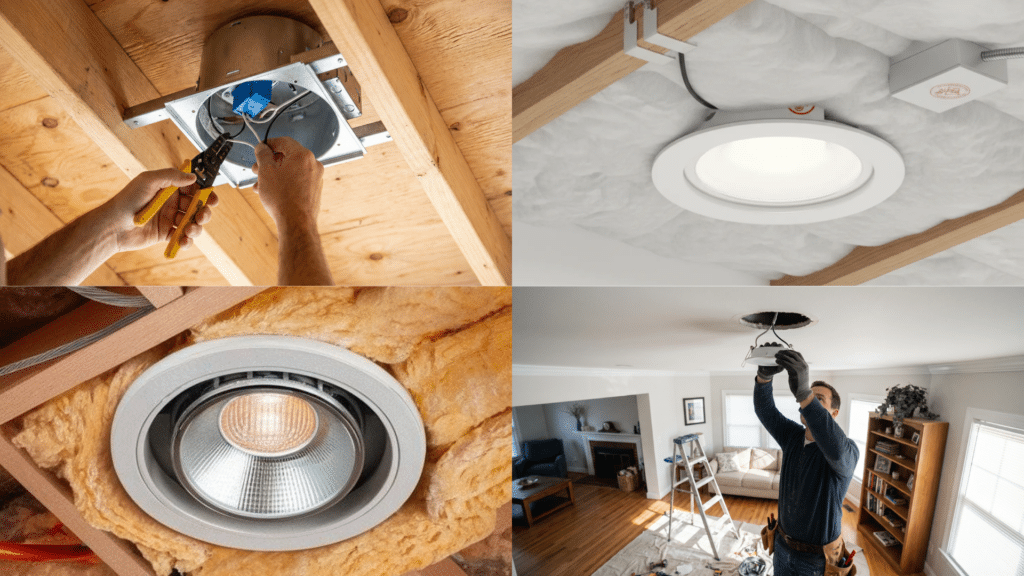
Housing determines how and where the recessed fixture can be installed. It affects safety, insulation compatibility, and whether the light is suitable for new construction or existing ceilings.
New Construction Housing
New construction housing is installed before drywall is placed. It attaches directly to ceiling joists, allowing secure positioning and precise spacing.
This type is ideal for new builds or major renovations where ceiling framing is exposed. It offers flexibility in layout planning but is not practical for finished ceilings without structural modifications.
Remodel Housing
Remodel housing is designed for installation in existing ceilings. It is secured using clips that attach to drywall after a hole is cut.
Because it does not require direct joist attachment, it is ideal for retrofit projects and home upgrades. This is one of the most common types of housing for renovations.
Insulation Contact (IC) Rated Housing
IC-rated housing can safely come into direct contact with insulation. It reduces fire risk and improves energy efficiency.
In modern homes with ceiling insulation, IC-rated housing is often required to meet safety standards.
Non-IC Rated Housing
Non-IC housing must maintain clearance from insulation to prevent overheating. It is typically used in areas without insulation.
While often less expensive, it offers less flexibility and may not comply with updated building codes.
Airtight (AT) Housing
Airtight housing minimizes airflow between conditioned spaces and attics. It reduces drafts and energy loss.
Many modern fixtures combine airtight construction with an IC rating for improved efficiency and safety.
2. Types of Recessed Lighting by Trim Style
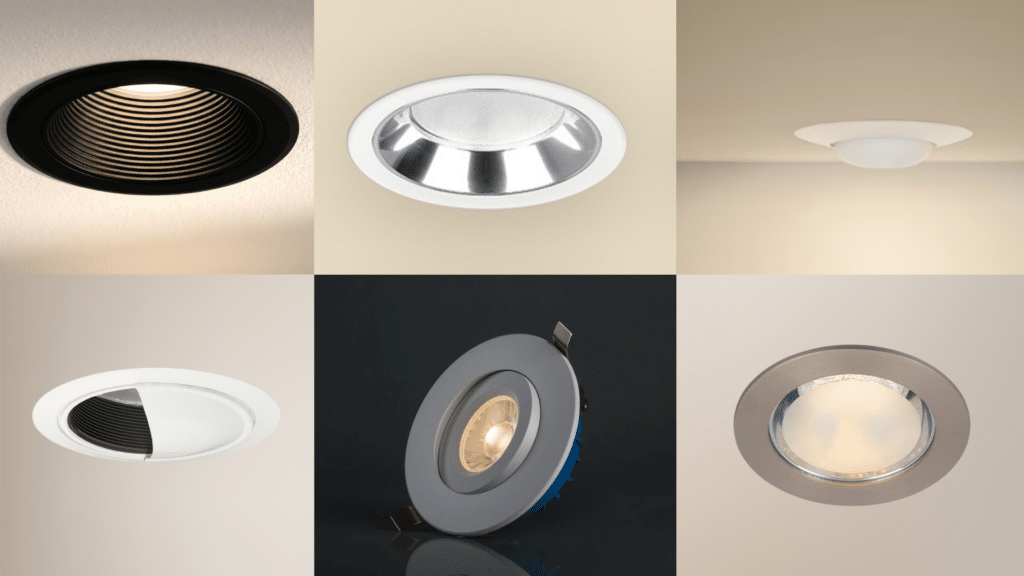
Trim is the visible part of the recessed light and plays a major role in both appearance and light distribution. Trim choice influences glare control, brightness, and overall design.
Baffle Trim
Baffle trim features ribbed interior grooves that reduce glare and soften light output. It is commonly used in living rooms, bedrooms, and hallways where comfortable ambient lighting is preferred.
The textured interior helps absorb excess brightness, making the light easier on the eyes during extended use.
Reflector Trim
Reflector trim has a smooth, polished interior that increases brightness by directing more light downward. It is well-suited for kitchens, offices, and task-oriented spaces that require stronger illumination.
The reflective surface maximizes lumen output, making it ideal for areas where clear visibility is important.
Open Trim
Open trim offers a simple design without added glare control. It provides direct light output and is often used in general lighting applications where high intensity is not required. Its clean, minimal structure makes it a cost-effective, straightforward option for basic lighting needs.
Adjustable (Eyeball) Trim
Adjustable trim allows the light to tilt within the housing. It is useful for accent lighting, highlighting artwork, or focusing on architectural details. This flexibility allows homeowners to change the direction of light without replacing the fixture.
Gimbal Trim
Gimbal trim provides a wider range of motion than standard adjustable trim. The entire light module pivots, allowing precise directional control. It works well on sloped ceilings and in rooms where lighting needs may change over time.
Wall Wash Trim
Wall-wash trim directs light outward toward vertical surfaces rather than straight down. It creates even illumination across walls and is ideal for textured finishes or feature walls. This trim helps reduce shadows and creates a smooth, consistent lighting effect.
Shower Trim
Shower trim includes a sealed lens to protect against moisture. It is rated for damp or wet locations and is commonly installed in bathrooms and covered outdoor areas.
The protective design prevents water vapor from entering the fixture and damaging internal components.
Decorative Trim
Decorative trim is available in various finishes such as bronze, brushed nickel, matte black, and white.
While functionally similar to other trims, it enhances the visual style of the fixture. Matching trim finishes with other hardware in the room creates a cohesive and polished look.
3. Types of Recessed Lighting by Light Source
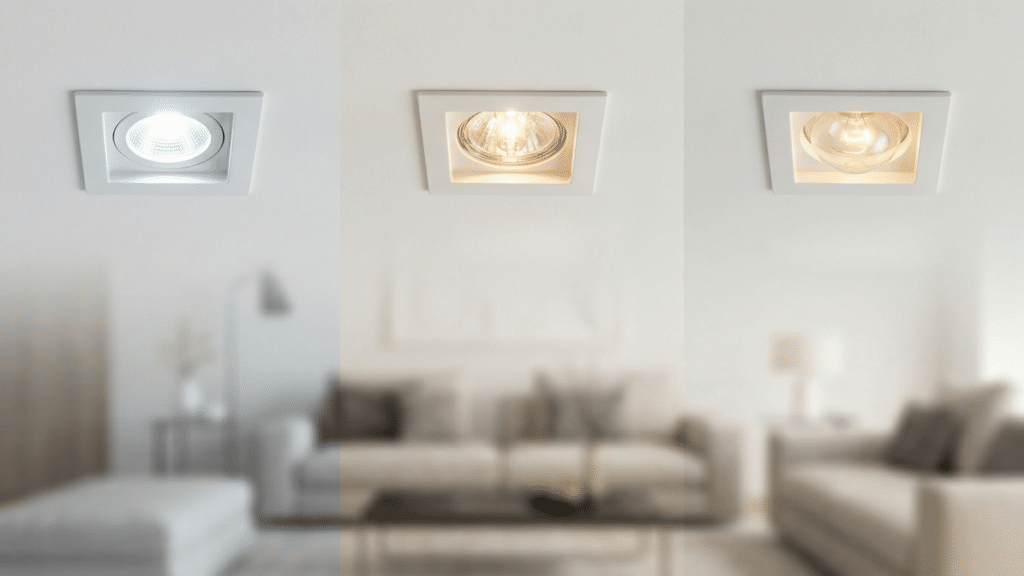
The light source affects energy efficiency, lifespan, heat output, and brightness quality. Modern recessed lighting systems primarily use LED technology, but other options still exist.
LED Recessed Lighting
LED recessed lighting is the most efficient and widely used option today. LEDs consume less energy, produce less heat, and last significantly longer than traditional bulbs.
Many LED systems are integrated, meaning the light source is built into the fixture. They often offer dimming features and adjustable color temperatures.
Halogen Recessed Lighting
Halogen lighting produces bright and crisp illumination with strong color accuracy. However, it generates more heat and consumes more energy than LED systems. Due to energy regulations, halogen options are less common in new installations.
Incandescent Recessed Lighting
Incandescent lighting provides warm light but has a short lifespan and high energy usage. Most homeowners are replacing incandescent recessed fixtures with LED upgrades for improved efficiency.
4. Types of Recessed Lighting by Function
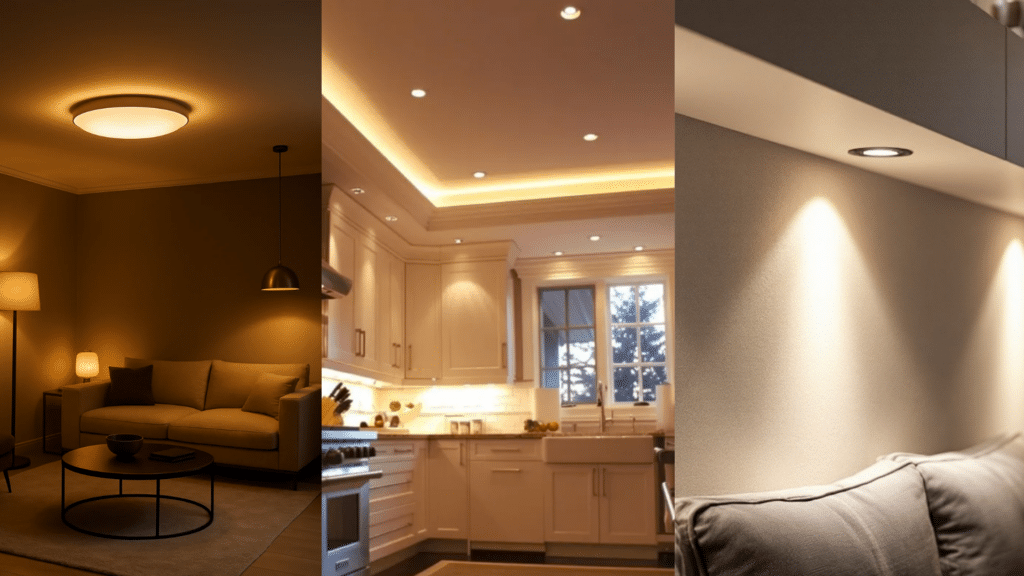
Recessed lighting can also be categorized by its role within a room. The function determines placement, brightness level, and trim selection.
Ambient Lighting
Ambient recessed lighting provides general illumination across the entire room. Fixtures are typically evenly spaced to eliminate shadows and achieve balanced brightness. Baffle and reflector trims are often used for this purpose.
Task Lighting
Task lighting focuses on specific work areas such as kitchen counters, desks, or reading spaces. These fixtures usually have higher lumen output and are positioned directly above the activity area. Reflector trims are commonly selected for increased brightness.
Accent Lighting
Accent recessed lighting highlights focal points like artwork, shelves, fireplaces, or textured walls. Adjustable and gimbal trims are frequently used to direct light precisely where attention is needed. Accent lighting adds depth and visual contrast to a space.
Fixed vs. Adjustable Recessed Lighting
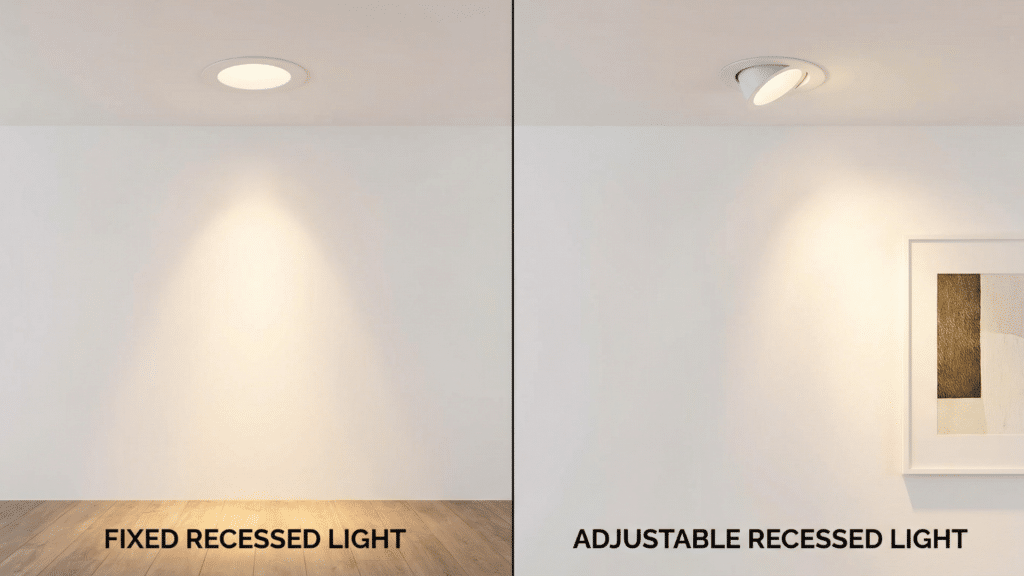
When comparing the different types of recessed lighting, one important distinction is whether the fixture is fixed or adjustable.
| Feature | Fixed Recessed Lighting | Adjustable Recessed Lighting |
|---|---|---|
| Light Direction | Directs light straight downward in a fixed position. | Allows the light to tilt or pivot to different angles. |
| Best For | General or ambient lighting across a room. | Accent or task lighting that requires targeted illumination. |
| Flexibility | Limited flexibility after installation. | Offers directional control even after installation. |
| Common Locations | Living rooms, hallways, bedrooms, and large open areas. | Art displays, feature walls, kitchen counters, and sloped ceilings. |
| Installation Complexity | Typically simpler and straightforward to install. | Slightly more complex due to movable components. |
| Visual Impact | Provides a clean and uniform ceiling appearance. | Adds visual interest by highlighting specific areas. |
| Cost | Often more affordable due to a simpler design. | May cost more because of added adjustment features. |
How Bright Should Recessed Lighting Be?
Modern LED recessed lighting allows users to choose color temperature, measured in Kelvins (K).
- 2700K–3000K produces warm white light
- 3500K–4000K creates neutral white light
- 5000K produces cool white light
Brightness is measured in lumens. Higher lumens produce brighter light. Matching lumen output to room size ensures balanced illumination.
Smart Recessed Lighting Options
Smart recessed lighting adds advanced control and flexibility to modern homes. These systems connect to Wi-Fi or smart home hubs, allowing users to manage lighting settings through mobile apps, voice assistants, or automated schedules.
- App-Based Control: Adjust brightness, turn lights on or off, and change settings directly from a smartphone or tablet.
- Voice Assistant Integration: Compatible with systems like Alexa, Google Assistant, or Apple HomeKit for hands-free control.
- Dimming Capabilities: Easily modify light intensity to match different activities or times of day.
- Adjustable Color Temperature: Switch between warm, neutral, and cool light tones without replacing the fixture.
- Color-Changing RGB Options: Select from a wide range of colors to create different moods or highlight design features.
- Scheduling and Automation: Program lights to turn on or off at specific times for convenience and security.
- Motion Sensor Compatibility: Automatically activate lighting when movement is detected, ideal for hallways and entryways.
- Energy Monitoring: Track energy usage through connected apps to manage electricity consumption more effectively.
- Remote Access: Control lighting from anywhere, even when away from home.
How to Choose the Right Type of Recessed Lighting
Choosing the right type of recessed lighting requires careful planning and a clear understanding of the space.
Start by evaluating the ceiling type and insulation to determine the correct housing, such as IC-rated or remodel options.
Next, consider the purpose of the room, since ambient, task, and accent lighting require different trim styles and brightness levels.
Pay attention to color temperature and lumen output to ensure the light matches the mood and size of the area.
Energy efficiency, dimming compatibility, and long-term maintenance should also the considered to ensure lasting performance and comfort.
Final Thoughts
Recessed lighting plays a quiet but powerful role in interior design. The right fixture can improve visibility, highlight key features, and create a comfortable atmosphere without adding visual clutter.
Installation method, trim design, light output, and energy performance all influence the overall result.
Taking time to evaluate these factors leads to better lighting balance and fewer adjustments later. Review your layout, define your lighting goals, and carefully compare your options.
Start planning your recessed lighting system today and choose fixtures that truly support your space.