

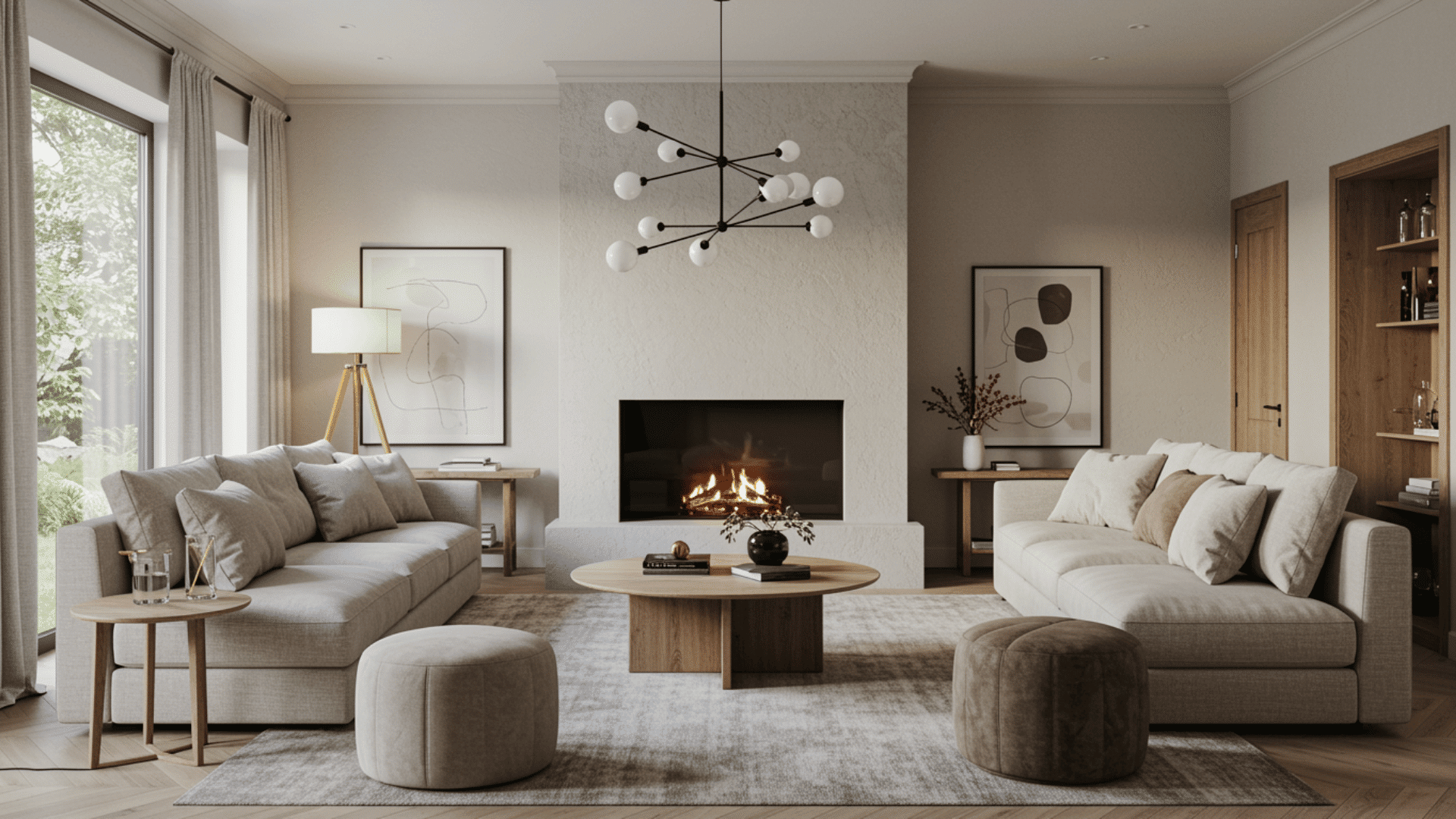
Living rooms with fireplaces should be cozy gathering spaces, but when you’re dealing with an awkward layout, the design challenges can feel overwhelming.
Perhaps your fireplace sits off-center, competes with windows for the focal point, or occupies valuable wall space in an already cramped room.
With the right awkward living room layout ideas and strategic planning, you can make these challenging spaces into functional, beautiful rooms that work with, not against, your fireplace.
In this blog, we will provide proven solutions, furniture arrangement strategies, and design tricks to help you maximize every inch while creating a harmonious, inviting living area.
What Makes a Living Room Layout “Awkward”?
A living room layout feels awkward when the architectural features and traffic flow make furniture placement difficult or visually unbalanced.
Common culprits include off-center or corner fireplaces that disrupt symmetry, forcing sofas and chairs into uncomfortable angles.
Long and narrow rooms can feel like hallways, while square rooms often lack a clear focal point. Multiple doorways, oddly placed windows, or open-concept connections can interrupt natural seating arrangements, leaving furniture floating without purpose.
When the TV and fireplace compete for attention, the room struggles to establish a hierarchy, creating visual tension.
Poorly scaled furniture, either too large or too small, can also create awkwardness. Altogether, these elements lead to layouts that feel cramped or uninviting rather than cohesive and functional.
Smart Solutions for Awkward Living Room Layouts With a Fireplace
With the right approach, even the most awkward fireplace layout can become a cozy, well-designed focal point in your living room.
1. Corner Focal Point Strategy
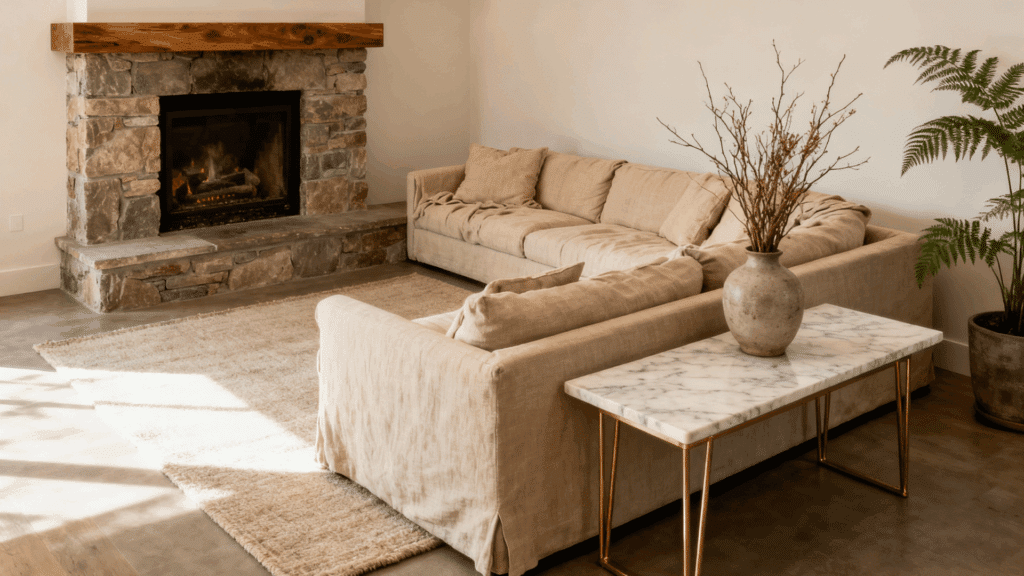
Position your main seating to face the angled hearth directly, creating an intimate conversation zone.
Float a sectional or two sofas perpendicular to the corner feature, allowing traffic flow behind the furniture. Add a console table behind the sofa to define the space and provide a display area.
This arrangement makes an awkward corner into a cozy gathering spot while maintaining room circulation and balance throughout the space.
2. Diagonal Furniture Placement
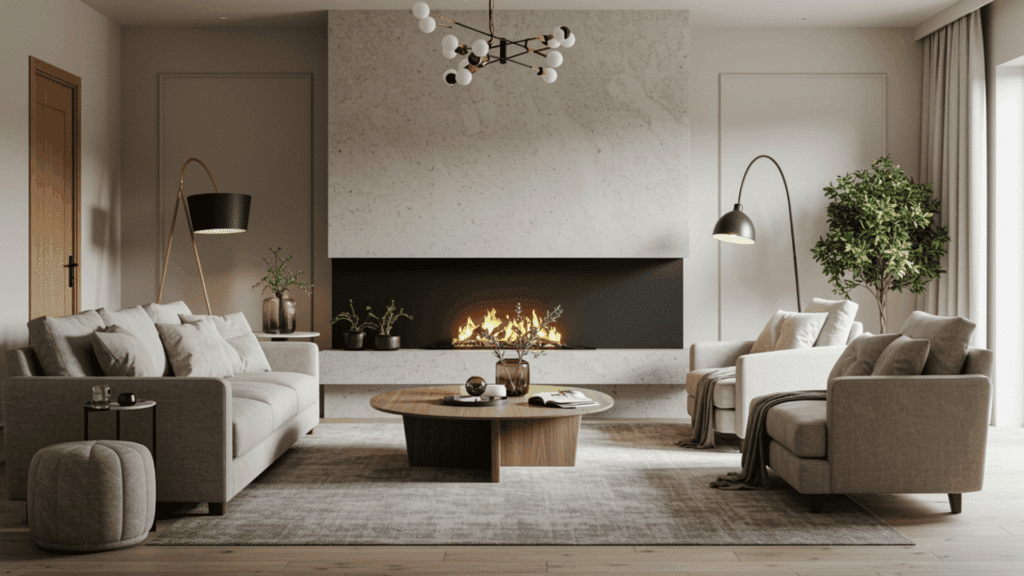
Combat boxy proportions by angling your largest pieces at 45 degrees toward the hearth. This unconventional approach creates dynamic sight lines and makes the room feel larger.
Place a sofa diagonally with two accent chairs flanking the stone or brick feature. The angled arrangement naturally directs conversation toward the focal point.
The negative space behind furniture can accommodate plants, floor lamps, or decorative screens for added depth.
3. Dual Zone Living
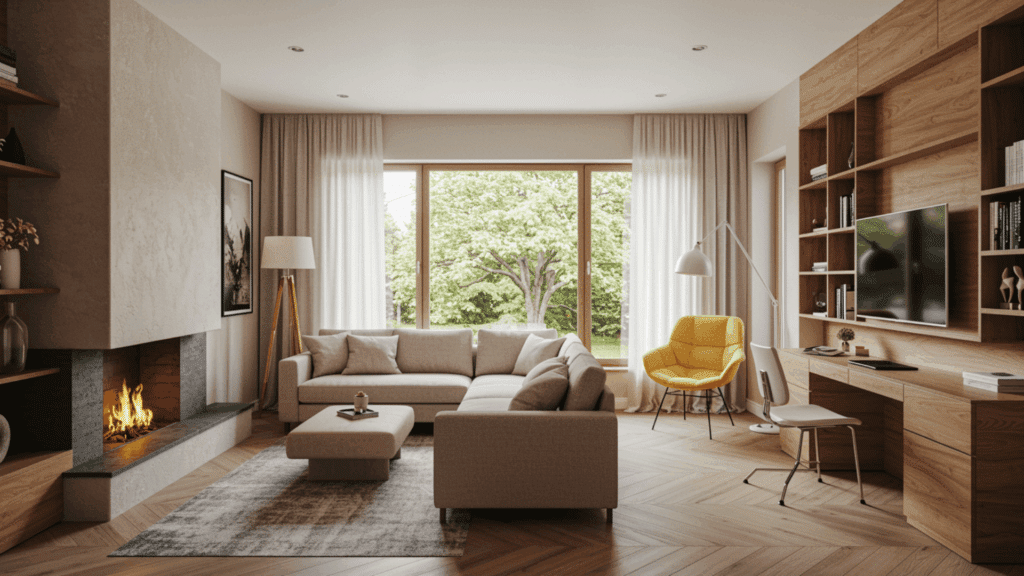
Divide an elongated space into two distinct areas: one centered around the hearth for cozy evenings, and another for entertainment or reading.
Use an area rug to anchor the primary seating arrangement facing the mantel, then create a secondary zone with a console table, chairs, or a desk near windows.
This solution maximizes functionality in narrow rooms while giving each area its own purpose and visual identity.
4. Off-Center Symmetry
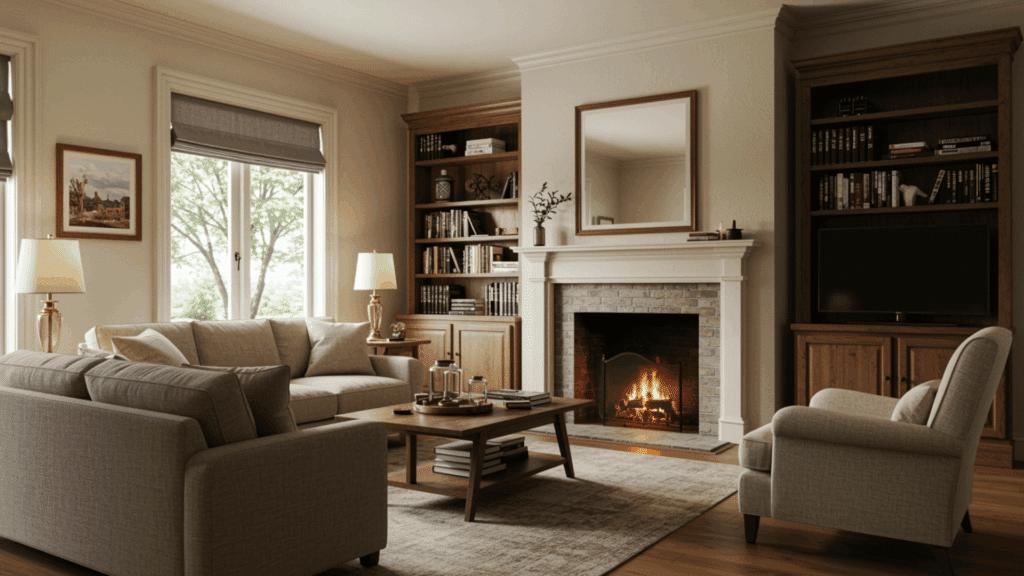
When the hearth isn’t centered on the wall, create visual balance by placing furniture asymmetrically.
Position a sofa parallel to the off-center feature with a substantial bookshelf or tall plant on the opposite side to equalize weight. Add two different accent chairs at angles to complete the area.
This approach embraces the room’s quirks while achieving harmony through carefully considered proportions and strategic placement of accessories.
5. Modular Seating Flexibility
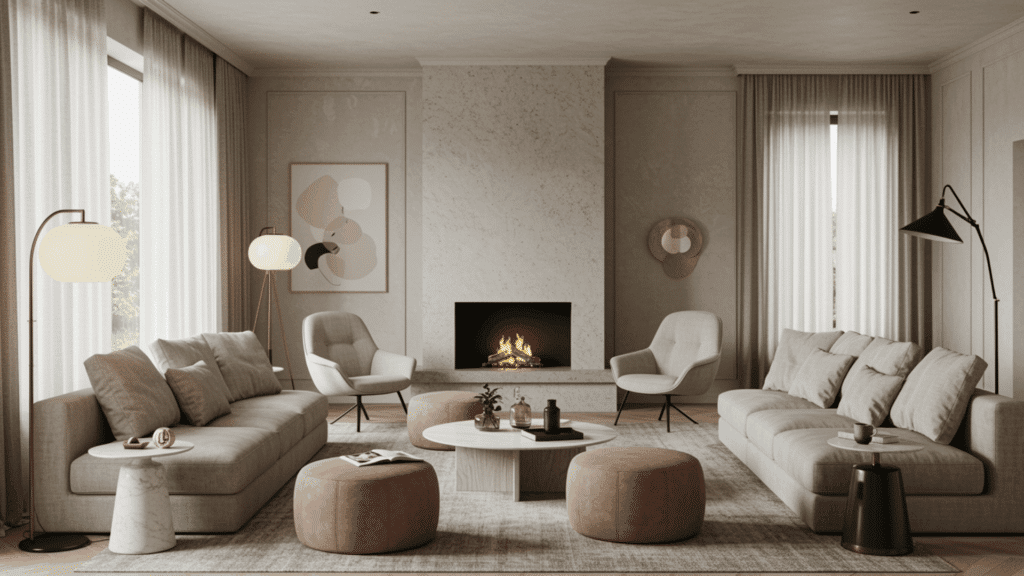
Use modular furniture pieces that can be rearranged based on the occasion. Individual chairs, poufs, and small sectional components can be clustered around the hearth.
For intimate gatherings or spread throughout the room for parties. This adaptable approach is ideal for multipurpose spaces or rooms with irregular dimensions.
Store extra modules against walls or in corners when not needed, keeping the primary conversation area streamlined and focused on the architectural focal point.
6. Swivel Chair Versatility
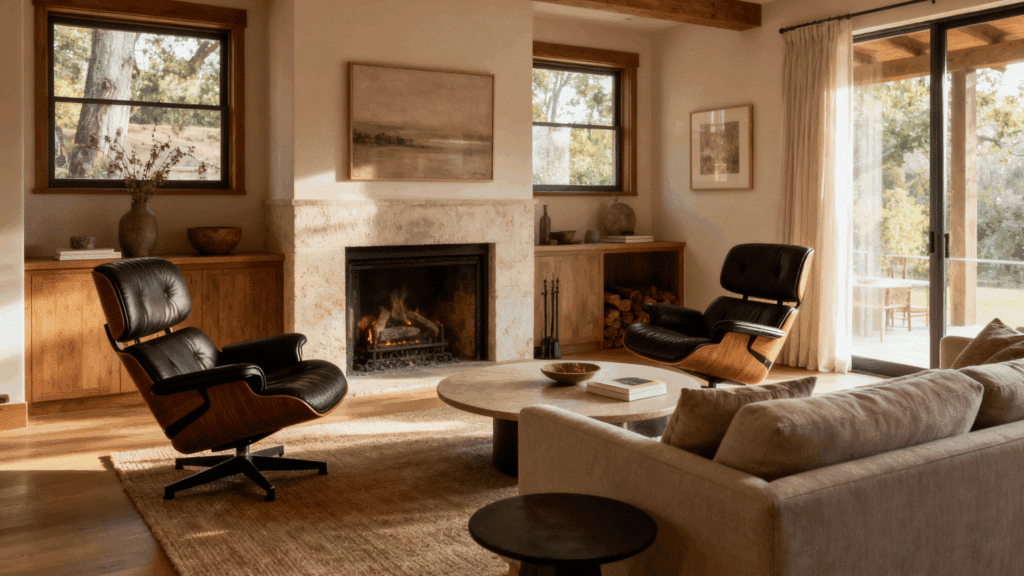
Invest in swivel chairs positioned strategically around the space, allowing occupants to rotate toward the hearth, the television, windows, or conversation partners as needed.
This flexible seating solution is perfect for rooms with multiple focal points or competing architectural features. Place a stationary sofa facing the mantel with two swivel chairs flanking.
Guests can easily adjust their orientation without rearranging furniture, making the space adaptable for various activities and gatherings.
7. Window Wall Competition
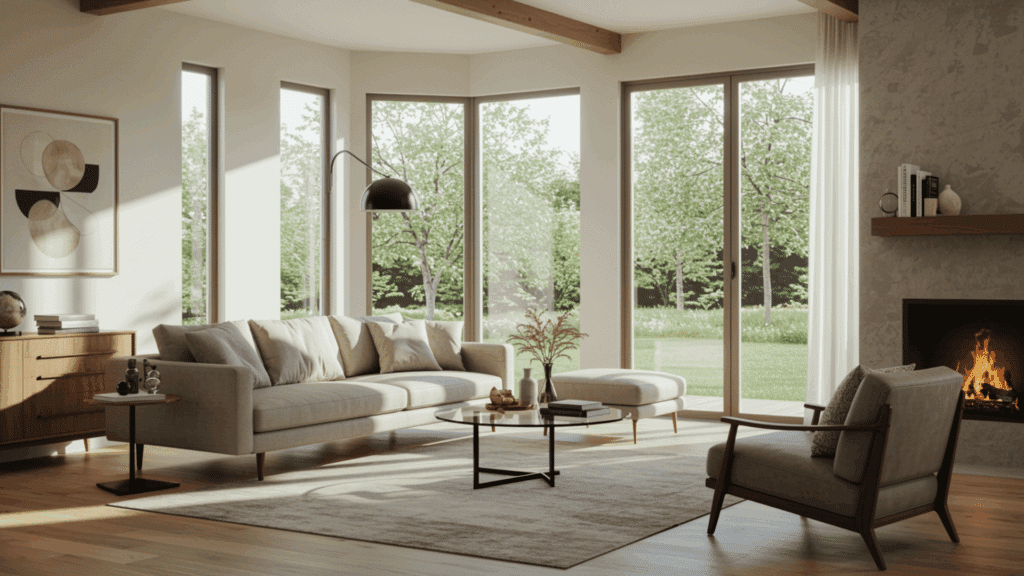
When windows and hearths compete on opposite walls, create a middle-ground seating arrangement that honors both features.
Float a sofa between the two focal points, angled slightly toward the mantel, with chairs positioned to enjoy both the view and the warmth. Use transparent furniture.
This compromise ensures neither architectural feature dominates while creating a balanced, light-filled space.
8. Vertical Space Maximization
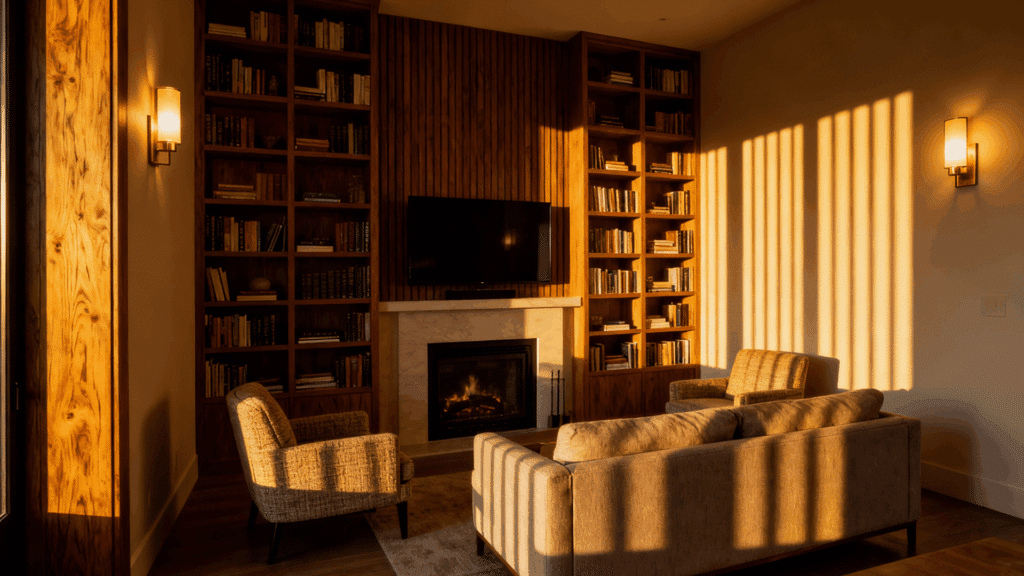
In rooms where floor space is limited, draw the eye upward with tall bookshelves flanking the hearth.
Keep furniture minimal and proportionate, and mount the television above the mantel if necessary, and use wall-mounted lighting to free up surface area.
This vertical emphasis makes low ceilings feel higher while maintaining essential functionality in compact quarters without sacrificing style or comfort.
9. Back-to-Back Seating
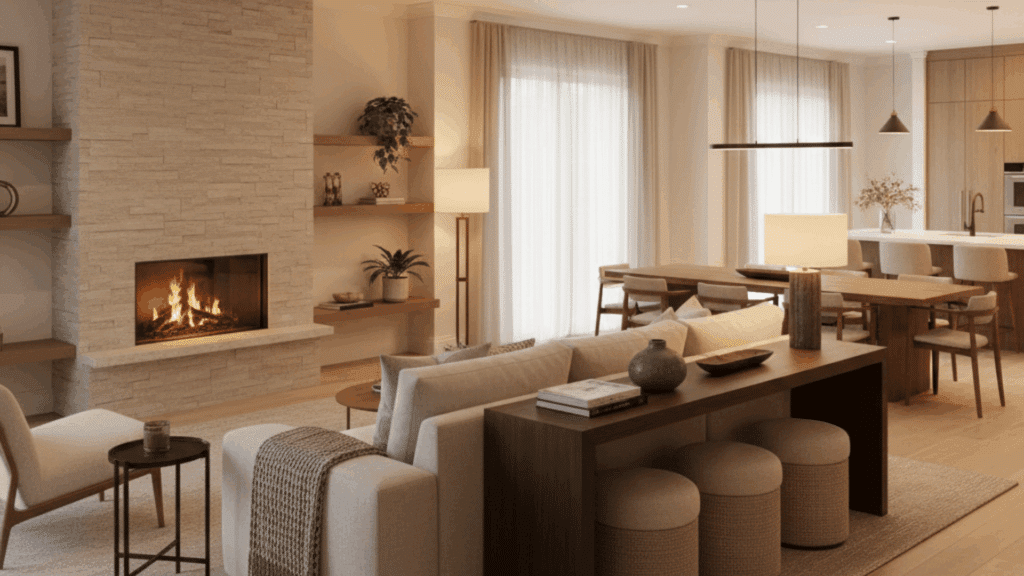
Place a console table behind a sofa that faces the hearth, creating a natural room divider in open-concept spaces.
The sofa anchors the living zone while the console provides display space and subtle separation from the dining area or kitchen. Add stools at the console for extra seating.
This layout defines distinct areas without walls while maintaining flow and ensuring the focal point remains visible from multiple vantage points throughout the space.
10. Angled Entertainment Integration
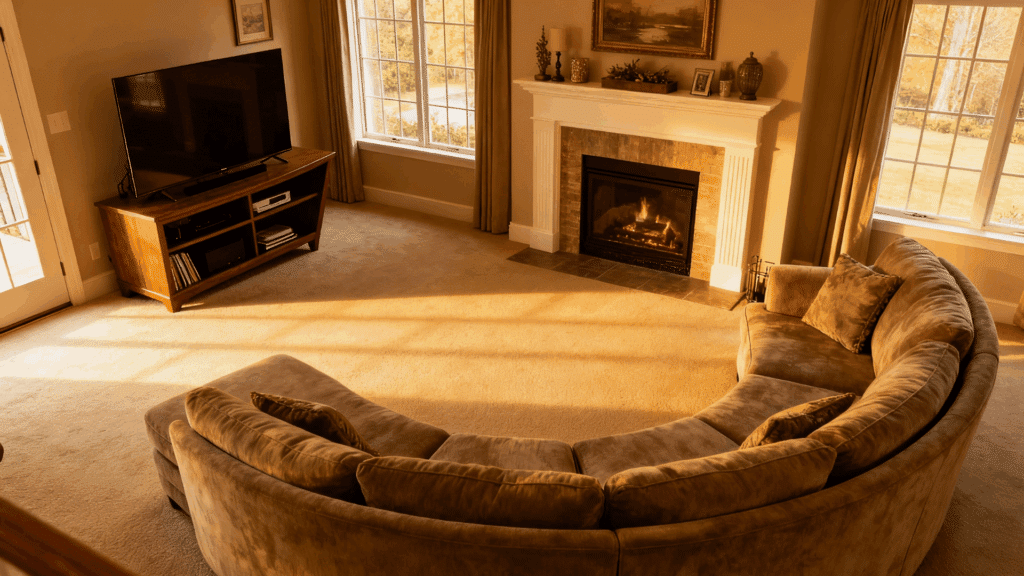
When both a television and a mantel demand attention, place the TV on an angled stand in the corner adjacent to the hearth.
Position seating in a gentle arc that accommodates viewing both features. Curved sections or strategically placed chairs can face both elements without anyone getting a stiff neck.
Use the mantel for decorative displays only, keeping media equipment consolidated on the entertainment unit for a cleaner aesthetic and better functionality.
11. Bifold Furniture
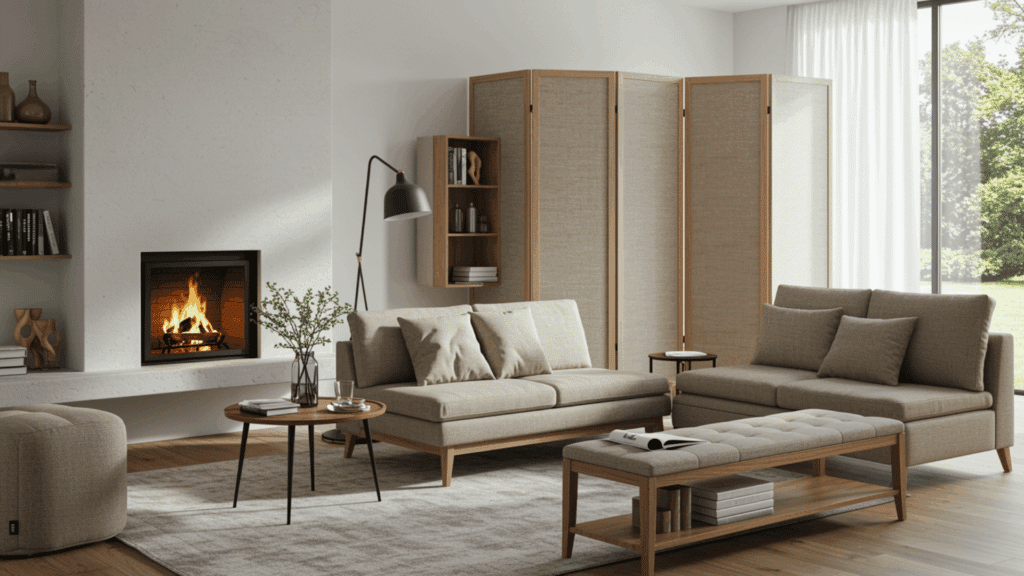
Utilize the furniture pieces that can shift between configurations daybeds that convert to sofas, folding screens that reveal storage, or benches with flip-up backs.
Position these adaptable pieces near the hearth for intimate evening settings, then reconfigure during daytime for open, multipurpose use.
This solution is ideal for studio apartments or homes where the living room must serve multiple functions throughout the day while maintaining the architectural element as a focal point.
Common Mistakes to Avoid
By sidestepping these mistakes, you can bring clarity, balance, and better traffic flow to any fireplace-focused room.
- Pushing All Furniture Against the Walls: This creates a stiff, empty center and makes awkward room shapes feel even more disconnected.
- Ignoring the Fireplace as a Focal Point: When the fireplace is treated as an afterthought, the room loses its natural anchor and feels visually unstable.
- Forcing the TV above the Fireplace: Mounting the TV too high strains the neck and often disrupts both aesthetics and viewing comfort.
- Choosing Oversized or Undersized Furniture: Pieces that don’t match the room’s scale exaggerate awkward proportions and block natural movement.
- Blocking Pathways With Seating: Placing sofas or chairs in high-traffic zones creates cluttered flow and makes the layout feel cramped.
- Using Rugs That Are Too Small: Undersized rugs make the furniture appear disconnected and prevent the room from feeling grounded.
Conclusion
An awkward living room layout with a fireplace doesn’t have to be a design liability; it can become your home’s most distinctive feature.
As we’ve seen in this, even the most challenging configurations can be made into functional, beautiful spaces with thoughtful planning and creative solutions.
By strategically placing furniture, creating multiple zones, and using clever design tricks, you can maximize both the aesthetic appeal and functionality of your space.
Contact your interior design experts today for personalized layout consultations and professional guidance tailored to your specific room configuration!